Marine Biodiversity Science Center

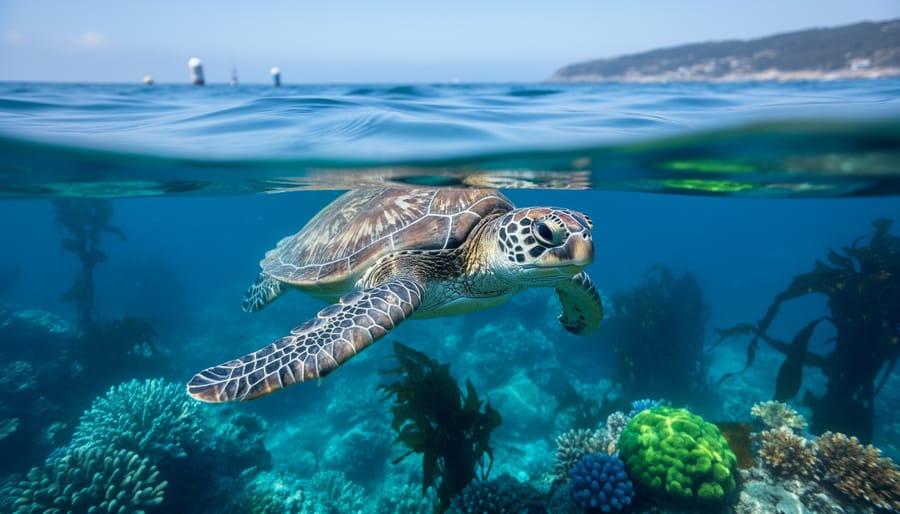
Marine biodiversity policy encompasses the laws, regulations, and international agreements designed to protect ocean ecosystems and the species that inhabit them. These frameworks apply to governments, fishing industries, coastal developers, shipping companies, and anyone whose activities affect marine environments. If you work in these sectors or simply care about ocean health, understanding your rights and obligations under these policies matters because they determine what protections exist, what activities require permits, and how you can participate in shaping conservation outcomes.
The regulatory landscape has grown more complex and more participatory. International treaties like the Convention on Biological Diversity set broad targets, while regional bodies translate these into enforceable rules. National governments implement marine protected areas, fishing quotas, and pollution controls. What many people don’t realize is that most of these frameworks include public consultation processes, citizen science programs, and volunteer monitoring opportunities that welcome input from non-experts.
The stakes are high. Ocean biodiversity underpins food security for billions, regulates climate, and supports coastal economies worth trillions annually. Yet policy often feels distant or inaccessible, written in bureaucratic language that obscures both the urgency of protection and the pathways to action.
This guide cuts through that complexity. You’ll learn what marine biodiversity policy actually requires, who needs to comply, how to engage in decision-making processes, and where to find support whether you’re a researcher tracking compliance, a business owner navigating permits, or a concerned citizen wanting to advocate effectively. Marine conservation depends not just on good policy but on people who understand and use it.
What Marine Biodiversity Policy Is and Why It Matters
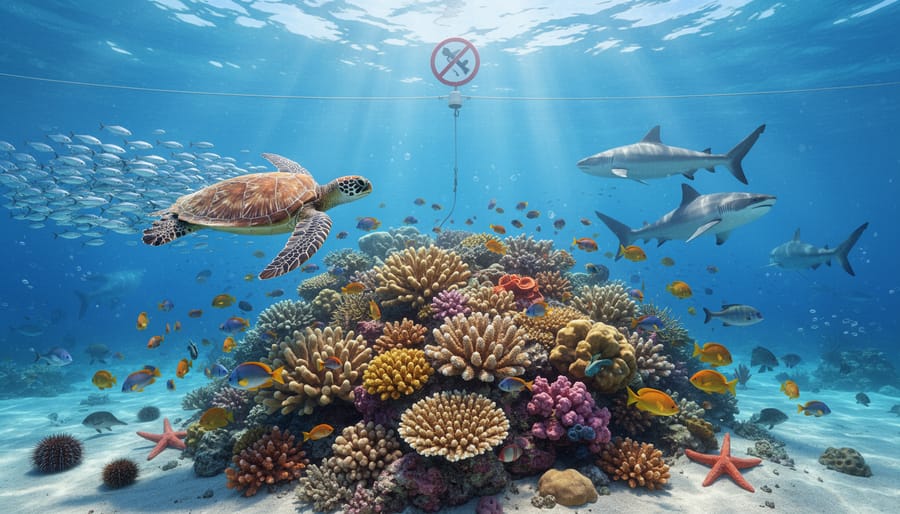
Marine biodiversity policy encompasses the legal and regulatory frameworks governments and international bodies create to protect ocean life, from microscopic plankton to apex predators, and the habitats they depend on. These policies that protect oceans establish everything from marine protected area designations and fishing quotas to pollution controls and habitat restoration requirements. At their core, they translate scientific understanding of ecosystem health into enforceable rules that balance conservation needs with human activities.
The foundation for global marine biodiversity protection lies in international agreements like the Convention on Biological Diversity, which established conservation targets for CBD in marine areas and created frameworks for countries to coordinate efforts. The 2023 High Seas Treaty (BBNJ agreement) extended this protection to international waters beyond national jurisdiction, establishing mechanisms for creating marine protected areas in the open ocean and regulating activities affecting deep-sea ecosystems. Regional frameworks like the OSPAR Convention in the North-East Atlantic and the Barcelona Convention in the Mediterranean translate these global commitments into geographically specific action plans tailored to local ecosystems and challenges.
National legislation completes the picture, converting international obligations into domestic law. These laws define who can fish where and when, set penalties for pollution, require environmental impact assessments for coastal development, and authorize agencies to enforce protections. What makes contemporary marine biodiversity policy different from past approaches is the shift toward ecosystem-based management, viewing ocean systems as interconnected wholes rather than managing single species in isolation. Modern frameworks incorporate adaptive governance that adjusts rules based on monitoring data, acknowledges uncertainty through precautionary approaches, and actively involves scientists, fishing communities, indigenous groups, and conservation organizations in decision-making. This collaborative model recognizes that effective ocean protection requires buy-in from everyone who depends on or affects marine ecosystems, not just top-down mandates from distant bureaucracies.
Who Qualifies and Is Affected by Marine Biodiversity Policies
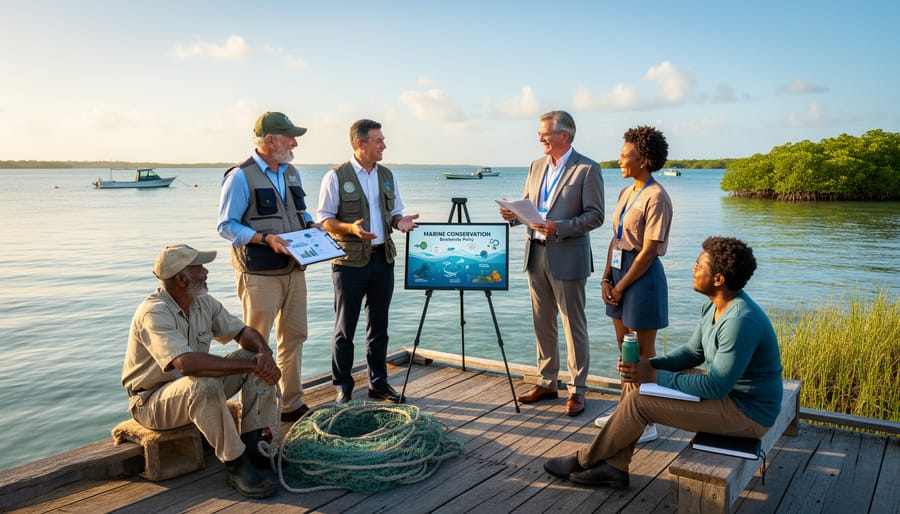
Marine biodiversity policies create a web of rights, responsibilities, and opportunities that extends far beyond government offices. Whether you’re a commercial fisher, a marine researcher, or someone who simply cares about ocean health, these policies likely affect you and offer avenues for meaningful participation.
Government agencies at all levels, national fisheries departments, coastal zone management authorities, environmental protection ministries, serve as primary implementers and enforcers of biodiversity policies. They develop regulations, issue permits, monitor compliance, and manage marine protected areas. Regional bodies like Regional Fisheries Management Organizations coordinate policies across borders, particularly for migratory species and shared marine resources.
Research institutions and universities play a dual role: they contribute scientific evidence that shapes policy decisions and often participate in monitoring and assessment programs mandated by conservation frameworks. Scientists can submit data to inform policy reviews, serve on technical advisory committees, and access funding tied to policy implementation priorities.
| Stakeholder Category | Primary Policy Role | Key Participation Rights |
|---|---|---|
| Government Agencies | Implementation, enforcement, regulation | Rulemaking authority, jurisdiction over marine areas |
| Research Institutions | Scientific input, monitoring, assessment | Data submission, advisory roles, grant access |
| NGOs and Conservation Groups | Advocacy, public engagement, program delivery | Public comment, proposal submission, partnership agreements |
| Fishing Communities and Marine Industries | Compliance, sustainable practice adoption | Permit applications, consultation processes, compensation claims |
| Indigenous and Local Communities | Traditional knowledge contribution, co-management | Free prior informed consent, benefit-sharing, customary use rights |
| Individual Citizens | Public oversight, citizen science participation | Comment periods, volunteer programs, legal standing for enforcement |
NGOs and conservation organizations hold significant influence in shaping marine biodiversity policy through advocacy campaigns, scientific research, and on-the-ground conservation programs. They can submit proposals for marine protected areas, participate in stakeholder consultations, and often receive government contracts to deliver conservation initiatives.
Fishing communities and marine industries, from small-scale artisanal fishers to shipping companies and offshore energy operators, must comply with biodiversity regulations affecting their operations. They have the right to participate in policy development processes that affect their livelihoods, apply for sustainable use permits, and sometimes receive compensation when policies restrict access to previously available resources.
Indigenous and local communities possess special status under many modern biodiversity frameworks, particularly under the Convention on Biological Diversity and emerging BBNJ treaty provisions. Their traditional ecological knowledge is increasingly recognized as valuable for policy design, and they hold rights to free prior informed consent for activities in their traditional territories, benefit-sharing arrangements, and co-management of marine resources.
Individual citizens have more power than many realize. You can participate in public comment periods, join citizen science monitoring programs, volunteer with conservation organizations implementing policy initiatives, and in some jurisdictions, bring legal actions to enforce biodiversity protections. Your engagement matters, particularly during policy review cycles and marine spatial planning processes.
Geographic jurisdiction determines which policies apply where. National policies govern territorial waters extending 12 nautical miles from shore, while exclusive economic zones stretching 200 miles offshore fall under national resource management authority but with international obligations. The high seas beyond national jurisdiction operate under international treaties and regional agreements, with the new BBNJ treaty establishing frameworks for marine protected areas and benefit-sharing in these global commons.
How to Participate in and Implement Marine Biodiversity Policy
Submitting Research and Data to Policy Makers
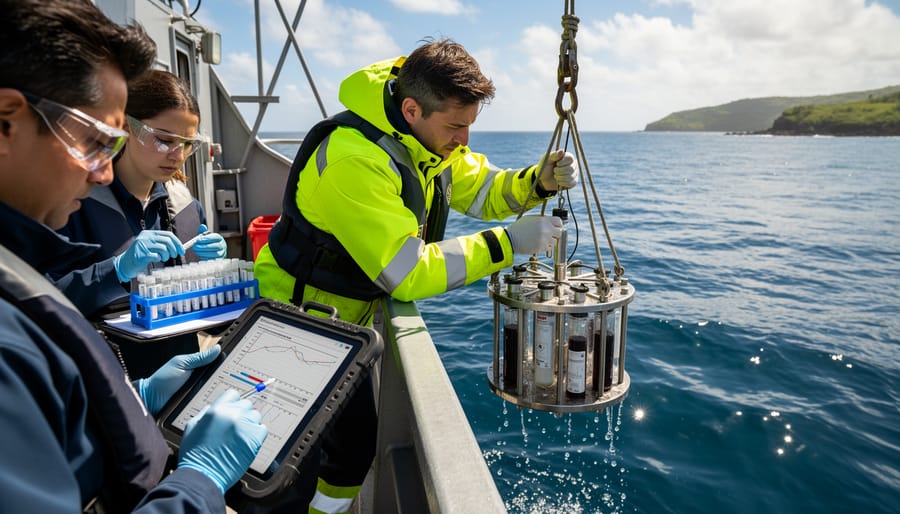
Marine scientists hold unique power to shape biodiversity policy through timely evidence submission. Most policy development cycles include formal comment periods, typically 30 to 90 days, when agencies actively solicit scientific input. Track these windows through government marine policy portals (NOAA’s Federal Register in the US, national environmental ministry websites elsewhere) or subscribe to policy alert networks through marine research associations.
Your data carries maximum weight when it addresses specific policy questions currently under review. Submit through official channels: designated email addresses, online comment portals, or stakeholder consultation platforms. Format submissions clearly with an executive summary, methodology overview, key findings, and policy implications. Include raw datasets when possible, following open-data standards like Darwin Core for biodiversity observations.
Target submission early in the policy cycle, initial scoping stages have more influence than late-stage reviews. Co-author with colleagues across institutions to strengthen credibility. If your research intersects with traditional ecological knowledge, collaborate respectfully with communities; Indigenous rights frameworks increasingly require such partnership in policy processes.
Regional fisheries management organizations and international treaty bodies (like the CBD) also welcome scientific contributions through their working groups and technical advisory committees, volunteer opportunities that directly connect research to global marine governance.
Applying for Marine Protected Area Designations
Proposing a new marine protected area requires building a compelling case that balances scientific evidence with community support. Start by assembling baseline data: species inventories, habitat maps, biodiversity assessments, and evidence of ecological significance or vulnerability. Document existing uses, fishing, recreation, shipping, to demonstrate what protections are needed and what activities would be affected.
Most jurisdictions require a formal proposal submitted to the relevant government agency (often fisheries or environmental ministries). Your proposal should include clear boundaries with GPS coordinates, conservation objectives tied to specific biodiversity outcomes, and a management plan outlining permitted activities, enforcement mechanisms, and monitoring protocols. Many frameworks require socioeconomic impact assessments showing how the MPA would affect local communities and industries.
Stakeholder engagement is non-negotiable. Before submitting, consult fishing communities, indigenous groups, tourism operators, and other users of the proposed area. Document their input and, where possible, incorporate their concerns into the management plan. Public comment periods typically follow submission, lasting 30-90 days depending on jurisdiction.
Timeline expectations: smaller MPAs may advance within 18-24 months; large or politically complex designations can take five years or more from initial proposal to final designation.
Joining Policy Advisory Committees and Working Groups
Serving on a marine policy advisory committee puts you at the table where conservation decisions are made. These bodies, ranging from regional fishery management councils to marine protected area working groups, actively recruit members with scientific expertise, local knowledge, or stakeholder perspectives.
Most committees post open positions on government agency websites or through professional networks. Application typically requires a CV, statement of interest explaining your relevant experience, and disclosure of any potential conflicts of interest. Qualifications vary: some seats require advanced degrees in marine science, while others prioritize fishing community representatives, indigenous knowledge holders, or conservation practitioners.
Time commitments range from quarterly meetings (often 2-3 days) to monthly calls and interim document review. Professional positions may offer stipends or travel reimbursement; many volunteer roles provide per diem and expenses only. Budget 5-15 hours monthly for preparation and participation.
Strengthen your application by demonstrating both subject-matter expertise and collaborative problem-solving skills. Highlight experience translating complex science for policy audiences or building consensus among diverse stakeholders. Terms typically run 2-4 years with renewal options, allowing you to influence marine biodiversity policy over the long term while learning how governance actually works.
Rights, Obligations, and Compliance Under Marine Biodiversity Policy
Understanding your rights and obligations under marine biodiversity policy matters whether you’re a commercial fisher, a researcher, or a community member whose livelihood depends on ocean resources. These frameworks establish a reciprocal relationship: stakeholders gain protected rights and access to benefits while accepting responsibilities that ensure the policy achieves its conservation goals.
Your rights under most marine biodiversity policies include substantial participation guarantees. Stakeholders are entitled to:
- Right to participate in decision-making processes affecting marine resource management
- Right to maintain traditional resource access for indigenous and local communities
- Right to fair compensation when conservation restrictions limit economic activities
- Right to transparent information about policy development and enforcement
- Right to appeal decisions through established dispute resolution mechanisms
Indigenous and local communities receive special protections under emerging policy innovations. The Nagoya Protocol on Access and Benefit-Sharing ensures that traditional knowledge holders receive recognition and compensation when their ecological expertise informs conservation strategies. Coastal communities displaced by Key Biodiversity Areas or marine protected area designations typically qualify for livelihood support, alternative access zones, or involvement in management and ecotourism ventures that generate revenue.
Obligations vary by stakeholder category. Fishing operators must obtain permits, report catches accurately, use gear approved for minimal bycatch, and comply with seasonal closures or quota limits. Research institutions collecting marine specimens need permits, must share data with national repositories, and often face requirements to deposit genetic sequence information in international databases. Marine industries like shipping or offshore energy must conduct environmental impact assessments, implement mitigation measures, and monitor their operations’ effects on protected species and habitats.
Enforcement mechanisms blend monitoring technology with traditional inspection. Vessel monitoring systems, satellite surveillance, and DNA tracing of seafood products help authorities detect illegal fishing in protected waters. Rangers patrol marine reserves, while citizen observers report violations through hotlines and apps. Penalties for non-compliance range from fines and permit suspensions for minor infractions to criminal prosecution for systematic illegal fishing or habitat destruction. Repeat offenders face escalating consequences, including vessel seizure and exclusion from future permitting.
Dispute resolution processes typically offer multiple pathways. Administrative appeals allow stakeholders to challenge permit denials or restriction decisions. Mediation services help resolve conflicts between user groups competing for ocean space. International tribunals address transboundary disputes when policies from neighboring nations clash, ensuring that conservation efforts don’t disadvantage one country’s fishers while benefiting another’s.
Innovative Policy Approaches Supporting Marine Biodiversity in 2026
The landscape of marine biodiversity protection has shifted dramatically as policy makers embrace adaptive, science-driven frameworks that respond to ecosystem complexity rather than imposing rigid top-down controls. Ecosystem-based management now anchors modern policy, moving beyond single-species quotas to consider entire food webs, habitat connectivity, and cumulative human impacts. Norway’s integrated ocean management plans exemplify this approach, using spatial zoning that balances shipping, aquaculture, fishing, and conservation areas based on continuous ecosystem monitoring. These plans adjust annually as new data reveals changing species distributions and habitat health.
Marine spatial planning has evolved into a precise tool for resolving ocean-use conflicts before they escalate. Portugal’s national plan allocates specific zones for renewable energy, shipping lanes, and biodiversity hotspots using high-resolution habitat mapping and stakeholder negotiations. The process incorporates indigenous knowledge alongside satellite data, creating management boundaries that reflect both ecological realities and community needs. What distinguishes successful plans from failed attempts is their flexibility, they build in review cycles and amendment pathways rather than locking zones permanently.
Blue carbon credit schemes represent a financing breakthrough, channeling private capital into coastal habitat restoration. Mangroves, seagrass beds, and salt marshes now qualify for carbon offset projects that fund protection and expansion. Kenya’s Mikoko Pamoja project pays coastal communities to restore and guard mangrove forests, generating credits sold to corporations offsetting emissions. The revenue stream makes conservation economically competitive with destructive land uses, though verification standards and permanence guarantees remain works in progress.
Technology-enabled monitoring has transformed enforcement from periodic patrols into near-real-time surveillance. Satellite-based vessel tracking identifies illegal fishing in marine protected areas within hours, and AI algorithms flag suspicious activity patterns for rapid response. Indonesia deployed this system across its vast archipelago, reducing poaching in no-take zones by 63 percent in monitored areas. Acoustic sensors track whale migrations and ship noise, feeding data directly into dynamic shipping lane adjustments that minimize collisions and disturbance.
Transboundary cooperation frameworks are tackling challenges that ignore national borders. The Ross Sea Marine Protected Area, negotiated among 25 nations through the Commission for the Conservation of Antarctic Marine Living Resources, protects 1.55 million square kilometers of Southern Ocean. It required years of diplomacy and compromise on fishing access, but stands as proof that competing interests can align around shared ecosystem goals when marine conservation lawyers and scientists translate ecological imperatives into negotiable terms.
Climate-biodiversity integration marks the most significant conceptual shift. Policies now explicitly link carbon reduction targets with biodiversity outcomes, recognizing that marine ecosystems sequester vast carbon while providing habitat. Australia’s recent climate legislation mandates biodiversity impact assessments for all coastal development projects, ensuring climate adaptation measures don’t inadvertently harm species or fragment habitats.
Dr. Maria Santos, a marine biologist advising Portugal’s spatial planning team, describes the evolution: “Ten years ago, we handed policy makers static maps and hoped for the best. Now I’m in monthly calls with regulators, updating models as oceanographic conditions shift. When a marine heatwave displaced sardine spawning grounds last year, we adjusted fishing zones within weeks instead of waiting for the next legislative cycle. That responsiveness, built into the policy structure itself, is what keeps ecosystems resilient.”
Where to Get Help, Resources, and Official Support
Navigating marine biodiversity policy can feel overwhelming, but you don’t have to do it alone. A robust network of government agencies, international organizations, scientific groups, and conservation partners provides guidance, technical support, and pathways to meaningful engagement.
For U.S.-based stakeholders, the National Oceanic and Atmospheric Administration (NOAA) operates dedicated marine policy portals with public comment systems, regulatory updates, and stakeholder toolkits. The agency’s Office of Habitat Conservation and Marine Protected Areas Center offer specific resources for communities and organizations working on habitat protection and MPA proposals. Most coastal nations maintain similar ministries or departments with marine conservation divisions, checking your national government’s environmental or fisheries ministry website is the best starting point for country-specific policy engagement.
At the international level, the International Union for Conservation of Nature (IUCN) maintains extensive marine policy resources, including best practice guidelines, case studies, and technical reports on protected area management and biodiversity governance. The Convention on Biological Diversity Secretariat provides access to treaty texts, national biodiversity strategies, and capacity-building materials for implementing global agreements. Regional fisheries management organizations (like the Northwest Atlantic Fisheries Organization or the Western and Central Pacific Fisheries Commission) offer stakeholder engagement mechanisms for industry, scientists, and conservation groups to contribute to sustainable management decisions.
Several NGO partners specialize in making policy accessible. The Environmental Law Institute and ClientEarth provide free legal guidance for communities navigating marine conservation regulations. Oceana, the Ocean Conservancy, and the Marine Conservation Institute maintain policy advocacy programs with toolkits for citizen engagement, including template comments, policy explainers, and campaign resources. Scientific networks like the International Council for the Exploration of the Sea (ICES) and the Partnership for Interdisciplinary Studies of Coastal Oceans (PISCO) connect researchers with policy processes, offering data submission portals and science-policy workshops that translate research into actionable recommendations.
Common Questions About Marine Biodiversity Policy
Navigating marine biodiversity policy can feel overwhelming, but many common questions have straightforward answers that demystify how these systems work and how you can engage with them.
How do international policies affect local waters?
International agreements like the Convention on Biological Diversity set global standards that countries incorporate into their national laws, which then govern coastal and territorial waters. These policies create baseline protections that local regulations must meet or exceed.
Can individuals influence marine policy?
Absolutely. Public comment periods, citizen science contributions, and advocacy through NGOs give individuals real leverage in shaping policy decisions. Policymakers rely on diverse perspectives to craft effective regulations.
How long does policy change typically take?
Major policy shifts usually require two to five years from initial proposal to implementation, though urgent conservation measures can move faster. The timeline includes scientific review, stakeholder consultation, legal drafting, and enforcement preparation.
How are policies enforced in international waters?
Regional fisheries management organizations and flag state responsibilities enforce policies in areas beyond national jurisdiction, with satellite monitoring, vessel inspections, and international cooperation agreements supporting compliance.
When policies appear to conflict, say, between fishing regulations and marine protected area rules, resolution typically follows a hierarchy: international law takes precedence over national rules, and more specific conservation measures override general use permissions. Most jurisdictions have established dispute resolution processes that bring together affected stakeholders and legal experts to clarify overlapping requirements.
Funding for policy implementation comes from multiple sources. National governments allocate budgets through environmental and fisheries agencies, while international bodies like the Global Environment Facility provide grants for developing countries. User fees from fishing permits, ecotourism licenses, and blue carbon markets increasingly fund enforcement and monitoring. Private foundations and conservation organizations also support specific programs, particularly community-based initiatives and scientific monitoring.
Staying current with policy developments doesn’t require constant vigilance. Subscribe to newsletters from agencies like NOAA or your national fisheries ministry, join networks like the center’s e-network for curated updates, and follow regional fisheries organizations relevant to your waters. Most agencies publish annual summaries that highlight significant changes without requiring daily tracking. Setting up alerts for specific keywords in government registries catches proposals during comment periods when your input matters most.
Marine biodiversity policy isn’t an exclusive domain reserved for government officials and policy experts, it’s a powerful tool that belongs to all of us who care about ocean health. Whether you’re a scientist contributing research data, an educator inspiring the next generation of ocean advocates, a community member participating in public consultations, or simply someone who values healthy seas, your voice and actions can shape the frameworks protecting our marine ecosystems.
The innovative policy approaches emerging in 2026 show us that conservation governance is becoming more adaptive, collaborative, and effective than ever before. From ecosystem-based management to climate-biodiversity integration, these frameworks are designed to respond to new science, incorporate diverse knowledge systems, and engage stakeholders at every level. Success depends on broad participation, policies work best when they reflect the needs and insights of the people closest to marine environments.
Getting involved is straightforward. Join our e-network to stay informed about policy developments and engagement opportunities. Participate in citizen science programs that feed critical data into management decisions. Volunteer with organizations working at the policy-implementation interface. Share your experiences and concerns during public comment periods.
Every contribution matters. Marine ecosystems face unprecedented challenges, but together, through informed, engaged, and persistent participation, we can build policy frameworks robust enough to protect ocean biodiversity for generations to come.

jessica
Ava Singh is an environmental writer and marine sustainability advocate with a deep commitment to protecting the world's oceans and coastal communities. With a background in environmental policy and a passion for storytelling, Ava brings complex topics to life through clear, engaging content that educates and empowers readers. At the Marine Biodiversity & Sustainability Learning Center, Ava focuses on sharing impactful stories about community engagement, policy innovations, and conservation strategies. Her writing bridges the gap between science and the public, encouraging people to take part in preserving marine biodiversity. When she’s not writing, Ava collaborates with local initiatives to promote eco-conscious living and sustainable development, ensuring her work makes a difference both on the page and in the real world.