Marine Biodiversity Science Center

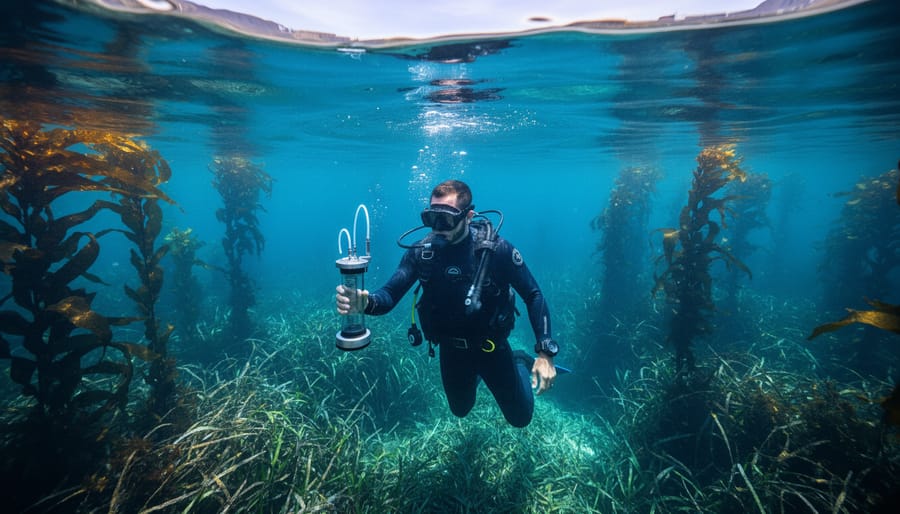
Ocean acidification prevention requires cutting carbon dioxide emissions at their source while supporting natural and engineered solutions that restore ocean chemistry. The primary method is reducing atmospheric CO2 through clean energy adoption, which stops roughly 30% of human-produced carbon from dissolving into seawater and lowering pH levels. This work happens on two scales: systemic changes like renewable energy policy and carbon capture technology, paired with individual actions such as reducing personal carbon footprints and protecting coastal ecosystems that buffer acidification.
The chemistry is straightforward. When CO2 enters seawater, it forms carbonic acid, which releases hydrogen ions that make the ocean more acidic. Since the Industrial Revolution, ocean pH has dropped by 0.1 units, a 30% increase in acidity that threatens marine life from coral reefs to commercial shellfish. But prevention isn’t just theory. Communities from the Pacific Northwest to the Great Barrier Reef are already implementing strategies that slow acidification rates and help marine ecosystems adapt.
Dr. Sarah Chen, a marine chemist who has monitored pH levels in Puget Sound since 2018, describes the shift: “We’ve seen localized improvements near restored kelp forests and eelgrass beds. These ecosystems pull CO2 from the water column during photosynthesis, creating refuges where juvenile oysters can build shells.” Her work demonstrates that while global emission cuts remain essential, coastal restoration and innovative monitoring create measurable wins today. The path forward combines immediate action with long-term commitment, and every step counts toward healthier oceans.
Understanding What Prevention Requires
Preventing ocean acidification starts with understanding the process you’re working to stop. The ocean naturally absorbs about 30% of the carbon dioxide we release into the atmosphere, acting as a critical carbon sink. When seawater absorbs this CO2, it undergoes a chemical reaction that produces carbonic acid, which then breaks down into hydrogen ions and bicarbonate. These excess hydrogen ions bind with carbonate ions that marine organisms need to build shells and skeletons, while simultaneously absorbing atmospheric CO2 lowers pH levels. Since the Industrial Revolution, ocean pH has dropped from 8.2 to 8.1, a seemingly small shift that represents a 30% increase in acidity because pH operates on a logarithmic scale.
This ocean acidification mechanism reveals why prevention requires a two-pronged approach: stopping the carbon flow at its source and protecting the ocean’s natural buffering capacity. The ocean’s chemistry has limits, and we’re pushing against them faster than natural systems can adapt.
The tools for prevention span multiple scales. Personal action addresses your carbon footprint through energy choices, transportation, and consumption patterns. Policy support amplifies individual efforts through systemic change, from carbon pricing to marine protected areas. Technology offers solutions like renewable energy infrastructure and ocean alkalinity enhancement methods still in development. Ecosystem protection maintains the ocean’s natural defenses, coastal blue carbon habitats that sequester massive amounts of carbon while buffering local pH changes.
Each tool matters because ocean acidification prevention isn’t a single fix. It’s a coordinated effort combining immediate emission reductions with long-term ecosystem restoration and innovative solutions. Understanding these mechanisms helps you recognize where your actions fit into the larger prevention strategy.
Essential Resources and Partners for Prevention
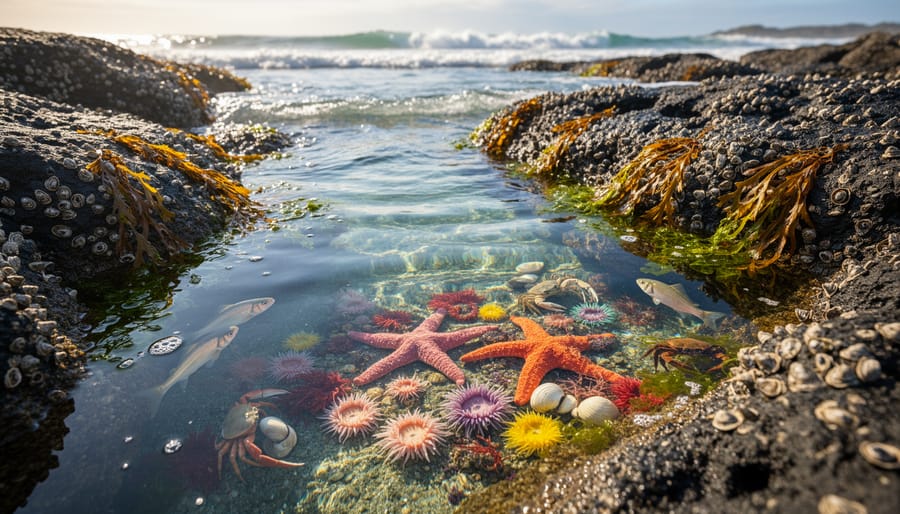
Participating effectively in ocean acidification prevention requires connecting with the right resources and partners. You don’t need specialized equipment or credentials, just access to reliable information and a willingness to engage with established conservation networks.
Start by connecting with organizations that provide structure and support for prevention work. The Marine Biodiversity Science Center offers volunteer programs, educational webinars, and citizen science opportunities specifically focused on ocean health monitoring and habitat restoration. Similar programs exist through regional aquariums, university marine labs, and nonprofits like Ocean Conservancy and The Nature Conservancy, all of which coordinate restoration projects and advocacy campaigns.
Essential tools and platforms include:
- Carbon footprint calculators that translate daily choices into measurable CO2 reductions
- Citizen science apps for monitoring local water quality and marine species
- Advocacy platforms connecting you with current ocean policy campaigns
- Local conservation groups organizing beach cleanups and restoration events
- Educational resources explaining ocean chemistry in accessible terms
Free carbon calculators from EPA, Carbon Footprint Ltd, and similar services help you identify which lifestyle changes deliver the biggest prevention impact. Platforms like iNaturalist and NOAA’s monitoring programs let you contribute observational data that scientists use to track acidification effects in real time.
Information access matters as much as organizational connection. Subscribe to newsletters from NOAA’s Ocean Acidification Program and scientific bodies like the Intergovernmental Panel on Climate Change for updates on ocean pH trends and emerging solutions. Following marine research institutions on social media keeps prevention strategies and success stories visible in your daily feed, maintaining motivation through the long-term commitment this work requires.
Important Considerations Before You Begin
Before committing to ocean acidification prevention work, you need to understand both the genuine challenges and the realistic pathways forward. This isn’t a problem you can solve alone in a month, and recognizing that upfront will help you sustain your efforts over the years required to make a real difference.
The scale of ocean acidification demands honest acknowledgment. Since the Industrial Revolution, ocean pH has already dropped by 0.1 units, representing a 30% increase in acidity. Reversing this trend requires reducing global carbon emissions by billions of tons annually, not just individual carbon savings measured in hundreds of pounds. Your personal actions matter as part of a collective movement, but they cannot substitute for policy changes, industrial transformation, and international cooperation.
Watch for greenwashing in both your own choices and the organizations you support. Not every product labeled “ocean-friendly” contributes meaningfully to acidification prevention, and some carbon offset programs lack scientific verification. Focus your energy on actions with documented impact: verified emissions reductions, proven blue carbon restoration projects, and evidence-based advocacy campaigns.
Plan for long-term engagement rather than short bursts of enthusiasm. Ocean chemistry responds slowly to atmospheric changes, meaning the results of today’s prevention efforts may not appear in pH measurements for decades. Set incremental goals, celebrate small victories, and build prevention habits into your routine rather than treating it as a temporary project. Burnout helps no one, so pace yourself and connect with communities that provide support and shared purpose.
Step-by-Step Prevention Actions You Can Take
Reduce Your Carbon Footprint
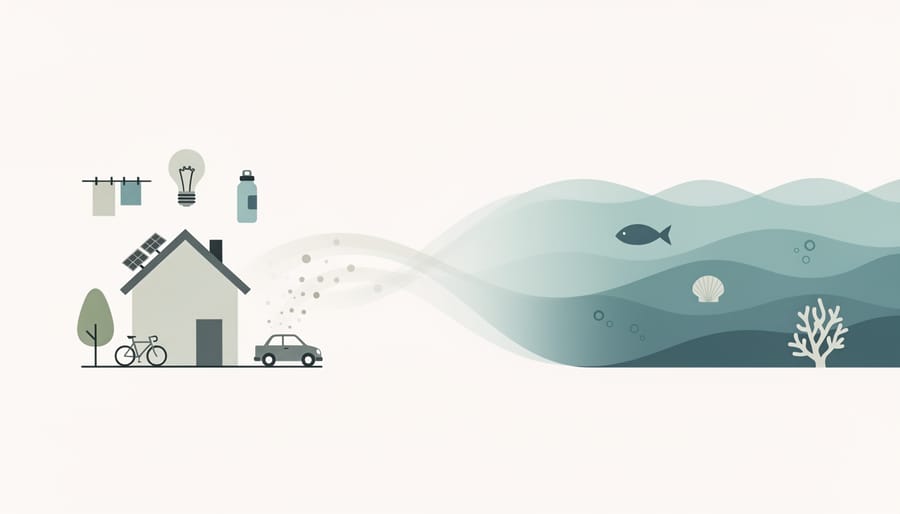
Every molecule of CO2 you prevent from entering the atmosphere helps keep the ocean’s pH stable. When fossil fuels burn in your car, home, or the power plant supplying your electricity, they release carbon dioxide that doesn’t just warm the air, roughly 30% dissolves directly into seawater, triggering the chemical reactions that lower pH and threaten marine life. This is why cutting your personal carbon emissions is the single most effective prevention action you can take.
Start with your energy footprint. Switch to renewable electricity if your utility offers it, or install solar panels if feasible. LED bulbs, programmable thermostats, and improved insulation can cut household emissions by 20-40%. For transportation, combine trips, use public transit when possible, or consider an electric vehicle for your next purchase. Even shifting to a hybrid reduces annual CO2 output by two tonnes.
Your consumption choices matter too. Buying less, choosing durable goods over disposables, and selecting locally-produced items all shrink your carbon shadow. Food production accounts for significant emissions, so eating more plant-based meals and choosing sustainable seafood from well-managed fisheries reduces both direct and indirect ocean impacts.
Track your progress with carbon calculators from reputable environmental organizations. Most people in developed nations emit 10-20 tonnes of CO2 annually. Reducing that by even 25% through these practical changes removes meaningful acidification pressure from the ocean while you work toward larger systemic solutions.
Support and Restore Blue Carbon Ecosystems
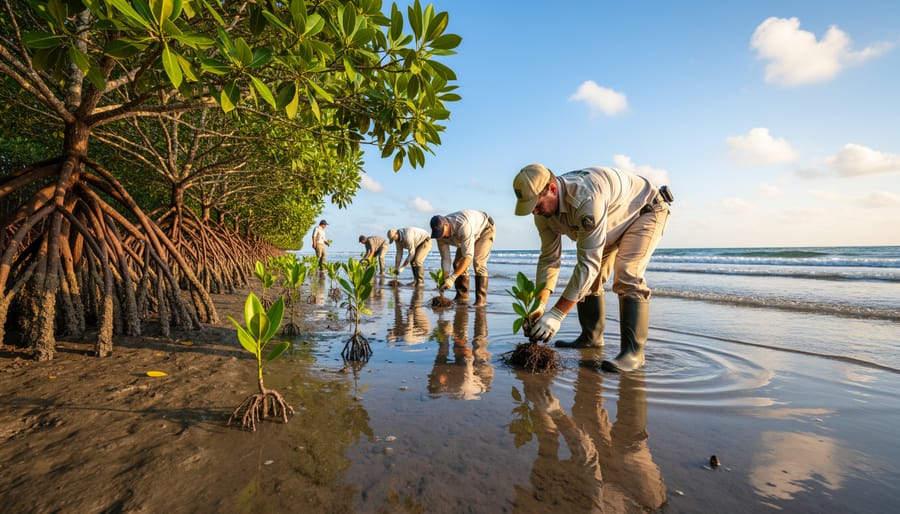
Blue carbon ecosystems, mangroves, seagrass meadows, and salt marshes, deserve special attention because they’re prevention powerhouses. These coastal ecosystems capture carbon at rates up to forty times faster than terrestrial forests, while simultaneously buffering local ocean chemistry against acidification. When you protect or restore a hectare of seagrass, you’re not just saving habitat for marine wildlife protection; you’re maintaining a natural pH stabilizer that benefits the entire food web.
Start by identifying restoration projects in your region. Organizations like The Nature Conservancy and local marine conservation groups run hands-on volunteer programs where you can plant seagrass shoots, remove invasive species from salt marshes, or monitor mangrove restoration sites. These programs typically require no prior experience and provide training on-site.
If you’re landlocked or can’t participate directly, support restoration financially. Many projects operate on tight budgets and welcome donations that fund seedlings, monitoring equipment, or staff time. You can also advocate for wetland protection policies in your area, coastal development remains the primary threat to blue carbon systems.
Track your impact through project updates. Most restoration programs share progress reports showing acreage restored, carbon sequestered, and species returning to rehabilitated areas. Your participation, whether physical or financial, contributes measurable results toward acidification prevention.
Advocate for Policy and Systemic Change
Individual carbon reduction matters, but systemic change amplifies impact exponentially. Policy-level action addresses the scale of ocean acidification in ways personal choices alone cannot, making advocacy an essential prevention tool.
Start by identifying your representatives at local, state, and federal levels. Most legislators maintain online contact forms and hold periodic town halls. Write brief, specific emails supporting carbon reduction policies, ocean protection funding, and renewable energy incentives. Reference your district’s coastal economy or marine resources to make the connection local. Congressional staffers track constituent communication, your message contributes to policy priorities.
Join established advocacy campaigns rather than starting from scratch. Organizations like Ocean Conservancy, Surfrider Foundation, and regional marine science centers run coordinated efforts with clear asks and proven strategies. Sign petitions, participate in call-to-action days, and share campaign materials through your networks. Collective voices demonstrate public support that legislators notice.
Attend public comment periods for environmental regulations and marine management plans. Coastal commissions, fisheries councils, and environmental agencies seek stakeholder input on decisions affecting ocean health. Your three-minute testimony carries weight, especially when you speak from direct experience as a volunteer, educator, or concerned community member.
Support businesses and institutions that lobby for climate action. Corporate advocacy influences policy through different channels than individual voices. Choose banks, retailers, and employers committed to carbon neutrality and public climate advocacy, then let them know their environmental stance matters to customers and employees.
Support Scientific Research and Innovation
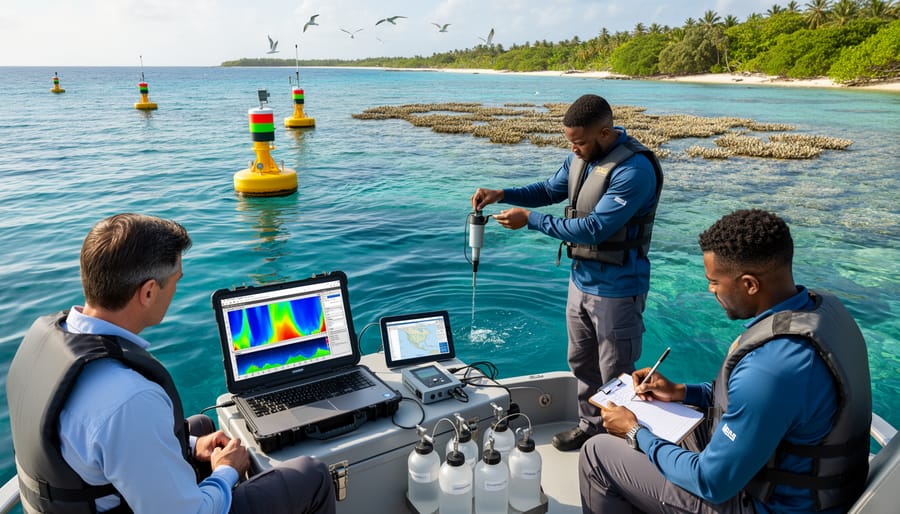
Supporting scientific research accelerates our understanding of ocean acidification and brings promising solutions closer to reality. You don’t need a PhD to contribute meaningfully to this work.
Citizen science monitoring programs welcome volunteers to collect water samples, measure pH levels, and report coastal conditions. These programs provide researchers with geographic coverage impossible to achieve otherwise. The Marine Biodiversity Science Center runs several ocean monitoring initiatives where trained volunteers contribute essential data to long-term studies.
Financial support matters too. Direct donations to marine research institutions fund equipment purchases, field expeditions, and graduate student positions. Many universities now run alkalinity enhancement experiments testing whether adding minerals to seawater can safely buffer pH changes at scale. Even modest monthly contributions help maintain these multi-year studies.
Professional involvement offers another pathway. If you work in chemistry, engineering, data science, or related fields, consider consulting on ocean alkalinity projects or joining collaborative research networks. These emerging technologies need diverse expertise to move from laboratory concepts to tested interventions.
Your contribution, whether through data collection, funding, or professional skills, directly expands the scientific foundation needed for effective prevention strategies.
Measuring Success and Staying Engaged
Tracking your impact keeps you motivated and ensures your prevention efforts align with measurable progress. Start with your personal carbon footprint, use free calculators from organizations like The Nature Conservancy or EPA’s carbon footprint tool to establish a baseline, then reassess quarterly. A 10% reduction in personal emissions translates to roughly 1,000 pounds of CO2 annually for the average household, which directly reduces ocean acidification pressure.
For broader ocean health indicators, follow regional pH monitoring through NOAA’s Ocean Acidification Program and the Global Ocean Acidification Observing Network. These platforms publish quarterly reports showing pH trends in different marine regions. While individual action won’t shift these graphs immediately, watching multi-year trends helps you understand whether collective efforts are slowing acidification rates. Look for stabilization patterns or reduced decline velocity as positive signals.
Subscribe to progress updates from conservation organizations you support. Groups like Ocean Conservancy and Marine Biodiversity Science Center release annual impact reports detailing acres of blue carbon habitat restored, policy victories achieved, and research milestones reached. Seeing concrete numbers, 50,000 mangrove seedlings planted, new marine protected areas established, validates your contributions.
Celebrate incremental wins rather than waiting for complete solutions. Switched to renewable energy? That’s measurable progress. Participated in a seagrass restoration day? You’ve created tangible carbon storage. Contacted your representative about emissions policy? You’ve amplified systemic pressure for change.
Maintain engagement by varying your involvement. Rotate between direct action months (volunteering, advocacy) and education months (reading research, attending webinars). Join online communities where others share their prevention journeys. Long-term commitment comes from seeing yourself as part of a sustained movement, not a solitary actor expecting immediate ocean-wide results.
Stories from the Front Lines
Dr. Sarah Chen spent three weeks aboard a research vessel off the coast of Papua New Guinea in 2025, studying coral reefs that continue to thrive despite rising acidity levels. “We documented communities with unusually high pH resilience,” she recalls. “Understanding why these corals survive gives us restoration targets.” Her team’s findings now inform breeding programs across the Pacific, cultivating resilient coral strains for transplantation into vulnerable reefs.
Volunteer coordinator Marcus Williams leads weekend seagrass restoration dives in Florida Bay. “I started with zero marine biology background,” he says. “Just a retired teacher who wanted to help.” Over two years, his volunteer network has planted 40,000 seagrass shoots across degraded meadows. Water quality monitoring shows measurable pH stabilization in restored areas compared to barren zones nearby.
Environmental lawyer Keiko Tanaka helped draft carbon emissions legislation that passed in her state legislature last year. “Scientists provided the data, but we needed someone to translate urgency into policy language,” she explains. The resulting law mandates phased industrial carbon reductions and funds coastal ecosystem protection.
These stories share common threads: scientific grounding, community collaboration, and sustained effort. Prevention work doesn’t deliver overnight victories, but each project demonstrates measurable progress. Whether deploying pH sensors, testifying at hearings, or planting mangrove seedlings, committed individuals create the momentum that systemic change requires.
Common Questions About Ocean Acidification Prevention
Can individual action really make a difference against ocean acidification?
Yes, but only when combined with collective effort. Your carbon footprint reduction contributes to the atmospheric CO2 levels that drive acidification, and your advocacy strengthens the political will for systemic solutions. Think of individual action as both direct impact and social modeling that influences broader networks.
How long will it take to see results from prevention efforts?
Ocean chemistry changes operate on decadal timescales. Carbon emissions reduced today won’t immediately reverse pH declines, but they prevent worse acidification tomorrow. Ecosystem restoration projects like seagrass beds can show local pH buffering within 3-5 years, offering measurable wins while global progress unfolds more gradually.
What if I live far from the ocean, can I still help?
Absolutely. Ocean acidification stems from atmospheric carbon that originates everywhere, not just coastal regions. Your energy choices, transportation habits, and consumer decisions in landlocked areas contribute just as much to the problem or solution as those made at the shore.
Is it too late to prevent ocean acidification?
It’s too late to prevent all acidification, but not too late to limit its severity. Every fraction of a pH point matters for coral survival, shellfish reproduction, and food web stability. Prevention now means protecting marine ecosystems from catastrophic collapse versus allowing manageable adaptation challenges.
Do I need a science background to participate in prevention work?
Not at all. Most prevention actions require commitment rather than expertise. Citizen science programs provide training, advocacy campaigns need voices more than credentials, and ecosystem restoration projects welcome volunteers of all backgrounds. Your willingness to learn and act matters more than prior knowledge.
How can I tell if prevention programs are legitimate and effective?
Look for transparency in goals, methods, and progress reporting. Credible programs publish data, partner with research institutions, and avoid exaggerated claims about quick fixes. Organizations like Marine Biodiversity Science Center that connect their work to peer-reviewed science and verifiable outcomes offer reliable paths for meaningful contribution.
These questions reflect the real hesitations people face when confronting a problem as vast as ocean acidification. Doubt about efficacy, confusion about timelines, and concern about relevance all stem from legitimate uncertainty. The answers acknowledge hard truths while maintaining realistic hope: prevention won’t undo existing damage overnight, but it determines whether marine ecosystems face manageable stress or total collapse. Geography doesn’t limit responsibility because carbon mixes globally before it acidifies oceans. Entry barriers remain low because most prevention work values participation over pedigree, and verification comes through transparent reporting rather than blind trust. Addressing these concerns honestly helps potential advocates move from paralysis to engagement.
Ocean acidification prevention isn’t a distant goal reserved for governments and institutions. It’s a living practice that combines your daily choices, your voice in policy conversations, and your hands-on participation in ecosystem restoration. Every carbon reduction you make, every blue carbon habitat you help protect, and every conversation you start about marine conservation contributes to healthier ocean chemistry.
The science is clear: we can slow and ultimately reverse acidification trends through persistent, coordinated effort. Your role matters because prevention operates at every scale, from the light bulb you replace to the policy you support to the seagrass bed you help restore.
Start today. Calculate your carbon footprint and commit to one meaningful reduction. Join a Marine Biodiversity Science Center restoration program or monitoring initiative. Share what you’ve learned with three people this week. Sign up for advocacy alerts that match your interests and availability.
The ocean has remarkable resilience when we give it the support it needs. Thousands of people just like you are already taking these steps, creating measurable change in marine ecosystems worldwide. Your consistent engagement amplifies their work and inspires others to join. Together, we’re building the collective force that ocean acidification prevention requires. The question isn’t whether we can make a difference. It’s how quickly we’ll get there when we all act.

jessica
Ava Singh is an environmental writer and marine sustainability advocate with a deep commitment to protecting the world's oceans and coastal communities. With a background in environmental policy and a passion for storytelling, Ava brings complex topics to life through clear, engaging content that educates and empowers readers. At the Marine Biodiversity & Sustainability Learning Center, Ava focuses on sharing impactful stories about community engagement, policy innovations, and conservation strategies. Her writing bridges the gap between science and the public, encouraging people to take part in preserving marine biodiversity. When she’s not writing, Ava collaborates with local initiatives to promote eco-conscious living and sustainable development, ensuring her work makes a difference both on the page and in the real world.