Marine Biodiversity Science Center

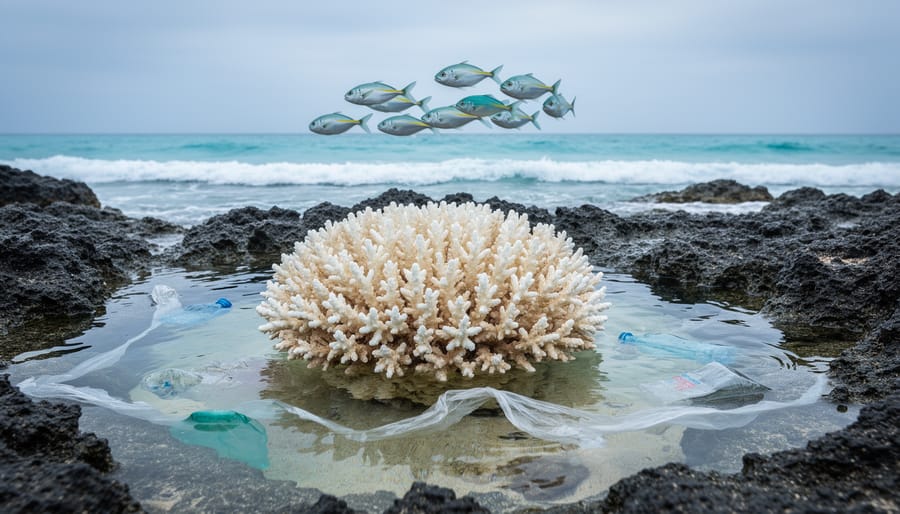
Human impact on the marine biome refers to the ways our activities alter, damage, or destroy ocean ecosystems and the delicate balance of life they support. From the surface waters where light penetrates to the deepest trenches, human actions have reshaped marine environments at an unprecedented scale. The consequences ripple through food webs, affect global climate systems, and threaten the livelihoods of billions who depend on healthy oceans.
The numbers tell a stark story. By 2026, over 90% of global fish stocks are either fully exploited or overfished. Plastic pollution has created massive garbage patches in every ocean basin, with an estimated 11 million metric tons entering marine waters annually. Coastal development has eliminated roughly half of the world’s mangroves and seagrass beds, critical nursery habitats for countless species. These aren’t isolated problems. They represent interconnected pressures that compound one another, creating cascading effects throughout marine ecosystems.
Understanding human impacts on marine life requires looking beyond individual threats to see how our choices on land translate into consequences at sea. Agricultural runoff triggers dead zones. Carbon emissions absorbed by seawater alter ocean chemistry. Ship traffic introduces invasive species to new waters thousands of miles from their origin.
This article breaks down the mechanisms through which human activities disrupt marine biomes, examines the major categories of impact, and explores how this knowledge shapes conservation efforts. Marine biologist Dr. Elena Vasquez, who has spent two decades documenting coral reef decline in the Caribbean, reminds us that awareness is the first step: “Every person who understands these connections becomes a potential advocate for change. The ocean may seem vast and resilient, but our collective footprint has proven larger than we imagined.”
What Human Impact on Marine Biomes Means
Marine biomes are distinct ocean ecosystems shaped by physical conditions like temperature, salinity, light penetration, and depth. From sunlit coral reefs teeming with life to the cold, dark abyssal plains, each biome hosts specialized communities of organisms adapted to its unique environment. These ecosystems provide essential services: they produce over half the world’s oxygen, regulate climate, cycle nutrients, and support billions of people through food and livelihoods.
Human impact on marine biomes refers to the ways our activities alter, degrade, or destroy these ocean ecosystems. Every action that changes the physical structure, chemical composition, or biological communities of marine environments falls under this umbrella. When we discharge pollutants into coastal waters, overfish predator species, or emit greenhouse gases that warm and acidify the ocean, we disrupt the delicate balance that has evolved over millions of years.
- Marine biome
- A large ocean ecosystem characterized by distinct physical conditions and adapted biological communities, such as coral reefs, kelp forests, or the open ocean.
- Anthropogenic impact
- Environmental changes caused directly or indirectly by human activities, from industrial pollution to climate modification.
- Ecosystem disruption
- The breakdown of natural relationships between organisms and their environment, affecting food webs, nutrient cycles, and habitat stability.
- Biodiversity loss
- The decline in variety and abundance of species within an ecosystem, reducing its resilience and capacity to provide essential services.
These impacts don’t occur in isolation. They cascade through marine food webs, alter habitat structure, and can push ecosystems past tipping points where they shift to degraded states. A coral reef damaged by warming waters becomes more vulnerable to disease and storm damage. Overfishing removes predators, allowing prey populations to explode and overgraze the algae that keeps reefs healthy. Each disruption weakens the system’s ability to withstand the next stress.
Understanding what constitutes human impact on marine biomes is the first step toward meaningful solutions. It means recognizing that our choices on land and at sea ripple through ocean systems in ways both obvious and subtle, affecting everything from microscopic plankton to migratory whales.
How Human Activities Affect Marine Ecosystems
Direct Physical Disruption
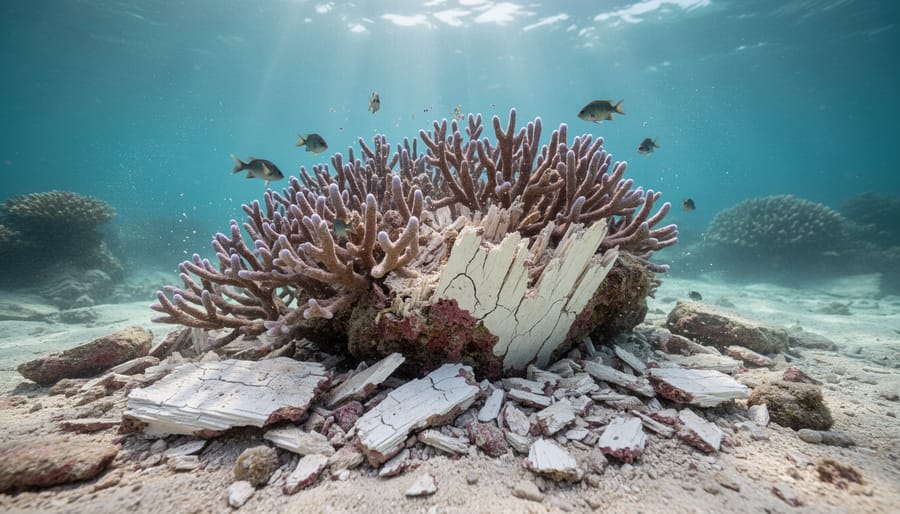
When we talk about direct physical disruption, we mean activities that literally scrape, dig, flatten or pave over marine habitats. Dredging for shipping channels and coastal construction carves through seabed communities, burying organisms and churning sediment that smothers filter feeders and seagrasses. Coastal development replaces mangrove forests and salt marshes with seawalls and marinas, eliminating nursery habitat for countless fish and invertebrate species.
But the most widespread physical assault comes from commercial fishing gear dragged across the ocean floor. Studies show that bottom trawling destroys habitat by flattening three-dimensional reef structures, crushing sponges and corals that took decades to grow, and leaving behind underwater deserts. This bottom trawling damage can persist for years or even decades, as slow-growing organisms struggle to recolonize compacted sediments. The result is simpler, less productive ecosystems that support fewer species and provide diminished ecosystem services. Each pass of heavy gear resets the recovery clock, creating chronic disturbance zones where complex marine communities once thrived.
Chemical and Biological Contamination
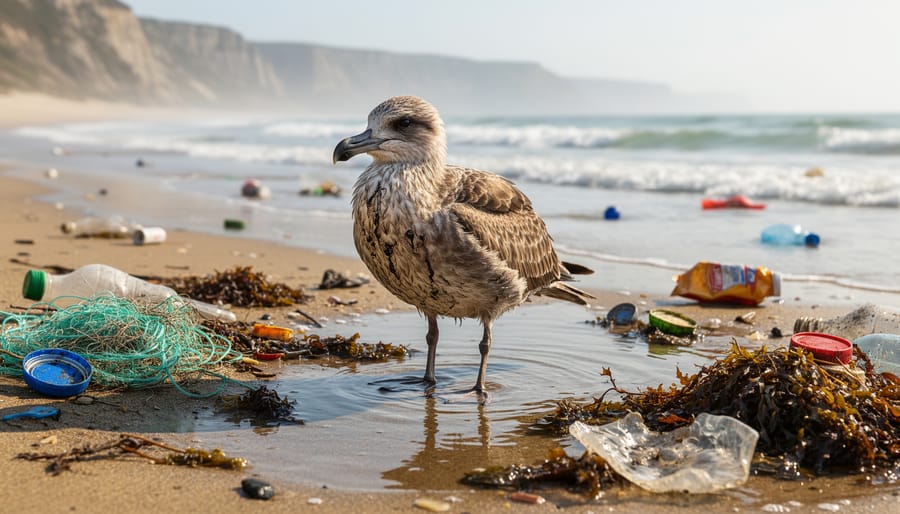
Chemical contaminants enter marine environments through multiple pathways: agricultural runoff carries pesticides and fertilizers, industrial discharges release heavy metals like mercury and lead, and urban wastewater introduces pharmaceuticals and personal-care products. Once in the ocean, these substances don’t simply disperse. Instead, they persist in sediments and water columns, where marine organisms absorb them through their skin, gills, or by consuming contaminated food.
The real danger emerges through bioaccumulation and biomagnification. Small organisms like plankton absorb low concentrations of contaminants, but when a fish eats hundreds of plankton, those toxins concentrate in its tissues. As larger predators consume smaller ones, toxins build up in food webs exponentially, a process that makes apex predators like tuna and sharks carry contaminant levels thousands of times higher than the surrounding water.
These accumulated pollutants disrupt endocrine systems, impair reproduction, weaken immune responses, and cause developmental abnormalities in embryos. Populations decline not from immediate poisoning but from reduced breeding success and increased disease susceptibility across generations.
Climate-Mediated Effects
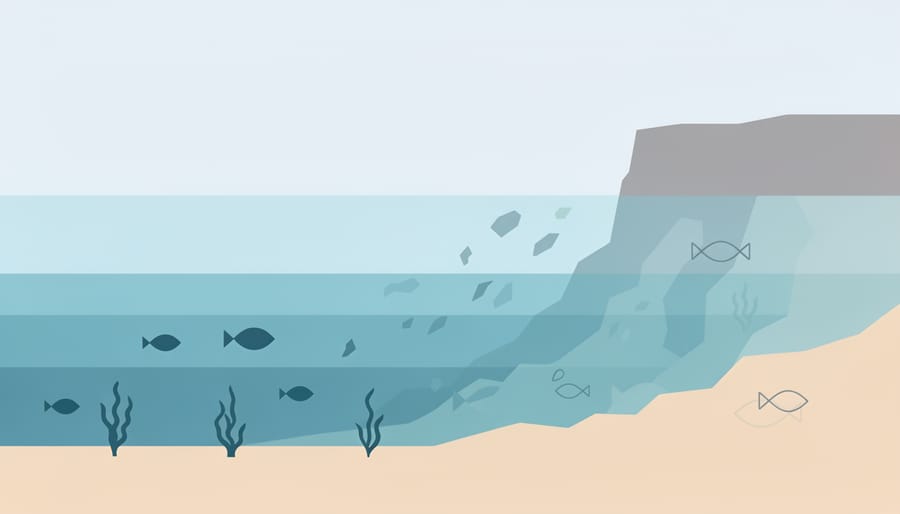
When we burn fossil fuels and release greenhouse gases into the atmosphere, we set off a chain of chemical and physical reactions that ripple through the ocean. Carbon dioxide dissolves into seawater, forming carbonic acid and lowering pH levels, a process known as ocean acidification. Meanwhile, the excess heat trapped by greenhouse gases doesn’t stay in the air; oceans absorb over 90% of it, raising water temperatures worldwide. These twin forces of ocean warming, acidification, deoxygenation work together to reshape marine biomes at their most fundamental level.
Warmer waters hold less dissolved oxygen, creating expanding dead zones where marine life struggles to survive. Fish and mobile species migrate toward cooler waters near the poles, leaving tropical ecosystems depleted. Coral reefs, which depend on specific temperature ranges, bleach and die when waters warm beyond their tolerance. Acidification weakens the shells and skeletons of organisms like oysters, clams, and corals by making it harder for them to build calcium carbonate structures. These aren’t isolated problems; they interact and amplify each other, fundamentally altering the structure and function of climate change habitats across all ocean zones. The result is a wholesale transformation of marine biomes, changes that affect everything from microscopic plankton to apex predators.
Major Categories of Human Impact
Pollution and Contamination
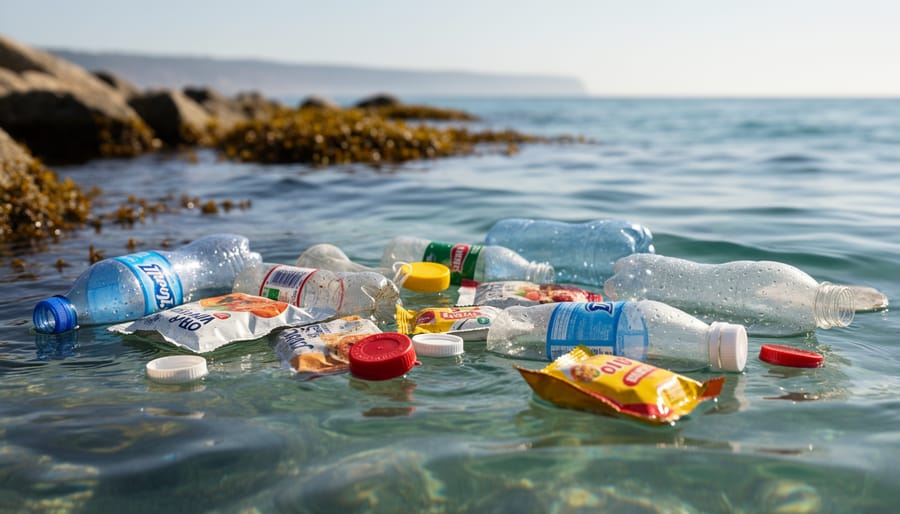
Pollution enters marine ecosystems through multiple pathways, each carrying distinct consequences for ocean life. Plastic debris accumulates in gyres and coastal zones, breaking down into microplastics that infiltrate food webs from plankton to apex predators. These particles absorb toxic chemicals and can cause physical harm when ingested, making the marine debris threat one that compounds over time rather than dissipates.
Chemical runoff from agriculture introduces fertilizers and pesticides into coastal waters, triggering algal blooms that deplete oxygen and create dead zones where marine life cannot survive. Industrial discharge adds heavy metals like mercury and lead, which bioaccumulate in fish tissues and pose risks to both marine organisms and human consumers.
Oil spills, whether from tanker accidents or offshore drilling operations, coat marine surfaces and seabeds, suffocating organisms and disrupting reproduction. Beyond these visible disasters, emerging contaminants present new challenges. Pharmaceuticals from wastewater treatment plants alter fish behavior and hormone systems, while microfibers from synthetic clothing pervade even the deepest ocean trenches. Each pollutant category interacts with others, creating synergistic effects that scientists are still working to fully understand.
Overfishing and Resource Extraction
Removing fish faster than populations can replenish triggers a cascade of consequences throughout marine food webs. Industrial fishing fleets have depleted an estimated 90% of large predatory fish since the 1950s, fundamentally altering ocean ecosystems. Species like Atlantic cod, bluefin tuna, and certain shark populations now exist at fractions of their historical abundance, unable to fulfill their ecological roles as apex predators.
Bycatch, the unintended capture of non-target species, compounds the problem. Trawl nets and longlines trap sea turtles, dolphins, seabirds, and juvenile fish, killing millions of individuals annually. These losses ripple outward, affecting species that depend on bycatch victims for food or habitat regulation.
Bottom trawling represents one of the most destructive extraction methods. Heavy nets dragged across the seafloor pulverize coral formations, sponge gardens, and sediment structures that took centuries to form, leaving behind biological deserts. The overfishing domino effect extends beyond target species: when predators disappear, their prey populations explode, overgrazing critical habitat like kelp forests and allowing less resilient species to dominate.
This ecosystem imbalance undermines the ocean’s capacity to regulate climate, cycle nutrients, and support the billion people who rely on marine protein as their primary food source.
Habitat Destruction and Alteration
Coastal development stands as one of the most visible forms of marine habitat destruction. When we build ports, resorts, and residential areas along shorelines, we permanently remove natural buffers that protect both human communities and marine ecosystems. The concrete and steel replace living coastlines that once filtered pollutants, absorbed storm energy, and provided nursery grounds for countless species.
Mangrove forests face particularly severe threats. These salt-tolerant trees trap sediments, sequester massive amounts of carbon, and shelter juvenile fish and crustaceans. Yet we’ve destroyed roughly 35% of global mangrove coverage since the 1980s, primarily for shrimp farming and coastal development. Each hectare lost eliminates habitat for hundreds of species while reducing the coast’s natural storm protection.
Coral reefs suffer damage from multiple sources: anchor drops, dredging operations, blast fishing, and coastal construction that smothers them with sediment. Physical destruction compounds chemical stressors, leaving reefs unable to recover between disturbances.
Seagrass meadows and coastal wetlands disappear under similar pressures. Boat propellers carve scars through seagrass beds that take decades to heal. Wetland drainage for agriculture and development eliminates critical filtration systems that once kept excess nutrients and pollutants from reaching open waters, fundamentally altering the chemistry and ecology of adjacent marine zones.
Climate Change and Ocean Chemistry
Climate change represents perhaps the most pervasive human impact on marine biomes, altering the fundamental physical and chemical properties of ocean water itself. Rising atmospheric carbon dioxide drives a dual crisis: as oceans absorb excess heat, surface waters have warmed approximately 0.9°C since 1900, with some regions experiencing temperature increases of 2-3°C. This warming disrupts the delicate thermal tolerances of marine species, forcing poleward migrations and triggering mass coral bleaching events when temperatures exceed critical thresholds even briefly.
Simultaneously, the ocean absorbs about 30% of anthropogenic CO2 emissions, triggering a chemical cascade. Dissolved carbon dioxide reacts with seawater to form carbonic acid, lowering pH levels in a process called ocean acidification. Since pre-industrial times, ocean pH has dropped 0.1 units, a 30% increase in acidity. This chemistry shift impairs the ability of organisms like corals, mollusks, and plankton to build calcium carbonate shells and skeletons, weakening the foundation of marine food webs.
These changes compound: warming waters hold less dissolved oxygen, creating expanding dead zones. Altered ocean currents redistribute nutrients and heat differently, shifting the timing of seasonal events like plankton blooms. Species that cannot adapt quickly enough face population collapse, while opportunistic invaders exploit newly suitable habitats.
Real-World Applications of Marine Impact Science
Understanding the mechanisms and extent of human impacts on marine biomes isn’t just academic knowledge, it directly shapes how we protect and restore ocean ecosystems. Scientists, policymakers, and conservation practitioners apply this knowledge daily to make tangible differences in marine health.
Marine protected areas represent one of the most direct applications of impact science. Researchers analyze fishing pressure, pollution patterns, and habitat degradation data to identify critical zones that need protection. The Papahānaumokuākea Marine National Monument in Hawaii, for instance, was designated based on scientific assessments showing how removing human pressures allows reef ecosystems to rebuild resilience. These protected zones now serve as living laboratories where scientists track recovery rates and ecosystem responses.
Fisheries management relies heavily on impact data to set sustainable catch limits. By understanding how overfishing depletes populations and disrupts food webs, managers can establish quotas that allow stocks to regenerate. The recovery of striped bass populations along the Atlantic coast following strict management demonstrates how applying scientific knowledge translates into measurable ecosystem improvements.
Coastal development planning increasingly incorporates marine impact assessments. Before approving construction projects, planners examine potential effects on water quality, sediment flow, and habitat connectivity. This prevents the cascading problems that plagued earlier development, where inadequate impact consideration led to destroyed wetlands and degraded estuaries.
Restoration ecology applies impact science to heal damaged ecosystems. Teams use knowledge about pollution sources, habitat requirements, and species interactions to design effective coral reef restoration projects, seagrass replanting initiatives, and oyster bed reconstruction. Success depends on understanding what originally damaged these systems and addressing root causes while rebuilding habitats.
Climate adaptation strategies depend on projections of ocean warming and acidification impacts. Coastal communities use this science to plan for sea level rise, altered storm patterns, and shifting fisheries. Some regions are already relocating infrastructure or redesigning aquaculture systems to accommodate changing conditions.
International policy frameworks like the Paris Agreement and UN Ocean Decade initiatives translate impact science into coordinated global action. Scientific consensus about the severity and sources of marine degradation drives treaty negotiations, funding priorities, and conservation targets. Each new research finding potentially influences how nations allocate resources and set protection standards.
What You Can Do: Action and Engagement
Protecting marine biomes doesn’t require waiting for governments or corporations to act first. Individual choices accumulate into measurable change, particularly when multiplied across communities. Start by reducing single-use plastics in your daily routine, carry a reusable water bottle, refuse plastic straws, choose products without microbeads, and bring bags to the grocery store. Support sustainable seafood by checking guides from the Marine Stewardship Council or Seafood Watch before purchasing fish; your buying decisions signal market demand for responsible fishing practices. Minimize your carbon footprint through energy-conscious choices like using public transit, reducing meat consumption, and choosing renewable energy when possible, since atmospheric carbon drives ocean acidification and warming.
Beyond personal habits, engagement multiplies impact. The Marine Biodiversity Science Center offers hands-on volunteer opportunities ranging from beach clean-ups and citizen science projects to assisting with research expeditions and education programs. These experiences connect you directly with marine ecosystems while contributing valuable data to conservation efforts. Consider:
- Monthly beach monitoring programs that track debris types and document coastal health
- Citizen science initiatives recording species observations through apps like iNaturalist
- Educational outreach where trained volunteers lead school or community presentations
- Advocacy campaigns contacting local representatives about marine protection policies
- Fundraising events supporting habitat restoration and research initiatives
Join or donate to organizations working on marine conservation, from local watershed groups to international advocacy networks. Educate others by sharing what you’ve learned, conversations with family, social media posts backed by credible sources, or presentations at schools all spread awareness. Marine biologist Dr. Kenji Watanabe, who leads volunteer programs, notes that participants often become the most effective advocates: “When people see ocean life up close and understand the threats firsthand, they transform from passive observers into passionate protectors who inspire their entire networks.”
Common Questions About Human Impact on Marine Biomes
How severe is the current damage to marine biomes?
The damage is substantial and accelerating, with approximately one-third of marine fish stocks overexploited, widespread coral bleaching events becoming more frequent, and plastic pollution detected in even the deepest ocean trenches. However, many marine ecosystems retain remarkable resilience when human pressures are reduced, and we still have the opportunity to prevent the most catastrophic outcomes through immediate action.
Can damaged marine ecosystems actually recover?
Yes, marine ecosystems can and do recover when given the chance. Protected areas have shown dramatic rebounds in fish populations within 5-10 years, and even severely damaged coral reefs can begin regenerating when stressors are removed, though full recovery may take decades. The key is reducing human impacts quickly enough to allow natural regeneration processes to work.
Which human activity has the biggest impact on marine biomes?
Climate change is emerging as the most pervasive threat because it affects every marine ecosystem simultaneously through warming, acidification, and deoxygenation. That said, the cumulative effect of multiple stressors, overfishing, pollution, and habitat destruction combined with climate impacts, often does more damage than any single factor alone.
Why should I care about oceans that seem so far away?
Marine biomes produce over half the oxygen you breathe, regulate global climate patterns that determine your local weather, and provide protein for more than three billion people worldwide. The health of distant oceans directly affects food security, economic stability, and the livability of coastal communities everywhere, making marine conservation a practical concern for everyone, not just those living near the coast.
These questions reflect the most common concerns we hear from visitors and volunteers at the Marine Biodiversity Science Center. People want to know if their efforts matter and whether the situation is truly as dire as headlines suggest. The honest answer is both sobering and hopeful: we face serious challenges, but marine ecosystems possess extraordinary regenerative capacity when we give them the breathing room to recover.
One pattern we’ve observed is that people often underestimate both the severity of current impacts and the potential for positive change. Small-scale interventions, from marine protected areas to community-led beach cleanups, have produced measurable improvements in ecosystem health within surprisingly short timeframes. Your individual choices and collective advocacy genuinely do make a difference in the trajectory of marine conservation.
The evidence is clear: human activities have fundamentally altered marine biomes across the planet, from coastal waters to the deepest ocean trenches. Yet this same evidence reveals something equally important, that marine ecosystems possess remarkable resilience when given the opportunity to recover. The choices we make today, individually and collectively, will determine whether that resilience translates into restoration or becomes overwhelmed by continued pressure.
Science provides the roadmap. We now understand the mechanisms through which our actions affect ocean health, which means we can design interventions that work. Marine protected areas are allowing fish populations to rebound. Pollution reduction efforts are cleaning harbors and estuaries. Climate action, though still insufficient, is gaining momentum. Each success demonstrates that decline is not inevitable.
The Marine Biodiversity Science Center exists because solutions require participation from everyone, scientists, policymakers, educators, and concerned citizens working together. Research expands our knowledge, but that knowledge becomes powerful only when people apply it. Whether you’re documenting coastal species as a volunteer, reducing your plastic consumption, or advocating for stronger ocean protections, your contribution matters. Marine conservation is not a spectator activity.
The ocean has sustained humanity for millennia. Now it needs us to return the favor, not through grand gestures alone but through consistent, informed action. The science is available. The solutions are known. What remains is the collective will to implement them, and that begins with individuals deciding to engage. The health of marine biomes, and the countless species that depend on them, hangs in the balance of choices we make starting now.

jessica
Ava Singh is an environmental writer and marine sustainability advocate with a deep commitment to protecting the world's oceans and coastal communities. With a background in environmental policy and a passion for storytelling, Ava brings complex topics to life through clear, engaging content that educates and empowers readers. At the Marine Biodiversity & Sustainability Learning Center, Ava focuses on sharing impactful stories about community engagement, policy innovations, and conservation strategies. Her writing bridges the gap between science and the public, encouraging people to take part in preserving marine biodiversity. When she’s not writing, Ava collaborates with local initiatives to promote eco-conscious living and sustainable development, ensuring her work makes a difference both on the page and in the real world.