Marine Biodiversity Science Center

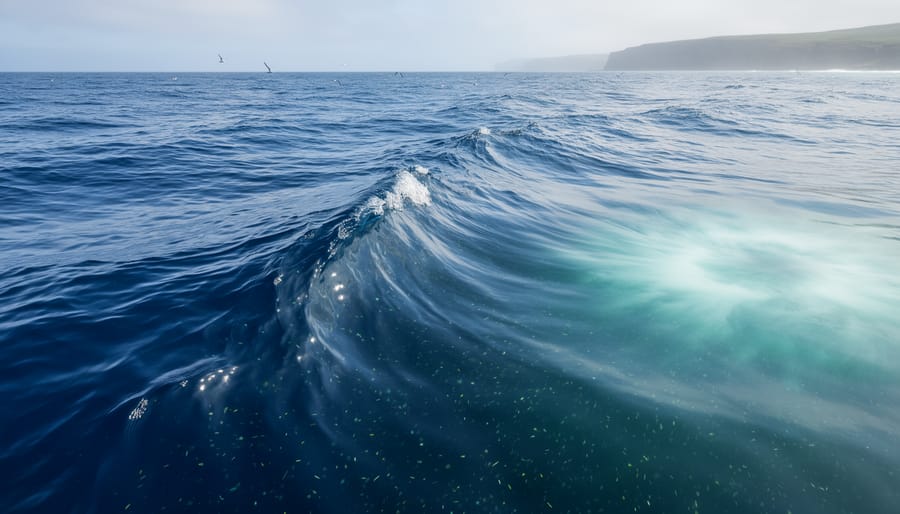
Ocean biodiversity refers to the variety of life in marine environments, from microscopic plankton to the largest whales, encompassing millions of species across every ocean depth and zone. This extraordinary richness of life doesn’t distribute randomly across our seas. Ocean currents act as invisible highways and barriers, shaping where species thrive, how they migrate, and which ecosystems flourish or fade.
The relationship between currents and biodiversity reveals one of nature’s most elegant systems. Currents carry nutrients from the deep ocean to sunlit surface waters, create temperature gradients that define habitat boundaries, and transport larvae across thousands of miles to colonize new regions. A single current system can support entirely different ecosystems along its path, from polar waters teeming with krill to tropical reefs bursting with color.
Understanding this connection matters now more than ever. As climate change alters current patterns in 2026, scientists observe corresponding shifts in species distributions, fishing grounds, and ecosystem health. Marine biologist Dr. Elena Vasquez, who has tracked plankton populations in the California Current for over a decade, notes that even subtle changes in upwelling timing can cascade through entire food webs, affecting everything from sardine populations to seabird breeding success.
This article explores the mechanisms that link currents to biodiversity, examines different current types and their ecological roles, and presents compelling facts that illustrate why these flowing rivers within the ocean deserve our attention. You’ll discover how conservation efforts can protect these vital systems and learn about opportunities to contribute to marine research. Whether you’re an educator seeking concrete examples, a student building foundational knowledge, or simply curious about ocean life, the facts ahead will deepen your appreciation for the dynamic relationship between water movement and the astonishing variety of life our oceans sustain.
What Ocean Biodiversity Really Means
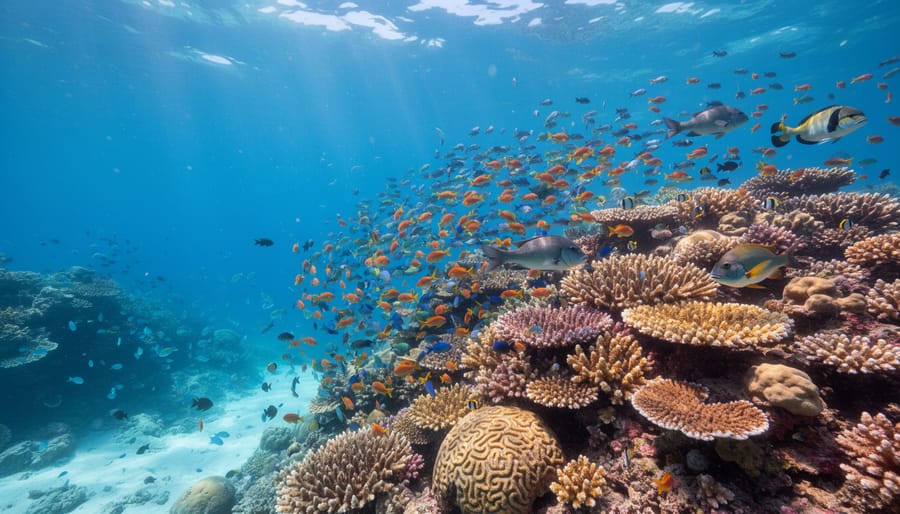
Ocean biodiversity is the spectacular variety of life that fills our seas, every organism from the tiniest drifting bacteria to the largest blue whale, plus all the genetic differences within species and the complex ecosystems they create together. This richness spans three interconnected levels that scientists use to measure ocean health.
Genetic diversity refers to the variation in DNA within a single species. A population of clownfish with diverse genes, for example, has better odds of surviving disease outbreaks or temperature shifts because some individuals will carry resistant traits. Species diversity counts the number of different organisms sharing a habitat, a coral reef with 500 fish species is more diverse than a coastal bay with 50. Ecosystem diversity describes the range of different marine environments themselves: kelp forests, seagrass meadows, deep-sea vents, mangrove swamps, and polar ice shelves each support distinct communities of life.
- Biodiversity
- The variety of all living organisms, their genetic makeup, and the ecosystems they form. In oceans, this ranges from microscopic plankton to apex predators and the habitats they inhabit.
- Species Richness
- A count of how many different species exist in a given area. Higher species richness generally indicates a healthier, more resilient ecosystem.
- Endemism
- When a species exists naturally in only one geographic location and nowhere else on Earth. Many isolated islands and deep-sea habitats harbor endemic species found nowhere else.
- Marine Ecosystems
- Interconnected communities of organisms and their physical environment in ocean habitats. Examples include coral reefs, hydrothermal vents, and open ocean gyres.
This diversity matters far beyond the ocean itself. Marine organisms produce roughly half the oxygen we breathe through photosynthesis. Ocean ecosystems absorb about 30% of human-generated carbon dioxide, buffering climate change impacts. More than three billion people rely on seafood as their primary protein source, and countless medicines, from cancer treatments to antibiotics, originate from marine compounds.
When biodiversity declines, ecosystems become fragile. A reef that loses its variety of herbivorous fish can’t control algae growth, eventually smothering the corals themselves. A warming sea that drives out one plankton species may collapse the food web for everything above it. Protecting ocean biodiversity isn’t just about saving charismatic species, it’s about maintaining the living systems that regulate our planet’s climate, feed billions of people, and hold solutions to challenges we haven’t even identified yet.
How Ocean Currents Work to Shape Marine Life
The Nutrient Highway: Upwelling Zones
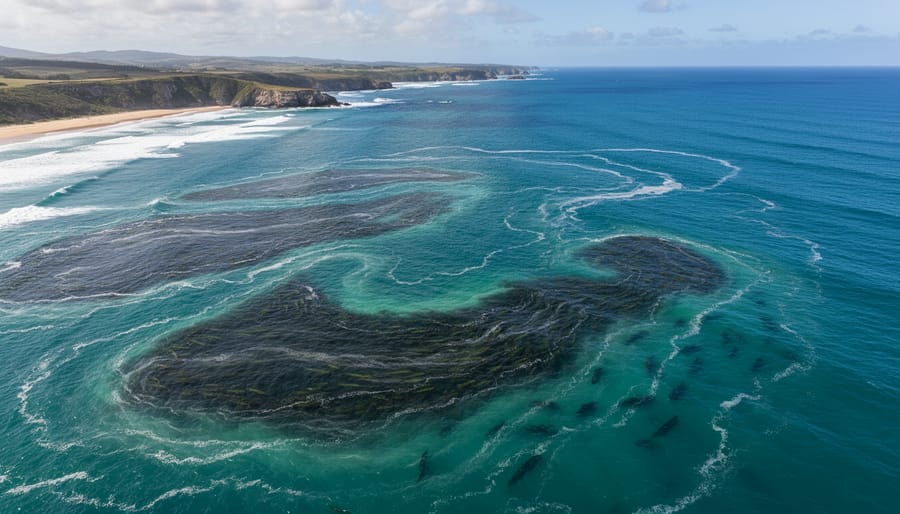
Upwelling zones function as the ocean’s most powerful nutrient delivery systems. When winds push surface water away from coastlines, cold, nutrient-dense water from the deep ocean rises to replace it. This process brings nitrogen, phosphorus, and other essential nutrients from depths of 200 to 1,000 feet into the sunlit surface layer where photosynthesis can occur. The result transforms relatively barren waters into thriving marine ecosystems virtually overnight.
Research confirms that coastal upwelling is highly productive supporting extraordinary concentrations of phytoplankton, the foundation of marine food webs. These microscopic algae blooms attract zooplankton, which in turn support massive schools of sardines, anchovies, and other forage fish. The abundance cascades upward, sustaining seabirds, marine mammals, and apex predators in numbers found nowhere else.
Off Peru’s coast, the Humboldt Current drives one of Earth’s richest fisheries, producing roughly 10% of the world’s wild-caught fish from less than 1% of ocean surface area. California’s upwelling zone hosts over 300 fish species and supports populations of humpback whales, sea lions, and millions of seabirds. West Africa’s Canary Current system feeds similar diversity, creating feeding grounds that sustain entire coastal communities.
Understanding how ocean currents generate these productivity hotspots reveals why protecting upwelling regions matters so urgently for global marine biodiversity and food security.
Temperature Zones and Species Distribution
Ocean currents act as massive thermal conveyor belts, carrying warm water from the equator toward the poles and cold water in the opposite direction. These flows establish predictable temperature zones that function as invisible borders for marine species, each organism has evolved to thrive within a specific thermal range, and currents determine where those conditions exist.
The Gulf Stream exemplifies this power. This warm current carries tropical Caribbean water northeast across the Atlantic, raising sea surface temperatures along its path by several degrees. Coral reefs flourish in these warm zones, with most reef-building corals requiring temperatures between 23°C and 29°C. When the current shifts even slightly, it can expose corals to fatal temperature stress.
Cold currents create equally specialized ecosystems. The California Current brings frigid water south from the North Pacific, supporting vast kelp forests that cannot survive in warm water. Giant kelp grows best below 20°C, and these nutrient-rich cold currents sustain entire communities of sea otters, fish, and invertebrates.
Temperature boundaries created by current edges host remarkable biodiversity. Where warm and cold currents meet, species from both zones converge. These transition areas attract predators exploiting the abundance, making them crucial feeding grounds for seabirds, sharks, and marine mammals that navigate between thermal zones following prey.
Connecting Oceans: Larval Dispersal and Migration Routes
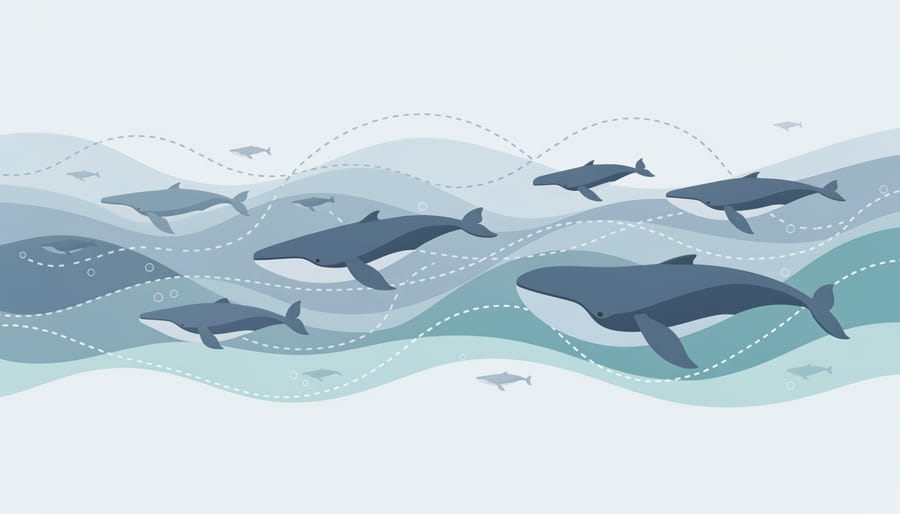
Ocean currents act as invisible conveyor belts for the next generation of marine life. Most fish, corals, mollusks, and crustaceans release millions of eggs that drift with the currents during their early life stages. A single grouper spawning event can scatter larvae across hundreds of miles, connecting reef populations that would otherwise remain genetically isolated. This dispersal prevents inbreeding and helps species recover from local disasters by replenishing depleted areas with new arrivals from distant waters.
For larger species, currents provide migration superhighways. European eels ride the Gulf Stream from spawning grounds in the Sargasso Sea to coastal rivers thousands of miles away. Sea turtles navigate current systems with remarkable precision, timing their reproduction to ensure hatchlings catch rides to feeding grounds. Bluefin tuna follow seasonal current shifts across entire ocean basins, their movements synchronized with the flow patterns that concentrate prey. When currents change course or weaken, these ancient migration routes fail, leaving species stranded or unable to complete their life cycles.
Major Types of Ocean Currents and Their Biodiversity Hotspots
Ocean currents fall into several categories, each sculpting biodiversity in distinct ways. Surface currents, driven by wind and the Coriolis effect, move relatively warm water across the upper ocean and create temperature gradients that define where species can live. The Gulf Stream, for instance, carries tropical warmth northward along the eastern United States and across the Atlantic, allowing species like loggerhead sea turtles to extend their range far beyond typical tropical boundaries. Meanwhile, the cold California Current supports entirely different marine habitats dominated by kelp forests and species adapted to nutrient-rich, cool water.
Deep currents operate thousands of meters below the surface, moving slowly in a global conveyor belt system that takes centuries to complete a full cycle. These currents transport oxygen and nutrients to the deep ocean, sustaining life in seemingly inhospitable darkness. The Antarctic Bottom Water, Earth’s densest ocean current, creeps along the seafloor carrying dissolved oxygen that supports unique deep-sea communities from the Southern Ocean to the North Atlantic. Without this slow circulation, vast regions of the deep ocean would become biological deserts.
Boundary currents flow along continental edges and include some of the ocean’s most dynamic biodiversity zones. Western boundary currents like the Kuroshio off Japan and the Agulhas off South Africa are fast, narrow, and warm, creating sharp transitions between water masses that concentrate marine life. The Agulhas retroflection, where the current abruptly turns back on itself, creates eddies that trap nutrients and larvae, spawning temporary biodiversity hotspots in the open ocean.
Gyres, massive circular current systems dominating each ocean basin, create different conditions at their centers versus edges. The North Pacific Gyre’s center has relatively low productivity, but its boundaries, where different water masses collide, support abundant predators like tuna and seabirds. Conversely, the South Pacific Gyre harbors specialized microorganisms adapted to extreme nutrient scarcity.
Each current type functions as both barrier and corridor, isolating some populations while connecting others across distances that would otherwise be impassable.
Remarkable Ocean Biodiversity Facts Shaped by Currents
Ocean currents don’t just shape where marine life exists, they create some of the most astonishing biodiversity patterns on our planet. The numbers reveal the extraordinary power of these flowing highways to concentrate, connect, and sustain life across vast distances.
Upwelling zones demonstrate perhaps the most dramatic example of current-driven productivity. Though these nutrient-rich areas cover less than one percent of the ocean’s surface, they produce approximately half of the world’s fish catches and support some of the highest concentrations of marine life on Earth. The Humboldt Current off Peru, for instance, sustains over 3,000 species in its waters, including more than 750 fish species, while occupying a relatively narrow coastal strip. When upwelling pulses bring cold, nutrient-laden water to the surface, phytoplankton populations can increase by a factor of 100 within days, triggering an explosive cascade of life through the entire food web.
The interconnectedness currents create between distant ecosystems defies simple geographic boundaries. Consider these remarkable facts that illustrate this global circulation of life:
- Upwelling zones occupy less than 1% of ocean area but account for roughly 50% of global fish catches
- The Gulf Stream supports more than 500 fish species along its path from the Gulf of Mexico to Norway
- Larvae of some coral reef fish species travel over 1,000 kilometers on currents before settling on reefs
- A single ocean gyre can connect ecosystems across 10,000 kilometers, linking species that never physically meet
- European eel larvae drift 5,000 kilometers on Atlantic currents from the Sargasso Sea to European rivers, a journey taking up to three years
Migration distances enabled by currents reach extraordinary scales. Leatherback sea turtles travel up to 16,000 kilometers annually, using current systems as navigational aids and energy-conserving highways between nesting beaches and jellyfish-rich feeding grounds. Bluefin tuna cross the Atlantic multiple times in their lives, following current-driven temperature fronts where prey concentrates.
Perhaps most striking is how currents maintain genetic connectivity across populations separated by thousands of kilometers. Molecular studies show that fish larvae carried by the Antarctic Circumpolar Current can disperse across 20 degrees of longitude, preventing isolated populations from diverging into separate species. Without these flowing connections, the ocean would fragment into thousands of isolated ecosystems, drastically reducing its overall biodiversity and resilience.
Where Ocean Currents Create Biodiversity Abundance
Ocean currents carve invisible highways through the sea, and where they converge, collide, or upwell, life explodes. The Coral Triangle, spanning Indonesia, Malaysia, the Philippines, Papua New Guinea, Timor-Leste, and the Solomon Islands, hosts over 600 coral species and 3,000 reef fish species, more than anywhere else on Earth. This region sits at the confluence of the Pacific and Indian Oceans, where complex current systems mix warm water from multiple sources, creating ideal conditions for coral growth while dispersing larvae across thousands of islands.
The Galápagos Islands owe their legendary biodiversity to the collision of four major currents: the cold, nutrient-laden Humboldt Current from Antarctica meets warm equatorial flows, creating dramatic temperature gradients. This allows tropical penguins and fur seals to coexist with reef sharks and angelfish. The upwelling driven by these interacting currents pumps nutrients that support everything from microscopic plankton to whale sharks.
Near Antarctica, the Antarctic Circumpolar Current, the planet’s largest ocean current, isolates the Southern Ocean while driving intense upwelling along the Antarctic Peninsula. These frigid, nutrient-saturated waters sustain massive krill populations that feed whales, seals, penguins, and fish in one of the ocean’s most productive food webs.
Off eastern Canada, the convergence of the cold Labrador Current and warm Gulf Stream over the Grand Banks once created North America’s richest fishing grounds. The mixing currents still generate ideal conditions for cod, haddock, and halibut, though overfishing decimated these populations.
Understanding these current-biodiversity patterns transforms conservation. Marine protected areas designed around upwelling zones, current convergences, and larval dispersal routes protect entire ecosystems rather than arbitrary boundaries. Scientists now map current connectivity to identify critical corridors linking distant habitats, ensuring protections extend beyond individual reefs or seamounts to encompass the flowing networks that keep populations connected and resilient.
Threats to Current-Driven Biodiversity Systems
Ocean current systems that have sustained biodiversity for millennia face unprecedented disruption. The Atlantic Meridional Overturning Circulation, which includes the Gulf Stream, has weakened by approximately 15% since the mid-20th century, slowing the global conveyor belt that redistributes heat and nutrients across ocean basins. As warming waters alter circulation patterns, the consequences ripple through every marine ecosystem these currents touch.
Temperature shifts represent the most immediate danger. When warm currents slow or change course, cold-water species lose critical habitat. Kelp forests anchored in cool California Current waters now face warming that pushes their temperature tolerance to the brink. Conversely, warming tropical waters stress coral reef systems adapted to narrow temperature ranges, even as shifting currents expose them to new ocean acidification patterns.
Upwelling dynamics show particularly troubling changes. Along coastal zones where wind-driven upwelling creates biodiversity hotspots, alterations in wind patterns and water column stratification reduce nutrient delivery. Early research indicates 20-30% declines in upwelling intensity in some regions, directly reducing primary productivity that supports entire food webs.
Species dependent on stable current corridors for migration and larval dispersal face severe challenges. Sea turtle hatchlings navigating by current systems encounter altered pathways. Fish larvae drift into unsuitable habitats when traditional currents shift. These disruptions fragment populations and reduce genetic exchange between distant ecosystems that ocean currents historically connected.
The broader picture of currents in crisis and mounting climate change threats demands scientific monitoring and adaptive conservation strategies. Understanding these shifts allows researchers and conservationists to anticipate impacts, protect climate refugia, and design marine reserves that account for changing ocean dynamics rather than assuming static conditions.
What You Can Do: Conservation and Volunteer Opportunities
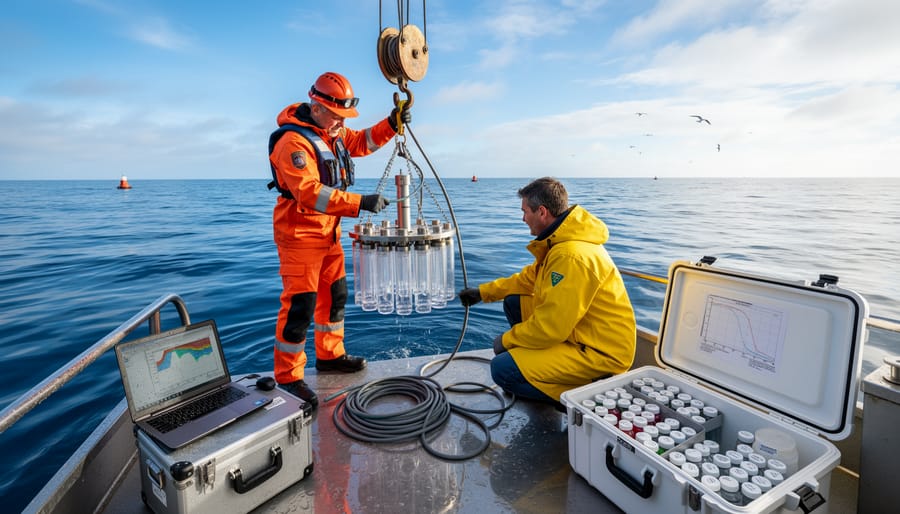
Understanding how ocean currents shape biodiversity isn’t just academic, it’s knowledge you can put into practice. Marine research organizations worldwide need volunteers to help track current-dependent species and monitor ecosystem changes, and your participation genuinely advances scientific understanding.
Citizen science programs offer the most accessible entry point. The Great Nurdle Hunt collects data on plastic pellet distribution along coastlines, revealing how surface currents transport pollutants that threaten marine life. Reef Check trains volunteers to survey coral health in current-influenced areas, providing researchers with baseline data on temperature-sensitive ecosystems. If you live near coastal upwelling zones, programs like Seabird Stewards document bird populations that depend on nutrient-rich currents, tracking shifts as ocean patterns change.
More hands-on opportunities exist with marine research stations studying larval dispersal and current impacts. Organizations like the Oceanic Research Institute welcome volunteers to assist with plankton sampling, which directly informs models of how currents distribute juvenile organisms across ecosystems. These positions typically require week-long or seasonal commitments but provide immersive experience in active research.
Dr. Elena Vasquez, who studies larval dispersal patterns in the Caribbean, explains why public involvement matters: “We deployed settlement collectors across 200 kilometers of coastline, a task impossible for our small team alone. Local volunteers monitored them monthly for two years. Their data revealed that shifting current patterns were disrupting larval delivery to degraded reefs, fundamentally changing our restoration strategy. Those volunteers didn’t just collect samples, they reshaped how we approach coral recovery.”
Even if fieldwork isn’t feasible, you can contribute through remote data analysis. Platforms like Floating Forests use satellite imagery to track kelp forest extent in major current systems, or Secchi Disk lets you measure water clarity to help scientists understand nutrient distribution patterns.
Your engagement does more than support research. It builds public understanding of current-biodiversity connections, creating informed advocates for marine protected areas positioned to safeguard current-driven ecosystems facing climate disruption.
Common Questions About Ocean Currents and Biodiversity
Why are some ocean areas more diverse than others?
Ocean currents create hotspots of biodiversity by delivering nutrients to specific regions through upwelling, maintaining stable temperature zones, and connecting distant ecosystems. Areas where multiple currents converge or where upwelling is consistent, like the Coral Triangle or coastal Peru, support exponentially more species than nutrient-poor, isolated waters.
Can marine species adapt to changing ocean currents?
Some species can shift their ranges to follow changing temperature zones or food sources, but adaptation has limits. Fast-moving currents may disperse larvae to unsuitable habitats, and species with narrow temperature tolerances or specific habitat requirements often can’t migrate quickly enough to keep pace with rapid current shifts.
How do scientists track current impacts on biodiversity?
Researchers combine satellite monitoring of sea surface temperatures and current velocities with direct species surveys, tagging studies, and genetic analysis of populations. Citizen science programs that track species sightings and range changes also provide valuable data on how shifting currents affect where marine life appears.
What happens when major ocean currents shift or weaken?
Current shifts can collapse local food webs when nutrient delivery changes, force species into new territories where they may compete with or displace resident organisms, and break migration routes that species have used for millennia. These disruptions ripple through entire ecosystems, affecting everything from plankton to apex predators.
Do all marine species depend equally on ocean currents?
No. Pelagic species, those living in open water, rely heavily on currents for food, reproduction, and migration, while some reef-dwelling or deep-sea organisms are less directly affected by surface current patterns. However, even stationary species depend on currents to bring nutrients, oxygen, and larvae to their ecosystems.
Are ocean currents more important than other factors for biodiversity?
Currents work in concert with other factors like sunlight, seafloor topography, and salinity levels. While currents are crucial for nutrient transport and connectivity, biodiversity emerges from complex interactions, a coral reef needs warm currents but also shallow, sunlit water and stable substrate to thrive.
These questions reflect what marine scientists hear most often from the public and educators. Understanding current-biodiversity relationships isn’t just academic, it helps explain why protecting specific ocean regions matters and why global changes to circulation patterns pose such urgent threats. The answers also reveal how interconnected marine ecosystems are, with shifts in one area potentially affecting biodiversity thousands of miles away through the ocean’s vast network of flowing water.
Ocean currents are far more than water in motion, they are the fundamental architects of marine biodiversity, connecting ecosystems across thousands of miles, delivering nutrients that fuel life from microscopic plankton to enormous whales, and creating the distinct biological provinces that define our ocean planet. Without the continuous circulation driven by these currents, the spectacular diversity of life we see in marine environments today simply could not exist. The upwelling zones, temperature gradients, and dispersal corridors shaped by currents have built the biodiversity patterns scientists have documented over centuries of exploration.
Yet these systems now face unprecedented pressure. As climate change alters current patterns and ocean temperatures, the biodiversity networks that depend on predictable circulation face disruption. Species that evolved over millennia to match their life cycles with specific current flows must now adapt at an accelerated pace or face decline. Protecting ocean biodiversity means protecting the currents themselves and the complex relationships they sustain.
The encouraging reality is that collective action works. Marine protected areas strategically placed along current pathways can preserve critical connectivity. Citizen science programs tracking indicator species provide essential data for understanding change. Research initiatives studying current-driven ecosystems generate knowledge that informs effective conservation policy. Every person who participates in marine research, supports ocean conservation organizations, or educates others about these connections contributes to protecting the circulatory system that keeps ocean biodiversity thriving. Understanding how currents shape life transforms you from observer to informed advocate for the ocean’s future.

jessica
Ava Singh is an environmental writer and marine sustainability advocate with a deep commitment to protecting the world's oceans and coastal communities. With a background in environmental policy and a passion for storytelling, Ava brings complex topics to life through clear, engaging content that educates and empowers readers. At the Marine Biodiversity & Sustainability Learning Center, Ava focuses on sharing impactful stories about community engagement, policy innovations, and conservation strategies. Her writing bridges the gap between science and the public, encouraging people to take part in preserving marine biodiversity. When she’s not writing, Ava collaborates with local initiatives to promote eco-conscious living and sustainable development, ensuring her work makes a difference both on the page and in the real world.