Marine Biodiversity Science Center

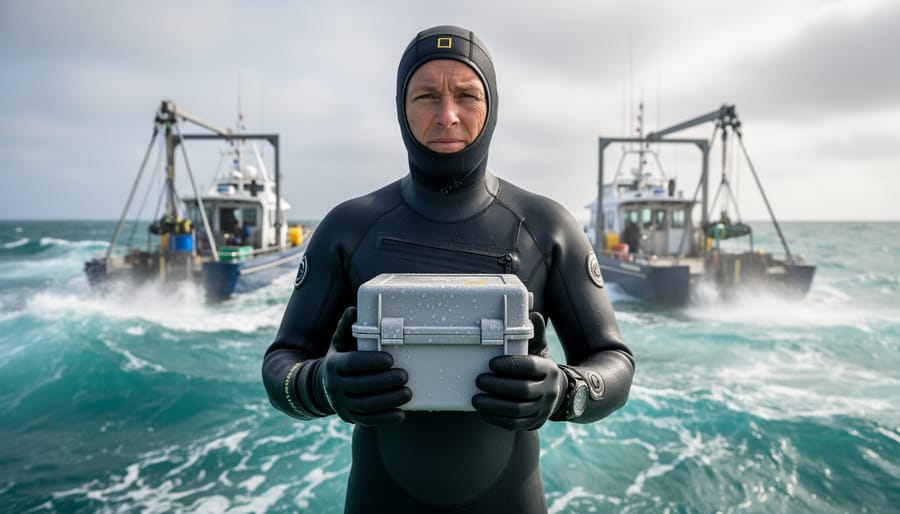
Marine biology laboratories today do far more than study marine life, they safeguard genetic resources and support species survival through cutting-edge science and community collaboration. Laboratories across the globe now serve as centers for biobanking, collecting and preserving genetic material from a dazzling array of ocean species. These collections act as living libraries, ensuring that genetic information is available for future restoration and research, even if wild populations face unpredictable changes.
At the heart of this work is advanced genetic technology. From collecting tissue samples to sequencing entire genomes, labs contribute not only to our understanding of marine biodiversity but also to its preservation. Initiatives like marine DNA mapping demonstrate how genetic data guides conservation priorities, helps identify at-risk populations, and uncovers hidden diversity in ocean ecosystems.
Yet, this is not work for scientists alone. Volunteers often help catalog samples, manage databases, and support field collection efforts. Many laboratories welcome citizen participation, offering training programs and public engagement events. As Dr. Maya Clark of Pacific Genome Lab shares, “Each new sample is a promise that the ocean’s story will not be lost. Every volunteer expands the reach of what’s possible.”
Marine biology labs are rewriting what it means to protect ocean life, transforming knowledge into action and making space for anyone who wants to join in. The next generation of conservation isn’t happening in far-off waters, it’s underway on lab benches, in freezers, and with every person who chooses to help.
What Marine Biology Laboratories Do Beyond Traditional Research
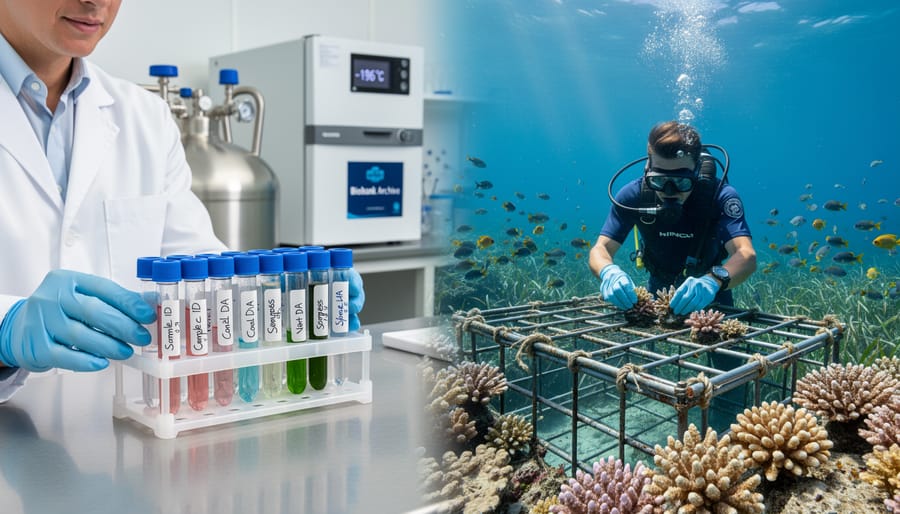
Walk into a modern marine biology laboratory today, and you’ll find it looks strikingly different from facilities just two decades ago. Alongside the familiar microscopes and aquarium systems, you’ll spot gleaming cryogenic storage tanks, advanced DNA sequencing equipment, and meticulously catalogued freezer banks holding thousands of genetic samples. These labs have transformed from places primarily focused on studying marine life into active guardians of ocean biodiversity itself.
Traditional marine biology labs built their reputation on taxonomy, describing and classifying species from ocean expeditions, and conducting controlled experiments to understand marine ecosystems. Researchers would collect specimens, observe their behavior, document their characteristics, and publish findings. While this foundational work remains essential, the mission has expanded dramatically in response to accelerating biodiversity loss.
Today’s marine biology laboratories function as sophisticated biorepositories, collecting and preserving genetic materials from threatened species before they vanish from our oceans. Scientists now work against the clock, banking reproductive cells, tissue samples, and DNA from coral species facing bleaching events, fish populations decimated by overfishing, and marine mammals threatened by habitat destruction. This genetic library serves multiple purposes: supporting breeding programs for endangered species, enabling restoration projects when populations crash, and maintaining a biological insurance policy for future generations.
The facilities have also become training grounds for a new generation of conservation scientists who blend traditional marine biology knowledge with cutting-edge preservation techniques. Graduate students learn both field collection methods and laboratory cryopreservation protocols. They master the delicate art of extracting viable genetic material from living organisms while minimizing harm, then preserving these samples at temperatures that halt biological time.
This evolution reflects a sobering reality: observation alone won’t save disappearing species. Marine biology laboratories have embraced a more interventionist role, becoming active participants in conservation rather than passive documentarians of decline. They’ve positioned themselves as critical infrastructure in the fight to maintain ocean biodiversity, creating genetic reservoirs that may prove invaluable for restoration efforts decades from now.
The Science of Marine Genetic Resources Biobanking
What Gets Preserved and Why
Marine biology laboratories preserve multiple forms of genetic material, each serving distinct conservation purposes. Tissue samples, flash-frozen in liquid nitrogen, contain complete DNA sequences that allow scientists to study invertebrate genomes and marine plant genomes without repeatedly collecting wild specimens. The cryopreservation of gametes and embryos offers something more immediate: the potential to revive populations through assisted reproduction when natural breeding efforts fail.
- Sperm and egg cells for breeding programs and genetic diversity restoration
- Embryonic stages that can be thawed and cultured when needed
- Tissue biopsies containing full genomic information for research and cloning potential
- Cell cultures that can be maintained and expanded for ongoing studies
- Extracted DNA for long-term genetic reference libraries
Species prioritization follows a triage approach based on extinction risk and ecological importance. Critically endangered species like vaquita porpoises and hawksbill sea turtles receive immediate attention because their wild populations may collapse before conservation measures take effect. Keystone species such as sea otters and parrotfish, whose presence stabilizes entire ecosystems, rank equally high despite healthier population numbers. Labs also target species with unique evolutionary traits, genetic bottlenecks threatening their adaptability, or commercial value that increases poaching pressure. The reality is stark: storage capacity is limited, and labs must choose which genetic lineages to preserve. Many prioritize species that represent evolutionary branches found nowhere else on Earth, recognizing that once lost, these genetic blueprints disappear forever.
From Ocean to Freezer: The Collection Process
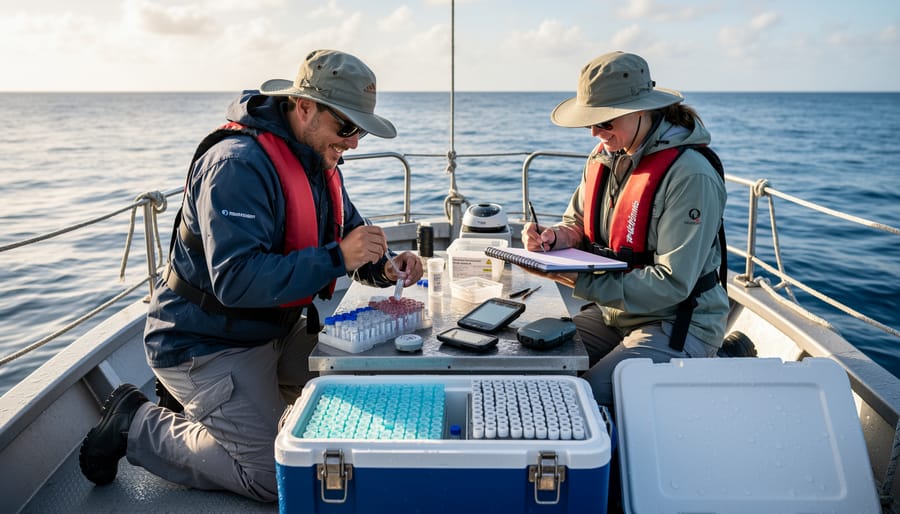
Collecting genetic materials from marine organisms demands precision under difficult conditions. Marine biologists typically work during research expeditions or collaborate with fisheries and aquariums to access specimens. When encountering a target species, whether through diving surveys, trawl nets, or opportunistic strandings, researchers must act quickly. They extract small tissue samples using sterile biopsy punches or needles, careful not to harm living animals, then immediately place samples in cryovials containing preservation buffers or flash-freeze them using liquid nitrogen dewars brought into the field.
Transport presents unique challenges. Unlike terrestrial samples, marine tissues degrade rapidly due to high moisture content and enzymatic activity triggered by stress. Scientists pack samples in specialized shipping containers with dry ice or vapor shippers that maintain ultra-cold temperatures during transit, sometimes across oceans. Chain-of-custody documentation tracks each sample’s location, temperature exposure, and handling to ensure viability.
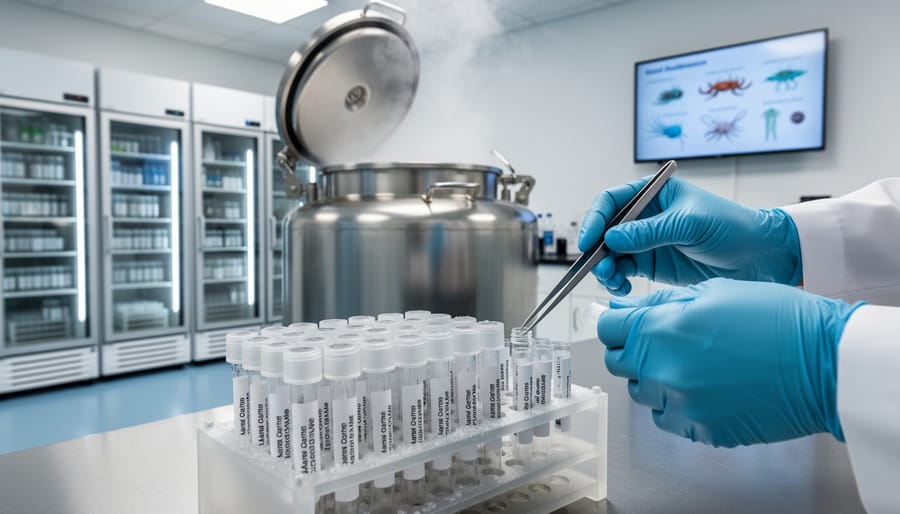
Once at the laboratory, technicians process samples in sterile conditions. They catalog each specimen with detailed metadata, species, collection coordinates, date, environmental conditions, then prepare tissues for long-term storage. Some labs also analyze water samples for ocean eDNA capturing genetic traces left behind by marine life.
The entire chain requires coordination between field teams, shipping logistics, and lab personnel, all working against the clock to preserve genetic integrity before cellular structures break down irreversibly.
Cryopreservation Techniques That Keep Cells Alive for Decades
At the heart of marine genetic biobanking lies a remarkable feat of cellular preservation: freezing living tissues at temperatures so extreme that biological time essentially stops. Marine biologists use cryopreservation to maintain viable cells for decades, creating biological time capsules that could one day restore species teetering on the brink of extinction.
The process begins with cryoprotectants, specialized chemicals that shield cells from the primary enemy of freezing: ice crystals. When water inside cells freezes naturally, sharp ice crystals form and puncture delicate membranes like microscopic daggers. Cryoprotectants replace much of the water in cells and prevent these destructive crystals from forming. Marine labs commonly use compounds like dimethyl sulfoxide or glycerol, carefully calibrated for each species since a sea turtle embryo requires different protection than a coral fragment.
- Ultra-low temperature storage
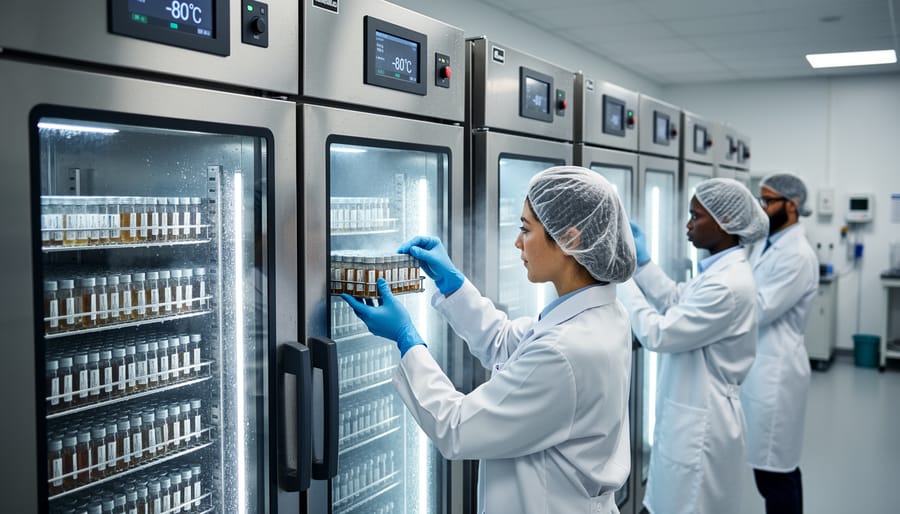
- Preservation at -80°C to -196°C (liquid nitrogen temperature) where cellular metabolism halts completely. The colder the storage, the longer samples remain viable.
- Vitrification
- Rapid freezing that transforms cellular contents into a glass-like solid state rather than forming ice crystals. This technique works especially well for coral eggs and fish sperm.
- Controlled-rate freezing
- Gradual temperature reduction at precise speeds (often 1°C per minute) that allows cells to dehydrate safely before freezing. This method suits larger tissue samples and embryos.
- Cryoprotectant
- Chemical compounds that replace water in cells and prevent ice crystal damage during freezing. Different marine species require specialized formulations.
The choice between techniques depends on what’s being preserved. Vitrification works beautifully for coral gametes because their small size allows ultra-rapid cooling, essentially turning them to glass before ice can form. Larger samples like shark embryos require controlled-rate freezing, where programmable machines drop the temperature in carefully timed steps. Once frozen, samples are plunged into liquid nitrogen tanks at -196°C, where they can theoretically remain viable for centuries. Some laboratories maintain backup systems and generator power to ensure these frozen arks never thaw, protecting their precious cargo against equipment failure or power outages.
Leading Marine Biology Laboratories Making a Difference
Across the globe, a dedicated network of marine biology laboratories has transformed from traditional research centers into vital genetic arks for ocean life. These facilities combine decades of scientific expertise with cutting-edge preservation technology to safeguard marine biodiversity.
The Smithsonian’s National Museum of Natural History in Washington, DC houses one of the world’s most comprehensive marine biobanks through its Biorepository. This facility preserves over 4.5 million tissue samples from marine species, with their frozen collection growing by approximately 30,000 specimens annually. Their cryopreservation protocols have proven particularly successful with coral samples, enabling genetic rescue efforts for Caribbean staghorn corals that face near-certain extinction in warming waters. What sets the Smithsonian apart is their open-access policy, researchers worldwide can request samples, democratizing conservation genetics research.
Australia’s Australian Institute of Marine Science operates the National Sea Simulator, where they’ve pioneered techniques for preserving deep-sea organism genetics. Working with species from hydrothermal vents and abyssal plains, their team developed modified cryoprotectant solutions that account for the extreme pressure adaptations these creatures possess. They’ve successfully banked genetic material from over 300 deep-sea species, many discovered only in the past decade.
The Monterey Bay Aquarium Research Institute in California takes a different approach, focusing on rapid response biobanking. When marine heatwaves or disease outbreaks threaten local populations, their mobile collection teams deploy within hours to preserve genetic diversity before it vanishes. This quick-action protocol saved genetic material from 17 abalone populations during the 2014-2016 sea star wasting disease outbreak, samples now proving invaluable for understanding disease resistance.
Europe’s contribution comes through the European Marine Biological Resource Centre network, which coordinates biobanking efforts across 12 nations. Their standardized collection protocols ensure samples from Mediterranean, Baltic, and Atlantic ecosystems remain compatible for comparative research. They’ve created the largest banked collection of marine microbial genetics, with over 8,000 bacterial and archaeal strains that play crucial roles in ocean nutrient cycling.
Japan’s Okinawa Institute of Science and Technology has achieved remarkable success preserving coral gametes. Their timing-critical work during mass coral spawning events has created frozen libraries representing 45 different coral species, including several now functionally extinct in the wild. These preserved reproductive cells offer tangible hope for reef restoration decades into the future.
Real-World Impact: How Biobanking Saves Species
The abstract promise of genetic preservation becomes tangible when you see frozen cells transform into thriving coral polyps or critically endangered fish populations rebound. Marine biobanks have already delivered conservation victories that would have been impossible just decades ago.
One of the most striking successes involves Caribbean elkhorn coral, a species that lost 98% of its population to disease and warming waters. The Smithsonian’s Caribbean Coral Biobank preserved sperm from genetically diverse colonies before many disappeared entirely. Researchers thawed these samples and successfully fertilized eggs from surviving corals, creating offspring with genetic combinations never found in the wild anymore. These restored reefs now show greater resilience to bleaching events, demonstrating how biobanked diversity directly strengthens species against threats tied to evolution in warming oceans.
The white abalone breeding program offers another powerful example. This California species crashed to fewer than 2,500 individuals by the 1990s, leaving wild populations too scattered to reproduce naturally. Marine laboratories preserved sperm from the last healthy males and used it years later to breed captive females, dramatically expanding genetic diversity in captive-bred juveniles. More than 25,000 juveniles have been raised and released back into protected waters, with biobanked genetics preventing the inbreeding that would have doomed the recovery effort.
Research breakthroughs extend beyond individual species. When scientists needed to understand how certain Antarctic fish produce natural antifreeze proteins, they accessed preserved tissue samples from specimens collected decades earlier, long before climate change accelerated ice shelf collapse. Those samples yielded insights now informing strategies to help other cold-water species adapt as ocean temperatures shift.
The Northwestern Hawaiian Islands monk seal program shows the human dimension of this work. Biobanked samples from seals that died before reproducing have been used to maintain genetic health in one of the world’s most endangered marine mammals, buying time for populations to recover while preventing the genetic bottleneck that often follows near-extinction. Every pup born from these efforts represents a victory over the narrowing window of possibility that threatens so many marine species.
The Challenges Marine Labs Face in Genetic Preservation
Despite groundbreaking advances in cryopreservation, marine biology laboratories face significant hurdles in their mission to bank ocean genetic diversity. These challenges threaten to slow conservation efforts precisely when speed matters most.
Funding remains the most persistent obstacle. Maintaining ultra-low temperature freezers costs thousands of dollars monthly in electricity alone, before accounting for specialized equipment, liquid nitrogen supplies, and trained personnel. Many labs operate biobanking programs as secondary projects alongside their primary research, competing for the same limited grant dollars. When budgets tighten, genetic preservation, which offers no immediate, tangible results, often loses priority to more visible conservation work.
Technical difficulties compound these financial pressures. Some marine organisms resist preservation entirely. Certain coral species produce gametes that survive collection but die during the freezing process, their cells too delicate for current vitrification methods. Deep-sea species adapted to extreme pressure environments often deteriorate before samples reach laboratory facilities. Each species requires customized protocols, demanding years of trial-and-error research that smaller labs cannot afford.
Storage capacity presents another pressing concern. A single comprehensive collection representing one coral reef ecosystem can fill dozens of cryogenic tanks. As collections grow, facilities must expand or make agonizing decisions about which samples to discard. Some labs have begun digital archiving of DNA sequences as a space-saving compromise, though this provides less flexibility than preserved living cells.
Most urgently, extinction timelines keep accelerating. Marine species disappear faster than labs can collect and preserve their genetic material. Biologists describe a heartbreaking triage process, choosing which endangered populations to save when resources cannot cover them all. Every species lost before collection represents irreplaceable genetic information vanishing forever from ocean ecosystems.
How You Can Support Marine Genetic Conservation
Getting involved in marine genetic conservation doesn’t require a PhD, it requires commitment and curiosity. Marine biology laboratories welcome diverse forms of support, and your contribution can directly impact their preservation work.
Join Citizen Science Programs
Several marine labs run citizen science initiatives where volunteers help collect tissue samples during beach cleanups or report stranded marine animals. Programs like the Smithsonian Marine Station’s volunteer network train participants to document and preserve genetic samples from deceased specimens found on shorelines. These contributions fill crucial gaps in biobank collections, particularly for rare species that researchers seldom encounter in the field.
Volunteer Your Time and Skills
Many facilities need hands-on help beyond the lab bench. Administrative support, data entry for sample cataloging systems, outreach coordination, and even skilled trades like equipment maintenance keep biobanking operations running smoothly. Check university marine labs and aquarium research centers in your region for volunteer openings, most provide training regardless of your scientific background.
Support Through Funding and Advocacy
Direct donations to marine biology laboratories fund the expensive cryogenic equipment and storage systems that genetic preservation demands. Organizations like the Coral Restoration Foundation and Ocean Genome Legacy explicitly channel contributions toward biobanking infrastructure. Equally valuable: contact your representatives to advocate for increased federal research funding, which remains the lifeblood of long-term genetic preservation projects.
Amplify the Message
Share biobanking success stories on social media, write about genetic conservation in community publications, or organize educational events highlighting local marine lab work. Awareness translates to resources, volunteers, and ultimately, more genetic diversity safely preserved for tomorrow’s oceans.
The work happening in marine biology laboratories today represents one of humanity’s most forward-thinking conservation strategies. These facilities have evolved from simple research centers into sophisticated genetic vaults, safeguarding the ocean’s biological inheritance against an uncertain future. Every frozen sample, every preserved embryo, every carefully catalogued DNA sequence represents not just scientific data but a lifeline for species teetering on the brink.
What makes this work particularly inspiring is its foundation in hope rather than despair. While we face genuine crises in our oceans, the scientists and technicians working in these laboratories approach their mission with determination and optimism. They understand that preservation buys time, that frozen genetic materials can power restoration efforts decades from now, and that today’s careful documentation might solve tomorrow’s conservation challenges.
The beauty of marine genetic biobanking lies in its collaborative nature. This isn’t work reserved for elite researchers alone. The opportunities we’ve explored throughout this article demonstrate how students, volunteers, citizen scientists, and engaged community members all play meaningful roles in this conservation revolution. Whether you’re collecting tissue samples during beach cleanups, supporting research through donations, or simply spreading awareness about these efforts, you’re contributing to a legacy that extends far beyond our lifetimes.
The ocean’s genetic future is being written right now in laboratories around the world. The question isn’t whether we can make a difference, it’s how quickly we’ll act to secure these irreplaceable resources while we still can.

jessica
Ava Singh is an environmental writer and marine sustainability advocate with a deep commitment to protecting the world's oceans and coastal communities. With a background in environmental policy and a passion for storytelling, Ava brings complex topics to life through clear, engaging content that educates and empowers readers. At the Marine Biodiversity & Sustainability Learning Center, Ava focuses on sharing impactful stories about community engagement, policy innovations, and conservation strategies. Her writing bridges the gap between science and the public, encouraging people to take part in preserving marine biodiversity. When she’s not writing, Ava collaborates with local initiatives to promote eco-conscious living and sustainable development, ensuring her work makes a difference both on the page and in the real world.