Marine Biodiversity Science Center

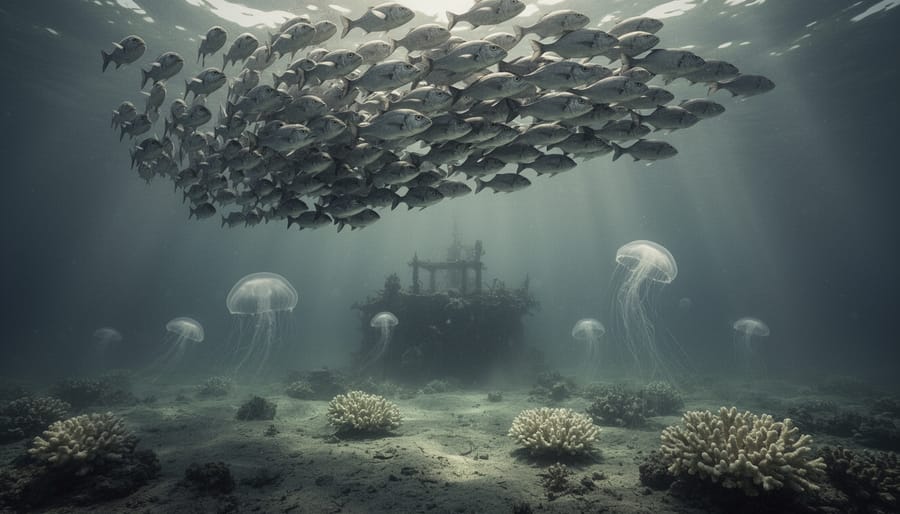
Beneath the shimmering surface of our oceans lies a crisis unfolding in slow motion—one that threatens the very foundation of marine life as we know it. Ocean deoxygenation, the progressive loss of oxygen in our seas, is silently suffocating marine biodiversity across the globe. As warming waters hold less oxygen and nutrient pollution fuels oxygen-depleting algal blooms, vast stretches of ocean are transforming into dead zones where fish cannot survive and entire ecosystems collapse.
This threat strikes at the heart of ocean biodiversity in ways both direct and devastating. From the smallest plankton to apex predators like sharks and tuna, marine species depend on adequate oxygen levels to breathe, reproduce, and thrive. When oxygen drops below critical thresholds, the intricate web of life that has evolved over millions of years begins to unravel. Coral reefs bleach and die. Fish populations plummet. Bottom-dwelling creatures flee their habitats or perish.
Yet this story is not one of inevitable decline. Marine biologist Dr. Sarah Chen, who has spent two decades studying oxygen minimum zones off the Pacific coast, reminds us that understanding is the first step toward restoration. “Every time I dive into these waters and witness the resilience of marine life adapting to changing conditions, I’m reminded why this work matters,” she shares. “We still have time to reverse these trends, but only if we act now.”
The science is clear, the stakes are immense, and the path forward requires both understanding the mechanisms driving ocean deoxygenation and embracing concrete solutions. This guide will illuminate how declining oxygen levels impact ocean ecosystems, showcase real-world examples of affected regions, and provide actionable ways you can contribute to protecting our ocean’s precious biodiversity.
What Is Ocean Deoxygenation and Why Should We Care?
The Science Behind Disappearing Oxygen
Ocean deoxygenation is driven by two primary mechanisms, both accelerated by warming seas. Understanding these processes helps us grasp the urgency of addressing climate change impacts on marine ecosystems.
First, warmer water simply holds less dissolved oxygen than cold water. This fundamental physical property means that as ocean temperatures rise, the water’s capacity to carry oxygen decreases. Think of it like a sponge that shrinks as it heats up, able to hold less and less liquid. Even a temperature increase of just one degree Celsius can significantly reduce oxygen availability for marine life.
Second, thermal stratification creates invisible barriers in the ocean. As surface waters warm, they become lighter and less likely to mix with the cooler, denser waters below. This layering effect is like oil floating on water. Normally, ocean currents circulate oxygen-rich surface water downward, replenishing deeper zones. But stratification disrupts this vital mixing process, trapping oxygen at the surface while deeper waters become increasingly depleted.
Marine biologist Dr. Elena Rodriguez explains it this way: “Imagine trying to breathe in a room where the air conditioning only works at ceiling level. The organisms living in deeper waters face a similar challenge as stratification intensifies.”
These combined effects create expanding oxygen-depleted zones that threaten biodiversity at every level, from microscopic plankton to apex predators, fundamentally altering ocean food webs and ecosystem functioning.
Dead Zones: Where Ocean Life Cannot Survive
Dead zones are areas in the ocean where oxygen levels have dropped so low that most marine life cannot survive. These hypoxic zones (less than 2 mg/L oxygen) and anoxic zones (essentially no oxygen) are expanding at alarming rates worldwide. Scientists have documented over 500 dead zones globally, compared to just 49 in the 1960s.
The Gulf of Mexico hosts one of the largest dead zones, reaching approximately 6,334 square miles in 2021—nearly the size of Connecticut. This area forms each summer when nutrient pollution from agricultural runoff fuels massive algae blooms. When algae die and decompose, bacteria consume available oxygen, suffocating fish, shrimp, and other organisms.
The Baltic Sea represents another critical example, where dead zones have quadrupled since 1950, now covering roughly 25,000 square miles. Marine biologist Dr. Elena Kovacs, who studies these zones, shares: “I’ve witnessed once-thriving seafloors completely barren. But what gives me hope is that when communities reduce nutrient pollution, we see recovery within seasons.”
Climate change intensifies this crisis. Warmer water holds less oxygen, while stronger stratification prevents oxygen mixing between surface and deep waters. Without intervention, dead zones are projected to expand by 3-8% with each degree of warming, threatening coastal fisheries and biodiversity hotspots that millions depend upon.
How Ocean Deoxygenation Threatens Marine Biodiversity
Impacts on Small but Mighty Marine Organisms
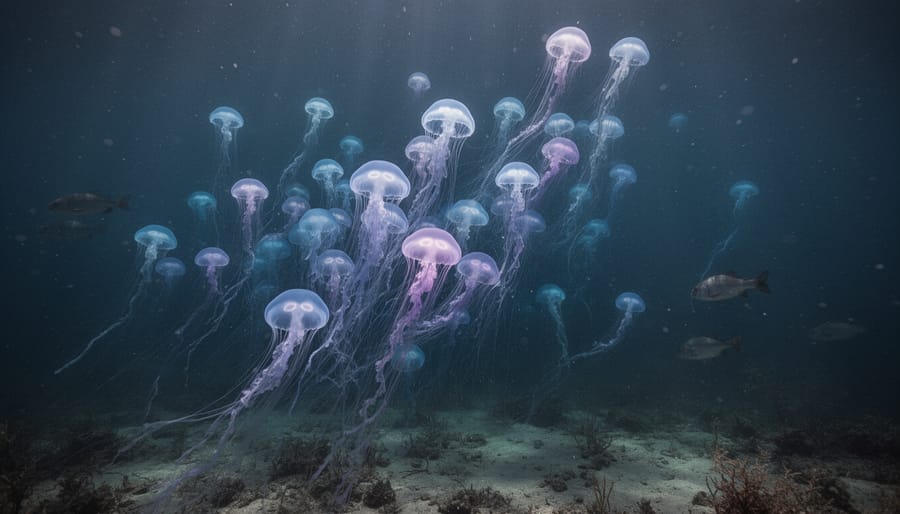
Ocean deoxygenation strikes hardest at the microscopic organisms that sustain all marine life. Phytoplankton, the tiny photosynthetic powerhouses producing half of Earth’s oxygen, struggle as warming waters and reduced nutrient mixing disrupt their growth cycles. When oxygen levels drop, these essential primary producers decline in abundance and diversity, creating a cascading effect throughout the entire food web.
Dr. Maria Santos, a plankton specialist studying oxygen-depleted zones off the California coast, shares her observations: “We’re seeing dramatic shifts in community composition. The hardy species survive, but we’re losing the diversity that makes these ecosystems resilient.”
Zooplankton, the crucial link between phytoplankton and larger marine animals, face double jeopardy. These tiny grazers not only depend on healthy phytoplankton populations but also require sufficient oxygen for their own metabolism. As oxygen levels decline, zooplankton populations shrink and migrate, disrupting feeding patterns for fish, seabirds, and marine mammals.
The microbial communities that decompose organic matter and cycle nutrients also transform under low-oxygen conditions. Beneficial aerobic bacteria give way to anaerobic species, fundamentally altering nutrient availability and ecosystem function. Understanding these foundational changes helps scientists predict broader impacts and develop targeted conservation strategies.
Fish and Mobile Species: Fleeing or Failing
When oxygen levels plummet in ocean waters, fish face a critical choice: flee or perish. Unlike stationary organisms, mobile species can theoretically escape low-oxygen zones, but this apparent advantage comes with significant consequences. As dissolved oxygen decreases, fish experience habitat compression, where viable living space shrinks dramatically. They’re forced into shallower waters or the edges of their normal ranges, leading to overcrowding and increased competition for food and shelter.
Dr. Maria Santos, a fisheries biologist studying Gulf of Mexico populations, recalls surveying after a major hypoxic event: “We found entire schools concentrated in narrow oxygen-rich corridors. The density was staggering, but so was the stress on these animals.” This compression makes fish more vulnerable to predators and fishing pressure, disrupting entire food webs.
Migration patterns also shift unpredictably. Species that historically spawned in specific areas may abandon traditional grounds when oxygen drops, affecting reproduction success. For some species, particularly those already living near their physiological limits, there’s simply nowhere to go. Mass mortality events occur when oxygen depletion happens too rapidly or extensively.
These disruptions cascade through ecosystems and economies. Commercial fisheries report changing catch locations and declining yields. Understanding these responses helps scientists predict future impacts and guides conservation strategies, including volunteer monitoring programs that track fish population movements in affected regions.
Stationary Species Trapped in Oxygen-Starved Waters
Unlike mobile species that can swim away from oxygen-depleted zones, corals and bottom-dwelling creatures face a particularly dire predicament. These stationary organisms are essentially trapped when deoxygenation strikes their habitat.
Coral reefs, already stressed by warming temperatures and acidification, suffer compounding damage when oxygen levels drop. Dr. Sarah Chen, a marine biologist studying Caribbean reefs, shares a sobering observation: “I’ve watched entire coral communities essentially suffocate. The polyps close up, symbiotic algae die off, and what was once a vibrant ecosystem becomes a graveyard.”
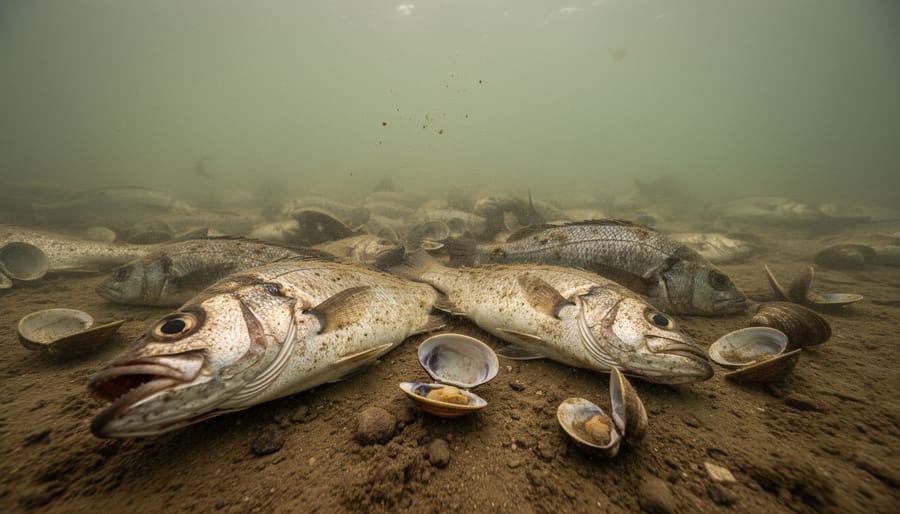
Shellfish including oysters, clams, and mussels cannot relocate when oxygen disappears from their waters. These filter feeders play crucial roles in maintaining water quality, yet they’re among the first casualties of hypoxic events. Bottom-dwelling crabs, sea cucumbers, and urchins face similar fates, creating cascading effects throughout food webs.
The economic toll extends beyond ecology. Commercial shellfish operations have reported massive die-offs, devastating coastal communities dependent on these resources. Understanding the vulnerability of stationary species helps prioritize conservation efforts. Volunteers can assist scientists by monitoring local oxygen levels and reporting unusual marine life behavior, providing early warning signals that protect these irreplaceable ecosystems.
Real-World Consequences We’re Already Seeing
The Gulf of Mexico’s Growing Dead Zone
Every summer, an area roughly the size of Connecticut becomes essentially uninhabitable for marine life in the Gulf of Mexico. This hypoxic zone, where oxygen levels drop below 2 milligrams per liter, forms near the Mississippi River delta due to nutrient runoff from agricultural fertilizers upstream. The excess nitrogen and phosphorus fuel massive algal blooms that eventually die and decompose, consuming oxygen faster than it can be replenished.
The consequences ripple through local economies and ecosystems alike. Shrimp, one of the Gulf’s most valuable catches, flee to deeper waters or experience stunted growth in oxygen-depleted areas. Fish populations struggle to reproduce, and bottom-dwelling species face the stark choice of migration or death. Dr. Nancy Rabalais, who has studied the dead zone for over three decades, notes that commercial fishers now travel farther and spend more on fuel to reach productive waters.
The good news? Solutions exist. Wetland restoration projects along the Mississippi create natural filters for nutrient pollution. Local watershed groups coordinate with farmers to implement better fertilizer management practices. Students and volunteers can participate in citizen science programs monitoring water quality in coastal areas, providing crucial data that helps track the zone’s expansion and recovery. Through collaborative action across state lines and industries, we can reverse this trend and restore vitality to these waters.
Pacific Northwest Crab Die-Offs
The Pacific Northwest has experienced alarming Dungeness crab die-offs in recent years, with oxygen-depleted waters claiming massive numbers of these economically and ecologically important crustaceans. During summer months, when ocean upwelling brings nutrient-rich but oxygen-poor water to coastal areas, crabs and other shellfish face lethal conditions. In some documented events, oxygen levels have dropped below 0.5 milliliters per liter, a threshold where most marine life cannot survive.
Dr. Sarah Henkel, a marine ecologist studying these events, recalls surveying affected areas: “We found hundreds of dead crabs in zones where oxygen had been depleted for just days. What’s particularly concerning is that these hypoxic zones are becoming more frequent and lasting longer.” The cascading effects extend beyond crabs to affect sea stars, sea cucumbers, and other benthic organisms that form the foundation of coastal food webs.
Climate change intensifies these events by warming surface waters, which reduces oxygen solubility and strengthens stratification that prevents oxygen mixing. For concerned citizens, participating in beach monitoring programs provides valuable data while connecting volunteers directly to conservation efforts. Organizations like the Oregon Department of Fish and Wildlife welcome community scientists to report unusual mortality events, helping researchers track and respond to these troubling oxygen depletion patterns.
Voices from the Field: Marine Biologists Share Their Observations
Dr. Maria Santos vividly remembers her first dive at the Great Barrier Reef fifteen years ago. “The explosion of color and life was breathtaking,” she recalls. “But returning to the same sites today, I’ve witnessed entire sections bleached white, with fish populations drastically reduced.” Her observations align with documented declines in oxygen levels, which directly impact coral health and the diverse species they support.
For Dr. James Chen, who has spent two decades studying kelp forests off California’s coast, the changes are equally stark. “We’re seeing warm-water species moving northward while cold-water fish disappear. The kelp itself is struggling in warmer, less oxygenated waters,” he explains. These shifts aren’t just scientific data points—they represent entire ecosystems in transition.
Young researcher Aisha Patel brings fresh perspective from her work in the Indian Ocean. “What gives me hope is seeing communities rally around conservation,” she shares. “When local fishermen join our monitoring efforts, they become powerful advocates for change.” Her experience highlights how volunteer opportunities transform concerned citizens into active participants in ocean protection, bridging the gap between scientific research and grassroots action.
The Ripple Effects Beyond Marine Life
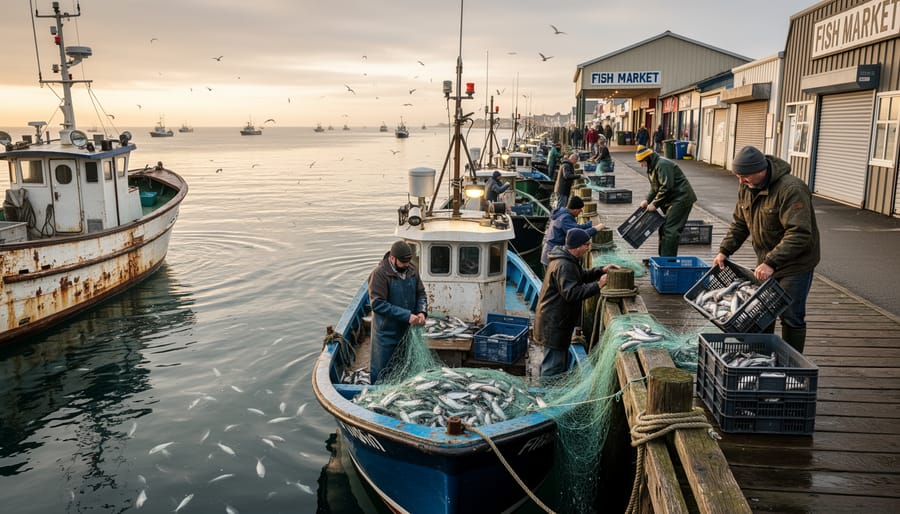
The consequences of ocean deoxygenation and declining marine biodiversity extend far beyond the water’s edge, creating profound impacts on coastal communities worldwide. For the three billion people who depend on fish as their primary protein source, shrinking oxygen-depleted zones mean diminishing catches and threatened food security. When commercially important species like cod, tuna, and shrimp abandon their traditional habitats in search of oxygen-rich waters, entire fishing fleets must follow—or face economic collapse.
Dr. Maria Santos, a marine biologist who has worked with fishing communities in Southeast Asia for fifteen years, shares a sobering observation: “I’ve watched villages that sustained themselves for generations suddenly struggle to meet basic needs. When the fish disappear, it’s not just an economic issue—it’s the unraveling of cultural identity.” These communities lose more than income; they lose traditions, knowledge systems, and ways of life passed down through centuries.
The global fishing industry, valued at over 400 billion dollars annually, faces mounting pressure as productive fishing grounds shrink. Small-scale fishers, who lack the resources to travel farther or invest in new equipment, bear the heaviest burden. Coastal tourism also suffers when vibrant coral reefs bleach and die, transforming underwater paradises into lifeless zones that no longer attract divers and snorkelers.
Yet these challenges have sparked inspiring responses. Community-based monitoring programs now train local fishers to collect data on oxygen levels and fish populations, transforming them into citizen scientists. Organizations like Ocean Conservancy offer volunteer opportunities for people to contribute to coastal cleanups and habitat restoration projects that help rebuild marine ecosystems. By supporting sustainable seafood choices, reducing nutrient pollution, and advocating for marine protected areas, individuals can help reverse these trends while preserving livelihoods and cultural heritage for future generations.
What Science Tells Us About the Future
Current climate models paint a clear picture of ocean deoxygenation trends. According to research published by the Intergovernmental Panel on Climate Change, the ocean has lost approximately 2% of its oxygen since the 1960s. More significantly, projections indicate that under a business-as-usual emissions scenario, oxygen levels could decline by an additional 3-4% by 2100. These percentages may seem modest, but their ecological impacts are profound.
Scientists have identified several concerning feedback loops that could accelerate this decline. As ocean temperatures rise, water holds less dissolved oxygen naturally—a basic principle of chemistry. Simultaneously, warming creates stronger stratification, where distinct layers of water resist mixing. This prevents oxygen-rich surface waters from reaching the depths. Perhaps most troubling is the metabolic feedback: warmer temperatures increase the oxygen demands of marine organisms, creating a double burden of reduced supply and increased need.
Dr. Sarah Chen, a marine biologist studying oxygen-minimum zones off the coast of Peru, explains the urgency: “We’re not just watching gradual change. We’re seeing tipping points where ecosystems shift rapidly. Coral reefs become algae-dominated wastelands. Fish populations crash within years, not decades. The window for preventing the worst outcomes is narrowing.”
However, science also offers hope. Models demonstrate that reducing greenhouse gas emissions and nutrient pollution can slow and potentially reverse deoxygenation in certain regions. The ocean has remarkable resilience when given the opportunity to recover. Every tenth of a degree of warming we prevent, every reduction in agricultural runoff, makes a measurable difference. This is precisely why individual and collective action matters now—the future isn’t predetermined, but rather shaped by choices we make today.
Solutions That Give Us Hope
Reducing Nutrient Pollution at Its Source
Addressing nutrient pollution requires tackling the problem where it begins. Agricultural runoff, laden with fertilizers and animal waste, contributes significantly to ocean deoxygenation. Farmers are increasingly adopting precision agriculture techniques, applying fertilizers only where needed and using buffer zones of vegetation to filter runoff before it reaches waterways. These practices have shown remarkable results in reducing nitrogen and phosphorus loads by up to 30% in some watersheds.
Municipal wastewater treatment plants are also upgrading their systems to remove more nutrients before discharge. Advanced treatments like biological nutrient removal use specialized bacteria to break down nitrogen compounds, preventing them from reaching coastal waters.
Success stories offer hope. The Chesapeake Bay restoration project has engaged over 15,000 volunteers in monitoring water quality and planting native grasses along shorelines. Marine biologist Dr. Sarah Chen shares, “Watching communities rally together to restore their waterways reminds me why this work matters. Every small action creates ripples of change.” These collaborative efforts demonstrate that with commitment and proper techniques, we can reverse nutrient pollution and restore oxygen levels in our oceans.
Climate Action as Ocean Action
Addressing climate change represents one of our most powerful tools for protecting ocean biodiversity. The connection is direct: reducing carbon emissions helps slow ocean warming and acidification, giving marine ecosystems precious time to adapt. As Dr. Maria Santos, a climate scientist working with coastal communities, explains, “Every ton of carbon we prevent from entering the atmosphere is a gift to the ocean and the incredible life it sustains.”
The shift toward renewable energy transitions plays a vital role in this effort, reducing our reliance on fossil fuels that drive ocean deoxygenation. Ocean-based climate solutions also hold tremendous promise. Protecting and restoring coastal blue carbon ecosystems like mangroves, seagrass beds, and salt marshes naturally captures carbon while providing critical habitat for marine species.
Individuals can contribute by supporting clean energy initiatives, reducing personal carbon footprints, and advocating for policies that prioritize both climate action and ocean health. These efforts create a healthier future for marine biodiversity.
How You Can Make a Difference
Protecting ocean biodiversity starts with individual choices and community involvement. Consider joining citizen science initiatives like Ocean Conservancy’s International Coastal Cleanup or tracking marine species through platforms such as iNaturalist. These programs allow you to contribute valuable data while connecting with fellow ocean advocates.
Marine biologist Dr. Sarah Chen shares, “Some of our most significant research breakthroughs have come from dedicated citizen scientists monitoring their local coastlines.” Look for volunteer opportunities with organizations like the Marine Conservation Institute, local aquariums, or beach cleanup groups in your area.
Your daily habits matter too. Reduce single-use plastics, choose sustainably sourced seafood certified by the Marine Stewardship Council, and minimize your carbon footprint through energy-conscious choices. Support businesses committed to ocean-friendly practices and advocate for marine protected areas in your region.
Educational engagement creates ripple effects. Share what you learn about ocean deoxygenation with friends, family, and social networks. Organize community events or school presentations to raise awareness. Every conversation plants seeds for broader change.
Remember, ocean conservation thrives on collective action. Your participation, whether through hands-on volunteering, lifestyle adjustments, or spreading awareness, contributes to protecting the remarkable biodiversity that makes our oceans thrive.
The story of ocean deoxygenation and marine biodiversity is one of interconnection. As oxygen levels decline, the intricate web of life beneath the waves responds in ways both visible and hidden. From the smallest plankton to the largest whales, every organism plays a role in maintaining the health of our oceans, and each is vulnerable to the cascading effects of oxygen loss. We’ve seen how warming waters, nutrient pollution, and climate change combine to create dead zones and stressed ecosystems, but we’ve also witnessed the remarkable resilience of marine life when given the chance to recover.
The challenge before us is significant, but it’s far from insurmountable. Dr. Elena Martinez, a marine biologist who has dedicated her career to studying oxygen-depleted zones, often reminds her volunteers of something powerful: “Every action matters. When I see communities come together to reduce pollution, when students become advocates for marine protection, I’m reminded that change is possible.”
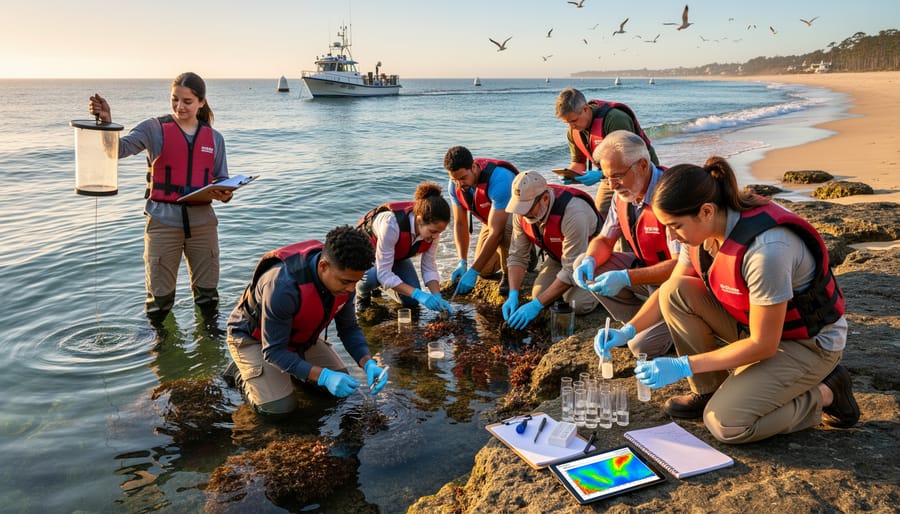
This is where you come in. Whether you’re an educator inspiring the next generation of ocean stewards, a scientist contributing to crucial research, or simply someone who cares about the future of our blue planet, your engagement makes a difference. Consider joining local beach cleanup initiatives, participating in citizen science programs that monitor water quality, or volunteering with organizations working to establish marine protected areas. Stay informed through our center’s resources, share what you learn with others, and advocate for policies that protect ocean health. Together, we can ensure that the biodiversity of our oceans continues to thrive for generations to come.

jessica
Ava Singh is an environmental writer and marine sustainability advocate with a deep commitment to protecting the world's oceans and coastal communities. With a background in environmental policy and a passion for storytelling, Ava brings complex topics to life through clear, engaging content that educates and empowers readers. At the Marine Biodiversity & Sustainability Learning Center, Ava focuses on sharing impactful stories about community engagement, policy innovations, and conservation strategies. Her writing bridges the gap between science and the public, encouraging people to take part in preserving marine biodiversity. When she’s not writing, Ava collaborates with local initiatives to promote eco-conscious living and sustainable development, ensuring her work makes a difference both on the page and in the real world.