Marine Biodiversity Science Center

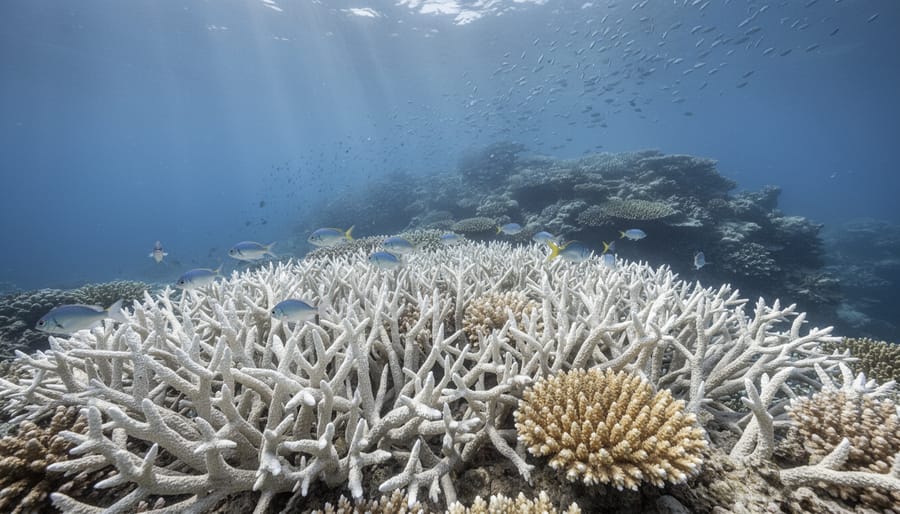
Beneath the crystal waters of the Great Barrier Reef in 2016, marine biologist Dr. Emma Chen witnessed something that would fundamentally change her understanding of ocean resilience. In just six weeks, vibrant coral colonies she had studied for a decade transformed into ghostly white skeletons. This phenomenon, coral bleaching, now threatens to unravel the intricate web of marine life that sustains over 25% of all ocean species and provides livelihoods for more than 500 million people worldwide.
Coral bleaching occurs when rising ocean temperatures force corals to expel the symbiotic algae living within their tissues, the very organisms that give them color and up to 90% of their energy. Without these microscopic partners, corals starve, weaken, and if conditions persist, die entirely. What begins as a stress response in individual polyps cascades through entire ecosystems with devastating efficiency.
The impacts extend far beyond the corals themselves. When reefs deteriorate, fish populations decline by up to 60%, collapsing fisheries that feed coastal communities across the tropics. Shorelines lose their natural barriers against storm surges and erosion. Tourism economies crumble. The pharmaceutical industry loses potential sources for life-saving medicines, as coral reef organisms have already yielded treatments for cancer, arthritis, and bacterial infections.
Recent mass bleaching events in 2016, 2017, 2020, and 2024 have left scientists racing against time. Yet hope remains. Communities worldwide are pioneering coral restoration projects, cultivating heat-resistant strains, and protecting marine areas to build ecosystem resilience. Understanding these impacts is the first step toward meaningful action that can preserve these underwater rainforests for future generations.
What Happens When Corals Lose Their Color
To understand coral bleaching, imagine a partnership so vital that without it, one partner literally loses its color and begins to starve. Corals may look like rocks or plants, but they’re actually colonies of tiny animals called polyps. These polyps have formed one of nature’s most successful collaborations with microscopic algae called zooxanthellae, which live inside their tissues.
Think of zooxanthellae as tiny solar-powered chefs. Through photosynthesis, they convert sunlight into sugars and nutrients, sharing up to 90% of this food with their coral hosts. In return, the corals provide shelter and access to sunlight. The zooxanthellae also give corals their stunning colors—vibrant yellows, browns, and greens that make reefs so visually spectacular.
This partnership thrives within a narrow temperature range. When ocean temperatures rise even 1-2 degrees Celsius above normal for extended periods, the relationship breaks down. The heat causes the zooxanthellae to produce harmful oxygen radicals—essentially, they start producing toxins instead of food. Faced with this internal threat, corals make a desperate decision: they expel their algae partners.
Without their colorful zooxanthellae, the coral’s white calcium carbonate skeleton shows through translucent tissue, creating the ghostly pale appearance we call bleaching. It’s like watching a tree shed all its leaves mid-summer—a visible distress signal that something is seriously wrong.
Marine biologist Dr. Elena Rodriguez, who has monitored Caribbean reefs for fifteen years, describes witnessing mass bleaching as heartbreaking: “You return to a reef that was teeming with color and life, and it’s transformed into an underwater desert of white. You know these corals are fighting for survival.”
Bleached corals aren’t immediately dead, but they’re starving and weakened. If temperatures return to normal quickly, zooxanthellae can recolonize their hosts. However, prolonged stress from climate change impacts means many corals never recover, setting off cascading effects throughout the entire marine ecosystem.
The Ripple Effect: How Bleaching Destabilizes Entire Marine Communities
Loss of Habitat and Biodiversity Hotspots
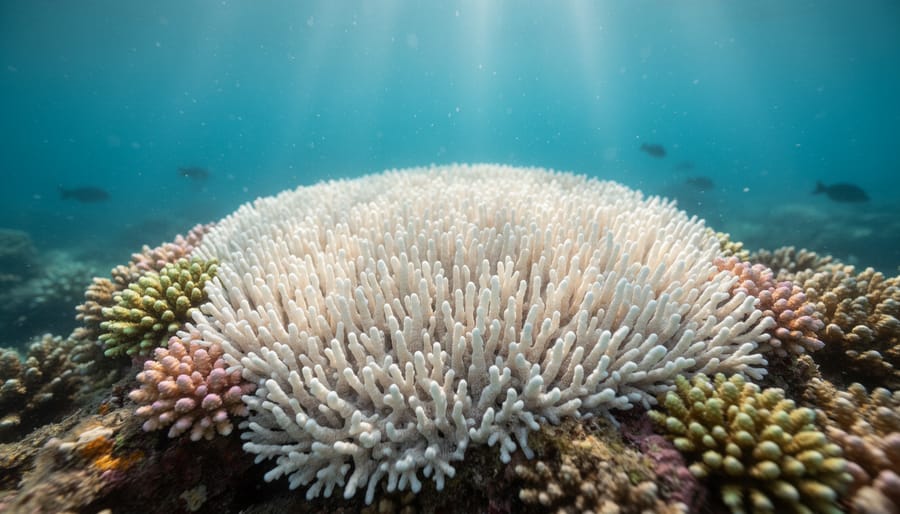
When coral bleaching strikes, the impacts ripple far beyond the corals themselves, threatening the intricate web of life that depends on reef ecosystems. Bleached and dying corals rapidly lose their structural complexity, eliminating the essential shelter, feeding grounds, and nurseries that support approximately 25% of all marine species despite covering less than 1% of the ocean floor.
The consequences for marine biodiversity are staggering. Fish populations decline dramatically when coral structures deteriorate. Butterfly fish, which feed exclusively on coral polyps, face immediate starvation. Damselfish, parrotfish, and groupers lose the intricate crevices where they hide from predators and establish territories. Studies have shown that fish species diversity can drop by up to 60% within just a few years following severe bleaching events.
Invertebrates suffer equally devastating losses. Sea urchins, which graze on algae growing on healthy coral surfaces, lose their habitat. Cleaner shrimp stations, where fish gather for parasite removal, disappear along with the coral structures. Crown-of-thorns starfish, already problematic in some regions, can overwhelm weakened reefs more easily.
Dr. Maria Santos, a marine biologist who has monitored Caribbean reefs for two decades, shares a sobering observation: “I’ve watched entire coral cities transform into rubble fields. The vibrant sounds of snapping shrimp and fish calls fade to silence. It’s like watching a bustling neighborhood become a ghost town.”
The loss extends to larger species too. Sea turtles lose foraging grounds, while sharks and rays find fewer prey fish congregating around degraded reefs. This habitat collapse creates cascading effects throughout the food web, ultimately impacting human communities that depend on reef fisheries for food security and livelihoods.
Breaking the Food Web
When coral reefs begin to bleach, the consequences ripple outward through the entire marine food web in ways that often surprise even experienced marine scientists. The disruption starts at the foundation and cascades upward, affecting every creature that depends on the reef ecosystem for survival.
Coral reefs support an intricate network of feeding relationships. Tiny herbivorous fish like parrotfish and surgeonfish graze on algae that grows on and around healthy corals. These herbivores, in turn, become prey for larger predators such as groupers, snappers, and sharks. Meanwhile, invertebrates living within the reef structure—crabs, shrimp, and sea urchins—serve as crucial food sources for octopuses, rays, and various fish species. Even the scavengers, from sea cucumbers to certain wrasse species, depend on the organic matter and shelter that thriving reefs provide.
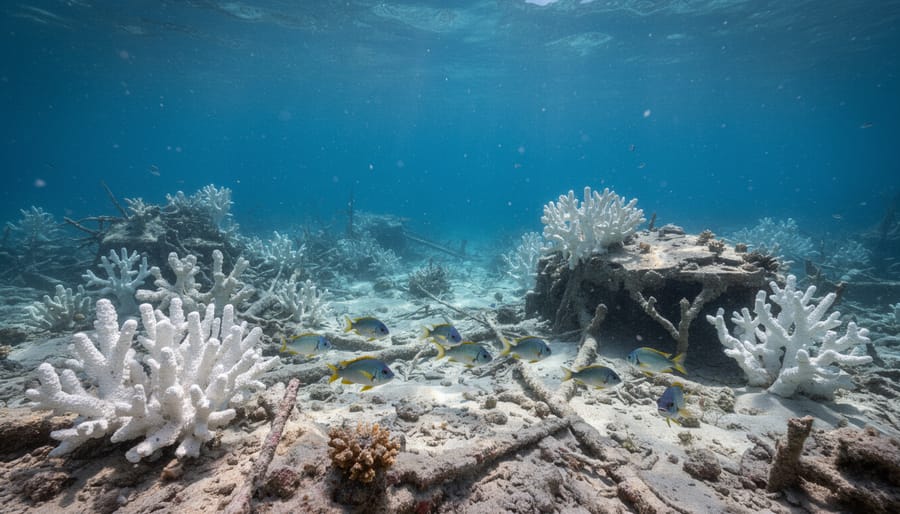
When corals bleach and die, this carefully balanced system begins to unravel. The loss of coral structure means fewer hiding places for juvenile fish, making them vulnerable to predation before they reach maturity. Algae populations can explode without the natural balance maintained by healthy corals, sometimes choking out remaining marine life. Herbivores may initially seem to benefit from increased algae, but the quality of their habitat deteriorates rapidly.
Dr. Maria Sanchez, a marine biologist who has studied Caribbean reefs for two decades, recalls surveying a bleached reef in the Florida Keys: “The silence was haunting. Where we once counted dozens of fish species in a single dive, we found only a handful of individuals desperately searching for food and shelter among the skeletal remains.”
As herbivore populations decline due to habitat loss, predator species struggle to find adequate prey. This triggers a domino effect—larger predators move elsewhere or face starvation, fundamentally altering the ecosystem’s structure. The interconnected nature of reef life means that losing coral doesn’t just affect one species; it destabilizes an entire community that has evolved together over millennia.
Economic Consequences for Coastal Communities
The ecological devastation of coral bleaching extends far beyond the reefs themselves, creating profound economic ripples that threaten the livelihoods of millions living in coastal communities worldwide. These consequences represent some of the most tangible human impacts on oceans, directly affecting food security, income, and safety.
Fisheries suffer immediate losses when coral ecosystems collapse. Healthy reefs support approximately 25% of all marine species, providing critical nursery grounds for commercially important fish populations. When bleaching events destroy these habitats, fish stocks decline dramatically. In Southeast Asia alone, coral-dependent fisheries generate over $2.4 billion annually and support more than six million people. Dr. Maria Santos, a marine biologist working with fishing communities in the Philippines, shares: “I’ve watched families who’ve fished these waters for generations now struggle to catch enough for dinner. The bleaching doesn’t just kill coral—it erases centuries of traditional livelihoods.”
Tourism revenue faces equally devastating impacts. Coral reefs attract diving and snorkeling enthusiasts who contribute an estimated $36 billion globally to coastal economies each year. Bleached, lifeless reefs lose their appeal, causing tourist numbers to plummet and affecting hotels, restaurants, dive operators, and local artisans.
Perhaps most critically, degraded reefs compromise coastal protection. Healthy coral structures absorb up to 97% of wave energy, shielding communities from storms and erosion. Without this natural barrier, coastal infrastructure becomes increasingly vulnerable to damage.
The Scale of the Crisis: Recent Bleaching Events
The numbers tell a sobering story. Between 2016 and 2017, the Great Barrier Reef experienced back-to-back mass bleaching events—an unprecedented occurrence in recorded history. These consecutive bleaching episodes affected approximately two-thirds of the reef, with some northern sections losing up to 50% of their coral cover. Just three years later, in 2020, the reef bleached again during its hottest summer on record, marking the third mass bleaching event in five years.
Dr. Emma Richardson, a marine biologist with fifteen years of experience studying the Great Barrier Reef, remembers the 2016 event vividly. “I’d been diving these same sites for over a decade,” she recalls. “In March 2016, I descended to a reef that had been a riot of color just months before. What I saw looked like a graveyard—endless expanses of ghostly white coral skeletons. The silence was deafening. The usual symphony of reef sounds, the clicking of shrimp, the parrotfish grazing, had diminished to almost nothing.”
The crisis extends far beyond Australia. The Caribbean has faced its own devastating bleaching episodes, with the 2005 event affecting more than 80% of corals in some regions. These ocean temperature changes are creating a new normal where bleaching events occur with increasing frequency and severity.
What makes these recent events particularly alarming is the shortened recovery time between bleaching episodes. Corals typically need 10-15 years to fully recover from severe bleaching, but when events occur every few years, reefs cannot regenerate. This creates a cumulative impact that threatens entire reef systems.
Dr. Richardson now channels her experience into action. “That moment underwater changed me,” she explains. “I realized that documenting the decline wasn’t enough—I needed to help people understand what we’re losing and what we can still save.” She now leads volunteer monitoring programs, training community members to track reef health and participate in restoration efforts.
These statistics represent more than scientific data points. Each bleached reef means lost habitat for thousands of species, diminished coastal protection for island communities, and reduced food security for millions who depend on reef fisheries. The scale demands our attention and our response.
Why Some Reefs Survive While Others Collapse
When bleaching events strike, the outcomes vary dramatically across different reef systems. Understanding why some corals bounce back while others succumb provides crucial insights for conservation efforts and offers genuine hope for reef preservation.
Water quality emerges as one of the most significant factors determining reef resilience. Reefs in pristine waters with minimal pollution and sediment runoff demonstrate remarkable recovery capabilities. Dr. Maya Patel, a marine biologist who has studied Caribbean reefs for fifteen years, explains: “I’ve watched the same reef experience two major bleaching events. Areas near river outflows with agricultural runoff lost 80% of their coral cover, while sections in clearer water recovered within three years. The difference is striking and underscores how local actions matter.”
Reef connectivity plays an equally vital role. Coral larvae need to travel from healthy reefs to repopulate damaged areas. Reefs situated within well-connected networks of marine protected areas receive a steady supply of new recruits, essentially functioning as a mutual aid system. Isolated reefs, however, struggle to recover because replacement corals cannot reach them.
Genetic diversity within coral populations provides another layer of protection. Some coral colonies possess genes that confer heat tolerance, allowing them to withstand higher temperatures without expelling their symbiotic algae. Scientists are now identifying these resilient individuals, with conservation programs working to propagate these heat-resistant corals and introduce them to vulnerable reefs.
Local stressors significantly impact recovery potential. Reefs already stressed by overfishing, coastal development, or destructive fishing practices enter bleaching events in weakened states. Conversely, well-managed reefs with healthy fish populations that control algae growth and maintain ecological balance show enhanced resilience.
The Great Barrier Reef illustrates these principles perfectly. Southern sections with cooler waters, better management, and lower pollution levels have experienced higher survival rates compared to northern areas facing multiple stressors. This demonstrates that while we cannot immediately stop global warming, reducing local pressures provides reefs the breathing room they need to survive and potentially adapt. Every action to improve water quality, establish marine protected areas, and reduce fishing pressure strengthens reef resilience against the inevitable challenges ahead.
How You Can Help Strengthen Marine Ecosystem Stability
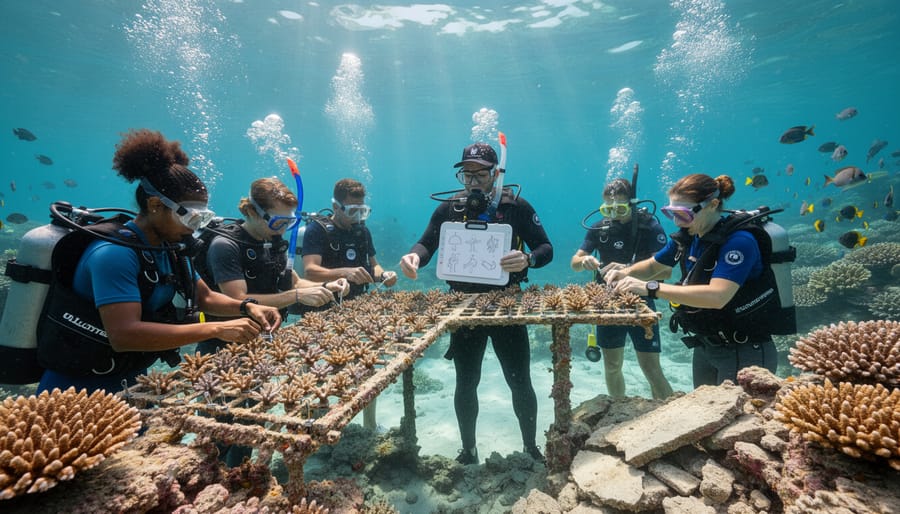
Volunteer Opportunities in Coral Monitoring and Restoration
The good news is that you don’t need to be a marine biologist to make a meaningful difference in coral reef conservation. Volunteer opportunities in coral monitoring and restoration are expanding globally, offering hands-on ways to contribute to reef recovery efforts.
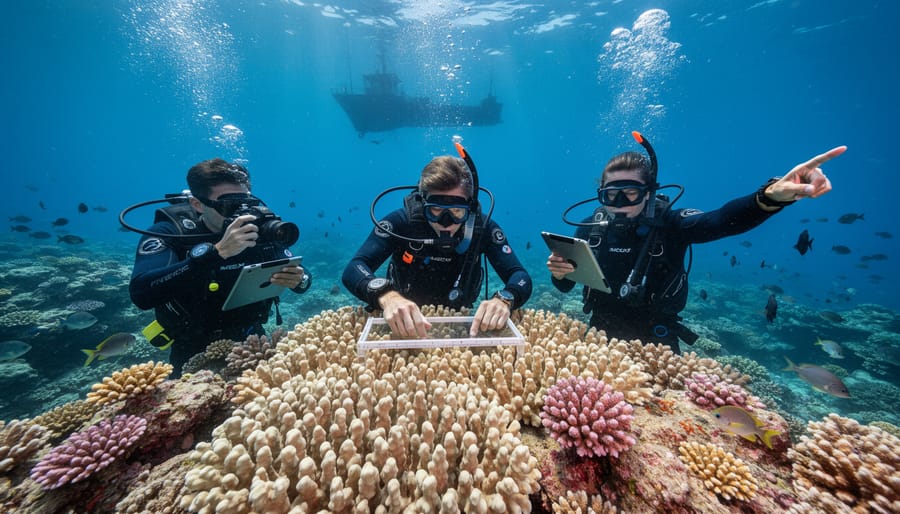
Coral gardening programs represent one of the most impactful volunteer activities. Organizations like the Coral Restoration Foundation in Florida and Reef Check worldwide train volunteers to help cultivate coral fragments in underwater nurseries. These fragments, once mature, are transplanted onto degraded reefs. Volunteers learn to monitor growth rates, clean algae from nursery structures, and assist with outplanting operations. The work is physically engaging and provides tangible results you can witness over time.
Citizen science initiatives offer another accessible entry point. Programs such as CoralWatch enable snorkelers and divers to collect valuable bleaching data using simple color reference charts. Your observations contribute to global databases that scientists use to track bleaching patterns and reef health trends. Even non-divers can participate through shore-based monitoring programs or by analyzing underwater photographs to identify coral species and health indicators.
Many conservation programs also welcome virtual volunteers who help process data, conduct literature reviews, or assist with educational outreach. Educational institutions and marine research centers frequently seek volunteers for reef surveys, water quality testing, and habitat assessments.
Before committing, research programs thoroughly to ensure they follow scientific best practices and work with local communities. Whether you can dedicate a week or ongoing support, your participation directly supports reef resilience and advances our understanding of these critical ecosystems.
Everyday Actions That Make a Difference
Protecting coral reefs begins with choices we make every day. The good news? Each action, however small it seems, contributes to healthier oceans and more resilient marine ecosystems.
Start by reducing your carbon footprint, the primary driver of ocean warming and acidification. Simple changes like using energy-efficient appliances, choosing public transportation or biking when possible, and reducing meat consumption can collectively make a substantial difference. Marine biologist Dr. Sarah Chen shares: “When I explain to people that their commute choices directly affect the reef I’ve studied for 15 years, I see their perspective shift. Individual actions truly matter.”
When visiting coastal areas, choose reef-safe sunscreen products free from oxybenzone and octinoxate, chemicals that damage coral tissue and exacerbate bleaching. Read labels carefully and look for mineral-based alternatives using zinc oxide or titanium dioxide.
Support sustainable seafood by consulting guides from organizations like the Marine Stewardship Council. Overfishing disrupts the delicate balance that helps reefs recover from bleaching events, so your purchasing decisions directly impact ecosystem stability.
Amplify your impact through social networks by sharing credible information about coral conservation. Volunteer opportunities abound, from beach cleanups to citizen science programs that monitor reef health. The Reef Check Foundation welcomes volunteers worldwide to contribute valuable data that informs conservation strategies.
Consider supporting organizations dedicated to coral research and restoration. Even modest monthly donations fund crucial work in reef rehabilitation and climate resilience research. Remember, collective action transforms individual efforts into powerful waves of change.
The story of coral bleaching ultimately reminds us that ocean health depends on countless interconnected relationships. When corals suffer, the ripples extend from microscopic organisms to apex predators, from coastal economies to global carbon cycles. Yet this interconnection also reveals our greatest strength: when communities unite behind conservation, the potential for recovery is remarkable.
Marine biologist Dr. Sofia Chen reflects on this after witnessing restoration success in the Great Barrier Reef: “I’ve seen bleached reefs that looked lifeless spring back to color within months when conditions improved and communities protected them. Nature’s resilience is extraordinary when we give it a chance.”
Your involvement matters more than you might think. Small actions multiply across communities into meaningful change. Whether reducing your carbon footprint, supporting sustainable seafood choices, or participating directly in restoration work, each contribution strengthens marine ecosystems.
The Marine Biodiversity Science Center offers numerous volunteer opportunities, from citizen science programs monitoring reef health to educational outreach initiatives. Join us in protecting these vital ecosystems. Together, we can ensure that vibrant coral reefs continue thriving for generations to come, supporting the incredible biodiversity that depends on them and enriching our planet’s future.

jessica
Ava Singh is an environmental writer and marine sustainability advocate with a deep commitment to protecting the world's oceans and coastal communities. With a background in environmental policy and a passion for storytelling, Ava brings complex topics to life through clear, engaging content that educates and empowers readers. At the Marine Biodiversity & Sustainability Learning Center, Ava focuses on sharing impactful stories about community engagement, policy innovations, and conservation strategies. Her writing bridges the gap between science and the public, encouraging people to take part in preserving marine biodiversity. When she’s not writing, Ava collaborates with local initiatives to promote eco-conscious living and sustainable development, ensuring her work makes a difference both on the page and in the real world.