Marine Biodiversity Science Center

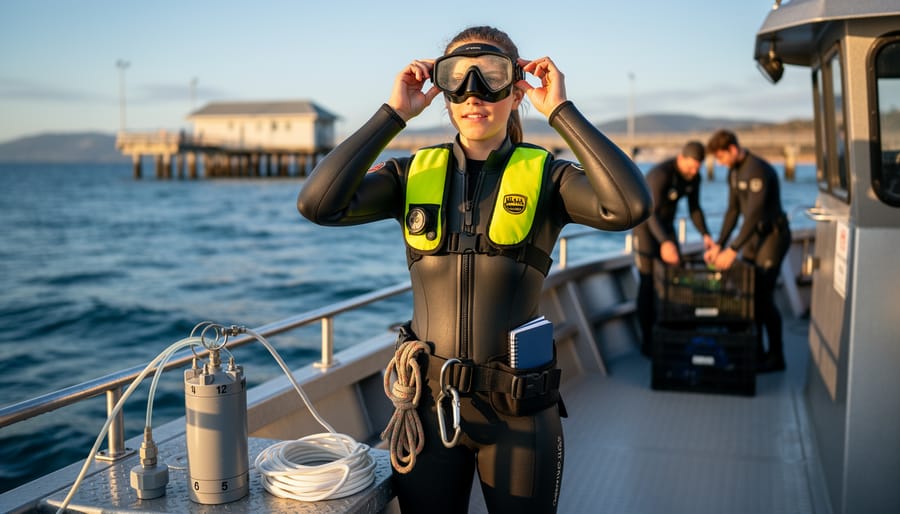
Becoming a marine biologist requires strategic planning from your high school years forward. Start by building a strong foundation in biology, chemistry, physics, and mathematics during secondary education, as these courses form the backbone of university marine science programs. Volunteer at local aquariums, coastal cleanup initiatives, or research laboratories to gain hands-on experience that strengthens college applications and clarifies your specific interests within this diverse field.
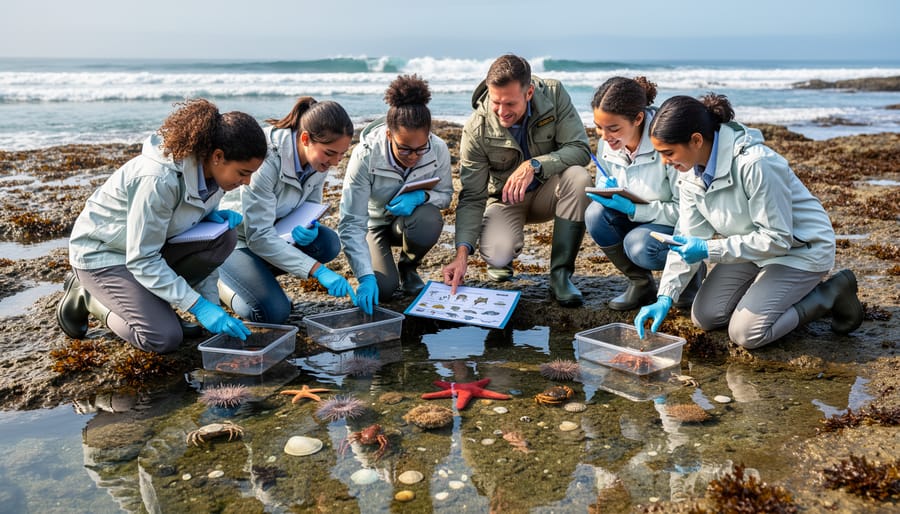
Pursue a bachelor’s degree in marine biology, biology, oceanography, or environmental science as your essential entry point into the profession. Most entry-level positions require this four-year degree at minimum, where you’ll study marine ecology, animal behavior, oceanography, and research methodologies. Select programs offering field courses, internship opportunities, and access to coastal research facilities, as practical experience distinguishes competitive candidates in this field.
Consider graduate education carefully based on your career goals. A master’s degree opens doors to specialized research positions, conservation program management, and higher-level consultancy roles, typically requiring two additional years of focused study. Doctoral programs become necessary for university professorships, leading independent research projects, or directing major conservation initiatives, demanding four to six years of original research and dissertation work.
Complement formal education with strategic certifications. Obtain scientific diving certification through AAUS-recognized programs, pursue boat operation licenses, and develop specialized skills in GIS mapping, statistical analysis software, or taxonomic identification. These credentials transform theoretical knowledge into practical capability, making you immediately valuable to research teams and conservation organizations seeking skilled marine biologists ready to contribute from day one.
Understanding the Marine Biology Career Landscape
What Marine Biologists Actually Do
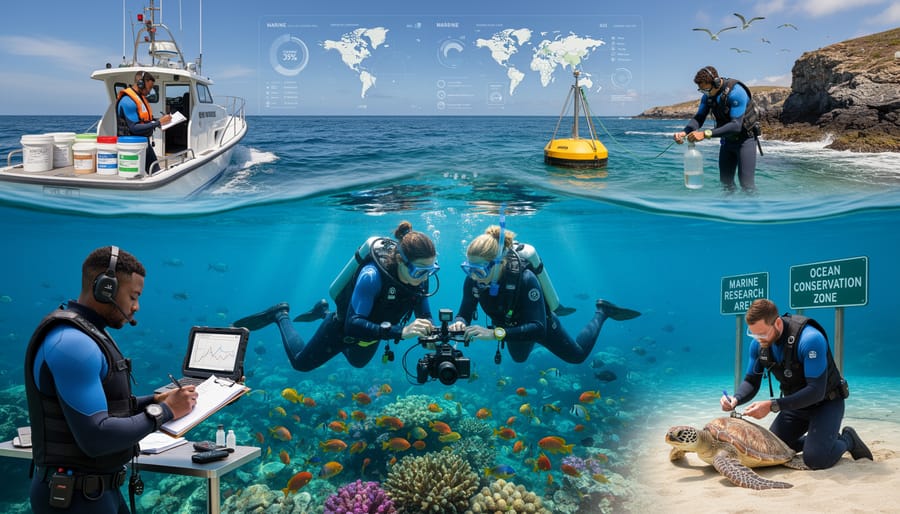
Marine biologists work in surprisingly diverse environments, from research vessels and coral reefs to laboratories and aquariums. While many envision fieldwork as the primary activity, the reality involves a blend of data collection, analysis, writing, and collaboration. A marine biologist might spend one week deploying underwater sensors to track sea turtle migrations, and the next analyzing thousands of data points on a computer.
Common specializations include marine mammal research, fisheries management, coral reef ecology, oceanography, and marine conservation policy. Some biologists work for government agencies monitoring coastal ecosystems, while others lead educational programs at aquariums or conduct breakthrough research at universities.
Dr. Sarah Chen, a kelp forest researcher, shares her experience: “People assume I’m diving every day, but honestly, I spend about 70% of my time in the lab or writing grant proposals. The field days are incredible, but the desk work is where discoveries actually take shape through careful analysis.”
Daily responsibilities often include collecting water samples, identifying species, maintaining research equipment, writing scientific papers, teaching, and communicating findings to stakeholders. Many positions require strong communication skills to present research to policymakers or the public. Understanding these realities helps aspiring marine biologists prepare academically and mentally for this multifaceted career path.
The Growing Demand for Ocean Professionals
The ocean’s call for skilled professionals has never been louder. As our planet faces unprecedented environmental challenges, from rising sea temperatures to plastic pollution and habitat degradation, the demand for qualified marine biologists continues to surge across multiple sectors. Conservation organizations, research institutions, government agencies, and environmental consulting firms are actively seeking experts who can help protect and restore our blue planet.
Climate change has emerged as a defining issue of our generation, creating urgent needs for marine scientists who can monitor coral reef bleaching, track shifting fish populations, and develop strategies to protect vulnerable marine ecosystems. Dr. Maria Santos, who now leads a coastal restoration project in Florida, recalls her decision to enter the field: “I watched documentaries about ocean acidification in high school and knew I wanted to be part of the solution. The ocean covers 70 percent of our planet, yet we’ve only explored a fraction of it. There’s so much work to be done.”
Beyond traditional research roles, marine biologists are increasingly needed in policy development, environmental education, aquaculture sustainability, and marine biotechnology. This expansion of career pathways means that aspiring ocean professionals can find opportunities aligned with their specific interests, whether that’s diving with whale sharks, analyzing data in a laboratory, or teaching the next generation about marine conservation.
Foundation: High School Preparation
Core Subjects That Matter Most
Building a strong foundation in core sciences isn’t just checking boxes for college applications—it’s developing the toolkit you’ll use throughout your marine biology career. Let’s explore why each subject matters and how they interconnect in real-world marine research.
Biology forms the heart of marine biology, naturally. You’ll need solid understanding of cellular processes, genetics, ecology, and evolution. These concepts help you grasp why coral reefs bleach under stress, how fish populations adapt to changing ocean temperatures, or why certain species thrive in extreme deep-sea environments. Dr. Maya Chen, who studies sea turtle migration, recalls that her high school biology teacher’s unit on animal behavior sparked her fascination with marine navigation systems—knowledge she now applies daily in her research.
Chemistry becomes essential when studying ocean acidification, pollution impacts, and the chemical processes sustaining marine life. Understanding pH levels, nutrient cycles, and chemical reactions helps marine biologists assess water quality and predict how ecosystems respond to environmental changes. You’ll use chemistry constantly, whether analyzing seawater samples or researching how toxins accumulate in the food chain.
Physics explains ocean currents, wave dynamics, pressure at different depths, and how marine animals move through water. This knowledge proves invaluable for understanding migration patterns, designing research equipment, and predicting how climate change affects ocean circulation.
Mathematics ties everything together. Statistical analysis helps you interpret research data, calculus models population dynamics, and geometry assists in spatial ecology studies. Strong math skills transform observations into meaningful scientific conclusions that drive conservation efforts forward.
Building Early Experience
Building meaningful experience in marine biology doesn’t require waiting for a college degree. Aspiring marine biologists can start developing crucial skills and knowledge during high school or even earlier through accessible volunteer opportunities and community programs.
Coastal cleanup initiatives provide an excellent entry point, teaching participants about marine debris, ecosystem health, and the tangible impacts of human activity on ocean environments. Organizations like Ocean Conservancy and local environmental groups regularly coordinate beach cleanups where volunteers collect data on trash types and quantities, contributing to global marine pollution research. This citizen science work builds observational skills while connecting participants to the broader conservation community.
Many public aquariums offer youth volunteer programs and internships that provide hands-on marine biology learning opportunities. Volunteers might assist with animal care, educational programs, or behind-the-scenes research projects. These experiences offer invaluable exposure to marine species, husbandry techniques, and public education strategies.
Citizen science projects like reef monitoring programs, whale tracking initiatives, and seabird surveys welcome participants of all experience levels. Platforms such as iNaturalist and eBird allow anyone to contribute meaningful observations that support real scientific research. Many organizations also run youth leadership programs focused on marine conservation, providing mentorship and advanced field experience.
Dr. Maria Santos, now a coral reef ecologist, recalls how volunteering at her local aquarium during high school solidified her career path. “Handling sea stars and explaining tide pools to visitors taught me that marine biology wasn’t just about studying animals—it was about inspiring others to care about protecting them,” she shares. These early experiences build both technical knowledge and the passion necessary for a fulfilling career in marine science.
Bachelor’s Degree: Your Essential Starting Point
Choosing Your Undergraduate Major
Selecting your undergraduate major represents one of your first significant decisions on the path to becoming a marine biologist. While the choice might seem overwhelming, understanding the different pathways and their advantages can help you make an informed decision that aligns with your career goals.
A marine biology degree offers the most direct route into the field. These specialized programs immerse you in marine-specific coursework from the start, covering topics like marine ecology, ichthyology (the study of fish), invertebrate zoology, and coastal systems. You’ll benefit from faculty who are active marine researchers and often gain access to marine stations or coastal laboratories. The downside? Marine biology programs are less common than general biology programs, potentially limiting your geographic options and sometimes being more competitive for admission.
General biology degrees provide a broader foundation and are available at nearly every university. This flexibility is a significant advantage if you’re not near coastal areas or need more affordable options. You’ll study cellular biology, genetics, physiology, and ecology—all essential for marine biology—while having the freedom to take marine-focused electives when available. Dr. Maria Santos, who now studies coral reef restoration, chose general biology because her inland university offered better financial aid. “I supplemented my education with summer internships at marine labs,” she explains. “The strong biological foundation prepared me well for graduate school in marine science.”
Oceanography programs blend physics, chemistry, geology, and biology to study ocean systems comprehensively. This interdisciplinary approach suits students interested in how physical processes affect marine life. Environmental science degrees offer another pathway, particularly valuable if you’re passionate about conservation policy and ecosystem management. Both options provide transferable skills but may require additional marine biology coursework during graduate studies.
Consider your location, financial constraints, and specific interests when choosing. Any of these pathways can lead to a successful marine biology career with proper planning and supplemental experiences.
Essential Coursework and Skills
Aspiring marine biologists need a solid foundation in both life sciences and physical sciences. The core coursework typically includes marine ecology, which explores the intricate relationships between ocean organisms and their environment, and oceanography, covering everything from currents and tides to water chemistry and geological processes. A strong background in general biology provides essential understanding of cellular processes, genetics, and evolution that apply across all marine life.
Chemistry courses are particularly important, as understanding water chemistry, pH levels, and chemical interactions is crucial when studying marine ecosystems. Many marine biologists find themselves analyzing water samples or studying how pollutants affect ocean life, making this knowledge indispensable. Statistics and data analysis courses equip students with the ability to design experiments, interpret research findings, and draw meaningful conclusions from field observations.
Research methods courses teach the scientific process, from forming hypotheses to collecting data and presenting results. These classes often include hands-on components where students learn to use specialized equipment like microscopes, water quality testing kits, and GPS tracking devices.
Beyond classroom learning, practical skills set marine biologists apart. SCUBA certification is often essential for fieldwork, allowing researchers to observe and collect samples in underwater environments. Many universities offer certification programs specifically for their marine science students. Laboratory techniques, including DNA extraction, specimen preservation, and microscopy, become second nature through repeated practice.
Dr. Sarah Chen, a coral reef specialist, recalls her undergraduate years: “I initially struggled with statistics, but those skills became my superpower. Being able to analyze complex data sets helped me secure research positions and publish findings that influenced conservation policy.”
Students should also develop strong writing and communication skills, as conveying research findings to both scientific and public audiences is fundamental to conservation work.
Hands-On Learning Opportunities
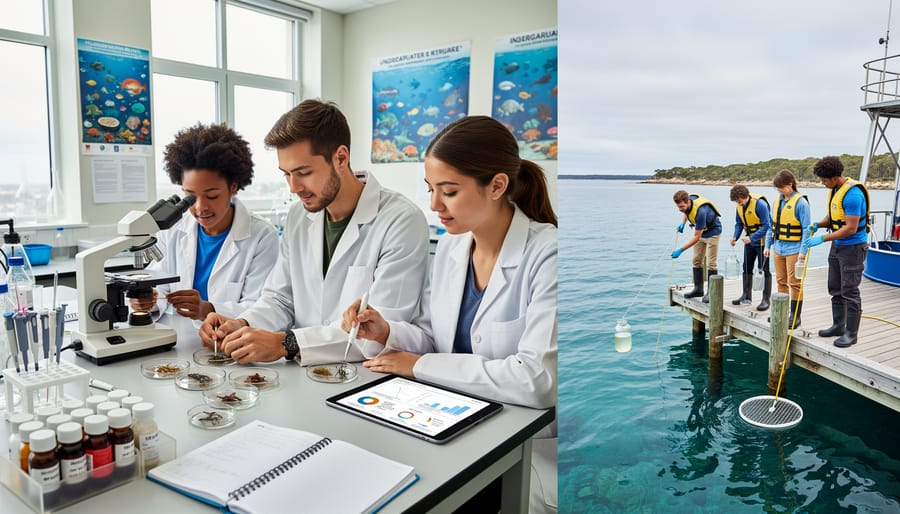
Practical experience is invaluable in marine biology, often making the difference between a good candidate and an exceptional one. Internships at aquariums, marine research centers, or conservation organizations provide hands-on skills that complement classroom learning. Research assistantships allow students to work directly with professors on ongoing projects, contributing to real scientific discoveries while building professional relationships. Many universities operate field stations in coastal areas where students can immerse themselves in marine ecosystems for weeks or months.
Study abroad programs offer unique opportunities to explore different marine environments, from tropical coral reefs to polar regions. These experiences broaden perspectives and expose students to international research methods and conservation approaches.
Finding these opportunities requires initiative. Start by checking your university’s marine biology department bulletin boards and websites. Reach out directly to professors whose research interests align with yours. Professional organizations like the Society for Conservation Biology often list internship opportunities. Volunteer at local aquariums or marine centers to build connections and demonstrate commitment.
When applying, emphasize relevant coursework, diving certifications, and any previous fieldwork. A passionate cover letter explaining your specific interests in marine conservation can set you apart. Many positions are competitive, so apply early and broadly. Remember, even unpaid volunteer experiences can lead to valuable networking connections and future paid positions in marine biology careers.
Advanced Education: Master’s and Doctoral Degrees
Master’s Degree: Deepening Your Expertise
For many aspiring marine biologists, a master’s degree represents the gateway to specialized research roles, management positions, and teaching opportunities at community colleges. This advanced degree typically requires two to three years of full-time study and allows you to develop deep expertise in a specific area of marine science, whether that’s coral reef ecology, marine mammal behavior, fisheries management, or oceanographic research.
When choosing a master’s program, you’ll encounter two primary options: thesis and non-thesis tracks. The thesis option involves conducting original research under a faculty advisor’s guidance, culminating in a substantial written document defending your findings. This path is ideal if you’re considering a PhD or research-focused career, as it provides invaluable experience in experimental design, data analysis, and scientific writing. The non-thesis option, sometimes called a professional master’s, emphasizes coursework and practical applications, often including internships or capstone projects. This route suits those pursuing careers in conservation management, environmental consulting, or policy.
Dr. Maria Santos, a marine conservation biologist working with endangered sea turtles in Costa Rica, shares her experience: “My master’s thesis on nesting site selection opened doors I never expected. The research skills I developed became the foundation of my entire career, and the connections I made with my advisor led to my current position.”
Most master’s programs require 30 to 45 credit hours, combining advanced coursework in marine ecology, oceanography, and statistics with hands-on fieldwork and laboratory experience, preparing you for the diverse challenges marine biologists face today.
Doctoral Programs: For Research and Academia
A doctoral degree (PhD) in marine biology represents the pinnacle of academic training and opens doors to specialized research positions, university professorships, and leadership roles in conservation organizations. The journey typically requires 4-7 years beyond a master’s degree, though some students enter PhD programs directly after completing their bachelor’s degree.
PhD candidates dedicate themselves to original research that advances our understanding of marine ecosystems. You’ll spend years investigating a specific question, whether that’s tracking migrations of endangered sea turtles, studying coral reef resilience to climate change, or discovering new deep-sea species. This intensive research culminates in a dissertation that contributes new knowledge to the field.
Dr. Ayana Johnson, a marine biologist and conservation strategist, shares that her doctoral research on Caribbean reef fish gave her the specialized expertise to influence ocean policy at the highest levels. “The PhD taught me not just facts, but how to ask the right questions and design experiments that matter,” she explains.
However, a doctorate isn’t necessary for all marine biology careers. Field researchers, aquarium directors, and many conservation coordinators thrive with master’s degrees. Pursue a PhD if you’re passionate about conducting independent research, teaching at the university level, or becoming a recognized expert in a specialized area. The commitment is substantial, but for those driven by scientific curiosity and discovery, it’s an incredibly rewarding path.
Balancing Education with Real-World Experience
Graduate education shouldn’t happen solely in lecture halls and laboratories. The most successful marine biology students actively seek opportunities to apply their knowledge in real-world settings from day one. This means volunteering with local aquariums, joining research expeditions during summer breaks, and attending marine science conferences even as a master’s student. Dr. Jennifer Santos, who now leads coral restoration projects in the Caribbean, recalls spending her graduate summers working with conservation organizations for free. “Those unpaid experiences taught me more about practical marine biology than any textbook could,” she shares. “I learned how to work with local communities, manage limited resources, and adapt research protocols to challenging field conditions.”
Publishing your research early, even in smaller journals or conference proceedings, builds credibility and opens doors. Start by co-authoring papers with your advisor, then work toward first-author publications before completing your degree. Professional networking proves equally valuable. Join organizations like the Society for Marine Mammalogy or the International Coral Reef Society as a student member. These connections often lead to postdoctoral positions, grant opportunities, and collaborative research projects. Maintain an active presence on professional platforms and don’t hesitate to email researchers whose work inspires you. Many established marine biologists eagerly mentor students who show genuine enthusiasm and initiative in the field.
Alternative and Complementary Credentials
Professional Certifications That Set You Apart
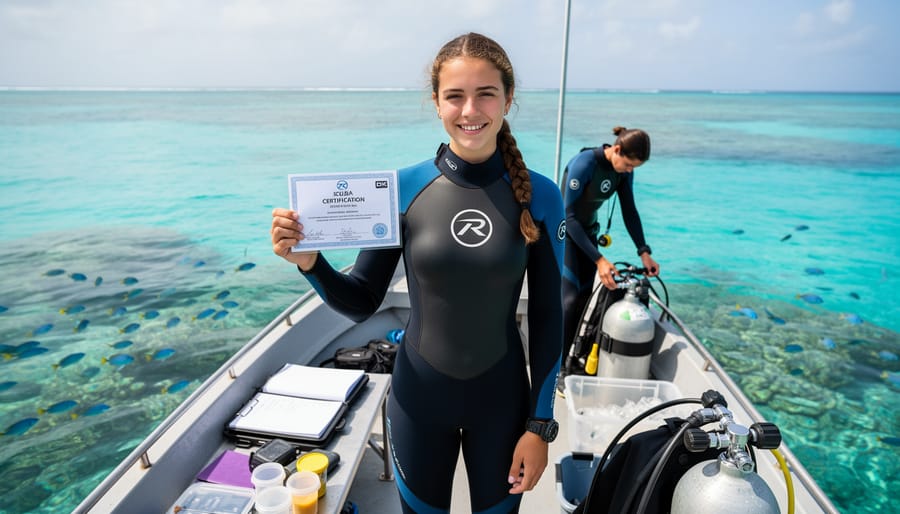
Beyond formal degrees, specialized certifications significantly enhance your marketability and fieldwork capabilities as a marine biologist. SCUBA diving certification stands as perhaps the most valuable credential you can obtain. Most positions requiring underwater research expect at least an Open Water certification, though many professionals pursue Advanced Open Water, Rescue Diver, or even Divemaster levels. Organizations like PADI and NAUI offer these programs, and dive shops near coastal universities often provide student discounts.
Boat operation licenses prove equally important for independent research. A basic boating safety certificate demonstrates competency, while captain’s licenses allow you to operate research vessels. Many marine biology programs incorporate these into their curriculum, but you can also obtain them through the U.S. Coast Guard or state boating authorities.
Technical skills certifications set competitive candidates apart. Geographic Information Systems training helps you map ocean habitats and track migration patterns. Proficiency in statistical software like R or Python for data analysis has become nearly essential in modern marine science. Several online platforms offer affordable courses in these areas.
Dr. Maria Chen, a coral reef researcher, shared that her advanced SCUBA certifications opened doors to international research projects immediately after graduation. She recommends accumulating diverse certifications early in your academic journey, as they demonstrate commitment and expand your research capabilities across various marine environments.
Science Communication and Outreach Training
Marine biologists increasingly need strong communication skills to bridge the gap between scientific research and public understanding. Many universities now offer environmental education certificates and science communication training as part of their marine biology programs. These courses teach how to translate complex scientific concepts into engaging narratives for diverse audiences, from schoolchildren to policymakers.
Professional development opportunities include workshops in science writing, documentary production, and social media engagement for conservation causes. Organizations like the National Association of Marine Educators provide certification programs specifically designed for marine environmental education. Marine conservation webinars offer accessible training in public speaking and educational program design.
Dr. Maya Chen, an aquarium educator, shares her journey: “My undergraduate degree gave me the science foundation, but a six-month environmental education certificate transformed my career. I learned to create interactive programs that inspire visitors to protect ocean ecosystems.”
Aspiring marine communicators can start by volunteering at aquariums, nature centers, or participating in citizen science programs. These experiences build confidence in public engagement while contributing to real conservation efforts. Whether your goal is museum education, environmental advocacy, or marine policy communication, these skills complement your scientific training and amplify your impact on ocean conservation.
Personal Stories: Marine Biologists Share Their Educational Journeys
Dr. Sarah Chen didn’t follow a straight path to becoming a marine mammal researcher. “I actually started college as a business major,” she shares with a laugh. “My parents wanted stability for me, and I wanted to make them happy.” Everything changed during a semester abroad in Australia, where she volunteered at a sea turtle rehabilitation center. “Holding that first turtle hatchling, helping it reach the ocean—I knew I couldn’t spend my life in an office.” Sarah switched her major to biology in her junior year, which meant an extra year of undergraduate work. She graduated at 23, later than planned, but pursued her passion. Today, she studies dolphin communication patterns in the Pacific and credits that volunteer experience as the pivotal moment that redirected her entire career.
For Marcus Thompson, the challenge wasn’t changing direction but overcoming financial barriers. Growing up in an inland community, Marcus fell in love with marine life through documentaries. “My high school didn’t offer marine biology classes, and my family couldn’t afford coastal college visits,” he explains. Marcus attended a local state university, majoring in general biology while working two part-time jobs. He strategically sought summer research internships at coastal institutions, often sleeping on friends’ couches to make it work. “Those three-month research positions gave me the field experience I needed,” he notes. His persistence paid off when he earned a fully-funded graduate assistantship. Now a coral reef restoration specialist, Marcus actively mentors first-generation college students pursuing marine science careers.
Dr. Yuki Nakamura’s journey highlights the value of interdisciplinary education. She earned her undergraduate degree in chemistry before discovering marine biology. “I thought I’d made a mistake choosing chemistry, but it became my greatest asset,” Yuki explains. Her strong chemistry background proved invaluable when studying ocean acidification during her marine biology master’s program. “Understanding the molecular processes behind climate change impacts on marine ecosystems set me apart from other candidates.” She encourages aspiring marine biologists to embrace diverse educational experiences rather than viewing them as detours.
These stories illustrate an important truth: there’s no single “correct” educational journey in marine biology. Whether you’re changing majors, starting later in life, navigating financial constraints, or bringing unexpected skills from other fields, your unique path can become your strength. What matters most is genuine passion for marine conservation, willingness to seek hands-on experience through internships and volunteer work, and persistence when facing obstacles. The marine biology community values diverse perspectives and backgrounds, recognizing that protecting our oceans requires varied approaches and fresh thinking from people with different life experiences.
Making Your Education Affordable and Accessible
Pursuing marine biology doesn’t have to drain your bank account. Numerous funding opportunities exist specifically for students passionate about ocean science, making this rewarding career path more accessible than many realize.
Scholarships tailored to marine science students are abundant and often less competitive than general academic scholarships. Organizations like the Marine Technology Society, Women Divers Hall of Fame, and the American Fisheries Society offer awards ranging from $1,000 to $10,000 annually. Many programs prioritize students demonstrating commitment to conservation, so volunteer experience at aquariums or beach cleanups strengthens applications significantly. Don’t overlook smaller, local scholarships from coastal conservation groups or diving clubs—these often go unnoticed but can add up substantially.
Graduate students have particularly strong funding prospects through research assistantships, which typically cover tuition while providing a stipend. Dr. Maria Santos, now a coral reef specialist, shares her experience: “My assistantship not only eliminated tuition costs but gave me invaluable research experience. I spent summers aboard research vessels while being paid—it felt like winning the lottery.” Teaching assistantships offer similar benefits while developing communication skills essential for any marine biologist.
Federal work-study programs place undergraduate students in marine labs, helping them gain hands-on experience while earning toward educational expenses. Coastal universities often partner with research facilities, creating opportunities where work directly aligns with coursework.
Grants from organizations like the National Science Foundation support both undergraduate research projects and graduate studies. The key is starting your search early—ideally a year before enrollment—and applying broadly. Create a spreadsheet tracking deadlines, requirements, and award amounts.
Community colleges offer another cost-effective strategy. Completing general education requirements at two-year institutions before transferring to marine science programs can reduce overall expenses by 40-50 percent while still providing access to quality oceanography courses.
Consider also the growing number of paid internships with government agencies like NOAA and conservation nonprofits. These positions provide income while building the experience graduate programs seek. The path to marine biology requires dedication, but financial barriers shouldn’t stop motivated students from pursuing their passion for ocean conservation.
Start Your Blue Career Journey Today
Whether you’re a high school student dreaming of swimming alongside whale sharks or a professional considering a career pivot toward ocean conservation, your marine biology journey can start today. The path forward depends on where you are right now, but the destination remains the same: a meaningful career protecting our blue planet.
For high school students, focus on building a strong foundation in biology, chemistry, and mathematics while seeking opportunities to connect with the ocean. Reach out to local aquariums, research stations, or conservation organizations about internships or shadowing opportunities. Many marine biologists trace their passion back to a single transformative experience during their teenage years.
Current undergraduates should prioritize hands-on research experiences, even if they’re unpaid at first. Approach professors about joining their lab teams, apply for summer research programs, and consider studying abroad at coastal field stations. These experiences shape your understanding of what marine biology actually entails and help you identify your specific interests within this broad field.
Career changers bring valuable transferable skills to marine conservation. Your background in education, business, communications, or technology can enhance research teams in ways purely scientific training cannot. Consider starting with volunteer opportunities that let you explore the field while maintaining your current career, then pursue additional coursework or certifications as your path becomes clearer.
Remember, every marine biologist started exactly where you are now, wondering if they had what it takes. Your passion for the ocean, combined with dedicated education and persistent curiosity, creates the foundation for a career that truly matters. The ocean needs advocates, researchers, and protectors now more than ever. Take that first step today.

jessica
Ava Singh is an environmental writer and marine sustainability advocate with a deep commitment to protecting the world's oceans and coastal communities. With a background in environmental policy and a passion for storytelling, Ava brings complex topics to life through clear, engaging content that educates and empowers readers. At the Marine Biodiversity & Sustainability Learning Center, Ava focuses on sharing impactful stories about community engagement, policy innovations, and conservation strategies. Her writing bridges the gap between science and the public, encouraging people to take part in preserving marine biodiversity. When she’s not writing, Ava collaborates with local initiatives to promote eco-conscious living and sustainable development, ensuring her work makes a difference both on the page and in the real world.