Marine Biodiversity Science Center

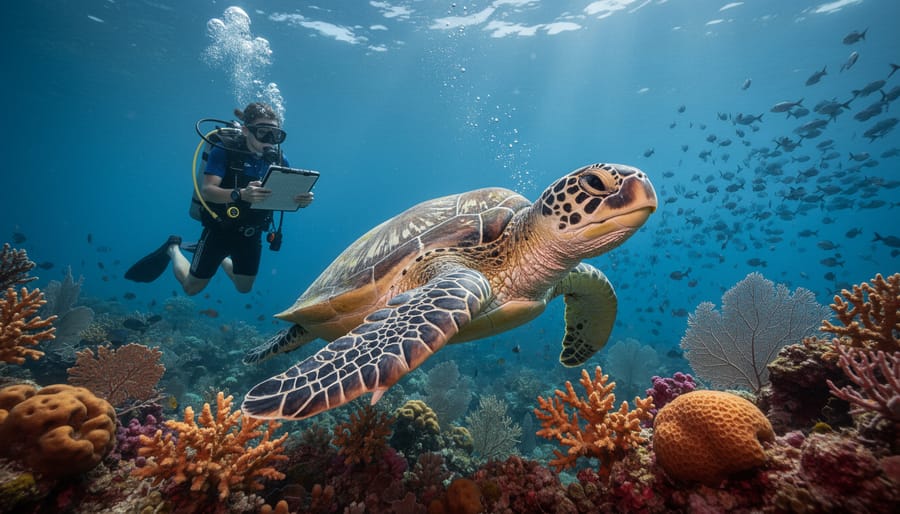
Explore Oceana.org’s marine life database to access free, curriculum-ready content featuring hundreds of species profiles, habitat information, and conservation status updates that align with Next Generation Science Standards and Ocean Literacy Principles. These resources transform abstract marine concepts into tangible learning experiences, complete with high-resolution imagery, scientific data presented in student-friendly formats, and real-world conservation case studies your young learners can immediately connect with.
Download species fact sheets and interactive materials to build lesson plans around charismatic megafauna like sea turtles and sharks, then extend learning by introducing lesser-known species that play critical ecosystem roles. Marine biologist Dr. Sarah Henning discovered that when her students researched Oceana’s campaigns to protect deep-sea coral habitats, their retention of marine food web concepts increased by 40% compared to textbook-only instruction. The tangible connection between scientific understanding and active conservation creates lasting engagement that traditional curricula often miss.
Structure your programming around Oceana’s campaign frameworks, which break complex marine issues into age-appropriate action steps. Middle school students can analyze fishery data to understand bycatch impacts, while elementary learners might track sea turtle migration patterns using Oceana’s mapping tools. Each resource connects biological science to conservation outcomes, demonstrating how knowledge translates directly into environmental stewardship.
Partner your educational initiatives with Oceana’s volunteer network to provide students with mentorship from working marine scientists and conservationists. These connections move beyond classroom walls, offering young people authentic research experiences, beach cleanup coordination opportunities, and pathways to contribute citizen science data that supports ongoing conservation campaigns. When youth see their efforts informing real policy decisions and habitat protection measures, marine literacy transforms from academic exercise into personal mission.
The Power of Marine Literacy in Youth Development
What Marine Literacy Really Means
Marine literacy extends far beyond memorizing ocean facts or identifying sea creatures. At its core, it represents a deep understanding of how the ocean influences us and how our actions impact marine ecosystems. True ocean literacy connects the dots between healthy seas and human survival, recognizing that the ocean produces over half the oxygen we breathe, regulates our climate, and provides food security for billions of people worldwide.
For young people, becoming ocean-literate means developing both knowledge and a sense of responsibility. It involves understanding complex relationships within marine ecosystems while recognizing their role as stewards of ocean health. Through marine literacy programs, youth learn to think critically about environmental challenges and discover how individual choices ripple outward to affect global ocean systems.
Marine biologist Dr. Sarah Chen shares how this framework transformed her approach: “When I started teaching marine science, I focused solely on facts. Now, I help students see themselves as active participants in ocean conservation. They understand that choosing sustainable seafood or reducing plastic use directly impacts the creatures we study together.”
Oceana.org provides resources that make these connections tangible and accessible. Their content bridges scientific understanding with practical action, empowering young ocean champions to make informed decisions. When youth grasp how ocean health directly affects their future, from coastal protection to food systems, they become motivated advocates ready to create meaningful change in their communities and beyond.
Why Youth Engagement Matters Now More Than Ever
Our oceans face unprecedented challenges that demand immediate attention and long-term commitment. Scientists estimate that 90% of large fish populations have been depleted, and plastic pollution now affects more than 800 marine species. Climate change continues to warm ocean waters, causing coral bleaching events that devastate entire reef ecosystems. These alarming trends underscore why cultivating ocean stewardship in young people isn’t just beneficial—it’s essential for the future of our blue planet.
When young people develop a deep understanding of marine ecosystems, they become powerful advocates for change. Research shows that children who participate in marine education programs are three times more likely to adopt sustainable behaviors as adults. This ripple effect extends beyond individual choices. An ocean-literate generation brings fresh perspectives to conservation challenges, drives innovation in sustainable technologies, and holds decision-makers accountable for protecting marine resources.
The timing couldn’t be more critical. The United Nations Decade of Ocean Science for Sustainable Development runs through 2030, emphasizing the urgent need for collective action. Young people today will inherit these decisions and their consequences. Marine biologist Dr. Ayana Elizabeth Johnson notes from her work with coastal communities that youth participants often become the most effective communicators about ocean issues, translating complex science into compelling narratives that inspire their peers and families.
By investing in youth engagement now, we’re not just educating the next generation—we’re empowering them to become active participants in marine conservation, creating a multiplier effect that extends far into the future.
Oceana’s Marine Life Resources as Educational Foundation
Species Profiles That Tell Compelling Stories
Oceana’s species profiles transform scientific data into captivating narratives that resonate deeply with young learners. Rather than presenting dry facts about ocean dwellers, these profiles weave together biology, behavior, and conservation challenges into stories that spark curiosity and emotional connection.
Consider the hawksbill sea turtle’s journey—a species profiled extensively on Oceana’s platform. Educators can guide students through this ancient mariner’s life cycle, from hatchlings navigating moonlit beaches to adults traveling thousands of miles across ocean basins. The profile reveals how these turtles serve as gardeners of coral reefs, maintaining ecosystem balance while facing threats from plastic pollution and illegal wildlife trade. This narrative approach helps youth understand that conservation isn’t abstract—it’s about protecting individual lives with remarkable stories.
Marine biologist Dr. Sarah Chen shares her experience using Oceana profiles in classroom settings: “When students learn about vaquita porpoises—the world’s smallest and most endangered marine mammal—they don’t just memorize facts. They become invested in the survival of fewer than ten individuals left in Mexico’s Gulf of California. That personal connection transforms passive learners into active advocates.”
These profiles also highlight actionable paths forward. Students discover how citizen science initiatives, habitat restoration projects, and policy advocacy directly impact species survival. By presenting marine life as characters in ongoing conservation stories—stories where young people can contribute meaningful chapters—Oceana’s resources cultivate both knowledge and empathy, essential ingredients for the next generation of ocean stewards.
Conservation Status and Real-World Context
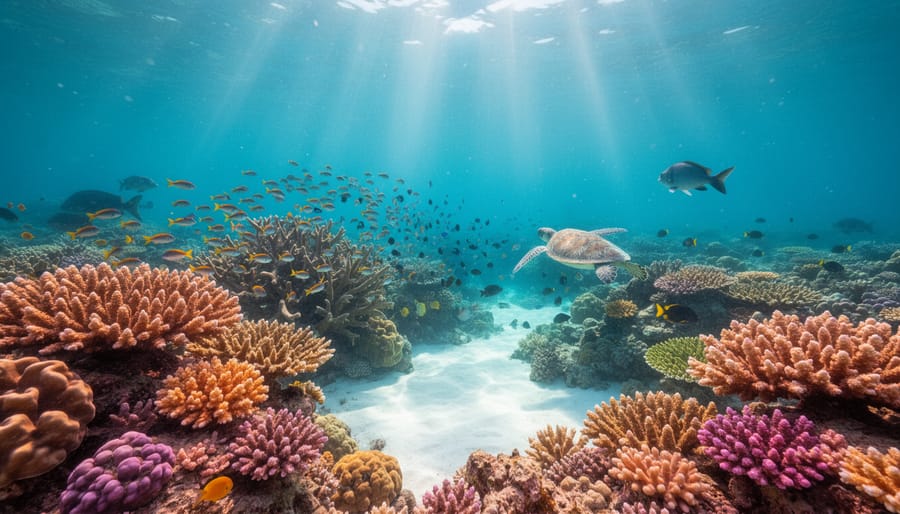
Understanding the conservation status of marine life transforms abstract environmental concerns into tangible realities that resonate with young learners. When youth explore Oceana.org’s comprehensive species profiles, they encounter real-time information about which animals face extinction threats and why. This knowledge creates personal connections that statistics alone cannot achieve. A student learning that sea turtles mistake plastic bags for jellyfish, or that vaquita porpoises number fewer than ten individuals worldwide, begins to see themselves as potential changemakers rather than passive observers.
Oceana’s platform presents conservation challenges through an accessibility lens that empowers rather than overwhelms. By examining marine species at risk, young people discover the interconnected nature of ocean threats including overfishing, habitat destruction, pollution, and climate change. These profiles avoid doom-and-gloom messaging while honestly addressing urgent realities. Marine biologist Dr. Sarah Chen shares how she uses these resources in her youth workshops: “When students see both the threats and the solutions being implemented, they understand that their generation has the power to reverse troubling trends.”
The conservation status information also introduces youth to scientific monitoring methods, teaching them how researchers track population changes and measure ecosystem health. This foundation in evidence-based conservation prepares students to evaluate environmental claims critically and participate meaningfully in restoration efforts. Many young volunteers report that understanding endangered species classifications inspired them to join beach cleanups, support sustainable seafood initiatives, or pursue marine science careers. By contextualizing conservation challenges within frameworks of hope and action, these resources cultivate a generation equipped to protect our ocean’s remarkable biodiversity.
Building Effective Marine Literacy Programs for Youth
Age-Specific Learning Approaches
Tailoring marine biodiversity education to different age groups ensures that students grasp complex concepts while staying engaged and inspired. Understanding developmental stages helps educators maximize the impact of Oceana’s rich marine life resources.
For elementary students (ages 5-10), focus on wonder and discovery. Use Oceana’s vivid imagery and videos to introduce charismatic species like sea turtles, dolphins, and colorful reef fish. Simple storytelling works beautifully at this age—share how a sea otter uses tools or how coral polyps build underwater cities. Hands-on activities like creating ocean dioramas or sorting pictures of marine creatures by habitat make learning tangible. Keep scientific terms basic, explaining that “predator” means an animal that hunts others for food, or that “ecosystem” is like a neighborhood where ocean animals live together.
Middle school students (ages 11-13) are ready for deeper connections. Introduce food webs, adaptations, and the impact of human activities on marine ecosystems. Oceana’s conservation campaigns provide real-world context for discussing overfishing, pollution, and climate change. At this stage, incorporate personal stories from marine biologists who describe their career paths and daily work. Students can analyze data from fish population studies or map migration patterns, developing critical thinking skills while exploring marine science.
High school students (ages 14-18) can tackle complex issues like marine policy, sustainable fishing practices, and ocean acidification. Challenge them to evaluate scientific studies, debate conservation strategies, and explore volunteer opportunities with organizations like Oceana. Encourage them to design their own research projects or advocacy campaigns, transforming their learning into meaningful action that protects our oceans for future generations.
Interactive and Experiential Learning Methods
Bringing marine life into educational settings requires more than textbooks and lectures. Oceana.org’s marine life resources provide the foundation for effective marine education programs that transform passive learning into active discovery. These interactive approaches help students connect emotionally with ocean ecosystems while developing critical thinking skills about conservation challenges.
Virtual marine encounters offer an accessible starting point for classrooms far from coastlines. Oceana’s extensive species profiles, complete with high-quality images and videos, enable students to observe marine animals in their natural habitats. Teachers can organize virtual expeditions where students research specific species, tracking their behaviors, habitats, and conservation status. These digital explorations become especially powerful when students share findings through presentations or creative projects, fostering both research skills and public speaking confidence.
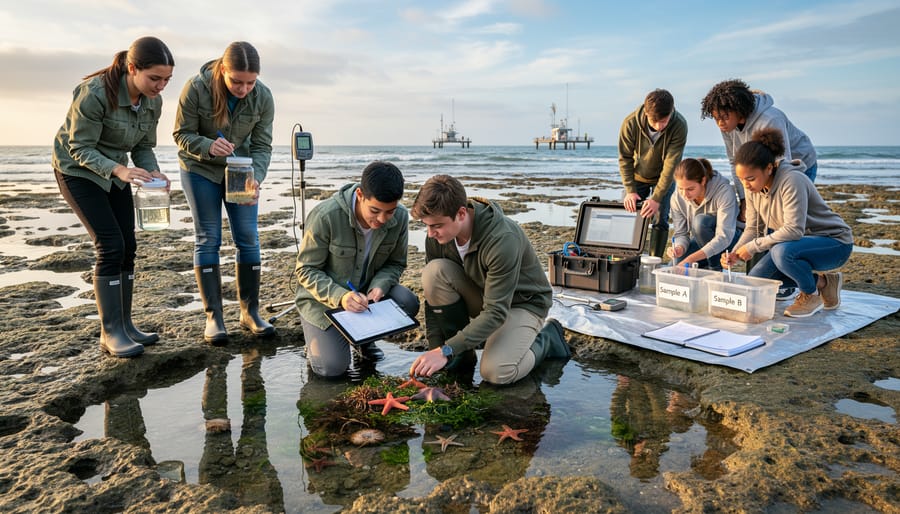
Citizen science initiatives bridge the gap between professional research and community engagement. Programs like beach cleanup data collection or marine debris monitoring allow young people to contribute meaningful information to actual conservation efforts. Students can document their findings using Oceana’s educational frameworks, learning to identify plastic pollution sources or track invasive species. This real-world data collection teaches scientific methodology while demonstrating how individual observations contribute to larger conservation goals.
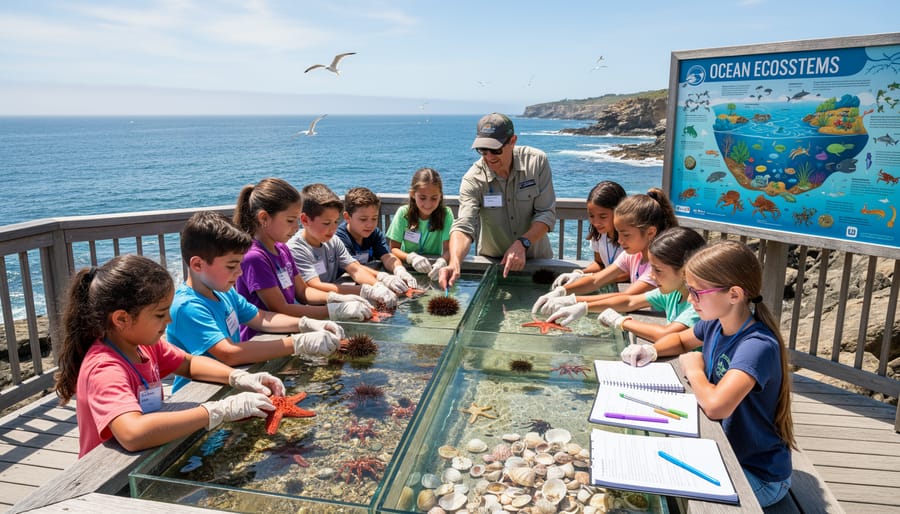
Hands-on activities bring abstract concepts into tangible reality. Creating food web models using Oceana’s species information helps students visualize ecosystem interconnections. Building miniature ocean zones with recycled materials demonstrates how different marine environments support diverse life forms. Water quality testing experiments reveal how pollution affects marine organisms, making conservation challenges concrete and understandable.
Dr. Sarah Martinez, a marine biologist who volunteers with youth programs, shares: “When students touch a starfish or examine seaweed under microscopes, their eyes light up. That wonder becomes the foundation for lifelong ocean stewardship.”
These experiential methods work because they engage multiple senses and learning styles, making marine conservation personally relevant. Students transition from passive consumers of information to active participants in protecting our oceans.
Real Stories: Youth Making a Difference
When fifteen-year-old Maya Rodriguez first joined her school’s marine conservation club, she never imagined she would become a voice for ocean protection in her coastal Florida community. After participating in a beach cleanup organized through Oceana’s educational resources, she discovered microplastics embedded in the sand where she had played as a child. That moment sparked a transformation that led her to present research findings to her city council, resulting in new local policies restricting single-use plastics.
Maya’s story exemplifies how marine education transforms lives and creates lasting environmental advocates. Dr. Elena Santos, a marine biologist who mentors youth through Oceana’s programs, notes, “When students connect emotionally with marine life, they don’t just learn facts—they become guardians. I’ve watched quiet teenagers find their voices when speaking about coral reefs or sea turtles they’ve studied.”
In California, seventeen-year-old James Chen turned his fascination with kelp forest ecosystems into action after participating in Oceana’s virtual marine literacy program. He created a documentary showcasing the importance of kelp habitats, which has been viewed by thousands of students across his school district. “Understanding how kelp forests support entire food webs made me realize that protecting one species means protecting hundreds,” James explains. “Now I can’t imagine not being involved in ocean conservation.”
These young advocates demonstrate the ripple effect of quality marine education. Through structured programs that combine scientific learning with hands-on experiences, students develop both knowledge and agency. Dr. Marcus Thompson, who coordinates youth outreach initiatives, observes, “The most powerful aspect is watching students realize their actions matter. A sixteen-year-old organizing a community awareness event about overfishing has as much impact as any adult advocacy campaign.”
From organizing fundraisers for marine protected areas to leading educational workshops for younger students, youth engaged through marine literacy programs are proving that age is no barrier to meaningful conservation work. Their fresh perspectives, digital fluency, and genuine passion are reshaping how communities approach ocean protection, creating a generation equipped not just with information, but with the commitment and skills to drive real change.
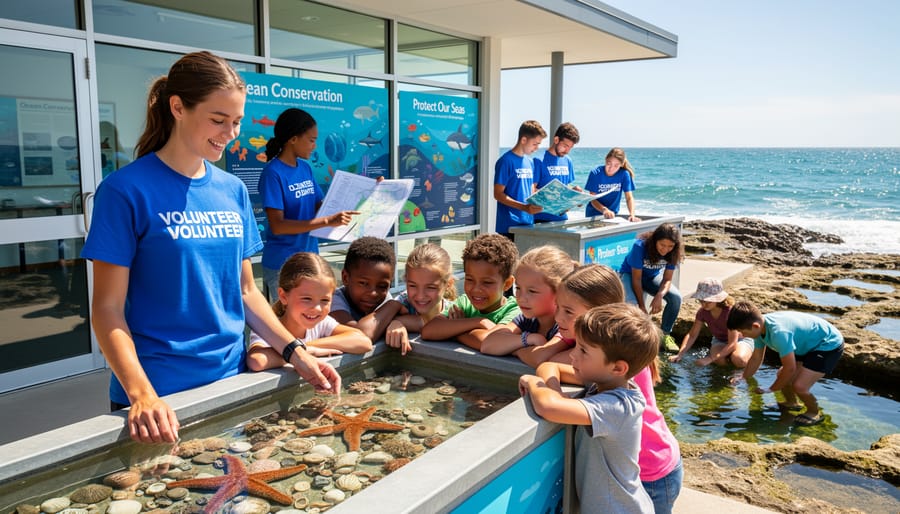
Getting Started: Volunteer and Partnership Opportunities
Oceana offers numerous pathways for educators, students, and organizations to actively participate in marine conservation while expanding their ocean literacy. Whether you’re a classroom teacher seeking curriculum support or a community group ready to take action, these opportunities create meaningful connections between people and our oceans.
Educators can access Oceana’s comprehensive library of marine life resources, including downloadable lesson plans, species fact sheets, and educational videos designed for various age groups. These materials align with Next Generation Science Standards and can be seamlessly integrated into existing science curricula. Teachers interested in building ocean stewards will find particular value in Oceana’s expedition footage and marine biologist interviews, which bring real-world conservation directly into the classroom.
Student volunteers, particularly those pursuing marine science or environmental studies, can participate in citizen science projects that contribute to actual research. These programs range from beach cleanup data collection to monitoring local marine species populations. Marine biologist Dr. Sarah Chen shares, “My journey began as a high school volunteer cataloging coastal biodiversity. That hands-on experience showed me how individual observations contribute to protecting entire ecosystems.”
Organizations seeking partnerships can collaborate with Oceana on community education events, beach conservation days, or school assembly programs. Local aquariums, nature centers, and environmental nonprofits often co-host educational workshops that combine Oceana’s expertise with local marine knowledge.
To get started, visit Oceana’s education portal where you’ll find a partnership inquiry form and volunteer application system. Many programs require minimal training and can accommodate various time commitments, making ocean conservation accessible to everyone regardless of experience level. Remember, every contribution toward marine literacy strengthens our collective ability to protect ocean biodiversity for future generations.
The future of our oceans rests in the hands of today’s youth, and marine literacy programs serve as the bridge connecting young minds with the underwater world they will inherit. By integrating Oceana.org’s comprehensive resources into educational frameworks, we create pathways for meaningful engagement that transform curiosity into conservation action. The evidence is clear: when young people understand marine ecosystems and their crucial role in planetary health, they become powerful advocates for change.
Dr. Maria Santos, a marine biologist who coordinates youth programs along the Gulf Coast, shares an inspiring observation: “I’ve watched teenagers who started as casual beach cleanup volunteers evolve into informed activists presenting to their city councils about single-use plastic bans. Marine literacy doesn’t just teach facts; it cultivates stewardship that ripples through entire communities.”
The time to act is now. Begin by exploring volunteer opportunities through Oceana and local marine conservation groups. Educators can download lesson plans and activity guides to introduce marine concepts in classrooms. Parents can initiate family ocean literacy projects using accessible online resources. Students themselves can establish marine conservation clubs at their schools, using Oceana’s advocacy toolkits to drive real policy changes.
Every action counts, whether monitoring local beach health, participating in citizen science projects, or simply sharing knowledge with peers. As these young ocean advocates grow, they carry forward an essential mission: protecting marine biodiversity for generations to come. Together, through education and action, we’re building an unprecedented movement where youth-led conservation creates lasting, transformative change for our oceans.

jessica
Ava Singh is an environmental writer and marine sustainability advocate with a deep commitment to protecting the world's oceans and coastal communities. With a background in environmental policy and a passion for storytelling, Ava brings complex topics to life through clear, engaging content that educates and empowers readers. At the Marine Biodiversity & Sustainability Learning Center, Ava focuses on sharing impactful stories about community engagement, policy innovations, and conservation strategies. Her writing bridges the gap between science and the public, encouraging people to take part in preserving marine biodiversity. When she’s not writing, Ava collaborates with local initiatives to promote eco-conscious living and sustainable development, ensuring her work makes a difference both on the page and in the real world.