Marine Biodiversity Science Center

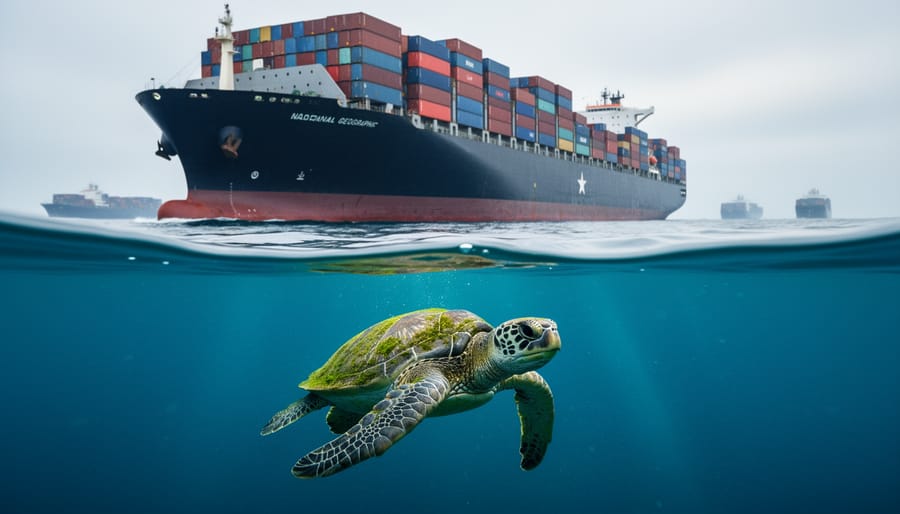
For over 5,000 years, maritime trade has shaped human civilization, connecting distant continents and fueling economic growth across every ocean. Today, approximately 90% of global commerce travels by sea, with more than 50,000 merchant ships transporting everything from consumer electronics to crude oil across our planet’s waters. Yet this vast network of ocean highways carries a hidden cost that rarely appears in economic reports: the systematic degradation of marine ecosystems that sustain all life on Earth.
Every container ship crossing the Pacific, every tanker navigating the Suez Canal, and every bulk carrier traversing the Indian Ocean leaves an invisible wake of environmental consequences. Ballast water discharge introduces invasive species that devastate native habitats. Underwater noise pollution disrupts whale migration patterns and dolphin communication. Oil spills, though less frequent than decades past, still contaminate coastlines and destroy fragile coral reef systems. Ship strikes kill thousands of endangered marine mammals annually, while air pollution from maritime vessels contributes significantly to ocean acidification.
Understanding this relationship between commerce and conservation is not about halting trade, but transforming it. Marine biologist Dr. Sarah Chen, who spent fifteen years studying shipping lane impacts on sea turtle populations, notes that even small route adjustments can reduce wildlife collisions by up to 80%. The solutions exist—cleaner fuels, quieter propulsion systems, protected marine corridors, and stricter international regulations—but implementing them requires informed public pressure and collective commitment to preserving ocean health while sustaining global connectivity.
The Dawn of Maritime Commerce: When Humans First Changed the Seas
Ancient Trade Routes and Early Environmental Impact
Long before modern container ships began crossing our oceans, ancient civilizations were already leaving their mark on marine ecosystems. The Phoenicians, masters of Mediterranean navigation around 1200 BCE, established extensive trade networks that connected distant coastlines. These early merchants transported not just goods, but also marine organisms clinging to ship hulls and hiding in cargo holds, beginning humanity’s unintentional redistribution of species across the seas.
Greek traders expanded these routes further, while the maritime portion of the Silk Road connected the Mediterranean to the Indian Ocean and beyond. Even these relatively small wooden vessels caused measurable environmental changes. Coastal forests were harvested for shipbuilding at unprecedented scales, altering shoreline habitats. Anchoring practices damaged seagrass beds and coral formations in busy ports, creating degradation patterns that intensified over centuries.
The countless ancient shipwrecks dotting our seabeds tell stories of these early impacts. Marine archaeologists have discovered non-native mollusk species in archaeological sites far from their original ranges, evidence that biological invasions began thousands of years ago. Port cities became hotspots where species from different regions mixed, sometimes outcompeting native organisms.
Understanding these historical patterns helps us recognize that while maritime trade has always affected marine ecosystems, today’s scale and speed have amplified these impacts exponentially. This knowledge empowers us to make more informed conservation decisions and appreciate why protecting our coastal habitats matters now more than ever.

The Age of Exploration: Accelerating Ocean Change
The 15th through 17th centuries marked a turning point in humanity’s relationship with the ocean. European voyages of exploration transformed ancient maritime traditions into globe-spanning networks, dramatically accelerating environmental impacts that would shape modern marine challenges.
As Portuguese, Spanish, Dutch, and British ships crisscrossed previously isolated ocean basins, they unintentionally created highways for biological invasions. Ships’ ballast water and fouled hulls transported organisms thousands of miles from their native habitats. Rats reached remote Pacific islands, devastating seabird colonies. Marine species hitchhiked across oceans, establishing populations that forever altered coastal ecosystems.
The demand for ports, shipyards, and trading posts drove unprecedented coastal development. Mangrove forests fell to make way for harbors. Wetlands were drained for warehouses. These patterns, established centuries ago, created blueprints for modern port expansion that continues threatening critical marine habitats today.
Understanding this historical acceleration helps us recognize that current biodiversity threats aren’t inevitable. They stem from choices made generations ago. By acknowledging these patterns, we can make different decisions now, supporting sustainable shipping practices and protecting remaining coastal ecosystems through informed conservation action.
Modern Maritime Trade: A Double-Edged Sword for Ocean Life

The Ballast Water Crisis: Unwanted Passengers Reshaping Ecosystems
Every day, commercial vessels crisscrossing our oceans carry silent hitchhikers that pose one of the greatest threats to marine ecosystems. Ships take on ballast water in one port to maintain stability during transit, then discharge it thousands of miles away, releasing an estimated 10 billion tons of ballast water globally each year. This water teems with life: bacteria, algae, larvae, and small invertebrates that can establish populations far from their native habitats.
The consequences have been devastating. The zebra mussel, originally from the Caspian Sea, arrived in North America’s Great Lakes via ballast water in the 1980s. These prolific breeders now blanket underwater surfaces, clog water intake pipes, and outcompete native species for food, causing billions in economic damage and fundamentally altering food webs. Similarly, the northern Pacific seastar has wreaked havoc on Australian shellfish populations after ballast water introductions.
Marine biologist Dr. Sarah Chen recalls surveying San Francisco Bay in 2015: “We documented over 200 non-native species, many arriving through ballast discharge. The ecological memory of what this bay once was exists only in historical records now.”
Current research reveals that ballast-mediated invasions occur faster than ecosystems can adapt. Scientists estimate that a new invasive species establishes itself somewhere in the world every nine weeks through this pathway alone. The International Maritime Organization now requires ships to treat ballast water before discharge, using filtration systems or chemical treatments to kill organisms. While progress continues, many vessels still lack proper equipment.
Volunteers can contribute to monitoring efforts through coastal biodiversity surveys, helping scientists track invasive species spread. These citizen science initiatives provide crucial early detection data, demonstrating how collective observation strengthens our understanding and response to this ongoing crisis.
When Commerce Collides With Marine Life
The expansion of global maritime trade has created an invisible battlefield beneath the waves, where commercial vessels and marine life are in constant, often deadly, conflict. Each year, thousands of ships traverse migration corridors and feeding grounds, leaving behind a trail of casualties and disruption that threatens marine ecosystems worldwide.
Ship strikes represent one of the most immediate threats to large marine animals. Whales, particularly slow-moving species like North Atlantic right whales, face catastrophic encounters with container ships and tankers traveling at speeds exceeding 20 knots. Marine biologist Dr. Sarah Chen recalls examining a juvenile humpback whale washed ashore near a major shipping lane: “The propeller wounds told a heartbreaking story. This whale survived for days before succumbing to its injuries.” These collisions kill an estimated 20,000 whales annually, pushing already vulnerable populations closer to extinction. Sea turtles, whale sharks, and other megafauna face similar risks, particularly in areas where shipping routes intersect with critical habitats.
Beyond physical strikes, maritime commerce generates a relentless auditory assault on ocean life. Commercial shipping produces low-frequency noise that travels hundreds of miles underwater, interfering with whale communication, disrupting migration patterns, and causing chronic stress in marine mammals that rely on echolocation. Studies show that ambient ocean noise has doubled each decade in some regions, fundamentally altering how marine species navigate, find food, and locate mates.
Oil spills compound these challenges. While catastrophic events like tanker accidents capture headlines, routine operational discharges and smaller incidents release millions of gallons annually, coating seabirds, suffocating coral reefs, and contaminating the food chain for decades.
The encouraging news? Solutions exist. Volunteer opportunities with organizations monitoring shipping impacts help collect crucial data, while citizen scientists contribute to whale-spotting networks that alert vessels to marine mammal presence, demonstrating how collective action creates meaningful change.
Coastal Development and Port Expansion: Trading Habitats for Highways
Lost Nurseries: How Ports Erase Critical Breeding Grounds
Port expansion systematically destroys some of the ocean’s most productive ecosystems, erasing the very foundations that countless marine species depend upon for survival. Mangrove forests, seagrass meadows, salt marshes, and estuaries serve as essential nurseries where juvenile fish, crustaceans, and mollusks find shelter from predators while feeding and growing to maturity. These transitional zones between land and sea harbor extraordinary biodiversity, yet they’re frequently targeted for development because of their sheltered waters and proximity to established shipping routes.
When ports replace mangroves with concrete berths, we lose more than trees. Studies show that up to 80% of commercially important fish species spend critical early life stages in these coastal nurseries. A single hectare of healthy seagrass can support 40,000 fish and 50 million invertebrates. The sediment churned up during dredging operations smothers these underwater meadows, while chemical runoff from ships creates dead zones where oxygen levels plummet.
Marine biologist Dr. Sarah Chen has spent fifteen years documenting habitat loss around expanding ports. “I’ve watched nursery grounds that sustained coastal communities for generations disappear in months,” she shares. “The fish populations crash within a few years because there’s nowhere for juveniles to mature safely.”
The cascading effects extend far beyond local waters. Many species rely on these nurseries before migrating across oceans, meaning port development in one location can devastate fisheries thousands of miles away. Fortunately, innovative port designs now incorporate artificial reefs and restored wetlands, proving that maritime infrastructure and marine habitat can coexist with proper planning and commitment.

A Marine Biologist’s Perspective: Witnessing Change Firsthand
I’ve spent the last eight years monitoring seagrass meadows along the California coast, just fifteen miles from one of North America’s busiest container ports. When I first arrived as a graduate student, these underwater gardens teemed with juvenile fish darting between swaying blades while sea turtles grazed peacefully. Today, the changes I’ve documented tell a different story.
Each research dive reveals the toll of increased maritime traffic. Propeller scars crisscross the seafloor like wounds that refuse to heal. Sediment stirred up by massive cargo vessels now blocks the sunlight these plants desperately need for photosynthesis. I’ve watched entire patches disappear, taking with them the nursery habitat for dozens of commercially important fish species.
The most heartbreaking moment came last spring when I found a seahorse clinging to a piece of plastic debris where healthy seagrass once stood. That image drives my work every day. But I’ve also witnessed encouraging signs. When we partnered with local shipping companies to designate marine protected corridors, recovery began within months. Young seagrass shoots appeared in formerly barren zones.
This experience taught me that science alone isn’t enough. We need people who care, who understand what’s at stake. That’s why I now lead volunteer monitoring programs, training community members to become citizen scientists. Together, we’re building the evidence and the movement needed to protect these irreplaceable coastal ecosystems.
Economic Growth Meets Conservation: Finding the Balance
International Treaties and Regulations Making Waves
The maritime industry has increasingly embraced international frameworks designed to protect ocean ecosystems from shipping impacts. The International Maritime Organization’s Ballast Water Management Convention, which entered into force in 2017, represents a milestone in preventing the spread of invasive aquatic species. Ships traveling between ports previously discharged untreated ballast water containing organisms that devastated local ecosystems. Now, vessels must install treatment systems that eliminate these biological hitchhikers before releasing water, protecting native marine communities.
Marine Protected Areas (MPAs) are reshaping traditional shipping routes to safeguard critical habitats. These designated zones restrict or redirect maritime traffic away from vulnerable ecosystems like coral reefs, seagrass beds, and breeding grounds. While this may add distance to some voyages, the ecological benefits are substantial. Dr. Sarah Chen, a marine biologist working in the Mediterranean, shares: “Watching shipping lanes shift around our protected spawning areas has given local fish populations a fighting chance to recover.”
Speed restrictions in sensitive waters provide another conservation tool gaining traction. Mandatory slow-downs in areas frequented by endangered whales, such as North Atlantic right whales, significantly reduce fatal ship strikes. These “slow zones” demonstrate how modest operational changes can yield dramatic conservation results. Many ocean conservation efforts now advocate for expanding these protective measures globally, proving that maritime commerce and biodiversity protection can coexist when regulations prioritize our shared ocean health.

Innovation on the High Seas: Technology That’s Changing the Game
The maritime industry is undergoing a technological revolution that offers genuine hope for our ocean ecosystems. While challenges remain significant, innovative solutions are emerging that demonstrate how commerce and conservation can coexist.
Cleaner fuel alternatives are leading this transformation. Liquefied natural gas (LNG) reduces sulfur oxide emissions by up to 90% compared to traditional heavy fuel oils, while some vessels now experiment with hydrogen fuel cells and ammonia-based propulsion systems. These alternatives dramatically decrease air pollution that affects both marine life and coastal communities. Several major shipping companies have committed to achieving net-zero emissions by 2050, with some already deploying vessels powered by methanol and biofuels.
Ballast water treatment systems represent another critical advancement. Ships traditionally discharged untreated ballast water containing invasive species into new ports, disrupting local ecosystems. Modern treatment technologies use filtration, ultraviolet light, and electrochlorination to eliminate organisms before discharge, protecting native marine biodiversity. The International Maritime Organization now requires these systems on all vessels, preventing the spread of potentially devastating invasive species.
Perhaps most exciting for marine mammal conservation is the development of AI-powered collision avoidance technology. These sophisticated systems use acoustic monitoring and predictive algorithms to detect whale presence and adjust vessel routes in real-time. Marine biologist Dr. Sarah Chen, who collaborates with shipping companies to refine these technologies, shares that early trials have reduced ship strikes by 80% in high-risk corridors. Quieter propulsion systems, including electric hybrid engines and specialized propeller designs, further minimize acoustic pollution that disrupts whale communication and navigation.
These innovations prove that protecting our oceans while maintaining global trade is not just possible but increasingly practical and economically viable.
What You Can Do: Joining the Movement for Sustainable Shipping
Volunteer Opportunities in Maritime Conservation
You can make a tangible difference in protecting marine ecosystems from shipping impacts through several rewarding volunteer programs. The Ocean Conservation Research Collective offers citizen science opportunities where volunteers help monitor vessel traffic patterns and document marine mammal behavior in shipping lanes. These observations contribute directly to research that shapes safer maritime policies.
For those passionate about advocacy, the International Maritime Conservation Alliance trains volunteers to participate in public comment periods for proposed shipping routes and port expansions. Your voice can influence decisions that affect critical habitats. Marine biologist Dr. Sarah Chen notes, “Our volunteer advocates have successfully pushed for seasonal shipping restrictions in whale migration corridors, proving that informed public participation works.”
Beach-based programs like Coastal Guardians allow volunteers to survey marine debris from shipping activities, collecting data on pollution sources and trends. This hands-on work requires no prior experience and welcomes families and students.
If you prefer remote involvement, the Global Shipping Watch project needs volunteers to analyze satellite imagery, identifying unreported vessel activity in marine protected areas. Even a few hours monthly contributes to conservation enforcement efforts. These programs demonstrate that protecting our oceans from maritime trade impacts requires community participation alongside scientific expertise.
Consumer Choices That Protect Ocean Highways
Every purchase we make sends ripples through global supply chains, and our consumer choices hold remarkable power to shape maritime practices. When selecting products, consider their journey across ocean highways. Look for companies transparent about their shipping methods and those investing in cleaner vessel technologies. Supporting businesses that use slow steaming practices, shore power when docked, or newer, more efficient ships creates market demand for environmental responsibility.
The seafood industry offers particularly direct opportunities for impact. Choosing sustainable seafood from fisheries using environmentally responsible practices reduces pressure on marine ecosystems already stressed by shipping traffic. Many retailers now provide information about sourcing methods, making informed decisions easier than ever.
Beyond individual purchases, collective action amplifies impact. Join advocacy groups pressuring shipping companies to adopt cleaner fuels and reduce speeds in sensitive marine habitats. Write to your representatives supporting policies that strengthen emission standards and enforce whale protection zones along shipping routes. Marine biologist Dr. Sarah Chen shares her experience: “I’ve witnessed shipping companies completely redesign routes after sustained public pressure. When consumers and advocacy groups unite, industry leaders listen.”
Consider volunteering with organizations monitoring maritime traffic impacts on marine life. These groups collect crucial data influencing policy decisions while raising public awareness. Even small actions matter. Sharing information about maritime environmental impacts through social media or community groups educates others, building the groundswell needed for systemic change. Together, our voices and choices can steer maritime trade toward a sustainable future that protects ocean biodiversity.
The relationship between maritime trade and ocean health represents one of the defining challenges of our time, yet it also presents unprecedented opportunities for transformation. Every shipping route, every port expansion, and every cargo vessel represents a choice—one that can either deplete marine ecosystems or demonstrate that economic vitality and environmental stewardship can coexist.
The path forward requires collective commitment from shipping companies, policymakers, scientists, and citizens alike. Emerging technologies like green fuels, advanced hull designs, and artificial intelligence for route optimization show that innovation can dramatically reduce maritime trade’s environmental footprint. Marine biologists working alongside industry leaders are developing practical solutions, from whale-safe shipping lanes to ballast water treatment systems that prevent invasive species spread.
Each of us plays a role in this transition. Supporting companies with transparent sustainability practices, advocating for stronger environmental protections, and participating in coastal cleanup efforts all contribute to healthier oceans. The evidence is clear: when we invest in research, embrace sustainable practices, and prioritize long-term ocean health, we create conditions where both commerce and marine life can flourish. Our oceans have sustained human civilization for millennia—now we have the knowledge, tools, and growing determination to return that gift through conscious stewardship.

jessica
Ava Singh is an environmental writer and marine sustainability advocate with a deep commitment to protecting the world's oceans and coastal communities. With a background in environmental policy and a passion for storytelling, Ava brings complex topics to life through clear, engaging content that educates and empowers readers. At the Marine Biodiversity & Sustainability Learning Center, Ava focuses on sharing impactful stories about community engagement, policy innovations, and conservation strategies. Her writing bridges the gap between science and the public, encouraging people to take part in preserving marine biodiversity. When she’s not writing, Ava collaborates with local initiatives to promote eco-conscious living and sustainable development, ensuring her work makes a difference both on the page and in the real world.