Marine Biodiversity Science Center

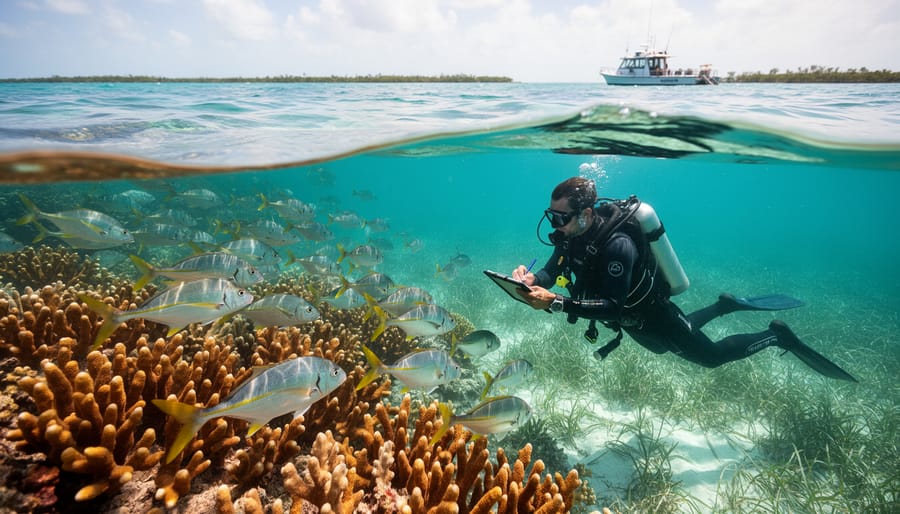
Florida’s 41 marine protected areas encompass over 4,000 square miles of ocean, representing one of the most ambitious coastal conservation networks in the United States. These underwater sanctuaries protect everything from shallow seagrass beds teeming with manatees to deep-water coral reefs that rival any tropical paradise. Yet protection alone isn’t enough—effective management strategies determine whether these areas truly safeguard marine life or simply exist as lines on a map.
Managing Florida’s MPAs requires a delicate balance between conservation goals and human use, achieved through zoning systems that designate specific activities for different areas, regular monitoring programs that track ecosystem health and species populations, and adaptive management approaches that adjust strategies based on real-world results. The Florida Keys National Marine Sanctuary exemplifies this approach, implementing a comprehensive plan that combines no-take zones with carefully regulated fishing areas, resulting in measurable increases in fish populations and coral recovery.
The success of these protected areas depends on collaboration between marine biologists, local communities, enforcement agencies, and countless volunteers who contribute to monitoring and education efforts. From graduate students conducting fish surveys to retired teachers leading snorkeling tours that fund conservation research, this collective action transforms policy into tangible protection.
Understanding how Florida implements these management strategies reveals both inspiring successes and ongoing challenges that shape the future of marine conservation along America’s most biodiverse coastline.
Understanding Florida’s Marine Protected Areas: A Unique Coastal Challenge
The Scope of Florida’s MPA Network
Florida’s marine protected area network represents one of the most comprehensive coastal conservation efforts in the United States, encompassing over 4,000 square miles of diverse marine ecosystems. This expansive network includes federal sanctuaries, state parks, and aquatic preserves, each playing a vital role in safeguarding the state’s extraordinary marine biodiversity.
The Florida Keys National Marine Sanctuary stands as the crown jewel of this network, protecting approximately 2,900 square nautical miles of waters surrounding the Florida Keys. Established in 1990, this sanctuary shelters the only living coral barrier reef in the continental United States, along with extensive seagrass meadows and mangrove forests that serve as critical nursery habitats for countless marine species.
Further west, the Dry Tortugas National Park encompasses 100 square miles of pristine waters and seven small islands. This remote location provides crucial nesting grounds for sea turtles and migratory bird species while protecting vibrant coral communities and serving as a natural laboratory for marine research.
Florida’s 41 state aquatic preserves add another essential layer to this conservation framework, protecting over 4 million acres of submerged lands, including estuaries, salt marshes, and coastal waters. These preserves, managed by the Florida Department of Environmental Protection, focus on maintaining water quality and preserving critical habitats that support both commercial and recreational fisheries.
Together, these protected areas form an interconnected network that supports ecosystem resilience, provides economic benefits through eco-tourism, and offers invaluable opportunities for scientific research and public education about marine conservation.
What Makes Florida’s Marine Ecosystems Worth Protecting
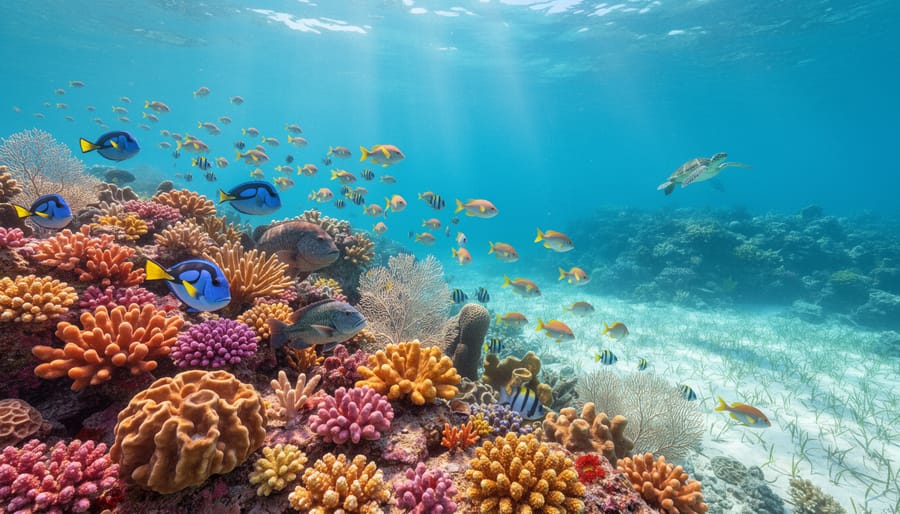
Florida’s waters harbor some of the most biodiverse marine ecosystems in North America, making their protection essential for ocean health. The state’s coral reefs, particularly the Florida Reef Tract stretching from the Dry Tortugas to Martin County, represent the only living barrier reef system in the continental United States. These underwater cities support over 500 fish species and countless invertebrates, serving as critical nurseries for commercial fisheries.
Seagrass beds blanket thousands of acres along Florida’s coast, acting as marine pastures that filter water, stabilize sediments, and provide food for manatees and sea turtles. These underwater meadows store massive amounts of carbon, making them vital allies in climate regulation. Marine biologist Dr. Sarah Chen describes seagrass beds as “the unsung heroes of coastal ecosystems—they’re doing so much work beneath the surface that we’re only beginning to fully appreciate.”
Mangrove forests line Florida’s shores, creating protective barriers against storm surge while serving as nurseries where 75% of commercial fish species spend part of their lives. These ecosystems support everything from tiny seahorses to massive groupers, with biodiversity hotspots like the Florida Keys and Tampa Bay hosting species found nowhere else on Earth.
Management Strategies That Actually Work in Florida Waters
Zone-Based Protection: Balancing Use and Conservation
Florida’s marine protected areas employ a sophisticated zoning system that recognizes different areas require different levels of protection. This strategic approach, rooted in ecosystem-based management, allows specific sites to balance conservation goals with recreational and economic activities.
No-take zones represent the strictest level of protection, where all extractive activities are prohibited. The Dry Tortugas National Park Research Natural Area exemplifies this approach, where the complete ban on fishing has resulted in a 65% increase in fish biomass within just five years. Marine biologist Dr. Sarah Chen, who has monitored these waters for over a decade, shares: “Watching groupers and snappers return to their historical abundance has been incredibly rewarding. These no-take zones serve as living laboratories, showing us what healthy reefs should look like.”
Limited-use areas permit certain low-impact activities while restricting others. In the Florida Keys National Marine Sanctuary, Wildlife Management Areas allow snorkeling and diving but prohibit fishing and anchoring on sensitive coral formations. This middle-ground approach has proven effective at protecting critical habitats while maintaining tourism opportunities that support local economies.
Multiple-use zones offer the greatest flexibility, allowing sustainable fishing, boating, and other recreational activities under specific regulations. These areas often serve as buffer zones around more sensitive sites, distributing human activity across larger regions.
This graduated protection system has shown remarkable success. Studies indicate that fish populations in no-take zones can spill over into adjacent areas, benefiting commercial fisheries. The John Pennekamp Coral Reef State Park demonstrates this effect, where properly managed zones have supported both ecosystem recovery and thriving dive tourism industries. Volunteers regularly assist park rangers in monitoring these zones, providing crucial data that informs adaptive management decisions.
Collaborative Governance: When Scientists, Fishers, and Communities Work Together
Florida’s approach to marine protected area management stands out because it recognizes that lasting conservation success requires buy-in from those who know the waters best. The state has established several mechanisms that bring scientists, commercial and recreational fishers, dive operators, and coastal residents to the same table.
The Florida Fish and Wildlife Conservation Commission operates Species Conservation Advisory Councils that include stakeholder representatives alongside biologists and managers. These councils meet regularly to review data, discuss emerging challenges, and recommend policy adjustments. Similarly, individual MPAs often have their own advisory groups. For example, the Florida Keys National Marine Sanctuary Advisory Council includes 24 voting members representing diverse interests, from commercial fishing to education to tourism.
This model of community-based conservation yields tangible benefits. Local knowledge helps scientists identify critical habitats and seasonal patterns that might not appear in standard surveys. Fishers can report unusual sightings or environmental changes in real-time. Perhaps most importantly, when stakeholders help shape regulations, compliance typically improves because the rules reflect practical realities.
Dr. Maria Sanchez, a marine biologist working in the Dry Tortugas, shares her experience: “During our council meetings, a longtime fishing captain pointed out spawning aggregation sites we hadn’t documented. That local expertise helped us refine protection zones while maintaining access to traditional fishing grounds. Everyone left feeling heard.”
Public comment periods, town halls, and online forums provide additional channels for community input, ensuring MPA management remains responsive and adaptive to changing conditions.
Adaptive Management in Action
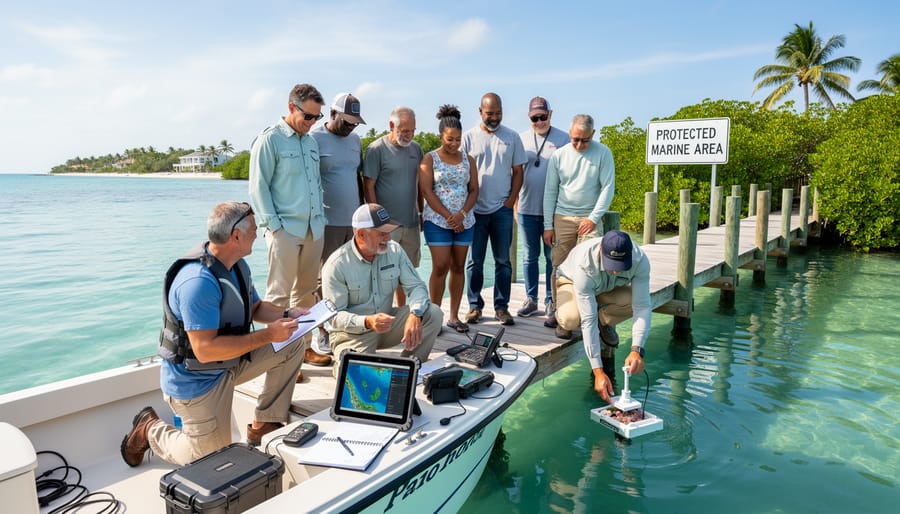
Florida’s marine protected areas demonstrate the power of flexibility in conservation. When monitoring revealed that stone crab populations in the Dry Tortugas were recovering faster than anticipated, managers adjusted harvest regulations to reflect this success while maintaining protective measures for slower-recovering species. This responsiveness exemplifies effective adaptive management strategies in action.
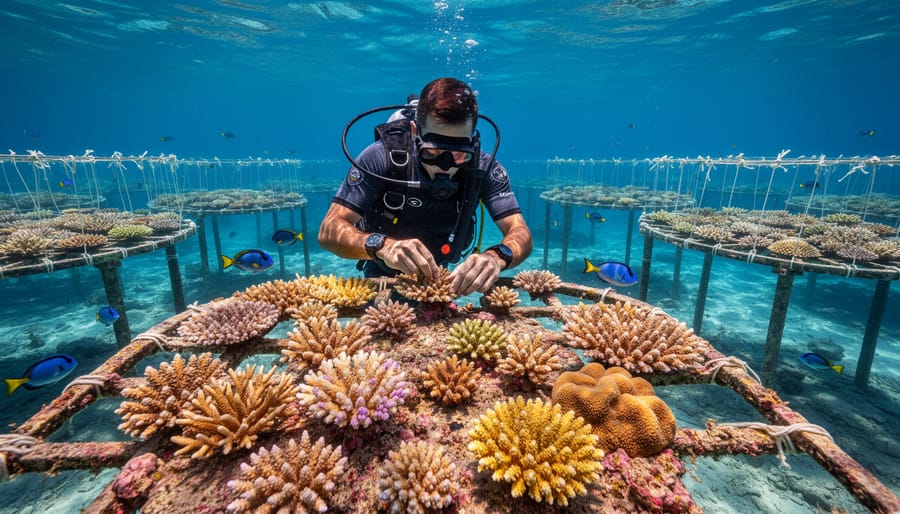
Climate change has prompted significant shifts in MPA operations. At the Florida Keys National Marine Sanctuary, scientists noticed coral bleaching events occurring with increasing frequency. In response, managers established coral nurseries and implemented emergency response protocols. When water temperatures spike, teams now deploy shade structures and relocate particularly vulnerable coral fragments to cooler depths.
The stony coral tissue loss disease outbreak beginning in 2014 triggered unprecedented adaptive responses. Managers fast-tracked research permits, established rescue missions to collect healthy coral samples, and created land-based nurseries. Marine biologist Dr. Sarah Fangman shares how her team works around the clock during disease outbreaks: “We’ve learned to act quickly, adapting our protocols weekly based on what we observe. Every rescue mission teaches us something new about resilience.”
Volunteers play crucial roles in these adaptive efforts, assisting with coral monitoring, water quality testing, and disease surveillance. Their observations often provide the first alerts that trigger management adjustments, proving that community engagement strengthens conservation outcomes in measurable ways.
Enforcement and Compliance: Making Rules Matter
Florida’s marine protected areas succeed only when enforcement transforms regulations into real-world protection. The Florida Fish and Wildlife Conservation Commission (FWC) leads enforcement efforts, combining traditional patrols with innovative technology. Officers conduct regular vessel inspections and monitor fishing activities, but the approach prioritizes education over punishment. Many violations stem from confusion rather than defiance, so rangers often issue warnings and explain regulations before resorting to citations.
Technology plays an increasingly vital role in compliance monitoring. Vessel Monitoring Systems track commercial fishing vessels in sensitive areas, while aerial surveillance using drones helps identify unauthorized activities in remote locations. These tools allow enforcement teams to cover vast ocean territories more effectively than traditional methods alone.
Compliance rates vary significantly across Florida’s MPAs. No-take zones like Dry Tortugas National Park report approximately 85-90% compliance, partly because clear boundaries and active ranger presence deter violations. Areas with complex zoning face greater challenges, as recreational users sometimes struggle to understand varying restrictions.
Community engagement proves essential for voluntary compliance. Marine biologist Dr. Sarah Chen notes, “When fishermen understand how protected areas rebuild fish populations in their favorite spots, they become our best advocates.” Local fishing communities increasingly participate in monitoring programs, reporting violations and helping educate newcomers about marine sanctuary boundaries.
Success Stories: When Protection Strategies Pay Off
Coral Restoration in the Florida Keys
The Florida Keys stands at the forefront of coral restoration innovation, with marine protected areas serving as living laboratories for groundbreaking techniques. Coral nurseries within these protected waters have become lifelines for threatened reef ecosystems, growing thousands of coral fragments that are later transplanted onto degraded reefs.
Dr. Maria Santiago, a marine biologist who has worked with the Coral Restoration Foundation for over a decade, describes the transformation she’s witnessed. “When we first established nurseries in these MPAs, we were experimenting with methods that seemed almost radical. Now, we’ve successfully outplanted over 100,000 corals back onto Florida’s reefs,” she explains. The protected status of these areas provides essential safeguards against fishing gear damage and anchor strikes that could destroy fragile nursery structures.
The success metrics are encouraging. Survival rates for nursery-grown staghorn and elkhorn corals within MPAs exceed 70 percent, significantly higher than natural recruitment rates. These corals are now reaching reproductive maturity, offering hope that restored populations will begin reproducing naturally.
What makes this work particularly meaningful is the community involvement. Volunteer divers assist with coral monitoring and maintenance, creating a direct connection between people and reef recovery. Dr. Santiago emphasizes this human element: “Every person who helps clean a coral or monitors its growth becomes an advocate. They see firsthand that restoration works, and that dedication translates into broader conservation support.”
The protected framework of these MPAs ensures long-term monitoring and adaptive management, allowing scientists to refine techniques and maximize restoration success for future generations.
Fish Population Rebounds and Spillover Effects
Florida’s marine protected areas have demonstrated remarkable success in rebuilding fish populations, with benefits extending far beyond their boundaries. Research conducted at the Dry Tortugas Ecological Reserve shows that fish biomass increased by more than 300% within just five years of protection. Yellow snapper populations particularly flourished, with adult fish abundance reaching levels not seen in decades.
What makes these results especially compelling for stakeholders is the spillover effect. Adult fish from protected areas naturally migrate to adjacent waters, while larvae drift with currents to replenish fishing grounds up to 20 miles away. A study by Dr. Jennifer Rehage, a marine biologist at Florida International University, documented how commercial fishers working near MPA boundaries reported catches 25% higher than those fishing farther away.
“I was skeptical at first,” admits Captain Maria Torres, a third-generation commercial fisher from Marathon. “Closing areas to fishing seemed counterintuitive. But after three years, we started seeing bigger fish and better catches right outside the reserve boundaries. It’s made believers out of many of us.”
The spillover effect creates a win-win scenario: protected areas serve as fish nurseries and refuges, while surrounding waters benefit from the overflow of healthy, reproducing populations. Data from the Southeast Reef Fish Survey confirms that this pattern holds across multiple species, including grouper, snapper, and grunt populations. These tangible economic benefits have transformed many former critics into conservation advocates, demonstrating how science-based management strategies can align ecological restoration with fishing community interests.
The Challenges Florida MPAs Still Face
Climate Change and Water Quality
Florida’s marine protected areas face mounting pressures from climate change that threaten their conservation effectiveness. Warming ocean temperatures are pushing tropical species northward while stressing cold-adapted populations, fundamentally altering the ecosystems these areas were designed to protect. The state’s coral reefs, already vulnerable, suffer from increased bleaching events as water temperatures rise beyond corals’ tolerance thresholds.
Ocean acidification compounds these challenges by weakening the ability of corals, shellfish, and other calcifying organisms to build their protective structures. This chemical shift results from increased atmospheric carbon dioxide dissolving into seawater, lowering pH levels and threatening the foundation of marine food webs.
Nutrient pollution from agricultural runoff and coastal development triggers harmful algal blooms that deplete oxygen and create dead zones, even within protected boundaries. These events can devastate fish populations and seagrass beds despite MPA protections.
Florida’s resource managers are implementing climate adaptation strategies to address these threats. Dr. Maria Santos, who monitors water quality in the Florida Keys, shares: “We’re establishing coral nurseries with heat-resistant strains and expanding monitoring networks to detect changes earlier. Every volunteer helping us track water conditions contributes vital data.”
These adaptive approaches include creating buffer zones around MPAs, restoring mangroves that filter pollutants, and developing climate-resilient management plans that anticipate future conditions rather than simply protecting present-day ecosystems.
Funding and Resource Limitations
Florida’s marine protected areas face significant budget constraints that directly impact their ability to maintain effective conservation programs. State funding for MPA management has remained relatively flat even as operational costs and the need for enhanced monitoring continue to grow. This reality means that many protected areas operate with skeleton crews and limited equipment for enforcement and research activities.
Despite these challenges, Florida’s MPAs have developed creative solutions to maximize their impact. One of the most successful approaches involves leveraging citizen science programs, where trained volunteers assist with coral health monitoring, fish counts, and water quality testing. These partnerships not only extend the reach of limited staff but also build stronger community connections to conservation efforts.
Dr. Maria Santos, a marine biologist at the Florida Keys National Marine Sanctuary, shares how her team adapted: “We realized early on that we couldn’t do this alone. By training recreational divers to document coral bleaching events, we’ve increased our monitoring capacity tenfold without a proportional budget increase.”
Technology has also provided cost-effective solutions. Remote sensing tools, automated monitoring buoys, and smartphone-based reporting apps allow managers to track conditions across vast areas more efficiently. Additionally, collaborative agreements with universities provide research support while offering students valuable fieldwork experience, creating a win-win situation that stretches limited resources further.
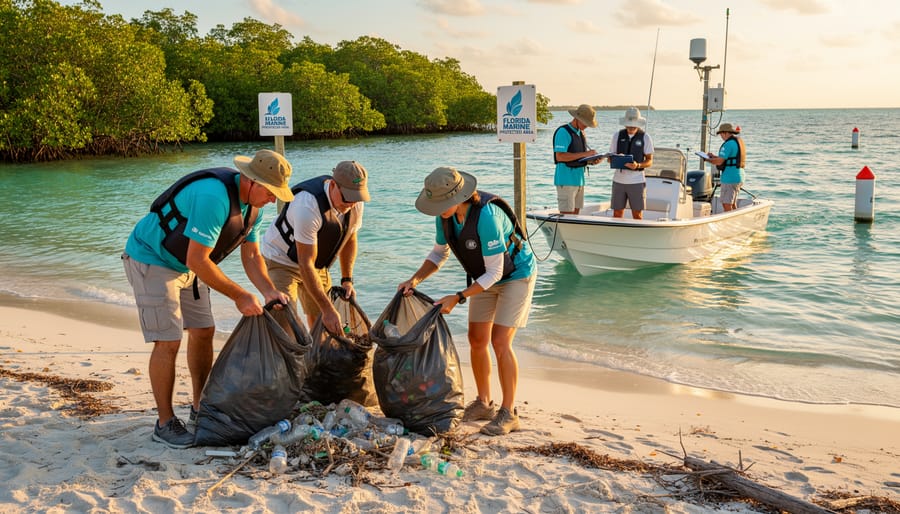
How You Can Support Florida’s Marine Protected Areas
Florida’s marine protected areas thrive when communities actively participate in their conservation. Whether you’re a scientist, educator, or ocean enthusiast, numerous opportunities exist to make a tangible difference in protecting these vital ecosystems.
Volunteer programs offer hands-on involvement in MPA management. Organizations like Mote Marine Laboratory and the Florida Fish and Wildlife Conservation Commission regularly recruit volunteers for habitat restoration projects, including seagrass planting and coral nursery maintenance. The Reef Environmental Education Foundation coordinates citizen divers to conduct fish surveys, contributing valuable data to ongoing research efforts. Even beach cleanups directly support MPAs by preventing debris from entering protected waters.
Citizen science initiatives provide accessible entry points for participation. Programs like the Florida Keys BleachWatch train volunteers to monitor coral health and report bleaching events. The Marine Mammal Health Network welcomes observers who document marine mammal sightings and strandings. These contributions help scientists track population trends and ecosystem changes, informing adaptive management strategies.
Responsible recreation remains fundamental to MPA success. Following designated boundaries, maintaining proper distances from wildlife, using mooring buoys instead of anchoring on sensitive habitats, and practicing proper diving techniques all minimize human impact. Educating fellow recreational users about these practices multiplies your positive influence.
Advocacy amplifies ocean conservation efforts. Supporting legislation that strengthens marine protections, attending public meetings about coastal development, and communicating with elected officials about conservation priorities shape policy decisions. Sharing educational content on social media raises awareness within your networks.
Financial support through donations to marine conservation organizations, memberships in environmental groups, or participation in fundraising events provides essential resources for research, enforcement, and education programs. Every contribution, regardless of size, helps maintain and expand Florida’s network of protected marine habitats for future generations.
Florida’s marine protected areas demonstrate that effective conservation isn’t just possible—it’s happening right now, thanks to carefully crafted management strategies and dedicated people working together. The combination of adaptive management frameworks, community engagement, scientific monitoring, and collaborative governance has positioned Florida as a model for coastal states facing similar challenges. While obstacles like climate change and funding constraints remain, the successes we’ve seen—from recovering fish populations to thriving coral restoration projects—prove that thoughtful intervention makes a measurable difference.
What makes Florida’s approach particularly inspiring is how it welcomes everyone into the conservation effort. Whether you’re a marine biologist conducting research, a volunteer monitoring coastal waters, or simply someone who cares about protecting our ocean’s future, there’s a role for you. The personal stories shared throughout this article reveal a common thread: individual actions, when multiplied across communities, create transformative change.
As we look ahead, the path forward requires sustained commitment, adequate resources, and continued innovation. But with growing public awareness and proven strategies already showing results, there’s genuine reason for optimism about Florida’s marine ecosystems—and inspiration for conservation efforts worldwide.

jessica
Ava Singh is an environmental writer and marine sustainability advocate with a deep commitment to protecting the world's oceans and coastal communities. With a background in environmental policy and a passion for storytelling, Ava brings complex topics to life through clear, engaging content that educates and empowers readers. At the Marine Biodiversity & Sustainability Learning Center, Ava focuses on sharing impactful stories about community engagement, policy innovations, and conservation strategies. Her writing bridges the gap between science and the public, encouraging people to take part in preserving marine biodiversity. When she’s not writing, Ava collaborates with local initiatives to promote eco-conscious living and sustainable development, ensuring her work makes a difference both on the page and in the real world.