Marine Biodiversity Science Center

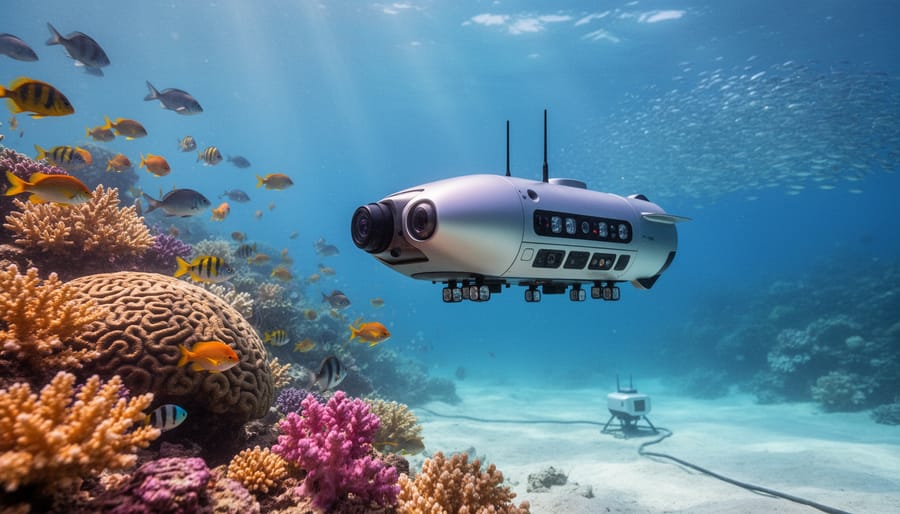
Beneath the ocean’s surface, a revolution is unfolding where artificial intelligence meets marine conservation. Advanced monitoring systems now track coral health, fish populations, and water quality with unprecedented precision, transforming how scientists protect vulnerable ecosystems. These automated networks collect data continuously across vast underwater territories—work that would require thousands of human dive hours—processing information in real-time to detect threats before they become catastrophic.
Marine automation systems combine underwater sensors, autonomous vehicles, and machine learning algorithms to create comprehensive ocean surveillance networks. Cameras mounted on robotic platforms identify individual species, count population numbers, and detect behavioral changes indicating environmental stress. Temperature and chemical sensors monitor shifting ocean conditions, while acoustic devices track marine mammal movements and communication patterns. This technology empowers small research teams to achieve monitoring coverage previously impossible, democratizing ocean science for institutions with limited budgets.
The impact extends beyond data collection. Early warning systems alert conservationists to coral bleaching events, illegal fishing activities, and pollution incidents within hours rather than weeks. Marine biologist Dr. Sarah Chen describes the transformation: “We’re no longer documenting decline after it happens. We’re intercepting threats as they emerge, giving ecosystems a fighting chance.” Volunteers and citizen scientists now participate remotely, analyzing footage and validating AI predictions, creating a global community united in ocean protection.
This technological leap represents hope—measurable, actionable progress in reversing marine ecosystem degradation through innovation and collective engagement.
The Challenge: Why Traditional Marine Restoration Falls Short
For decades, marine conservationists have faced a persistent challenge: how do you effectively monitor and measure the health of ecosystems that span millions of square miles of ocean? Traditional restoration monitoring methods, while valuable, struggle under the weight of significant limitations that compromise our ability to protect marine biodiversity.
The human capacity constraint stands as perhaps the most obvious hurdle. Marine biologists like Dr. Sarah Chen, who has spent fifteen years tracking coral reef recovery in the Caribbean, puts it bluntly: “There simply aren’t enough of us to be everywhere we need to be. A team of dedicated researchers can survey maybe a dozen sites per month, but meaningful restoration requires monitoring hundreds or thousands of locations simultaneously.”
This shortage creates cascading problems. Data collection becomes inconsistent, with some sites visited monthly while others might go years between surveys. Different researchers may use varying methodologies, making it difficult to compare results across regions or time periods. The vastness of ocean territories means that remote or deep-water ecosystems often go unmonitored entirely, leaving critical gaps in our understanding.
Perhaps most challenging is tracking long-term ecosystem health. Marine restoration projects can take decades to show measurable success, requiring consistent monitoring over extended periods. Staff turnover, funding fluctuations, and logistical constraints make maintaining this continuity extremely difficult. Without reliable baseline data and regular check-ins, it becomes nearly impossible to determine whether restoration efforts are truly working or identify emerging threats before they become catastrophic.
These limitations don’t reflect a lack of dedication among marine conservationists. Rather, they highlight the fundamental mismatch between the scale of ocean restoration needs and the resources available through traditional methods. The question becomes: how can technology help bridge this gap?
What Marine Automation Systems Actually Do
The Eyes Beneath the Waves: Sensor Networks
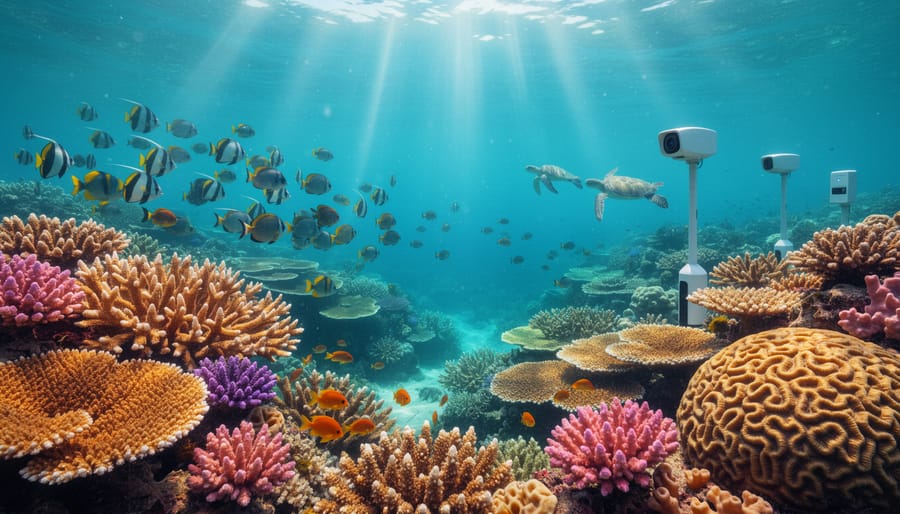
Beneath the ocean’s surface, an invisible network is awakening. Advanced sensor systems now serve as vigilant guardians, continuously monitoring the health of our marine ecosystems. These sophisticated instruments, often deployed alongside underwater robots, measure critical parameters like water temperature, salinity, pH levels, and dissolved oxygen—all factors that influence marine life survival.
Modern underwater cameras capture high-resolution footage of species movement and behavior, helping marine biologists track migration patterns and population changes without disturbing wildlife. Acoustic sensors detect the calls of whales and dolphins, revealing communication patterns and helping prevent ship strikes. Chemical sensors identify pollutants in real-time, allowing rapid response to contamination events.
Dr. Sarah Chen, a marine biologist working with automated monitoring systems in British Columbia, shares her experience: “These sensors have become our eyes in places humans rarely visit. We’re discovering coral spawning events, tracking endangered species, and detecting ecosystem shifts weeks before they become visible at the surface.”
This constant stream of data helps conservation teams make informed decisions, predict environmental changes, and direct restoration efforts where they’re needed most. The technology transforms ocean monitoring from occasional snapshots into continuous, comprehensive observation.
The Brain: AI Analysis and Pattern Recognition
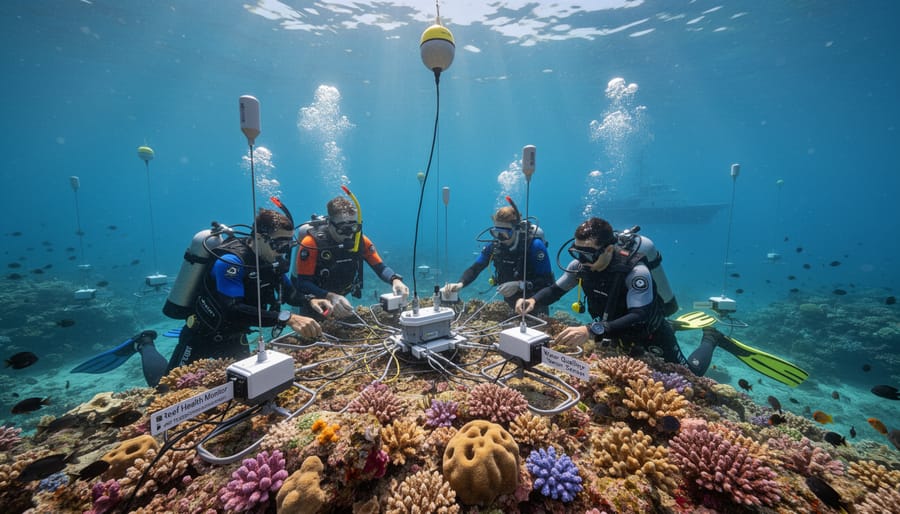
Artificial intelligence serves as the analytical powerhouse behind modern marine conservation, processing oceanic data at speeds and scales impossible for human teams alone. AI-powered marine monitoring systems analyze thousands of hours of underwater footage, acoustic recordings, and sensor readings in mere hours, identifying individual species, tracking migration patterns, and detecting subtle environmental shifts that might otherwise go unnoticed.
These intelligent systems excel at pattern recognition, learning to distinguish between normal ecosystem fluctuations and concerning anomalies. For example, AI can detect early warning signs of coral bleaching by analyzing water temperature data alongside visual imagery, alerting conservation teams before damage becomes irreversible. Machine learning algorithms identify illegal fishing vessels by recognizing unusual movement patterns, while predictive models forecast harmful algal blooms days in advance.
Dr. Sarah Chen, a marine biologist working with automated monitoring networks, shares her experience: “What used to take our team weeks to analyze now happens overnight. The AI flags areas needing immediate attention, allowing us to deploy our limited resources where they’ll make the biggest difference.” This intelligent analysis transforms raw data into actionable conservation strategies, empowering both scientists and citizen volunteers to respond swiftly to emerging threats.
Real-World Applications: AI Automation in Action
Coral Reef Recovery Monitoring
AI-powered monitoring systems are revolutionizing how scientists track coral reef restoration efforts, providing unprecedented insight into reef health and recovery patterns. Underwater autonomous vehicles equipped with high-resolution cameras and multispectral imaging sensors now patrol restoration sites continuously, documenting coral growth rates, bleaching events, and biodiversity changes with remarkable precision.
At the Great Barrier Reef’s rehabilitation zones, AI systems analyze thousands of images daily, identifying early stress indicators before visible bleaching occurs. The technology measures color variations invisible to the human eye, allowing intervention teams to respond within hours rather than weeks. Marine biologist Dr. Sarah Chen shares that this early detection capability has improved coral survival rates by 40% in monitored areas.
The Coral Restoration Foundation in Florida employs machine learning algorithms to track over 100,000 transplanted coral fragments across multiple nurseries. These systems identify which coral genotypes thrive under specific conditions, informing future planting strategies. The automated monitoring reduces dive time by 60%, allowing scientists to focus on active restoration rather than data collection.
Volunteers can access public dashboards showing real-time reef recovery data, connecting global audiences to ongoing conservation successes and fostering collective hope for ocean resilience.
Seagrass Meadow Restoration Tracking
Automated systems are revolutionizing how we track seagrass meadow restoration, providing unprecedented insights into these vital coastal ecosystems. Underwater drones equipped with high-resolution cameras and sensors now patrol restored areas, documenting seagrass growth rates, density, and overall health without disturbing the delicate habitat. These systems work alongside eco-friendly restoration materials to ensure successful recovery.
One remarkable capability is automated carbon sequestration measurement. Seagrass meadows are incredible carbon sinks, storing up to 35 times more carbon per acre than tropical rainforests. Marine conservation technician Dr. Maya Chen explains, “Our sensors measure soil carbon content, photosynthesis rates, and biomass accumulation in real-time, giving us precise data on how much CO2 these restored meadows are capturing.”
The technology also monitors ecosystem recovery indicators like water clarity, temperature fluctuations, and the return of marine species to restored areas. Fish populations, invertebrate diversity, and even visiting sea turtles are tracked automatically, painting a comprehensive picture of ecological success.
Volunteers can participate through citizen science programs that help validate automated data by conducting manual surveys, making restoration tracking a truly collaborative effort between technology and human dedication.
Marine Wildlife Population Recovery
Artificial intelligence has become a game-changer for tracking endangered marine species and assessing the health of recovering populations. Automated underwater cameras equipped with AI recognition software can now identify individual animals based on unique markings, much like facial recognition technology. This capability allows researchers to monitor specific whales, sea turtles, and dolphins over time without intrusive tagging methods.
Dr. Elena Rodriguez, a marine biologist working in the Channel Islands National Marine Sanctuary, shares an inspiring example: “Our AI system identified a young humpback whale we’d been tracking since birth. Three years later, we spotted her with her first calf—proof that our protected waters are supporting successful breeding.” These success stories emerge from thousands of hours of video footage that AI processes in mere days, a task that would take human researchers months to complete.
Migration tracking has similarly advanced through AI-powered satellite imagery and acoustic monitoring. Algorithms detect patterns in movement data, revealing critical feeding grounds and breeding sites that require protection. In the Mediterranean, automated systems have mapped previously unknown sea turtle nesting beaches, enabling targeted conservation efforts.
Breeding success monitoring has become remarkably precise. AI counts hatchlings, estimates survival rates, and identifies threats in real-time. Volunteers can now participate in this effort through citizen science apps that use simplified AI tools, making population monitoring a truly collaborative endeavor. This democratization of technology means conservation isn’t limited to scientists—anyone with a smartphone can contribute valuable data to recovery efforts.
The Human Element: How Scientists Work Alongside AI
Dr. Maria Santos remembers the moment she realized technology would become her greatest ally. Standing on the deck of a research vessel off the Great Barrier Reef at 3 AM, exhausted from manually collecting water samples, she watched a newly deployed automation system begin its work. “I thought I’d feel replaced,” she admits. “Instead, I felt liberated to do what I actually trained for—interpreting data and developing conservation strategies.”
This transformation reflects a broader shift in marine science. Modern automation systems, including autonomous monitoring vessels, handle the repetitive tasks that once consumed researchers’ time. Meanwhile, scientists focus on what machines cannot do: asking the right questions, understanding ecological context, and making nuanced conservation decisions.
Take James Chen, a coral reef specialist in Indonesia. He works with an AI system that processes thousands of underwater images daily, flagging potential coral bleaching events. “The AI spots patterns I might miss after hours of reviewing footage,” Chen explains. “But when it identifies a concern, that’s when my expertise becomes critical. I determine whether it’s true bleaching, a seasonal change, or a lighting artifact. I decide what interventions might help.”
This collaborative model appears across marine conservation. In the Mediterranean, researcher Sofia Nakis uses acoustic monitoring systems that detect whale calls 24/7. The technology alerts her team to marine mammal presence, but Sofia’s knowledge of migration patterns, behavior, and local threats guides their response. “The system extends my reach infinitely,” she says. “I can’t be everywhere, but the technology can. Then I bring the human judgment.”
The technology also creates unexpected opportunities for engagement. Many automation systems now include volunteer training programs, allowing citizen scientists to help verify AI identifications or contribute to data analysis. This democratizes marine science while maintaining quality control through expert oversight.
As these partnerships evolve, one truth emerges: the most effective marine conservation happens when cutting-edge technology amplifies human passion, experience, and creativity. The machines provide the eyes and ears; scientists provide the heart and mind. Together, they’re achieving what neither could accomplish alone—comprehensive ocean monitoring that drives meaningful conservation action.
Breaking Down the Benefits: Why This Matters for Ocean Health
Earlier Threat Detection Saves Ecosystems
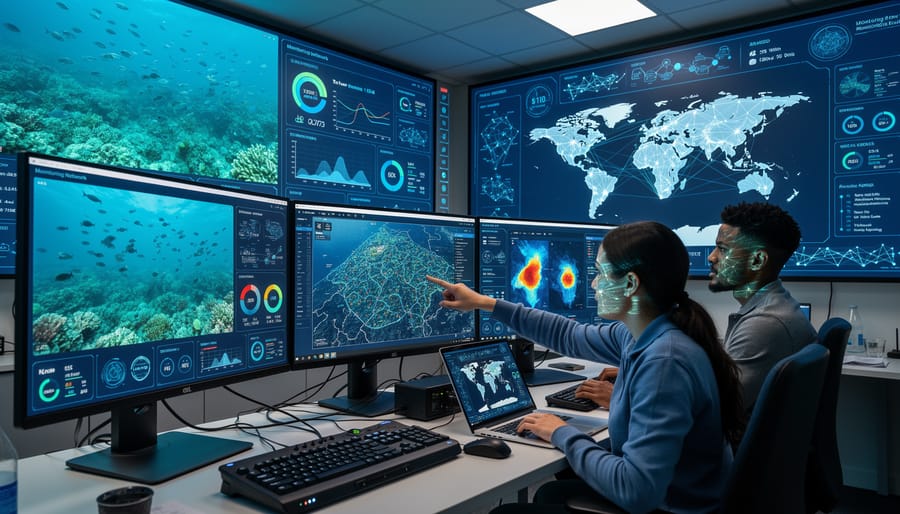
Time makes all the difference when protecting marine ecosystems. Automated monitoring systems act as an early warning network, detecting threats within hours rather than weeks or months. When sensors identify sudden drops in oxygen levels, spikes in water temperature, or unusual chemical signatures, conservationists can respond immediately—often before visible damage occurs.
Consider algal blooms: traditional monitoring might catch them once they’ve already choked out marine life, but real-time sensors detect the nutrient imbalances that trigger these events days in advance. Marine biologist Dr. Sarah Chen recalls a recent case where automated systems flagged unusual bacterial markers in a coral reef. “We mobilized within 24 hours and contained what could have been a devastating disease outbreak. Without that immediate alert, we would have lost an entire reef section.”
These systems also track invasive species movements, creating digital barriers that help restoration teams act strategically. The technology doesn’t replace human expertise—it amplifies it, giving conservation professionals the precious gift of time to make informed decisions and protect vulnerable ecosystems before reaching irreversible tipping points.
Data That Drives Better Decisions
Marine automation systems generate a wealth of information that transforms how we approach ocean restoration. Rather than relying on scattered snapshots or occasional surveys, these systems provide continuous, standardized datasets across multiple locations simultaneously. This consistency allows scientists to identify patterns they might otherwise miss—such as which restoration techniques work best in specific conditions or how quickly different species colonize artificial reefs.
Dr. Sarah Chen, a marine ecologist working with automated monitoring networks, explains: “We used to spend months analyzing limited data from a handful of sites. Now we can compare conditions across dozens of locations in real-time, helping us redirect resources to areas where they’ll have the greatest impact.” This data-driven approach means conservation funds support strategies proven to work, while unsuccessful methods can be quickly adjusted. For coastal communities and volunteers participating in restoration projects, these insights provide tangible evidence that their efforts are making a measurable difference in ocean health.
Scaling Up Conservation Efforts
Marine automation systems are transforming conservation by making large-scale monitoring achievable even with tight budgets and small teams. Traditional methods required expensive vessels, extensive crews, and countless hours to survey even modest areas. Today’s autonomous underwater vehicles and networked sensor arrays can patrol vast stretches of ocean continuously, collecting data that would have taken years to gather manually.
Dr. Maria Santos, a marine ecologist in the Philippines, shares how automation changed her work: “We’re a team of five monitoring coral restoration across 50 square kilometers. Before automation, we could only check maybe 5% of our sites quarterly. Now our sensor network and autonomous drones give us real-time data from every restoration zone, allowing us to respond quickly when corals show stress.” This efficiency means limited resources reach farther, protecting more marine habitat per dollar spent.
For volunteers and students, this scaling creates exciting opportunities to contribute meaningfully to conservation. Many programs now welcome citizen scientists to help analyze the massive datasets these systems generate, turning automation into a bridge between cutting-edge technology and community engagement in ocean protection.
Challenges and Considerations
While marine automation systems offer tremendous promise for ocean conservation, implementing these technologies comes with genuine challenges we must acknowledge. The most immediate obstacle is cost. Advanced sensor arrays, underwater robotics, and AI processing systems require substantial initial investment—often hundreds of thousands of dollars for comprehensive monitoring networks. This financial barrier can exclude smaller research institutions and community-based conservation groups from accessing these powerful tools.
Technical limitations also persist. Sensors can malfunction in harsh marine environments, where saltwater corrosion, biofouling, and extreme pressures test equipment durability. Dr. Maria Chen, a marine roboticist working on coral reef restoration, shares candidly: “We’ve had entire sensor networks go dark after unexpected storms. It’s humbling and reminds us that technology is only part of the solution—we still need human adaptability and traditional ecological knowledge.”
Data interpretation presents another hurdle. AI systems require extensive training datasets, which may not exist for understudied ecosystems or rare species. False positives in species identification can waste resources, while missed detections might allow problems to escalate unnoticed.
Ethical considerations deserve attention too. As we increasingly rely on automated systems, we must ensure these technologies complement rather than replace human observation and the invaluable expertise of local communities who have stewarded marine environments for generations.
Despite these obstacles, the conservation community remains optimistic. Volunteer opportunities in data validation and equipment maintenance are making these systems more accessible and community-driven. Costs continue decreasing as technology advances, and collaborative networks are emerging to share resources and knowledge. By honestly confronting these challenges while working collectively to overcome them, we’re building more resilient, equitable approaches to marine conservation.
How You Can Get Involved
You don’t need to be a marine biologist to contribute to ocean conservation powered by automation technology. Numerous pathways exist for people at every experience level to make a meaningful difference.
Many research institutions now offer citizen science programs where volunteers help analyze data collected by automated monitoring systems. Projects like Reef Check and iNaturalist allow you to identify species in underwater footage or contribute observations from your local coastline. Marine biologist Dr. Sofia Martinez shares, “Some of our most valuable species distribution insights come from dedicated volunteers reviewing hours of camera trap footage. Their eagle eyes catch patterns our algorithms sometimes miss.”
Educational opportunities abound for those wanting deeper involvement. Several universities and conservation organizations offer online courses in marine technology and data analysis. Students can pursue internships with organizations deploying automated monitoring systems, gaining hands-on experience with cutting-edge conservation tools.
Financial support matters too. Organizations like The Ocean Conservancy and local marine sanctuaries use donations to expand their automated monitoring networks and restoration programs. Even small contributions help purchase sensors, maintain equipment, or fund data analysis.
For educators, free curriculum resources are available to bring marine automation concepts into classrooms, inspiring the next generation of ocean advocates. Local aquariums and science centers frequently host workshops where families can learn about underwater robotics and AI applications.
Community beach cleanups and habitat restoration events provide direct action opportunities while supporting areas where monitoring systems operate. Every contribution, whether time, expertise, or resources, strengthens our collective capacity to protect marine ecosystems through technology-enhanced conservation.
The future of our oceans depends on innovation paired with dedication, and AI-driven marine automation systems represent a powerful convergence of both. These technologies are not replacing the human element in conservation—they’re amplifying it, enabling scientists and volunteers alike to protect vast ecosystems with unprecedented precision and efficiency. From autonomous underwater vehicles mapping critical habitats to intelligent sensor networks detecting environmental changes in real-time, these systems are transforming how we understand and safeguard marine biodiversity.
But technology alone cannot restore our oceans. The data these systems collect only becomes meaningful when communities, researchers, and passionate individuals unite to act on the insights they provide. Dr. Maria Santos, a marine biologist working with automated monitoring platforms, reminds us: “Every data point represents an opportunity—to learn, to adapt, and to make a difference.”
The Marine Biodiversity Science Center invites you to be part of this transformation. Whether you’re an educator inspiring the next generation, a student eager to contribute, or someone who simply loves the ocean, there’s a role for you. Explore volunteer opportunities in marine monitoring projects, share your voice in ocean advocacy, or support research initiatives pushing the boundaries of conservation technology. Together, we can ensure thriving oceans for generations to come.

jessica
Ava Singh is an environmental writer and marine sustainability advocate with a deep commitment to protecting the world's oceans and coastal communities. With a background in environmental policy and a passion for storytelling, Ava brings complex topics to life through clear, engaging content that educates and empowers readers. At the Marine Biodiversity & Sustainability Learning Center, Ava focuses on sharing impactful stories about community engagement, policy innovations, and conservation strategies. Her writing bridges the gap between science and the public, encouraging people to take part in preserving marine biodiversity. When she’s not writing, Ava collaborates with local initiatives to promote eco-conscious living and sustainable development, ensuring her work makes a difference both on the page and in the real world.