Marine Biodiversity Science Center

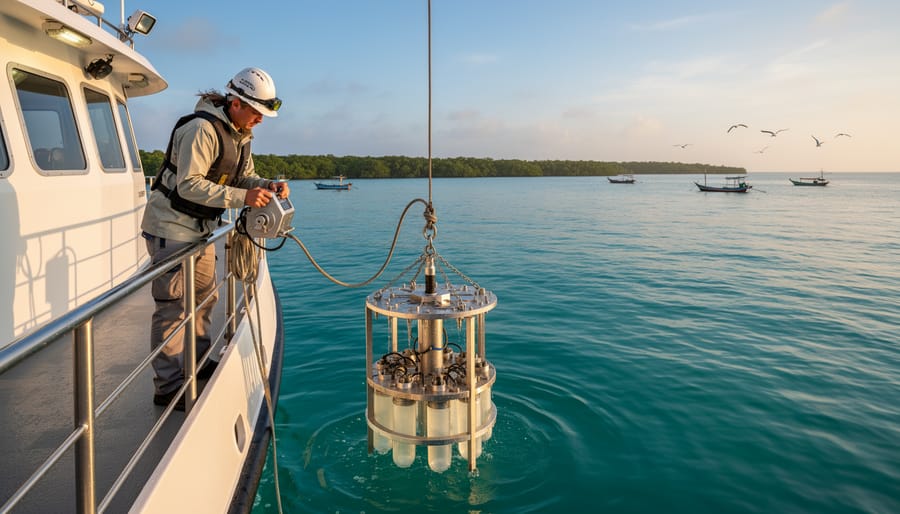
Imagine trying to understand the health of a complex living system without a comprehensive diagnostic tool—that’s the challenge ocean scientists faced until recently. Our oceans cover 71% of Earth’s surface, provide half the oxygen we breathe, and sustain billions of people, yet for decades we lacked a unified way to measure their wellbeing. The Ocean Health Index changed that fundamental gap.
Developed in 2012 through a collaboration between Conservation International, the National Center for Ecological Analysis and Synthesis, and other leading institutions, the Ocean Health Index represents the first comprehensive framework to measure ocean health across ten critical goals: food provision, artisanal fishing opportunities, natural products, carbon storage, coastal protection, livelihoods and economies, tourism and recreation, sense of place, clean waters, and biodiversity. Rather than focusing solely on pristine conditions, this innovative tool evaluates how well oceans deliver the benefits people need and expect, both now and in the future.
What makes the Index revolutionary is its dual focus on ecological integrity and human wellbeing. A healthy ocean isn’t just one teeming with wildlife—it’s one that sustainably provides jobs, protects coastlines from storms, and allows communities to maintain cultural connections to the sea. The framework assigns scores from 0 to 100 for each goal, then combines them into an overall assessment that guides policy decisions, conservation priorities, and resource allocation.
Today, over 20 countries and regions have adapted the Index to their unique contexts, transforming abstract environmental data into actionable strategies. For marine scientists, students, and conservation professionals, understanding this tool opens doors to evidence-based advocacy, meaningful research directions, and ultimately, more effective ocean stewardship that balances ecological health with human prosperity.
What Is the Ocean Health Index?
The Ten Goals That Define Ocean Health
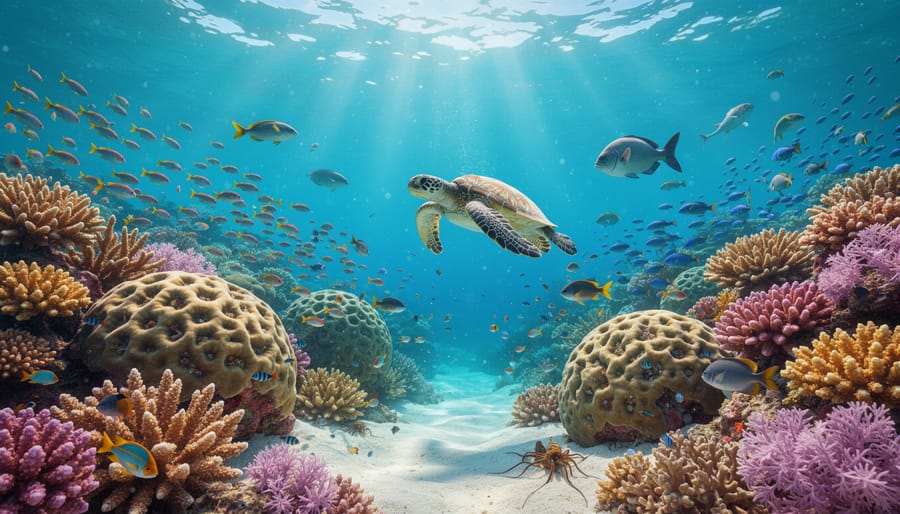
The Ocean Health Index evaluates ocean sustainability through ten interconnected goals, each representing a critical aspect of how our oceans support both human communities and marine ecosystems. Understanding these goals helps us grasp the complexity of ocean health and why comprehensive monitoring matters.
Food Provision measures two vital components: fisheries and mariculture. This goal assesses whether seafood is harvested sustainably without depleting fish populations or damaging marine habitats. For the billions of people who depend on seafood for protein and livelihoods, this goal directly impacts food security.
Artisanal Fishing Opportunity examines whether coastal communities can access ocean resources for small-scale fishing, preserving cultural traditions and local economies. Coastal Livelihoods and Economies tracks job opportunities and economic health of coastal communities dependent on ocean resources.
Tourism and Recreation evaluates sustainable ocean-based activities that contribute to local economies while maintaining ecosystem integrity. Clean Waters assesses pollution levels, including nutrients, chemicals, and marine debris that affect both human and ocean health.
Carbon Storage recognizes the ocean’s critical role in climate regulation by measuring how effectively coastal habitats like mangroves, seagrasses, and salt marshes capture and store carbon dioxide. Coastal Protection evaluates how natural habitats shield coastlines from storms, erosion, and sea-level rise.
The Sense of Place goal acknowledges our emotional and cultural connections to oceans, measuring the condition of iconic species and special marine places. Biodiversity assesses the health of species and habitats, recognizing that diverse ecosystems are more resilient and productive.
Finally, Lasting Special Places measures the percentage of marine areas that receive protected status, ensuring critical habitats remain intact for future generations.
Marine biologist Dr. Elena Rodriguez explains the interconnected nature of these goals: “When I’m collecting data on coral reef health, I’m simultaneously gathering information relevant to biodiversity, coastal protection, tourism, and food provision. These goals don’t exist in isolation—they reflect the intricate web of ocean life.”
Together, these ten goals create a comprehensive picture of ocean health, enabling scientists, policymakers, and communities to identify strengths, address weaknesses, and track progress toward genuine ocean sustainability.
How the Scoring System Works
The Ocean Health Index uses a straightforward yet comprehensive approach to assess ocean vitality. Each coastal nation or region receives a score between 0 and 100, where 100 represents the healthiest possible ocean state. Think of it as a report card for our seas, evaluating how well they’re meeting both human needs and ecological sustainability.
The scoring system examines ten individual goals, including food provision, coastal protection, biodiversity, tourism, and carbon storage. Each goal receives its own score, and these combine to create the overall index number. For example, Ecuador scored 73 out of 100 in recent assessments, performing well in natural products (81) and artisanal fishing opportunities (77), but facing challenges in tourism and recreation (56).
What makes this methodology accessible is its focus on measurable outcomes. When assessing food provision, researchers don’t just count fish caught today. They compare current harvest levels against maximum sustainable yields, ensuring we’re not depleting ocean resources faster than they can regenerate. A score of 100 would mean harvesting at optimal sustainable levels, while lower scores indicate either overfishing or underutilization.
Marine biologist Dr. Sarah Chen, who has contributed to OHI assessments in Southeast Asia, explains: “We’re essentially asking, ‘Is this ocean delivering the benefits people need while remaining healthy for future generations?’ The beauty is that communities can see exactly where they’re succeeding and where improvement is needed.”
The index updates annually, incorporating new scientific data and refined methodologies. This living framework means that as our understanding of ocean systems deepens, the scoring evolves too, always reflecting the best available science while remaining comprehensible to decision-makers and citizens alike.
Why We Need Comprehensive Ocean Monitoring Frameworks
The Limitations of Traditional Ocean Assessments
For decades, ocean monitoring focused primarily on single issues—tracking fish populations here, measuring pollution levels there, monitoring coral bleaching in isolated locations. While these assessments provided valuable data, they painted an incomplete picture of ocean wellness. Marine biologist Dr. Sarah Chen recalls her early career frustration: “We’d declare a fishery sustainable based solely on stock numbers, completely ignoring the coastal communities that depended on it or the habitat destruction our fishing methods caused. We were measuring trees while missing the entire forest.”
Traditional approaches typically examined ocean conditions through narrow lenses: biological assessments counted species, chemical monitoring tracked contaminants, and economic analyses valued fisheries. Rarely did these methods communicate with each other or acknowledge the intricate connections between ocean elements. A region might score well on water quality tests while communities faced economic collapse from overfishing, or thriving tourism industries might mask severe biodiversity loss.
This fragmented approach created significant blind spots. Conservation efforts addressing one problem sometimes inadvertently worsened another. Protected areas established for fish recovery occasionally displaced coastal communities with deep cultural ties to those waters. Pollution reduction programs succeeded chemically but failed to consider the livelihoods of affected industries.
The growing recognition of these limitations sparked calls for holistic frameworks that could capture ocean health’s true complexity. Scientists and conservationists realized effective ocean stewardship required understanding how ecological, social, and economic factors intertwined—measuring not just individual symptoms, but the ocean’s overall vitality as an integrated system supporting both marine life and human communities.
From Data to Action: Real-World Applications
The Ocean Health Index has moved beyond academic assessment to become a practical tool driving meaningful change in marine conservation worldwide. Governments and conservation organizations now integrate OHI data into policy frameworks, budget allocations, and strategic planning processes that directly protect ocean ecosystems.
Ecuador provides a compelling success story. After their 2015 OHI assessment revealed concerning declines in artisanal fishing opportunities and coastal protection, the government partnered with conservation groups to develop targeted interventions. They established new marine protected areas, invested in coastal habitat restoration projects, and created sustainable fishing cooperatives. Within five years, their coastal livelihoods score improved by 12 points, demonstrating how data-driven action yields measurable results.
In British Columbia, Canada, the OHI framework helped indigenous communities advocate for stronger protections of traditional fishing grounds. The Heiltsuk First Nation used OHI metrics to document declining herring populations and their cultural significance, leading to collaborative management agreements with federal fisheries agencies. Marine biologist Dr. Sarah Williams, who worked with the community, recalls the moment when OHI data validated generations of traditional knowledge: “The numbers confirmed what elders had observed for decades. It gave their voices scientific backing in policy discussions.”
Small island nations have particularly embraced the OHI. Fiji uses annual assessments to prioritize coral reef restoration efforts and track tourism sustainability. Local dive operators volunteer to collect water quality data, creating a community-driven monitoring network that feeds directly into national ocean policy.
These examples illustrate the Index’s power to transform scientific understanding into conservation victories, proving that rigorous measurement combined with community engagement creates lasting positive change for ocean health.
How the Ocean Health Index Connects to Marine Biodiversity Conservation
Tracking Species and Habitats Through the Index
The Ocean Health Index tracks biodiversity and habitat health through an integrated assessment framework that combines multiple data sources into actionable metrics. The Biodiversity goal specifically monitors species condition and habitat integrity across coastal and marine ecosystems worldwide.
For endangered species populations, the Index draws on IUCN Red List assessments, tracking recovery trends for marine mammals, seabirds, sea turtles, sharks, and other at-risk species. Marine biologist Dr. Sofia Ramirez shared how her team uses OHI data to identify priority conservation zones: “When we see declining scores in specific regions, it signals where we need to focus our field surveys and protection efforts. The Index helped us locate critical nesting beaches for loggerhead turtles along the Mediterranean coast.”
The habitat component examines six critical ecosystem types: coral reefs, seagrass beds, salt marshes, mangroves, sea ice, and soft-bottom habitats. Each receives a condition score based on current extent compared to historical baselines. For instance, coral reef conservation efforts are evaluated by measuring live coral coverage, bleaching events, and recovery rates.
Scientists appreciate the Index’s spatial resolution, which breaks down global scores into 220 coastal nations and territories. This granularity reveals biodiversity hotspots requiring immediate attention while highlighting success stories where conservation interventions are working. Volunteers can contribute by participating in citizen science programs that feed data into these assessments, from reef monitoring to beach cleanups that document habitat conditions.
A Marine Biologist’s Perspective on the Index
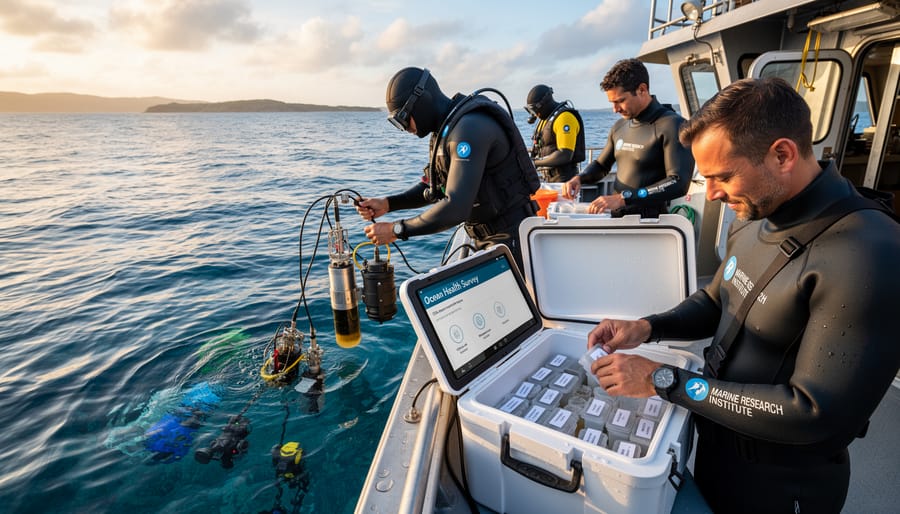
When Dr. Elena Martinez first encountered the Ocean Health Index during her graduate research on coastal fisheries in Southeast Asia, she admits she was skeptical. “I thought it might be just another theoretical framework disconnected from the realities we face in the field,” she recalls. That perspective changed dramatically when her team used OHI data to identify specific pressure points affecting small-scale fishing communities in the Philippines.
By analyzing the index’s ten goal scores for their study region, Elena discovered that while fisheries scores had declined, the culprit wasn’t overfishing alone. The data revealed interconnected issues: coastal habitat degradation was reducing fish nursery areas, while limited livelihood opportunities pushed more people toward fishing as their only income source. “The OHI gave us a complete picture rather than isolated symptoms,” she explains. “We weren’t just seeing declining fish stocks; we understood the ecosystem and human dimensions driving that decline.”
This holistic view transformed her conservation approach. Instead of recommending fishing restrictions that would harm vulnerable communities, Elena’s team developed integrated solutions: mangrove restoration projects that created both habitat and alternative income through ecotourism, combined with sustainable aquaculture training programs.
Today, Elena uses the OHI framework to guide community-based monitoring programs, teaching local fishers to collect data that feeds into regional assessments. “The index becomes powerful when communities see their own experiences reflected in the scores,” she says. “It validates their observations and empowers them to drive solutions.”
Regional Ocean Health Index Assessments: Bringing Global Metrics Local
Success Stories from Around the World
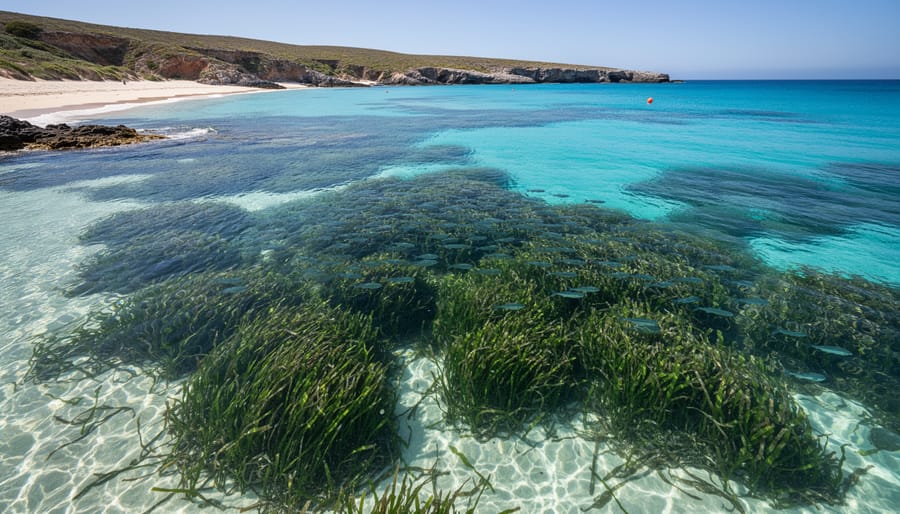
The Ocean Health Index has catalyzed remarkable conservation achievements across diverse coastal regions, demonstrating how scientific measurement translates directly into environmental action.
In Ecuador’s Gulf of Guayaquil, local fishers partnered with researchers to conduct their first regional OHI assessment in 2015. The results revealed declining scores in artisanal fishing opportunities and coastal livelihoods. This data became the foundation for establishing community-managed marine reserves and sustainable fishing cooperatives. Within four years, fish populations rebounded by 35%, and household incomes from fishing increased accordingly. Maria Santos, a marine biologist working with the fishing communities, shares that “seeing their ocean’s health as measurable scores empowered locals to become conservation champions rather than passive observers.”
British Columbia’s comprehensive OHI+ assessment identified specific watersheds where pollution was degrading coastal habitats. Armed with this precise data, provincial authorities prioritized cleanup efforts and implemented stricter runoff regulations. Habitat health scores improved measurably within two assessment cycles, validating their targeted approach.
The Mediterranean’s collaborative OHI assessment across multiple nations revealed tourism pressure points threatening biodiversity. Countries coordinated marine protected area expansions and visitor management strategies based on shared data, demonstrating how the Index facilitates international cooperation.
These success stories share common elements: engaged local communities, committed leadership, and the willingness to let scientific evidence guide policy. The Index doesn’t solve problems independently, but it illuminates pathways forward and provides benchmarks to measure progress, transforming ocean conservation from abstract goals into achievable milestones.
Other Important Ocean Health Monitoring Tools
The Ocean Health Index doesn’t work in isolation. Instead, it functions as part of a rich ecosystem of monitoring tools that together paint a comprehensive picture of marine ecosystem status. Understanding these complementary frameworks helps us appreciate how scientists gather multiple perspectives on ocean wellness.
The Marine Biodiversity Observation Network (MBON) focuses specifically on tracking changes in marine life diversity across different regions. While the OHI provides broad health scores, MBON drills down into species-level data, monitoring everything from microscopic plankton to marine mammals. This detailed biological information feeds into broader assessments and helps identify early warning signs of ecosystem shifts.
The Global Ocean Observing System (GOOS) takes a different approach, concentrating on physical and chemical ocean properties. Temperature, salinity, acidity, and oxygen levels all influence marine health profoundly. GOOS data helps researchers understand the environmental conditions affecting the goals measured by the OHI, creating crucial context for interpreting health scores.
Regional initiatives like the Reef Check program demonstrate how citizen scientists contribute to ocean monitoring. Trained volunteers conduct standardized surveys of coral reefs worldwide, collecting data that informs conservation decisions. Dr. Sarah Martinez, a marine biologist who coordinates volunteer divers in the Caribbean, shares that “these community members become ocean ambassadors, connecting scientific monitoring with local stewardship.”
Marine Protected Area (MPA) monitoring frameworks assess conservation effectiveness in designated zones, while fisheries stock assessments track commercially important species. Each tool offers unique insights, and when combined with the OHI’s holistic scoring system, decision-makers gain the multi-dimensional understanding necessary for effective ocean management. This integrated approach ensures we’re monitoring not just individual components, but the complex, interconnected system that sustains marine life and human communities alike.
How You Can Contribute to Ocean Health Monitoring
Ocean health doesn’t improve through monitoring alone—it requires action, and everyone has a role to play. Whether you’re a seasoned marine scientist or someone who simply loves the ocean, numerous pathways exist for contributing to ocean health initiatives.
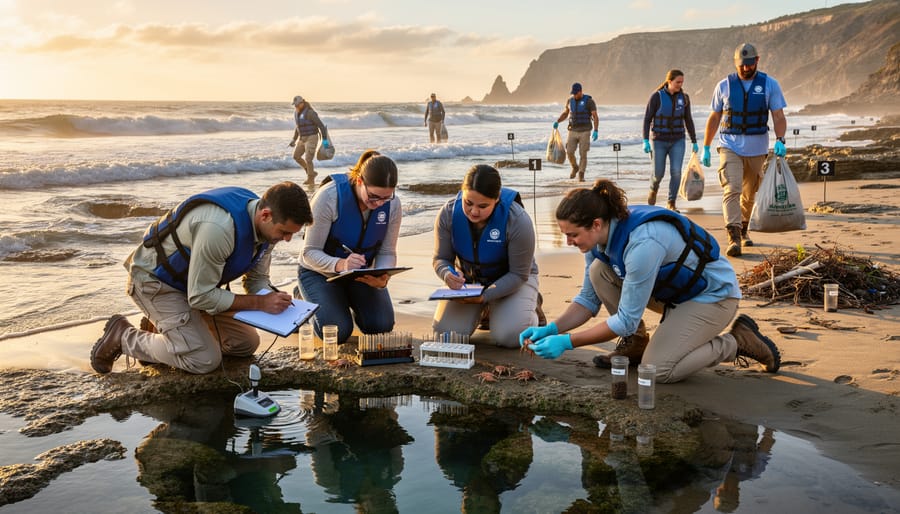
For those seeking hands-on involvement, citizen science programs offer remarkable opportunities to directly support ocean monitoring efforts. The Marine Biodiversity Science Center operates several volunteer programs that welcome participants of all backgrounds. These initiatives range from coastal cleanup events that document marine debris to underwater surveys that help track fish populations and coral health. Dr. Maria Santos, a marine biologist who coordinates our volunteer programs, shares, “Some of our most valuable data comes from dedicated citizen scientists who monitor the same beach sites month after month. Their consistency provides insights that snapshot surveys simply can’t capture.”
Students and educators can engage through classroom partnerships and field experiences. Many universities and research institutions offer internships focused on ocean health assessment, providing practical experience with data collection and analysis methods used in Ocean Health Index calculations. These positions offer invaluable exposure to real-world conservation challenges while building professional skills.
For professionals in environmental fields, opportunities exist to contribute expertise to collaborative research projects. The Marine Biodiversity Science Center regularly seeks partnerships with organizations working on specific Ocean Health Index goals, from sustainable fisheries management to habitat restoration.
Even from home, anyone can participate meaningfully. Mobile apps now allow beachgoers to report marine life sightings, plastic pollution, and coastal changes. These crowd-sourced observations feed into larger databases that inform regional ocean health assessments.
Financial support also makes a tangible difference. Donations to marine conservation organizations directly fund monitoring equipment, research expeditions, and community education programs that strengthen our collective understanding of ocean health.
The key is finding your entry point and committing to consistent engagement. Ocean health improvement is a marathon, not a sprint, and every contribution—whether data point, volunteer hour, or shared story—builds toward healthier seas for future generations.
The Ocean Health Index represents more than just numbers on a dashboard—it embodies our collective commitment to understanding and protecting the world’s marine ecosystems. By integrating economic, social, and environmental dimensions, this comprehensive monitoring framework gives us the clarity needed to make informed decisions that benefit both people and nature. The data tells us where our oceans are thriving and where they need urgent attention, transforming abstract concerns into actionable conservation strategies.
What makes this moment particularly exciting is that ocean health monitoring is no longer confined to research institutions alone. Community scientists, educators, and passionate volunteers are contributing valuable observations that strengthen our understanding of marine ecosystems. Marine biologist Dr. Elena Rodriguez shares, “Every data point we collect builds a clearer picture, and when communities see their own contributions reflected in these indices, it creates powerful momentum for change.”
The path forward requires all of us. Whether you’re analyzing satellite imagery, participating in coastal cleanups, or sharing ocean stories with your community, your involvement matters. Our center offers diverse volunteer opportunities that connect your interests with meaningful conservation work. Join our e-network to receive updates on research findings, upcoming citizen science projects, and ways to advocate for evidence-based ocean policies. Together, armed with knowledge and driven by optimism, we can ensure healthy, resilient oceans for generations to come. The question isn’t whether we can make a difference—it’s how quickly we’ll act.

jessica
Ava Singh is an environmental writer and marine sustainability advocate with a deep commitment to protecting the world's oceans and coastal communities. With a background in environmental policy and a passion for storytelling, Ava brings complex topics to life through clear, engaging content that educates and empowers readers. At the Marine Biodiversity & Sustainability Learning Center, Ava focuses on sharing impactful stories about community engagement, policy innovations, and conservation strategies. Her writing bridges the gap between science and the public, encouraging people to take part in preserving marine biodiversity. When she’s not writing, Ava collaborates with local initiatives to promote eco-conscious living and sustainable development, ensuring her work makes a difference both on the page and in the real world.