Marine Biodiversity Science Center

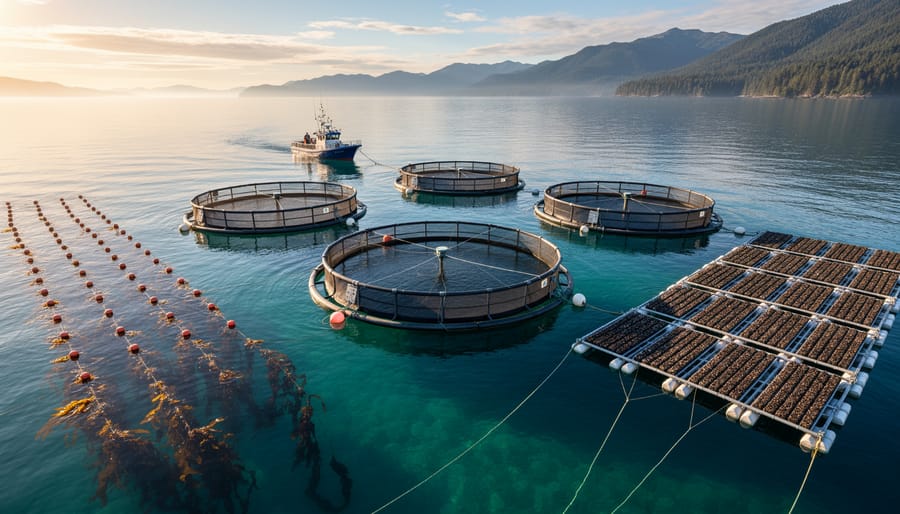
Marine aquaculture—the farming of fish, shellfish, and seaweed in ocean environments—has emerged as one of the fastest-growing food production sectors globally, promising to feed billions while relieving pressure on wild fish populations. Yet beneath this promise lies a complex relationship with ocean biodiversity that demands our careful attention. From coastal mangrove destruction to genetic pollution of wild stocks, poorly managed aquaculture operations can trigger cascading ecological consequences that ripple through entire marine ecosystems. Disease outbreaks in densely packed fish pens spread to wild populations. Excess nutrients from uneaten feed fuel harmful algal blooms. Escaped farmed salmon compete with and interbreed with their wild cousins, diluting populations that have evolved over millennia.
The story, however, is far from hopeless. Innovative aquaculture practices are demonstrating that we can produce sustainable seafood while protecting and even enhancing marine biodiversity. Integrated multi-trophic systems transform waste into resources. Restorative shellfish farms filter water and create habitat. Seaweed cultivation absorbs excess nutrients while providing carbon sequestration benefits. The difference between harmful and helpful aquaculture lies in how we design, locate, and manage these operations.
Understanding these mechanisms—both destructive and constructive—empowers us to advocate for better practices, support responsible producers, and participate in solutions. Whether you’re a marine scientist seeking deeper technical knowledge, a student exploring conservation careers, or a concerned citizen wanting to make informed seafood choices, examining aquaculture’s biodiversity impacts reveals pathways toward ocean stewardship that work for both people and planet.
The Rise of Marine Aquaculture: Meeting Global Demand
Over the past four decades, marine aquaculture has transformed from a modest supplementary food source into one of the fastest-growing food production sectors globally. Today, ocean-based fish and shellfish farming contributes approximately 35 million metric tons annually to global seafood supplies, representing nearly half of all seafood consumed worldwide. This remarkable expansion reflects both technological innovation and urgent necessity as wild fish populations struggle under mounting pressure.
The numbers tell a compelling story. Since 1990, marine aquaculture production has increased more than sixfold, with species ranging from Atlantic salmon and European sea bass to mussels, oysters, and seaweed now cultivated in coastal waters across every inhabited continent. Asia dominates production, accounting for roughly 90 percent of global output, though Europe, the Americas, and Africa are rapidly developing their own marine farming operations.
This growth stems from a critical reality: our oceans can no longer sustainably provide the seafood required by an expanding global population through wild capture alone. With more than three billion people depending on seafood as their primary protein source, and the world population projected to reach 9.7 billion by 2050, marine aquaculture offers a vital pathway forward. By cultivating fish and shellfish in controlled ocean environments, we can meet nutritional needs while reducing pressure on wild fish stocks that have declined precipitously in recent decades.
Dr. Sarah Chen, a marine biologist who has studied aquaculture operations in Southeast Asia for fifteen years, notes that well-managed marine farms can actually support ecosystem recovery. “When done responsibly, aquaculture takes the fishing pressure off vulnerable wild populations, giving them space to rebuild,” she explains. “We’ve documented cases where local fish diversity increased after sustainable aquaculture operations replaced intensive wild fishing.”
The challenge now lies in ensuring this expansion happens sustainably, protecting the very marine ecosystems we depend upon.
How Marine Farms Alter Ocean Environments
Habitat Disruption and Coastal Development
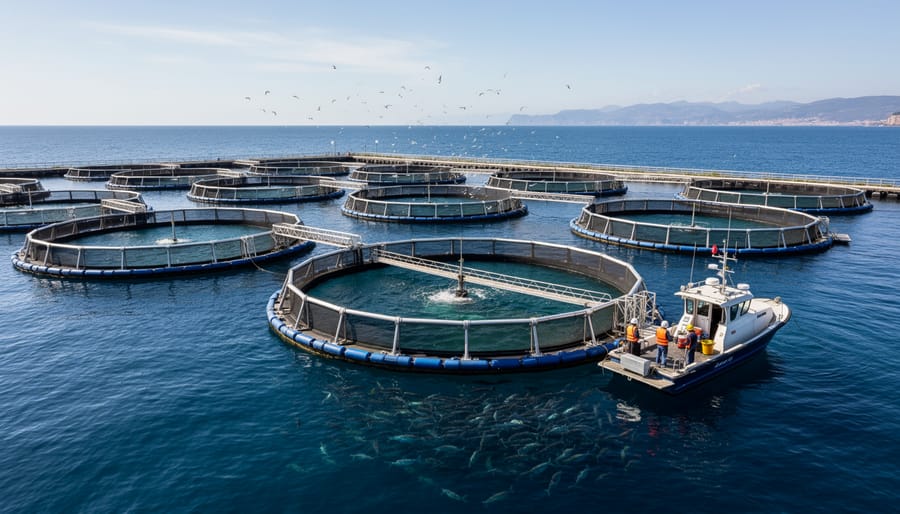
Marine aquaculture operations fundamentally transform the environments where they’re established, creating impacts that ripple through entire ecosystems. When farms are constructed in coastal zones and spawning grounds, the physical infrastructure—including nets, cages, anchoring systems, and feeding platforms—alters natural seafloor habitats that countless species depend upon for survival.
The weight and movement of aquaculture equipment can damage delicate substrates like seagrass beds and coral formations, which serve as nurseries for juvenile fish. In some regions, coastal mangroves have been cleared to make room for shrimp farms, eliminating crucial habitat that protects shorelines and supports biodiversity.
Dr. Sarah Chen, a marine biologist studying habitat disruption in Southeast Asia, shares her observations: “I’ve witnessed thriving reef systems replaced by uniform farm structures. The diversity loss is heartbreaking, but what gives me hope is seeing communities recognize these impacts and demand better practices.”
The presence of farm structures can also block traditional migration routes and interfere with spawning behaviors of wild fish populations. Lighting from operations may disorient marine organisms, while increased boat traffic and noise pollution add further stress.
Understanding these habitat impacts is essential for developing placement strategies that minimize ecological disruption while supporting sustainable food production.
Nutrient Loading and Water Quality
Marine aquaculture operations, particularly intensive fish farms, create concentrated sources of nutrient pollution that cascade through coastal ecosystems. When fish are raised at high densities, uneaten feed pellets sink to the seafloor while fish excrete nitrogen and phosphorus-rich waste directly into surrounding waters. Studies show that a single salmon farm can release nutrient loads equivalent to a small town’s untreated sewage.
These excess nutrients don’t simply disperse harmlessly. Instead, they accumulate beneath and around farm sites, fundamentally altering local chemistry. The nitrogen and phosphorus act as fertilizers, triggering explosive algal blooms that cloud the water and block sunlight from reaching seagrass beds and other photosynthetic organisms below. When these algal blooms eventually die, bacteria decompose the organic matter, consuming dissolved oxygen in the process.
This oxygen depletion, known as hypoxia, creates dead zones where marine life cannot survive. Dr. Sarah Chen, a marine ecologist who has monitored aquaculture sites for fifteen years, describes discovering these zones: “You descend expecting vibrant seafloor communities and instead find biological deserts, carpeted with bacterial mats and decomposing matter.”
Chemical treatments add another layer of concern. Antibiotics, anti-parasitic compounds, and antifoulants used in farm operations don’t break down immediately. These substances persist in sediments and contribute to broader water quality impacts, affecting organisms far beyond farm boundaries and potentially contributing to antibiotic resistance in marine bacteria.
Disease Transfer and Parasite Amplification
Dense concentrations of fish in aquaculture pens create ideal conditions for disease and parasite outbreaks that ripple far beyond farm boundaries. When thousands of fish occupy confined spaces, pathogens spread rapidly, transforming these facilities into amplification centers that threaten nearby wild populations.
Sea lice present perhaps the most documented example of this phenomenon. These tiny parasites naturally occur at low levels in wild fish, but aquaculture operations dramatically increase their numbers. On salmon farms, sea lice populations can explode, with a single facility hosting billions of these parasites. As wild juvenile salmon migrate past fish farms during their journey to the ocean, they become infected with unnaturally high lice loads. Young salmon, already vulnerable during this critical life stage, often cannot survive the infestation.
Marine biologist Dr. Sarah Chen, who has monitored wild salmon populations near aquaculture sites for over a decade, shares a sobering observation: “We’ve documented juvenile salmon with 20 to 30 lice attached to bodies smaller than your hand. In natural conditions, they might encounter one or two. The mathematics of survival simply don’t work in their favor anymore.”
Beyond sea lice, infectious salmon anemia virus, bacterial kidney disease, and other pathogens escape from farms, creating persistent disease reservoirs. These health threats compound other stressors facing wild fish populations, from climate change to habitat loss, pushing some species toward critical decline.
Genetic Pollution: When Farmed Fish Escape
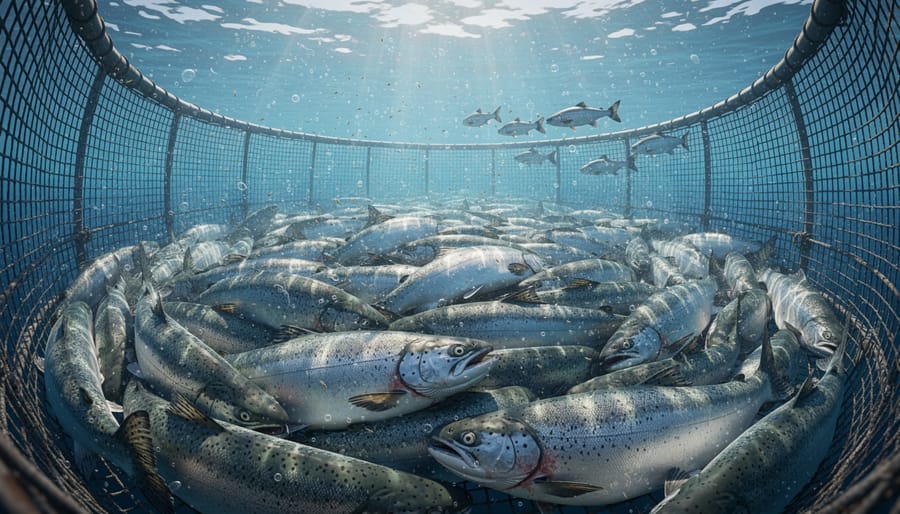
Every year, hundreds of thousands of farmed fish escape from aquaculture facilities into wild waters, creating an invisible crisis that threatens the genetic integrity of native populations. When these escapees interbreed with their wild relatives, they introduce farmed genes into natural gene pools, compromising the genetic diversity and fitness that wild fish need to survive in changing ocean conditions.
The scale of this problem is staggering. Atlantic salmon farms in Norway, Scotland, and Canada report escape events during storms, equipment failures, and routine operations. Studies show that in some Norwegian rivers, escaped farmed salmon now outnumber wild salmon during spawning season. These farm-raised fish carry genetic traits selected for rapid growth in captivity, but these same traits often prove detrimental in the wild, where survival depends on disease resistance, predator evasion, and navigational abilities honed over thousands of generations.
Dr. Elena Rodriguez, a population geneticist studying salmon in British Columbia, has witnessed this transformation firsthand. “We’re seeing wild populations lose the genetic tools they’ve developed to thrive in their specific rivers,” she explains. “Farmed fish might grow faster, but their offspring show reduced survival rates, poorer spawning success, and decreased ability to find their home streams.” Her research reveals that even a small percentage of farmed genes in wild populations can reduce overall fitness by up to 40 percent within just a few generations.
The consequences extend beyond individual species. In the Mediterranean, escaped sea bass and sea bream from farms have interbred with wild stocks, potentially reducing their resilience to warming waters and disease outbreaks. These genetic changes ripple through ecosystems, affecting predator-prey relationships and community dynamics in ways we’re only beginning to understand.
The long-term outlook concerns conservationists because genetic pollution, unlike chemical contamination, cannot be cleaned up. Once farmed genes enter wild populations, they persist across generations. However, solutions exist. Improved containment systems, sterile triploid fish, and land-based recirculating facilities can dramatically reduce escape risks. Several organizations now offer volunteer opportunities to monitor wild fish populations for signs of genetic introgression, contributing valuable data to conservation efforts while learning about this critical biodiversity challenge.
The Feed Problem: Aquaculture’s Hidden Impact on Wild Fish
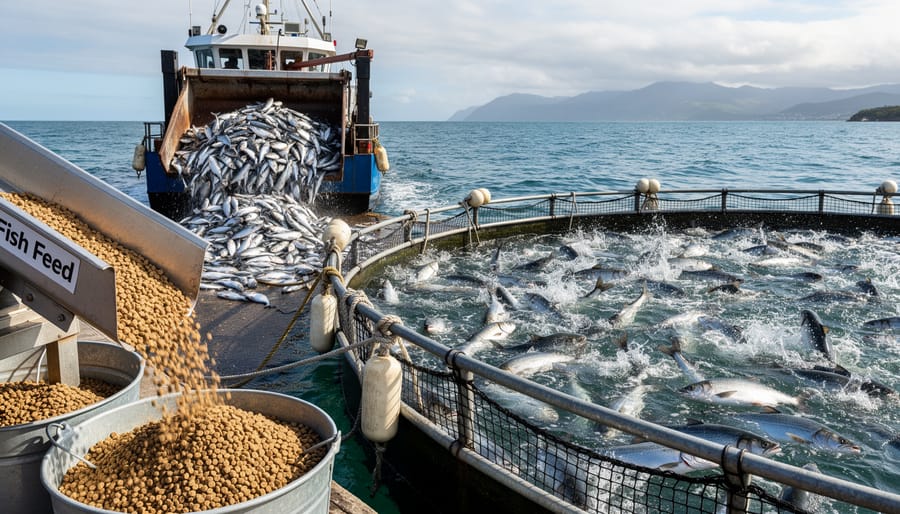
One of marine aquaculture’s most troubling contradictions lies in what we feed the fish. While fish farming promises to reduce pressure on wild populations, many farmed species—particularly salmon, tuna, and sea bass—are carnivorous. These fish require protein-rich diets, traditionally sourced from wild-caught forage fish like anchovies, sardines, herring, and menhaden.
The numbers tell a stark story. The feed conversion ratio, which measures how much feed is needed to produce one kilogram of farmed fish, reveals the scale of this problem. While the ratio has improved over decades, carnivorous species still require substantial inputs. For every kilogram of farmed salmon produced, roughly 1.2 kilograms of feed is needed—and that feed may contain significant amounts of fishmeal and fish oil derived from wild catches.
Here’s where the paradox deepens: we’re essentially grinding up small fish to feed larger ones. Globally, nearly 20 million metric tons of forage fish are caught annually, with approximately 90% processed into fishmeal and fish oil. These aren’t just any fish—they’re keystone species that form the foundation of marine food webs. When we remove massive quantities of anchovies or sardines, we’re pulling the rug out from under larger predators like seabirds, marine mammals, and commercially valuable fish species that depend on them for survival.
Dr. Maria Santos, a marine biologist studying forage fish populations off the California coast, explains the ripple effects: “When I began monitoring seabird colonies fifteen years ago, we had thriving populations. As forage fish harvests intensified to meet aquaculture demand, we’ve watched nesting success plummet. These small fish are the heartbeat of our ocean ecosystems.”
The pressure on these populations creates a conservation dilemma. While advances in plant-based feeds and insect proteins show promise, the industry’s continued reliance on wild fish perpetuates the very problem aquaculture was meant to solve—reducing our impact on ocean biodiversity.
Positive Contributions: Can Aquaculture Support Biodiversity?
While concerns about marine aquaculture’s environmental impacts are valid, emerging evidence shows that thoughtfully designed and responsibly managed operations can actually support marine biodiversity in meaningful ways. This more nuanced perspective offers hope for the future of ocean stewardship.
One of the most promising contributions comes from habitat creation. Aquaculture structures like oyster cages, mussel ropes, and fish pens can function as artificial reefs, providing shelter and feeding grounds for diverse marine species. Research has documented increased fish abundance and diversity around well-managed facilities. Dr. Maria Chen, a marine biologist who has studied Mediterranean aquaculture sites for over a decade, shares an inspiring observation: “We’ve watched bare seafloor transform into thriving communities. Small fish seek refuge among the cage supports, attracting larger predators. It’s remarkable how quickly nature capitalizes on these structures when water quality is maintained.”
Aquaculture also reduces pressure on wild fish populations. As demand for seafood continues rising globally, farming provides an alternative to overfishing. When operations use plant-based feeds or recirculating systems rather than relying heavily on wild-caught fishmeal, they can genuinely contribute to ocean recovery. Some estimates suggest that without aquaculture, wild fisheries would face significantly greater exploitation to meet human consumption needs.
Perhaps most exciting is restoration aquaculture, where farming techniques directly support endangered species recovery. Programs worldwide are successfully breeding and releasing threatened species like white abalone, giant clams, and various coral species. Oyster restoration projects combine commercial cultivation with ecological recovery, rebuilding reef habitats that filter water and support countless other organisms.
Volunteers play crucial roles in these restoration efforts, from monitoring water quality at farm sites to helping transplant cultivated corals onto degraded reefs. Many coastal communities now offer opportunities to participate in citizen science projects alongside aquaculture operations focused on conservation goals.
The key lies in management practices that prioritize environmental stewardship alongside production, proving that human food systems and marine biodiversity can indeed coexist and even mutually benefit one another.
Solutions Already Making Waves
Integrated Multi-Trophic Aquaculture (IMTA)
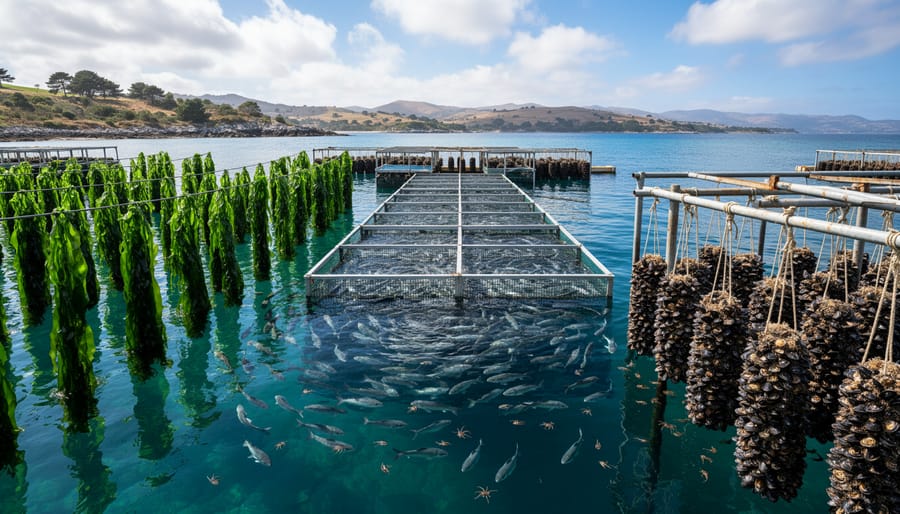
Integrated Multi-Trophic Aquaculture represents a promising shift toward sustainable marine farming by mimicking natural ecosystem processes. In IMTA systems, species from different trophic levels are cultivated together, creating a mutually beneficial relationship that recycles nutrients and minimizes environmental impact. Fed species like salmon or shrimp produce waste rich in nitrogen and organic matter. These outputs then nourish extractive species such as seaweed, which absorbs dissolved nutrients, and filter-feeders like mussels or sea cucumbers, which consume particulate waste.
Dr. Elena Rodriguez, a marine biologist working with IMTA operations in British Columbia, describes the transformation: “We’ve seen a 40% reduction in excess nutrients released into surrounding waters. The kelp grows vigorously while cleaning the water column, and we’re producing three marketable products instead of one.”
Real-world IMTA farms in Norway combine Atlantic salmon with blue mussels and sugar kelp, while operations in China integrate fish, sea cucumber, and various seaweed species. These systems demonstrate how aquaculture can function more like natural ecosystems, reducing pollution while increasing productivity.
For those passionate about sustainable seafood, supporting IMTA-certified products and participating in coastal monitoring programs helps advance this ecosystem-based approach to ocean farming.
Alternative Feeds and Herbivorous Species
One of the most promising shifts in marine aquaculture addresses the sustainability challenge at its source: what we feed farmed fish. Traditional fish feeds rely heavily on wild-caught fish processed into fishmeal and fish oil, creating a paradox where aquaculture depletes ocean resources rather than conserving them. Fortunately, innovation is transforming this landscape.
Plant-based feeds derived from soybeans, algae, and other terrestrial crops now supplement or replace fishmeal in many operations. Research by marine nutritionists has shown that carefully formulated plant proteins can meet the dietary needs of many farmed species without compromising growth or health. Insect proteins, particularly from black soldier fly larvae, represent another breakthrough. These nutrient-rich alternatives require minimal resources to produce and convert organic waste into high-quality feed.
Perhaps equally important is the industry’s growing focus on herbivorous and filter-feeding species. Tilapia, carp, and catfish naturally consume plant matter and lower trophic level foods, eliminating the need for fishmeal entirely. Shellfish like oysters and mussels actually improve water quality while growing, filtering nutrients and requiring zero external feed. Dr. Patricia Chen, a marine biologist working with sustainable aquaculture initiatives, shares that “farming species lower on the food chain fundamentally changes aquaculture’s ecological footprint, transforming it from a net resource consumer to a potential conservation tool.”
Improved Siting, Monitoring, and Regulation
The good news is that the aquaculture industry is increasingly embracing science-based approaches to minimize environmental harm. Third-party certification programs like the Aquaculture Stewardship Council (ASC) and Best Aquaculture Practices (BAP) now provide frameworks for sustainable operations, requiring farms to meet strict standards on waste management, chemical use, and ecosystem protection. These certifications help consumers and businesses identify responsibly produced seafood.
Site selection has become far more sophisticated, with marine biologists and environmental planners working together to map sensitive habitats before farm placement. Modern tools combine satellite imagery, oceanographic data, and biodiversity surveys to identify locations where farming operations pose minimal risk to seagrass beds, coral reefs, or critical nursery areas. Dr. Sarah Chen, a marine spatial planner working with coastal communities in Southeast Asia, shares her experience: “When we involve local fishers in the site selection process, we tap into generations of ecological knowledge. They know where fish spawn, where currents flow strongest, and which areas are most resilient. This collaboration produces better outcomes for both biodiversity and local livelihoods.”
Stronger regulatory frameworks are emerging globally, with governments establishing buffer zones around protected areas, mandating environmental impact assessments, and implementing real-time monitoring requirements. These measures ensure farms operate within ecological limits while supporting food security.
What You Can Do to Support Sustainable Marine Aquaculture
The future of our oceans depends on the choices we make today, and each of us has the power to support sustainable marine aquaculture practices that protect biodiversity while meeting global food demands.
Start with your shopping basket. When purchasing seafood, look for certification labels like the Aquaculture Stewardship Council (ASC) or Best Aquaculture Practices (BAP), which indicate farms meet rigorous environmental and social standards. Ask questions at restaurants and grocery stores about seafood sourcing. Consumer demand drives industry change, and your purchasing decisions send a powerful message that sustainability matters.
Support organizations advancing responsible aquaculture through research and advocacy. Many nonprofits work directly with coastal communities and policymakers to develop better regulations and farming practices. Consider donating to or volunteering with groups focused on marine conservation and sustainable fisheries. Dr. Sarah Chen, a marine biologist who monitors aquaculture sites in British Columbia, shares that “volunteer citizen scientists have been instrumental in our water quality monitoring programs, providing data that helps us advocate for stricter environmental protections.”
Educational outreach makes a difference too. Share what you learn about sustainable aquaculture with your community. Teachers can incorporate these topics into science curricula, helping students understand the connection between their food choices and ocean health.
Engage with policy by contacting local representatives about supporting sustainable aquaculture legislation and improved coastal zone management. Participate in public comment periods when new aquaculture operations are proposed in your region.
Finally, explore volunteer opportunities with research institutions conducting aquaculture studies. Many universities and marine centers welcome volunteers for field monitoring, data collection, and habitat restoration projects. These hands-on experiences not only contribute to vital research but also deepen your understanding of the challenges and solutions in sustainable seafood production.
The future of marine aquaculture’s impact on biodiversity is not written in stone. It rests squarely in the hands of farmers, policymakers, researchers, consumers, and citizens who care about the health of our oceans. Every choice we make today shapes whether aquaculture becomes a driver of ecological decline or a model of sustainable food production that works in harmony with marine life.
The science is clear: aquaculture can be designed and managed to minimize harm and even enhance biodiversity. Integrated systems, careful site selection, native species cultivation, and reduced chemical inputs are not theoretical ideals but practical approaches already proving successful around the world. The challenge is scaling these solutions and ensuring they become the standard rather than the exception.
This transformation requires collective action. Support marine conservation organizations working to establish better aquaculture standards. Choose seafood from certified sustainable farms. If you’re passionate about marine ecosystems, consider volunteering with research projects monitoring aquaculture impacts or educational programs raising awareness in coastal communities. Marine biologists like Dr. Chen, who devoted her career to developing low-impact farming techniques, remind us that persistence and collaboration can reshape entire industries.
Our oceans can feed us without sacrificing the incredible biodiversity that makes them thrive. The question is not whether sustainable marine aquaculture is possible, but whether we have the commitment to make it our reality.

jessica
Ava Singh is an environmental writer and marine sustainability advocate with a deep commitment to protecting the world's oceans and coastal communities. With a background in environmental policy and a passion for storytelling, Ava brings complex topics to life through clear, engaging content that educates and empowers readers. At the Marine Biodiversity & Sustainability Learning Center, Ava focuses on sharing impactful stories about community engagement, policy innovations, and conservation strategies. Her writing bridges the gap between science and the public, encouraging people to take part in preserving marine biodiversity. When she’s not writing, Ava collaborates with local initiatives to promote eco-conscious living and sustainable development, ensuring her work makes a difference both on the page and in the real world.