Marine Biodiversity Science Center

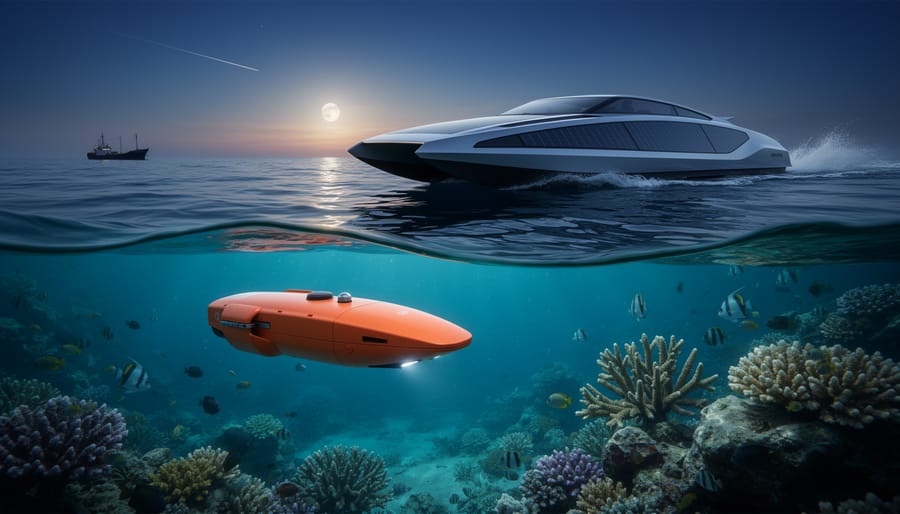
Beneath the ocean’s surface, coral reefs are dying at unprecedented rates, illegal fishing vessels operate in shadows, and marine debris accumulates faster than cleanup crews can manage. Traditional monitoring methods—research vessels, manned aircraft, and stationary sensors—cannot cover the vast scales needed to address these crises effectively. The ocean spans 139 million square miles, yet scientists estimate we’ve explored less than 5% of it, leaving critical ecosystems vulnerable and unprotected.
Unmanned maritime autonomy architecture represents a technological revolution in how we understand and protect our oceans. These integrated systems combine autonomous surface vessels, underwater drones, satellite communications, and artificial intelligence to create persistent, adaptive monitoring networks across marine environments. Unlike conventional approaches that require constant human operation, these platforms navigate independently for weeks or months, collecting data on water quality, tracking marine species, mapping seafloor habitats, and detecting environmental threats in real-time.
The architecture functions through three interconnected layers: autonomous vehicles equipped with specialized sensors, cloud-based processing systems that analyze incoming data, and decision-making algorithms that direct missions based on environmental conditions. A single autonomous surface vessel can survey 100 square kilometers daily while simultaneously deploying underwater drones to investigate areas of concern—a capacity that would require dozens of researchers and multiple vessels using traditional methods.
Marine conservationists are already deploying these systems to monitor coral bleaching events, track endangered whale migrations, and identify illegal fishing activities in protected waters. The technology democratizes ocean research, enabling smaller organizations and developing nations to conduct sophisticated marine surveys previously accessible only to well-funded institutions. As these systems become more affordable and capable, they’re transforming reactive conservation efforts into proactive, data-driven strategies that can respond to threats before they become irreversible.
The Ocean Monitoring Challenge: Why Human-Only Approaches Fall Short
Our oceans cover more than 70 percent of Earth’s surface, containing ecosystems of breathtaking complexity and scale. Yet monitoring these vast underwater worlds presents challenges that have long frustrated marine scientists and conservationists. Traditional approaches to ocean monitoring rely heavily on human divers, research vessels, and sporadic sampling missions, methods that have served us well but ultimately fall short of what’s needed for effective marine restoration.
The limitations are significant and multifaceted. Research vessels cost thousands of dollars per day to operate, restricting monitoring efforts to well-funded institutions and limiting the frequency of data collection. Human divers, while invaluable, can only safely reach certain depths and must contend with decompression requirements, limited dive times, and the physical demands of underwater work. Weather conditions further constrain monitoring efforts, as storms and rough seas can halt data collection for days or weeks at a time.
Dr. Maria Santos, a marine biologist who has spent two decades studying coral reef systems, describes the frustration of these constraints. “We might visit a reef site quarterly or monthly if we’re lucky,” she explains. “But coral bleaching events can unfold in days. By the time we return, critical changes have already occurred, and we’ve missed the opportunity to understand what triggered them.”
This gap in continuous observation creates blind spots in our understanding of marine ecosystems. Restoration projects need consistent, long-term data to track recovery progress, identify threats early, and adapt management strategies accordingly. Temperature fluctuations, pollution events, species migrations, and habitat changes don’t operate on human schedules. Without continuous monitoring, we’re essentially trying to understand a complex story while only reading occasional pages, missing crucial plot developments that could inform more effective conservation strategies.
The scale of the challenge demands a new approach, one that complements human expertise with technology capable of maintaining constant vigilance over our ocean environments.
What Is Unmanned Maritime Autonomy Architecture?
The Building Blocks: Vessels, Sensors, and Intelligence
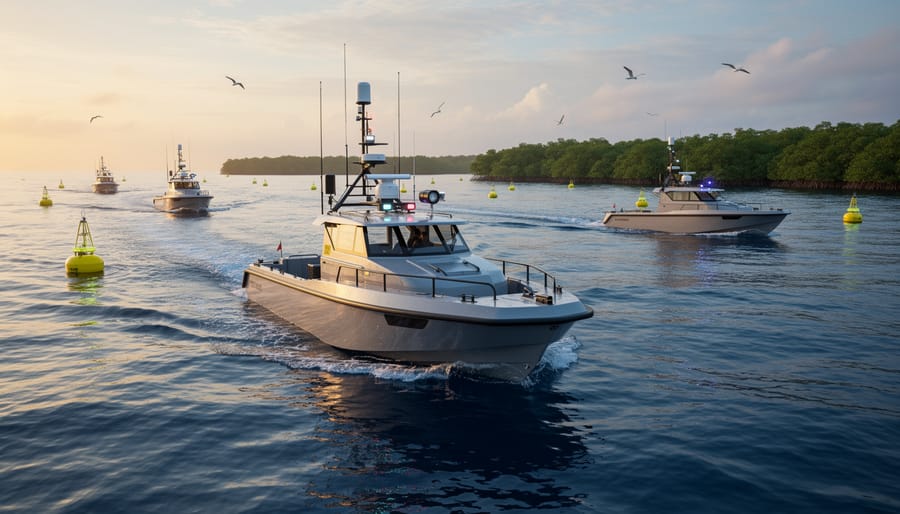
At the heart of unmanned maritime autonomy systems lie three essential components working in harmony: the vessels themselves, sophisticated sensor arrays, and artificial intelligence that brings it all together.
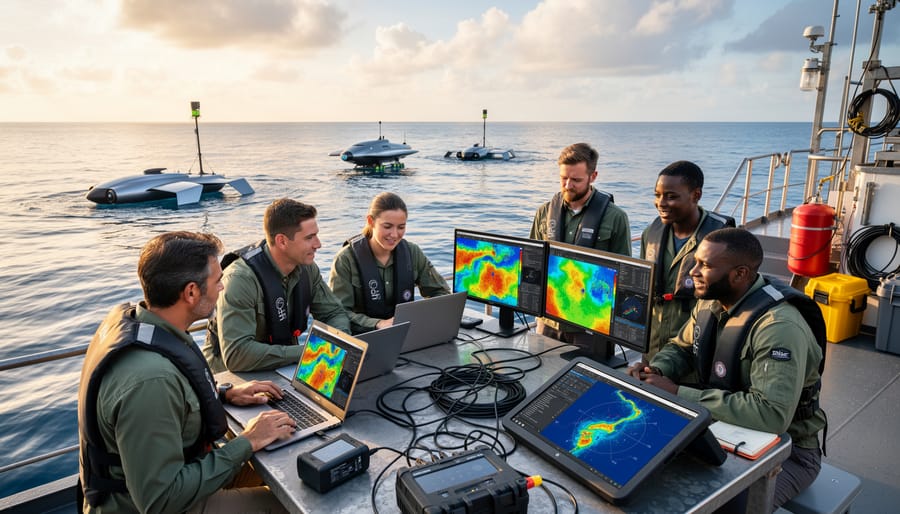
Unmanned Surface Vessels (USVs) skim across ocean surfaces, ranging from small, portable units measuring just a few feet to larger platforms capable of weeks-long missions. These vessels are engineered to withstand harsh marine conditions—saltwater corrosion, powerful waves, and extreme temperatures—while maintaining stable sensor platforms. Many are solar-powered or use hybrid energy systems, allowing them to operate far from shore without refueling.
Beneath the waves, underwater robots known as Autonomous Underwater Vehicles (AUVs) explore depths humans cannot easily reach. These submarine-like drones navigate using sonar and acoustic positioning, collecting samples and visual data in complete darkness thousands of feet below the surface.
The sensor arrays aboard these platforms are the system’s eyes and ears. High-resolution cameras capture detailed images of marine life and habitats. Acoustic sensors detect whale calls and fish populations. Water quality instruments measure temperature, salinity, pH levels, and pollutant concentrations. Some vessels even carry environmental DNA samplers that identify species from tiny genetic traces in seawater.
Intelligence systems process this flood of data in real-time, using machine learning to identify species, detect changes in ecosystems, and make navigation decisions autonomously. This combination allows researchers to monitor vast ocean areas continuously, gathering conservation-critical information that would be impossible to collect through traditional methods alone.
The Brain Behind the Operation: AI Decision-Making Systems
At the heart of unmanned maritime vessels lies a sophisticated artificial intelligence system that serves as both captain and crew. Think of it as an incredibly attentive marine biologist who never sleeps, constantly processing information from the surrounding environment to make split-second decisions that keep the vessel safe and its mission on track.
These AI systems integrate data from multiple sensors—sonar, cameras, GPS, weather monitors, and specialized oceanographic instruments—creating a comprehensive picture of the vessel’s surroundings. Using machine learning algorithms trained on thousands of hours of maritime data, the AI can identify potential obstacles like other vessels, marine mammals, floating debris, or underwater formations. When a humpback whale surfaces unexpectedly in the vessel’s path, the system recognizes the animal, calculates safe passage routes, and adjusts course within seconds, all without human input.
The decision-making process mirrors how experienced sailors navigate, but with computational advantages. The AI continuously evaluates weather patterns, ocean currents, and wave conditions, adapting its route to maximize data collection while minimizing energy consumption. During a sudden storm, it might autonomously navigate to calmer waters or adjust its sensor deployment depth to protect delicate equipment.
Dr. Maria Santos, a marine biologist who works with autonomous vessels, explains the technology’s impact: “These systems allow us to maintain consistent monitoring in remote areas where traditional research vessels can’t operate cost-effectively. The AI handles the navigation complexities while we focus on analyzing the incredible biodiversity data it collects.”
What makes these systems particularly valuable for conservation is their ability to learn and improve. Each mission generates data that refines future decision-making, creating increasingly effective tools for understanding and protecting our oceans.
AI-Driven Monitoring in Action: Real Applications for Marine Restoration
Tracking Coral Reef Recovery
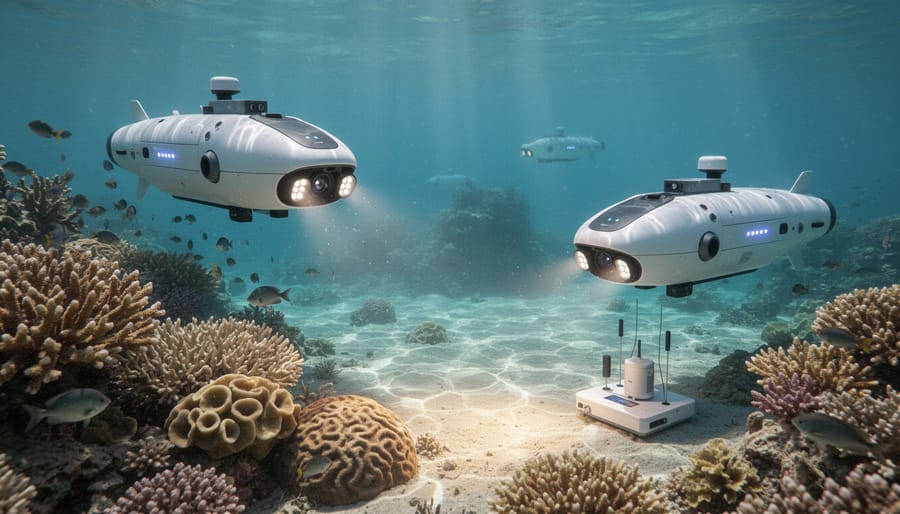
Autonomous underwater vehicles (AUVs) and surface vessels are revolutionizing how scientists monitor coral reef restoration projects, providing unprecedented detail about ecosystem recovery. These systems patrol restoration sites regularly, capturing high-resolution imagery that tracks coral growth rates, colony health, and structural development over time.
In the Caribbean, the CORALBOT project deploys autonomous robots equipped with specialized sensors that measure water temperature, pH levels, salinity, and nutrient concentrations around restored reef structures. The vehicles document returning fish populations and invertebrate species, creating comprehensive biodiversity inventories that would require hundreds of dive hours if conducted manually.
Marine biologist Dr. Elena Martinez, who works with autonomous monitoring systems in the Florida Keys, shares her excitement: “We can now visit restoration sites weekly instead of monthly, catching problems early. Last year, our AUV detected a temperature spike that threatened newly transplanted corals, allowing us to implement protective measures immediately.”
The Great Barrier Reef Foundation utilizes autonomous surface vessels that survey vast reef expanses, identifying areas where coral recruitment succeeds and pinpointing locations needing intervention. These systems generate detailed thermal maps, revealing microhabitats where corals thrive despite warming waters, information crucial for strategically placing future restoration efforts and understanding resilience patterns in changing ocean conditions.
Monitoring Seagrass Meadow Regeneration
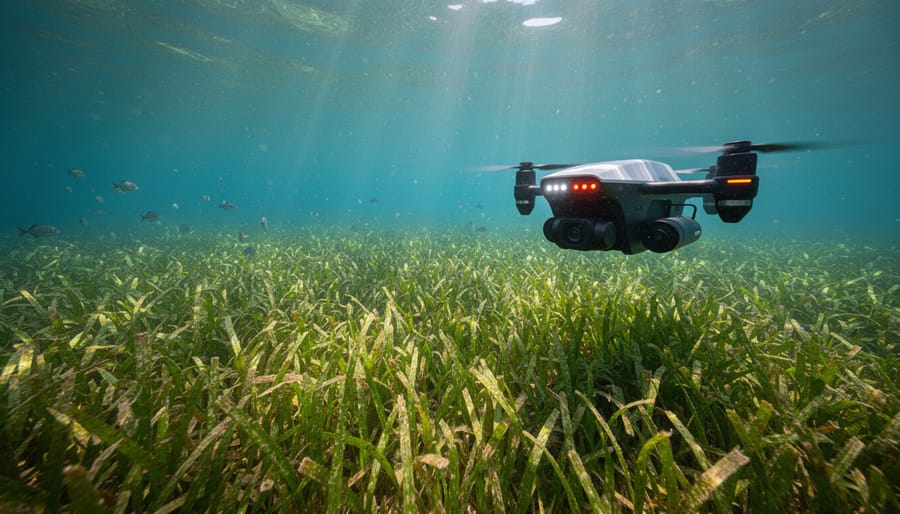
Underwater drones equipped with high-resolution cameras and sensors are revolutionizing how we track seagrass recovery in restoration areas. These autonomous vehicles systematically patrol designated zones, capturing detailed imagery that reveals the extent of seagrass coverage across the seafloor. By conducting regular surveys, the technology creates time-lapse records showing how quickly meadows are expanding or whether growth has stalled.
The data collected goes beyond simple mapping. Advanced imaging systems measure blade density, shoot height, and overall plant health by analyzing color variations and structural patterns. This information helps scientists calculate growth rates with remarkable precision, identifying which restoration techniques yield the best results. When paired with marine habitat restoration efforts, these insights guide adaptive management strategies.
Perhaps most critically, autonomous drones serve as early warning systems for emerging threats. They can detect invasive species like algae or urchins before populations explode, spot unusual sediment patterns indicating pollution, and identify areas where anchoring or human activity damages young plants. Marine biologist Dr. Sarah Chen shares her experience: “We discovered a nutrient pollution source affecting our restoration site within days of deployment. Previously, we might have lost months of progress before noticing the problem during routine dives.”
This constant vigilance transforms reactive conservation into proactive protection.
Protecting Marine Protected Areas
Marine Protected Areas represent some of our ocean’s most critical sanctuaries, yet monitoring these vast underwater territories has traditionally required significant resources and personnel. Autonomous vessels are changing this reality by providing continuous surveillance capabilities that were previously impossible to maintain.
These unmanned systems patrol designated conservation zones around the clock, using advanced sensors and artificial intelligence to detect unauthorized fishing activities. When suspicious behavior is identified, the vessels can immediately alert enforcement authorities while documenting evidence through high-resolution cameras and tracking systems. This constant presence serves as both a deterrent and an enforcement tool, helping protect vulnerable ecosystems from exploitation.
Beyond security functions, autonomous platforms are revolutionizing how we monitor endangered species populations. Equipped with acoustic sensors, these vessels can track whale migrations, identify individual animals through their unique calls, and assess population health without the disturbance that traditional research vessels might cause. Underwater cameras capture footage of sea turtle nesting patterns, while specialized equipment monitors coral reef conditions and fish populations.
Dr. Sarah Chen, a marine biologist working with autonomous monitoring systems in the Pacific, shares her experience: “These vessels collect data during storms, at night, and in conditions where we simply couldn’t send researchers. We’re discovering migration patterns and behaviors we never knew existed because we finally have eyes in places we couldn’t reach before.”
The biodiversity data gathered creates comprehensive baselines for measuring conservation success and identifying emerging threats before they become critical.
The Data Revolution: What These Systems Tell Us
From Raw Data to Conservation Insights
The true power of unmanned maritime systems lies not in collecting data, but in transforming that raw information into actionable conservation strategies. AI-powered monitoring systems process massive datasets in real-time, identifying patterns that would take human researchers months or years to detect.
These intelligent platforms analyze water chemistry parameters like pH levels, dissolved oxygen, and nutrient concentrations, flagging deviations that signal ecosystem stress. When sensors detect rising temperatures or abnormal salinity levels, AI algorithms cross-reference this data with historical patterns to predict potential coral bleaching events or harmful algal blooms before they become catastrophic.
Species behavior analysis reveals equally valuable insights. Machine learning models track migration patterns, breeding cycles, and population dynamics, alerting conservationists to concerning changes. If fish populations suddenly shift their distribution or marine mammals alter their feeding behaviors, the system identifies these anomalies as potential responses to environmental pressures.
The integration of multiple ecosystem health indicators creates a comprehensive picture of marine environments. AI doesn’t just report numbers; it synthesizes complex relationships between temperature, species diversity, water quality, and human activities to provide early warning systems that enable proactive intervention.
Marine biologist Dr. Sarah Chen explains: “These systems have transformed our response time. We’re no longer reacting to visible damage but preventing it through predictive insights that guide our conservation priorities.”
Real-Time Alerts and Adaptive Management
One of the most transformative capabilities of unmanned maritime systems is their ability to detect environmental changes and send immediate notifications to conservation teams. Picture a network of autonomous vessels continuously monitoring a coral reef restoration site. When sensors detect a sudden drop in oxygen levels or an unexpected spike in water temperature, the system instantly alerts marine biologists, who can then dispatch response teams or adjust management strategies before significant damage occurs.
These real-time alert systems function as early warning networks for our oceans. For instance, if an autonomous vehicle identifies a diseased coral colony spreading infection, conservationists receive GPS coordinates and visual data within minutes rather than waiting weeks for scheduled surveys. Dr. Maya Torres, a marine restoration specialist, shares how this technology changed her work: “We once lost an entire nursery site to crown-of-thorns starfish because we discovered the outbreak too late. Now, our autonomous monitors alert us the moment predators appear, giving us time to protect vulnerable corals.”
This immediate feedback loop enables adaptive management, where conservation strategies evolve based on current conditions rather than outdated assessments. The technology empowers smaller organizations and volunteer groups to monitor larger areas more effectively, democratizing ocean stewardship and making meaningful conservation action accessible to more communities.
Voices from the Field: Marine Scientists Working with Autonomous Systems
Dr. Maria Chen still remembers the first time she deployed an autonomous underwater vehicle to survey coral reefs in the Philippines. “I was nervous,” she admits with a laugh. “I’d spent years diving these reefs myself, documenting every species by hand. Could a robot really capture what I saw?” What she discovered surprised her. The AUV collected data from depths and durations impossible for human divers, revealing hidden coral communities thriving 80 meters below the surface.
For marine biologists like Chen, autonomous systems haven’t replaced the intimacy of fieldwork—they’ve expanded it. “I still dive, I still get my hands wet,” she explains. “But now I can be in three places at once. While I’m studying shallow-water fish behavior, my AUV is mapping deeper habitats, and my surface vessel is collecting water samples across a wider area.”
Conservation technologist James Okafor shares similar enthusiasm about using autonomous surface vehicles to monitor whale migration patterns off the West African coast. “These systems give us eyes on the ocean 24/7,” he says. “We’ve documented whale songs and movements we never knew existed because we simply couldn’t be out there constantly.” The data his team collects helps establish marine protected areas and shipping lane adjustments that reduce vessel strikes.
Yet both scientists emphasize that technology serves the mission, not the other way around. “The most exciting moment isn’t launching the equipment,” Chen reflects. “It’s when a local fishing community sees the data and says, ‘Now we understand why this area matters.’ That’s when autonomous systems become tools for collective stewardship.”
For students considering marine conservation careers, Okafor offers encouragement: “You don’t need to be a robotics engineer. You need curiosity about the ocean and willingness to learn new tools. These technologies are making marine science more accessible than ever, opening doors for diverse voices in conservation.”
Challenges and Considerations
While unmanned maritime autonomy architecture offers tremendous promise for marine conservation, it’s important to understand the current limitations and challenges facing this emerging technology.
One of the most significant hurdles is power management. Autonomous vessels operating in remote ocean environments need reliable energy sources for extended missions. Solar panels work well in sunny conditions, but storms and cloudy weather can limit effectiveness. Battery technology continues to improve, but weight and capacity constraints still restrict operational duration. Marine biologist Dr. Sarah Chen, who has deployed autonomous vessels for coral reef monitoring, shares that “our biggest frustration is when a mission gets cut short because the vessel needs to return for recharging, sometimes just when we’re gathering the most valuable data.”
Environmental considerations also warrant attention. While these vessels aim to protect marine ecosystems, we must ensure the technology itself doesn’t cause harm. Concerns include potential noise pollution affecting marine mammals, collision risks with wildlife, and the environmental impact of manufacturing and maintaining these systems. Researchers are actively developing quieter propulsion systems and improved obstacle detection to minimize these risks.
Cost remains a substantial barrier, particularly for smaller conservation organizations and developing nations where marine protection is critically needed. Initial investment in autonomous vessels, sensors, and data processing infrastructure can run into hundreds of thousands of dollars. Maintenance, software updates, and specialized training add ongoing expenses.
Ethical questions also arise around automation in conservation work. Can algorithms truly replace human judgment in complex ecological decisions? What happens when autonomous systems malfunction in sensitive habitats? There’s also concern about job displacement for traditional boat operators and field researchers, though many experts argue these technologies will create new roles rather than eliminate existing ones.
Regulatory frameworks are still catching up with the technology, creating uncertainty about where and how these vessels can operate legally. International maritime laws weren’t designed with autonomous conservation vessels in mind, leading to gray areas in jurisdiction and liability.
How You Can Support This Technology Frontier
The future of marine conservation depends not only on innovative technology but on people like you who are willing to engage, learn, and contribute. Whether you’re a seasoned scientist, an educator, a student considering career paths, or simply someone passionate about protecting our oceans, there are meaningful ways to support unmanned maritime autonomy efforts.
One of the most accessible entry points is through citizen science programs that analyze data collected by autonomous vessels. Organizations worldwide are seeking volunteers to help classify marine species from underwater footage, identify behavioral patterns, and flag unusual observations that might indicate environmental changes. These programs require no special equipment—just an internet connection and willingness to learn. Your contributions directly enhance the datasets that inform conservation strategies.
For students, this technology frontier offers exciting educational pathways. Marine robotics, data science, environmental engineering, and marine biology programs increasingly incorporate autonomous systems into their curricula. Consider pursuing internships with research institutions or conservation organizations deploying these technologies. Many offer summer programs specifically designed to introduce students to autonomous marine monitoring.
Advocacy plays an equally vital role. Supporting policies that fund marine research and technology development ensures these tools remain available for conservation purposes. Share stories about autonomous monitoring successes with your networks to build public awareness and appreciation for this work.
Educational institutions can integrate autonomous maritime technology into STEM curricula, inspiring the next generation of ocean advocates. Teachers can connect classrooms with real-time data streams from research vessels, transforming abstract concepts into tangible conservation efforts.
Finally, consider supporting organizations pioneering this technology through donations or volunteer work. Every contribution—whether time, expertise, or financial—helps expand our capacity to understand and protect marine ecosystems before it’s too late.
The convergence of unmanned maritime autonomy and ocean conservation represents more than technological advancement—it signals a profound shift in how humanity can engage with and protect our marine ecosystems. These autonomous systems, from underwater robots mapping coral reefs to surface vessels monitoring water quality across vast distances, are extending our reach into previously inaccessible ocean territories. They’re generating unprecedented volumes of data that inform restoration strategies, track endangered species, and reveal the intricate connections within marine habitats.
Yet technology alone cannot restore our oceans. The true power of unmanned maritime autonomy lies in its ability to amplify human commitment. Marine biologist Dr. Elena Rodriguez, who works with autonomous monitoring systems in the Caribbean, emphasizes this partnership: “These tools give us eyes everywhere, but people give us the heart and hands to act on what we discover.” Every data point collected by an autonomous vehicle requires human interpretation, every conservation insight demands community action, and every technological breakthrough must be guided by ethical stewardship.
The ocean’s future depends on collective engagement. Whether you’re a researcher leveraging autonomous data for groundbreaking studies, an educator sharing these innovations with students, or a concerned citizen supporting marine conservation initiatives, your role matters. Consider participating in citizen science programs that complement autonomous monitoring, advocating for funding that expands these technologies to underserved marine regions, or simply spreading awareness about the tools revolutionizing ocean protection. Together, we’re not just observing ocean health—we’re actively shaping its recovery for generations to come.

jessica
Ava Singh is an environmental writer and marine sustainability advocate with a deep commitment to protecting the world's oceans and coastal communities. With a background in environmental policy and a passion for storytelling, Ava brings complex topics to life through clear, engaging content that educates and empowers readers. At the Marine Biodiversity & Sustainability Learning Center, Ava focuses on sharing impactful stories about community engagement, policy innovations, and conservation strategies. Her writing bridges the gap between science and the public, encouraging people to take part in preserving marine biodiversity. When she’s not writing, Ava collaborates with local initiatives to promote eco-conscious living and sustainable development, ensuring her work makes a difference both on the page and in the real world.