Marine Biodiversity Science Center


Gaseous air pollutants from human activities pose one of the most significant threats to our planet’s atmosphere, fundamentally altering both air quality and climate stability. As human activities impacting oceans and atmospheres continue to intensify, three primary anthropogenic sources emerge as critical concerns: industrial emissions from manufacturing and power generation facilities, transportation-related exhaust from vehicles and aircraft, and agricultural practices including livestock management and fertilizer use. Understanding these major pollution sources is essential for developing effective mitigation strategies and protecting both human health and environmental stability. While the challenges may seem daunting, identifying and addressing these key sources provides a clear pathway for meaningful action in reducing atmospheric pollution and its far-reaching consequences on global ecosystems.
Maritime Transportation: The Silent Ocean Polluter

Impact on Marine Life
Gaseous air pollutants from maritime activities have devastating effects on marine ecosystems, disrupting the delicate balance of ocean life. When these pollutants dissolve in seawater, they contribute to ocean acidification, making it harder for coral reefs, mollusks, and other calcifying organisms to build and maintain their structures. Marine biologist Dr. Sarah Chen notes that even small changes in water chemistry can trigger cascading effects throughout the food web.
Nitrogen oxide emissions from ships create harmful algal blooms that deplete oxygen levels in coastal waters, leading to dead zones where marine life cannot survive. These areas particularly affect bottom-dwelling species and can force fish populations to relocate, disrupting traditional fishing grounds and local economies.
Sulfur dioxide emissions pose another significant threat, as they contribute to acid rain that affects both coastal and deep-water ecosystems. This acidification particularly impacts plankton populations, which form the foundation of marine food chains. Recent studies show that areas with high maritime traffic experience up to 30% reduction in plankton diversity, affecting everything from tiny crustaceans to large whales that depend on these microscopic organisms for survival.
Current Regulations and Solutions
International regulations have made significant strides in addressing gaseous air pollution, particularly through the International Maritime Organization’s (IMO) MARPOL Annex VI. This framework sets strict limits on sulfur content in marine fuels, requiring ships to use fuels with no more than 0.5% sulfur content since 2020, down from the previous 3.5% limit.
Technological solutions are playing a crucial role in emission reduction. Scrubber systems, which remove sulfur from exhaust gases, have become increasingly common on vessels. Alternative fuel technologies, including liquefied natural gas (LNG) and hydrogen fuel cells, are gaining traction as cleaner energy sources for shipping.
On land, many nations have implemented stringent vehicle emission standards and industrial regulations. The European Union’s Euro 6 standards and similar regulations worldwide have pushed manufacturers to develop cleaner engines and pollution control technologies. Carbon capture and storage (CCS) systems are being deployed at power plants and industrial facilities to reduce greenhouse gas emissions.
These combined efforts demonstrate promising progress, though continued innovation and stricter enforcement remain essential for meaningful pollution reduction.
Coastal Industrial Activities
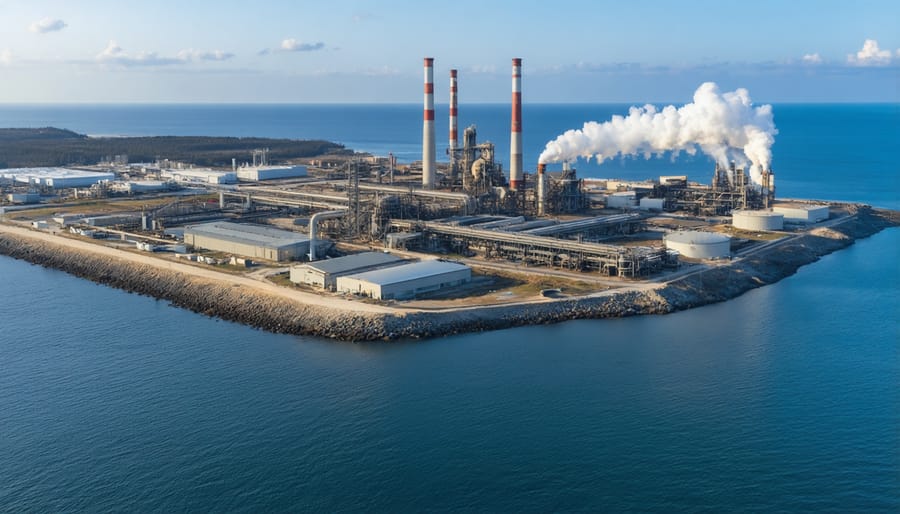
Chemical Processing Plants
Coastal chemical processing facilities represent a significant source of gaseous air pollutants affecting marine ecosystems. These industrial complexes release various toxic compounds, including volatile organic compounds (VOCs), sulfur dioxide, and nitrogen oxides, through their manufacturing processes. The proximity of these facilities to coastal waters makes their emissions particularly concerning for marine life.
During standard operations, chemical plants emit pollutants through stack releases, equipment leaks, and storage tank venting. These emissions can create acidic conditions in nearby waters when they combine with moisture in the air, leading to ocean acidification. Recent studies show that areas within a 50-kilometer radius of coastal chemical facilities often experience significantly higher concentrations of harmful gases.
The impact extends beyond direct air pollution. These facilities frequently release process gases during maintenance operations and emergency situations, creating acute exposure risks for marine organisms. Many coastal processing plants have implemented advanced emission control technologies, though challenges remain in achieving zero-emission operations.
Power Generation Facilities
Coastal power generation facilities represent a significant source of gaseous air pollutants affecting marine environments. These facilities, primarily burning fossil fuels like coal and natural gas, release substantial amounts of sulfur dioxide, nitrogen oxides, and carbon dioxide into the atmosphere. The proximity of these plants to coastlines creates a direct pathway for pollutants to interact with marine ecosystems, affecting both air and water quality.
The impact is particularly concerning in areas where multiple facilities operate along the same coastline. Studies show that emissions from these plants can create acidic precipitation, which alters ocean chemistry and affects marine life. Through integrated coastal management, some regions have successfully implemented stricter emission controls and transition plans toward renewable energy sources.
Recent innovations in clean energy technology offer promising alternatives, with offshore wind farms and solar installations gradually replacing traditional coastal power plants. This transition not only reduces air pollution but also helps protect vulnerable marine ecosystems from the cumulative effects of long-term exposure to airborne pollutants.

Offshore Oil and Gas Operations
Methane and VOC Emissions
Offshore oil and gas operations release significant amounts of methane and volatile organic compounds (VOCs) into the atmosphere through various processes. During drilling, production, and transportation activities, these gases escape through equipment leaks, venting operations, and incomplete combustion in flaring systems. Methane, a potent greenhouse gas, has a warming potential 25 times greater than carbon dioxide over a 100-year period. VOCs contribute to the formation of ground-level ozone and can cause respiratory issues in marine life and nearby coastal communities.
Recent studies indicate that offshore facilities emit approximately 1.5 million metric tons of methane annually. Advanced detection technologies, including satellite monitoring and drone-based sensors, are now helping identify and quantify these emissions more accurately. Industry leaders are implementing vapor recovery systems and conducting regular leak detection and repair (LDAR) programs to minimize these emissions. Some companies have adopted zero-emission initiatives, demonstrating that significant reductions in methane and VOC emissions are achievable through technological innovation and proper maintenance protocols.
Prevention and Control Measures
Modern emission reduction strategies combine technological innovation with policy implementation to address gaseous air pollution effectively. Advanced scrubbing systems and catalytic converters are increasingly deployed in industrial facilities, while ocean conservation technologies help monitor and reduce marine vessel emissions. Electric vehicle adoption and renewable energy integration are significantly reducing transportation and power generation emissions.
Emerging technologies include carbon capture and storage (CCS) systems, which can trap up to 90% of CO2 emissions from power plants. Smart sensors and real-time monitoring systems enable better emission control, while artificial intelligence optimizes industrial processes for minimal pollution output. Green building practices and energy-efficient technologies are becoming standard in urban development.
Successful implementation requires a combination of regulatory frameworks, economic incentives, and public awareness campaigns. Many countries have adopted strict emission standards and are investing in clean energy infrastructure, demonstrating that effective pollution control is achievable through coordinated effort and technological innovation.
The devastating impact of industrial emissions, vehicle exhaust, and agricultural activities on marine air quality demands immediate attention and action. These three major anthropogenic sources continue to release harmful gases that not only affect marine ecosystems but also contribute to broader environmental challenges like ocean acidification and climate change. However, there is hope through collective action. By supporting clean energy initiatives, adopting sustainable transportation methods, and promoting responsible agricultural practices, we can significantly reduce these harmful emissions. Individual choices, from carpooling to supporting eco-friendly farming, make a difference. Together, we can protect our marine environments for future generations. Consider joining local environmental groups, participating in citizen science projects, or advocating for stricter emission controls in your community. The time to act is now – our oceans depend on it.

jessica
Ava Singh is an environmental writer and marine sustainability advocate with a deep commitment to protecting the world's oceans and coastal communities. With a background in environmental policy and a passion for storytelling, Ava brings complex topics to life through clear, engaging content that educates and empowers readers. At the Marine Biodiversity & Sustainability Learning Center, Ava focuses on sharing impactful stories about community engagement, policy innovations, and conservation strategies. Her writing bridges the gap between science and the public, encouraging people to take part in preserving marine biodiversity. When she’s not writing, Ava collaborates with local initiatives to promote eco-conscious living and sustainable development, ensuring her work makes a difference both on the page and in the real world.