Marine Biodiversity Science Center


At the intersection of the infinitesimal and the environmental, nanotechnology emerges as a groundbreaking force in our quest to protect and restore Earth’s ecosystems. Operating at scales smaller than a human hair, these microscopic innovations are revolutionizing how we monitor, clean, and safeguard our natural world. From self-cleaning surfaces that reduce toxic chemical use to ultra-efficient water filtration systems that remove microscopic pollutants, nanotech solutions are quietly transforming environmental protection from the molecular level up.
The environmental applications of nanotechnology extend far beyond conventional cleanup methods. Nano-sensors now detect pollutants at previously undetectable concentrations, while engineered nanoparticles remediate contaminated soil and groundwater with unprecedented precision. Yet as we deploy these powerful tools, we must carefully consider their own environmental impact and ensure their responsible implementation.
Scientists and environmental engineers stand at a critical juncture, where the promise of nanotechnology meets the urgent need for sustainable solutions. This rapidly evolving field offers hope for addressing some of our most pressing environmental challenges, from climate change to ocean pollution, while demanding thoughtful evaluation of both its potential and its risks.
How Nanosolutions Combat Marine Pollutants
Nanofilters and Oil Spill Recovery
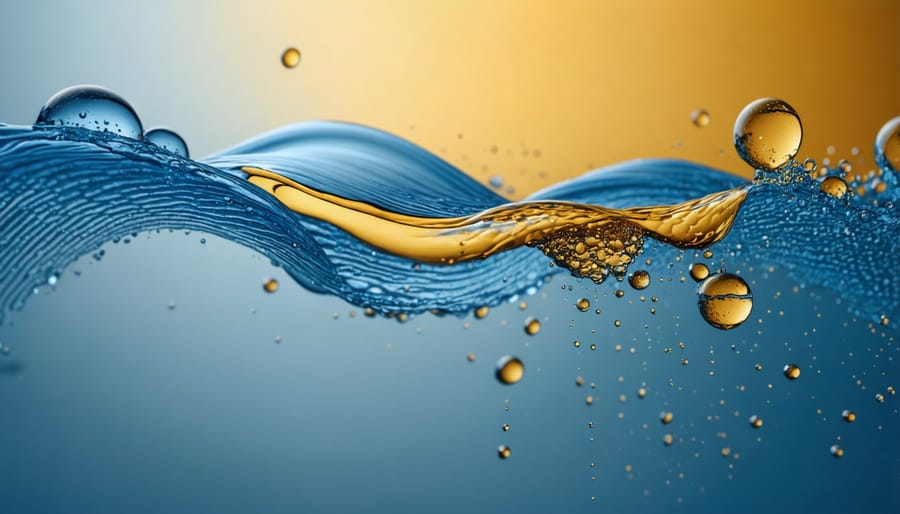
Nanotechnology has revolutionized oil spill cleanup solutions, offering innovative approaches to protecting our marine ecosystems. Advanced nanofilters, composed of specially engineered nanomaterials, can effectively separate oil from water while maintaining impressive flow rates. These filters utilize materials like carbon nanotubes and nanoscale metal oxides, which possess unique surface properties that attract oil molecules while repelling water.
One remarkable breakthrough is the development of magnetic nanoparticles that can be scattered over oil spills. When these particles bind with the oil, they create a magnetic mixture that can be collected using powerful magnets, making cleanup operations more efficient and less harmful to marine life. Similarly, aerogel-based materials enhanced with nanostructures can absorb up to 30 times their weight in oil while floating on water’s surface.
Recent innovations include “smart” nanofilters that can automatically adjust their properties based on the type of contamination they encounter. These adaptive systems combine traditional filtration methods with responsive nanomaterials, creating more effective and versatile cleanup tools. Scientists have also developed eco-friendly nanofibers made from natural materials like cellulose, which can be safely deployed in sensitive marine environments.
The integration of these technologies with existing cleanup methods has significantly improved our ability to respond to marine oil spills, offering hope for better protection of our ocean ecosystems.
Microplastic Capture Technologies
Nanotechnology offers promising solutions for one of our oceans’ most pervasive problems: microplastic pollution. Scientists have developed innovative nano-based technologies that can both detect and capture these harmful particles, which often measure less than 5 millimeters in size.
Magnetic nanoparticles coated with specialized polymers have shown remarkable success in attracting and binding to microplastics in water. When these particles attach to the plastics, researchers can use magnetic fields to collect and remove both the nanoparticles and the captured microplastics. This method has proven particularly effective in wastewater treatment facilities, where it can capture up to 90% of microplastics before they enter natural water systems.
Another breakthrough involves carbon nanotube membranes that act like extremely fine sieves. These membranes can filter out particles as small as 100 nanometers while allowing water to flow through efficiently. What makes this technology particularly exciting is its potential for large-scale implementation in existing water treatment infrastructure.
Researchers are also exploring “smart” nanorobots designed to seek out and collect microplastics. These microscopic machines use light-activated mechanisms to move through water, attracting plastic particles through chemical bonding. Early trials have demonstrated promising results in controlled environments, though scaling up remains a challenge.
These technologies represent significant progress in our fight against marine plastic pollution, offering hope for cleaner oceans in the future.
Smart Nanosensors in Marine Monitoring
Real-time Pollution Detection
Nanotechnology has revolutionized our ability to detect and monitor environmental pollutants in real-time, offering unprecedented precision and speed in identifying potential threats to marine ecosystems. These innovative smart monitoring systems utilize specialized nanosensors that can detect pollutants at concentrations as low as parts per billion.
These advanced sensors work through various mechanisms, including carbon nanotubes that change their electrical conductivity when exposed to specific chemicals, and quantum dots that emit different wavelengths of light in response to various pollutants. This technology enables immediate detection of oil spills, heavy metals, microplastics, and other harmful substances before they can spread extensively through marine environments.
Marine conservation teams are now deploying networks of these nanosensors throughout coastal areas and shipping lanes, creating an early warning system for pollution events. When integrated with mobile applications and cloud-based platforms, these systems can alert environmental response teams within minutes of detecting a threat, dramatically reducing response times and limiting environmental damage.
The real-time nature of these detection systems has proven particularly valuable in busy ports and industrial areas, where quick identification of pollutants can prevent widespread contamination and protect vulnerable marine species.

Long-term Environmental Monitoring
Nanosensor networks are revolutionizing our ability to monitor marine ecosystems in real-time, offering unprecedented insights into ocean health and environmental changes. These sophisticated networks, working alongside autonomous marine monitoring technologies, create a comprehensive picture of marine environmental conditions.
Modern nanosensor arrays can detect minute changes in water quality, temperature variations, pH levels, and the presence of pollutants at the molecular level. These sensors, often no larger than a grain of sand, form interconnected networks that transmit data continuously to research stations, providing early warning signs of potential environmental threats.
The deployment of these networks has already yielded remarkable results in several marine sanctuaries. For instance, in the Great Barrier Reef, nanosensor networks have helped researchers track coral bleaching events with unprecedented precision, enabling rapid response strategies to protect vulnerable areas.
Marine biologists are particularly excited about these systems’ ability to monitor microplastic concentrations and chemical pollutants in real-time, allowing for immediate intervention when dangerous levels are detected. This technology represents a significant leap forward in our capacity to protect and preserve marine ecosystems for future generations.
Environmental Impact and Safety Considerations
Eco-compatibility Studies
Recent studies have revealed complex interactions between engineered nanoparticles and marine ecosystems. Marine biologists have observed that certain nanoparticles can be absorbed by phytoplankton, potentially entering the marine food chain. This discovery has prompted extensive research into the bioaccumulation patterns and potential impacts on marine life at different trophic levels.
Laboratory experiments with marine organisms have shown varied responses to nanoparticle exposure. While some metallic nanoparticles demonstrated toxicity to certain species of fish and invertebrates, others appeared relatively benign. For instance, research conducted at coastal research stations found that zinc oxide nanoparticles, commonly used in sunscreens, can affect the growth rates of coral larvae and disrupt the symbiotic relationship between corals and their zooxanthellae.
Scientists are particularly focused on understanding how nanoparticles behave in saltwater environments. Factors such as salinity, temperature, and pH levels can significantly alter nanoparticle characteristics, affecting their distribution and interaction with marine organisms. These studies have led to the development of more eco-friendly nanoparticles designed specifically for marine applications.
Encouragingly, some research teams have successfully created biodegradable nanoparticles that break down into harmless compounds over time. This advancement represents a crucial step toward sustainable nanotechnology applications in marine environments, though long-term studies are still ongoing to verify their safety and effectiveness.
Safety Protocols and Guidelines
The implementation of nanotechnology in marine environments requires strict adherence to safety protocols to protect both ecosystems and researchers. Scientists follow a comprehensive set of guidelines that begin with thorough risk assessment and controlled laboratory testing before any field deployment.
All nanoparticles undergo extensive characterization to understand their behavior in marine conditions. This includes studying their aggregation patterns, dissolution rates, and potential interactions with marine organisms. Researchers use specialized containment systems and filters to prevent unintended release of nanomaterials during experiments.
Personal protective equipment (PPE) requirements include chemical-resistant gloves, protective eyewear, and appropriate respiratory protection when handling dry nanomaterials. Field teams must document all deployments and maintain detailed logs of nanomaterial quantities and locations.
Environmental monitoring is continuous, with regular sampling of water, sediment, and marine life in treatment areas. Scientists establish safety perimeters around deployment zones and use marker buoys to alert marine traffic. Emergency response protocols are in place to address potential spills or unexpected reactions.
To ensure long-term safety, researchers conduct periodic assessments of treated areas and maintain detailed databases of all nanomaterial applications. Training programs for field personnel cover proper handling procedures, emergency responses, and environmental impact awareness. These protocols evolve as new research reveals more about nanoparticle behavior in marine ecosystems.
Community engagement includes informing local stakeholders about safety measures and maintaining transparent communication about ongoing projects and their potential impacts.
Future Prospects and Challenges
Emerging Technologies
Several groundbreaking nanotechnologies are currently in development, promising to revolutionize environmental protection and marine conservation innovations. Scientists are developing smart nanorobots capable of selectively removing specific pollutants from water bodies while leaving beneficial organisms untouched. These microscopic machines use advanced sensors and precise targeting mechanisms to identify and capture harmful substances.
Another exciting advancement is the creation of self-healing nanomaterials that can repair environmental damage. These materials, inspired by natural biological processes, can detect and respond to changes in their environment, potentially helping to restore damaged ecosystems. Researchers are also working on nano-based filters that can remove microplastics and other contaminants with unprecedented efficiency.
Photocatalytic nanoparticles represent another promising development. These particles harness sunlight to break down pollutants into harmless compounds, offering a sustainable solution for water treatment. Additionally, biodegradable nanomaterials are being engineered to temporarily serve their purpose before naturally decomposing without leaving harmful residues.
Perhaps most intriguing are the new nano-sensors being developed for environmental monitoring. These ultra-sensitive devices can detect pollutants at previously undetectable levels, enabling earlier intervention in environmental threats. Some can even transmit real-time data to monitoring stations, creating a network of environmental surveillance that could revolutionize our approach to conservation and pollution control.
Implementation Hurdles
Despite the promising potential of nanotechnology in environmental applications, several significant challenges impede its widespread implementation. One of the primary hurdles is the high cost of developing and manufacturing nanomaterials at scale. Many innovative solutions remain confined to laboratory settings due to the expensive production processes and specialized equipment requirements.
Safety concerns also present a major challenge. While nanomaterials show remarkable effectiveness in environmental remediation, their long-term effects on ecosystems and human health are not fully understood. Scientists are particularly concerned about the potential bioaccumulation of nanoparticles in food chains and their interaction with different organisms.
Technical limitations pose another significant barrier. Controlling nanoparticle behavior in complex environmental conditions remains challenging. Factors such as pH levels, temperature variations, and the presence of other chemicals can affect the performance and stability of nanomaterials, making their application less predictable in real-world scenarios.
Infrastructure requirements present practical challenges as well. Many existing water treatment facilities and environmental monitoring systems would need substantial modifications to incorporate nanotechnology effectively. This adaptation requires significant investment and specialized training for operational staff.
Regulatory frameworks also lag behind technological developments. The unique properties of nanomaterials often fall outside traditional environmental regulations, creating uncertainty for manufacturers and implementers. Establishing comprehensive safety guidelines and standardized testing protocols remains a work in progress, sometimes slowing the adoption of promising solutions.
Nanotechnology stands at the forefront of innovative solutions for marine pollution management, offering unprecedented opportunities to protect and restore our ocean ecosystems. From advanced oil spill cleanup methods to microplastic detection and removal systems, these microscopic technologies are proving to be powerful allies in our fight against marine contamination.
The potential impact of nanotechnology extends beyond immediate cleanup efforts. Smart monitoring systems equipped with nanoscale sensors are revolutionizing how we track and respond to pollution incidents, while nano-based filtration systems are making water treatment more efficient and cost-effective than ever before. These advances demonstrate that we have the tools necessary to make significant progress in marine conservation.
However, the success of these technologies depends on continued research, investment, and responsible implementation. Scientists, policymakers, and environmental organizations must work together to ensure that nanotechnology solutions are deployed safely and effectively. Public awareness and support are equally crucial – everyone can contribute by staying informed about these developments and supporting organizations that implement these solutions.
The future of marine conservation looks promising with nanotechnology, but it requires our collective commitment. Whether you’re a researcher, student, or concerned citizen, there are ways to get involved. Support local cleanup initiatives, participate in citizen science projects, or advocate for increased funding for nanotechnology research in marine conservation. Together, we can harness the power of the incredibly small to solve one of our planet’s biggest challenges.

jessica
Ava Singh is an environmental writer and marine sustainability advocate with a deep commitment to protecting the world's oceans and coastal communities. With a background in environmental policy and a passion for storytelling, Ava brings complex topics to life through clear, engaging content that educates and empowers readers. At the Marine Biodiversity & Sustainability Learning Center, Ava focuses on sharing impactful stories about community engagement, policy innovations, and conservation strategies. Her writing bridges the gap between science and the public, encouraging people to take part in preserving marine biodiversity. When she’s not writing, Ava collaborates with local initiatives to promote eco-conscious living and sustainable development, ensuring her work makes a difference both on the page and in the real world.