Marine Biodiversity Science Center

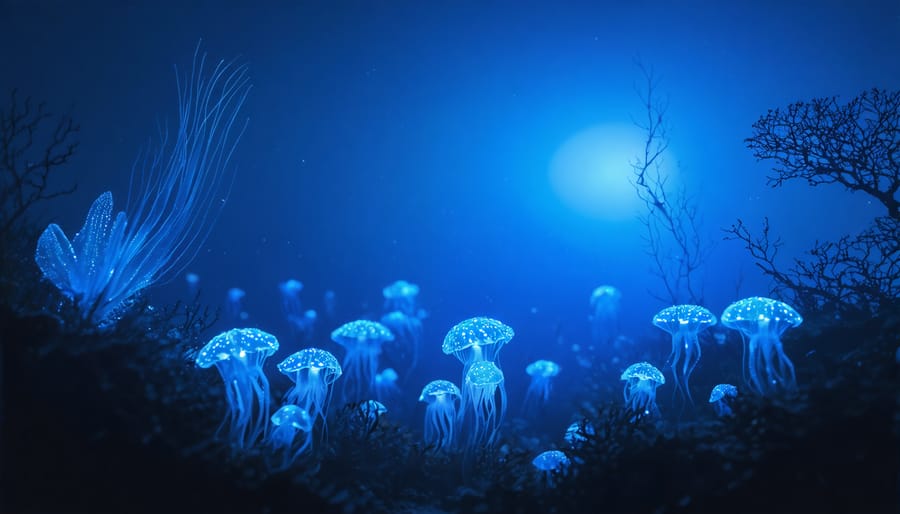
In the darkest depths of our oceans, an ethereal light show illuminates the extreme ocean environments where sunlight never reaches. Marine bioluminescence—nature’s living light—transforms these mysterious waters into a glowing spectacle that serves as both a survival strategy and a testament to evolution’s ingenuity. This remarkable phenomenon, produced by millions of microscopic organisms and larger marine species alike, isn’t just a captivating display; it’s a crucial biological process that enables communication, hunting, and defense in the ocean’s twilight zones. From the brilliant blue waves that sparkle along nighttime shores to the strategic flash patterns of deep-sea anglerfish, bioluminescence represents one of the most widespread and essential adaptations in marine ecosystems. Understanding this natural wonder not only illuminates the complexity of ocean life but also offers valuable insights into biotechnology, medical research, and the monitoring of ocean health in an era of rapid environmental change.
The Science Behind Living Light
Chemical Reactions at Work
The mesmerizing glow of marine bioluminescence occurs through a precise chemical reaction involving two key compounds: luciferin and luciferase. Luciferin is a light-emitting compound that, when oxidized by the enzyme luciferase, produces the characteristic blue-green light commonly observed in marine organisms. This reaction requires oxygen and often ATP (adenosine triphosphate) as an energy source.
Different marine species have evolved variations of this basic reaction. Some organisms, like dinoflagellates, use a luciferin-binding protein that protects the luciferin molecule until the right conditions trigger the light-producing reaction. In deep-sea fish, the chemical reaction often occurs within specialized organs called photophores, which can contain reflective plates and lens-like structures to direct the light.
The color of bioluminescence can vary depending on the specific chemical structure of luciferin and the presence of fluorescent proteins. While most marine bioluminescence appears blue-green (wavelengths that travel furthest in water), some organisms produce yellow or red light through additional biochemical modifications.
Temperature, pH levels, and ion concentrations can all affect the efficiency of these reactions, which explains why bioluminescent displays often vary in intensity under different environmental conditions.

Evolution of Light Production
The evolution of bioluminescence in marine organisms represents one of nature’s most fascinating adaptations, emerging independently at least 40 different times throughout evolutionary history. This convergent evolution suggests the significant survival advantages that light production offers in marine environments.
The earliest known bioluminescent organisms appeared approximately 400 million years ago, likely developing from proteins that originally served other functions. The key innovation came through the evolution of luciferin-luciferase systems, where these chemical compounds work together to produce light through oxidation.
Different species developed varied approaches to light production. Some, like dinoflagellates, evolved to produce light directly within their cells. Others formed symbiotic relationships with bioluminescent bacteria, as seen in deep-sea anglerfish. These bacteria colonize special light organs in the host, creating a mutually beneficial partnership.
The diversity of light-producing mechanisms reflects different ecological pressures. Surface-dwelling organisms typically evolved blue-green luminescence matching the ocean’s ambient light, while deep-sea creatures developed a broader spectrum of colors. Some species even acquired the ability to control their light production through specialized organs and neural control, allowing for complex communication and hunting strategies.
This evolutionary journey continues today, with scientists regularly discovering new bioluminescent species and mechanisms in marine environments.
Bioluminescent Marine Species
Deep-Sea Luminaries
In the darkest reaches of the ocean, where sunlight never penetrates, an extraordinary array of deep-sea creatures illuminate the abyss with their natural light shows. The anglerfish, perhaps the most iconic of these luminous beings, dangles a glowing lure powered by symbiotic bacteria to attract prey in the darkness. This bioluminescent fishing rod, called an esca, exemplifies the incredible adaptations these organisms have developed over millions of years.
The vampire squid, despite its fearsome name, creates one of the ocean’s most mesmerizing displays. When threatened, it releases a cloud of bioluminescent mucus instead of ink, creating a sparkling barrier between itself and potential predators. This defensive strategy, known as a “light show escape,” demonstrates how deep-sea organisms use bioluminescence for protection.
Equally fascinating are the firefly squid, which create synchronized light displays during their breeding season. These tiny cephalopods, measuring only three inches in length, produce light through specialized organs called photophores. Scientists have discovered that these photophores contain light-producing chemicals that react when mixed, similar to the process used by fireflies on land.
The crystal jellyfish contributes something unique to science: its green fluorescent protein (GFP) has revolutionized biomedical research. This protein, which gives the jellyfish its ethereal glow, has become an invaluable tool for tracking cellular processes and gene expression in laboratories worldwide, demonstrating how nature’s light-makers continue to inspire scientific advancement and discovery.

Surface Waters and Coastal Species
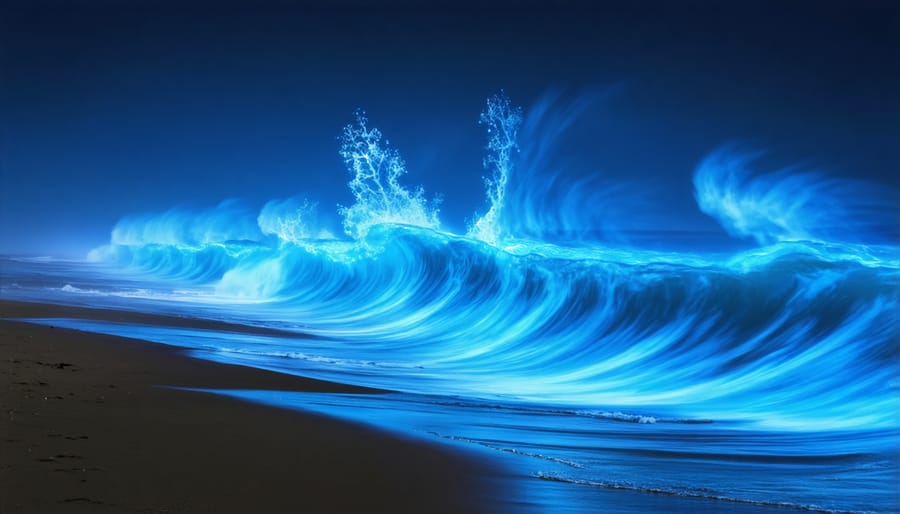
In surface waters and coastal regions, bioluminescent organisms create some of nature’s most captivating displays. The most common surface-dwelling bioluminescent organisms are dinoflagellates, microscopic single-celled organisms that produce a distinctive blue glow when disturbed. These tiny creatures are responsible for the mesmerizing phenomenon known as “sea sparkle,” where waves appear to light up as they crash against the shore.
Notable coastal species include the crystal jellyfish (Aequorea victoria), which has contributed significantly to scientific research through its green fluorescent protein (GFP). Along coastlines worldwide, various species of firefly squid create spectacular light shows during their breeding seasons, particularly in places like Toyama Bay, Japan, where millions gather annually.
Comb jellies, despite their jellyfish-like appearance, represent another distinct group of bioluminescent organisms found in surface waters. These transparent creatures produce rainbow-like patterns of light as they move through the water, using specialized cells called photocytes to generate their characteristic glow.
In many coastal regions, seasonal algal blooms known as “red tides” can produce intense bioluminescent displays at night. While beautiful, these events require careful monitoring as some species can be harmful to marine ecosystems. Marine biologists have observed that surface-dwelling bioluminescent organisms often use their light-producing abilities for defense against predators, communication, and attracting prey.
Recent studies have shown that climate change and ocean acidification may affect these organisms’ ability to produce light, making them important indicators of marine ecosystem health. Conservation efforts focus on protecting these species and their habitats, as they play crucial roles in marine food webs and serve as valuable research subjects for biotechnology applications.
Survival Strategies and Ecological Roles
Defense and Camouflage
In the vast depths of the ocean, bioluminescence serves as a crucial defense mechanism, representing one of the most fascinating survival adaptations in marine environments. Many species utilize this natural light show as a sophisticated protection strategy, employing various techniques to confuse, deter, or escape from predators.
The counterillumination method, commonly used by mid-water organisms like lanternfish, involves producing light on their ventral surface to match the surrounding downwelling light. This clever camouflage technique helps them blend seamlessly with their environment, effectively becoming invisible to predators lurking below.
Some marine creatures employ a startling defense mechanism called the “burglar alarm” response. When threatened, they release clouds of bioluminescent chemicals into the water, creating a brilliant display that either temporarily blinds predators or attracts larger predators to the area, giving the original prey a chance to escape during the confusion.
Perhaps most remarkably, certain species of squid can detach bioluminescent parts of their bodies as a defensive strategy. These living light decoys, known as photophores, continue to glow after separation, distracting predators while the squid makes its escape. This sacrificial defense mechanism demonstrates the sophisticated evolution of bioluminescent capabilities in marine organisms.
These defensive strategies highlight how marine creatures have evolved to use light not just for communication or attraction, but as an essential tool for survival in the ocean’s challenging environment.
Communication and Mating
Bioluminescence plays a crucial role in the social and reproductive behaviors of many marine species, serving as a sophisticated form of underwater communication. Like other marine animals’ sensory abilities, the ability to produce and control light emissions enables creatures to interact in the darkness of the deep ocean.
Many species use distinct patterns of light to recognize potential mates from the same species. The female firefly squid, for example, creates intricate light displays to attract males during breeding season. These displays are species-specific, ensuring successful reproduction by preventing cross-species mating attempts.
Some deep-sea anglerfish females use their bioluminescent lure not only to catch prey but also to attract males. The male, significantly smaller than the female, follows her light signal and eventually fuses with her body in a remarkable permanent bond.
In schooling fish, synchronized light patterns help maintain group cohesion in the darkness. Species like the flashlight fish use their light organs to coordinate movement and stay together, offering protection from predators while facilitating social interactions within the group.
Scientists have observed that different species often develop unique light patterns and frequencies, creating a complex visual language in the deep ocean. This biological light show enables everything from simple presence detection to elaborate courtship rituals, demonstrating the remarkable adaptability of marine life.
Research and Conservation Implications
Scientific Applications
The study of marine bioluminescence has led to groundbreaking advances in medical science and technology. Scientists have successfully adapted bioluminescent proteins, particularly the green fluorescent protein (GFP) found in jellyfish, for use in medical imaging and cellular research. These proteins act as natural biological markers, allowing researchers to track disease progression, study gene expression, and monitor cellular processes in real-time.
In cancer research, bioluminescent markers help scientists observe tumor growth and test the effectiveness of various treatments. The technology has also revolutionized drug development, enabling researchers to visualize how new medications interact with target cells and tissues.
Beyond medicine, marine bioluminescence has inspired innovations in sustainable lighting technology. Engineers are developing bio-inspired light sources that mimic the efficient, cold light production of marine organisms. These developments could lead to more energy-efficient lighting solutions and reduce our environmental impact.
Military and oceanographic applications benefit from studying bioluminescence as well. Natural bioluminescent systems have influenced the design of new biosensors for detecting environmental pollutants and monitoring ocean health. Some navies use bioluminescent detection systems to track underwater movements, demonstrating how nature’s light show continues to illuminate new technological frontiers.
Conservation Challenges
Bioluminescent marine organisms face numerous threats from human activities and environmental changes. Light pollution from coastal development significantly disrupts the natural patterns of bioluminescent displays, affecting both the behavior and survival of light-producing species. As cities expand along coastlines, artificial light interferes with the darkness these organisms need to communicate, hunt, and reproduce effectively.
Ocean acidification poses another severe challenge, as changing pH levels can affect the chemical reactions necessary for bioluminescence. This is particularly concerning for planktonic species, which form the foundation of many marine food webs. Additionally, rising ocean temperatures due to climate change stress bioluminescent organisms, potentially altering their distribution patterns and survival rates.
Chemical pollution, including oil spills and agricultural runoff, can devastate bioluminescent bay ecosystems. These sensitive environments require specific conditions to maintain their magical displays, and even small changes in water quality can have lasting impacts. Marine biologists have observed declining populations in several famous bioluminescent bays worldwide, including Puerto Rico’s Mosquito Bay.
Conservation efforts focus on establishing protected marine areas, reducing coastal light pollution, and implementing stricter water quality controls. Citizen science programs allow volunteers to monitor bioluminescent populations, providing valuable data for researchers while raising public awareness about these extraordinary creatures’ preservation needs.
As we’ve explored throughout this article, marine bioluminescence represents far more than just a stunning natural light show. It’s a critical component of ocean ecosystems, playing vital roles in communication, survival, and species interactions across the depths. Understanding these intricate biological mechanisms not only advances our scientific knowledge but also highlights the delicate balance within marine environments.
The preservation of bioluminescent organisms and their habitats has become increasingly urgent as ocean ecosystems face mounting pressures from climate change, pollution, and habitat destruction. These remarkable creatures serve as important bioindicators, offering valuable insights into ocean health and environmental changes. Their unique abilities also hold promising applications in medical research, biotechnology, and sustainable lighting solutions.
By protecting marine environments that harbor bioluminescent life, we safeguard not only these fascinating organisms but entire ecosystems that depend on their presence. Conservation efforts, ranging from reducing light pollution in coastal areas to establishing marine protected areas, are essential steps toward ensuring their survival.
Everyone can contribute to protecting these remarkable creatures. Whether through supporting marine conservation organizations, participating in citizen science projects, or making sustainable choices in daily life, each action helps preserve the magic of marine bioluminescence for future generations. As we continue to uncover new species and understand their capabilities, the importance of these living lights in our oceans becomes ever more apparent, reminding us of the extraordinary diversity and interconnectedness of marine life.

jessica
Ava Singh is an environmental writer and marine sustainability advocate with a deep commitment to protecting the world's oceans and coastal communities. With a background in environmental policy and a passion for storytelling, Ava brings complex topics to life through clear, engaging content that educates and empowers readers. At the Marine Biodiversity & Sustainability Learning Center, Ava focuses on sharing impactful stories about community engagement, policy innovations, and conservation strategies. Her writing bridges the gap between science and the public, encouraging people to take part in preserving marine biodiversity. When she’s not writing, Ava collaborates with local initiatives to promote eco-conscious living and sustainable development, ensuring her work makes a difference both on the page and in the real world.