Marine Biodiversity Science Center


Marine education requirements have shifted a lot over the past decade, and that shift is still playing out in 2026. Programs now expect a real mix of academic grounding and field time, and educators who want to transform marine education for the next generation need both. The baseline is a bachelor’s degree in marine biology, oceanography, or environmental science, plus teaching credentials that vary by region and institution. That’s the floor, not the ceiling. It gives educators the footing to explain marine ecosystems, conservation principles, and scientific methods to very different audiences.
Anyone mapping out marine biologist education should also plan for practical experience. Research projects, internships, and volunteer work at marine research stations, aquariums, or conservation organizations all count. Time spent in the field closes the gap between what’s in the textbook and what actually happens on a boat or a tide flat, which matters most when you’re teaching students about real environmental problems.
Credentials don’t stop at the degree, either. Marine biologist certifications such as scientific diving, boat handling, and marine safety training are a regular part of ongoing professional development, and many employers look for them. Pair those technical qualifications with solid public speaking and curriculum design skills, and you have an educator who can genuinely inspire future marine scientists and conservationists. The sections below break down the education pathways and certifications in more detail.
Core Academic Requirements for Marine Education
Secondary Education Foundations
A strong foundation in high school science is crucial for aspiring marine scientists. Students should build a core of biology, chemistry, and physics, since these subjects underpin nearly everything that comes later in marine biologist education: understanding how organisms function, how seawater chemistry shifts, and how waves, light, and pressure behave underwater. Advanced Placement (AP) or International Baccalaureate (IB) courses in biology, chemistry, and environmental science offer college-level preparation and, in many cases, transferable credit. AP Biology and AP Chemistry in particular tend to line up with the first-year sequences students meet in a marine biology or oceanography program. For a broader look at which helpful high school courses support this career path, that occupational resource is a good place to start.
Mathematics deserves just as much attention. Courses through pre-calculus or calculus are recommended, and a statistics course (AP Statistics if it’s offered) may be the single most practical one on the list. Marine research runs on data: survey counts, water-quality readings, tagging records, population models. Students who can already reason about sampling, variability, and significance walk into college labs with a real head start. Early math and science preparation also keeps doors open. Falling behind in algebra or chemistry in ninth and tenth grade makes the college-level sequence much harder to enter on time.
Computer science courses are increasingly valuable, because modern marine research relies heavily on digital tools, mapping software, and data modeling. Even a basic programming class pays off once students meet spreadsheets of sensor data in their first research project.
Beyond the core sciences, earth science is a smart addition. A course covering oceanography, geology, and climate systems gives students context for the physical environment that marine life depends on. Strong English and communication skills matter too. Marine scientists spend a surprising amount of time writing reports, grant proposals, and presentations, and clear writing is part of the job.
Extracurricular activities can strengthen college applications and provide practical experience. Science fairs, environmental clubs, and volunteering at local aquariums all show commitment to marine science. Many successful marine scientists started with a high school internship or a summer program at a marine research center, and those early experiences often shape which pathway they choose next.
Undergraduate Prerequisites
Students pursuing careers in marine science typically need a strong foundation in science and mathematics during their undergraduate studies. Most successful marine scientists begin with majors in Biology, Environmental Science, Oceanography, or related fields. Core prerequisites often include Calculus, Statistics, General Chemistry, and Physics, which provide the mathematical and analytical skills essential for understanding marine ecosystems and conducting research.
For aspiring marine biologists, the degree choice matters less than people expect. A Bachelor of Science in Marine Biology is the most direct route, and it’s offered at coastal universities with their own field stations. But a general Biology degree with marine-focused electives works just as well, and so do degrees in Ecology, Zoology, or Oceanography. Employers and graduate admissions committees tend to care more about your quantitative skills, lab and field record, and research experience than the exact name on the diploma. Programs vary a lot in how much marine content they offer, so check the course catalog before committing. Career guides written for marine biology majors are a useful way to see how different degrees translate into real job opportunities.
A comprehensive marine biologist education requires coursework across multiple disciplines. Essential undergraduate courses typically include:
- Core Sciences: General Biology, General Chemistry, Organic Chemistry, Physics, Calculus, and Statistics
- Marine Specialization: Marine Biology, Oceanography, Ecology, Invertebrate Zoology, and Ichthyology
- Technical Skills: Geographic Information Systems (GIS), Data Analysis, Programming, and Environmental Chemistry
- Professional Development: Scientific Writing and Communication, Research Methods, and Field Experience
Understanding marine science curriculum development can help students make informed decisions about their course selection and career preparation.
A bachelor’s degree opens the door to many entry-level roles, including lab technician, aquarium or hatchery staff, environmental consultant, and field assistant positions. Research-focused careers are a different story. Leading your own projects, running a lab, or working as a research scientist at a university or government agency usually requires a master’s degree or PhD. A master’s often suits people headed for applied work such as fisheries management, consulting, or conservation program leadership. A doctorate is the standard path for independent research and faculty positions. Undergraduates who know they’re leaning toward research should start early, since strong grades in statistics and a published or presented undergraduate project make graduate applications far more competitive.
Field experience is vital, and many programs require participation in summer field courses or research projects. Students are encouraged to seek internships at marine research stations, aquariums, or conservation organizations. These hands-on experiences not only fulfill prerequisites but also provide valuable networking opportunities and practical skills that classroom learning alone can’t replicate.
Many successful marine scientists also recommend taking courses in Environmental Policy and Conservation Management, particularly for those interested in marine conservation careers. These courses provide important context for navigating the intersection of science, policy, and public engagement in marine research and protection.
Practical Training Components
Laboratory Skills
Laboratory work forms a crucial component of marine education, requiring students to develop a diverse set of technical skills and competencies. Students must become proficient in water quality testing, including measurements of salinity, pH levels, dissolved oxygen, and nutrient concentrations. These skills are essential for understanding marine ecosystems and monitoring environmental changes.
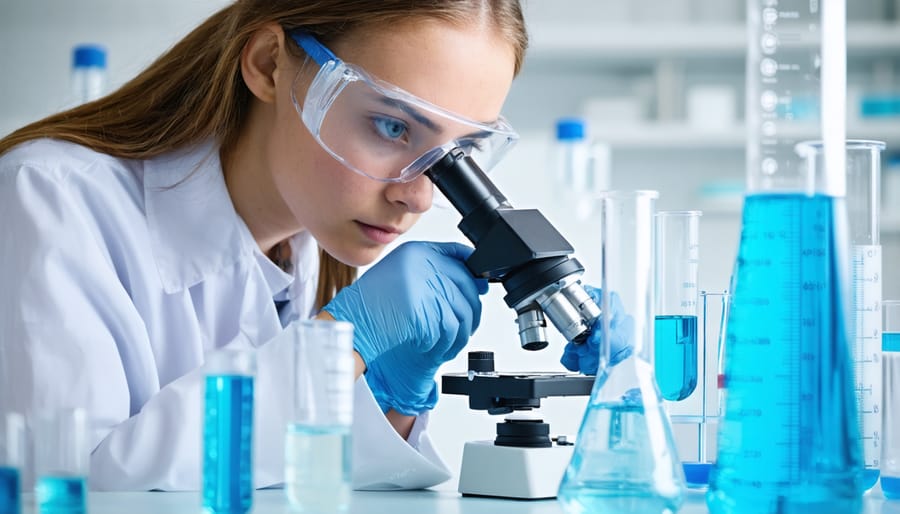
Microscopy skills are fundamental, as students need to identify and study marine organisms at various life stages. This includes proper slide preparation, use of different microscope types, and accurate documentation of observations. Students also learn specimen collection and preservation techniques, ensuring samples are properly maintained for both immediate study and long-term research.
Data collection and analysis form another vital component, with students learning to use various scientific instruments such as spectrophotometers, flow meters, and water sampling devices. They must also master proper laboratory safety protocols, including handling hazardous materials and maintaining sterile conditions when necessary.
Modern marine education increasingly emphasizes molecular biology techniques, including DNA extraction, PCR analysis, and gel electrophoresis. These methods are crucial for studying marine biodiversity and understanding genetic relationships between species.
Field sampling techniques are integrated with laboratory work, teaching students to properly collect, transport, and process environmental samples. This includes sediment core sampling, plankton tow operations, and water column profiling.
Documentation skills are equally important, with students learning to maintain detailed laboratory notebooks, follow standard operating procedures, and prepare technical reports. They must also demonstrate proficiency in laboratory equipment maintenance and calibration, ensuring accurate and reliable results in their scientific investigations.
Field Research Experience
Field research experience forms a crucial component of marine education, typically requiring students to complete a minimum of 100-150 hours of hands-on fieldwork. This practical experience usually takes place during summer programs or semester-long research projects, allowing students to apply theoretical knowledge in real-world settings.
Common field research activities include conducting underwater surveys, collecting marine specimens, monitoring water quality, and participating in marine mammal observation programs. Students often work alongside experienced researchers at marine research stations, where they learn essential data collection techniques and proper scientific methodology.
Many programs require students to complete at least one major research project, which typically involves:
– Designing and implementing a field study
– Collecting and analyzing environmental data
– Using specialized marine research equipment
– Documenting findings and preparing research reports
– Presenting results to peers and faculty
Field work may also include participation in conservation initiatives, such as coral reef restoration projects, sea turtle monitoring, or marine debris cleanup efforts. These experiences help students develop crucial skills in:
– Scientific diving and underwater research techniques
– Marine species identification
– Environmental sampling methods
– Data logging and analysis
– Team collaboration in challenging conditions
Most institutions maintain partnerships with marine research facilities, providing students access to various marine environments, from coastal ecosystems to deep-sea habitats. Some programs offer opportunities for international field research, allowing students to study diverse marine ecosystems while gaining valuable cross-cultural experience.
Safety certification, including first aid and scientific diving credentials, is typically required before participating in field research activities. Students should expect to maintain detailed field journals and contribute to ongoing research projects at their institution.

Professional Development Requirements
Certifications and Licenses
If you’re searching for marine biologist certifications, here’s the first thing to know: there’s no single credential that makes someone a marine biologist. The field is built on a degree, then a stack of safety and skills certifications that vary by employer, location, and the kind of fieldwork involved. For educators, that stack often includes a teaching credential on top. Sorting what’s required from what’s merely helpful will save you time and money.
The baseline for anyone teaching in a formal setting is a valid teaching license or certification from the state or province where you work. Without it, most public and many private schools simply can’t hire you for a classroom role. Informal educators at aquariums, nature centers, and field stations usually don’t need it, though employers there often prefer candidates who have it.
For field and boat-based work, the core credentials are practical ones. SCUBA certification is the big one. Many employers ask for at least an Advanced Open Water level from an agency such as PADI or an equivalent, and some positions that involve leading student dives require Rescue Diver or Divemaster. Research-focused roles at universities and agencies may instead require scientific diving certification, which is typically issued through the institution’s own diving safety program (often following American Academy of Underwater Sciences standards) rather than a commercial dive agency. First Aid and CPR is close to universal. Many programs go further and want wilderness first aid or waterfront lifeguarding, since help is rarely minutes away on a boat or remote shoreline.
Vessel work adds another layer. Educators who operate or crew boats may need U.S. Coast Guard credentials, including basic safety training and, for those who captain trips, a captain’s license such as the OUPV (often called the Six-Pack) or higher. Requirements shift with vessel size, passenger numbers, and whether you’re carrying paying guests, so check with the operating organization and the Coast Guard before assuming what applies.
Then there’s the optional tier. Environmental education certification through the North American Association for Environmental Education (NAAEE) and professional development through the National Marine Educators Association (NMEA) won’t be demanded for most jobs, but they signal serious commitment and keep your teaching practice current. Specialized training in marine mammal handling, wildlife rehabilitation, or specific research methods tends to matter only for the roles that use those skills directly.
| Certification | Issuing body | Typical purpose | Renewal or maintenance |
|---|---|---|---|
| State or provincial teaching license | State or provincial education authority | Required for most formal classroom teaching | Periodic renewal, usually tied to continuing education hours |
| SCUBA (Open Water, Advanced, Rescue, Divemaster) | Dive training agencies such as PADI | Field access and leading dives, often employer-required | Certification generally doesn’t expire, but employers expect current skills and recent dive activity |
| Scientific diving certification | University or agency diving safety program | Research and survey diving under institutional oversight | Maintained through ongoing medical clearance, logged dives, and program-specific checks |
| First Aid, CPR, and wilderness first aid | Recognized providers such as the Red Cross | Safety baseline for field, boat, and waterfront work | Regular recertification, commonly on a two-year cycle for many providers |
| U.S. Coast Guard credentials (OUPV and related) | U.S. Coast Guard | Operating or crewing vessels with students or passengers | Renewal on a set schedule, with documentation of sea service and safety requirements |
| NAAEE or NMEA professional credentials | NAAEE and NMEA | Optional credibility and teaching development | Ongoing professional development and membership upkeep |
Renewal is where people get caught out. Safety certifications such as First Aid and CPR lapse quickly if you ignore them, and a lapsed card can ground you from a field day. Dive credentials technically stick around, but a diver who hasn’t been in the water for a couple of years will usually need a refresher before an employer lets them supervise students. Coast Guard credentials and teaching licenses run on formal renewal cycles with paperwork attached. Put expiry dates in a calendar the day you earn each credential. It’s a dull habit that prevents expensive scrambles.
A sensible order of operations: finish your degree and any teaching credential first, add First Aid and CPR early since it’s cheap and widely required, then build diving and vessel credentials around the jobs you actually want. Chasing every optional badge before you have a target role is how people end up with a wall of certificates and no field experience.
Continuing Education
Marine professionals must commit to lifelong learning to stay current with evolving research, technologies, and conservation practices. Regular participation in professional development for marine educators is essential for maintaining expertise and credentials.
Many organizations require completion of continuing education units (CEUs) annually, typically ranging from 20-40 hours. These can be earned through various activities, including workshops, conferences, field research projects, and online courses. Popular options include marine mammal observation certification renewals, advanced diving certifications, and specialized research methodology training.
Professional associations like the National Marine Educators Association (NMEA) offer regular workshops and annual conferences where educators can network, share best practices, and learn about emerging trends in marine science education. Online platforms now provide flexible learning opportunities through webinars, virtual field trips, and digital workshops.
Field-based learning remains crucial, with opportunities including research vessel expeditions, coastal habitat restoration projects, and coral reef monitoring programs. These hands-on experiences not only fulfill continuing education requirements but also provide valuable real-world experience that enhances teaching effectiveness.
Educators are encouraged to maintain memberships in relevant professional organizations and participate in collaborative research projects to stay connected with the broader marine science community.
Modern Curriculum Integration
Technology Integration
Modern marine education increasingly incorporates digital tools and technology to enhance learning experiences and prepare students for contemporary marine science careers. Virtual reality (VR) simulations now allow students to explore underwater ecosystems safely, while augmented reality (AR) applications help visualize complex marine biological processes. These immersive technologies make abstract concepts more tangible and engaging.
Students must demonstrate proficiency in scientific software applications, including Geographic Information Systems (GIS) for mapping marine environments and data analysis tools for processing oceanographic information. Familiarity with remote sensing technology and underwater monitoring systems is becoming essential, as these tools are standard in modern marine research.
Digital collaboration platforms and online learning management systems are integral to marine education programs. Students regularly use these platforms to participate in virtual laboratories, access course materials, and collaborate on research projects with peers worldwide. Additionally, proficiency in using scientific equipment interfaces, such as digital microscopes and water quality monitoring devices, is typically required.
Mobile applications for species identification and citizen science projects are increasingly incorporated into curricula, helping students contribute to real-world marine conservation efforts while learning.
Conservation and Sustainability Focus
Modern marine education increasingly emphasizes the critical importance of environmental conservation and sustainable practices. Current curriculum requirements integrate marine conservation education with hands-on experience in ecosystem protection and restoration. Students learn about climate change impacts, ocean acidification, and marine pollution while developing practical solutions to these challenges.
Core components now include studying sustainable fishing practices, marine protected areas management, and coral reef conservation techniques. Programs require students to participate in coastal cleanup initiatives, conduct biodiversity surveys, and engage in community outreach projects. This practical approach helps develop a deep understanding of marine ecosystems while fostering environmental stewardship.
The curriculum also incorporates emerging technologies for ocean monitoring and conservation, such as remote sensing, GPS tracking of marine species, and underwater drone operations. Students must demonstrate proficiency in data collection and analysis methods that support evidence-based conservation strategies. This combination of theoretical knowledge and practical skills prepares future marine professionals to address complex environmental challenges while promoting sustainable ocean resource management.
Marine education requirements continue to evolve alongside our growing understanding of ocean ecosystems and environmental challenges. The path to becoming a marine educator typically requires a bachelor’s degree in marine biology, environmental science, or a related field, with many positions demanding advanced degrees for specialized roles. Practical experience through internships, research projects, and field work remains crucial for developing hands-on skills and professional networks.
Looking ahead, programs seem likely to keep adding technology-focused components, including virtual reality experiences, remote sensing techniques, and data analysis skills. There’s also a clear push toward interdisciplinary knowledge, combining traditional marine science with climate science, policy understanding, and public communication skills. How quickly any of this spreads will vary by institution and region, so check the current requirements of the specific programs and employers you’re targeting.
For those pursuing this career path, staying current with certification requirements and continuing education opportunities is essential. Many organizations offer specialized certifications in marine education, sustainable tourism, and conservation management. Educators who can explain complex environmental issues to diverse audiences while pointing toward practical, sustainable solutions tend to stand out.
Our oceans face serious pressures, and well-trained marine educators help build environmental awareness and inspire the next generation of ocean stewards. The field offers room for personal growth, scientific discovery, and meaningful contribution to marine conservation efforts.

jessica
Ava Singh is an environmental writer and marine sustainability advocate with a deep commitment to protecting the world's oceans and coastal communities. With a background in environmental policy and a passion for storytelling, Ava brings complex topics to life through clear, engaging content that educates and empowers readers. At the Marine Biodiversity & Sustainability Learning Center, Ava focuses on sharing impactful stories about community engagement, policy innovations, and conservation strategies. Her writing bridges the gap between science and the public, encouraging people to take part in preserving marine biodiversity. When she’s not writing, Ava collaborates with local initiatives to promote eco-conscious living and sustainable development, ensuring her work makes a difference both on the page and in the real world.