Marine Biodiversity Science Center

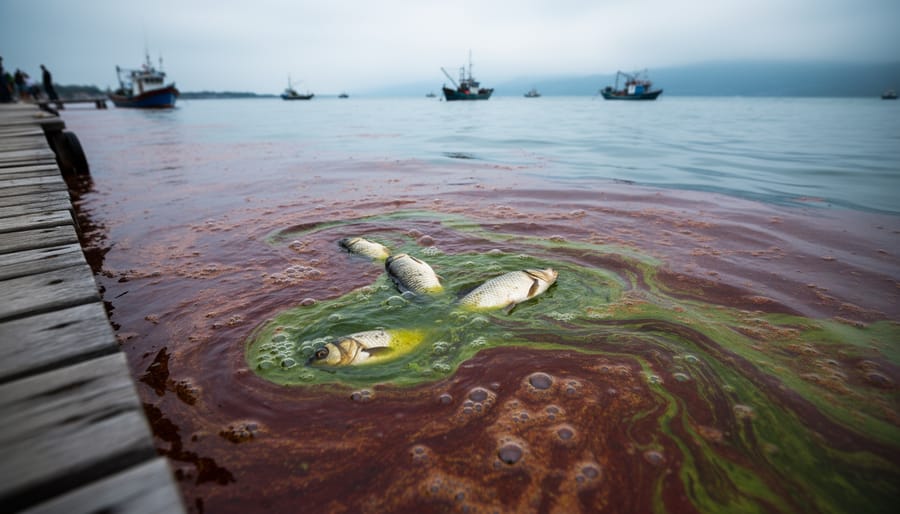
Beneath the ocean’s surface, massive blooms of microscopic algae are transforming coastal waters into toxic dead zones at an alarming rate. These explosive growths, visible from space as swirling green, red, or brown patches, now occur with greater frequency and intensity than ever recorded in human history. What was once a natural seasonal phenomenon has escalated into a global crisis that threatens marine biodiversity, coastal economies, and human health.
Ocean algal blooms, particularly harmful algal blooms (HABs), represent one of the most urgent challenges facing our oceans today. When conditions align—excess nutrients from agricultural runoff, warming waters from climate change, and shifting ocean currents—single-celled algae multiply exponentially, sometimes doubling their populations every few hours. Within days, billions of these organisms can dominate entire coastal ecosystems, suffocating marine life by depleting oxygen, blocking sunlight from reaching coral reefs and seagrass beds, and releasing potent neurotoxins that accumulate in fish and shellfish.
The consequences ripple through entire food webs. Sea turtles, dolphins, and manatees surface disoriented and dying. Commercial fisheries close for months, devastating fishing communities. Beaches become off-limits as decomposing algae release noxious fumes. Yet this environmental crisis also presents an opportunity for collective action and scientific innovation.
Understanding harmful algal blooms is the first step toward protecting our oceans. Marine biologists working on the frontlines of this challenge have witnessed both the devastating impacts and the remarkable resilience of marine ecosystems when communities mobilize. From citizen scientists monitoring water quality to policy changes reducing nutrient pollution, solutions exist—and they require participation from everyone who values ocean health. The question is not whether we can address this growing threat, but whether we will act with the urgency it demands.
What Are Harmful Algal Blooms?
The Science Behind the Bloom
Understanding what triggers an algal bloom requires looking at three essential ingredients that algae need to thrive: nutrients, warmth, and sunlight. Think of it like a recipe where getting the proportions just right leads to explosive growth.
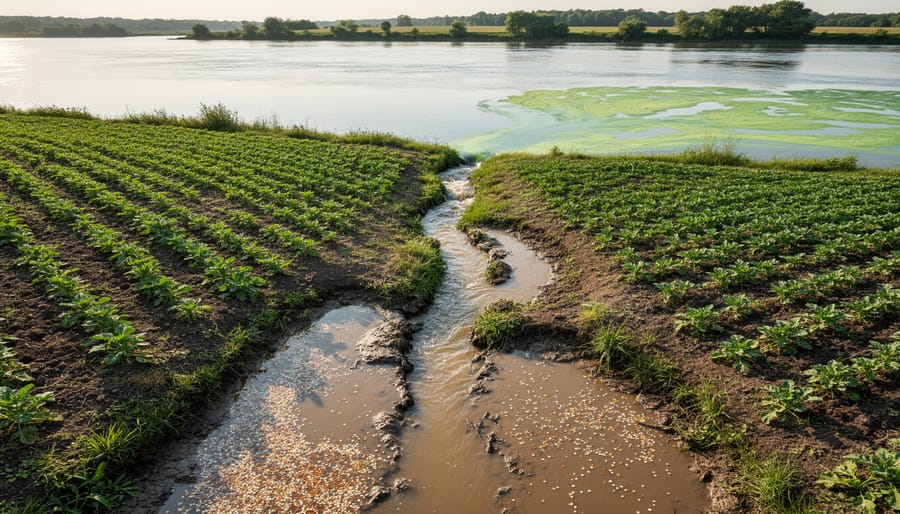
Algae, like all plants, depend on nutrients to grow, particularly nitrogen and phosphorus. Under normal conditions, these nutrients exist in limited quantities in ocean water, keeping algae populations in check. However, when excess nutrients enter coastal waters through agricultural runoff, sewage discharge, or stormwater, they act like fertilizer in a garden. This process, called eutrophication, provides algae with an abundance of food that triggers rapid reproduction.
Water temperature plays an equally crucial role. Warmer water accelerates algae metabolism and growth rates, which explains why blooms typically peak during summer months. Climate change is extending these warm periods, creating longer windows for blooms to develop and intensify.
Light availability completes the equation. Algae need sunlight for photosynthesis, the process that converts light energy into chemical energy for growth. Shallow coastal waters with high clarity allow sunlight to penetrate deeper, supporting larger populations. Calm waters with minimal wind and wave action help algae stay near the surface where light is most abundant.
When these three factors align perfectly, a single algae cell can divide into millions within days. Marine biologist Dr. Elena Rodriguez, who has studied blooms for fifteen years, describes it as witnessing nature’s version of a population explosion. Understanding these mechanisms helps scientists predict when and where blooms might occur, enabling communities to prepare protective measures for marine ecosystems and human health.
Red Tides, Brown Tides, and Beyond
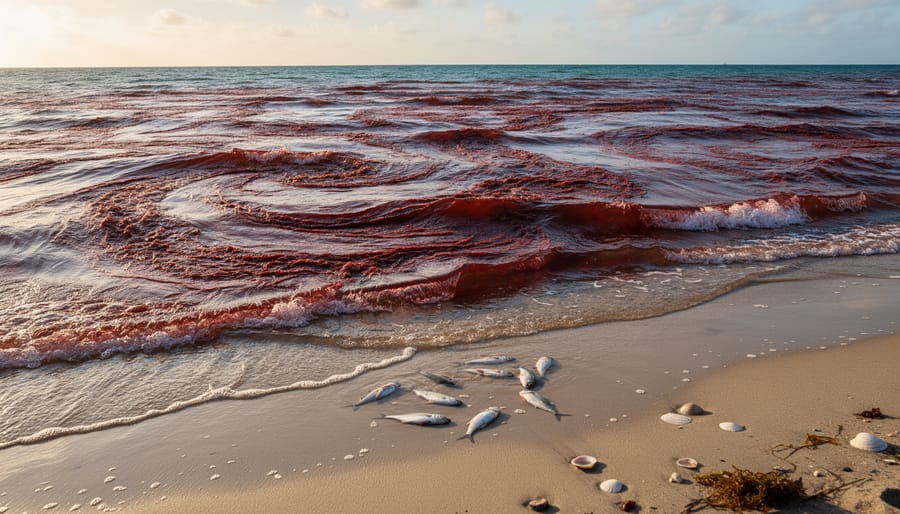
Harmful algal blooms reveal themselves through striking color transformations in our waters, each hue telling a distinct story about ocean conditions. Red tides, perhaps the most infamous, result from explosive populations of dinoflagellates—microscopic organisms that produce reddish-brown pigments. These blooms often indicate warm, nutrient-rich conditions and can devastate marine life through toxin production and oxygen depletion. Dr. Maria Santos, a marine biologist who has studied red tides off Florida’s coast for fifteen years, describes witnessing massive fish kills: “The water looked like rust, and the silence was deafening—no splashing, no birds diving. It’s a powerful reminder of nature’s delicate balance.”
Brown tides, caused by different algae species like Aureococcus, create murky chocolate-colored waters that block sunlight from reaching seagrass beds and filter-feeding organisms. Meanwhile, cyanobacteria blooms in coastal areas produce blue-green scum on the surface, thriving in stagnant, polluted conditions with excess nitrogen and phosphorus. Each bloom type serves as a biological indicator: red suggests temperature stress and upwelling changes, brown points to coastal pollution, and cyanobacteria signals agricultural runoff problems. Understanding these colorful warnings helps scientists and volunteers—who increasingly participate in citizen science monitoring programs—track ocean health trends and identify areas needing immediate intervention.
Why Harmful Algal Blooms Are Increasing
Nutrient Pollution: Feeding the Problem
The connection between human activities on land and algal blooms in the ocean is direct and troubling. Excess nutrients, primarily nitrogen and phosphorus, act as fertilizer for algae, triggering explosive growth that disrupts marine ecosystems.
Agricultural runoff represents the largest source of nutrient pollution. When farmers apply fertilizers to crops, rain washes these nutrients into streams and rivers, eventually reaching coastal waters. The Mississippi River delivers massive quantities of agricultural runoff to the Gulf of Mexico, creating a seasonal dead zone that can span over 6,000 square miles. Similarly, the Chesapeake Bay struggles with nutrient pollution from farms across its vast watershed, leading to recurring algal blooms that smother underwater grass beds and suffocate marine life.
Sewage discharge compounds the problem. Aging wastewater treatment systems in many coastal communities release inadequately treated effluent directly into marine waters. In Florida’s Indian River Lagoon, a combination of septic tank leakage and stormwater runoff has fueled devastating algal blooms that have decimated seagrass meadows and triggered massive fish kills.
Dr. Maria Chen, a marine biologist studying Lake Erie’s toxic blooms, shares a sobering observation: “We’re essentially force-feeding the ocean and lakes nutrients they can’t process. The algae respond exactly as you’d expect, growing uncontrollably until entire ecosystems collapse.”
Urban stormwater adds another layer, carrying lawn fertilizers, pet waste, and other nutrient sources into waterways. These combined sources create a perfect storm for harmful algal blooms, making nutrient management critical for protecting ocean health.
Climate Change and Warming Waters
Climate change has emerged as a powerful accelerant for harmful algal blooms, fundamentally altering marine ecosystems worldwide. Rising ocean temperatures create ideal conditions for many HAB species, which thrive in warmer waters. These temperature increases act like a biological accelerator, speeding up algal growth rates and metabolism while extending the duration of bloom seasons that once ended with autumn’s chill.
Marine biologist Dr. Sarah Chen, who has monitored coastal waters for two decades, observes this shift firsthand: “We’re seeing blooms starting earlier in spring and lasting well into late fall—sometimes even year-round in certain locations. The ‘bloom season’ we once knew has fundamentally changed.”
The geographic expansion is equally concerning. HAB species previously confined to tropical and subtropical waters now flourish in temperate zones as those waters warm. This northward migration brings toxic blooms to regions with ecosystems ill-adapted to handle them, threatening species that evolved without exposure to these natural toxins.
Warmer waters also increase ocean stratification, reducing the mixing of nutrient-rich deep waters with surface layers. Paradoxically, this can concentrate nutrients in surface waters where algae grow, creating perfect storm conditions for explosive blooms. Understanding these climate connections is essential for developing effective monitoring and response strategies.
The Perfect Storm of Environmental Stressors
Harmful algal blooms rarely emerge from a single cause. Instead, they result from multiple environmental stressors converging simultaneously. Nutrient pollution from agricultural runoff provides the initial fuel, while warming ocean temperatures accelerate algae growth rates and extend bloom seasons. Ocean acidification alters marine chemistry, potentially favoring certain toxic species over others. Meanwhile, shifting ocean currents and altered rainfall patterns concentrate nutrients in coastal areas, creating ideal conditions for explosive blooms.
This interconnected web of factors means addressing HABs requires holistic solutions. Marine biologist Dr. Sarah Chen notes from her coastal monitoring work that locations experiencing multiple stressors see blooms lasting three times longer than areas with single pressures. Understanding these connections helps communities develop comprehensive prevention strategies, from reducing agricultural runoff to protecting natural coastal buffers that filter nutrients before they reach the ocean.
The Devastating Impact on Marine Ecosystems
Oxygen Depletion and Dead Zones
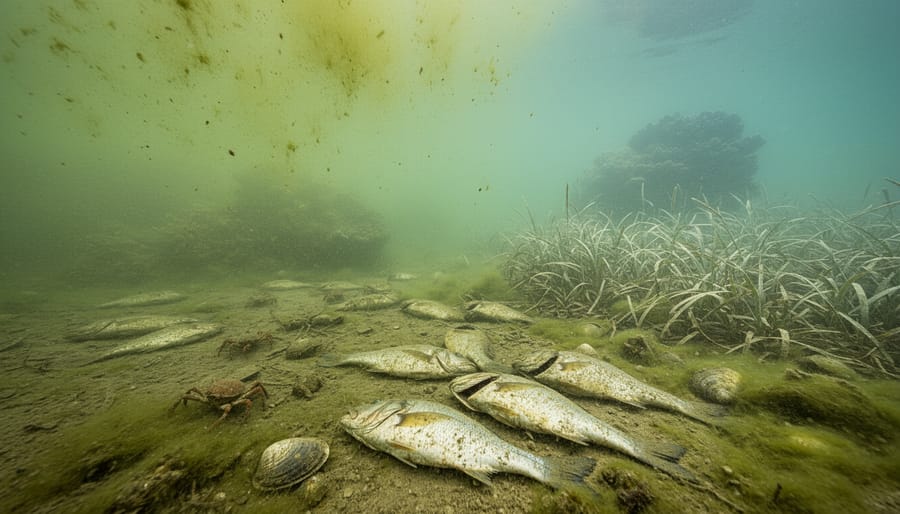
When massive algal blooms die off, they sink to the ocean floor where bacteria begin the decomposition process. These bacteria consume enormous amounts of dissolved oxygen, creating zones of hypoxia (low oxygen) or anoxia (no oxygen) that make survival impossible for most marine life. Fish, crustaceans, and other mobile species flee if they can, while slower-moving creatures like starfish, sea urchins, and bottom-dwelling organisms simply suffocate. These dead zones can persist for weeks or months, devastating local ecosystems and fisheries.
Dr. Maria Santos, a marine biologist with fifteen years studying coastal ecosystems, recalls her first encounter with a dead zone off the Gulf Coast. “Swimming through crystal-clear water, I suddenly hit a wall of murky, lifeless ocean. The transition was stark. Where I’d seen thriving coral communities weeks earlier, now only bacterial mats covered everything. Not a single fish. The silence underwater was eerie and heartbreaking.” She describes finding countless dead crabs and fish scattered across the seafloor, their bodies slowly decomposing in the oxygen-starved water.
Dead zones now affect over 400 coastal areas worldwide, with some growing to the size of small countries. The good news is that many are reversible. When nutrient pollution decreases and blooms subside, oxygen levels gradually recover and marine life returns. This recovery potential makes citizen action particularly meaningful. Supporting watershed cleanup initiatives, participating in water quality monitoring programs, and advocating for reduced agricultural runoff can help shrink these zones and restore ocean health.
Toxins That Travel Through the Food Web
When harmful algal blooms occur, they release potent toxins that don’t simply disappear when the bloom subsides. Instead, these dangerous compounds travel upward through the marine food web in a process called bioaccumulation, where toxin concentrations increase at each level of consumption.
Three primary toxins pose significant threats to marine life. Domoic acid, produced by certain diatom species, causes neurological damage and can lead to disorientation and seizures in animals that consume contaminated prey. Saxitoxin, generated by dinoflagellates, blocks nerve signals and causes paralytic shellfish poisoning. Brevetoxin, another dinoflagellate product, attacks the nervous system and respiratory function of marine organisms.
The journey begins when filter-feeding shellfish like mussels, clams, and oysters consume toxic algae cells. These organisms concentrate the toxins in their tissues without apparent harm to themselves. Small fish and crustaceans then feed on contaminated shellfish, accumulating even higher toxin levels. The concentrations multiply dramatically as larger predators consume multiple contaminated prey items throughout their lives.
Marine mammals face the greatest risk. Sea lions, dolphins, and whales feeding on toxic fish can experience seizures, reproductive failure, and death. In 2015, marine biologist Dr. Frances Gulland documented unprecedented numbers of California sea lions stranded due to domoic acid poisoning, many exhibiting severe neurological symptoms. These events demonstrate how a microscopic organism can ultimately threaten apex predators.
Understanding this cascade effect helps researchers predict which species face the greatest vulnerability and guides conservation efforts to protect marine food webs during bloom events.
Coral Reefs, Seagrass Beds, and Habitat Destruction
Harmful algal blooms inflict severe damage on marine ecosystems that countless species call home. When thick mats of toxic algae blanket coral reefs, they block sunlight essential for coral survival, leading to bleaching and widespread coral reef damage. The toxins released by certain HABs can directly poison coral polyps, while decomposing algae consumes oxygen that corals desperately need.
Seagrass beds face similar threats. These underwater meadows serve as nurseries for fish and feeding grounds for sea turtles and manatees, but dense algal blooms shade out sunlight, causing seagrasses to die back. Dr. Elena Martinez, a marine biologist studying Florida Bay, shares: “We’ve documented seagrass losses of up to 40 percent following major blooms. The juvenile fish that depend on these habitats simply have nowhere to go.”
The cascading effects ripple through entire food webs. When foundational habitats deteriorate, species lose critical breeding grounds, shelter, and food sources, ultimately threatening the biodiversity that makes our oceans resilient and productive.
Human Health and Economic Consequences
From Ocean to Plate: Contaminated Seafood
When toxic algae proliferate, shellfish like oysters, mussels, and clams become living filters of danger. These organisms naturally feed by filtering water, inadvertently concentrating toxins from harmful algal blooms in their tissues. While the shellfish themselves remain unharmed, humans consuming them can develop serious illnesses including paralytic shellfish poisoning, which can cause tingling, numbness, and in severe cases, respiratory paralysis.
Fish kills represent another devastating consequence. Massive die-offs occur when algal toxins directly poison fish or when decomposing blooms deplete oxygen levels. Images of thousands of dead fish washing ashore serve as stark reminders of bloom severity, disrupting both ecosystems and local fishing economies.
Fortunately, comprehensive monitoring programs stand between contaminated seafood and dinner plates. Coastal management agencies regularly test shellfish beds for toxin levels, closing harvest areas when concentrations exceed safety thresholds. Dr. Maria Santos, a marine toxicologist, shares how her team collects weekly samples: “We’re essentially the guardians between ocean and plate. Our monitoring prevents illness while helping us track bloom patterns.”
These surveillance systems protect public health while providing crucial data about bloom frequency and intensity. If you live near coastal areas, consider volunteering with local monitoring programs—citizen scientists play valuable roles in sample collection and early detection efforts.
Coastal Communities on the Front Lines
Coastal communities worldwide face devastating economic consequences when harmful algal blooms strike their shores. Fishing industries suffer immediate losses as blooms contaminate shellfish beds with toxins, forcing closures that can last weeks or months. In the Gulf of Maine, for instance, recurring red tide events have cost the shellfish industry millions of dollars annually, threatening livelihoods that families have depended on for generations.
Tourism takes a significant hit when beaches close due to algal blooms. Florida’s 2018 red tide event caused an estimated $130 million in lost tourism revenue as visitors avoided discolored waters and unpleasant odors. Similar impacts have struck communities from the Pacific Northwest to the Mediterranean, where green tides drive away beachgoers and damage local economies.
Marine biologist Dr. Sarah Chen, who works with affected fishing communities in Puget Sound, shares that the human toll extends beyond finances. “I’ve watched multigenerational fishing families consider leaving their profession entirely,” she explains. “These blooms don’t just threaten marine life—they threaten entire coastal cultures and ways of life.”
The ripple effects reach restaurants, hotels, and small businesses that depend on healthy ocean ecosystems for their survival.
Building Ocean Health Resilience Against HABs
Early Warning Systems and Monitoring Networks
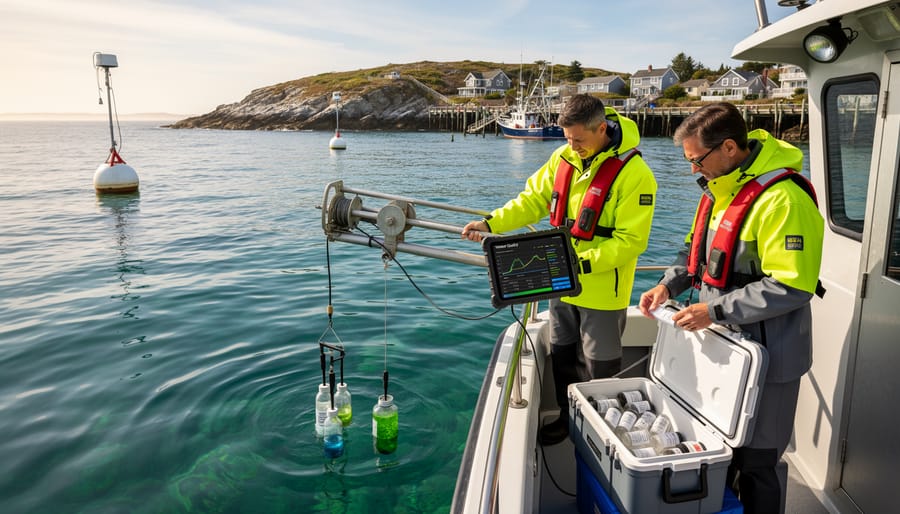
Scientists have developed sophisticated tools to detect algal blooms before they spiral out of control, giving coastal communities precious time to prepare. Satellite technology now allows researchers to monitor ocean color changes from space, identifying the telltale green, red, or brown patches that signal blooming algae across vast ocean expanses. These satellites can track bloom movement, intensity, and duration in near real-time, providing invaluable data to predict where harmful blooms might strike next.
On the water, automated buoys and sensors continuously measure water quality parameters like temperature, salinity, nutrient levels, and chlorophyll concentrations. This ocean monitoring technology creates a comprehensive picture of conditions that favor bloom development. Researchers then feed this data into predictive models that forecast bloom likelihood days or even weeks in advance, allowing authorities to issue warnings and implement protective measures.
What makes this monitoring even more powerful is the participation of everyday ocean enthusiasts. Citizen science programs welcome volunteers to report bloom sightings, collect water samples, and document affected wildlife. Dr. Sarah Chen, a marine biologist coordinating a coastal monitoring network, shares: “Our volunteers are our eyes on the water. They’ve helped us identify blooms in remote areas we couldn’t monitor otherwise, and their dedication has strengthened our early warning capabilities tremendously.”
Whether you’re a beachgoer, kayaker, or coastal resident, you can join local monitoring programs and contribute vital observations that protect marine ecosystems and communities alike.
Reducing Nutrient Pollution at the Source
Preventing harmful algal blooms begins with addressing the nutrient pollution that fuels them. Across the globe, innovative approaches are showing real promise in protecting our coastal waters.
In the agricultural sector, precision farming techniques are revolutionizing how nutrients reach our waterways. Farmers in the Chesapeake Bay watershed have adopted cover cropping, planting vegetation during off-seasons to capture excess nitrogen and phosphorus before they wash into streams. Buffer strips of native plants along field edges act as natural filters, reducing nutrient runoff by up to 70 percent in some areas. Iowa’s Nutrient Reduction Strategy demonstrates how state-level coordination can motivate thousands of farmers to implement conservation practices voluntarily.
Wastewater treatment facilities are upgrading to advanced nutrient removal technologies. In Tampa Bay, Florida, significant investments in treatment infrastructure have reduced nitrogen loading by 60 percent since the 1970s, leading to dramatic improvements in water clarity and seagrass recovery. This success story proves that municipal action creates measurable results.
Policy frameworks provide essential support for these efforts. The European Union’s Water Framework Directive sets binding targets for nutrient reduction, while China has implemented strict regulations on agricultural fertilizer use near sensitive coastal areas. Marine biologist Dr. Sarah Chen, who monitors water quality in San Francisco Bay, notes that combining regulatory approaches with farmer education programs yields the best outcomes: “When communities understand they’re protecting both their livelihoods and ocean health, engagement soars.”
These solutions require sustained funding and political will, but the evidence is clear—source reduction works when communities commit to action.
Restoring Marine Ecosystem Balance
Nature provides powerful allies in our fight against harmful algal blooms through coastal habitat restoration projects that act as living filters for our oceans. Wetlands function as natural nutrient traps, intercepting agricultural runoff before it reaches coastal waters. Their complex root systems and resident microorganisms break down nitrogen and phosphorus—the same nutrients that fuel excessive algae growth. Similarly, oyster reefs serve as remarkable water purifiers, with each adult oyster filtering up to 50 gallons of water daily, removing suspended particles and excess nutrients.
Seagrass meadows provide another layer of protection. These underwater prairies stabilize sediments, absorb nutrients through their roots, and create oxygen-rich environments that discourage toxic algae species. Marine biologist Dr. Sarah Chen describes her restoration work: “Watching a seagrass bed recover transforms more than the landscape—it rebuilds the entire food web and creates natural resistance to blooms.”
Communities worldwide are joining these efforts. Volunteer opportunities range from oyster shell collection for reef construction to seagrass planting events. These initiatives strengthen ecosystem resilience while reducing HAB frequency and intensity, demonstrating that collective conservation action creates lasting change.
How You Can Help Protect Our Oceans
Join Monitoring and Research Efforts
You can make a tangible difference in algal bloom research by joining citizen science initiatives that monitor water quality and track bloom events. The Marine Biodiversity Science Center offers year-round volunteer programs where participants collect water samples, measure temperature and salinity levels, and document visible algae concentrations along coastlines. These programs welcome all experience levels, with comprehensive training provided on proper sampling techniques and data recording methods.
Organizations like the Phytoplankton Monitoring Network coordinate volunteers across multiple regions to create expansive datasets that help scientists identify bloom patterns and environmental triggers. Participants use simple testing kits to measure nutrient levels, particularly nitrogen and phosphorus concentrations that fuel algal growth. Your observations contribute directly to early warning systems that protect public health and marine ecosystems.
Dr. Sarah Chen, a marine biologist coordinating citizen science efforts, shares an inspiring perspective: “Our volunteers have detected blooms days before satellite imagery confirmed them. Their ground-level observations fill critical gaps in our monitoring capabilities.” Many programs now incorporate smartphone apps for real-time data submission, making participation convenient and immediate.
Students and educators can access specialized programs designed for classroom integration, transforming monitoring into hands-on learning experiences. Whether you commit to weekly sampling or occasional beach surveys, your participation strengthens the scientific understanding needed to protect ocean health for future generations.
Reduce Your Nutrient Footprint
Every individual can make a meaningful difference in reducing nutrient pollution that fuels harmful algal blooms. Start in your own yard by minimizing fertilizer use—lawns don’t need as much as you might think, and excess nutrients wash into storm drains during rain, eventually reaching coastal waters. Consider replacing portions of your lawn with native plants that require no fertilization. When you do fertilize, choose slow-release, phosphorus-free options and never apply before heavy rain.
Your food choices matter too. Supporting sustainable agriculture through purchasing organic produce and products from farms that practice responsible nutrient management helps reduce agricultural runoff, one of the largest contributors to coastal nutrient pollution. Look for certifications that indicate environmentally-friendly farming practices.
Proper disposal of pet waste is another simple yet impactful action—always bag and trash it rather than leaving it on sidewalks or grass where rain can carry nutrients into waterways. In your home, use phosphate-free detergents and cleaning products, and maintain your septic system if you have one, as failing systems leak nutrients into groundwater.
Marine biologist Dr. Sarah Chen shares: “I’ve watched communities transform their local waters by making these small changes collectively. When everyone does their part, we see real improvements in water quality and fewer bloom events.”
The challenge of harmful algal blooms demands our attention, yet there’s genuine reason for hope. Marine ecosystems have demonstrated remarkable resilience when we provide them with the protection and support they need. From coral reefs recovering after nutrient pollution controls to seagrass meadows rebounding with improved water quality, nature responds powerfully to our positive interventions.
Addressing HABs requires collective action at every level. Scientists continue developing early warning systems and monitoring technologies. Policymakers work to strengthen nutrient management regulations. Coastal communities implement best practices for runoff reduction. But perhaps most importantly, individuals like you are stepping forward to make a difference.
Dr. Sarah Martinez, a marine biologist who has studied algal blooms for fifteen years, reflects on this moment: “I’ve watched communities transform their relationship with the ocean. When people understand the connections between their daily choices and marine health, they become passionate advocates. That’s when real change happens.”
The ocean needs your voice, your energy, and your commitment. Whether you’re a scientist seeking collaboration opportunities, an educator looking to inspire the next generation, or someone who simply loves the sea, there’s a place for you in this movement. Join our e-network to receive research updates, volunteer opportunities, and practical ways to protect marine ecosystems. Together, we can ensure that our oceans remain vibrant, diverse, and thriving for generations to come. The time to act is now, and every contribution matters.

jessica
Ava Singh is an environmental writer and marine sustainability advocate with a deep commitment to protecting the world's oceans and coastal communities. With a background in environmental policy and a passion for storytelling, Ava brings complex topics to life through clear, engaging content that educates and empowers readers. At the Marine Biodiversity & Sustainability Learning Center, Ava focuses on sharing impactful stories about community engagement, policy innovations, and conservation strategies. Her writing bridges the gap between science and the public, encouraging people to take part in preserving marine biodiversity. When she’s not writing, Ava collaborates with local initiatives to promote eco-conscious living and sustainable development, ensuring her work makes a difference both on the page and in the real world.