Marine Biodiversity Science Center

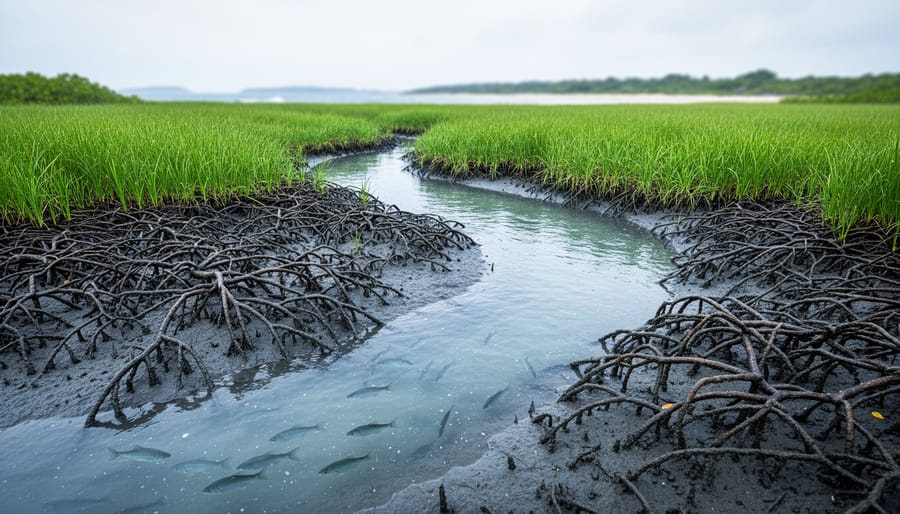
Blue earth restoration is the practice of rebuilding damaged ocean and coastal ecosystems, such as mangroves, seagrass meadows, salt marshes, coral reefs, and kelp forests, so they can recover their natural functions and support life again. It combines ecology, engineering, and community effort to replant, reseed, and reshape habitats that human activity or changing conditions have degraded.
Why does it matter? These ecosystems do heavy lifting. Mangroves and salt marshes buffer shorelines from storm surge. Seagrass and kelp store carbon and shelter young fish. Reefs feed and protect millions of people along tropical coasts. When they decline, the loss ripples through food supplies, coastal safety, and marine biodiversity.
The good news is that restoration works when it’s done thoughtfully. Success depends on choosing the right method for each habitat, addressing the original cause of the damage, and monitoring results over time.
This article explains how blue earth restoration works, the techniques used for each habitat type, and where it’s already making a difference. You’ll also see what volunteers can do to help, because much of this work moves forward on the hands and time of ordinary people willing to get their feet wet.
What Blue Earth Restoration Means
Why Coastal Habitats Store So Much Carbon
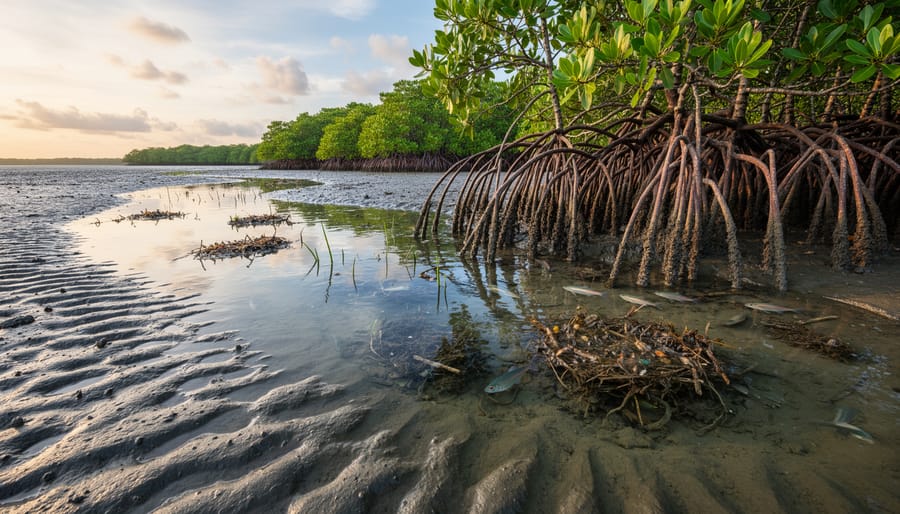
Plants in coastal habitats work a lot like their land-based cousins. Mangroves, seagrasses, and marsh grasses pull carbon dioxide from the air or water and use it to grow leaves, stems, and roots. What sets them apart is where that carbon ends up. When these plants shed leaves or die, the material settles into sediments that stay soaked with seawater. With little oxygen available, the microbes that normally break down plant matter work very slowly, so the carbon stays put instead of drifting back into the atmosphere. Layer after layer builds up, sometimes storing carbon for centuries or longer.
A few core terms make this easier to follow:
- Blue carbon
- Carbon captured and stored by coastal and ocean ecosystems, especially in their plants and sediments.
- Sequestration
- The process of capturing carbon dioxide and holding it away from the atmosphere for a long time.
- Carbon sink
- A natural system that absorbs and stores more carbon than it releases.
- Restoration versus rehabilitation
- Restoration aims to return a habitat to its original condition, while rehabilitation repairs some of its functions without fully recreating what was there.
Because so much carbon sits below the surface, protecting the sediment matters as much as protecting the plants. Disturb the mud, and stored carbon can escape. That is why careful restoration focuses on rebuilding the whole system, not just the greenery above it.
How Blue Carbon Habitat Restoration Works
A restoration project starts long before anyone picks up a shovel. The first job is to understand why the habitat disappeared. Scientists survey the site and look for the root causes, such as blocked tidal channels, drained wetlands, polluted runoff, or coastal development. Treating the symptom without fixing the cause rarely works, so this assessment shapes everything that follows.
Next comes restoring natural conditions. For many sites, this means reconnecting tidal water flow, rebuilding eroded sediment, or improving water clarity so plants can get enough light. Sometimes this step alone lets a habitat start recovering on its own, because seeds and seedlings arrive naturally once the environment is right again.
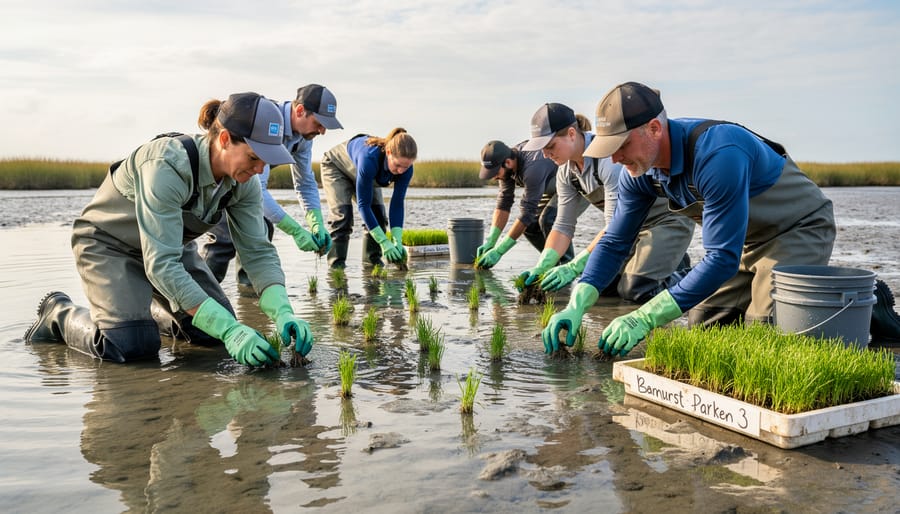
Where nature needs a helping hand, teams move on to planting or seeding. Depending on the habitat, this might mean placing mangrove seedlings, spreading seagrass seeds, or replanting native marsh vegetation. Choosing species that belong at the site, and planting them at the right elevation and density, gives young plants the best chance to establish.
Then the long wait begins. Monitoring tracks how many plants survive, how fast they spread, and whether fish, birds, and invertebrates return. Researchers also measure carbon in the plants and sediment, comparing results against baseline readings taken before the work started. These measurements show whether the project is delivering the climate and biodiversity benefits it promised.
Patience is part of the process. Seagrass meadows may take years to fill in, and mangrove and marsh soils build their carbon stores over decades. That is why the strongest projects commit to long-term monitoring, adjusting their approach as conditions change. Success isn’t measured in a single planting day. It shows up slowly, as a living habitat takes hold, steadies the shoreline, and begins locking away carbon again.
Restoration Technologies and Approaches by Habitat
Mangrove Restoration
Mangrove restoration often begins with water, not plants. Many mangrove forests decline because dikes, roads, or ponds cut off the tidal flow that feeds them. Hydrological restoration reopens those channels, letting seawater and sediment move in and out again. In many cases, this alone allows natural seedlings to return on their own.
Where recovery needs a boost, restorers plant propagules, the buoyant, seed-like structures mangroves drop, or young seedlings raised in nurseries. Matching each species to the right tidal elevation matters more than the number of trees planted.
Community-based nurseries are a common approach. Local residents collect propagules, raise seedlings, and later plant and watch over the site. This builds skills, shares the benefits, and gives people a reason to protect the forest for years to come.
Seagrass Meadow Restoration
Seagrass meadows can be rebuilt in a few proven ways. One is seed collection: volunteers and scientists gather mature seeds from healthy meadows, then scatter them over bare, suitable seabed. Another is shoot transplanting, where small plugs or shoots are carefully moved from donor beds to degraded areas and planted by hand. Biodegradable anchors and planting aids, such as burlap bags or mesh frames, hold young plants in place until their roots take hold, then break down without leaving waste behind. Some teams now use underwater robots to speed up seeding in hard-to-reach areas.
Water quality decides whether any of this works. Seagrass needs clear water so sunlight can reach the leaves, and excess nutrients or sediment can smother new growth. Many projects track recovery with monitoring tools that check clarity and plant health over time.
Salt Marsh and Tidal Wetland Recovery
Salt marshes recover fastest when the tide can move freely again. Many degraded marshes were cut off by dikes, culverts, or berms, so the first step is often reconnecting that flow. Breaching or removing a barrier lets saltwater and sediment drift back in and rebuild the marsh surface naturally.
Where land has sunk too low, crews may add sediment to raise the elevation, giving plants the right conditions to root. Some projects also use eco-friendly materials to stabilize loose soil while vegetation takes hold.
Finally, native cordgrass and other marsh plants are replanted, or allowed to return on their own. Their roots trap sediment and lock away carbon.
Monitoring Tools That Support All Three
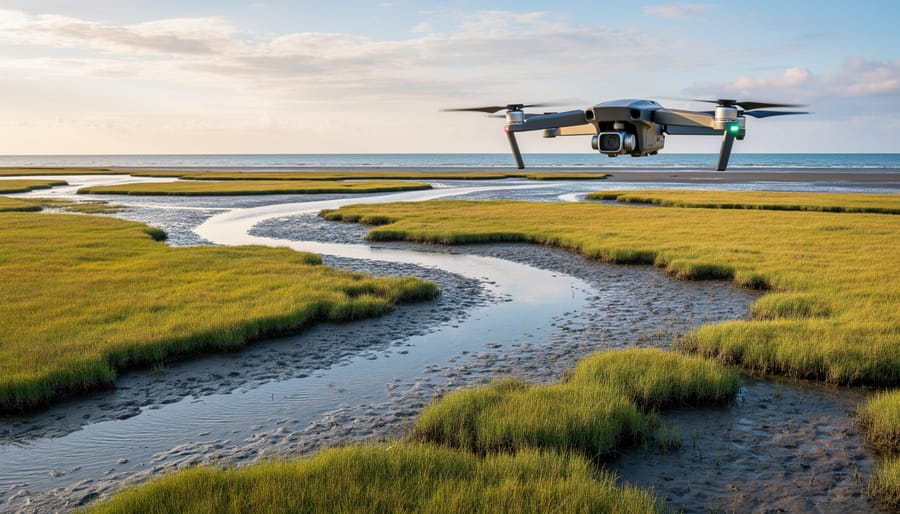
Tracking recovery is just as important as planting, and a few tools do most of the work. Drones and satellite imagery show how far vegetation has spread across mangrove forests and salt marshes, while divers and underwater cameras survey seagrass meadows shoot by shoot. Below the surface, scientists collect sediment cores to measure how much carbon has built up over time. Together, these methods reveal whether a site is truly healing and storing carbon, so teams can adjust their approach and keep progress on track.
How Blue Earth Restoration Is Used
Restored coastal habitats do far more than look healthy. Once mangroves, seagrass meadows, and salt marshes recover, they deliver benefits that people and wildlife rely on every day. The most widely recognized uses of this work include:
- Coastal protection: roots and dense vegetation slow waves and hold shorelines in place against erosion and storm surge.
- Wildlife habitat: sheltered shallows give young fish, crabs, and other marine life a safe place to grow.
- Water filtration: plants and sediments trap pollutants and excess nutrients before they reach open water.
- Carbon storage: recovering habitats capture carbon dioxide and lock it away in waterlogged soils.
- Community livelihoods: healthier fisheries, tourism, and cleaner coasts support the people who live beside them.
Take shoreline defense. A fringe of mangroves or a wide salt marsh acts like a living buffer, absorbing wave energy that would otherwise strike homes and roads. Unlike a concrete wall, it can also build up sediment over time, which helps it keep pace with rising seas.
The same habitats work as nurseries. Many commercially valuable fish and shellfish spend their earliest, most vulnerable weeks among seagrass blades or mangrove roots, so restoring these places helps replenish the wider ocean. Seagrass meadows also feed and shelter species of concern, including sea turtles and seahorses, giving threatened animals room to recover.
Water quality improves too. Seagrass and marsh plants slow the flow of water and settle out suspended particles, which can leave the water clearer and more welcoming to other life.
Finally, restoration contributes to climate goals by rebuilding natural carbon sinks, and it often creates local work in planting, monitoring, and sustainable fishing. When communities share in these benefits, they have every reason to look after the restored habitat for the long term.
Challenges and What Makes Restoration Succeed
Restoration is rewarding work, but it is rarely simple. The most common hurdle is site selection. A planting site might look ideal, yet if the original cause of decline, such as blocked tidal flow or polluted runoff, is still in place, new seedlings struggle to survive. Water quality matters just as much, especially for seagrass, which needs clear water to photosynthesize. Rising sea levels add another layer of uncertainty, since a habitat that thrives today may need room to migrate inland over the coming decades.
Then there is the long game. Recovery takes years, and monitoring costs money well after the planting crews have gone home. Projects with short funding windows often miss the stage where results become visible.
The good news is that the solutions are well understood. Careful scientific planning helps teams choose sites and methods that fit the habitat. Local communities who help plant, guard, and monitor a site tend to care for it long after the first season. Legal protection keeps restored areas from being drained or developed again. Researchers studying resilience biology also help us understand how restored habitats can withstand stress and bounce back from disturbance.
With patience and planning, these obstacles become manageable steps rather than barriers.
How You Can Help Restore Blue Habitats
Restoring blue habitats takes many hands, and you don’t need a science degree to join in. The Marine Biodiversity Science Center offers volunteer programs that connect everyday people with real conservation work, and its online e-network is a friendly way to learn, ask questions, and meet others who care about the coast.
Start small and close to home. Local shoreline cleanups keep debris and pollution out of the shallow waters where seagrass and marsh plants grow, which helps those habitats recover. If a habitat planting event happens near you, consider signing up. Planting mangrove seedlings or marsh grasses is hands-on, rewarding work, and organizers usually provide training on the day.
You can also help from afar. Supporting science-based conservation groups means your contribution goes toward methods that have been tested and monitored over time. Choosing sustainably sourced seafood and reducing fertilizer and plastic use at home both ease the pressure on coastal waters.
Finally, share what you learn. Explaining blue carbon to a friend, a classmate, or your community helps more people see why these habitats matter. Every conversation widens the circle of people ready to protect and rebuild them.
Common Questions About Blue Earth Restoration
What is blue carbon?
Blue carbon is the carbon captured and stored by coastal and ocean ecosystems, especially mangroves, seagrass meadows, and salt marshes. Much of it ends up locked in the waterlogged sediments beneath these habitats.
How long does restoration take to show results?
It depends on the habitat and the site. Some plantings show new growth within a season, but rebuilding a mature, carbon-rich ecosystem takes years, which is why long-term monitoring matters.
Is planting always necessary?
No. Often the best first step is removing what caused the decline, such as restoring tidal flow or improving water quality, and letting nature recover on its own. Planting is used where natural recovery needs a boost.
Can restored habitats really store carbon?
Yes, though the amount builds gradually as plants grow and sediments accumulate. Careful monitoring helps track how much carbon a restored site is capturing over time.
Still wondering how you can get involved? You don’t need a science degree to help. Joining a local shoreline cleanup or habitat planting event is a great start, and the Marine Biodiversity Science Center’s volunteer programs and online e-network are a welcoming way to learn alongside others who care about healthy coasts.
Blue earth restoration comes down to a simple, hopeful idea: rebuild the mangroves, seagrass meadows, and salt marshes that shelter marine life, protect coastlines, and lock away carbon for the long term. When these habitats recover, the benefits ripple outward, from healthier fisheries to stronger shorelines and a steadier climate.
None of this happens by chance. Blue Carbon Habitat Restoration Technologies give scientists and communities the tools to restore tidal flow, plant native species, and track recovery over years, so that every project rests on evidence rather than guesswork. Patience and careful monitoring turn small plantings into thriving ecosystems.
The encouraging part is that you can be involved. Explore the Marine Biodiversity Science Center’s volunteer opportunities, join the e-network to stay connected with new projects and discoveries, and share what you’ve learned with others. Together, we can help bring these vital habitats back to life.

jessica
Ava Singh is an environmental writer and marine sustainability advocate with a deep commitment to protecting the world's oceans and coastal communities. With a background in environmental policy and a passion for storytelling, Ava brings complex topics to life through clear, engaging content that educates and empowers readers. At the Marine Biodiversity & Sustainability Learning Center, Ava focuses on sharing impactful stories about community engagement, policy innovations, and conservation strategies. Her writing bridges the gap between science and the public, encouraging people to take part in preserving marine biodiversity. When she’s not writing, Ava collaborates with local initiatives to promote eco-conscious living and sustainable development, ensuring her work makes a difference both on the page and in the real world.