Marine Biodiversity Science Center

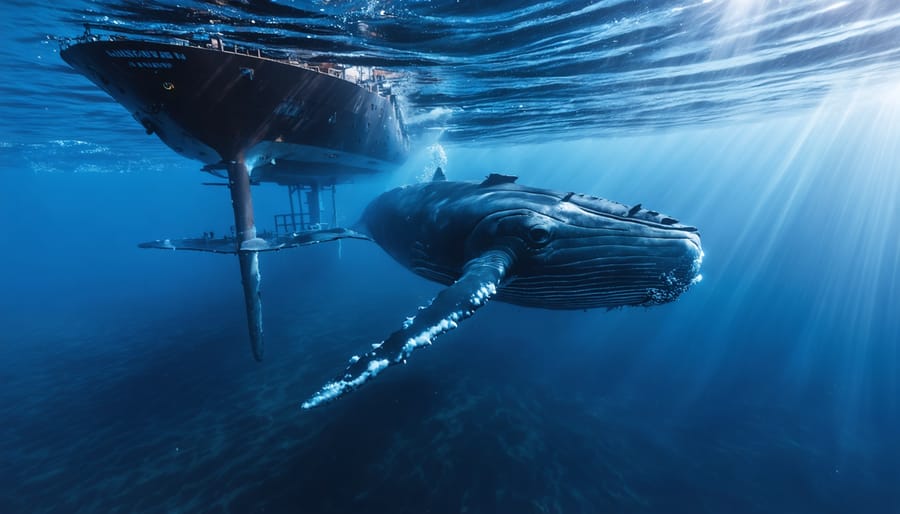
Beneath the waves, an invisible crisis unfolds as human-generated noise transforms the ocean into an increasingly hostile environment for marine life. Ship engines, seismic surveys, sonar systems, and offshore construction create a relentless cacophony that reverberates through the water—and sound travels four times faster underwater than in air, amplifying the problem across vast distances.
Marine animals depend on sound for survival. Whales navigate across ocean basins using acoustic signals, dolphins echolocate to hunt prey, fish larvae follow reef sounds to find suitable habitats, and countless species communicate, find mates, and avoid predators through sophisticated acoustic systems refined over millions of years. When anthropogenic noise floods their environment, these essential biological functions break down with devastating consequences.
The impacts extend far beyond temporary disturbance. Research documents hearing loss in marine mammals exposed to intense underwater noise, behavioral changes that disrupt feeding and breeding patterns, stress responses that compromise immune systems, and mass strandings linked to naval sonar exercises. Coral reef fish lose their ability to locate suitable homes, while commercially important species experience reduced reproduction rates. Even invertebrates like squid and octopuses show physical damage to their sensory organs from noise exposure.
This growing threat demands urgent attention from scientists, policymakers, and citizens alike. Understanding how noise pollution disrupts marine ecosystems represents a crucial first step toward implementing effective ocean conservation efforts. As Dr. Sarah Mitchell, a marine acoustics researcher who has spent two decades studying whale communication, explains: “We’ve fundamentally changed the acoustic landscape of our oceans in just a few generations. The question now is whether we can quiet our activities enough to give marine life a chance to recover.”
Understanding Marine Noise Pollution: Sources and Scale
The Major Culprits: Where Ocean Noise Comes From
Our oceans have become remarkably noisy places, and the sources of this underwater cacophony are predominantly human-made. Understanding these culprits is the first step toward meaningful solutions.
Commercial shipping represents the largest contributor to ocean noise pollution. With over 90,000 cargo vessels crisscrossing our seas, the constant hum of propellers and engines creates a persistent background noise that blankets major shipping routes. These low-frequency sounds travel vast distances underwater, affecting marine life far from the actual shipping lanes.
Naval sonar operations produce some of the ocean’s most intense sounds. Military vessels use active sonar systems that emit powerful pulses to detect submarines and underwater objects. These high-intensity blasts can reach levels exceeding 235 decibels, causing severe impacts on marine mammals.
Seismic surveys for oil and gas exploration fire compressed air guns that create explosive sounds every few seconds, sometimes continuously for months. These surveys map the ocean floor by analyzing sound wave reflections, but the process generates some of the loudest human-made noises in marine environments.
Offshore construction activities, including pile driving for wind farms and oil platforms, create percussive sounds that reverberate through the water. While renewable energy is crucial for our future, the construction phase demands careful management to minimize acoustic impact.
Even recreational vessels contribute significantly in coastal areas, where motorboats, jet skis, and cruise ships concentrate noise in ecologically sensitive habitats. Marine biologist Dr. Sarah Chen notes that during her volunteer work monitoring whale populations, the weekend increase in recreational traffic noticeably changes cetacean behavior patterns in popular tourist destinations.

How Sound Travels Underwater
Water is a remarkably efficient conductor of sound, which creates both opportunities and challenges for marine life. Sound travels approximately four times faster in water than in air—roughly 1,500 meters per second compared to 343 meters per second. This increased speed occurs because water molecules are packed more densely together than air molecules, allowing sound waves to transfer energy more efficiently between them.
What acoustic science reveals is even more concerning: sound waves don’t just move faster underwater—they travel much farther with less energy loss. While a sound might dissipate after traveling a few hundred meters through air, the same sound can traverse entire ocean basins. Low-frequency sounds, like those produced by shipping vessels, can travel hundreds or even thousands of kilometers before fading.
Marine animals evolved over millions of years to exploit these acoustic properties. Whales communicate across vast distances, dolphins use echolocation to navigate murky waters, and fish rely on sound to find mates and avoid predators. Their entire sensory world is built around sound.
This dependency makes ocean noise pollution particularly devastating. When we introduce human-made sounds into marine environments, they don’t simply fade away—they persist, traveling vast distances and saturating the underwater soundscape. For species that depend on acoustic signals for survival, this constant barrage of noise creates an environment where their most critical sense becomes unreliable, disrupting everything from feeding to reproduction.
The Devastating Effects on Marine Species
Marine Mammals: Disrupted Communication and Navigation
Marine mammals possess some of the ocean’s most sophisticated acoustic abilities, making them particularly vulnerable to underwater noise pollution. Whales, dolphins, and seals depend on sound for virtually every aspect of survival—from finding food and navigating vast ocean distances to locating mates and maintaining social bonds. When human-generated noise floods their environment, these essential functions become severely compromised.
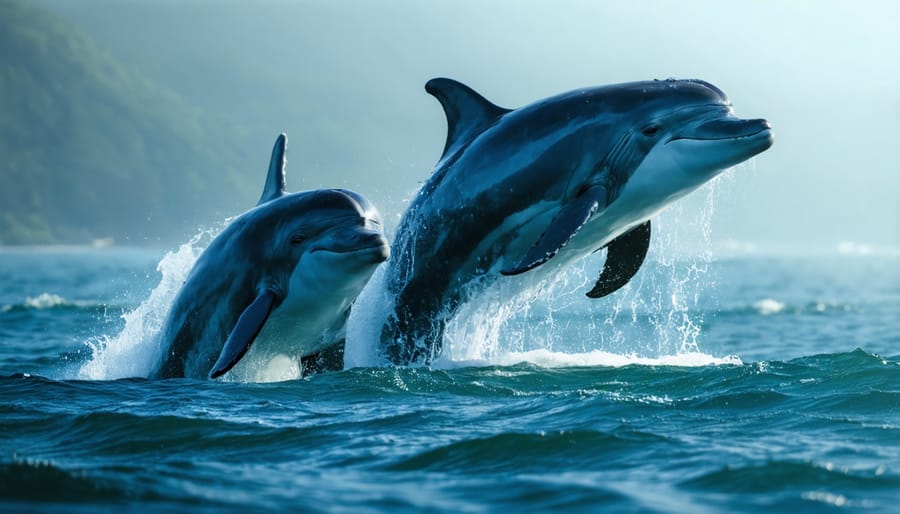
Echolocation, the biological sonar used by toothed whales and dolphins, allows them to “see” through sound by emitting clicks and interpreting the returning echoes. However, intense noise from shipping traffic, seismic surveys, and military sonar can mask these delicate signals or even cause temporary hearing loss. Dr. Sarah Chen, a marine biologist who has studied dolphin populations off California’s coast for fifteen years, shares a sobering observation: “We’ve documented pods that alter their click patterns and abandon prime feeding areas when noise levels spike. They’re essentially being forced from their dinner table.”
The consequences extend beyond inconvenience. Mass strandings of beaked whales have been directly linked to naval sonar exercises, with autopsies revealing hemorrhaging around their ears and brains—evidence of acoustic trauma. Baleen whales, which use low-frequency calls to communicate across hundreds of miles, now struggle to connect with potential mates as ship noise occupies the same frequency range.
Behavioral changes are equally concerning. Studies show that right whales have increased their call volume by up to forty percent in noisy environments, essentially shouting to be heard. Others simply stop calling altogether, choosing silence over competition with industrial cacophony. For volunteers participating in whale monitoring programs along migration routes, documenting these changes provides crucial data that helps researchers understand the full scope of acoustic interference.
Fish and Invertebrates: The Overlooked Victims
While charismatic whales and dolphins capture much of our attention, fish and invertebrates comprise the vast majority of marine life and face equally devastating impacts from noise pollution. Recent research reveals these often-overlooked animals are far more sensitive to sound than previously understood.
Fish rely on sound for critical survival behaviors including finding food, avoiding predators, and locating suitable habitat. Studies show that noise pollution causes measurable physiological stress in fish, elevating cortisol levels and suppressing immune function. Dr. Maria Santos, a marine biologist who has studied Mediterranean fish populations for fifteen years, shares a striking observation: “We’ve documented fish near busy shipping lanes showing the same stress markers as animals in fight-or-flight responses, except this stress never stops.”
The physical damage can be severe. Exposure to loud sounds causes hair cell damage in fish inner ears, leading to temporary or permanent hearing loss. Research on European sea bass found that even moderate ship noise caused significant auditory threshold shifts, essentially making fish partially deaf in their own environment.
Invertebrates face similar challenges. Squid exposed to seismic airgun noise show severe acoustic trauma, including damaged statocysts, the organs they use for balance and spatial orientation. Crabs exhibit altered foraging behavior and reduced predator avoidance when exposed to chronic noise. Even tiny larvae struggle to locate suitable settlement habitat when their acoustic cues are masked by human-generated sounds.
The behavioral changes cascade through ecosystems. Fish abandon feeding grounds, alter spawning behaviors, and show reduced reproductive success in noisy environments. These disruptions affect not only individual animals but entire food webs, as volunteer monitoring programs have documented declining fish populations in chronically noisy coastal areas. Understanding these widespread impacts is crucial for developing effective protection strategies.
Cascading Effects on Marine Ecosystems
The impact of underwater noise extends far beyond individual animals, triggering a domino effect throughout marine ecosystems. When noise pollution disrupts the fundamental behaviors that sustain ocean life, the consequences ripple outward, affecting entire food webs and community structures.
Predator-prey dynamics become dangerously unbalanced when acoustic interference masks the sounds both hunters and hunted rely upon. Dolphins hunting in murky waters depend on echolocation to track fish schools, but ship noise can reduce their hunting success by up to 50%. Conversely, prey species like herring use sound to detect approaching predators, and when chronic noise diminishes this early warning system, predation rates increase unnaturally. Marine biologist Dr. Sarah Chen observed during her research in shipping lanes that “we’re essentially blindfolding both predators and prey simultaneously, creating chaos in relationships refined over millions of years.”
Mating rituals suffer equally devastating disruptions. Male humpback whales sing complex songs to attract females across distances exceeding 20 kilometers, but these romantic serenades are increasingly drowned out by vessel traffic. Right whales, already critically endangered, experience reduced reproductive success when noise forces them to abandon traditional breeding grounds. Fish species that spawn in response to acoustic cues miss critical breeding windows when marine pollution threats include persistent noise.
Migration patterns become confused as noise obscures natural acoustic landmarks. Gray whales navigating coastal routes and sea turtles following soundscapes to nesting beaches face increased strandings and delayed arrivals, ultimately threatening population stability across entire ocean regions.
Threat to Marine Biodiversity: Long-Term Consequences
Impact on Endangered Species
For species already teetering on the brink of extinction, noise pollution acts as a devastating additional stressor that pushes them closer to the edge. The North Atlantic right whale, with fewer than 350 individuals remaining, faces catastrophic consequences from vessel noise along their migration routes. These whales depend on low-frequency calls to communicate across vast ocean distances, but shipping traffic in the same frequency range masks their vocalizations. Mother-calf pairs become separated, mating opportunities are missed, and critical feeding areas become unusable due to acoustic disturbance.
The vaquita, the world’s most endangered marine mammal with approximately 10 individuals left, contends with noise from illegal fishing operations in Mexico’s Gulf of California. While entanglement in gillnets remains their primary threat, acoustic disturbance from boats forces these shy porpoises into less optimal habitats, reducing their already slim chances of survival and reproduction.
Beaked whales, a diverse group of deep-diving species, have experienced mass strandings linked directly to military sonar exercises. These elusive creatures are particularly sensitive to mid-frequency sonar, which can cause panic responses leading them to surface too rapidly, resulting in decompression sickness and death.
Marine biologist Dr. Sarah Jensen, who has monitored endangered sea turtles for two decades, shares a sobering observation: “We’ve documented how construction noise from coastal development disorients nesting females and hatchlings. For species like the Kemp’s ridley sea turtle, already critically endangered, every lost nesting opportunity matters enormously.”
The compounding effect of noise pollution with climate change, habitat loss, and overfishing creates a crisis demanding immediate intervention.
Loss of Critical Habitats
Noise pollution doesn’t just disturb marine animals—it can force them to abandon the very places they depend on for survival. When underwater noise reaches certain thresholds in critical habitats like breeding grounds, feeding areas, and nursery zones, these spaces become essentially uninhabitable, effectively shrinking the available living space for marine populations.
Marine biologist Dr. Elena Rodriguez has witnessed this firsthand while studying humpback whales in their calving grounds. “We documented mothers with newborn calves abandoning traditional nursery areas after increased shipping traffic made communication nearly impossible,” she explains. “These mothers were forced into suboptimal habitats where food was scarcer and predation risks higher.”
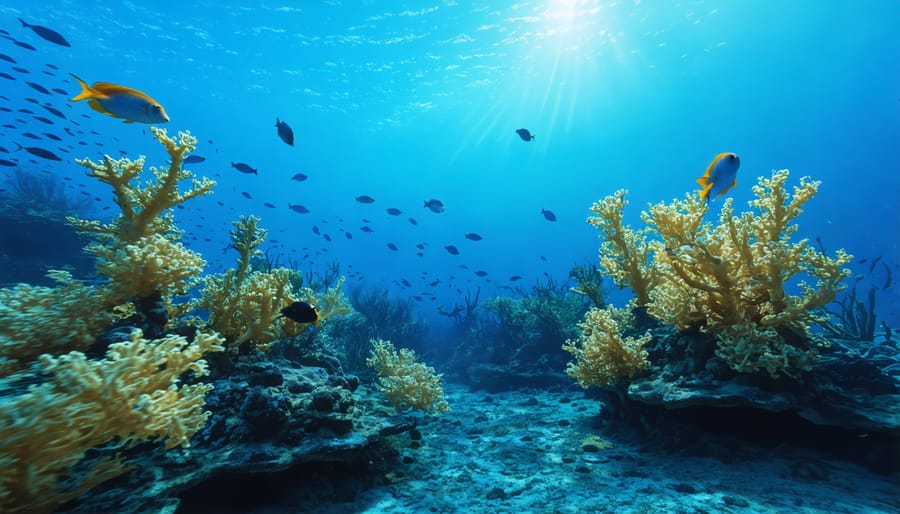
The consequences ripple through entire ecosystems. Coral reefs, which serve as nurseries for countless fish species, become far less effective when chronic noise masks the acoustic cues that larval fish use to locate suitable settlement sites. Studies show that fish larvae exposed to boat noise are significantly less likely to detect reef sounds, potentially reducing recruitment to these already threatened habitats by up to 50 percent.
Feeding grounds face similar challenges. Foraging whales and dolphins rely on echolocation and communication to coordinate hunting strategies. When noise pollution drowns out these signals, animals must either abandon productive feeding areas or expend significantly more energy with reduced success rates—a trade-off that can prove fatal during critical seasons.
For those passionate about protecting these vital spaces, volunteer opportunities exist with organizations conducting acoustic monitoring in marine protected areas, helping scientists identify and advocate for quieter zones where marine life can thrive undisturbed.
Solutions and Conservation Efforts
Technological Innovations and Quieter Alternatives
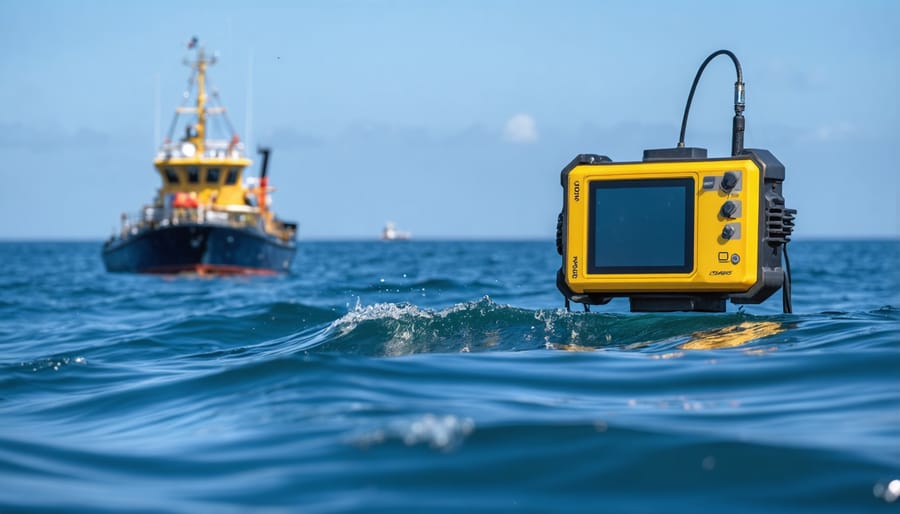
The maritime industry is rising to the challenge of reducing underwater noise through innovative engineering and design solutions. Modern ship propellers now feature advanced blade configurations that minimize cavitation—the formation of bubbles that create damaging sound waves. Some vessels incorporate air-bubble curtains around their hulls, which act as acoustic barriers that reduce noise transmission by up to 80 percent.
Marine construction projects are adopting quieter alternatives to traditional pile driving. Vibratory hammers and drilling methods produce significantly less noise while maintaining structural integrity. Bubble curtains deployed around construction sites create protective acoustic zones, allowing nearby marine life to continue their essential behaviors with minimal disruption.
Marine biologist Dr. Elena Rodriguez, who has studied whale populations for over two decades, shares her optimism: “I’ve witnessed shipping companies voluntarily reroute vessels away from critical feeding grounds. These small changes make tremendous differences for marine mammals trying to communicate and navigate.”
Technologies like dynamic positioning systems allow ships to maintain position without dropping loud anchors. Electric and hybrid propulsion systems are becoming increasingly viable, operating at whisper-quiet levels compared to traditional diesel engines. As these innovations become industry standards, our oceans grow quieter, giving marine life the acoustic space they desperately need to thrive.
Policy and Legal Protections
The growing recognition of ocean noise as a serious threat has spurred international action and legal frameworks to protect marine life. The International Maritime Organization’s voluntary guidelines encourage quieter ship designs and operational practices, though enforcement remains challenging. Regional initiatives show promising progress: the European Union’s Marine Strategy Framework Directive now includes underwater noise as a pollutant requiring monitoring and reduction.
Marine protected areas increasingly incorporate noise restrictions as part of proven conservation strategies. Sanctuaries like the Stellwagen Bank National Marine Sanctuary off Massachusetts have implemented seasonal speed restrictions for vessels, reducing both collision risks and acoustic disturbance during critical whale migration periods. Similar measures protect feeding and breeding grounds worldwide.
Dr. Sarah Chen, a marine policy advisor, shares her optimism: “We’re witnessing a shift in how governments view ocean soundscapes. Nations are establishing baseline acoustic monitoring programs and setting noise reduction targets.” Canada’s Oceans Act and the U.S. Marine Mammal Protection Act provide legal foundations for addressing noise pollution, while emerging technologies enable better enforcement. Though challenges persist, these frameworks represent crucial steps toward quieter, healthier oceans that support thriving marine communities for future generations.
What the Marine Biodiversity Science Center Is Doing
The Marine Biodiversity Science Center is at the forefront of addressing underwater noise pollution through comprehensive research and community engagement. Our team of marine biologists conducts acoustic monitoring programs in critical habitats, using specialized hydrophones to measure noise levels and identify sources of disturbance affecting vulnerable species. This data informs targeted conservation strategies and helps establish quieter marine protected areas.
We’re actively partnering with shipping companies and port authorities to promote vessel speed reductions and quieter propeller designs in key migration corridors. Dr. Sarah Chen, one of our lead researchers, shares that “witnessing a pod of whales successfully navigate through a newly designated quiet zone validates every late night spent analyzing acoustic data.”
The Center also runs educational workshops for coastal communities, helping fishers and recreational boaters understand how their activities impact marine life. Our citizen science program invites volunteers to participate in soundscape surveys, making marine conservation accessible to everyone. Through advocacy work, we’re pushing for stricter noise regulations in sensitive ecosystems.
Students and educators can access our free online resources, which translate complex acoustic research into classroom-ready materials. By combining rigorous science with grassroots action, we’re creating meaningful change for ocean creatures struggling to be heard above the din.
How You Can Make a Difference
Volunteer and Citizen Science Opportunities
You can make a tangible difference in combating ocean noise pollution through hands-on involvement with marine conservation initiatives. Our center offers diverse volunteer opportunities that welcome participants of all experience levels, from students to seasoned environmental professionals.
Join our acoustic monitoring program, where volunteers assist researchers in deploying hydrophones and analyzing soundscape data along coastal areas. These citizen scientists help create comprehensive maps of underwater noise levels, providing crucial information for conservation planning. “Having volunteers expand our monitoring coverage has been invaluable,” shares Dr. Maria Chen, our lead marine biologist. “Their dedication allows us to track noise patterns across much larger areas than we could manage alone.”
Participate in monthly beach cleanups that remove debris contributing to coastal degradation while raising awareness about multiple pollution threats facing marine life. These events provide networking opportunities with fellow conservation enthusiasts and direct interaction with our research team.
For those seeking deeper involvement, our research assistance program offers training in data collection, species observation techniques, and sound analysis software. Remote volunteers can help transcribe field notes, categorize acoustic recordings, and support educational outreach efforts.
Whether you can commit a few hours monthly or wish to develop long-term research skills, your participation directly supports solutions to ocean noise pollution while fostering meaningful connections with marine conservation efforts.
Spreading Awareness and Supporting Conservation
Every individual can play a vital role in protecting marine life from noise pollution. Start by supporting responsible boating practices in your community—encourage slower speeds in sensitive marine areas and proper vessel maintenance to reduce underwater noise. When choosing recreational activities, opt for operators who demonstrate environmental awareness and follow wildlife-friendly guidelines.
Advocacy creates powerful change. Contact your local representatives to support regulations that limit harmful shipping speeds in critical habitats and establish marine protected areas with noise restrictions. Share information about ocean noise pollution through social media and community networks to help others understand this invisible threat.
Join the center’s e-network to stay informed about environmental health initiatives and receive updates on conservation actions you can support. Consider volunteering for beach cleanups, citizen science monitoring programs, or educational outreach events.
Marine biologist Dr. Sarah Chen shares: “I’ve witnessed firsthand how community engagement transforms conservation efforts. When people understand the connection between their actions and ocean health, they become passionate advocates for change.” Your voice and actions matter—together, we can reduce the acoustic footprint threatening our ocean’s remarkable biodiversity.
The ocean’s soundscape crisis demands our immediate attention, yet there’s genuine reason for hope. As we’ve explored throughout this article, noise pollution threatens marine life at every level—from disrupting individual animals’ ability to communicate and navigate to destabilizing entire ecosystems. The good news? We already possess the knowledge and tools to make a meaningful difference.
Dr. Sarah Chen, a marine biologist who has spent fifteen years studying whale communication patterns, recently shared a powerful observation: “Last year, during a brief shipping slowdown, we documented humpback whales communicating across distances we hadn’t observed in decades. It reminded me that the ocean can heal remarkably quickly when we give it the chance. Every action we take to reduce underwater noise creates immediate benefits for marine life.”
Her words underscore an essential truth: marine animals are resilient, and our collective efforts matter. Whether through supporting stricter regulations on shipping noise, choosing quieter recreational boating practices, or advocating for marine protected areas, each action contributes to quieter, healthier oceans.
We invite you to become part of this solution. Our center offers volunteer opportunities in acoustic monitoring programs, citizen science initiatives, and educational outreach. By joining our community, you’ll gain hands-on experience while directly contributing to marine conservation efforts. Together, we can ensure future generations inherit oceans where marine life thrives in their natural acoustic environment. Visit our programs page today to discover how you can make waves for ocean conservation.

jessica
Ava Singh is an environmental writer and marine sustainability advocate with a deep commitment to protecting the world's oceans and coastal communities. With a background in environmental policy and a passion for storytelling, Ava brings complex topics to life through clear, engaging content that educates and empowers readers. At the Marine Biodiversity & Sustainability Learning Center, Ava focuses on sharing impactful stories about community engagement, policy innovations, and conservation strategies. Her writing bridges the gap between science and the public, encouraging people to take part in preserving marine biodiversity. When she’s not writing, Ava collaborates with local initiatives to promote eco-conscious living and sustainable development, ensuring her work makes a difference both on the page and in the real world.