Marine Biodiversity Science Center

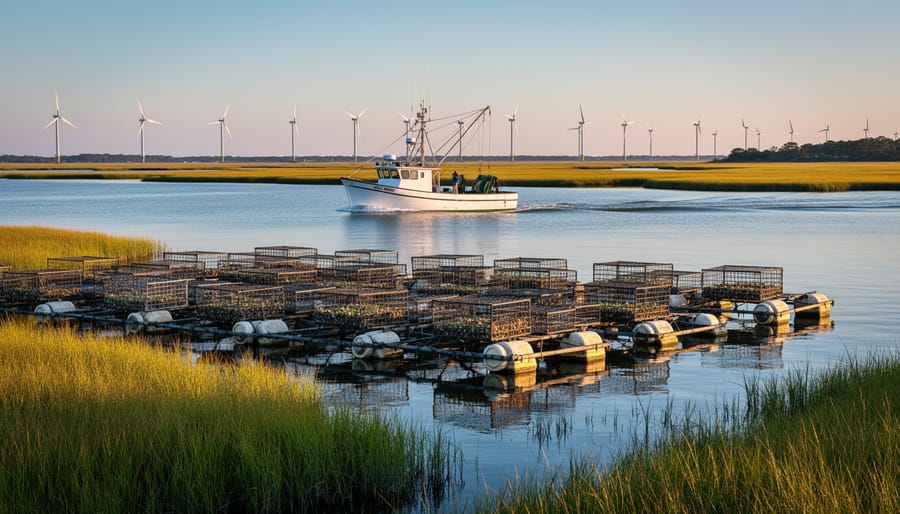
Rhode Island may be America’s smallest state, but its 400-mile coastline powers an outsized commitment to sustainable ocean management. Here, the blue economy isn’t abstract policy—it’s commercial fishermen adopting selective gear to protect juvenile fish, offshore wind turbines generating clean energy while creating artificial reef habitats, and coastal communities restoring salt marshes that serve as nurseries for countless marine species.
The Ocean State has transformed its relationship with the sea over the past decade. Following decades of overfishing and habitat degradation, Rhode Island now stands as a national model for balancing economic prosperity with marine conservation. The state’s blue economy encompasses everything from sustainable aquaculture operations producing oysters and seaweed to innovative marine biotechnology companies developing medicines from ocean organisms. These industries generated over $2.4 billion in economic output in 2022 while actively supporting ecosystem restoration.
What makes Rhode Island’s approach distinctive is its integration of scientific research with community participation. The University of Rhode Island’s Graduate School of Oceanography collaborates directly with fishing cooperatives to develop sustainable harvest methods. Meanwhile, citizen scientists monitor water quality in Narragansett Bay, contributing data that shapes conservation policy. Coastal residents volunteer for eelgrass restoration projects that expand critical habitat for winter flounder and bay scallops.
This convergence of economic innovation and ecological stewardship offers valuable lessons for coastal regions worldwide. Rhode Island demonstrates that ocean-dependent communities don’t have to choose between livelihoods and conservation—they can pursue both simultaneously through thoughtful blue economy initiatives. The state’s success stems from recognizing a fundamental truth: healthy marine ecosystems form the foundation of sustainable coastal prosperity.
Understanding the Blue Economy: More Than Just Ocean Business
The Three Pillars of Rhode Island’s Approach
Rhode Island’s blue economy framework rests on the three pillars of sustainability: economic vitality, environmental stewardship, and social equity. This balanced approach ensures that marine industries can thrive while protecting the ocean ecosystems that support them and creating opportunities accessible to all Rhode Islanders.
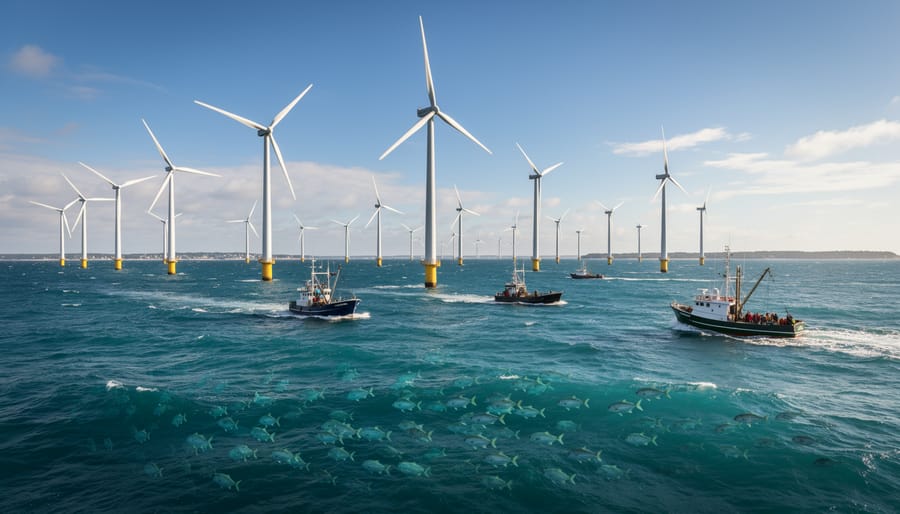
Economic growth manifests through innovative industries like offshore wind development and sustainable aquaculture. The state has become a national leader in offshore wind energy, with the Block Island Wind Farm generating clean power while creating hundreds of skilled jobs. Shellfish aquaculture operations demonstrate how economic activity can coexist with healthy marine environments, as oyster farms actually improve water quality by filtering nutrients while providing sustainable seafood and employment for coastal communities.
Environmental protection remains central to Rhode Island’s strategy. The state has invested heavily in marine habitat restoration, including eelgrass bed rehabilitation in Narragansett Bay. These underwater meadows serve as nurseries for juvenile fish and feeding grounds for sea turtles. Dr. Maria Santos, a marine biologist working on restoration projects, shares that “watching these ecosystems recover gives us hope. We’re seeing species return that we hadn’t observed in decades, from winter flounder to diamondback terrapins.”
Social equity initiatives ensure coastal access and marine career pathways reach underserved communities. Programs like the Rhode Island Coastal Fellowship connect young people from diverse backgrounds with marine science mentors and hands-on conservation work. Weekend beach cleanups and water quality monitoring volunteer opportunities welcome participants of all experience levels, fostering a sense of collective stewardship. This inclusive approach recognizes that ocean health depends on everyone’s engagement and that blue economy benefits should reach all communities, not just those with traditional ties to maritime industries.
Rhode Island’s Blue Economy Initiatives: From Policy to Practice
The Rhode Island Ocean Special Area Management Plan
Rhode Island’s Ocean Special Area Management Plan (Ocean SAMP) stands as the nation’s first comprehensive coastal planning framework specifically designed to balance renewable energy development with marine ecosystem protection. Adopted in 2010, this innovative approach emerged from collaboration between state agencies, fishermen, environmental groups, and offshore wind developers who recognized the urgent need for science-based ocean zoning.
The Ocean SAMP divides Rhode Island’s waters into distinct zones, carefully mapping critical habitats before allowing industrial development. This proactive strategy protects essential breeding grounds for commercially valuable species like Atlantic cod, winter flounder, and American lobster. The plan also safeguards migratory corridors used by endangered North Atlantic right whales, whose population hovers around just 350 individuals.
Marine biologist Dr. Sarah Chen, who contributed to the habitat assessments, shares: “We spent years documenting seafloor communities, identifying areas where complex boulder fields support incredible biodiversity. These underwater structures host everything from juvenile fish seeking refuge to colonial anemones that filter nutrients from the water column.”
The framework specifically protects coldwater coral gardens and rocky reef ecosystems that take centuries to develop. Areas with cobble substrate, preferred by black sea bass during spawning season, received special consideration. The plan also established buffer zones around known concentrations of longfin squid, a keystone species supporting both commercial fisheries and marine food webs.
Importantly, the Ocean SAMP isn’t static. Adaptive management provisions allow scientists to adjust protected areas as they gather new data about species distributions and climate change impacts. This flexibility has proven crucial as warming waters shift fish populations northward.
For those interested in contributing to ongoing monitoring efforts, the Rhode Island Department of Environmental Management regularly seeks volunteer citizen scientists to help document marine species along the coast, ensuring protection measures remain effective as conditions evolve.
Sustainable Fisheries and Aquaculture Programs
Rhode Island’s fishing heritage is evolving to meet the challenges of the 21st century, balancing economic viability with environmental stewardship. The state has implemented comprehensive sustainable fisheries management programs that protect marine biodiversity while supporting the livelihoods of coastal communities.
Through the Rhode Island Fishermen’s Alliance, commercial fishermen are adopting innovative practices such as selective fishing gear that reduces bycatch and protects juvenile fish populations. This approach has shown promising results in rebuilding depleted stocks of flounder and cod while maintaining healthy populations of lobster and squid. Marine biologist Dr. Sarah Chen, who works closely with fishing cooperatives, explains: “We’re seeing fishermen become active participants in conservation. They’re collecting data, reporting unusual species sightings, and adjusting their practices based on real-time ecosystem feedback.”
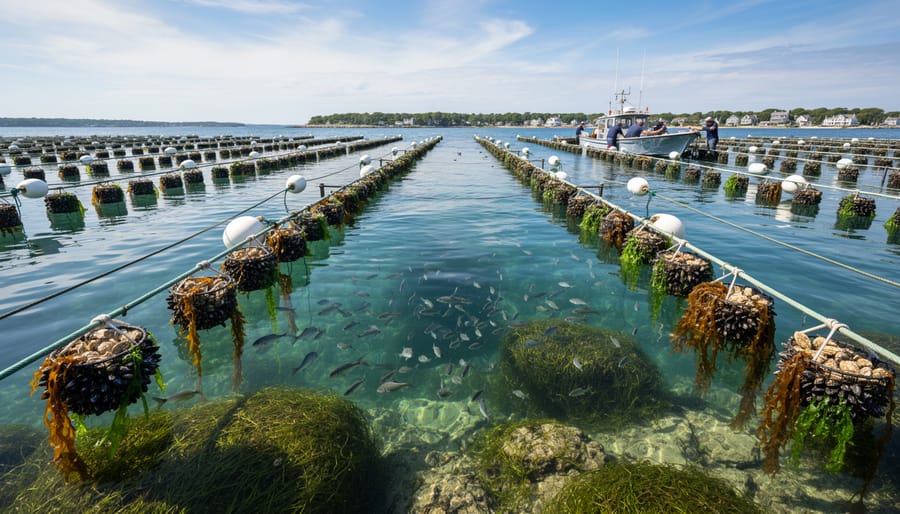
Aquaculture innovation represents another cornerstone of Rhode Island’s sustainable approach. The state has become a leader in oyster farming, with operations in Narragansett Bay that not only provide economic opportunities but also deliver significant environmental benefits. Oysters are natural water filters, with a single adult capable of filtering up to 50 gallons of water daily. This filtering action removes excess nitrogen and improves water clarity, creating healthier habitats for eelgrass beds and marine life.
The state’s Aquaculture Initiative supports new farmers through technical assistance and streamlined permitting processes, making it easier for young entrepreneurs to enter the industry sustainably. These farms operate with minimal environmental impact, avoiding antibiotics and relying on natural tidal flows.
Community support programs ensure that traditional fishing families can adapt to changing conditions. Training workshops cover sustainable practices, climate resilience, and diversification strategies. For those interested in supporting these efforts, volunteer opportunities exist through organizations like Save The Bay, where community members can participate in oyster reef restoration projects and learn firsthand about the connection between sustainable fisheries and thriving marine ecosystems. These hands-on experiences demonstrate how economic activity and conservation can work together harmoniously.
Marine Renewable Energy Development
Rhode Island is emerging as a national leader in offshore wind energy development, with projects that promise not only clean electricity but also unexpected benefits for marine life. The state’s waters now host the nation’s first offshore wind farm, Block Island Wind Farm, and are positioned to accommodate several large-scale projects that will significantly contribute to renewable energy goals while creating unique marine habitats.
When offshore wind turbines are installed, their foundations and supporting structures function as artificial reefs. These hard surfaces attract marine organisms that need substrate for attachment, including mussels, barnacles, and algae. These foundational species then draw fish, crabs, and other mobile creatures, effectively establishing new feeding grounds and nursery habitats. Dr. Sarah Chen, a marine biologist monitoring Block Island Wind Farm since its 2016 installation, shares an encouraging observation: “We’ve documented increased biodiversity around the turbine foundations, with species composition resembling natural rocky reef communities. It’s fascinating to watch these structures become thriving underwater ecosystems.”
However, responsible development requires rigorous oversight. Rhode Island mandates comprehensive environmental monitoring requirements for all offshore wind projects, including baseline surveys before construction, impact assessments during installation, and long-term ecological monitoring. These protocols track effects on marine mammals, sea turtles, birds, fish populations, and benthic communities.
For those interested in participating, volunteer opportunities exist through organizations like Save The Bay and the Rhode Island Natural History Survey, which collect data supporting these monitoring efforts. Citizen scientists can contribute to bird surveys, marine debris documentation, and coastal observation programs that inform sustainable energy development practices while protecting Rhode Island’s invaluable marine biodiversity.
Marine Biodiversity Wins: Species and Ecosystems Thriving Under Blue Economy Policies

Personal Story: A Marine Biologist’s View from Narragansett Bay
I’ve spent fifteen years studying these waters, but the past five have been different. My name is Dr. Sarah Chen, and as a marine biologist with the University of Rhode Island’s Coastal Resources Center, I’ve witnessed firsthand how Rhode Island’s blue economy initiatives are reshaping both our marine ecosystems and our coastal communities.
When I first started monitoring Narragansett Bay in 2010, we were documenting declining fish populations and struggling eelgrass beds. The bay was under pressure from decades of industrial use and nutrient pollution. Today, thanks to coordinated blue economy efforts—sustainable aquaculture, habitat restoration, and marine conservation technology—I’m recording species I hadn’t seen in years.
Last summer, while conducting our annual biodiversity survey near Prudence Island, we documented winter flounder juveniles thriving near restored oyster reefs. These reefs, part of the Save The Bay restoration program, aren’t just supporting shellfish aquaculture. They’re creating complex habitat structures that benefit dozens of species. The oysters themselves filter millions of gallons of water daily, improving water clarity and allowing eelgrass to recover.
What excites me most is the community engagement I’ve witnessed. When we began partnering with local aquaculture operations, fishermen became citizen scientists, reporting species sightings and water quality observations. High school students from coastal communities now join our research cruises, many expressing interest in marine science careers. This represents economic opportunity meeting environmental stewardship.
I remember a conversation with a third-generation fisherman who initially viewed aquaculture skeptically. After participating in our monitoring program and seeing the biodiversity benefits, he now manages his own oyster farm while maintaining traditional fishing. His children help with data collection during summer breaks.
Rhode Island’s approach proves that economic growth and environmental health aren’t opposing forces. We’re building something sustainable here—a model where ocean-based industries support, rather than deplete, the marine ecosystems they depend upon. The data confirms what I see daily: when communities invest in healthy oceans, everyone benefits.
Challenges and Ongoing Concerns
While Rhode Island has made impressive strides in building its blue economy, significant challenges remain that require honest acknowledgment and collaborative problem-solving. Understanding these obstacles is essential for anyone looking to engage with the state’s marine conservation efforts.
Climate change presents the most pressing threat to Rhode Island’s coastal future. Rising sea levels and increasing storm intensity endanger both marine ecosystems and the infrastructure supporting blue economy initiatives. Warmer ocean temperatures are already shifting fish populations northward, disrupting traditional fishing grounds and the livelihoods dependent on them. Ocean acidification threatens shellfish aquaculture, a cornerstone of the state’s sustainable seafood industry. Yet these challenges also create urgency for innovation, pushing researchers and businesses to develop climate-resilient practices.
Funding limitations constrain the scale and pace of blue economy development. While Rhode Island has secured federal grants and private investments, competition for resources remains fierce. Smaller organizations working on grassroots marine conservation often struggle to access capital, even as their community-based approaches prove effective. This funding gap particularly affects long-term monitoring programs essential for understanding ecosystem health and measuring the success of conservation initiatives.
Stakeholder conflicts occasionally arise between different blue economy sectors. Commercial fishermen may view marine protected areas as threats to their access, while renewable energy developers sometimes face opposition from coastal communities concerned about visual impacts and fishing displacement. These tensions aren’t insurmountable, but they require sustained dialogue and compromise. Dr. Maria Santos, a marine biologist working with fishing communities, notes that “the most successful projects happen when everyone sits at the table early, before decisions are made.”
Gaps in marine protection also persist despite progress. Only a fraction of Rhode Island’s coastal waters receive comprehensive protection, leaving vulnerable habitats exposed to degradation. Enforcement of existing regulations can be inconsistent due to resource constraints, and regulatory frameworks sometimes lag behind emerging threats like microplastic pollution.
These challenges demand neither despair nor complacency. Instead, they represent opportunities for citizens, scientists, and policymakers to work together, refining approaches and building the resilient, equitable blue economy Rhode Island envisions. Every volunteer hour, research project, and community conversation moves the state closer to that goal.
How You Can Support Rhode Island’s Blue Economy and Marine Conservation
Rhode Island’s blue economy thrives when community members actively participate in marine conservation efforts. Whether you’re a seasoned scientist or simply passionate about the ocean, numerous opportunities exist to make a tangible difference.
Start by engaging with citizen science programs that directly contribute to marine research. Organizations like Save The Bay regularly recruit volunteers for water quality monitoring, coastal cleanups, and eelgrass restoration projects. These hands-on experiences not only support critical data collection but also deepen your understanding of local marine ecosystems. The Rhode Island Natural History Survey offers seasonal opportunities to participate in biodiversity assessments, where volunteers help document marine species along the coastline.
Making sustainable seafood choices represents another powerful way to support the blue economy. Download the Seafood Watch app or consult local guides to identify responsibly sourced options. Rhode Island fishermen practice sustainable harvesting of species like squid, lobster, and striped bass. By purchasing directly from local fish markets or participating in community-supported fishery programs, you support traditional fishing families while ensuring healthy fish populations for future generations.
Educational engagement strengthens Rhode Island’s marine conservation community. The University of Rhode Island’s Graduate School of Oceanography hosts public lectures and open houses where researchers share their latest discoveries. Many marine biologists in Rhode Island started their journeys through similar programs, inspired by direct connections with ocean scientists.
Consider volunteering with beach monitoring programs that track nesting shorebirds or marine debris. These efforts provide essential data that shapes conservation policies and restoration priorities. Even small actions like properly disposing of fishing line or reducing single-use plastics contribute to healthier marine environments.
For educators and students, numerous marine science curriculum resources exist through the Rhode Island Sea Grant program, offering classroom materials that connect students with local ocean issues. These educational tools cultivate the next generation of marine stewards who will continue advancing Rhode Island’s blue economy.
Your participation, regardless of scale, strengthens the collective effort to protect and sustainably manage Rhode Island’s extraordinary marine resources.
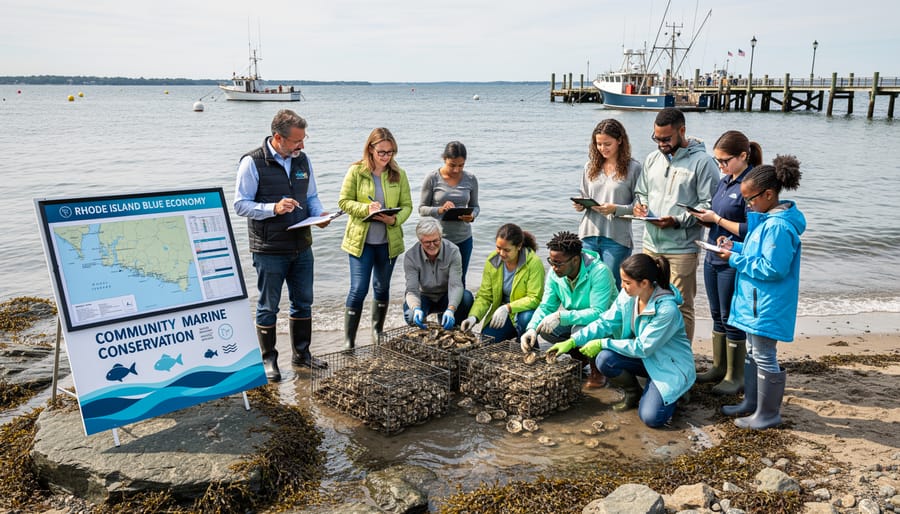
Rhode Island’s blue economy journey offers a powerful blueprint for coastal regions worldwide seeking to harmonize economic growth with marine conservation. The state’s success demonstrates that protecting marine biodiversity isn’t just an environmental imperative—it’s an economic opportunity that creates jobs, strengthens communities, and safeguards ocean resources for future generations.
What makes Rhode Island’s model particularly replicable is its foundation in collaboration. By bringing together fisheries managers, offshore wind developers, research institutions, and local communities, the state has shown that diverse stakeholders can align around shared ocean health goals. The measurable improvements in fish populations, the expansion of protected habitats, and the growth of sustainable maritime industries prove that careful planning and inclusive governance yield tangible results.
For other coastal regions, the lesson is clear: investing in marine biodiversity protection fuels long-term economic resilience. Whether through developing renewable ocean energy, supporting sustainable aquaculture, or creating marine research hubs, the opportunities are vast and varied.
The future of our oceans depends on collective action. Marine biologist Dr. Sarah Chen, who has worked with community volunteers restoring eelgrass beds in Narragansett Bay, reminds us that “every person who participates in ocean conservation—whether through citizen science, beach cleanups, or advocating for protective policies—contributes to lasting change.”
Now is the time to engage. Support local marine conservation organizations, participate in volunteer restoration projects, and champion policies that prioritize ocean health. Together, we can replicate Rhode Island’s success and create thriving blue economies that honor and protect the incredible biodiversity beneath our waves.

jessica
Ava Singh is an environmental writer and marine sustainability advocate with a deep commitment to protecting the world's oceans and coastal communities. With a background in environmental policy and a passion for storytelling, Ava brings complex topics to life through clear, engaging content that educates and empowers readers. At the Marine Biodiversity & Sustainability Learning Center, Ava focuses on sharing impactful stories about community engagement, policy innovations, and conservation strategies. Her writing bridges the gap between science and the public, encouraging people to take part in preserving marine biodiversity. When she’s not writing, Ava collaborates with local initiatives to promote eco-conscious living and sustainable development, ensuring her work makes a difference both on the page and in the real world.