Marine Biodiversity Science Center

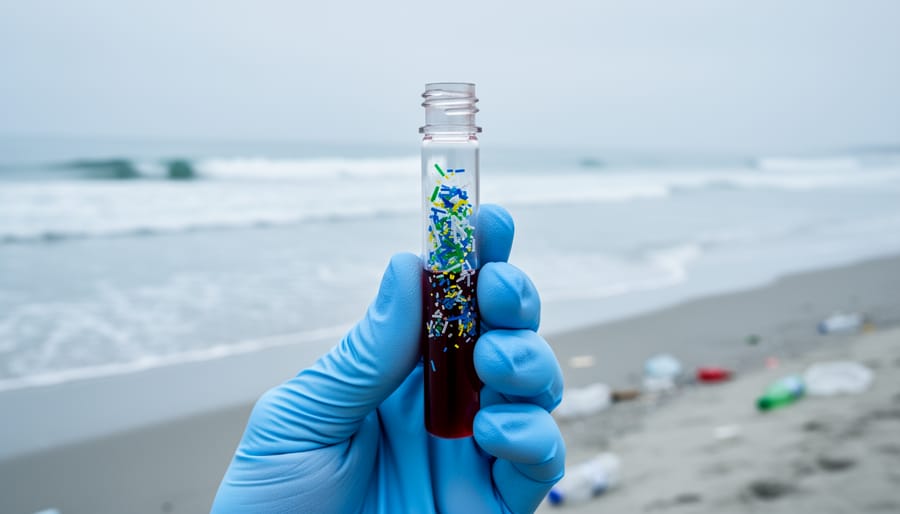
In 2022, scientists made a discovery that transformed our understanding of plastic pollution’s reach: microplastics were detected in human blood for the first time. This groundbreaking research, which found plastic particles in nearly 80% of blood samples tested, revealed that these tiny pollutants—measuring less than 5 millimeters—have breached one of our body’s most protected systems. The implications extend far beyond personal health; they underscore an urgent environmental crisis that connects every discarded plastic bottle to the microscopic fragments now circulating through our veins.
This discovery didn’t emerge in isolation. For years, citizen scientists are tracking microplastics in oceans, rivers, and coastal ecosystems, documenting how these persistent pollutants move through marine food webs. What begins as waste in our waterways eventually returns to us through the seafood we consume, the water we drink, and even the air we breathe. The presence of plastics in human blood represents a critical intersection between marine conservation and human health—a stark reminder that the health of our oceans directly determines our own wellbeing. Understanding how these particles enter our bloodstream, what risks they pose, and how we can collectively address this challenge has never been more essential. This is not just a scientific concern but a call to action for everyone who values both ocean health and human vitality.
The Breakthrough Discovery: Microplastics in Human Blood
What Scientists Found
In this groundbreaking 2022 study, researchers analyzed blood samples from 22 healthy adult volunteers and made a stunning discovery: 77% contained measurable quantities of plastic particles. The team identified several common polymer types circulating in human bloodstreams, with polyethylene terephthalate (PET), used in beverage bottles and food packaging, appearing most frequently. Polyethylene, found in plastic bags and containers, and polystyrene, used in food packaging and disposable cups, were also detected in multiple samples.
The concentrations varied considerably among participants, ranging from zero to 2.4 micrograms per milliliter of blood. While these numbers might seem small, consider that the average adult has approximately five liters of blood continuously circulating through their body. The particles detected were microscopic, measuring smaller than what the naked eye can see, yet large enough to potentially travel through our bloodstream and accumulate in organs.
What makes this discovery particularly concerning for marine conservationists is the connection between ocean plastic pollution and human health. These same polymers accumulate in marine ecosystems, entering food chains and ultimately reaching our plates and bloodstreams, creating an urgent need for comprehensive monitoring and action.
From Ocean to Bloodstream: The Journey of Microplastics
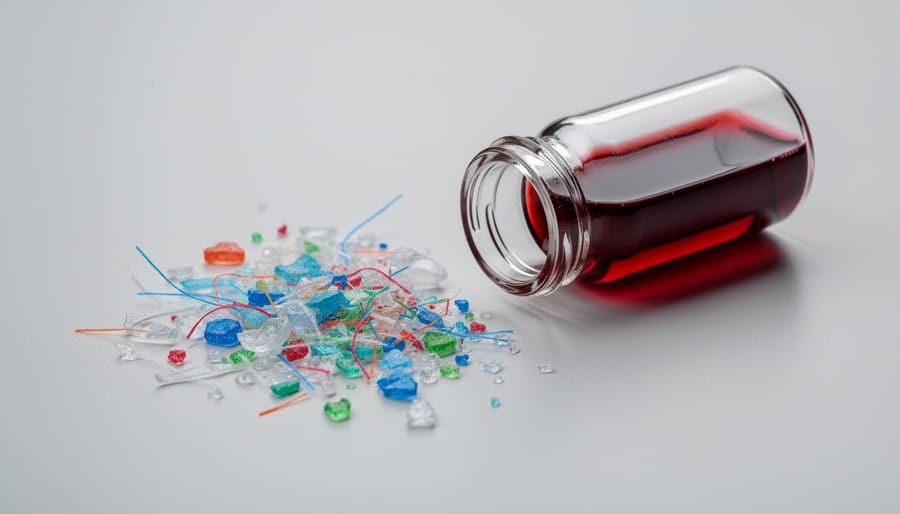
The journey of microplastics from ocean to human bloodstream follows a troubling pathway that connects marine pollution directly to human health. When larger plastic items break down in marine environments through wave action, sunlight, and time, they fragment into particles smaller than 5 millimeters. These tiny pieces become virtually impossible to remove from our oceans.
Marine life, from microscopic plankton to fish we consume, inadvertently ingest these particles. When we eat seafood, those microplastics transfer to us. Studies show that a single serving of mussels can contain up to 90 microplastic particles. But seafood isn’t the only culprit. Microplastics have infiltrated our drinking water systems, with bottled water containing nearly twice the concentration found in tap water. Even the air we breathe carries airborne plastic fibers, particularly indoors where synthetic textiles shed particles.
Marine biologist Dr. Sarah Chen shares her perspective: “Every time I collect water samples, I’m reminded that ocean health and human health are inseparable. The plastics we’re finding in fish today are the same ones entering our bodies tomorrow.” This connection underscores why reducing plastic pollution benefits both marine ecosystems and human wellbeing simultaneously.
Why Marine Ecosystems Are Ground Zero
The Scale of Ocean Plastic Pollution
Our oceans contain an estimated 50 to 75 trillion plastic pieces, weighing approximately 269,000 tons. These fragments don’t simply disperse—they accumulate in massive ocean gyres, where currents concentrate debris into floating patches larger than entire countries. Marine biologist Dr. Sarah Chen describes witnessing “plastic soup” firsthand: “You can’t see individual pieces from a distance, but drag a net through the water and it comes up filled with tiny fragments.”
Microplastics—particles smaller than 5 millimeters—pose particular dangers because marine organisms from plankton to whales mistake them for food. Research shows that 90% of seabirds and more than half of sea turtle species have ingested plastic. These particles bioaccumulate up the food chain, concentrating in fish tissues that eventually reach human plates. While ocean cleanup efforts continue expanding, preventing new pollution remains crucial as plastic production continues rising globally.
Marine Species as Early Warning Systems
Years before scientists detected microplastics in human blood, marine animals were serving as early warning systems. Researchers studying fish, shellfish, and sea turtles consistently found plastic particles in their tissues throughout the 2000s and early 2010s. Dr. Chelsea Rochman, a marine biologist studying plastic ingestion in fish populations, notes that these findings “were a clear signal that plastics weren’t just floating on the surface—they were entering food webs and accumulating in organisms.” Sea turtles, often mistaking plastic bags for jellyfish, showed particularly high contamination levels. When scientists began examining commercially harvested seafood, the connection became undeniable: the plastics accumulating in marine species were making their way onto our plates and into our bodies. These marine organisms essentially functioned as biological monitors, demonstrating that microplastic pollution had become systemic. Understanding their exposure patterns helped researchers predict and eventually confirm human contamination, making marine conservation efforts directly relevant to human health protection.

The Power of Citizen Science in Microplastic Monitoring
What Is Citizen Science Microplastic Monitoring?
Citizen science microplastic monitoring transforms everyday people into environmental researchers, creating a powerful network of observers tracking plastic pollution from our oceans to our bloodstreams. This approach, similar to marine community science initiatives, empowers volunteers without formal scientific training to collect meaningful data using standardized protocols.
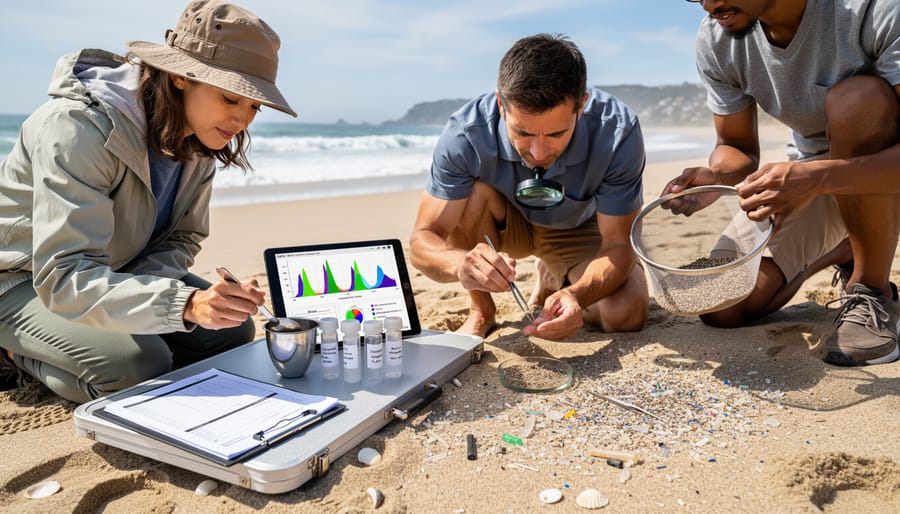
The process is surprisingly straightforward. Participants receive clear instructions and simple collection kits designed by research institutions. These might include fine-mesh nets for water sampling, magnifying tools for identification, or smartphone apps that guide proper documentation. Volunteers collect samples from beaches, rivers, or local waterways, photograph their findings, and record specific location and environmental data.
What makes this approach revolutionary is scale. While professional scientists face limitations in time, funding, and geographic reach, thousands of citizen scientists can simultaneously monitor countless locations worldwide. Their collective data feeds into centralized databases, revealing pollution patterns that would otherwise remain invisible. This democratization of science not only advances research but also builds personal connections to the crisis, transforming participants from passive observers into informed advocates for change.
Current Citizen Science Programs Making an Impact
Around the world, dedicated volunteers are making remarkable contributions through citizen science programs that track microplastic pollution. The Marine Debris Tracker, active in over 100 countries, empowers volunteers to document plastic waste along coastlines using a mobile app. This program has cataloged millions of debris items, revealing hotspots where microplastics concentrate and helping scientists understand pollution pathways into our oceans and ultimately, our bloodstreams.
In Europe, the Plastic Pirates initiative engages students in collecting water and sediment samples from rivers. Young scientists have discovered alarming microplastic concentrations in seemingly pristine waterways, with one German team identifying over 500 particles per liter in a local stream. Their findings directly informed regional water management policies.
The Australian Marine Debris Initiative has trained thousands of volunteers to conduct standardized beach surveys. Citizen scientists there documented microplastic ingestion in seabirds, with volunteer Sarah Chen discovering fragments in 90 percent of examined specimens, data that strengthened Australia’s single-use plastics ban. These programs demonstrate how everyday people generate crucial data connecting environmental pollution to human health impacts.
Real Stories from the Field
Maria Chen, a biology teacher from California, describes her first beach microplastic sampling session as “eye-opening and strangely hopeful.” She explains, “Collecting samples alongside marine scientists made me realize that ordinary people can contribute meaningful data to combat this crisis. Every vial I fill feels like a small victory against pollution.”
Dr. James Okafor, a marine biologist studying blood contamination pathways, shares how citizen science partnerships have accelerated research. “Volunteers help us monitor seasonal variations in microplastic concentrations at dozens of coastal sites simultaneously—something our small lab team could never accomplish alone. Their dedication reminds me why this work matters.”
These experiences highlight how participation in monitoring programs creates personal connections to ocean health while generating critical data that helps researchers understand how plastics move from marine environments into human bodies.
How Citizen Scientists Quantify Microplastics
Simple Collection Methods Anyone Can Learn
You don’t need expensive laboratory equipment to begin collecting environmental samples for microplastic analysis. Start with water sampling using clean glass jars or metal containers, avoiding plastic whenever possible. For shoreline sand collection, simple stainless steel spoons or scoops work perfectly. Take samples from the top few centimeters where plastics accumulate most heavily.
Marine biologist Dr. Sarah Chen shares her experience: “I teach students to use homemade plankton nets crafted from fine mesh fabric attached to embroidery hoops. These simple tools effectively capture floating microplastics during surface water sweeps.”
Document each sample with photographs, GPS coordinates, and notes about weather conditions. Store samples in glass containers labeled with collection date, location, and depth. Many community programs provide free sample kits and detailed instructions. Local universities often accept citizen science samples, turning your beach walks into valuable research contributions. Remember, consistency matters more than sophisticated equipment. Regular sampling from the same location builds datasets that reveal pollution trends over time, empowering communities to advocate for meaningful change.
Identifying and Counting Plastic Particles
Once samples are collected, citizen scientists use straightforward visual methods to identify and count plastic particles. Begin by examining your filter paper under bright natural light, using a magnifying glass or basic microscope if available. Look for particles that appear synthetic—they often have unnaturally vibrant colors, smooth or fibrous textures, and uniform shapes distinct from organic matter like pollen or plant fragments.
Photography plays a vital role in documentation. Use your smartphone camera with macro mode enabled, placing a ruler beside particles for scale reference. Take multiple angles and lighting conditions to capture texture details. Many projects provide comparison guides showing common plastic types versus natural materials.
Create a simple counting grid by dividing your filter into quadrants, systematically scanning each section to avoid double-counting. Record particle colors, estimated sizes, and shapes in a standardized data sheet provided by your chosen project. Marine biologist Dr. Sarah Chen shares, “We’ve seen incredible accuracy from trained volunteers using nothing more than a hand lens and patience—their contributions have expanded our monitoring capacity tenfold.”
Remember, even uncertain identifications are valuable when noted as such. Your observations contribute to larger pattern recognition, helping scientists understand the scope of plastic pollution flowing from terrestrial sources into our oceans.
Ensuring Data Quality and Scientific Validity
Maintaining scientific rigor in citizen science programs requires careful attention to quality control. Research teams establish standardized protocols that volunteers follow consistently, ensuring data comparability across different locations and time periods. Training sessions, often conducted through online webinars or in-person workshops, equip participants with proper sampling techniques and identification skills. These programs typically include verification steps where experts review submitted samples or photographs before incorporating data into research databases.
Quality assurance extends beyond initial training. Many initiatives implement blind duplicate sampling, where multiple volunteers analyze the same samples independently to assess consistency. Regular calibration exercises help participants maintain accuracy over time. Marine biologist Dr. Sarah Chen shares, “We’ve seen remarkable dedication from our volunteers who complete monthly proficiency tests to ensure their observations remain scientifically sound.” This commitment to accuracy transforms everyday citizens into valuable contributors to understanding microplastic pollution, creating reliable datasets that inform both health research and conservation strategies while maintaining the credibility essential for peer-reviewed scientific publications.
The Link Between Monitoring and Solutions
How Your Data Drives Conservation Action
Your contributions to microplastic monitoring create real-world conservation outcomes. In California’s Channel Islands, citizen-collected data on microplastic concentrations helped establish stricter waste management protocols within the marine protected area boundaries. Volunteers documented hotspots where microplastic levels exceeded baseline measurements by 300%, prompting targeted cleanup operations that removed over 2,000 pounds of plastic debris from coastal zones.
In the Mediterranean, community scientists tracking microplastic ingestion in seabirds provided crucial evidence that influenced the European Union’s single-use plastics directive. Their findings showed that 87% of sampled seabirds contained microplastics, with concentrations linked to specific coastal pollution sources.
Marine biologist Dr. Elena Rodriguez shares, “Citizen science data transformed our understanding of microplastic pathways. One volunteer’s persistent sampling near a storm drain revealed microfiber concentrations ten times higher than surrounding areas, leading to the installation of filtration systems that now prevent millions of particles from entering the ocean annually.”
These examples demonstrate how your monitoring efforts translate into policy changes, habitat protection, and species conservation measures. Each data point you collect strengthens the scientific foundation for environmental action, proving that collective participation drives meaningful change in protecting marine ecosystems and human health alike.
Building the Evidence Base for Systemic Change
Every water sample collected, every microplastic particle documented, and every data point submitted by citizen scientists contributes to a growing body of evidence that researchers and policymakers desperately need. This accumulated information isn’t just sitting in databases—it’s actively shaping our understanding of how plastic pollution moves through marine ecosystems and ultimately into our bodies. When thousands of volunteers consistently monitor coastal waters, rivers, and beaches, they create geographic and temporal datasets that no single research institution could achieve alone.
These collective efforts have already influenced regulatory discussions in several countries, providing the hard numbers needed to justify stricter controls on single-use plastics and improved waste management systems. Marine biologist Dr. Chen Rodriguez shares that “citizen science data has been instrumental in our blood contamination studies, helping us trace pollution pathways from ocean to human.” Your participation in monitoring programs directly feeds into research that connects marine plastic pollution to human health outcomes, making the case for systemic change undeniable. This evidence-based approach transforms individual observations into powerful tools for environmental protection and policy reform.
How You Can Get Involved
Finding Programs Near You
Discovering opportunities to contribute to microplastic research begins with exploring local environmental organizations and regional water monitoring networks. Many communities host citizen science initiatives through universities, environmental nonprofits, and marine conservation groups. Start by checking websites like SciStarter.org and Zooniverse, which maintain searchable databases of active projects requiring volunteers for sample collection and data analysis. The Ocean Conservancy and Surfrider Foundation chapters frequently organize beach cleanups and water sampling events where participants help document plastic pollution.
Marine laboratories and aquariums near coastal areas often welcome participants for volunteer conservation work that includes microplastic monitoring. Contact your local watershed council or state environmental agency to learn about ongoing sampling programs. Social media groups focused on environmental action can connect you with grassroots initiatives in your area. Educational institutions regularly seek community members to assist with fieldwork, offering training in proper collection techniques. By joining these efforts, you become part of a global network tracking pollution from source to sea, generating critical data that informs both marine conservation and human health research.
Getting Started: Training and Resources
Getting involved in microplastic monitoring requires minimal prior experience, making it accessible to nearly everyone. Most citizen science programs offer free online training modules lasting 1-3 hours, covering sample collection techniques, safety protocols, and data recording methods. Organizations like the Marine Biological Association and local environmental groups provide downloadable guides and video tutorials to prepare volunteers.
Basic equipment needs are surprisingly simple: collection containers, gloves, and smartphone apps for data submission. Many programs supply specialized kits or loan equipment at no cost. Time commitments vary widely, from single beach cleanup events requiring just 2-3 hours to ongoing monthly monitoring sessions. Students can integrate participation into coursework, while educators find these programs valuable for hands-on environmental education.
The learning curve is gentle, with experienced volunteers often mentoring newcomers during group activities. This collaborative approach not only builds skills but creates meaningful connections among people passionate about protecting our waters and health from plastic pollution.
Can’t Get to the Coast? Other Ways to Contribute
You don’t need ocean access to make a meaningful difference in understanding and combating microplastic pollution. Remote volunteers can assist researchers by analyzing digital microscopy images of water samples, helping identify and categorize plastic particles from the comfort of home. Many citizen science platforms now offer virtual training sessions where you can learn to recognize different plastic types in environmental samples.
Inland waterways desperately need monitoring too. Rivers and streams serve as highways carrying plastic pollution to our oceans, making upstream data collection crucial. You can establish monitoring sites at local lakes, ponds, or rivers using simple collection methods. Educational outreach offers another powerful avenue for contribution. Share what you’ve learned about the blood-plastic connection with schools, community groups, or through social media platforms. Dr. Maria Santos, a marine toxicologist, notes that “every conversation about microplastics plants seeds for systemic change.” Consider organizing plastic-free challenges in your community or workplace, document your local waterway’s health, or mentor students interested in environmental science. These inland efforts create ripples that ultimately protect our oceans and human health alike.
The discovery of plastic particles in human blood represents more than a scientific finding—it’s a wake-up call that connects the health of our oceans directly to our own well-being. What begins as marine pollution doesn’t stay in the sea; it enters our food chains, our water sources, and ultimately, our bodies. But here’s the encouraging truth: understanding this connection empowers us to create meaningful change.
You don’t need to be a marine biologist or environmental scientist to make a difference. Citizen science transforms concerned individuals into vital contributors to research and conservation efforts. Every water sample collected, every microplastic documented, and every data point submitted adds to our collective understanding of this challenge. Marine biologists working on the frontlines of this research consistently share how volunteer contributions have expanded their capacity to monitor plastic pollution far beyond what traditional research funding could achieve.
The path forward isn’t about perfection—it’s about participation. Whether you have an hour each month or just a few minutes to log observations, your involvement matters. Communities around the world are already demonstrating that collective action creates measurable impact, reducing plastic pollution in waterways and raising awareness that shifts behaviors.
Your first step starts today. Choose one citizen science project that resonates with you, register as a volunteer, and join thousands of others who are actively protecting our oceans and, by extension, our health. Together, we’re not just documenting the problem—we’re building the solution.

jessica
Ava Singh is an environmental writer and marine sustainability advocate with a deep commitment to protecting the world's oceans and coastal communities. With a background in environmental policy and a passion for storytelling, Ava brings complex topics to life through clear, engaging content that educates and empowers readers. At the Marine Biodiversity & Sustainability Learning Center, Ava focuses on sharing impactful stories about community engagement, policy innovations, and conservation strategies. Her writing bridges the gap between science and the public, encouraging people to take part in preserving marine biodiversity. When she’s not writing, Ava collaborates with local initiatives to promote eco-conscious living and sustainable development, ensuring her work makes a difference both on the page and in the real world.