Marine Biodiversity Science Center

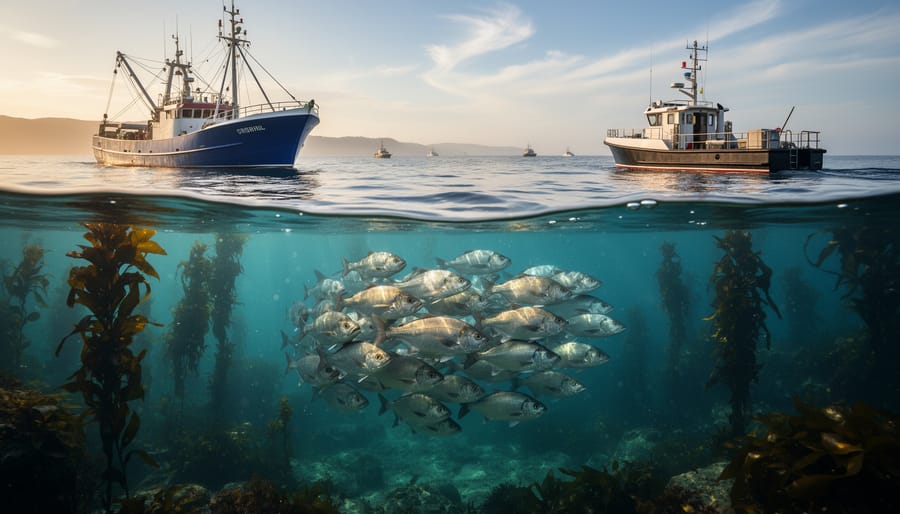
The Magnuson-Stevens Fishery Conservation and Management Act stands as America’s primary law governing marine fisheries in federal waters, protecting the ocean ecosystems that provide food, livelihoods, and ecological stability for millions. Since its enactment in 1976 and subsequent reauthorizations, this landmark legislation has transformed how the United States manages its vast marine resources, establishing a framework that balances commercial fishing interests with the urgent need to prevent overfishing and rebuild depleted fish populations.
Understanding MSFCMA matters because healthy oceans depend on effective management. The act created eight regional fishery management councils that develop fishing regulations based on scientific data, ensuring decisions reflect both ecological realities and community needs. These councils work with marine biologists, fisheries scientists, and stakeholders to set catch limits, designate essential fish habitat, and monitor population health. When populations decline, the law mandates rebuilding plans with strict timelines, a provision that has successfully restored dozens of once-collapsed fisheries.
The real-world impact is measurable. Since 2000, 47 fish stocks have been rebuilt to healthy levels, representing billions of dollars in economic value and countless ecosystem benefits. Stricter science-based catch limits have allowed species like Atlantic sea scallops and Pacific hake to rebound dramatically, proving that strategic management works when properly implemented and enforced.
Yet challenges remain. Climate change alters migration patterns and habitat availability, requiring adaptive management strategies. Illegal fishing, habitat destruction, and data gaps continue threatening marine biodiversity. The act’s success ultimately depends on continued scientific research, robust enforcement, and public engagement in the conservation process. Whether you’re a scientist, educator, or concerned citizen, understanding MSFCMA empowers you to participate in protecting the ocean resources we all share.
What Is the Magnuson-Stevens Fishery Conservation and Management Act?
From Overfishing Crisis to Legislative Action
By the early 1970s, America’s coastal waters faced an unprecedented crisis. Foreign fishing fleets, equipped with sophisticated technology and factory ships, were harvesting fish at alarming rates just beyond U.S. territorial limits. These industrial operations depleted once-abundant stocks of cod, haddock, and flounder along the Atlantic coast, while Pacific fisheries suffered similar devastation. Local fishing communities watched helplessly as their livelihoods disappeared, and marine ecosystems struggled under the pressure of intensive harvesting.
The situation grew increasingly dire. Scientists documented dramatic population declines across multiple species, with some stocks plummeting to historic lows. Entire fishing grounds that had sustained American coastal communities for generations were being stripped bare. The existing three-mile territorial limit proved woefully inadequate to protect these vital resources from foreign vessels that could simply move just beyond this narrow boundary and continue their operations.
Marine biologist Dr. Sarah Chen recalls stories from her mentor about this era: “Fishermen would return to port with nearly empty nets, watching massive foreign trawlers on the horizon. It was heartbreaking and economically devastating for these communities.”
The mounting evidence of ecological collapse and economic hardship created undeniable pressure for federal action. Conservation advocates, fishing industry representatives, and coastal state governments united in demanding comprehensive protection. This coalition’s persistent advocacy ultimately led to the passage of the Fishery Conservation Act in 1976, marking a turning point in American marine resource management and establishing the foundation for modern fishery conservation.
The Act’s Core Provisions
The Magnuson-Stevens Fishery Conservation and Management Act fundamentally transformed how the United States manages its marine resources through three groundbreaking provisions that continue to shape ocean stewardship today.
First, the Act established a 200-nautical-mile Exclusive Economic Zone extending from the U.S. coastline. This bold move effectively placed approximately 3.4 million square miles of ocean under federal jurisdiction, ending the era of unrestricted foreign fishing that had severely depleted fish populations. Think of it as drawing a protective boundary around America’s marine resources, giving the nation authority to decide who fishes, when they fish, and how much they can take.
Second, the Act created eight Regional Fishery Management Councils, bringing decision-making closer to the communities that depend on these resources. Each council represents specific geographic areas, from the North Pacific to the Caribbean, and includes commercial and recreational fishermen, state officials, and conservation representatives. This innovative approach recognizes that fishing communities in Alaska face different challenges than those in the Gulf of Mexico. Marine biologist Dr. Sarah Chen, who served on the Pacific Council, shares that “having diverse voices at the table means we craft solutions that actually work in the real world, not just on paper.”
Third, and perhaps most crucially, the Act mandates that all fishery management decisions must be grounded in the best available science. This means setting catch limits based on stock assessments, population surveys, and ecosystem research rather than political pressure or short-term economic interests. Councils work with teams of scientists who continuously monitor fish populations, ensuring that harvesting today doesn’t compromise abundance tomorrow. This science-based framework has become the gold standard for sustainable fisheries management worldwide.
How MSFCMA Protects Marine Ecosystems Today
Science-Based Catch Limits
At the heart of the Magnuson-Stevens Act lies a powerful tool for preventing overfishing: science-based catch limits. Every year, federal fisheries managers establish maximum amounts of fish that can be harvested from each stock, grounded firmly in the best available scientific data. This approach transforms fisheries management from guesswork into a data-driven conservation strategy.
The process begins with comprehensive stock assessments conducted by teams of scientists who analyze everything from fish population sizes and age structures to reproductive rates and natural mortality. These assessments paint a detailed picture of each fish population’s health. Marine biologist Dr. Sarah Chen, who has participated in Pacific groundfish assessments for over a decade, describes the work as “detective work at sea—we’re piecing together the story of entire populations using multiple sources of evidence, from trawl surveys to fishermen’s logbooks.”
Using this scientific foundation, regional fishery management councils set Annual Catch Limits (ACLs) that ensure harvests remain sustainable. The law requires these limits to prevent overfishing while accounting for scientific uncertainty. When scientists aren’t completely certain about population sizes, managers must err on the side of caution, building in buffers that protect fish stocks.
This precautionary approach has yielded remarkable results. Since mandatory catch limits took effect in 2011, the number of overfished stocks has decreased significantly. The system demonstrates how rigorous science, when properly applied through legal requirements, can reverse declining trends and rebuild ocean abundance for future generations.
Rebuilding Overfished Populations
When the Magnuson-Stevens Act identifies a fish population as overfished, it triggers a mandatory rebuilding process designed to restore the stock to healthy levels. The law requires fishery managers to develop and implement rebuilding plans within two years of declaring a stock overfished, with timelines set to achieve recovery as quickly as possible, typically within ten years. These plans must establish annual catch limits and accountability measures, ensuring fishing pressure stays below levels that would prevent recovery.
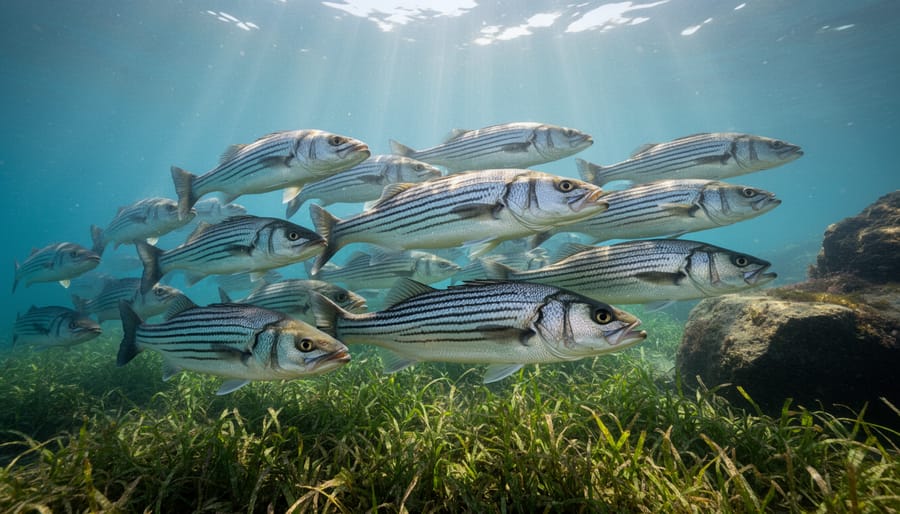
The success of these rebuilding provisions is remarkable. Since 2000, federal managers have successfully rebuilt 47 fish stocks, demonstrating that science-based management works. Atlantic striped bass, once severely depleted in the 1980s, rebounded dramatically after managers implemented strict catch limits and seasonal closures. Similarly, Pacific lingcod populations recovered from overfished status in just seven years through collaborative efforts between scientists, fishermen, and managers. More recently, Gulf of Mexico red grouper achieved rebuilt status, supporting both thriving ecosystems and profitable fisheries along the coast.
Dr. Maria Santos, a fisheries biologist who has tracked stock recovery for fifteen years, shares this perspective: “Watching these populations rebound gives me incredible hope. When we follow the science and give fish time to reproduce, nature responds. Every rebuilt stock represents countless hours of data collection, community input, and difficult decisions that ultimately pay off.”
Challenges remain, however. Climate change complicates rebuilding efforts as warming waters shift species distributions and alter reproduction patterns. Some long-lived species like Atlantic halibut require decades to rebuild, testing managers’ patience and fishermen’s livelihoods. Additionally, determining accurate population baselines proves difficult when historical data is incomplete. Despite these obstacles, the act’s framework continues guiding successful recoveries, proving that commitment to science-based management yields measurable results.
Essential Fish Habitat Protection
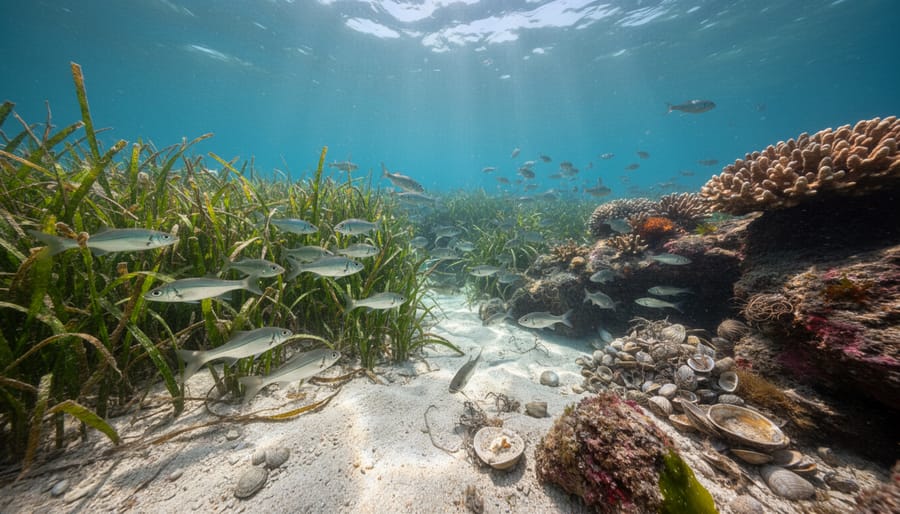
Essential Fish Habitat (EFH) represents the waters and substrate necessary for fish to spawn, breed, feed, or grow to maturity. Under the Magnuson-Stevens Act, these critical marine habitats receive special protection to ensure sustainable fisheries for future generations.
Regional Fishery Management Councils identify EFH through extensive scientific research, analyzing where fish species complete their life cycles. This includes coral reefs where juvenile snapper find shelter, seagrass beds where shrimp mature, and deep-ocean canyons where grouper spawn. Each habitat assessment considers water quality, bottom composition, and the presence of prey species.
Once designated, federal agencies must consult with the National Marine Fisheries Service before authorizing activities that might damage these areas. This process has prevented harmful development in sensitive zones and prompted modifications to fishing gear that previously destroyed seafloor habitats.
Marine biologist Dr. Sarah Chen shares how this protection works: “When we documented juvenile cod using eelgrass meadows off Massachusetts, that data helped establish EFH protections. Now those nursery grounds are recovering, and we’re seeing increased fish populations.”
Citizens can participate by reporting habitat damage and supporting local habitat restoration projects, directly contributing to healthier ocean ecosystems.
The Regional Council System: Democracy Meets Conservation
Who Makes the Decisions?
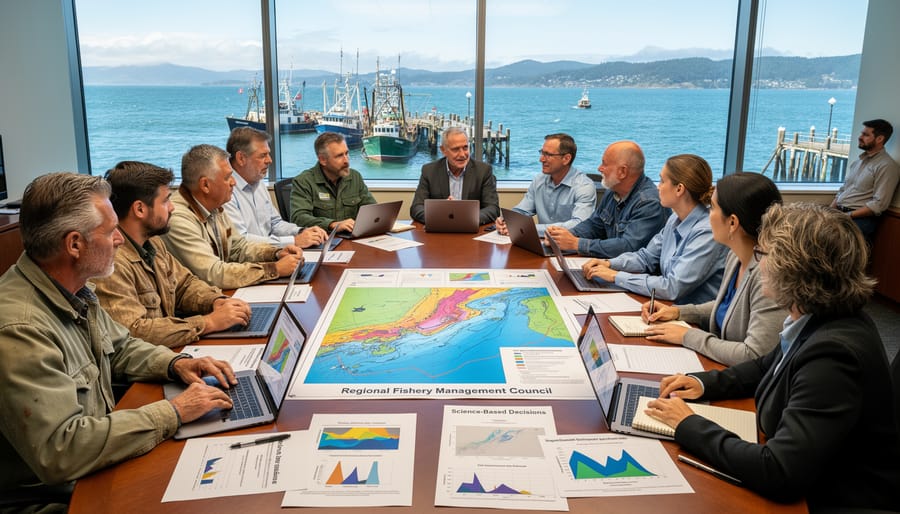
The Magnuson-Stevens Act requires each regional council to bring together diverse perspectives through a carefully balanced membership structure. Each of the eight regional councils includes commercial and recreational fishermen who understand local waters firsthand, marine scientists who provide research-based insights, state fish and wildlife officials who represent coastal communities, and conservation advocates who champion long-term ecosystem health.
This diversity isn’t just symbolic—it fundamentally shapes how fishery management decisions unfold. When a council considers new regulations, commercial fishermen might share observations about changing fish populations they’ve witnessed over decades at sea, while scientists present data from stock assessments and ecosystem monitoring. State representatives ensure regulations align with local coastal management plans, and conservation members advocate for protective measures that maintain biodiversity.
The deliberative process requires council members to find common ground, balancing immediate economic needs with scientific evidence about sustainable harvest levels. Public participation opportunities, including comment periods and open meetings, allow additional voices to inform decisions. Marine biologist Dr. Sarah Chen, who serves on the Pacific Council, describes her role: “I’ve seen how bringing fishermen and scientists together at the table leads to creative solutions we wouldn’t have found in isolation. Their knowledge of ocean conditions complements our research in powerful ways.”
This collaborative structure means management decisions reflect both practical fishing realities and conservation science, creating policies more likely to succeed in protecting marine ecosystems while supporting coastal livelihoods.
Turning Science into Action
The journey from scientific discovery to enforceable marine protection involves a carefully structured process designed to balance expert knowledge with public input. Once NMFS scientists complete their assessment of a marine species or ecosystem, they develop conservation recommendations based on rigorous data analysis. These recommendations detail specific threats, habitat boundaries, and necessary protective measures.
The proposed regulations then enter a mandatory public comment period, typically lasting 60 to 90 days. This transparency requirement ensures that fishermen, coastal communities, conservation organizations, and concerned citizens can review the scientific findings and share their perspectives. During this window, NMFS holds public hearings in affected regions and accepts written comments through online portals.
Dr. Maria Chen, a marine biologist with NMFS, recalls reviewing thousands of public comments during the Atlantic coral designation process: “We received input from commercial divers who knew reef locations we hadn’t documented, local educators concerned about student access for research, and fishermen who helped us understand seasonal migration patterns. This collaborative approach strengthened our final protections.”
After reviewing all comments, NMFS scientists may refine their recommendations to address legitimate concerns while maintaining conservation integrity. The agency must respond to substantive comments, explaining how public input influenced the final decision. This back-and-forth creates regulations grounded in both scientific excellence and real-world applicability.
Once finalized, these regulations become legally binding, transforming scientific understanding into concrete habitat protections, fishing restrictions, or species recovery programs that safeguard marine ecosystems for future generations.
Real-World Impact: Success Stories and Ongoing Challenges
Species Brought Back from the Brink
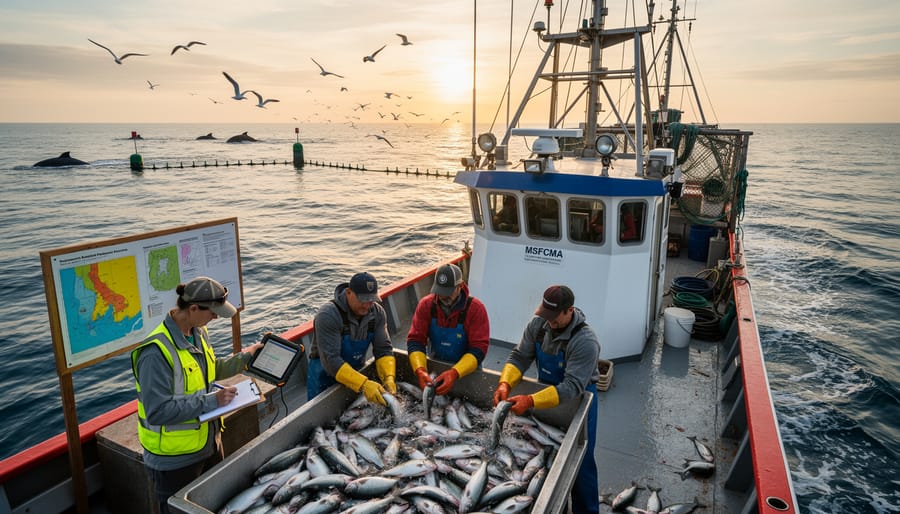
The Magnuson-Stevens Act has orchestrated remarkable comebacks for several fish populations that once faced collapse. These success stories demonstrate how science-based management, when paired with political will and community cooperation, can reverse seemingly irreversible decline.
Atlantic striped bass stands as one of the Act’s most celebrated victories. By the early 1980s, overfishing and habitat degradation had reduced the population to just 5% of sustainable levels. Emergency protections implemented under the Act included strict catch limits, size restrictions, and seasonal closures. Within fifteen years, the population rebounded to healthy levels, supporting both commercial fisheries worth millions annually and recreational fishing that benefits coastal communities from Maine to North Carolina.
Summer flounder populations along the Mid-Atlantic coast tell a similar story. Comprehensive stock assessments in the 1990s revealed severe overfishing. Federal managers established annual catch limits and began adjusting them yearly based on scientific data. The population has since recovered to approximately 75% of target biomass levels, allowing sustainable fishing to resume while maintaining ecosystem balance.
Perhaps most dramatic is the recovery of multiple Pacific rockfish species off the West Coast. These slow-growing fish faced devastating population crashes in the early 2000s. Marine biologist Dr. Sarah Chen recalls surveying depleted reefs: “The silence was haunting. Where dozens of species once thrived, we found near-empty waters.” Today, after implementing Individual Fishing Quotas and establishing marine protected areas, populations of canary rockfish, widow rockfish, and darkblotched rockfish have rebounded, with some approaching pre-depletion levels. These recoveries required patience, collaboration between fishers and scientists, and unwavering commitment to data-driven management.
Where We Still Have Work to Do
Despite the Magnuson-Stevens Act’s significant achievements in rebuilding fish populations, serious challenges continue to test the resilience of both our oceans and the framework designed to protect them.
Climate change stands as perhaps the most pressing concern facing fisheries managers today. Rising ocean temperatures are forcing fish populations to migrate into new waters, sometimes crossing jurisdictional boundaries that complicate management decisions. Dr. Maria Santos, a fisheries biologist with NOAA, shares that “we’re seeing species move northward and into deeper waters at rates we didn’t anticipate even a decade ago. This reshuffles the entire ecosystem and challenges our traditional management zones.” Acidification further threatens the shellfish and coral habitats that countless species depend upon for survival.
Habitat degradation continues despite protective measures. Coastal development, pollution runoff, and the legacy impacts of decades of bottom trawling have damaged essential nursery grounds and spawning areas. While marine protection policies exist to safeguard critical habitats, restoration takes time and consistent effort.
Enforcement remains an ongoing struggle, particularly for vast ocean territories with limited patrol resources. Illegal fishing, though less prevalent than in previous decades, still occurs. Budget constraints mean that monitoring programs sometimes lack the comprehensive data needed for optimal management decisions.
Emerging challenges also demand attention. Offshore wind energy development, while beneficial for reducing carbon emissions, raises questions about impacts on fish behavior and marine mammal migration routes. Plastics pollution and emerging contaminants continue infiltrating marine food webs.
Volunteers play a crucial role in addressing these challenges through beach cleanups, habitat restoration projects, and citizen science initiatives that expand our monitoring capacity. Your involvement, whether reporting tagged fish or participating in local conservation efforts, helps fill critical data gaps and strengthens the collective response to these evolving threats.
Why MSFCMA Matters Beyond U.S. Waters
When the Magnuson-Stevens Fishery Conservation and Management Act established science-based fishery management in U.S. waters, it created ripples that extended far beyond American coastlines. Today, the MSFCMA serves as an influential blueprint for nations worldwide seeking to balance marine resource use with long-term sustainability.
The act’s emphasis on regional fishery management councils represents a particularly valuable export. Countries from Canada to Australia have studied this approach, recognizing how local stakeholder involvement combined with scientific oversight creates more effective, community-supported conservation outcomes. The MSFCMA demonstrates that top-down mandates alone rarely succeed; instead, empowering regional experts who understand local ecosystems yields better compliance and results.
Dr. Maria Santos, a marine biologist who has advised international fishery organizations, shares: “When I work with developing nations on fishery policy, the MSFCMA provides concrete examples of how to operationalize abstract conservation principles. The requirement for annual catch limits backed by scientific data isn’t just American innovation—it’s a model that works across diverse marine environments.”
The act’s integration into broader ocean policy frameworks has influenced international agreements, including provisions within regional fisheries management organizations. Its measurable benchmarks for stock recovery have become international standards, helping nations demonstrate conservation progress through concrete data rather than promises.
For those passionate about marine conservation, understanding the MSFCMA’s global influence reveals opportunities for engagement. Many international conservation organizations seek volunteers to help translate successful American management strategies for different cultural and ecological contexts. By participating in these programs, individuals contribute to a worldwide movement toward sustainable ocean stewardship, proving that effective policy innovation crosses borders as readily as the marine species it protects.
How You Can Support Marine Conservation Under MSFCMA
The Magnuson-Stevens Fishery Conservation and Management Act offers numerous pathways for individuals to become active participants in marine conservation. Your engagement can make a tangible difference in protecting our ocean ecosystems.
One of the most direct ways to influence fishery management is by participating in public comment periods. When regional fishery management councils propose new regulations or amendments, they’re required to seek input from stakeholders. You can submit written comments or attend council meetings to voice your perspectives on proposed management measures. These councils genuinely consider public feedback when making decisions that affect marine resources for decades to come.
Volunteer opportunities abound for those wanting hands-on involvement. Many research institutions and conservation organizations need volunteers for fish population surveys, habitat monitoring, and data collection. Dr. Elena Martinez, a marine biologist working on Gulf Coast fisheries, shares: “Our volunteer monitors have been instrumental in tracking juvenile fish populations in nursery habitats. Their dedication provides us with data we simply couldn’t gather otherwise.” These citizen science programs require no advanced degree, just enthusiasm and commitment.
Supporting organizations that employ effective advocacy strategies strengthens the implementation and enforcement of MSFCMA provisions. Whether through donations, membership, or amplifying their campaigns on social media, your support helps ensure robust science-based management continues.
Finally, make informed seafood choices. Look for products certified by programs that align with MSFCMA standards, such as those indicating sustainable catch methods and legal harvest. Your purchasing decisions send market signals that reward responsible fishing practices.
Every action, from commenting on proposed regulations to choosing sustainable seafood, contributes to the collective effort of preserving marine biodiversity. The framework exists, but its success depends on engaged citizens willing to participate in its processes.
The Magnuson-Stevens Fishery Conservation and Management Act stands as one of the most significant pieces of environmental legislation in American history. Its comprehensive approach to managing fisheries has not only helped rebuild depleted fish populations but has also protected the intricate web of marine life that depends on healthy ocean ecosystems. Through science-based management, habitat protection, and adaptive strategies, the MSFCMA has proven that thoughtful legislation paired with dedicated implementation can reverse decades of environmental decline.
Yet the act’s continued success hinges on something beyond legislation alone: active participation from people like you. Marine conservation is not the sole responsibility of government agencies or scientists working in isolated laboratories. It requires engaged citizens who understand the issues, support sustainable practices, and advocate for the policies that protect our oceans.
The Marine Biodiversity Science Center offers numerous pathways for involvement, whether you’re a seasoned marine biologist or someone newly inspired to make a difference. Our volunteer programs connect community members with ongoing research projects, from monitoring coastal habitats to participating in citizen science initiatives that contribute valuable data to conservation efforts. Educational workshops help build understanding of marine ecosystems and the policies protecting them, while advocacy training empowers participants to become effective voices for ocean conservation.
Dr. Sarah Chen, a marine biologist with our center, shares this perspective: “Every person who learns about marine conservation and takes action, no matter how small, contributes to the collective effort that makes legislation like the MSFCMA effective. Your voice matters, your choices matter, and your engagement truly makes a difference.”
Join us in protecting our ocean’s future.

jessica
Ava Singh is an environmental writer and marine sustainability advocate with a deep commitment to protecting the world's oceans and coastal communities. With a background in environmental policy and a passion for storytelling, Ava brings complex topics to life through clear, engaging content that educates and empowers readers. At the Marine Biodiversity & Sustainability Learning Center, Ava focuses on sharing impactful stories about community engagement, policy innovations, and conservation strategies. Her writing bridges the gap between science and the public, encouraging people to take part in preserving marine biodiversity. When she’s not writing, Ava collaborates with local initiatives to promote eco-conscious living and sustainable development, ensuring her work makes a difference both on the page and in the real world.