Marine Biodiversity Science Center

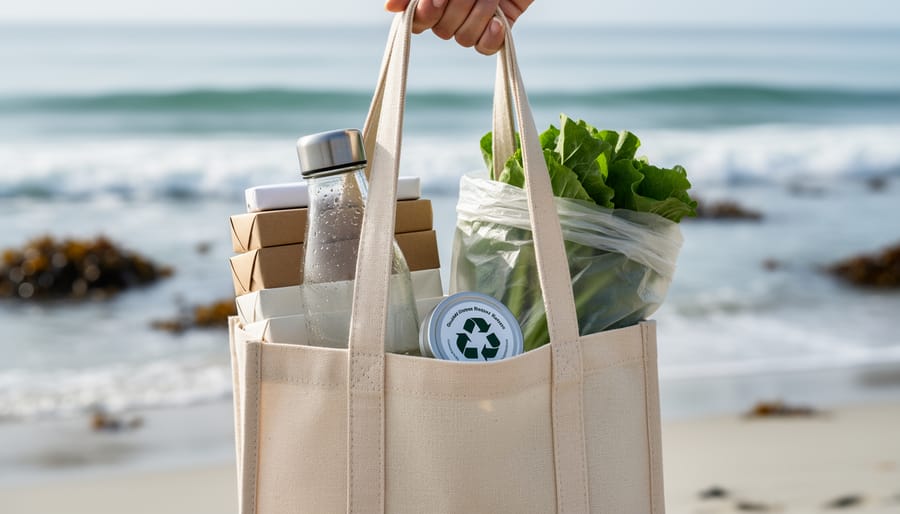
Sustainable consumer behavior means making purchasing decisions that minimize harm to marine ecosystems, and the science is unambiguous: what you buy directly influences ocean health through supply chains, pollution pathways, and resource extraction. The connection runs deeper than most people realize. When you choose products with excessive plastic packaging, select seafood from overexploited fisheries, or purchase items containing microplastics, those decisions ripple through marine food webs and coastal communities thousands of miles away.
The encouraging reality? Research from 2024 shows that when consumers shift even 30 percent of their purchases toward ocean-friendly alternatives, manufacturers respond by reformulating products and altering supply chains within 18 months. Your daily choices create measurable market signals that corporations cannot ignore.
Yet the path forward isn’t always clear. You’ve likely stood in a store aisle wondering whether the “eco-friendly” label means anything substantive or simply clever marketing. That confusion is valid. The marketplace floods us with competing certifications, vague sustainability claims, and products that solve one environmental problem while creating another.
This guide cuts through that noise by connecting specific consumer behaviors to their documented marine impacts. You’ll learn which product categories carry the highest ocean cost, how to identify genuinely sustainable alternatives using evidence-based criteria, and why the psychological barriers that make changing habits feel impossible are actually predictable patterns you can work around.
The framework here builds on behavioral research and marine science, not guilt or wishful thinking. Individual actions matter precisely because they’re never truly individual. When enough people make informed choices simultaneously, entire industries transform.
The Ocean in Your Shopping Cart
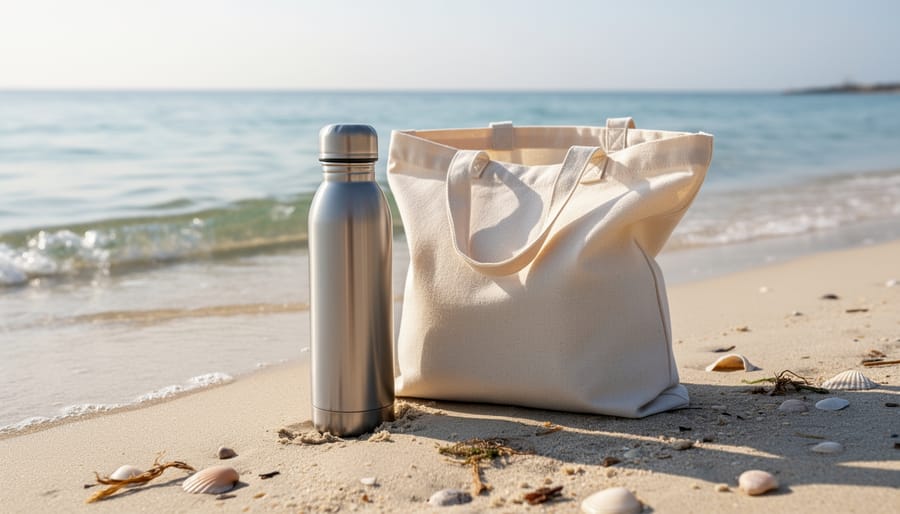
Your morning coffee run connects to the ocean in ways you might never see on the label. That disposable cup and plastic lid, even if you toss them in recycling, may eventually ride urban stormwater systems to coastal waters where they’ll fragment into particles small enough for filter-feeding organisms to ingest. The coffee itself traveled thousands of nautical miles in container ships burning heavy fuel oil, releasing carbon that acidifies seawater and disrupts the chemistry corals and shellfish need to build their skeletons.
Every product you purchase carries a marine footprint, often invisible until you trace its journey from source to shelf to disposal. Plastic packaging dominates this impact chain. Plastic waste in oceans accumulates because the material itself was designed to resist breakdown, a feature that serves manufacturers but devastates marine environments where seabirds, turtles, and marine mammals mistake fragments for food or become entangled in abandoned fishing gear and consumer debris.
The seafood counter presents another direct connection. That farmed salmon might have consumed wild-caught fish converted to feed pellets at a ratio that depletes forage fish populations other marine species depend on. Shrimp from certain regions may come from operations that destroyed mangrove forests, eliminating nursery habitat for countless fish species and removing natural storm barriers that protect coastlines.
Beyond what you see, chemical-laden products leave traces throughout watersheds. Conventional sunscreens wash off swimmers at beaches, releasing oxybenzone and octinoxate that damage coral DNA and disrupt reproductive cycles even at concentrations equivalent to a drop of water in six Olympic swimming pools. Household cleaners containing phosphates, synthetic fragrances, and antibacterial agents flow through wastewater treatment plants that weren’t designed to filter these compounds, allowing them to enter coastal waters where they can trigger algae blooms that suffocate marine life or act as endocrine disruptors in fish populations.
Shipping networks that deliver your purchases also matter. Consumer demand for rapid delivery and year-round access to global products drives maritime traffic that spreads invasive species through ballast water, creates noise pollution that interferes with whale communication and echolocation, and contributes roughly 3% of global greenhouse gas emissions.
These connections operate silently, hidden behind clean packaging and convenient transactions. Making them visible transforms shopping from a thoughtless routine into an opportunity for marine stewardship.
Making Sustainable Choices That Actually Matter
Sustainable Seafood: Beyond the Labels

I used to believe the label on a package told you everything you needed to know about sustainable seafood. Then I spent a field season with Dr. Elena Vasquez off the coast of Newfoundland, documenting the collapse of cod populations in historically productive waters. Standing on deck as we hauled up nets containing fish half the size they should have been, and a quarter of the expected number, shifted my entire perspective. The labels on grocery store cod hadn’t changed, but the ocean had.
Choosing seafood that truly supports marine biodiversity requires looking past the front-of-package claims. Multiple certification systems exist, MSC, ASC, Ocean Wise, Seafood Watch, each with different standards and rigor. MSC certification focuses on wild-caught species and evaluates stock health, ecosystem impact, and management effectiveness. ASC covers farmed seafood, assessing everything from disease management to feed sourcing. Environmental claims may mislead consumers when certifications are poorly enforced or when they certify only one processing step while calling the entire product sustainable.
The fishing method matters as much as the species. Bottom trawling decimates seafloor habitats that take decades to recover, while pole-and-line fishing has minimal bycatch. Farmed options vary wildly: closed-containment systems prevent pollution and disease transfer, whereas open-net pens in coastal waters can spread parasites to wild populations and release concentrated waste into surrounding ecosystems.
What shaped consumer demand in recent years isn’t just environmental awareness, it’s access to better information. Ask your fishmonger where and how seafood was caught. Download a regional sustainable seafood guide app and reference it before ordering. Choose abundant species over those listed as overfished, even if they’re less familiar.
Dr. Vasquez now works with fishing communities to transition toward selective gear and seasonal closures that allow populations to recover. She reminds me that consumers aren’t responsible for fixing broken fisheries management, but our choices do signal what we value. When restaurants see diners consistently choosing hook-caught over trawled fish, supply chains adjust.
Breaking Free from Single-Use Plastics
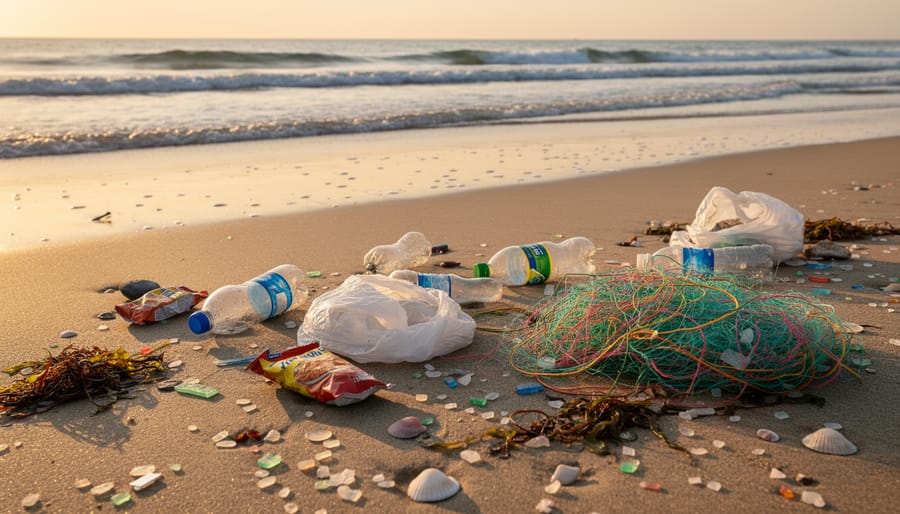
Single-use plastics represent one of the most direct threats to marine ecosystems, with Plastic enters oceans yearly at staggering volumes that fragment into microplastics consumed by everything from zooplankton to whales. The good news? Reducing your plastic footprint doesn’t require overhauling your entire life. Focus on the items you use most frequently.
Start by identifying your personal “plastic hot spots” through a week-long audit. Most people discover 80% of their plastic waste comes from just five to seven repeat purchases: coffee cups, water bottles, grocery bags, food containers, or personal care items. Target these first rather than scattering energy across dozens of minor swaps.
| Single-Use Item | Marine Impact | Sustainable Alternative | Durability Note |
|---|---|---|---|
| Plastic water bottles | Takes 450 years to decompose; leaches toxins | Stainless steel or glass bottle | Lasts 10+ years with proper care |
| Grocery bags | Entangles marine wildlife; breaks into microplastics | Canvas or recycled polyester totes | Withstands 500+ uses when washed regularly |
| Produce bags | Lightweight bags travel farthest in ocean currents | Mesh cotton bags or reuse paper | Cotton lasts years; paper reusable 3-4 times |
| Takeout containers | Polystyrene never biodegrades; absorbs pollutants | Bring your own containers to restaurants | Glass or stainless containers last indefinitely |
Watch for greenwashing in “eco-friendly” alternatives. Biodegradable plastics often require industrial composting facilities that don’t exist in most areas, meaning they end up in landfills or oceans where they persist like conventional plastic. Compostable straws and cutlery won’t break down in seawater. Similarly, switching to bioplastics made from corn or sugarcane still creates single-use waste and demands agricultural resources.
The principles of just sustainability remind us that the most effective solution is elimination, not substitution. Before buying any reusable alternative, ask whether you truly need it. Refuse plastic straws rather than purchasing metal ones you’ll rarely use. Declining excess packaging at checkout costs nothing and creates zero manufacturing footprint.
Chemical Footprints in Our Waters
Every shower you take, every lawn you fertilize, and every surface you clean sends a chemical signature into our waterways, and eventually, into the ocean. Unlike plastic waste we can see washing ashore, these dissolved pollutants create invisible impacts that ripple through marine food webs in ways most consumers never consider.
Sunscreen ingredients like oxybenzone and octinoxate bleach coral reefs at concentrations equivalent to a single drop in six Olympic-sized swimming pools. When 14,000 tons of sunscreen wash into reef ecosystems annually, the cumulative effect devastates these biodiversity hotspots. Mineral-based sunscreens with non-nano zinc oxide or titanium dioxide provide reef-safe protection, though you’ll need to read labels carefully since “reef-safe” remains an unregulated marketing term.
Household cleaning products present another pathway. Phosphates from detergents trigger algal blooms that suffocate marine life, while synthetic fragrances contain phthalates that disrupt reproductive systems in fish and marine mammals. Wastewater treatment plants cannot filter out these chemicals completely, so choosing plant-based, fragrance-free cleaners directly reduces what enters the ocean.
Personal care products add microplastics and persistent chemicals. Exfoliating scrubs with polyethylene beads, water-resistant cosmetics with siloxanes, and antibacterial soaps with triclosan all flow through drains into ecosystems where they accumulate in tissue and concentrate up the food chain. A marine biologist I know witnessed hermit crabs along a popular beach exhibiting shell-abandonment behavior linked to cosmetic chemical exposure, a stark reminder that your bathroom cabinet connects directly to marine habitats.
Even lawn care matters. Nitrogen-rich fertilizers and herbicides run off during rain, creating coastal dead zones where oxygen levels plummet. If you maintain a yard, choosing organic alternatives and applying them sparingly protects downstream marine communities.
When Consumer Choices Create Waves of Change
When enough consumers demand better, industries respond. The transformation of the personal care market demonstrates this perfectly. In 2018, Hawaii and Key West banned oxybenzone and octinoxate sunscreens after consumer advocacy highlighted their coral reef damage. Within three years, major brands reformulated products not just for these markets but globally, recognizing that shoppers increasingly refused to buy reef-toxic formulas. The result: mineral-based sunscreens became mainstream rather than niche, protecting coral spawning grounds from chemicals that disrupt reproduction.
The seafood industry tells a similar story. Twenty years ago, most consumers couldn’t tell you whether their tuna came from sustainable sources. Today, major retailers like Whole Foods and Costco stock primarily MSC-certified seafood because shoppers consistently choose it. This market pressure pushed fishing operations to adopt selective gear and reduce bycatch. In Alaska, pollock fisheries overhauled practices to maintain certification, cutting seabird deaths by 90% through simple gear modifications, all driven by the knowledge that losing certification meant losing shelf space.
Plastic bag bans emerged from consumer-driven momentum rather than sudden corporate altruism. When California implemented its statewide ban in 2016, it followed years of local campaigns where shoppers demonstrated they’d bring reusable bags if given clear alternatives. Grocery chains that initially resisted discovered customers adapted within weeks. The ban prevented an estimated 40,000 tons of plastic bags annually from reaching marine environments, many of which would have been mistaken for food by sea turtles and marine mammals.
The microplastic revolution accelerated after 2015, when consumer pressure led to voluntary phase-outs of microbeads in cosmetics before formal bans took effect. Unilever, Johnson & Johnson, and Procter & Gamble reformulated hundreds of products after advocacy groups revealed that a single shower could send 100,000 plastic particles into waterways. Today, finding microbead scrubs requires effort because manufacturers recognized the reputational risk exceeded any functional benefit.
These aren’t isolated victories. They’re proven strategies showing that when consumers vote with their wallets consistently, industries recalculate their economics. Each purchase signals demand for better practices, and aggregated across millions of shoppers, that signal becomes impossible to ignore.
The Psychology Behind Sustainable Shifts
Understanding why we struggle to adopt sustainable habits, even when we genuinely care about marine life, is the first step toward lasting change. Our brains evolved to prioritize immediate rewards over distant consequences, which makes choosing the plastic-free option today to protect coral reefs decades from now neurologically challenging. Add decision fatigue from evaluating every purchase, guilt when we fail to meet our own standards, and the overwhelming sense that our individual actions won’t matter anyway, and it’s no wonder sustainable behavior feels exhausting.
The good news? Research on behavior change offers concrete strategies that work with, not against, how our minds actually function. Start by leveraging habit formation: pick one specific swap (like bringing reusable produce bags) and repeat it in the same context until it becomes automatic. Studies show it takes an average of 66 days for a behavior to become habitual, but the cognitive load decreases significantly after the first few weeks.
Social influence is equally powerful. When sustainable choices become visible within your community, whether through collaborative conservation efforts, workplace initiatives, or simply discussing your ocean-friendly purchases with friends, they normalize behaviors that might otherwise feel unusual or inconvenient. You’re not just changing your own habits; you’re making it easier for others to follow.
Finally, practice self-compassion when you fall short. Perfectionism kills momentum. A 2019 study found that people who forgave themselves for sustainability “lapses” maintained their overall eco-friendly behavior patterns, while those consumed by guilt were more likely to abandon their efforts entirely. Every marine-conscious choice matters, even when surrounded by less sustainable ones.
Beyond Individual Action: Amplifying Your Impact
Your wallet is a lever, but your voice is a megaphone. While thoughtful purchasing decisions create market pressure, genuine transformation happens when consumers step beyond the checkout counter and into collective action.
Start where you already are. Talk about your choices with friends, family, and colleagues, not to lecture, but to share what you’ve learned about seafood sourcing or plastic alternatives. When people see real examples rather than abstract concepts, they’re far more likely to experiment themselves. Host a screening of ocean documentaries, organize beach cleanups that double as community gatherings, or coordinate group orders from sustainable suppliers to reduce shipping impacts and costs.
Your purchasing power extends to the boardroom through shareholder advocacy. If you hold stock in companies that source from the ocean or produce marine-impacting products, attend shareholder meetings or submit resolutions demanding sustainable practices. Corporations respond to investor pressure, particularly when it comes with financial rationale attached.
Policy change multiplies individual effort exponentially. Contact local representatives about marine protection bills, single-use plastic bans, or watershed management policies. Attend town halls focused on coastal development or fisheries management. Decision-makers track constituent input carefully, and a dozen well-informed emails often outweigh thousands of uninformed opinions.
Support organizations conducting the research and conservation work that makes informed consumer choices possible. The Marine Biodiversity Science Center welcomes volunteers for beach monitoring, data collection, educational outreach, and citizen science projects that directly inform marine protection strategies. Join their e-network for action alerts and opportunities to contribute expertise, whether that’s photography, data analysis, or simply committed observation.
Your impact compounds when you move from conscious consumer to active advocate. The ocean needs both.
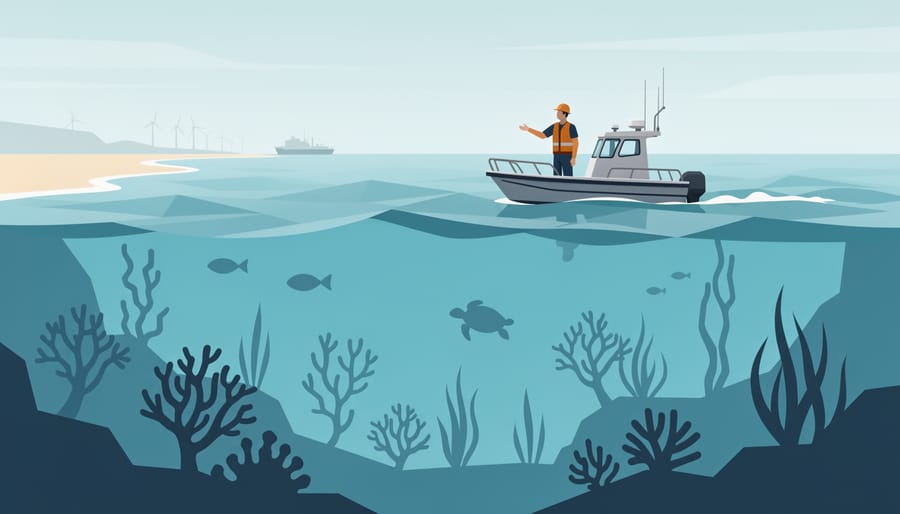
Every sustainable choice you make sends a signal through the marketplace and contributes to healthier oceans. You don’t need to transform your entire life overnight or achieve zero-impact perfection. What matters is bringing awareness to your purchasing decisions and choosing marine-friendly options when you can.
The collective impact of informed consumers has already shifted industries toward better practices, and that momentum grows with each person who joins the effort. Your individual actions combine with thousands of others to create measurable change for marine ecosystems.
Ready to deepen your commitment to ocean conservation? Join the Marine Biodiversity Science Center’s e-network for practical tips, updates on marine conservation efforts, and opportunities to participate in citizen science projects. Together, we’re building a future where thriving oceans and sustainable consumption go hand in hand.

jessica
Ava Singh is an environmental writer and marine sustainability advocate with a deep commitment to protecting the world's oceans and coastal communities. With a background in environmental policy and a passion for storytelling, Ava brings complex topics to life through clear, engaging content that educates and empowers readers. At the Marine Biodiversity & Sustainability Learning Center, Ava focuses on sharing impactful stories about community engagement, policy innovations, and conservation strategies. Her writing bridges the gap between science and the public, encouraging people to take part in preserving marine biodiversity. When she’s not writing, Ava collaborates with local initiatives to promote eco-conscious living and sustainable development, ensuring her work makes a difference both on the page and in the real world.