Marine Biodiversity Science Center

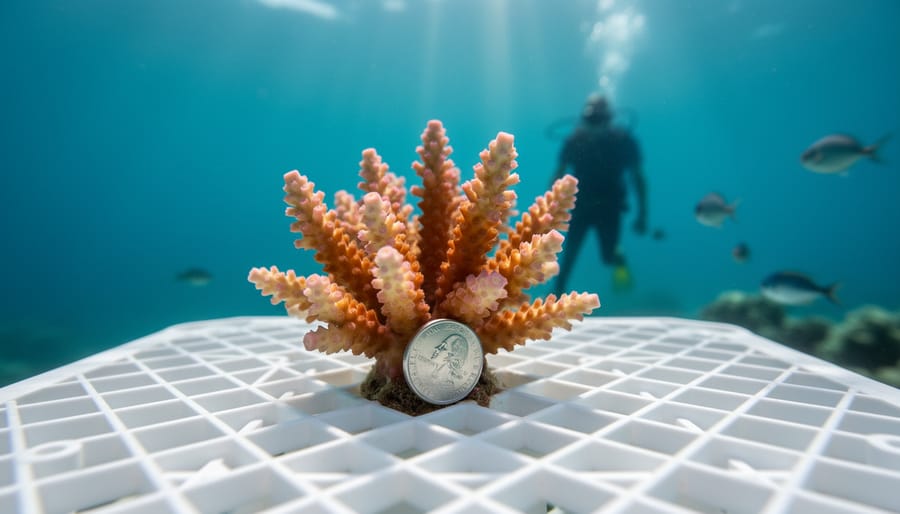
Our oceans face unprecedented challenges—from microplastic pollution choking marine food webs to coral reefs bleaching at alarming rates—but emerging nanotechnology offers revolutionary tools to combat these threats at the molecular level. Scientists are now deploying nanomaterials smaller than a virus to absorb oil spills, nanoparticles that accelerate coral skeleton growth, and nanoscale sensors that detect ocean acidification in real-time, transforming marine restoration from reactive cleanup to precision intervention.
Nanotechnology operates at scales between 1 and 100 nanometers—roughly 80,000 times smaller than a human hair—allowing scientists to manipulate matter with extraordinary specificity. In marine environments, this means creating materials that can target specific pollutants without harming surrounding ecosystems, or developing coral restoration substrates that mimic natural calcium carbonate deposition at the cellular level. Research teams have successfully used iron oxide nanoparticles to remove heavy metals from contaminated sediments and titanium dioxide nanomaterials to break down persistent organic pollutants through photocatalysis—processes that would take decades through natural degradation alone.
Yet this technology arrives with legitimate questions about unintended ecological consequences. While nanoparticles demonstrate remarkable efficiency in laboratory settings, their long-term behavior in complex ocean systems remains partially understood. Some studies indicate certain nanomaterials may accumulate in marine organisms or disrupt microbial communities essential to nutrient cycling.
This article examines current nanotechnology applications in marine restoration—from pollution remediation to ecosystem monitoring—providing concrete examples of deployed technologies, explaining the science behind their function, and honestly addressing both their conservation potential and environmental risks. Understanding these innovations empowers everyone from marine biologists to concerned citizens to make informed decisions about supporting emerging restoration strategies that could determine our oceans’ future.
What Is Nanotechnology and Why It Matters for Our Oceans
Understanding the Nanoscale in Ocean Environments
To understand how nanotechnology works in marine environments, it helps to grasp just how incredibly small we’re talking. A nanometer is one-billionth of a meter—so tiny that a single human hair is about 80,000 nanometers wide. If a nanoparticle were the size of a soccer ball, a red blood cell would be as large as a football stadium.
This scale matters tremendously in ocean ecosystems because it’s the realm where many fundamental biological and chemical processes occur. Marine phytoplankton, the microscopic organisms that produce over half our planet’s oxygen, operate at scales just above the nanoscale. When pollutants break down into nanoparticles, they can interact directly with these crucial organisms and enter food webs at the cellular level.
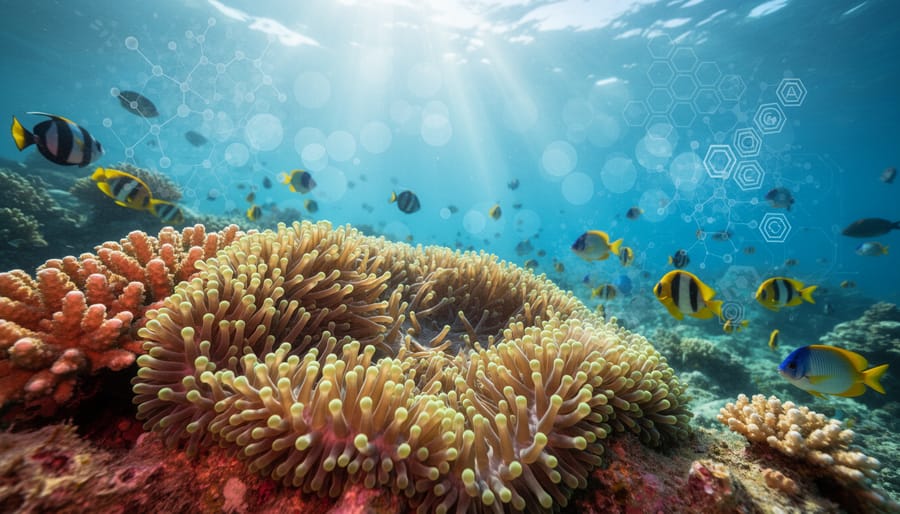
Think of it this way: coral polyps filter water through structures with nanoscale features, and the symbiotic algae living within coral tissues function at similar dimensions. Nanotechnology applications in marine restoration work at precisely these scales—small enough to interact with cellular processes, yet engineered to target specific environmental challenges. This precision is what makes nanotechnology both promising and requiring careful study, as marine biologist Dr. Sarah Chen explains: “Working at nature’s own scale allows us to potentially address problems where they actually occur.”
The Connection Between Small Solutions and Big Ocean Problems
The ocean’s most pressing problems often operate at scales invisible to the naked eye. Microplastics measuring mere millionths of a meter contaminate every marine ecosystem. Coral larvae need attachment surfaces with specific chemical properties to successfully settle and grow. Pollutants bind to sediments at the molecular level, making conventional cleanup ineffective. This is where nanotechnology becomes transformative—it works at the same tiny scale as these problems themselves.
Traditional cleanup methods, like nets or booms, simply cannot capture particles smaller than 100 nanometers. Chemical treatments often create secondary pollution or harm beneficial organisms. Nanotechnology offers precision tools that can target specific contaminants, enhance natural processes like coral growth, or detect trace amounts of pollution before it becomes widespread. As marine biologist Dr. Sarah Chen explains, “We’re essentially fighting fire with fire—using nanoscale solutions to address nanoscale damage.”
The beauty of this approach lies in its efficiency. Nanomaterials have enormous surface areas relative to their volume, meaning small amounts can accomplish substantial work. This targeted intervention reduces resource waste and minimizes ecosystem disruption, offering hope for restoring our oceans without creating new environmental challenges.
Cleaning Up Ocean Pollution at the Molecular Level
Nanomaterials That Capture Microplastics and Chemical Contaminants
Imagine tiny materials so small they’re measured in billionths of a meter, yet powerful enough to pull dangerous pollutants from our oceans. That’s the promise of nanomaterials in marine cleanup efforts, and researchers are already putting them to work.
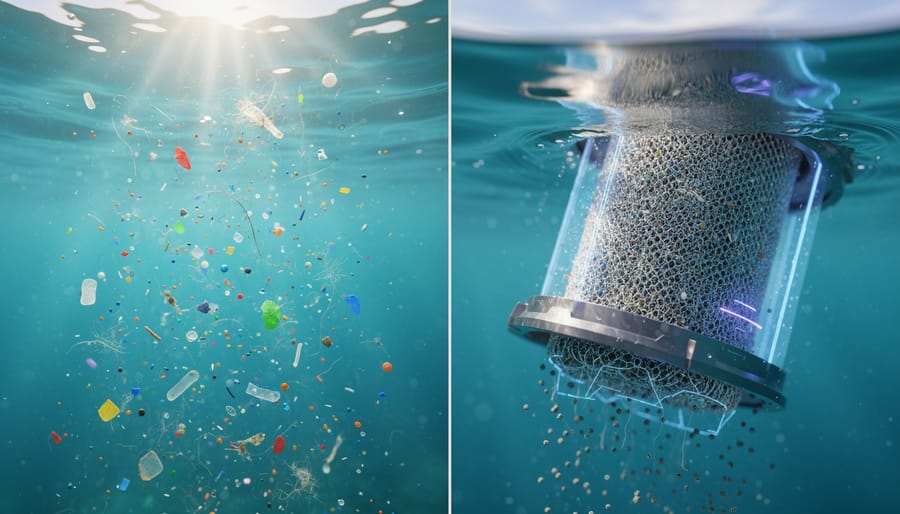
Nano-filters represent one of the most exciting developments in ocean purification. These ultrafine membranes contain pores smaller than microplastic particles, effectively screening out contaminants that traditional filters miss. Think of them as microscopic sieves that can catch pollutants invisible to the naked eye. Scientists at several research institutions have developed nano-filter systems capable of removing microplastics as small as 100 nanometers from seawater samples.
Magnetic nanoparticles offer another ingenious approach. These iron-based particles can be engineered to attract and bind with specific pollutants, including microplastics and chemical contaminants like heavy metals. Once attached to the pollutants, scientists simply use magnets to remove them from the water. Dr. Sarah Chen, a marine chemist working on coastal cleanup projects, describes it as “giving pollutants a magnetic tag so we can fish them out efficiently.”
Absorbent nanomaterials like carbon nanotubes and graphene-based compounds act like molecular sponges. Their enormous surface area relative to their size allows them to absorb vast quantities of oil, pesticides, and other chemical pollutants. Some varieties can hold up to 100 times their weight in contaminants.
While these technologies show tremendous promise, scaling them from laboratory success to ocean-wide application remains the challenge researchers are actively addressing.
Oil Spill Remediation Using Nanosponges
Oil spills devastate marine ecosystems, coating wildlife, smothering coral reefs, and disrupting food chains for years. Traditional cleanup methods using booms, skimmers, and chemical dispersants often prove slow, expensive, and incomplete. Enter nanosponges: tiny engineered materials that are revolutionizing how we respond to these environmental disasters.
These microscopic structures, typically made from carbon-based materials or specially treated polymers, work like ultra-efficient sponges at the nanoscale. Their secret lies in their incredibly high surface area—one gram can have the surface area of several football fields. This allows nanosponges to absorb oil up to 100 times their own weight while repelling water, making them far more effective than conventional absorbents.
What makes this technology particularly exciting for marine conservation is its selectivity and reusability. Unlike chemical dispersants that break oil into smaller droplets that remain in the water column, nanosponges physically remove oil from the environment. After deployment, they can be collected, the absorbed oil extracted through simple squeezing or heating, and the material reused multiple times.
Research teams are currently field-testing various nanosponge designs in controlled spill scenarios. Marine biologist Dr. Sarah Chen notes, “We’ve seen nanosponges clean contaminated water in minutes rather than weeks, giving marine life a fighting chance at survival.” While challenges remain in scaling up production and developing efficient deployment methods, this technology represents a promising tool in our ocean protection arsenal.
Breaking Down Harmful Substances with Nanocatalysts
Nanocatalysts work like microscopic chemical engineers, breaking down harmful pollutants at the molecular level through targeted reactions. These tiny particles—often made from materials like titanium dioxide or iron oxide—speed up chemical processes that transform toxic substances into harmless compounds. When deployed in contaminated waters, nanocatalysts attach to pollutants such as oil residues, heavy metals, and industrial chemicals, then use light energy or naturally occurring oxygen to trigger decomposition reactions.
What makes this technology particularly promising for ocean restoration is its selectivity. Researchers have engineered nanocatalysts to target specific pollutants while leaving beneficial marine compounds untouched. Unlike traditional cleanup methods that may harm plankton or disrupt delicate ecosystems, these nanoscale solutions work with surgical precision. Marine biologist Dr. Elena Rodriguez, who has witnessed nanocatalyst trials in polluted coastal waters, shares that “the technology mimics natural purification processes but at accelerated rates, giving damaged ecosystems a fighting chance to recover.” The particles eventually break down into non-toxic components, preventing long-term accumulation in marine food chains—a critical consideration for protecting the biodiversity we’re working to preserve.
Healing Coral Reefs with Nano-Enhanced Materials
Nano-Coating Technologies That Protect Coral from Bleaching
Scientists are developing innovative nano-coating technologies that act as microscopic sunscreen and thermal shields for coral reefs facing unprecedented bleaching events. These ultra-thin protective layers, measuring just billionths of a meter, are designed to address two primary stressors: elevated water temperatures and intense ultraviolet radiation.
The coatings work by reflecting harmful UV rays while allowing essential visible light to reach the coral’s symbiotic algae, which perform photosynthesis crucial for coral survival. Some formulations incorporate titanium dioxide or zinc oxide nanoparticles that create a barrier against thermal stress without blocking the light wavelengths corals need to thrive.
Early laboratory trials show promising results. Dr. Maya Patel, a marine biologist testing these coatings in Florida, shares her optimism: “We’ve observed reduced bleaching responses in treated coral fragments exposed to temperature spikes that would normally cause severe stress. It’s like giving corals an extra layer of resilience during heat waves.”
The application methods remain experimental, with researchers exploring biodegradable formulations that naturally break down without harming marine ecosystems. While not a replacement for addressing climate change, these coatings could buy critical time for vulnerable reef systems.
For those interested in supporting coral research, many marine laboratories offer volunteer programs where participants can contribute to data collection and restoration efforts, making this cutting-edge science accessible to conservation enthusiasts.
Targeted Nutrient Delivery Systems for Coral Growth
Imagine microscopic delivery vehicles carrying essential nutrients directly to stressed coral polyps—this is the promise of targeted nutrient delivery systems. These specialized nanoparticles act like precision medicine for reefs, bypassing the dilution problems of traditional ocean fertilization methods.
Researchers are developing biodegradable nanocarriers loaded with nitrogen, phosphorus, and trace elements that corals need to build their calcium carbonate skeletons and maintain their symbiotic relationships with zooxanthellae algae. The nanoparticles attach to coral tissues and release nutrients gradually, maximizing absorption while minimizing waste. Some systems even deliver beneficial microorganisms like probiotics that help corals resist disease and bleaching.
Dr. Maria Santos, a marine biologist working on nutrient delivery systems in the Philippines, shares an inspiring observation: “We’ve seen bleached corals regain color within weeks when treated with these nano-supplements, something that would take months naturally.”
This technology complements existing coral restoration techniques by giving transplanted coral fragments a nutritional boost during their vulnerable establishment phase. While still in experimental stages, early trials show promising results. However, scientists emphasize the importance of long-term monitoring to ensure these nanoparticles don’t accumulate in marine food webs or create unintended ecological effects.
Artificial Reef Structures Enhanced with Nanomaterials
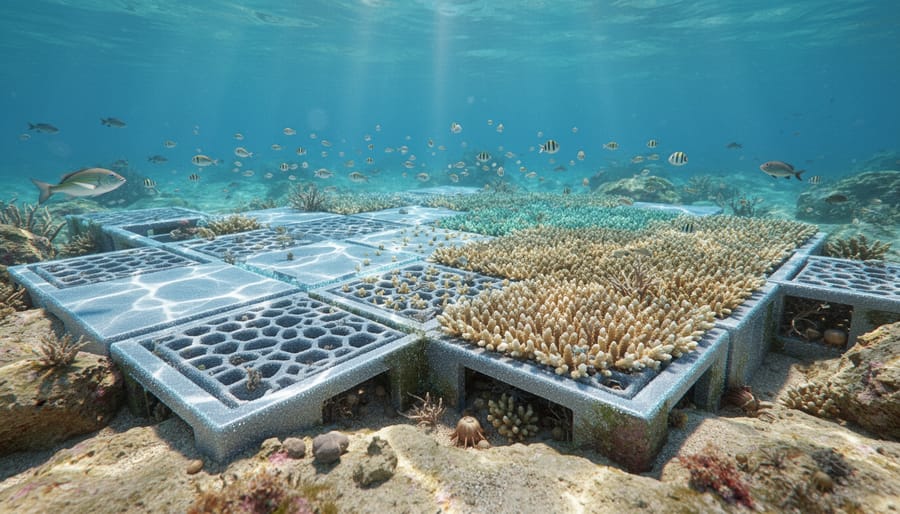
Scientists are revolutionizing artificial reef construction by incorporating nanomaterials into substrates, creating surfaces that dramatically improve coral larvae settlement and growth. These nano-enhanced eco-friendly materials work by mimicking the natural chemical and physical properties of healthy coral reef surfaces at the molecular level.
Titanium dioxide nanoparticles, for example, can be embedded into concrete or ceramic reef structures to enhance their biocompatibility. These nanoparticles create microscopic surface textures that coral polyps naturally recognize as suitable attachment sites. The enhanced surface area also promotes beneficial bacterial biofilms that signal to coral larvae that conditions are favorable for settlement.
Some research teams are experimenting with calcium carbonate nanocrystals that match the composition of natural coral skeletons, essentially providing baby corals with familiar building blocks from the start. Marine biologist Dr. Elena Torres, who works with reef restoration projects in the Caribbean, shares that “seeing coral larvae preferentially choose nano-enhanced surfaces over traditional materials is incredibly encouraging—it shows we’re learning nature’s language.”
These technological advances offer hope for accelerating reef recovery in degraded areas, though researchers emphasize that artificial structures complement rather than replace natural reef protection efforts.
Monitoring Ocean Health with Nanosensors
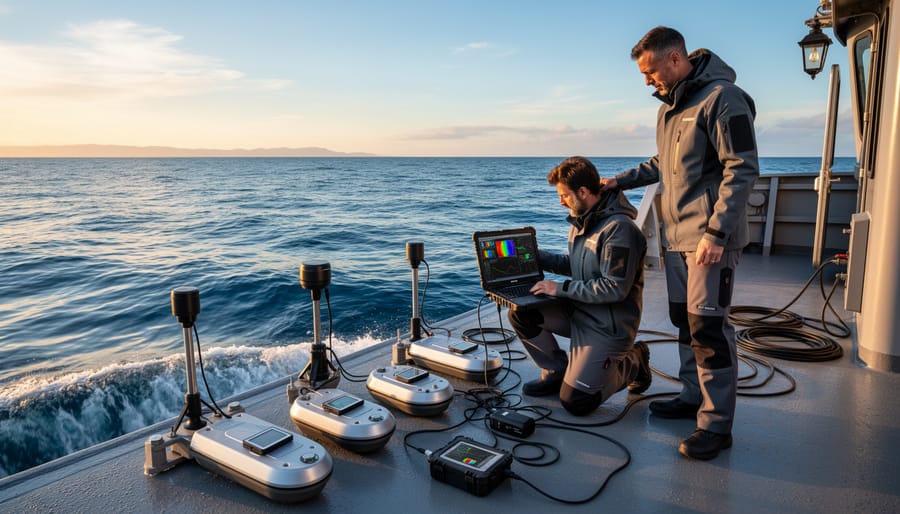
Detecting Pollution and Chemical Changes Instantly
Nanosensors represent a breakthrough in our ability to monitor ocean health at the molecular level. These microscopic devices can detect pollutants like heavy metals, microplastics, and oil residues at concentrations previously impossible to measure. When deployed across marine ecosystems, nanosensors provide real-time data on water quality, tracking pH shifts that signal ocean acidification, temperature fluctuations, and dissolved oxygen levels critical to marine life survival.
Unlike traditional water testing that requires sample collection and laboratory analysis—a process that can take days or weeks—nanosensors transmit instant alerts when they detect harmful chemical changes. This rapid response capability allows conservation teams to identify pollution sources quickly and mobilize cleanup efforts before contamination spreads. Marine biologist Dr. Elena Rodriguez, who deployed nanosensors in a coastal restoration project, shares: “We detected an industrial discharge within minutes rather than discovering it weeks later. That early warning saved an entire seagrass meadow.”
These sensors integrate seamlessly with advanced monitoring systems, creating comprehensive networks that help scientists understand pollution patterns and their impacts on biodiversity, ultimately guiding more effective conservation strategies.
Tracking Marine Species and Migration Patterns
Understanding the movements and behaviors of marine species is essential for effective conservation, but traditional tracking methods often require invasive procedures that stress animals. Nanotechnology is revolutionizing this field through ultra-small tracking devices and biosensors that monitor wildlife with minimal interference.
Nano-tags represent a breakthrough in animal monitoring. These miniature devices, sometimes smaller than a grain of rice, can be attached externally or administered through brief, non-invasive contact. Unlike bulky traditional tags that alter swimming patterns or attract predators, nano-tags are virtually weightless and hydrodynamic. They transmit location data, diving depths, and movement patterns through satellite networks, providing researchers with unprecedented insights into migration routes and habitat use.
Advanced nanosensors go even further by monitoring physiological indicators without capturing animals. These devices can detect chemical signatures in seawater left behind by specific species, essentially creating an environmental DNA profile. Some biosensors measure stress hormones, reproductive status, and even disease markers from water samples alone. This technology works alongside tools like underwater robots to create comprehensive monitoring networks.
Marine biologist Dr. Sarah Chen shares her experience: “We’ve tracked endangered sea turtles across entire ocean basins using nano-tags that don’t impede their natural behavior. The data revealed critical feeding grounds we never knew existed, enabling targeted protection efforts.”
These technologies empower citizen scientists too. Many conservation programs now train volunteers to deploy non-invasive monitoring equipment, democratizing marine research and fostering deeper connections between communities and ocean health.
The Challenges We Must Address Before Widespread Use
Understanding Nanoparticle Behavior in Ocean Environments
Once released into ocean environments, nanoparticles undergo complex transformations that scientists are still working to fully understand. These tiny particles don’t simply disappear—they interact with seawater chemistry, aggregate with other particles, and can be taken up by marine organisms ranging from microscopic plankton to larger fish.
Over time, nanoparticles may clump together, forming larger aggregates that settle on the seafloor, or they might bind with natural organic matter, changing their properties and behavior. Temperature, salinity, and pH levels all influence these processes, making each marine environment unique in how it handles these materials.
The potential interactions with marine life deserve careful attention. Filter-feeding organisms like mussels and oysters may accumulate nanoparticles as they process water. While some engineered nanoparticles are designed to be biocompatible and break down safely, others might persist longer than intended. Research shows that certain nanoparticles can cross biological membranes, though the long-term effects remain under investigation.
Marine biologist Dr. Sarah Chen, who studies nanoparticle behavior in coastal ecosystems, explains that understanding these interactions is crucial before large-scale deployment. Her team monitors how different nanoparticle types behave across various conditions, providing essential data that helps engineers design safer, more effective materials for ocean restoration while minimizing unintended consequences for the marine food web.
Ensuring Safety Through Research and Regulation
As nanotechnology applications expand in marine environments, scientists and regulatory bodies are working to establish comprehensive safety protocols. Current research focuses on understanding how nanoparticles behave in saltwater conditions, their potential to accumulate in food chains, and their long-term effects on marine organisms. Leading marine research institutions are conducting multi-year studies tracking nanomaterial persistence in ocean ecosystems, while toxicology labs test various formulations on everything from phytoplankton to fish species.
Dr. Maria Chen, a marine toxicologist studying nanoparticle impacts at a coastal research facility, shares her perspective: “We’re developing standardized testing protocols that mirror real-world ocean conditions. It’s crucial work that helps us distinguish between truly safe applications and those requiring refinement.”
International organizations are beginning to draft regulatory frameworks specifically for marine nanotechnology. These emerging guidelines address manufacturing standards, deployment procedures, and environmental monitoring requirements. The European Union and several Pacific nations have initiated pilot programs requiring thorough environmental impact assessments before any nanomaterial release into ocean waters.
Volunteer monitoring programs are emerging where citizen scientists help collect water samples in areas where nanotechnology applications are being tested. This collaborative approach between researchers and communities ensures transparency while gathering valuable data across wider geographic areas. Moving forward, robust regulation paired with ongoing research will be essential for responsibly harnessing nanotechnology’s potential while protecting ocean health.
How You Can Support Nanotechnology Research in Marine Conservation
You don’t need a laboratory or advanced degree to support the exciting intersection of nanotechnology and marine conservation. The Marine Biodiversity Science Center offers multiple pathways for engagement that welcome everyone from students to seasoned professionals.
Our citizen science programs provide hands-on opportunities to contribute to real research projects. Volunteers assist scientists in collecting water samples from coastal areas, which are then analyzed using nanotechnology-based sensors to track pollution levels and ecosystem health. Dr. Elena Rodriguez, a marine biologist at the center, shares: “Our citizen scientists have been instrumental in expanding our monitoring capabilities. Their dedication allows us to gather data across wider geographical areas than we could ever cover alone.”
Educational workshops held monthly at the center introduce participants to nanotechnology applications in marine environments. These sessions include laboratory tours, interactive demonstrations of nanomaterial sensors, and discussions with researchers working on coral restoration projects. Students particularly benefit from internship opportunities that provide direct exposure to cutting-edge conservation technology.
Supporting ongoing research extends beyond volunteering. The center welcomes partnerships with schools and community organizations interested in developing marine conservation curricula. Financial contributions directly fund equipment purchases, field research expeditions, and the development of new nanotechnology applications for threatened marine ecosystems.
Whether you contribute a few hours monthly to data collection or attend an educational session, your involvement accelerates the advancement of nanotechnology solutions that protect our oceans for future generations.
As we stand at the intersection of innovation and urgency, nanotechnology offers remarkable promise for healing our oceans. The applications we’ve explored—from neutralizing microplastics to regenerating coral reefs and revolutionizing how we monitor marine ecosystems—demonstrate that scientific advancement can work hand-in-hand with nature’s resilience. These tiny technologies carry enormous potential to address challenges that once seemed insurmountable.
However, optimism must be tempered with responsibility. The marine environment is extraordinarily complex, and introducing any new technology requires rigorous testing, transparent research, and collaborative oversight. Scientists, policymakers, and conservation organizations must continue working together to ensure that nanotechnology applications are both effective and safe for the intricate web of ocean life we’re striving to protect.
The good news? You don’t need a laboratory to contribute to this exciting frontier. Staying informed about emerging technologies and their applications helps build public support for responsible innovation. Engage with marine conservation organizations that are exploring these solutions, participate in beach cleanups to reduce the pollution burden that nanotechnology aims to address, and support policies that fund ocean research.
Consider connecting with local aquariums, universities, or conservation groups to learn about volunteer opportunities in marine monitoring programs. Marine biologists consistently emphasize that community involvement amplifies their research impact exponentially. Whether through citizen science projects or advocacy, your participation helps ensure that promising technologies like nanotechnology receive the resources and careful consideration they deserve. Together, we can transform hope into action and secure a healthier ocean for generations to come.

jessica
Ava Singh is an environmental writer and marine sustainability advocate with a deep commitment to protecting the world's oceans and coastal communities. With a background in environmental policy and a passion for storytelling, Ava brings complex topics to life through clear, engaging content that educates and empowers readers. At the Marine Biodiversity & Sustainability Learning Center, Ava focuses on sharing impactful stories about community engagement, policy innovations, and conservation strategies. Her writing bridges the gap between science and the public, encouraging people to take part in preserving marine biodiversity. When she’s not writing, Ava collaborates with local initiatives to promote eco-conscious living and sustainable development, ensuring her work makes a difference both on the page and in the real world.