Marine Biodiversity Science Center

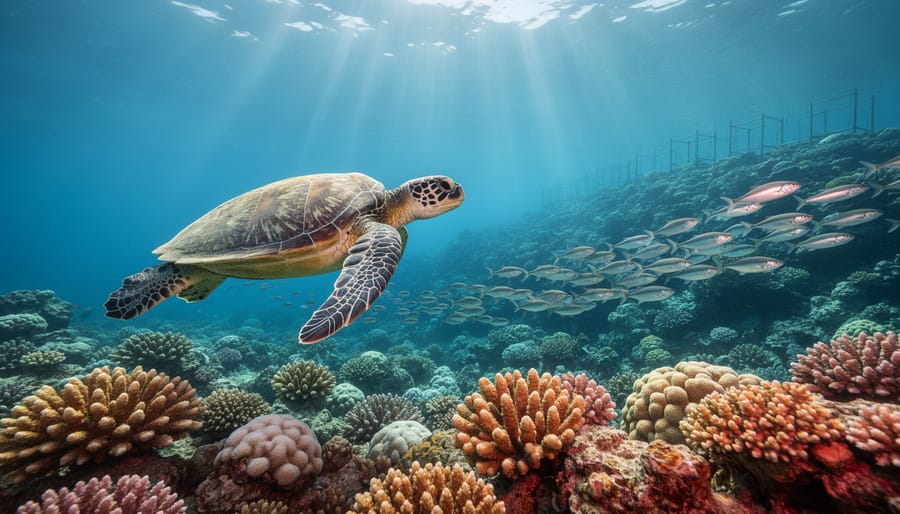
Beneath the surface of our warming oceans, a profound evolutionary drama unfolds every moment. Marine organisms from microscopic plankton to massive whales face unprecedented pressure to adapt as ocean temperatures rise, acidity increases, and currents shift. Some species are already responding, altering their behaviors, distributions, and even their genetic makeup across just a few generations. Others struggle to keep pace with the rapid changes, facing population declines or local extinctions.
Understanding marine adaptation is no longer just an academic pursuit. It has become essential knowledge for anyone concerned about the future of ocean ecosystems and the billions of people who depend on them. The mechanisms by which marine life responds to environmental stress whether through behavioral plasticity, physiological tolerance, or genetic evolution directly inform how we approach conservation in an era of climate disruption.
This adaptive capacity, however, has limits. While some coral species can adjust their symbiotic algae partnerships to tolerate warmer waters, and certain fish populations are shifting their ranges poleward, these responses often lag behind the speed of environmental change. The critical question isn’t whether marine organisms can adapt, but whether they can adapt fast enough.
The encouraging news is that human action can tip the balance. By reducing local stressors like pollution and overfishing, we create conditions that allow marine species the breathing room they need to respond to climate challenges. Marine protected areas, habitat restoration projects, and assisted evolution research all represent tangible pathways to support ocean resilience. Every conservation choice we make today either constraints or enhances the ocean’s adaptive potential for tomorrow.
What Marine Adaptation Really Means
Marine adaptation refers to the remarkable ways organisms evolve and adjust to survive in changing ocean conditions. Traditionally, this process unfolded over thousands or even millions of years through natural selection, where beneficial traits gradually became more common in populations. A fish species might develop different fin shapes across generations, or coral polyps might slowly shift their symbiotic relationships with algae. These evolutionary changes happened incrementally, giving marine ecosystems time to find balance.
Today’s reality looks dramatically different. The climate change impacts we’re witnessing are compressing what would normally take millennia into mere decades. Ocean temperatures are rising, waters are becoming more acidic, currents are shifting, and oxygen levels are dropping at unprecedented rates. Marine organisms now face a critical challenge: adapt rapidly or face population decline and potential extinction.
This acceleration creates what marine biologist Dr. Sarah Chen describes as “an evolutionary race against time.” When she examines coral samples in her lab, she’s looking for signs that these ancient organisms can keep pace with environmental changes happening fifty times faster than historical norms. Some species show promising flexibility through phenotypic plasticity, where individual organisms can adjust their physiology or behavior within their lifetime. Others rely on genetic diversity within their populations, hoping some members carry traits suited for warmer, more acidic conditions.
The stakes couldn’t be higher. Marine ecosystems support half the planet’s oxygen production, provide protein for billions of people, and regulate global climate patterns. When adaptation fails, we don’t just lose individual species; entire food webs can collapse, coastal communities lose protection from storms, and the ocean’s ability to absorb carbon dioxide diminishes.
Understanding marine adaptation isn’t just academic curiosity. It’s the foundation for developing conservation strategies that give marine life the best possible chance to survive our rapidly changing world.
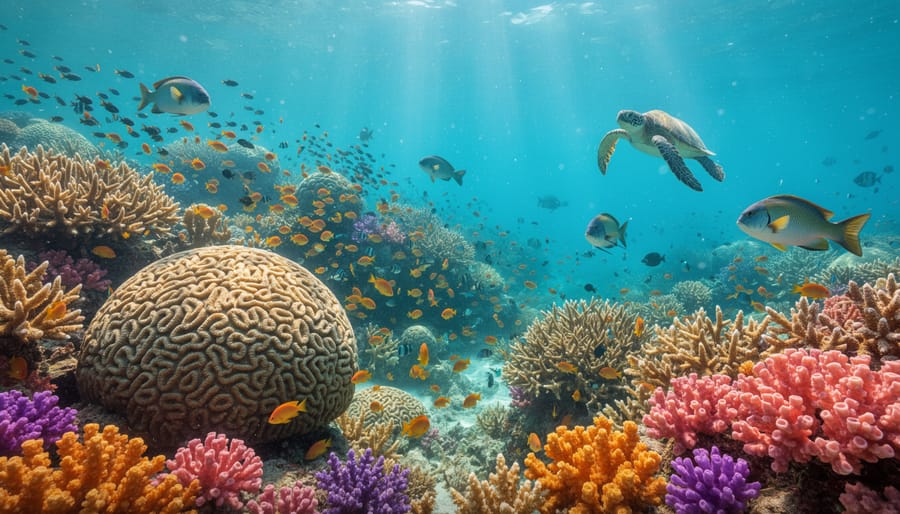
The Challenges Marine Life Faces Today
Rising Ocean Temperatures
As our planet warms, the ocean temperature impacts ripple through marine ecosystems in profound ways. Rising water temperatures directly influence marine metabolism, causing many species to require more oxygen and energy just to maintain basic life functions. This metabolic stress forces organisms to either adapt, migrate to cooler waters, or face population decline.
Temperature shifts are already reshaping where marine species can survive. Coral reefs experience devastating bleaching events when waters exceed thermal tolerance thresholds by just 1-2 degrees Celsius. Cold-water fish species like Atlantic cod are moving northward, following their preferred temperature ranges, while warm-water species expand into previously cooler zones.
Marine biologist Dr. Sarah Chen describes observing these changes firsthand: “In twenty years of diving the same reef systems, I’ve watched entire species communities transform. The tropical fish I now see were absent from these waters when I started my career.”
These temperature-driven migrations disrupt established food webs and create novel species interactions, fundamentally altering marine community structures and ecosystem functioning across our oceans.
Ocean Acidification and Chemistry Changes
Our oceans absorb approximately 30% of atmospheric carbon dioxide, acting as a crucial climate buffer. However, this comes at a cost. When CO2 dissolves in seawater, it forms carbonic acid, lowering the ocean’s pH in a process called ocean acidification. Since the Industrial Revolution, ocean pH has dropped by 0.1 units, representing a 30% increase in acidity.
These chemistry changes particularly threaten calcifying organisms like corals, mollusks, and certain plankton species that build shells and skeletons from calcium carbonate. In more acidic waters, this process becomes energetically expensive and structurally compromised, weakening protective structures and slowing growth rates.
The ripple effects extend throughout marine food webs. Pteropods, tiny swimming snails that serve as crucial prey for salmon and whales, already show shell dissolution in some regions. Dr. Sarah Mitchell, a marine chemist studying Antarctic waters, notes that “we’re witnessing changes we didn’t expect to see for decades.”
Supporting research on adaptive capacity and reducing carbon emissions remain our most effective responses. Many aquariums now offer volunteer programs monitoring pH levels, providing hands-on opportunities to contribute to this critical research.
Shifting Currents and Oxygen Levels
Ocean circulation patterns are undergoing significant shifts as climate change alters water temperatures and density gradients. These currents act as conveyor belts, distributing heat, nutrients, and oxygen throughout marine ecosystems. When circulation slows or changes course, entire regions can experience dramatic shifts in habitat quality. The Atlantic Meridional Overturning Circulation, for example, has shown signs of weakening, which could profoundly affect marine life across vast ocean areas.
Equally concerning is ocean deoxygenation—the loss of dissolved oxygen in seawater. Warmer water holds less oxygen, and stratification prevents oxygen-rich surface waters from mixing with deeper layers. Since 1960, the ocean has lost approximately 2% of its oxygen content, creating expanding “dead zones” where marine life struggles to survive. Species like fish and crustaceans require specific oxygen levels to thrive, and many are being forced to relocate to better-oxygenated waters.
These combined stressors compress suitable habitat into narrower zones, forcing species into smaller ranges where they face increased competition and vulnerability. Understanding these dynamics helps conservationists identify priority areas for protection and guides restoration efforts that can improve water quality and circulation patterns at local scales.
Nature’s Toolkit: How Marine Species Adapt
Geographic Range Shifts
As ocean temperatures rise, marine species are on the move, seeking cooler waters that match their physiological needs. This phenomenon, known as range shift, represents one of the most visible responses to climate change in our oceans.
Fish populations provide compelling evidence of this migration. Atlantic cod, once abundant in southern New England waters, have shifted northward by several hundred miles over the past four decades. Similarly, Pacific species like market squid and sardines are appearing in Alaskan waters where they were previously rare. These movements follow a pattern: species are migrating poleward at an average rate of 45 miles per decade, roughly four times faster than terrestrial species.
Coral reefs, traditionally confined to tropical waters, are also establishing themselves in new territories. Marine biologist Dr. Elena Rodriguez, who has studied coral dispersal patterns for fifteen years, shares an encouraging observation: “We’re finding juvenile corals settling successfully on rocky reefs in subtropical Japan and eastern Australia, areas that were previously too cold. While this doesn’t replace what we’re losing in the tropics, it shows nature’s resilience.”
Vertical migration offers another escape route. Many fish species are diving deeper, seeking cooler temperatures in ocean layers below the warming surface. Mediterranean fish have descended an average of 160 feet deeper than historical records indicate.
These shifts create both opportunities and challenges for conservation. Understanding migration patterns helps scientists identify critical corridors that need protection, enabling marine species to reach suitable habitats as conditions change.
Behavioral Changes
Marine animals demonstrate remarkable behavioral flexibility when confronted with changing ocean conditions. These adaptations often represent the fastest response to environmental shifts, occurring within a single generation rather than through evolutionary change.
Feeding patterns have undergone significant transformations as prey distributions shift with warming waters. Many seabirds now travel greater distances to forage, while some fish species have adjusted their feeding times to coincide with peak prey availability at different hours than historically observed. Dr. Maria Chen, a marine biologist studying North Atlantic cod populations, shares that “we’re seeing these fish feeding earlier in the day when water temperatures are cooler, a behavior virtually unknown twenty years ago.”
Breeding seasons are shifting dramatically across marine ecosystems. Sea turtles, whose nesting timing is temperature-dependent, now arrive at beaches weeks earlier than in previous decades. Coral spawning events, once predictable to within days, have become less synchronized as temperature cues change, potentially affecting reproductive success.
Migration patterns reveal perhaps the most visible behavioral adaptations. Gray whales have altered their traditional routes, while many fish species are moving poleward, tracking preferred temperature ranges. Some populations have extended their range by hundreds of miles in just a few decades.
These behavioral changes offer hope but also underscore urgency. Conservation organizations worldwide seek volunteers to monitor these shifting patterns, providing critical data that shapes protection strategies for our rapidly changing oceans.
Physiological Adjustments
Marine organisms employ remarkable internal mechanisms to survive environmental shifts. At the cellular level, these adjustments can mean the difference between thriving and perishing as ocean conditions change.
When water temperatures rise or salinity fluctuates, many marine species activate heat shock proteins—molecular guardians that protect cellular structures from damage. These proteins essentially act as emergency responders, refolding damaged proteins and preventing cellular collapse under stress. Similarly, metabolic adjustments allow organisms to conserve energy when resources become scarce or redirect energy toward essential survival functions.
Dr. Elena Martinez, a marine biologist studying coral stress responses in the Caribbean, has witnessed these mechanisms firsthand. “What fascinates me most is watching corals upregulate their antioxidant systems during heat stress,” she explains. “It’s like they’re deploying an internal defense army. Some colonies produce higher levels of protective compounds that help neutralize harmful molecules generated during thermal stress.”
These physiological changes don’t happen overnight. They require energy investments that can temporarily reduce growth or reproduction rates. However, when successful, such adjustments buy precious time for populations to persist through challenging periods. Understanding these biological responses helps conservationists identify which species possess greater adaptive capacity and where intervention efforts might prove most effective in supporting marine resilience.
Genetic Evolution in Fast-Forward
Climate change is accelerating evolution in remarkable ways. Some marine species are adapting to warming waters within just a few generations, a pace that challenges our traditional understanding of evolutionary timescales. Researchers have documented killifish populations in polluted urban harbors developing resistance to toxins up to 8,000 times faster than typical evolutionary rates. Similarly, certain reef fish species are showing enhanced heat tolerance, with parents passing along stress-response traits to their offspring.
These rapid changes often involve epigenetic modifications—chemical tags on DNA that alter gene expression without changing the underlying genetic code. When corals experience heat stress, they can modify how their genes function, and surprisingly, some of these modifications transfer to their offspring, potentially priming the next generation for warmer conditions. Marine biologist Dr. Elena Rodriguez describes it as “nature’s emergency response system, buying time while longer-term genetic changes catch up.”
However, this evolutionary fast-track has limits. Not all species can adapt quickly enough, and those with longer generation times face particular challenges. Understanding which species possess this remarkable plasticity helps conservationists prioritize protection efforts and identify resilient populations that might serve as genetic reservoirs for future recovery.
Real-World Success Stories
Coral Communities Finding New Homes
In the warming waters of southeastern Australia and Japan, coral species are establishing thriving communities hundreds of kilometers beyond their historical ranges. What was once considered too cold for coral survival has transformed into viable habitat, creating an unexpected narrative of marine expansion.
Dr. Hiroya Yamano, who has tracked coral movement along Japan’s coastline for over a decade, describes witnessing colonies spreading northward at rates of 14 kilometers per year. “We’re documenting species in Shikoku that textbooks said couldn’t survive there,” he shares. “It’s simultaneously fascinating and unsettling—these corals are climate refugees finding new homes.”
Similar patterns emerge along Tasmania’s eastern shores, where tropical and subtropical corals now flourish in previously barren temperate waters. Researchers have identified over 15 coral species establishing permanent populations, fundamentally altering local ecosystems.
However, this expansion tells a complex story. While some corals find refuge in cooler waters, their original tropical habitats face unprecedented bleaching and mortality. These pioneering corals also encounter challenges—different seasonal patterns, unfamiliar predators, and competition with established temperate species.
For those interested in supporting coral adaptation research, volunteer opportunities exist through citizen science programs that monitor range-shifting species. Organizations like Reef Life Survey train recreational divers to document coral presence in temperate regions, contributing valuable data to understanding these remarkable migrations. Your observations could help scientists predict and protect tomorrow’s coral communities.
Resilient Fish Populations
Fish species worldwide are demonstrating remarkable adaptive capacity in response to changing ocean conditions, offering hope for marine ecosystem resilience. Atlantic cod in the North Sea have shifted their spawning times by approximately three weeks earlier over recent decades, synchronizing reproduction with the earlier emergence of plankton blooms that their larvae depend upon. Similarly, Pacific salmon populations in Alaska are adjusting their migration patterns, with some runs now occurring weeks ahead of historical schedules.
Distribution shifts represent another striking adaptation strategy. Many fish species are moving poleward or into deeper waters to find their preferred temperature ranges. European seabass have extended their range northward by hundreds of kilometers, now thriving in waters where they were once rare. In Australia’s waters, tropical fish species are increasingly found in temperate zones as warming continues.
Dr. Elena Martinez, a marine biologist studying adaptation in the Mediterranean, shares an encouraging observation: “We’re seeing mullet populations develop different thermal tolerances across just a few generations—evolution happening in real time.” Her research team welcomes volunteer citizen scientists to help document fish sightings along coastal areas, contributing valuable data about range expansions.
These examples demonstrate that while climate change presents serious challenges, fish populations possess inherent flexibility. However, this adaptability has limits, making our conservation efforts to protect genetic diversity and maintain healthy habitats absolutely essential for supporting these natural resilience mechanisms.
When Adaptation Isn’t Enough
While marine species possess remarkable adaptive capabilities, we must confront an uncomfortable truth: natural adaptation has its limits. For many ocean dwellers, the speed and severity of climate change is outpacing their ability to evolve and adjust.
Consider coral reefs, often called the rainforests of the sea. Despite some populations showing heat tolerance, most coral species cannot adapt quickly enough to match the rate of ocean warming. When water temperatures rise just 1-2 degrees Celsius above normal summer maximums, widespread bleaching occurs. The pace of environmental change matters enormously—evolution typically unfolds over thousands of generations, yet we’re witnessing dramatic ocean chemistry shifts within just decades.
Some species face particularly steep odds. Cold-water specialists like Arctic cod have nowhere cooler to migrate as polar waters warm. Animals with limited geographic ranges, slow reproduction rates, or highly specialized diets struggle most. Dr. Sarah Chen, a marine biologist who has spent fifteen years studying Antarctic krill, shares a sobering observation: “These creatures have evolved over millions of years to thrive in stable, frigid conditions. They simply cannot reprogram their biology fast enough to keep pace with current warming trends.”
The cumulative stress compounds the problem. Marine animals aren’t just facing warmer water—they’re simultaneously dealing with acidification, oxygen depletion, pollution, and overfishing. Even species with strong adaptive potential can be overwhelmed when multiple stressors hit at once.
This reality underscores why conservation intervention remains absolutely critical. We cannot rely on natural adaptation alone to preserve ocean biodiversity. Protected marine areas, pollution reduction, sustainable fishing practices, and climate action create breathing room for adaptation to occur. By addressing human-caused stressors we can control, we give marine life their best chance at navigating the changes ahead. Volunteering with marine conservation organizations or supporting science-based policy advocacy helps translate this understanding into meaningful action that complements nature’s resilience.
How We Can Support Marine Adaptation
Creating Climate-Resilient Marine Protected Areas
As our oceans warm and ecosystems shift, marine protected areas are becoming crucial climate adaptation tools when designed with future conditions in mind. Strategic conservation planning now incorporates climate projections to identify and protect climate refugia—areas where cooler temperatures or stable conditions may persist, offering sanctuary for vulnerable species.
The key is connectivity. By establishing networks of protected zones along natural migration corridors, we create pathways that allow species to move poleward or to deeper waters as temperatures rise. Dr. Maria Santos, a conservation biologist working in California, shares an encouraging example: “We’ve documented several fish species using our connected MPA network as stepping stones, gradually shifting their ranges northward while maintaining healthy populations.”
Modern climate-resilient MPAs also protect diverse habitat types at varying depths, ensuring species have options as conditions change. These areas function as living laboratories, helping scientists monitor adaptation in real-time while safeguarding genetic diversity essential for evolutionary responses.
You can support this approach by advocating for science-based MPA expansion in your region and participating in citizen science programs that track species movements within protected waters.
Reducing Additional Stressors
Climate change doesn’t act alone. Marine species facing warming waters and ocean acidification simultaneously battle pollution, overfishing, and habitat destruction—a combination that dramatically reduces their capacity to adapt. Think of it like asking someone to run a marathon while carrying heavy weights; removing those weights significantly improves their chances of success.
When we reduce these additional stressors, we effectively give marine life the breathing room they need to cope with changing conditions. Cleaner waters mean healthier immune systems and more energy for reproduction. Sustainable fishing allows populations to maintain genetic diversity, the raw material evolution needs for adaptation. Protected habitats provide refuges where species can recover and adjust to new conditions gradually.
Marine biologist Dr. Ayana Johnson notes that her most encouraging field observations occur in areas where local communities have reduced pollution and overfishing. “The resilience is remarkable,” she explains. “When we give ocean ecosystems just a little relief from human pressure, they respond.”
By tackling the stressors we can control, we buy precious time for marine species to adapt to those we’re still learning to manage.
Getting Involved in Adaptation Research
You don’t need a marine biology degree to contribute meaningfully to marine adaptation research. Across North America, citizen science initiatives are transforming how we monitor and understand how ocean life responds to changing conditions.
The center’s Coastal Watch program offers an accessible entry point for newcomers. Volunteers document species distribution shifts by photographing marine organisms during monthly beach surveys. One participant, a retired teacher from Vancouver, discovered a subtropical fish species 300 kilometers north of its previously recorded range—a finding that contributed to published research on temperature-driven range expansions.
For those seeking deeper involvement, the Temperature Tolerance Project trains volunteers to assist researchers in collecting physiological data from intertidal organisms. Participants learn proper sampling techniques and data recording methods that directly feed into conservation strategies.
Even from home, you can make an impact. Online platforms like Marine Observers allow you to analyze underwater footage, identifying species and behaviors that help scientists track adaptation patterns across vast ocean areas. Students particularly appreciate this flexible option for gaining research experience.
The Kelp Forest Monitoring Network welcomes scuba divers to document ecosystem changes quarterly. Training sessions equip participants with species identification skills and standardized survey protocols. Your observations become part of long-term datasets revealing how marine communities adapt—or struggle—with environmental change, informing protection efforts for vulnerable species.
The ocean’s story is ultimately one of remarkable resilience. For millions of years, marine life has weathered dramatic shifts in temperature, chemistry, and currents, evolving ingenious strategies to persist through change. While today’s climate crisis presents unprecedented challenges in its speed and scale, the adaptive capacity woven into marine ecosystems offers genuine hope. From coral polyps developing heat tolerance to fish populations shifting their ranges, nature continues demonstrating its extraordinary ability to respond.
Yet adaptation has limits, and the window for action is narrowing. Every species lost represents millennia of evolutionary refinement erased, every degraded habitat means fewer refuges for climate-stressed populations. The urgency of this moment demands that we become active partners in supporting marine resilience rather than passive observers of decline.
The empowering truth is that meaningful contribution doesn’t require a PhD in marine biology. Participating in coastal cleanups removes plastics that compound climate stress on wildlife. Supporting marine protected areas gives populations the breathing room to adapt. Choosing sustainable seafood reduces pressure on already struggling species. Making your voice heard on climate policy amplifies the collective call for ocean protection.
Marine biologist Dr. Ayana Elizabeth Johnson reminds us that “we are the ancestors of the future, and we get to decide what we pass on.” Each action, however small it seems, contributes to the broader mission of safeguarding marine biodiversity. By understanding adaptation and championing conservation, you become part of the solution, helping ensure that ocean life continues its remarkable evolutionary journey for generations to come.

jessica
Ava Singh is an environmental writer and marine sustainability advocate with a deep commitment to protecting the world's oceans and coastal communities. With a background in environmental policy and a passion for storytelling, Ava brings complex topics to life through clear, engaging content that educates and empowers readers. At the Marine Biodiversity & Sustainability Learning Center, Ava focuses on sharing impactful stories about community engagement, policy innovations, and conservation strategies. Her writing bridges the gap between science and the public, encouraging people to take part in preserving marine biodiversity. When she’s not writing, Ava collaborates with local initiatives to promote eco-conscious living and sustainable development, ensuring her work makes a difference both on the page and in the real world.