Marine Biodiversity Science Center

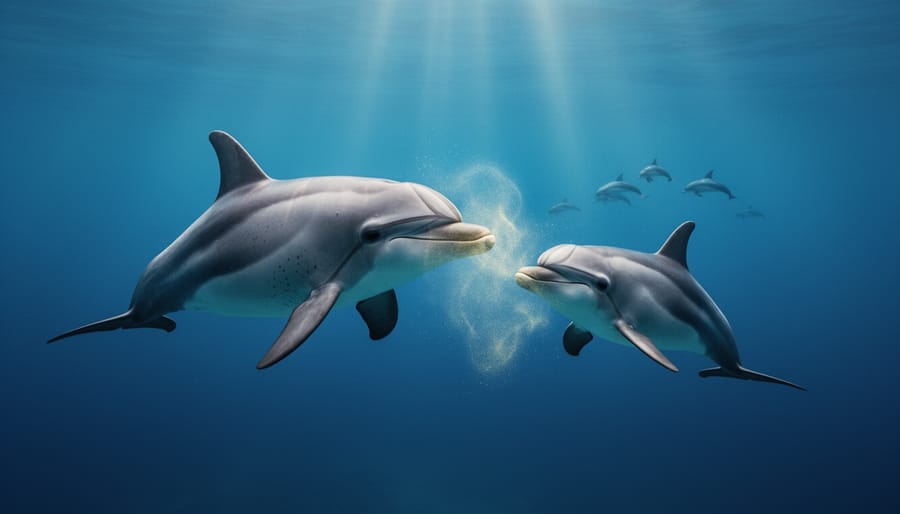
Beneath the ocean’s surface, an invisible language flows through the water—one written not in sound waves, but in molecules. While acoustic communication often dominates our understanding of how marine mammals interact, chemical signals create an equally sophisticated communication network that influences everything from mating to territorial defense, from mother-calf bonding to predator avoidance.
Chemical communication represents one of nature’s oldest and most universal languages. Long before animals developed complex vocalizations or visual displays, they relied on chemical compounds to convey critical information about their identity, reproductive status, emotional state, and intentions. In marine environments, where light penetrates only the upper layers and sound can be disrupted by varying water conditions, chemical cues provide a reliable, persistent method of exchanging information across vast distances and through complete darkness.
Marine mammals release pheromones, hormones, and other biochemical markers through urine, feces, specialized glands, and even breath. These chemical signatures dissolve into the surrounding water, creating invisible trails and plumes that other animals can detect and decode. A female dolphin’s urine might announce her reproductive readiness to potential mates kilometers away. A sea lion’s scent gland secretions can mark territory boundaries that persist for hours. A mother whale’s unique chemical profile helps her calf locate her in crowded breeding grounds.
Understanding this hidden dimension of marine mammal behavior opens new windows into their social structures, migration patterns, and survival strategies—knowledge that proves essential for developing effective conservation measures in our rapidly changing oceans.
The Science Behind Chemical Signals in Water
What Are Chemical Signals?
Chemical signals are specialized molecules that animals produce and release to communicate with others of their kind—and sometimes even with different species. Think of them as invisible messages floating through water, carrying information about everything from identity to reproductive status. These chemical messengers come in several forms, each serving unique purposes in the underwater world.
Pheromones are perhaps the most well-known type of chemical signal. These powerful compounds trigger specific behavioral or physiological responses in animals of the same species. In marine mammals, pheromones can signal readiness to mate, mark territorial boundaries, or help mothers and offspring recognize each other in crowded colonies. For instance, sea lion mothers can identify their pups among hundreds of others partly through chemical cues, creating an olfactory fingerprint as unique as our own.
Metabolites, the byproducts of an animal’s metabolism, also serve as chemical messengers. These compounds provide information about an individual’s health, diet, and stress levels. Marine biologist Dr. Sarah Chen, who has spent fifteen years studying beluga whale populations, shares: “When we analyze metabolites in whale skin samples, we’re essentially reading their life story—what they’ve eaten, where they’ve been, and what environmental challenges they’ve faced.”
Similar to chemical communication in fish, marine mammals rely on these chemical signals to navigate their complex social worlds, though the specific compounds and detection methods differ between species.
How Chemicals Travel Through Ocean Waters
Understanding how chemical signals move through ocean waters requires appreciating the complex interplay of physical forces that shape marine environments. Unlike sound waves that travel efficiently through water, chemical molecules disperse in patterns influenced by currents, temperature gradients, and salinity variations, creating a dynamic landscape for animal communication.
Ocean currents act as highways for chemical messages, carrying scent plumes across distances that would otherwise be impossible for stationary molecules to reach. When a female sea turtle releases pheromones during mating season, these chemicals don’t simply diffuse equally in all directions. Instead, they follow prevailing currents, creating elongated trails that males can detect from remarkable distances. This process shares similarities with water flow communication, where animals exploit natural water movements to enhance their signaling efficiency.
Temperature plays a crucial role in chemical dispersal rates. Warmer waters increase molecular movement, causing chemicals to spread more rapidly but potentially reducing their concentration and detection range. Cold water does the opposite, slowing dispersal but potentially maintaining higher concentrations along narrower pathways. Salinity affects chemical stability and how molecules interact with the surrounding seawater, influencing whether a signal remains detectable over time.
Marine biologist Dr. Sarah Chen describes observing this phenomenon firsthand: “Watching how sharks track prey using chemical cues in shifting currents reminded me that the ocean is never static. Every temperature change, every tidal shift creates new opportunities and challenges for chemical communication.” Understanding these physical principles helps us appreciate the remarkable adaptations marine animals have developed to communicate effectively in their fluid, ever-changing world.
Which Marine Mammals Use Chemical Communication?
Seals and Sea Lions: Maternal Recognition
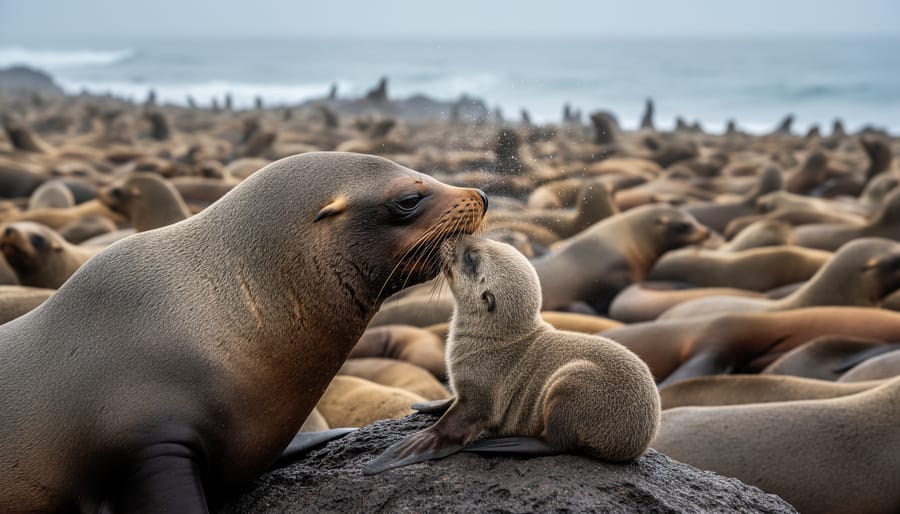
On crowded breeding beaches where thousands of seals and sea lions congregate, the challenge of maternal recognition becomes extraordinary. Mother pinnipeds must locate their specific pup among hundreds or even thousands of similar-looking youngsters, and chemical communication plays a vital role in this process.
Antarctic fur seals demonstrate remarkable olfactory abilities when returning from foraging trips at sea. Research conducted on the sub-Antarctic islands has revealed that mothers systematically sniff multiple pups before identifying their own. Scientists have documented that females rely heavily on scent recognition, particularly during the critical first few days after birth when the maternal bond forms. Each pup develops a unique chemical signature that the mother memorizes, creating an olfactory template she’ll recognize throughout the nursing period.
California sea lions show similar behaviors along the Pacific coast. Marine biologist Dr. Colleen Reichmuth shares her observations: “Watching a mother sea lion navigate through a crowded rookery is fascinating. She’ll vocalize to narrow down the search area, but the final confirmation always involves nose-to-nose contact and extensive sniffing.”
This chemical recognition system proves especially crucial when environmental conditions make vocal communication difficult, such as during storms or in particularly noisy colonies. Understanding these maternal bonds helps conservationists develop better strategies for protecting breeding habitats and minimizing human disturbance during critical bonding periods.
Dolphins and Whales: The Chemical Mystery
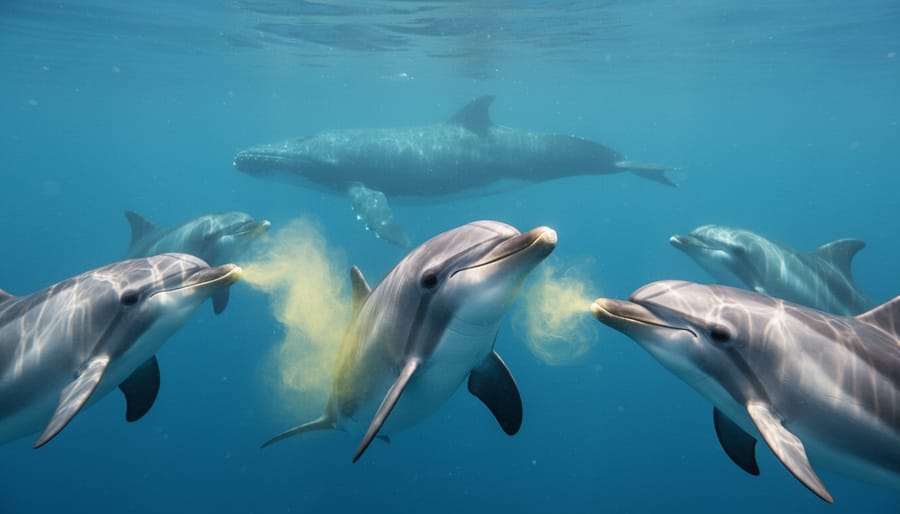
Unlike the well-documented acoustic songs of humpback whales, chemical communication in dolphins and whales remains largely mysterious to scientists. These ocean giants present unique research challenges—their vast ocean habitat and constant movement through water make detecting and tracking chemical signals extraordinarily difficult.
However, intriguing evidence suggests cetaceans may indeed use chemical cues. Scientists have observed dolphins investigating urine plumes from other individuals, lingering in these areas as if gathering information. Since urine contains hormones and metabolic byproducts, it could potentially convey details about reproductive status, health, or individual identity. Some researchers theorize that mothers and calves might recognize each other through chemical signatures, though confirming this hypothesis requires innovative research approaches.
Marine biologist Dr. Sarah Chen, who has spent fifteen years studying dolphin behavior in the Caribbean, shares her perspective: “We’ve documented behaviors that suggest chemical sensing, but proving it definitively underwater is incredibly complex. Each observation raises more questions than answers, which makes this field exciting for emerging researchers.”
Current limitations include the absence of specialized equipment to detect and analyze chemical traces in seawater in real-time and the difficulty of conducting controlled experiments with free-ranging cetaceans. Conservation organizations are actively seeking volunteers with backgrounds in chemistry and marine biology to help develop new detection methods that could unlock these chemical secrets.
Sea Otters and Other Marine Mammals
While acoustic signals dominate our understanding of marine mammal communication, chemical cues play surprisingly important roles for several species. Sea otters, for instance, use scent marking through specialized glands to communicate territory boundaries and reproductive status, particularly in kelp forest habitats where visual signals may be limited. Marine biologist Dr. Sarah Chen, who has studied sea otter populations in California’s coastal waters for over a decade, notes that mothers and pups rely heavily on scent recognition during their early bonding period, especially in areas with high turbidity.
Manatees utilize chemical communication differently, releasing pheromones that convey information about reproductive readiness and individual identity. These gentle giants have been observed investigating scent trails left by other manatees, suggesting chemical pathways help them navigate social structures in murky freshwater and coastal environments.
Even polar bears, though semi-aquatic, demonstrate remarkable chemical communication abilities. They mark sea ice territories and can detect the scent of seals beneath thick ice layers, showcasing how chemical sensing adapts to marine hunting strategies. Understanding these communication methods helps conservationists develop better protection strategies for critical habitats where these animals exchange vital chemical signals.
What Marine Mammals Are Saying: Message Types
Finding a Mate in the Open Ocean
In the vastness of the open ocean, finding a mate might seem like searching for a needle in a haystack, yet marine mammals have evolved sophisticated chemical communication systems to overcome this challenge. Female whales, dolphins, and seals release pheromones into the water that can travel impressive distances, creating invisible chemical trails that males detect and follow to locate potential partners.
These chemical signals convey crucial information about reproductive readiness. When a female is approaching estrus, her body releases specific hormones and compounds that males can detect using specialized sensory receptors. For baleen whales, these chemical cues can persist in the water column for hours, effectively broadcasting availability across miles of ocean. This is particularly important for species with low population densities or those that migrate across vast territories.
Marine biologist Dr. Sarah Chen, who has spent fifteen years studying humpback whale reproduction, shares her perspective: “It’s remarkable how these gentle giants use chemistry in concert with their famous songs. The chemical signals essentially announce when a female is receptive, while acoustic displays help males compete for her attention.”
For those interested in learning more about these fascinating behaviors, volunteer opportunities exist with research organizations that track whale migrations and breeding patterns. By participating in citizen science projects, you can contribute valuable data that helps scientists better understand these chemical conversations, ultimately supporting conservation efforts for these magnificent ocean dwellers.
Mother-Pup Bonds That Save Lives
In the chaotic breeding colonies where thousands of seals gather, a mother returning from feeding in the ocean faces an extraordinary challenge: finding her single pup among hundreds that look and sound remarkably similar. Chemical communication provides the solution to this life-or-death puzzle.
Research on Antarctic fur seals reveals that mothers and pups create unique chemical signatures within hours of birth. Dr. Sarah Chen, a marine biologist who spent three seasons studying seal colonies in South Georgia, shares a memorable observation: “I watched a mother seal navigate through nearly 200 pups, sniffing each one briefly before finding her own. The recognition was instantaneous—her pup’s scent triggered an immediate behavioral change.”
These chemical bonds involve volatile organic compounds in maternal fluids and pup secretions. Studies show that pups can distinguish their mother’s scent from other females within 48 hours of birth, while mothers learn their offspring’s unique chemical profile even faster.
The stakes are remarkably high. Pups that lose contact with their mothers face starvation, as female seals typically nurse only their biological offspring. This chemical recognition system has evolved to ensure survival rates remain high even in crowded, noisy colonies where visual and acoustic cues alone would fail. Conservation efforts now monitor these bonding behaviors as indicators of colony health and environmental stress.
Stress Signals and Social Hierarchies
Within marine mammal societies, chemical signals may play a subtle yet significant role in establishing and maintaining social order. While we’re just beginning to understand these mechanisms, evidence suggests that certain species release chemical compounds during stressful encounters or when asserting dominance.
Research on bottlenose dolphins indicates that urine may contain hormonal markers reflecting an individual’s stress levels or reproductive status. These chemical signatures could inform group members about social tensions or hierarchical shifts without aggressive displays. Marine biologist Dr. Sarah Chen shares her observations: “During our fieldwork with wild dolphin populations, we noticed certain individuals seemed to ‘sense’ changes in group dynamics before any visible behavior occurred. Chemical communication might be that missing piece.”
Pinnipeds like sea lions have scent glands that potentially signal breeding readiness and territorial claims. Dominant males may produce stronger chemical signatures during mating season, communicating their status to rivals and potential mates.
Understanding these chemical hierarchies has conservation implications. Stressed populations in degraded habitats might exhibit altered chemical communication patterns, affecting social cohesion and reproductive success. Conservation organizations increasingly welcome volunteers to assist with behavioral monitoring studies that could reveal these hidden chemical conversations, helping us protect not just individual animals but the complex social networks sustaining marine mammal communities.
How Scientists Study Chemical Communication Underwater
From the Field: A Marine Biologist’s Perspective
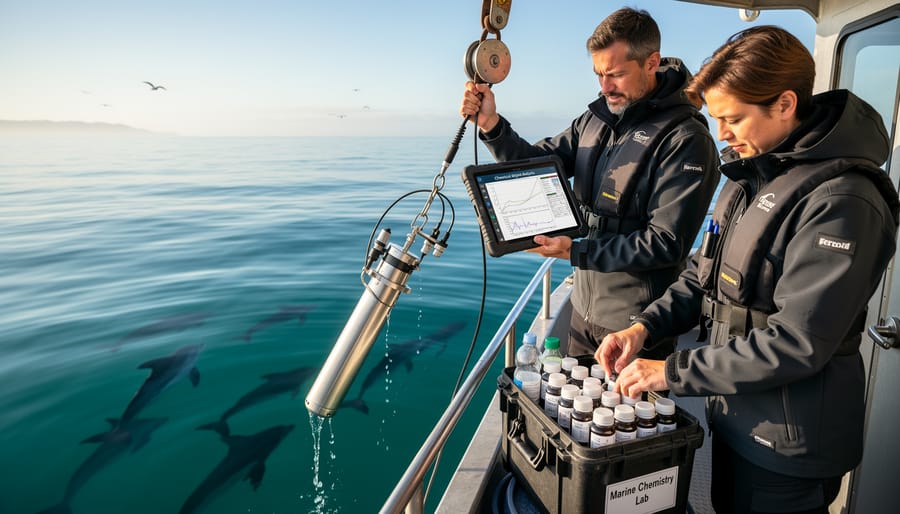
I’ll never forget the morning our research team made a discovery that would reshape my understanding of dolphin behavior. We’d been tracking a pod off the California coast for weeks, collecting water samples at different times of day. The breakthrough came not from expensive equipment, but from patience and careful observation.
During mating season, we noticed something unusual. Female dolphins were releasing specific chemical compounds into the water that males could detect from remarkable distances. Using specialized sensors, we measured pheromone concentrations and mapped their dispersal patterns through ocean currents. The challenge was isolating these signals from the thousands of other chemical compounds present in seawater—like finding a whisper in a crowded room.
The most frustrating moment came when our collection equipment failed during a critical observation period. We’d spent months planning this fieldwork, coordinating with conservation partners and volunteers. But that setback taught us something valuable: marine mammals don’t communicate on our schedule. We adapted our methods, developing more reliable sampling techniques and training volunteers to assist with data collection.
What keeps me passionate about this work is knowing how chemical communication research directly supports conservation efforts. Understanding how pollutants interfere with these invisible signals helps us advocate for cleaner oceans. Every water sample we analyze brings us closer to protecting these magnificent creatures.
If you’re inspired by this research, consider joining citizen science programs monitoring ocean health. Your observations could contribute to the next breakthrough in understanding marine chemical communication.
Tools and Technologies Making New Discoveries Possible
Scientific advances are opening remarkable windows into the hidden chemical world of marine mammals. Gas chromatography-mass spectrometry (GC-MS) allows researchers to identify specific compounds in water samples and on animal skin with incredible precision, revealing the exact chemical “words” animals might be using to communicate. Think of it as a molecular translator that can detect substances at concentrations as low as parts per trillion.
Underwater chemical sensors, some now small enough to attach to research vessels or even swimming robots, continuously monitor pheromones and other signaling molecules in real-time. These devices are revolutionizing our understanding by tracking chemical trails as they disperse through ocean currents. Dr. Maria Santos, a marine chemist studying dolphin populations, shares: “When I first detected a chemical signature trail extending over 500 meters from a pod, I realized we were witnessing an entirely new dimension of their social world.”
Newer technologies like electronic noses, modeled after animal olfactory systems, can rapidly screen water samples during field research. Combined with DNA analysis techniques, scientists can now link specific chemical signals to individual animals, building detailed profiles of who’s communicating what. These tools are making the invisible visible, transforming our understanding of marine mammal societies.
Why Chemical Communication Matters for Conservation
Ocean Pollution’s Hidden Impact on Chemical Signals
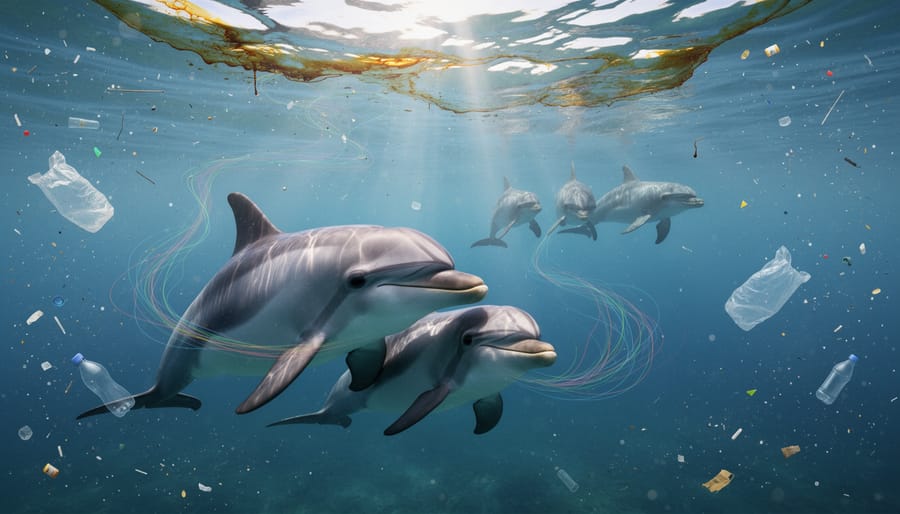
Ocean pollution presents an invisible threat to marine mammals by disrupting the delicate chemical signals in marine environments they rely on for survival. Contaminants like heavy metals, microplastics, and agricultural runoff alter the chemical composition of seawater, masking or distorting pheromones and other crucial scent markers.
These disruptions have cascading effects on reproduction, as dolphins and whales depend on chemical cues to identify potential mates and signal reproductive readiness. When pollutants interfere with these signals, breeding success rates decline. Navigation also suffers, particularly for species that use chemical trails to locate feeding grounds or migration routes.
Dr. Sarah Chen, a marine chemist who studies pollution impacts, shares a sobering observation from her field research: “We’ve documented humpback whales repeatedly returning to areas where chemical prey markers once indicated food abundance, only to find barren waters. The pollution has essentially created false signals, wasting their precious energy reserves.”
Oil spills pose particularly acute problems, coating the water surface and creating barriers that prevent volatile chemical compounds from dispersing naturally. This dramatically reduces the distance over which animals can detect important chemical information.
The encouraging news is that targeted pollution reduction efforts show measurable improvements in chemical communication quality. Volunteer opportunities exist through coastal cleanup programs and citizen science initiatives that monitor water quality. By addressing pollution at its source, we can help restore these essential communication pathways and support healthier marine mammal populations.
Protecting Critical Habitats for Chemical Communication
Certain marine environments serve as crucial communication hubs where chemical signals travel most effectively, making their protection vital for species survival. Coastal breeding grounds, kelp forests, and coral reef systems create ideal conditions for pheromone exchange, as their complex structures slow water movement and allow chemical messages to linger longer. In these zones, marine mammals like sea otters and seals rely on scent marking to establish territories and locate mates. When these habitats degrade due to pollution or development, the chemical landscape becomes disrupted, potentially leading to communication breakdowns that affect reproduction and social structures.
Conservation efforts targeting these critical areas must consider the invisible network of chemical signals alongside more visible ecosystem features. Marine protected areas can safeguard not just physical habitats but also the chemical integrity of these zones. Dr. Sarah Martinez, a marine biologist studying sea lion colonies in California, shares that protecting haul-out sites where animals congregate has proven essential: “We’ve observed that when these areas remain undisturbed, pheromone-based communication strengthens social bonds and improves breeding success rates.”
Practical conservation actions include reducing chemical pollutants that interfere with natural scents, maintaining water quality in breeding areas, and creating buffer zones around known communication hotspots. Volunteer opportunities exist through coastal cleanup programs and citizen science projects monitoring marine mammal behavior. By understanding that these animals navigate an invisible world of chemical cues, we can design more effective protection strategies that preserve both the habitat and the critical communication networks within them.
How You Can Support Marine Mammal Research
Understanding chemical communication in marine mammals is just the beginning—now it’s time to turn knowledge into action. Whether you’re a seasoned researcher or simply passionate about ocean conservation, there are meaningful ways to support ongoing research and protect these remarkable creatures.
The Marine Biodiversity Science Center welcomes volunteers who want to contribute directly to chemical communication studies. Opportunities range from laboratory assistance analyzing pheromone samples to field support during marine mammal surveys. No prior experience is required for many positions, as researchers provide training in sample collection protocols and data recording techniques. Marine biologist Dr. Sarah Chen shares, “Our volunteers become integral team members. Last year, a volunteer with no scientific background helped us identify a pattern in sea lion marking behavior that led to a breakthrough in understanding their territorial signals.”
Citizen science projects offer accessible entry points for those unable to commit to regular volunteering. The Ocean Chemical Trackers initiative allows beachgoers and recreational boaters to report sightings of marine mammal scent-marking behavior through a simple mobile app. These crowdsourced observations help researchers map chemical communication hotspots and identify critical habitats. Similarly, the Marine Mammal Behavior Documentation project encourages photographers and videographers to submit footage of social interactions, which scientists analyze for chemical signaling behaviors.
Supporting clean ocean initiatives directly benefits chemical communication research. Pollutants interfere with marine mammals’ ability to detect and interpret chemical signals, disrupting their social bonds, reproduction, and survival. Contributing to organizations focused on reducing plastic pollution, agricultural runoff, and industrial discharge helps preserve the chemical landscape these animals depend upon.
Educational outreach amplifies impact too. Sharing what you’ve learned about chemical communication with schools, community groups, or through social media raises awareness about these hidden conversations happening beneath the waves. Every conversation plants seeds for greater ocean stewardship and inspires the next generation of marine researchers.
Your involvement, regardless of scale, contributes to unraveling the mysteries of marine mammal communication and ensuring these ancient chemical languages continue for generations to come.
The remarkable world of chemical communication in marine mammals reveals just how interconnected and sophisticated ocean life truly is. From humpback whales detecting hormonal cues in vast waters to sea otters recognizing family members through scent, these animals have evolved extraordinary adaptations that continue to astound researchers. Each discovery opens new windows into understanding not only how marine mammals survive but how entire ocean ecosystems function and thrive.
As we face unprecedented challenges to ocean health, including climate change, pollution, and habitat loss, understanding chemical communication becomes increasingly vital for conservation efforts. Changes in ocean chemistry can disrupt these delicate signaling systems, affecting everything from reproductive success to predator avoidance. Dr. Sarah Chen, a marine biologist studying chemical ecology in California sea lions, shares a compelling observation: “When we protect these animals’ ability to communicate chemically, we’re protecting the very foundation of their social structures and survival strategies.”
The good news is that everyone can contribute to safeguarding these communication networks. Supporting marine protected areas helps preserve the clean waters essential for chemical signaling. Reducing plastic pollution and chemical runoff protects the integrity of ocean chemistry. Even seemingly small actions, like choosing ocean-friendly products and supporting sustainable seafood, create ripple effects.
Opportunities abound for those wanting to get more involved. Citizen science programs welcome volunteers to assist with marine mammal monitoring, while educational outreach initiatives need passionate advocates. Universities and research institutions regularly seek field assistants for chemical communication studies, offering hands-on experience in this fascinating field.
Together, through continued research, thoughtful conservation, and collective action, we can ensure that marine mammals continue their ancient chemical conversations for generations to come. The ocean’s silent language deserves our listening ears and protective hands.

jessica
Ava Singh is an environmental writer and marine sustainability advocate with a deep commitment to protecting the world's oceans and coastal communities. With a background in environmental policy and a passion for storytelling, Ava brings complex topics to life through clear, engaging content that educates and empowers readers. At the Marine Biodiversity & Sustainability Learning Center, Ava focuses on sharing impactful stories about community engagement, policy innovations, and conservation strategies. Her writing bridges the gap between science and the public, encouraging people to take part in preserving marine biodiversity. When she’s not writing, Ava collaborates with local initiatives to promote eco-conscious living and sustainable development, ensuring her work makes a difference both on the page and in the real world.