Marine Biodiversity Science Center

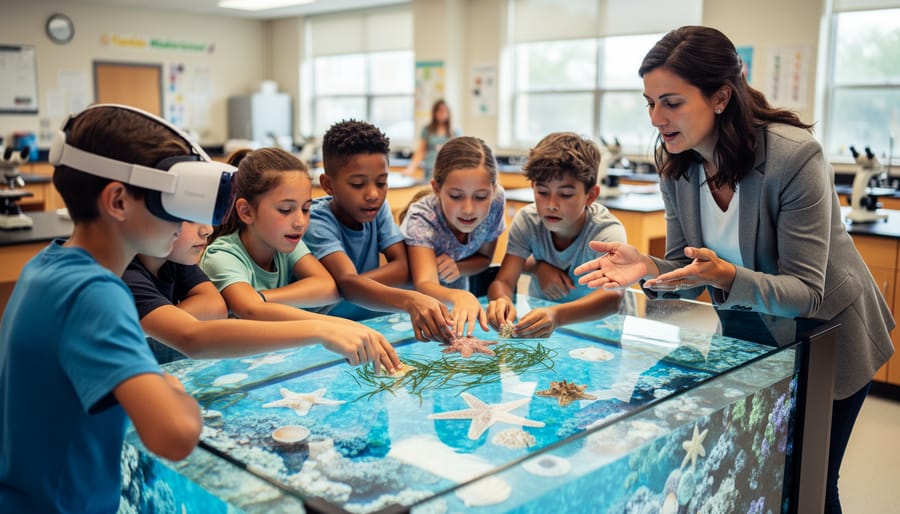
The ocean doesn’t stop mattering just because you live hundreds of miles from the coast. For students in landlocked Florida communities, the challenge isn’t just understanding marine ecosystems—it’s connecting with them in meaningful ways that spark genuine conservation action. The Florida Marine Institute bridges this geographic divide by transforming marine science from an abstract concept into a tangible, participatory experience for inland learners.
Traditional marine education programs often assume proximity to coastlines, leaving inland students with secondhand knowledge gleaned from textbooks and documentaries. This approach creates a disconnect between understanding ocean ecosystems and feeling responsible for their protection. When young people in central Florida communities can’t smell salt air or witness tidal changes firsthand, marine conservation can feel like someone else’s problem—a dangerous mindset for a state surrounded by over 8,400 miles of coastline and where inland waterways directly impact ocean health.
The institute’s mission recognizes a fundamental truth: effective marine stewardship requires educated citizens across all communities, not just coastal ones. By deploying mobile laboratories, creating virtual dive experiences, and establishing hands-on aquatic research stations in inland schools, the program ensures that geographic location doesn’t determine environmental literacy. Students who have never seen the Gulf of Mexico learn to identify coastal species, understand watershed connections, and recognize how their daily choices—from stormwater runoff to plastic consumption—impact marine habitats miles away.
This commitment to ocean science education extends beyond classroom visits. The institute cultivates long-term relationships with inland communities through teacher training programs, student internship pathways, and collaborative research projects that position landlocked learners as active contributors to marine science. These partnerships demonstrate that marine conservation isn’t reserved for oceanfront communities—it’s a shared responsibility requiring knowledge, passion, and action from every corner of Florida.
The Florida Marine Institute: Bridging Distance with Science
For many students growing up hundreds of miles from the nearest coastline, the ocean remains a distant, almost mythical place encountered only through textbooks and documentaries. The Florida Marine Institute was founded with a singular mission: to dissolve that distance and bring the wonders of marine science directly to inland communities. Since its establishment, the institute has pioneered innovative approaches to ocean education, recognizing that understanding and protecting our marine ecosystems requires engagement from all communities, regardless of their proximity to the shore.
The institute’s educational philosophy centers on experiential learning and accessibility. Rather than expecting students to travel to coastal facilities, the Florida Marine Institute brings the ocean to them through mobile marine labs, virtual reality experiences, and hands-on programs featuring live marine specimens. These marine science education programs transform gymnasiums and classrooms into temporary marine research stations, where students can examine tide pool creatures, analyze water samples, and engage with practicing marine biologists who share their personal journeys into ocean science. This ocean education outreach model ensures that geographic location is no barrier to meaningful engagement with marine ecosystems.
Dr. Maria Chen, a marine biologist who joined the institute five years ago, recalls her first inland presentation: “I watched a student hold a sea star for the first time, and her face lit up with wonder. She told me she’d never imagined these animals were real, living creatures. That moment reminded me why this work matters so profoundly.”
The institute operates on the principle that marine conservation is everyone’s responsibility. Ocean health affects global weather patterns, food systems, and biodiversity, impacting communities worldwide. By making marine science tangible and relevant to inland populations, the Florida Marine Institute cultivates a generation of informed advocates who understand their connection to the sea. Educational programs are carefully designed to meet state science standards while inspiring curiosity and environmental stewardship, creating pathways for students who might never have considered marine science as a field of study or conservation as a personal calling.
Why Marine Education Matters for Inland Communities
When you live hundreds of miles from the nearest coastline, the ocean might seem like a distant concern. Yet the health of our marine ecosystems depends significantly on decisions made far from any beach. Understanding these connections isn’t just educational—it’s essential for the future of our planet.
Every inland community is part of a watershed, and everything that flows down storm drains, streams, and rivers eventually reaches the ocean. These watershed connections to ocean health create measurable impacts that marine scientists document daily. A plastic bottle discarded in Orlando today could end up in the Gulf of Mexico tomorrow. Fertilizers applied to lawns in Gainesville contribute to harmful algal blooms along Florida’s coasts. Dr. Rachel Morrison, a marine biologist who grew up in landlocked Kansas, shares: “I never saw the ocean until college, but I learned that my actions at home mattered. That realization changed my career path and my life.”
Inland residents impact marine environments in numerous ways:
- Single-use plastic consumption that enters waterways through improper disposal
- Agricultural runoff carrying fertilizers and pesticides downstream to coastal waters
- Excessive water usage affecting freshwater flow to estuaries and wetlands
- Carbon emissions from transportation and energy use contributing to ocean acidification
- Consumer choices supporting unsustainable fishing practices through seafood purchases
The climate crisis makes these connections even more urgent. Ocean warming and acidification affect weather patterns, food security, and economic stability everywhere—not just in coastal regions. When coral reefs die or fish populations collapse, the consequences ripple through global supply chains, affecting communities worldwide.
Environmental literacy bridges the gap between knowledge and action. Effective watershed education helps students in Tallahassee understand seagrass ecosystems and question their own consumption habits. When families in Jacksonville grasp watershed dynamics, they make different choices about lawn care and waste disposal. This understanding transforms inland marine conservation from an abstract concept into personal responsibility.
The Florida Marine Institute recognizes that protecting our oceans requires engagement from everyone, regardless of zip code. Through innovative outreach programs, virtual experiences, and traveling exhibits, the institute brings marine science directly to inland schools and community centers. These initiatives create what one volunteer educator calls “ocean ambassadors in unexpected places”—individuals who understand their connection to the sea and are empowered to protect it.
Marine education isn’t just for coastal communities. It’s for anyone who drinks water, eats food, or cares about the planet we’ll leave to future generations.
Innovative Outreach Programs That Transcend Geography
Virtual Marine Labs and Digital Expeditions
The Florida Marine Institute bridges the gap between coastal research and inland education through innovative technology platforms that transform ordinary classrooms into windows to the ocean. Students hundreds of miles from the nearest beach can now explore coral reefs, observe deep-sea creatures, and participate in real-time research expeditions without leaving their schools.
The institute’s flagship program utilizes virtual reality ocean experiences that immerse students in 360-degree underwater environments. Through specially designed headsets, learners can swim alongside sea turtles, navigate through mangrove forests, and witness the vibrant ecosystems of Florida’s coastal waters. These VR marine education experiences are enhanced by narration from institute marine biologists who explain the ecological relationships students observe in real time.
Live streaming capabilities bring digital ocean expeditions directly into classrooms as they happen. The institute’s research vessels are equipped with high-definition cameras and two-way communication systems, allowing students to watch scientists at work and ask questions during active field research. Recent expeditions have featured coral restoration projects, shark tagging operations, and deep-water ecosystem surveys.
The institute’s interactive online platform complements these experiences with virtual marine labs where students can analyze real oceanographic data, track tagged marine animals, and participate in citizen science projects. These digital laboratory experiences allow students to conduct simulated experiments, examine water quality data, and explore marine specimen collections remotely. Dr. Sarah Martinez, an education coordinator at the institute, shares that “watching a fifth-grader from rural Florida identify fish species from our underwater footage and contribute to our biodiversity database proves technology can democratize marine science education.”
Traveling Educational Exhibits and Mobile Labs
The Florida Marine Institute breaks down geographical barriers by bringing the ocean directly to communities hundreds of miles from the coast. Through traveling marine exhibits and a mobile ocean lab, the institute’s dedicated outreach team transforms classrooms, libraries, and community centers into immersive marine learning environments.
The mobile ocean lab program features custom-designed vehicles equipped with portable aquariums housing live marine specimens, from colorful reef fish to fascinating invertebrates like sea stars and hermit crabs. These traveling tanks give inland students their first glimpse of ocean creatures in action, sparking curiosity that textbooks alone cannot achieve. Alongside the aquatic displays, educators bring extensive specimen collections including preserved organisms, shells, corals, and shark teeth that students can examine up close.
What truly sets these programs apart are the hands-on marine science activities designed to engage learners of all ages. Students conduct water quality testing, examine plankton under microscopes, and participate in interactive demonstrations about ocean currents and marine food webs. Marine biologist Dr. Elena Rodriguez, who leads many traveling marine exhibits, shares that watching a child’s face light up when touching a sea urchin for the first time never gets old. These moments create lasting connections to ocean conservation, even for those who may never visit the coast.
The program has reached over 45,000 students across central and northern Florida since its inception, with volunteer educators playing crucial roles in making each visit successful and memorable.
Teacher Training and Curriculum Development
The Florida Marine Institute recognizes that ocean literacy shouldn’t be limited to coastal communities. Their comprehensive marine science teacher training programs bridge the gap between marine science and inland classrooms, empowering educators across the state to bring the ocean to life for their students.
Through intensive summer workshops and digital learning platforms, teachers gain hands-on experience with marine ecosystems, from examining water quality testing techniques to understanding coral reef biology. Marine biologist Dr. Rachel Torres shares, “We’ve trained over 500 inland teachers who now confidently teach ocean topics they never thought they could tackle.”
The institute provides ready-to-use ocean literacy curriculum modules aligned with both state science standards and the Ocean Literacy Framework, complete with virtual reef tours, specimen kits, and interactive activities. These resources make complex concepts like ocean acidification and marine food webs accessible to students who may never have seen the sea. Educators receive ongoing support through regional networks and annual refresher courses, ensuring marine science remains a vibrant part of their teaching repertoire year after year.
Success Stories: Transforming Perspectives Hundreds of Miles from Shore
When marine biologist Dr. Sarah Chen first visited Lakeland Elementary School in central Florida, 150 miles from the nearest coastline, she wondered if fourth-graders would connect with lessons about coral reefs and sea turtles. Within weeks, the transformation was undeniable. “These students became ambassadors for ocean conservation without ever seeing the ocean,” she recalls. “They started questioning their families’ plastic use and organized a school-wide campaign to reduce single-use items. That’s when I realized distance from the coast doesn’t limit passion for marine protection.”
The Florida Marine Institute’s inland ocean education programs have documented remarkable marine education impact across Florida’s interior communities. According to program data, a recent three-year study tracking 2,400 students showed that participants demonstrated a 78% increase in understanding marine ecosystem connectivity and a 65% improvement in identifying personal actions that impact ocean health.
Jessica Martinez, a high school science teacher in Ocala, integrated the institute’s virtual reef exploration program into her curriculum two years ago. “My students went from thinking the ocean was irrelevant to their lives to understanding that every storm drain in our parking lot eventually connects to marine environments,” she explains. Her class initiated a watershed monitoring project that identified pollution sources affecting the Silver River system, which flows to the Gulf of Mexico. Three students have since pursued marine science degrees, despite growing up hours from the beach.
The behavioral changes extend beyond classrooms. Community member Tom Bradley, who attended a weekend marine conservation workshop in Sebring, now volunteers monthly with local waterway cleanup efforts. “I learned that fertilizer from my lawn travels through our aquifer system and eventually reaches coastal waters, contributing to algal blooms that harm manatees,” he shares. “That knowledge changed how I maintain my property and how I talk to neighbors about their choices.”
These ocean conservation success stories are tracked through pre- and post-program surveys, revealing that 82% of inland participants report changing at least one daily behavior to reduce ocean impact. Additionally, 91% of educators report increased student engagement with environmental topics after marine education integration.
Perhaps most compelling are the stories of young people finding purpose. Fifteen-year-old Marcus Thompson from Lakeland credits the institute’s mobile aquarium visit with inspiring his current volunteer work. “Holding a sea star for the first time made ocean conservation real,” he says. “Now I’m helping others make that same connection.”
Getting Involved: Volunteer and Participation Opportunities
The Florida Marine Institute welcomes participation from individuals and groups across all communities, regardless of proximity to the coast. Whether you’re a teacher in central Florida, a student passionate about ocean science, or simply someone who cares about marine conservation, there are numerous pathways to get involved and make a tangible difference.
Marine volunteer programs Florida offers span a wide spectrum of activities and commitment levels. Coastal cleanup coordinators help organize quarterly beach restoration events, while data collection volunteers assist researchers by logging observations through mobile apps from anywhere in the state. Marine educators can join the institute’s traveling outreach team, bringing exhibits and interactive demonstrations to schools and community centers throughout inland Florida. “I started volunteering during college breaks,” shares Maria Gonzalez, now a marine biologist with the institute. “Even though I grew up hours from the ocean, those early experiences showed me that marine conservation needs passionate people everywhere, not just at the shoreline.”
Citizen science initiatives offer hands-on research experiences that contribute to real scientific understanding. The Seagrass Monitoring Network trains volunteers to assess water quality in local waterways, creating crucial data sets that track ecosystem health. The Marine Debris Tracker program allows participants to document and catalog pollution found in rivers, lakes, and streams, helping scientists understand how inland waste impacts ocean environments. These ocean conservation volunteering projects require no prior scientific training, just curiosity and commitment.
For educators and community groups seeking structured partnerships, the institute has streamlined the collaboration process:
- Submit an initial inquiry through the institute’s partnership portal, describing your organization and educational goals.
- Schedule a virtual consultation with the outreach coordinator to discuss program options and logistics.
- Collaborate on developing a customized program that aligns with your curriculum or community needs.
- Complete brief online training modules for facilitators and volunteers.
- Launch your program with ongoing support from institute staff and access to educational resources.
The partnership model has proven remarkably flexible, accommodating everything from single-day assembly programs to year-long youth conservation programs that develop student leadership skills.
Students can participate through internship programs, summer research assistantships, and the Young Ocean Advocates initiative, which connects high school students with mentors and provides training in science communication and environmental advocacy. These experiences often spark lifelong careers in marine science and conservation, creating ripple effects that extend far beyond initial participation.
Creating Your Own Marine Conservation Impact from Anywhere
You don’t need to live near the ocean to make a meaningful difference in marine conservation. The choices we make hundreds of miles inland ripple outward, affecting coastal ecosystems and marine life in powerful ways. Understanding this connection is the first step toward becoming an effective advocate for our oceans, regardless of your zip code.
Start with your everyday consumer decisions. The seafood you purchase matters tremendously. Choose sustainably caught or farmed options by consulting resources like the Monterey Bay Aquarium’s Seafood Watch guide. Even in landlocked states, your buying power sends market signals that influence fishing practices worldwide. Similarly, reducing single-use plastics prevents these materials from traveling through waterways to the ocean, where they harm marine animals and ecosystems. The NOAA Marine Debris Program provides resources on how everyday actions prevent ocean pollution.
Your local waterways serve as highways to the sea. Organize or join stream cleanups in your community, knowing that trash removed from a creek in Kansas won’t end up in the Gulf of Mexico. This approach to inland ocean conservation recognizes that marine protection begins at home, wherever home may be. Dr. Sarah Chen, a marine biologist who grew up in Iowa, shares: “I never saw the ocean until college, but I learned early that protecting our local river meant protecting something much bigger. That realization shaped my entire career.”
Advocacy amplifies your impact. Contact legislators about policies affecting ocean health, from climate action to marine protected areas. Your voice matters, especially when decision-makers see that constituents far from the coast care deeply about marine conservation. Organizations like Oceana offer specific ocean conservation actions you can take today to make your voice heard.
Education creates lasting change. Start a marine conservation club at your school or library. Host film screenings about ocean issues. Share what you learn with friends and family. Teachers can integrate ocean science into curricula, helping students understand marine ecosystems’ global importance.
Finally, consider supporting organizations financially or through volunteer opportunities. Many marine research institutions welcome remote volunteers for data analysis, social media support, or educational outreach. Virtual volunteering allows you to contribute specialized skills while learning from marine conservation professionals. These marine conservation from home opportunities build connections that transcend geography and create real-world impact.
The ocean’s influence extends far beyond its shores, and so does our collective responsibility to protect it. Whether you live in a coastal community or hundreds of miles inland, the health of our marine ecosystems affects the air we breathe, the climate we experience, and the future we leave for generations to come. The Florida Marine Institute has demonstrated that geographic distance from the ocean need not translate to disconnection from marine conservation efforts.
For educators seeking to ignite curiosity about ocean science in their classrooms, for students eager to explore marine biology careers, or for community members passionate about environmental stewardship, the institute offers accessible pathways to meaningful engagement. Through virtual programs, traveling exhibits, and comprehensive educational resources, marine conservation has never been more within reach for inland communities.
Dr. Sarah Chen, a marine biologist with the institute, shares her perspective: “Every person who learns about coral reef ecosystems, understands plastic pollution, or participates in citizen science becomes an advocate for our oceans. That advocacy doesn’t require living near the beach—it requires caring enough to take action.”
The opportunity to make a difference starts today. Join the Florida Marine Institute’s e-network to receive updates on virtual events, access educational materials, and connect with a community of ocean advocates nationwide. Participate in online citizen science projects, bring marine education programs to your local school, or simply commit to making ocean-conscious choices in your daily life. Your location doesn’t limit your impact—your engagement defines it.

jessica
Ava Singh is an environmental writer and marine sustainability advocate with a deep commitment to protecting the world's oceans and coastal communities. With a background in environmental policy and a passion for storytelling, Ava brings complex topics to life through clear, engaging content that educates and empowers readers. At the Marine Biodiversity & Sustainability Learning Center, Ava focuses on sharing impactful stories about community engagement, policy innovations, and conservation strategies. Her writing bridges the gap between science and the public, encouraging people to take part in preserving marine biodiversity. When she’s not writing, Ava collaborates with local initiatives to promote eco-conscious living and sustainable development, ensuring her work makes a difference both on the page and in the real world.