Marine Biodiversity Science Center

From Camouflage to Courtship: The Remarkable Survival Strategies of Seahorses
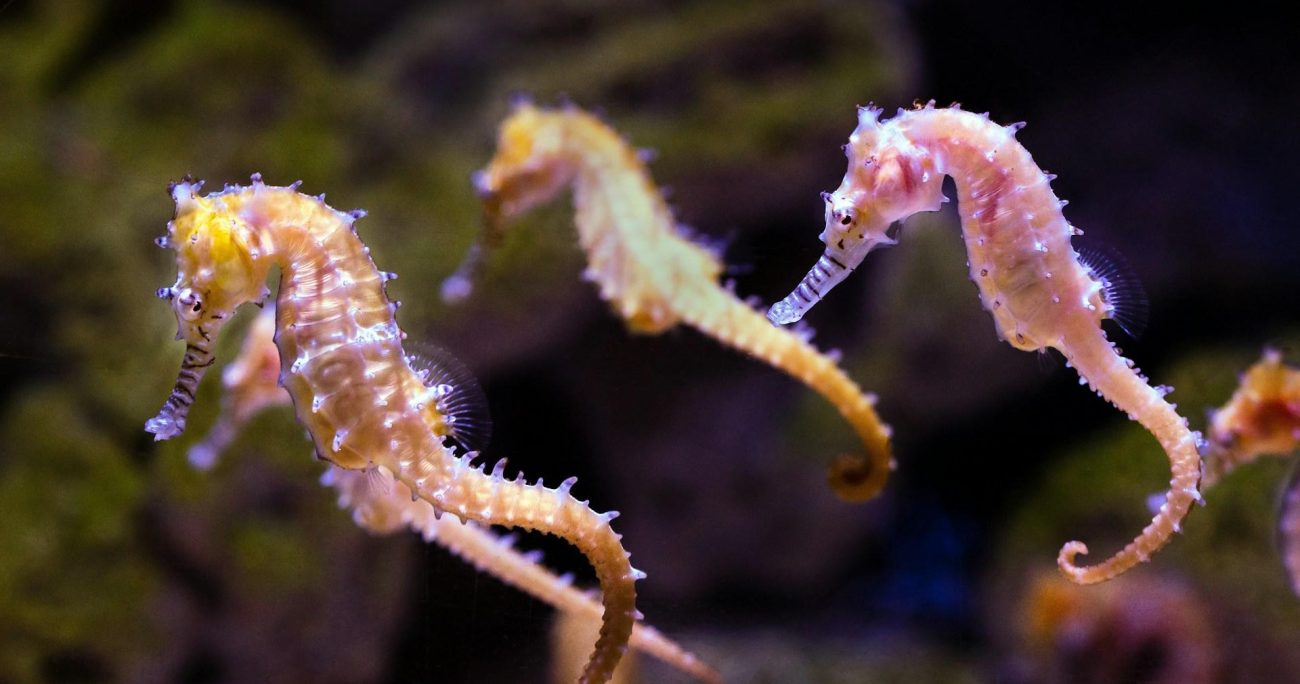
Seahorses are among the most captivating creatures in the ocean, instantly recognizable by their horse-like heads, upright posture, and slow, deliberate movements. Yet behind this whimsical appearance lies a finely tuned survivor shaped by millions of years of evolution.
For marine biology enthusiasts, seahorses offer a fascinating window into behavioral ecology, showcasing how specialized adaptations in camouflage, reproduction, and anatomy can support life in complex coastal ecosystems.
Masters of Camouflage
One of the seahorse’s most important survival tools is its ability to disappear into its surroundings. Living primarily in seagrass meadows, mangroves, and coral reefs, seahorses rely on camouflage to avoid predators and ambush prey. Many species can shift their coloration to match nearby vegetation, blending seamlessly into greens, browns, yellows, or even reddish hues depending on the habitat.
Some seahorses take camouflage to extraordinary extremes. Pygmy seahorses, for example, are so precisely matched to the coral structures they inhabit that they were overlooked by scientists for decades.
Their bodies are covered in tiny bumps that mirror coral polyps, while their coloration perfectly mimics the host coral’s surface. This level of visual deception allows seahorses to remain almost completely invisible, a crucial advantage given that they are poor swimmers and cannot flee quickly from danger.
Rather than relying on speed, seahorses cling to vegetation using their prehensile tails, anchoring themselves against currents while remaining motionless. This strategy conserves energy and enhances camouflage, allowing prey to drift close enough to be captured with a quick snap of the snout.
Unique Courtship Rituals
Seahorses are equally remarkable when it comes to reproduction. Unlike most fish, many species form long-term pair bonds and engage in daily courtship rituals. These interactions often take place in the early morning, when pairs greet each other with synchronized movements, tail entwining, and coordinated swimming patterns.
Color plays a central role during courtship. While camouflage dominates daily survival, mating periods trigger dramatic color changes. Seahorses may brighten, darken, or shift patterns entirely, signaling readiness to reproduce. These visual cues help synchronize partners and reinforce their bond.
Perhaps the most famous aspect of seahorse biology is male pregnancy. During mating, the female transfers her eggs into a brood pouch located on the male’s abdomen. Once fertilized, the eggs develop inside this pouch, where they are protected and nourished until birth. After several weeks, the male undergoes muscular contractions to release fully formed juvenile seahorses into the water.
This unusual role reversal allows females to recover and prepare the next clutch of eggs while the male completes gestation. The result is a highly efficient reproductive cycle that maximizes offspring survival in environments where encounters with potential mates can be rare.
Anatomy Built for Survival
Seahorses possess a suite of anatomical adaptations that support their lifestyle. Their bodies are encased in bony plates rather than flexible scales, forming a natural armor that deters predators. While this structure limits flexibility, it provides protection without adding significant weight.
Their tails are another standout feature. Unlike most fish tails, a seahorse’s tail is prehensile and capable of grasping objects with impressive strength. This allows seahorses to anchor themselves to seagrass or coral, maintaining position in flowing water and reducing the risk of being swept away.
Seahorses also have independently moving eyes, enabling them to scan for predators and prey simultaneously. This near-360-degree visual awareness is especially valuable for an ambush hunter that relies on precision rather than pursuit.
Feeding itself is a highly specialized process. Seahorses lack teeth and stomachs, instead using a tubular snout to create suction that pulls tiny crustaceans directly into their mouths. Because food passes through their digestive system quickly, seahorses must eat almost constantly to meet their energy needs.
Survival, Chance, and Observation
Observing seahorses in the wild highlights how survival often depends on timing, positioning, and subtle advantage. In many ways, their existence mirrors broader natural patterns where patience and preparation outweigh raw speed. Humans have long been fascinated by this balance of chance and strategy, whether watching wildlife, tracking animal behavior, or even engaging in activities like horse wagering, where understanding patterns and probabilities plays a central role.
In nature, however, the stakes are absolute. A successful camouflage shift, a well-timed courtship display, or a secure grip on seagrass can mean the difference between life and death for a seahorse.
A Symbol of Marine Complexity
Seahorses remind us that survival in the ocean is not solely about dominance or strength. Instead, it is often about specialization, cooperation, and adaptation. Their intricate behaviors and distinctive anatomy make them both visually fascinating and scientifically significant.
As coastal habitats face increasing pressure from climate change, pollution, and habitat loss, understanding the survival strategies of species like seahorses becomes more important than ever. Protecting seahorses means protecting the fragile ecosystems they depend on — ecosystems that support countless other marine organisms.
From camouflage to courtship, seahorses stand as elegant examples of how life evolves to meet the challenges of its environment, offering endless insight for those who look closely beneath the surface.

jessica
Ava Singh is an environmental writer and marine sustainability advocate with a deep commitment to protecting the world's oceans and coastal communities. With a background in environmental policy and a passion for storytelling, Ava brings complex topics to life through clear, engaging content that educates and empowers readers. At the Marine Biodiversity & Sustainability Learning Center, Ava focuses on sharing impactful stories about community engagement, policy innovations, and conservation strategies. Her writing bridges the gap between science and the public, encouraging people to take part in preserving marine biodiversity. When she’s not writing, Ava collaborates with local initiatives to promote eco-conscious living and sustainable development, ensuring her work makes a difference both on the page and in the real world.