Marine Biodiversity Science Center

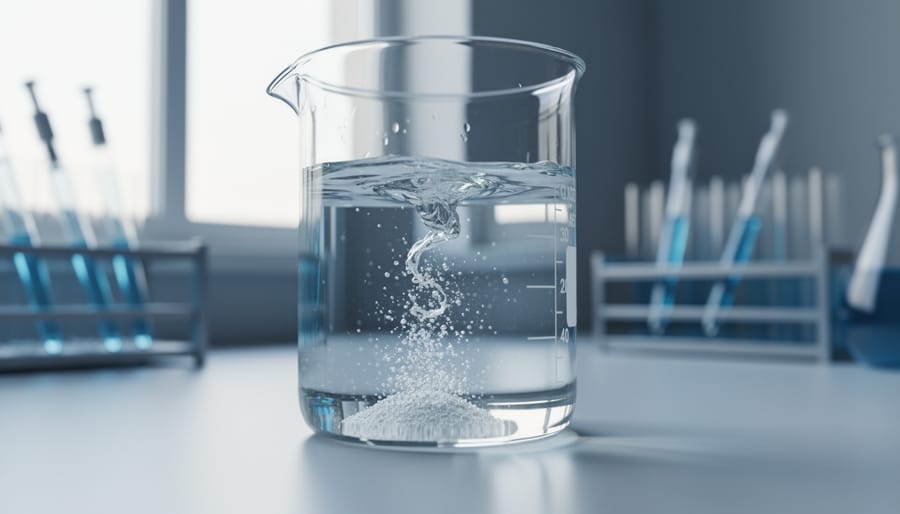
Peptide solubility is how well a peptide, a short chain of amino acids, dissolves in a given liquid to form a clear, stable solution. If you’re sourcing materials, a Canadian source for research peptides can supply peptides with supplier data sheets, which you should always read alongside your institution’s safety guidance. Get it right and your experiment starts on solid footing. Get it wrong and you’re left with cloudy vials, clumped powder, and results you can’t trust.
It matters because a peptide that hasn’t fully dissolved can’t be measured or dosed accurately. The amino acids in the chain decide almost everything: charged residues tend to welcome water, while oily, hydrophobic ones push back. Reading your peptide’s sequence before you pick a solvent saves time, material, and frustration.
This guide covers the chemistry behind solubility, common solvent choices, and a step-by-step workflow for the bench. It’s written for students, early-career researchers, and educators who want a clear foundation.
Careful lab preparation also supports the bigger picture. Peptides are used in studies that help us understand environmental health and the marine life that depends on it, so solid technique at the bench ripples outward. Later, a marine biologist will share a story from the field, and we’ll point to ways you can volunteer for ocean conservation.
What Peptide Solubility Means in Plain Language
Peptide solubility describes how well a peptide dissolves in a liquid to form a stable, clear solution where every molecule is spread evenly through the liquid. Peptides are short chains of amino acids, the same building blocks that make up proteins, only much smaller. Because each chain has its own mix of building blocks, each one behaves a little differently when it meets a liquid.
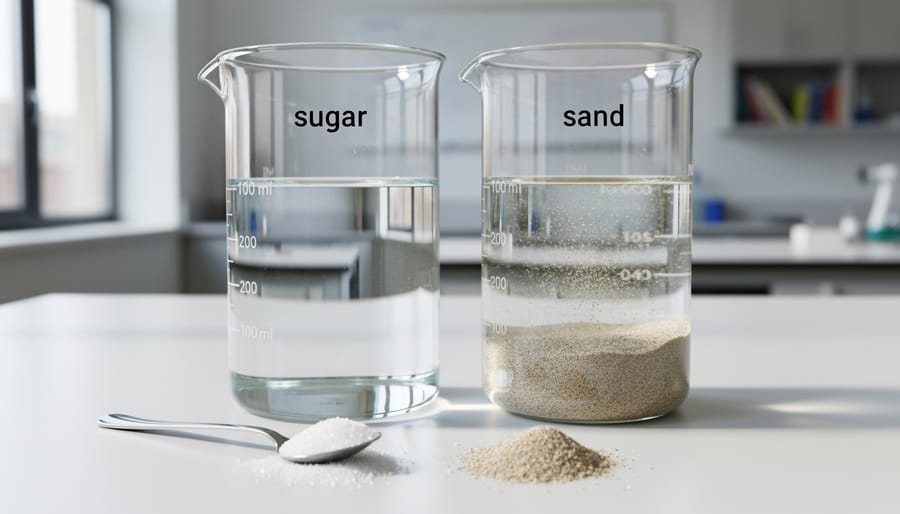
Here’s the part that surprises many newcomers. Stirring powder into liquid isn’t the same as dissolving it. Think of sugar versus sand in a glass of water. Sugar vanishes into a clear solution. Sand swirls around, looks cloudy for a moment, then settles. A peptide can act like either one, or something in between, with tiny clumps floating where you can’t easily see them.
A few terms will help as you read on:
- Peptide
- A short chain of amino acids linked together, smaller than a full protein.
- Solvent
- The liquid used to dissolve a substance, such as sterile water or a buffer.
- Lyophilized peptide
- A freeze-dried peptide supplied as a dry powder, which is how most peptides are shipped and stored.
- Reconstitution
- The process of dissolving a freeze-dried peptide back into liquid form so it can be used.
- Aggregation
- When peptide molecules stick together into clumps instead of staying evenly dispersed.
Why does this matter? A peptide that only looks dissolved can quietly skew results, because the real concentration in your tube may be lower than you think. Reliable preparation is what makes experiments repeatable, and repeatability is a value shared across conservation science, where trustworthy data guides real decisions about the ocean.
How Peptide Solubility Works: The Chemistry Behind the Clear Solution
Amino Acid Composition: Water-Loving vs. Water-Avoiding Building Blocks
Every peptide is a chain of amino acids, and each amino acid brings its own personality to the water-mixing party. Some are water-loving, or hydrophilic. Others are water-avoiding, or hydrophobic. The balance between the two shapes how a peptide behaves once it meets a solvent.
Charged residues, such as lysine, arginine, aspartic acid, and glutamic acid, carry electrical charges that attract water molecules. Polar residues, like serine, threonine, and glutamine, also form friendly connections with water through hydrogen bonding. Peptides rich in these building blocks tend to dissolve more readily in water.
Hydrophobic residues, including leucine, valine, isoleucine, phenylalanine, and tryptophan, behave differently. They shy away from water and prefer to cluster together, which can make a peptide resist dissolving or clump into a cloudy mixture.
The proportion of each type is a strong early predictor of behavior. A sequence with many charged and polar residues usually leans toward easy dissolution, while one packed with hydrophobic residues often calls for more patience. Counting these residues before you begin is a simple, useful first step in planning your preparation.
Net Charge, pH, and the Isoelectric Point
Think of net charge as the peptide’s overall electrical balance. Some amino acids carry a positive charge at a given pH, others a negative one, and the total is the net charge. That charge shifts as the pH of the liquid changes, because acidic and basic groups pick up or lose hydrogen ions.
The isoelectric point (often written pI) is the pH at which those charges cancel out and the peptide is close to neutral overall. Here’s the catch: charged peptides repel one another, which keeps them spread out in solution. Near the pI, that repulsion fades, so molecules can drift together and clump. This is why proteins and peptides often show minimum solubility at isoelectric point even when the same peptide dissolves nicely elsewhere.
So the practical idea is simple. If a peptide struggles in a solution near its pI, nudging the pH away from that point restores some charge and some repulsion. A mostly basic peptide may prefer a slightly acidic solution, while a mostly acidic one may prefer a slightly basic solution.
You don’t need to calculate anything precise by hand. Free online tools can estimate a pI from the sequence, and your supplier’s data sheet is the best guide for your specific peptide.
Length, Sequence, and Aggregation
Longer peptides have more places to interact with each other, and that raises the odds of clumping. Picture a short chain as a single thread and a long one as a tangled ball of yarn: the longer the strand, the easier it is to snag on its neighbors.
Sequence matters just as much as length. Stretches of repeating hydrophobic residues, or patterns that encourage chains to line up side by side, can pull peptides together into aggregates. These clumps may look like faint cloudiness, a gel, or tiny particles that settle out over time.
Conditions at the bench play a role too. A higher concentration puts peptide molecules closer together, so they meet more often. Temperature changes can nudge chains toward sticking or relaxing. And time is a factor: a solution that starts clear can slowly turn hazy during storage as aggregation builds. Keeping an eye on all three helps a clear solution stay that way.
Choosing a Solvent: Types of Solvents and When Each Fits
Water and Buffers: The Starting Point
Sterile water or a suitable buffer is usually the first thing to try, and for good reason. It’s the gentlest option, it rarely interferes with downstream assays, and it keeps the preparation simple. Peptides that are short, rich in charged or polar amino acids, and low in hydrophobic residues often dissolve cleanly this way.
Buffers add a helpful layer of control. A buffer holds the pH steady, which matters because a peptide’s charge, and therefore its solubility, shifts with pH. Choose one that fits your assay and sits comfortably away from the peptide’s isoelectric point.
Water quality counts too. High-purity water keeps stray ions, microbes, and contaminants out of your stock, so cloudiness or odd results are easier to trace. That kind of care is the same discipline behind reliable marine science where reproducible bench work supports trustworthy findings.
Dilute Acids, Bases, and Organic Co-Solvents
When water or a buffer alone does not give a clear solution, researchers often reach for a gentle adjustment of pH. The logic follows from the chemistry of charge. A basic peptide, rich in residues that carry a positive charge, may dissolve more readily in a dilute acidic solution. An acidic peptide, rich in negatively charged residues, may respond better to a dilute basic solution. In both cases, the aim is to move the pH away from the isoelectric point, where the peptide tends to clump.
Hydrophobic peptides are a different story. Because their water-avoiding residues resist dissolving, an organic co-solvent is sometimes used to coax them into solution. The key word is sparingly. A small amount is typically used to dissolve the peptide first, and then the aqueous solution is added slowly, in small steps, while mixing gently. Adding it all at once can cause the peptide to crash out of solution.
Whichever route you take, compatibility with your assay matters. Acids, bases, and organic solvents can affect living cells, enzymes, and measurements, so confirm that the final concentration of any additive suits your downstream work. Your supplier’s data sheet is the best guide.
How Solubility Testing Is Used in Everyday Lab Preparation
In everyday lab work, solubility testing is the quiet step that makes everything else possible. Before a peptide ever reaches an assay, researchers dissolve a small test portion to learn what it needs, then use that knowledge to prepare a stock solution at a known concentration. That stock gets diluted for experiments, so any hidden clumps or cloudiness at the start carry through every result that follows.
Careful preparation is also how labs earn reproducible results. When a peptide is fully dissolved, a colleague in another lab can follow the same method and expect the same outcome. That consistency matters just as much for marine-derived peptides, such as those studied for their roles in sponge and tunicate defense.
Every careful dilution adds a small, trustworthy piece to our understanding of marine biodiversity.
A Step-by-Step Approach to Dissolving Your Peptide
Dissolving a peptide goes best as a series of small, deliberate decisions rather than one big mix. Think of it as gathering clues first, then testing gently. This general workflow is educational only, so defer to your supplier’s data sheet and your institution’s safety protocols.
1. Review the data sheet and the sequence. Look at the peptide’s amino acid makeup, estimated charge, and any solvent suggestions from the supplier. This tells you whether it leans water-loving, acidic, basic, or hydrophobic.
2. Test a small portion first. Set aside a tiny amount rather than committing the whole vial. If something goes wrong, you haven’t lost your entire sample.
3. Start with the gentlest solvent. Try sterile, high-purity water or a suitable buffer before anything else. Many peptides dissolve here without any fuss.
4. Escalate stepwise, only if needed. If the solution stays cloudy, consider a dilute acid for basic peptides or a dilute base for acidic ones. For stubborn hydrophobic peptides, a small amount of organic co-solvent may be an option, with gradual dilution afterward. Always confirm it won’t interfere with your downstream assay.
5. Mix gently. Slow swirling or light vortexing is usually kinder than vigorous shaking, which can encourage clumping.
6. Check clarity. A properly dissolved peptide should look clear and free of visible particles. Hold the tube up to the light and look closely.
Patience at each step pays off in cleaner, more reproducible results.
Common Pitfalls and Troubleshooting Cloudy Solutions
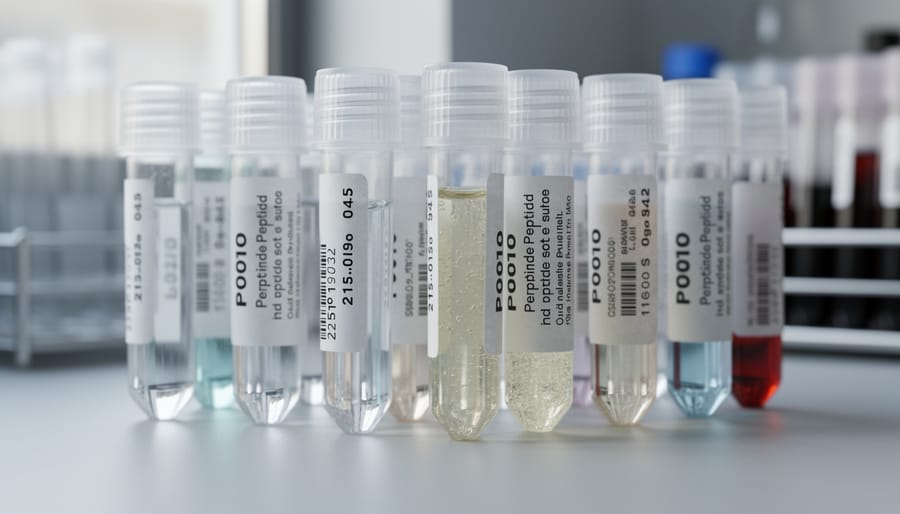
Even experienced researchers meet stubborn peptides now and then, so a cloudy vial is not a failure. It is a signal that the peptide and solvent need a little more attention. These are common, solvable issues, and a calm, stepwise approach usually brings the solution back into balance.
Here are the warning signs to watch for, each paired with a general first response:
- Visible particles: allow a little more gentle mixing time before changing anything else.
- Haze or cloudiness: consider adjusting the pH slightly away from the peptide’s isoelectric point.
- Gel-like texture: dilute gradually, or try a different solvent suited to the peptide’s character.
- Precipitation on dilution: add the concentrated peptide to the diluent slowly, rather than the reverse.
- Missing material on container walls: try low-binding tubes, which reduce sticking.
Gentle sonication or mild warming can help in some cases, but use them sparingly and only where the peptide and supplier guidance allow, since too much heat can damage a sample. Dilution order matters more than many newcomers expect. Adding the peptide stock into a larger volume of diluent, a little at a time, often prevents the sudden shift that causes clumping.
When something goes wrong, make one small change at a time and note what you did. That habit turns a frustrating afternoon into a lesson you can reuse, and it keeps your results reproducible.
Storage and Handling After Dissolving
Once a peptide is in solution, it’s more vulnerable than the dry powder it came from. Lyophilized (freeze-dried) peptides have almost no water around to drive chemical breakdown, so they tend to stay stable for long periods. In liquid, the same molecules can degrade, clump together, or stick to container walls, which is why dissolved stocks are generally treated as short-lived.
Three habits help most. Aliquoting means dividing your stock into small single-use portions, so you only ever thaw what you need. Avoiding repeated freeze-thaw cycles protects against the stress that can encourage aggregation. And clear labeling, with the peptide name, concentration, solvent, and preparation date, keeps your records trustworthy and your experiments reproducible.
Storage needs vary from peptide to peptide, so check the supplier’s data sheet for specific temperature and shelf-life guidance.
Peptide Solubility Questions Researchers Often Ask
Why won’t my peptide dissolve in water?
Peptides rich in water-avoiding (hydrophobic) amino acids often resist plain water, and peptides sitting near their isoelectric point can clump together. A small shift in pH or a carefully chosen co-solvent is usually the next step, as long as it suits your assay.
Can I predict solubility from the sequence?
You can make a good educated guess by counting charged versus hydrophobic residues and estimating net charge. It’s a starting point, not a guarantee, so confirm with a small test portion.
Is cloudiness always a problem?
Usually it signals that the peptide hasn’t fully dissolved or has begun to aggregate. A clear solution is the goal, though some peptides form hazy mixtures that still need gentle troubleshooting rather than immediate disposal.
Why test a small amount first?
Peptides can be costly and limited in supply. Testing a small portion lets you find a workable solvent without risking your whole sample.
Solubility can also change over time, since concentration, temperature, and storage all influence whether a clear solution stays clear. That’s why labeling and prompt use matter. When a question goes beyond the basics, the supplier’s data sheet and your institution’s safety rules always take priority over general advice like this.
Students curious to learn more can start with their course instructors and lab supervisors, who can show safe, supervised technique. It also helps to see where this bench skill leads. Careful preparation underpins the kind of marine biodiversity research that helps us understand and protect ocean life, so every well-dissolved peptide is a small contribution to a bigger story.
Understanding peptide solubility basics turns a frustrating guessing game into a repeatable process. When you know how amino acid makeup, net charge, and chain length shape a peptide’s behavior, you can choose a sensible solvent, test a small portion first, and spot trouble before it costs you a precious sample. That care pays off in clear solutions and in experiments that other researchers can actually reproduce.
Patient bench technique may feel small next to the vastness of the ocean, but it is part of how we learn what marine life has to teach us. Reliable preparation supports reliable results, and reliable results support better decisions for the species and habitats we want to protect.
If this topic sparked your curiosity, we’d love to have you involved. Explore the center’s volunteer programs and join our online e-network to connect with students, educators, and scientists who share your interest. And if you’ve picked up a lesson at the lab bench, whether a hard-won success or a cloudy-solution mishap, share your story so others can learn from it too.

jessica
Ava Singh is an environmental writer and marine sustainability advocate with a deep commitment to protecting the world's oceans and coastal communities. With a background in environmental policy and a passion for storytelling, Ava brings complex topics to life through clear, engaging content that educates and empowers readers. At the Marine Biodiversity & Sustainability Learning Center, Ava focuses on sharing impactful stories about community engagement, policy innovations, and conservation strategies. Her writing bridges the gap between science and the public, encouraging people to take part in preserving marine biodiversity. When she’s not writing, Ava collaborates with local initiatives to promote eco-conscious living and sustainable development, ensuring her work makes a difference both on the page and in the real world.