Marine Biodiversity Science Center

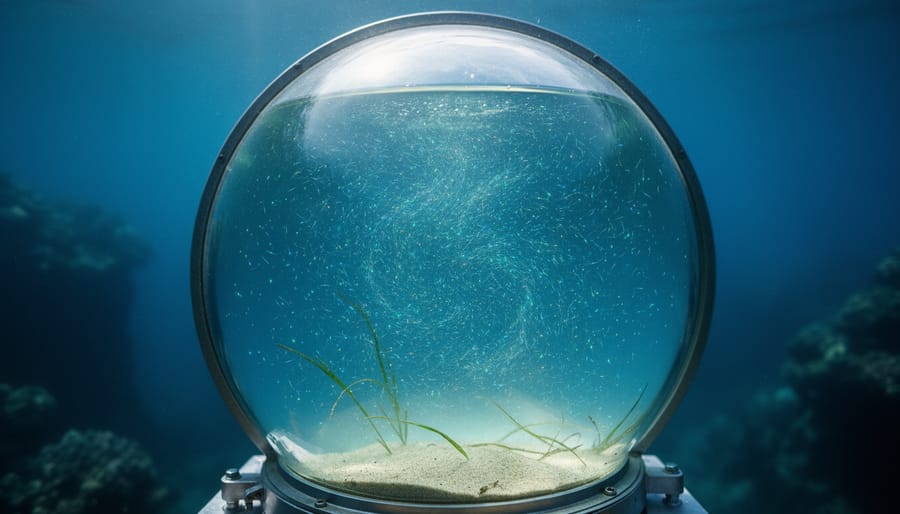
The marine microbiome is the vast, invisible community of bacteria, archaea, viruses, and fungi that inhabit ocean waters, seafloor sediments, and the bodies of marine organisms. These microscopic life forms outnumber the stars in our galaxy and perform essential functions that sustain ocean health: they cycle nutrients, produce roughly half the oxygen we breathe, regulate climate by capturing carbon, and form the foundation of marine food webs.
When this delicate microbial balance breaks down, a condition called dysbiosis, the consequences ripple through entire ecosystems. Coral reefs lose their resilience to bleaching. Fish populations suffer increased disease. Coastal waters experience toxic algal blooms. What was once considered a problem confined to human gut health has emerged as one of the most pressing yet least visible threats to ocean conservation.
The disruption happens faster than most people realize. Pollution, warming waters, agricultural runoff, and antibiotics from coastal development can shift microbial communities within days, replacing beneficial bacteria with harmful strains. A healthy reef’s microbiome might harbor thousands of microbial species working in harmony; a stressed reef can see that diversity collapse to a handful of opportunistic pathogens.
This article explains how the marine microbiome functions as the ocean’s immune system, identifies the key microbial players in healthy versus disrupted ecosystems, and examines the emerging science of microbial dysbiosis as a conservation priority. You’ll discover how scientists monitor these invisible shifts, what restoration strategies show promise, and how citizen scientists are contributing valuable data to protect marine microbial diversity. Understanding this microscopic frontier is no longer optional for anyone serious about ocean conservation. The microbes were here first, and they’ll determine what survives the changes ahead.
What the Marine Microbiome Means for Ocean Health
The marine microbiome encompasses the invisible universe of microscopic life that permeates every corner of our oceans. This vast community includes bacteria, archaea, viruses, fungi, and protists, organisms so small that a single drop of seawater can contain millions of individual cells. Together, they outnumber all visible marine life by factors of thousands, forming what scientists now recognize as the ocean’s true foundation.
- Marine microbiome
- The collective community of microscopic organisms living throughout ocean environments, including bacteria, archaea, viruses, fungi, and protists. These communities drive essential ecological processes that sustain all marine life.
- Microorganisms
- Living organisms too small to see without magnification, typically measured in micrometers. In marine environments, they range from photosynthetic cyanobacteria to single-celled protists to viruses that infect larger cells.
- Microbial communities
- Groups of different microorganism species living together in a specific environment, where they interact with each other and their surroundings. These communities vary dramatically based on location, depth, temperature, and available nutrients.
- Host-microbe interactions
- The relationships between larger marine organisms and the microbes living on or within them. These partnerships often provide essential benefits like digestion, immunity, and nutrient acquisition for the host.
These microbes inhabit virtually every marine environment imaginable. They float freely in sunlit surface waters, where photosynthetic bacteria produce much of the oxygen we breathe. They colonize particles drifting through the water column and carpet the seafloor, from shallow coastal sediments down to the deepest ocean trenches. Inside coral polyps, fish guts, and whale skin, specialized microbial communities form intimate partnerships with their hosts, providing nutrition, protection against disease, and developmental signals that these animals cannot survive without.
The marine microbiome operates as the ocean’s metabolic engine. These microscopic workers break down dead organic matter, recycle nutrients that would otherwise sink and disappear, and convert dissolved compounds into forms that larger organisms can use. Without this constant microbial activity, marine food webs would collapse within weeks. The health of every fish, every coral reef, every kelp forest depends entirely on maintaining balanced, diverse microbial communities performing these fundamental tasks.
How the Marine Microbiome Works
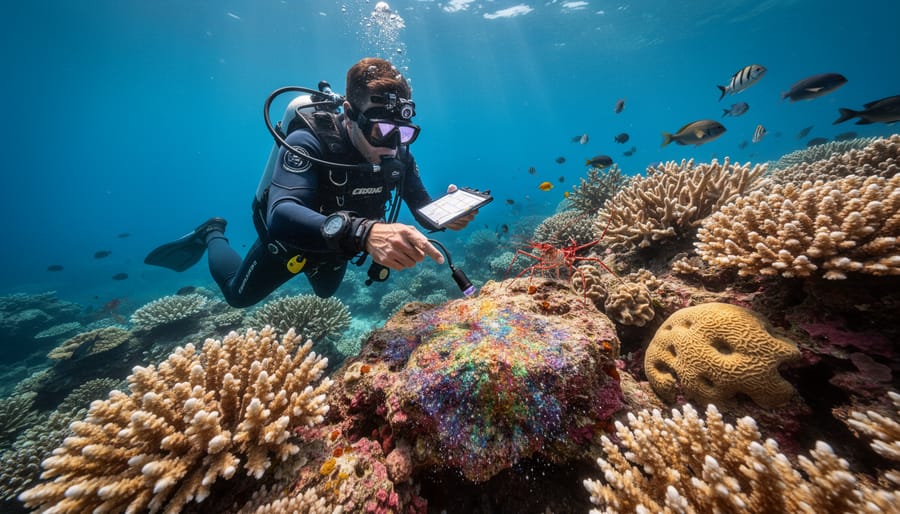
The Invisible Engine of Marine Food Webs
At the foundation of every marine food web sits an invisible workforce of microorganisms that transforms lifeless chemicals into living tissue. Photosynthetic bacteria and cyanobacteria convert dissolved carbon dioxide and inorganic nutrients into organic matter through primary production, generating roughly half the oxygen we breathe in the process. These microscopic producers create biomass from sunlight and seawater chemistry, forming tiny packages of energy and nutrients that larger organisms can consume.
Heterotrophic bacteria break down dissolved organic matter released by dying phytoplankton, excretions, and decomposing material, repackaging these nutrients into bacterial cells. Zooplankton then graze on both photosynthetic microbes and these bacteria, transferring microbial productivity up the food chain to fish, seabirds, and marine mammals.
This microbial loop recycles nutrients that would otherwise sink beyond the reach of surface ecosystems. Without it, dissolved nutrients would remain locked in forms larger organisms cannot access. Marine microbiologist Dr. Sarah Chen describes it as “nature’s conversion system, microbes take what nothing else can use and turn it into food for everything else.” The efficiency of this conversion directly determines how much life an ocean region can support.
Microbial Partnerships with Marine Life
Beneath the ocean’s surface, microbes and marine animals have forged intimate alliances essential to survival. Coral reefs depend on vast microbial consortia that recycle nutrients, defend against pathogens, and regulate the coral’s relationship with zooxanthellae algae. When these bacterial partners disappear or shift, corals lose their protective shield and become vulnerable to disease and bleaching.
Fish carry specialized gut microbiomes that break down complex polysaccharides, produce vitamins, and train immune systems to distinguish friend from foe. Juvenile fish inherit their first microbial colonizers from surrounding seawater and parental mucus, establishing communities that influence growth rates and disease resistance throughout life. Marine mammals harbor similarly complex partnerships, dolphin skin microbiomes produce antimicrobial compounds that prevent infections in constantly wet environments, while whale gut bacteria help extract energy from krill and fish.
Even deep-sea tube worms rely entirely on chemosynthetic bacteria housed in specialized organs to convert toxic hydrogen sulfide into usable energy. These partnerships aren’t optional extras but fundamental to how marine life functions, grows, and adapts to changing conditions.
Components and Diversity of Marine Microbial Communities
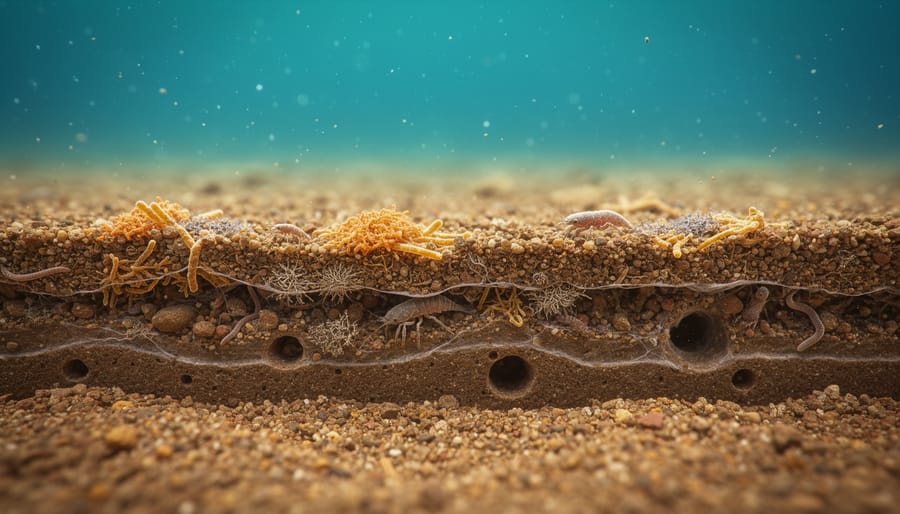
The marine microbiome contains an astonishing diversity of microscopic life, each group playing specialized roles that keep ocean ecosystems functioning. Understanding these different microbial players helps reveal why even subtle shifts in community composition can cascade into serious ecological disruptions.
Bacterioplankton dominate the open ocean, with trillions of cells suspended in every liter of seawater. These free-floating bacteria drive most of the ocean’s nutrient recycling. Cyanobacteria like Prochlorococcus and Synechococcus perform half of all marine photosynthesis, producing oxygen while fixing carbon dioxide. Proteobacteria, the ocean’s most abundant bacterial group, specialize in breaking down organic matter and cycling nitrogen compounds that fuel marine food webs. In surface waters where sunlight penetrates, photosynthetic species thrive, while deeper zones harbor chemosynthetic bacteria that extract energy from chemical reactions in total darkness.
Archaea were once thought rare in the ocean, but molecular techniques revealed them as major players, particularly in extreme conditions. These ancient microbes dominate deep ocean layers where they process ammonia and methane, acting as a crucial buffer in global nitrogen and carbon cycles. Marine Group I archaea, for instance, can make up a third of all microbial cells below 100 meters depth, thriving in cold, dark waters where most bacteria struggle.
Marine viruses vastly outnumber all other organisms, roughly ten viral particles for every bacterial cell. These microscopic predators infect and kill about 20% of ocean microbes daily, releasing nutrients back into the water and controlling which bacterial strains dominate. Viruses also act as genetic shuttles, transferring DNA between hosts and driving rapid microbial evolution.
The major microbial groups each contribute essential functions:
- Cyanobacteria: oxygen production through photosynthesis
- Proteobacteria: nutrient cycling and organic matter decomposition
- Archaea: specialists in extreme environments and deep ocean chemistry
- Viruses: population control and horizontal gene transfer
- Fungi: decomposition of complex organic materials
- Protists: primary production and grazing on bacteria
Marine fungi and protists round out the microbial community, though they remain less studied than bacteria. Fungi excel at breaking down tough organic compounds like cellulose and chitin from dead organisms, while protists range from photosynthetic diatoms producing food to predatory ciliates that graze on bacteria.
This microbial diversity shifts dramatically across ocean environments. Warm tropical surface waters harbor different communities than frigid polar seas. Coastal zones teeming with nutrients support different species than nutrient-starved open ocean gyres. Salinity creates boundaries too, microbes adapted to full-strength seawater differ from those in estuaries where rivers meet the sea. A single water sample from Antarctica contains entirely different microbial players than one from the equator, each community shaped by millennia of adaptation to local conditions.
Understanding Marine Microbiome Dysbiosis
Marine microbiome dysbiosis occurs when the delicate balance of microbial communities shifts from a healthy, functional state to one that compromises ecosystem stability. Unlike the natural fluctuations microbes experience with seasonal changes or tidal cycles, dysbiosis represents a fundamental breakdown in community structure, one that persists and often worsens without intervention.
Think of a healthy marine microbiome as a well-rehearsed orchestra. Each microbial group plays its part in nutrient cycling, waste decomposition, and supporting host organisms. Dysbiosis is what happens when key players disappear, invasive species dominate the ensemble, or the entire composition becomes chaotic. The music doesn’t just sound different, it stops functioning as intended.
Normal microbial variation is adaptive and reversible. Bacterial populations naturally ebb and flow with water temperature, nutrient availability, and light exposure. These communities bounce back to baseline conditions once environmental pressures ease. Dysbiosis, by contrast, creates a new, often harmful equilibrium. Beneficial microbes decline while opportunistic pathogens or less functional species proliferate. The community loses its resilience and its ability to support the larger ecosystem.
What triggers this pathological shift? Chronic environmental stress is typically the culprit. When ocean temperatures remain elevated beyond normal seasonal peaks, or when pollution introduces persistent toxins, microbial communities cannot recover between stressors. The timeline matters: a brief heat spike might cause temporary disruption, but sustained warming fundamentally rewires which microbes can survive and reproduce.
Dr. Elena Roth, a microbial ecologist studying Pacific reef systems, observes that dysbiosis rarely results from a single factor. “We’re seeing compounding stressors, acidification weakening coral defenses while agricultural runoff feeds harmful bacteria. The microbiome can handle one challenge, but multiple simultaneous pressures push it past the tipping point into dysbiosis.”
This distinction between natural variation and dysbiosis is crucial for conservation. Recognizing when microbial communities have crossed from adaptive flexibility into pathological imbalance allows researchers to intervene before ecosystem collapse becomes irreversible.
Causes of Marine Microbiome Disruption
Marine microbiome disruption stems from multiple intersecting stressors, each fundamentally altering the composition and function of microbial communities in ways scientists are only beginning to understand.
Ocean warming ranks among the most pervasive threats. Rising temperatures directly affect microbial metabolism, growth rates, and community assembly. Heat-adapted microbes outcompete cold-water specialists, shifting the balance toward communities less efficient at nutrient cycling. Thermal stress also weakens the immune systems of coral and other hosts, making them vulnerable to opportunistic pathogens that thrive in warmer waters. The relationship between climate change and microbial dysbiosis creates feedback loops that accelerate ecosystem decline.
Ocean acidification changes the chemical landscape microbes navigate. As seawater absorbs excess atmospheric carbon dioxide, declining pH levels favor acid-tolerant bacterial strains while suppressing species that calcifying organisms depend on. This chemical shift disrupts symbiotic partnerships, particularly in coral, mollusks, and plankton communities where microbes assist in shell and skeleton formation.
Pollution introduces chemical stressors that toxic microbial communities cannot buffer. Plastics leach additives and concentrate pollutants, creating microenvironments where harmful bacteria flourish. Heavy metals from industrial runoff and mining operations accumulate in sediments, selecting for metal-resistant microbes that often carry antibiotic resistance genes. Agricultural runoff delivers excess nutrients that trigger explosive growth of opportunistic species, outcompeting the diverse communities that maintain ecosystem stability.
The overfishing impacts extend beyond depleted fish stocks to microbial communities. Removing predators and herbivores disrupts nutrient flows that shape microbial ecosystems. Bottom trawling physically destroys sediment microbiomes that took decades to establish, replacing complex communities with simple assemblages dominated by fast-growing generalists.
Habitat destruction through coastal development, dredging, and mangrove clearance eliminates the physical structures where specialized microbial communities develop. Each habitat type harbors distinct microbiomes adapted to local conditions; their loss represents irreplaceable microbial biodiversity.
Emerging contaminants including pharmaceuticals, personal care products, and microplastics introduce novel selection pressures. Antibiotics in coastal waters promote resistance, while endocrine disruptors alter host-microbe signaling pathways that evolved over millions of years.
How Dysbiosis Functions as a Biological Threat
Coral Bleaching and Microbial Collapse
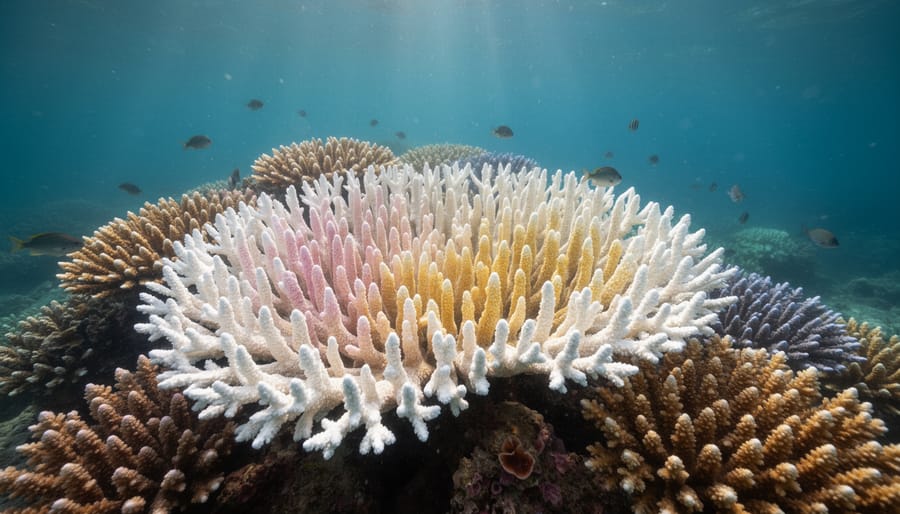
Coral reefs provide a striking case study in how microbial disruption translates into visible ecosystem collapse. When ocean temperatures rise by even 1-2°C above seasonal norms, heat stress triggers a cascade of microbial changes in coral tissues. The first casualty is the stable community of beneficial bacteria that normally help corals process nutrients, defend against pathogens, and maintain their symbiotic relationship with zooxanthellae algae. As these protective microbes decline, opportunistic bacteria, including known coral pathogens like Vibrio species, proliferate rapidly.
This microbial shift compromises the coral’s immune response at precisely the moment it faces maximum stress. The coral expels its zooxanthellae, losing both its color and its primary energy source. The depleted microbiome can no longer prevent pathogen colonization, creating an opening for diseases that further weaken the coral. Researchers tracking coral microbiomes during bleaching events have documented a shift from diverse, stable communities to pathogen-dominated ones within days.
The connection extends beyond individual coral colonies. Degraded reefs release nutrients that fuel harmful algal blooms which further stress surrounding coral and create feedback loops of decline. Recovery depends not just on temperature stabilization but on microbial community restoration, a process that can take years even under ideal conditions.
Fish and Marine Mammal Health Consequences
Beyond coral, fish and marine mammals face their own microbiome crises. Researchers are documenting gut dysbiosis in commercially important fish species exposed to warming waters and pollutants, finding that disrupted microbial communities compromise nutrient absorption and weaken immune defenses against pathogens. In marine mammals, altered skin and respiratory microbiomes correlate with increased susceptibility to marine diseases particularly in populations already stressed by habitat loss and food scarcity. Studies of stranded dolphins and seals reveal microbial signatures distinct from healthy individuals, suggesting dysbiosis may be an invisible precursor to visible population declines. The implications extend to fisheries and ecosystem stability, as microbial imbalances ripple through food webs.
Applications of Marine Microbiome Research in Conservation
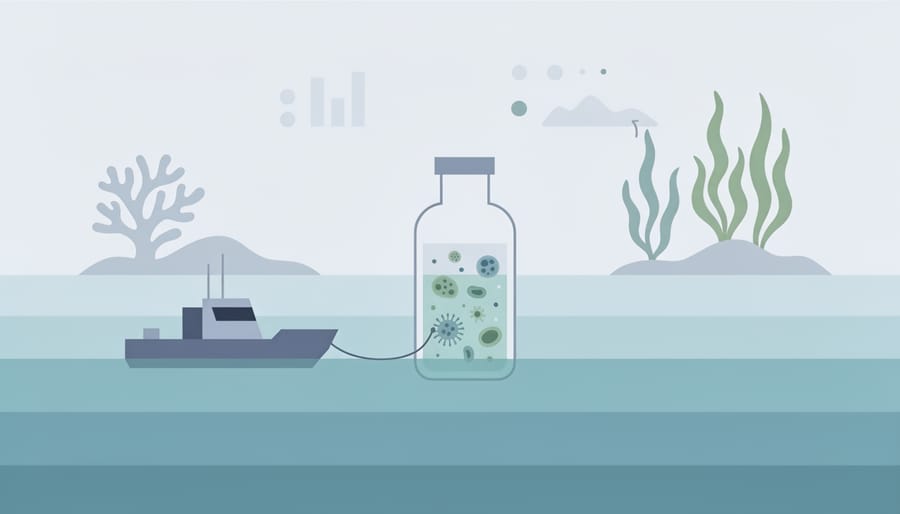
Scientists now deploy marine microbiome research as a practical conservation tool, translating laboratory findings into field interventions that protect ocean ecosystems. These applications bridge fundamental microbiology and hands-on restoration, offering measurable strategies to combat dysbiosis and rebuild marine resilience.
Microbiome monitoring functions as an early warning system for ecosystem stress. Researchers collect water samples and analyze microbial DNA to detect shifts in community composition before visible damage appears. A 2025 study in the Great Barrier Reed used this approach to identify coral reefs entering pre-bleaching stress states weeks ahead of satellite temperature alerts, enabling targeted intervention. Monitoring programs now track microbial indicators of pollution, disease risk, and climate impacts across marine protected areas worldwide.
Probiotic interventions represent one of the most promising applications. Scientists isolate beneficial bacteria from healthy corals and reintroduce them to stressed or recovering reefs, much like probiotic supplements support human gut health. Trials in the Caribbean have applied these microbial cocktails to coral fragments during nursery growth, boosting survival rates and heat tolerance when transplanted back to degraded reefs. This marine biotechnology approach complements traditional coral gardening by addressing the invisible microbial layer of reef health.
Bioremediation harnesses microbes’ natural ability to break down pollutants. After oil spills, conservation teams seed affected areas with hydrocarbon-degrading bacteria to accelerate cleanup. Similar strategies target plastics, heavy metals, and agricultural runoff, turning microbes into living scrubbers that restore water quality without harsh chemicals.
Current applications span multiple fronts:
- Real-time ecosystem health monitoring through microbial DNA sequencing
- Coral probiotic treatments to prevent bleaching and disease
- Oil spill bioremediation using hydrocarbon-degrading bacteria
- Aquaculture disease management through microbiome balancing
- Restoration ecology projects seeding beneficial microbes in degraded habitats
- Climate resilience strategies selecting heat-tolerant microbial communities
Marine protected area design increasingly incorporates microbiome data. Managers identify zones where microbial communities show high diversity and resilience, then prioritize those areas for protection. This strategy preserves microbial “seed banks” that can recolonize damaged ecosystems during recovery.
Volunteers contribute to these efforts through citizen science water sampling programs, coral nursery maintenance that includes probiotic application, and beach monitoring that tracks pollution impacts on microbial communities. The Marine Biodiversity Science Center coordinates hands-on opportunities where participants collect samples for microbiome analysis, directly supporting conservation research that informs management decisions.
What You Can Do to Support Marine Microbiome Health
You don’t need a research lab to support marine microbiome health. Start with your daily choices. Reduce single-use plastics, which shed microplastics that harbor harmful bacteria and disrupt microbial communities. Swap plastic bags for reusable ones, choose products with minimal packaging, and carry a refillable water bottle. These small shifts reduce the pollutant load entering coastal waters.
Your seafood choices matter too. Buy from fisheries certified by the Marine Stewardship Council or check Seafood Watch ratings before purchasing. Overfishing removes key species that host beneficial microbes and destabilizes nutrient cycles. Supporting sustainable practices helps maintain the ecological balance that healthy microbiomes require.
Citizen science offers hands-on involvement. Programs like NOAA’s Marine Debris Tracker let you document pollution that affects microbial habitats. If you live near the coast, join local beach cleanups or water quality monitoring initiatives. Your observations contribute to datasets researchers use to track ecosystem stress.
The Marine Biodiversity Science Center provides direct volunteer opportunities. Join our coastal sampling teams collecting water and sediment for microbiome analysis. No biology background is required, we train volunteers in proper collection techniques. Remote volunteers can help digitize historical marine survey data or assist with social media outreach.
Advocacy amplifies your impact. Contact local representatives to support marine protected area expansion and stricter pollution controls. Attend town halls on coastal development projects. Your voice influences policies that shape ocean health for decades.
Connect with our e-network to receive monthly volunteer opportunities, research updates, and conservation alerts. Together, these actions create the conditions marine microbiomes need to thrive and maintain the ocean ecosystems we all depend on.
Frequently Asked Questions About the Marine Microbiome
Can marine microbiome dysbiosis affect human health?
Yes, through multiple pathways. Disrupted marine microbiomes can trigger harmful algal blooms that produce toxins affecting seafood safety, while dysbiosis in fish gut microbiomes may compromise the nutritional value and safety of the seafood we consume. Additionally, healthy marine microbes produce approximately half of Earth’s oxygen, so large-scale dysbiosis could impact air quality globally.
How quickly can marine microbiome changes occur?
Microbial communities can shift within days to weeks in response to acute stressors like pollution events or temperature spikes. However, the functional consequences of these shifts, such as reduced nutrient cycling or increased pathogen prevalence, may take months to years to fully manifest across an ecosystem.
Is marine microbiome damage reversible?
Recovery depends on the severity and duration of disruption. Mild dysbiosis may reverse within weeks once stressors are removed, but chronic imbalances can fundamentally alter community structure, making restoration difficult. Some coral reefs have shown microbiome recovery after targeted probiotic interventions, though research in this area remains early-stage.
What distinguishes marine microbiomes from terrestrial ones?
Marine microbiomes exist in a fluid, three-dimensional environment where dispersal is easier and communities are less spatially confined than in soil. Ocean microbes face unique challenges including salt tolerance, pressure adaptation at depth, and nutrient scarcity in open waters, resulting in metabolic strategies and community structures fundamentally different from their land-based counterparts.
These questions reflect the growing public awareness that ocean health extends beyond charismatic megafauna to include the invisible organisms underpinning marine life. Scientists continue developing new techniques to study these microscopic communities, from environmental DNA sampling that captures genetic material from seawater to advanced imaging that reveals microbes living inside coral tissues. Each research advance brings us closer to understanding how to protect and restore the microbial foundations of ocean ecosystems.
The complexity of marine microbiomes means we’re still discovering basic facts about how they function and respond to stress. What we know with certainty is that these communities are changing rapidly in response to human impacts, and the consequences ripple through entire food webs.
The ocean’s invisible majority, trillions of microbes working in concert, sustains every aspect of marine life we can see. When these microbial communities fall out of balance, the consequences ripple through entire ecosystems, from coral reefs to commercial fisheries. Dysbiosis is not a distant threat. It is happening now, accelerated by warming waters, pollution, and habitat loss.
Yet the story does not end there. Every research breakthrough in marine microbiome science opens new doors for intervention and restoration. Scientists are developing probiotic treatments for stressed corals, using microbial monitoring to detect ecosystem decline before it becomes catastrophic, and designing conservation strategies that work with natural microbial processes rather than against them.
You have a role in this effort. Join the Marine Biodiversity Science Center’s e-network to stay informed about volunteer research expeditions, citizen science initiatives, and advocacy opportunities. Whether you are reducing plastic consumption, supporting sustainable seafood, or contributing data through monitoring programs, your actions matter. Healthy oceans depend on healthy microbiomes, and protecting them requires all of us working together. The microscopic world needs champions, and that work begins with understanding what is at stake.

jessica
Ava Singh is an environmental writer and marine sustainability advocate with a deep commitment to protecting the world's oceans and coastal communities. With a background in environmental policy and a passion for storytelling, Ava brings complex topics to life through clear, engaging content that educates and empowers readers. At the Marine Biodiversity & Sustainability Learning Center, Ava focuses on sharing impactful stories about community engagement, policy innovations, and conservation strategies. Her writing bridges the gap between science and the public, encouraging people to take part in preserving marine biodiversity. When she’s not writing, Ava collaborates with local initiatives to promote eco-conscious living and sustainable development, ensuring her work makes a difference both on the page and in the real world.