Marine Biodiversity Science Center

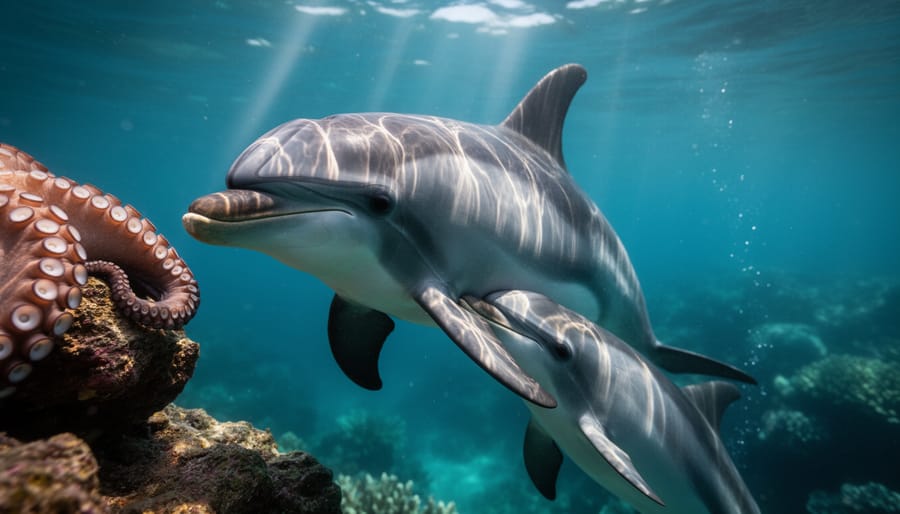
Tactile communication in animals is the exchange of information through physical contact, a sensory language spoken through touch rather than sound or sight. From dolphins brushing pectoral fins in coordinated hunts to octopuses using their eight arms to explore reef crevices and assess potential mates, marine species rely on direct contact to convey messages that can mean the difference between survival and death.
This form of communication operates through specialized sensory receptors in the skin, scales, or other body surfaces that detect pressure, vibration, texture, and temperature. When one animal touches another, mechanoreceptors translate that physical stimulus into electrical signals the nervous system can interpret. The result is a rich vocabulary of tactile cues: a gentle nudge from a mother whale guiding her calf, the aggressive jab of a territorial mantis shrimp, or the delicate antenna contact between cleaner shrimp and their fish clients.
Understanding tactile communication matters for marine conservation in 2026 because it reveals how species navigate their underwater world, coordinate group behavior, establish social bonds, and respond to environmental change. When habitat degradation disrupts these physical interactions or when noise pollution forces animals to rely more heavily on touch, entire communication networks can break down. Marine biologist Dr. Sarah Chen, who has spent fifteen years studying tactile behavior in Hawaiian spinner dolphins, puts it simply: “Touch is their first language. Before they learn to echolocate effectively, young dolphins are already reading the ocean through contact with their mothers and pod mates.”
This article explains the biological mechanisms behind tactile communication, categorizes the types of touch-based behaviors scientists observe across marine species, and connects this research to practical conservation strategies you can support through volunteer work and informed advocacy.
What Tactile Communication Means in the Animal Kingdom
Tactile communication is the transfer of information between animals through direct physical contact, touch that carries meaning. When a dolphin calf nudges its mother, a seal presses its whiskers against another’s face, or an octopus runs an arm along the ocean floor, they’re gathering data and sending signals through specialized touch receptors embedded in their skin and other tissues. This sensory channel operates on a fundamentally different principle than vision or hearing: it requires proximity and contact rather than transmitting signals across distance.
In marine environments, tactile communication takes on heightened importance. Light scatters and fades rapidly as water depth increases, limiting visual signals to shallow, clear waters. Sound communication travels well underwater but can be masked by ambient noise or disrupted by human activity. Water flow communication offers another sensory pathway, yet touch remains irreplaceable for intimate interactions, bonding between mothers and young, conflict resolution, and mating rituals where precise, private information exchange matters most.
- Mechanoreception
- The biological process by which specialized cells detect mechanical stimuli such as pressure, vibration, or texture and convert them into neural signals the brain can interpret.
- Tactile receptors
- Sensory nerve endings in the skin and other tissues that respond to touch, allowing animals to perceive contact, temperature changes, and surface characteristics.
- Vibrissae
- Stiff, highly sensitive whiskers found on seals, sea lions, and walruses that detect minute water movements and help track prey even in complete darkness.
- Lateral line system
- A network of fluid-filled canals beneath the skin of fish and some amphibians that senses water pressure changes, vibrations, and movement nearby.
- Social touch
- Physical contact between animals that serves bonding, comfort, or communication functions rather than aggressive or reproductive purposes.
Marine animals have evolved remarkable anatomical specializations for tactile sensing. These structures amplify their ability to detect subtle variations in pressure, texture, and movement, essential capabilities in an environment where other senses face limitations.
How Tactile Communication Works in Marine Species
Specialized Touch Organs in Marine Life
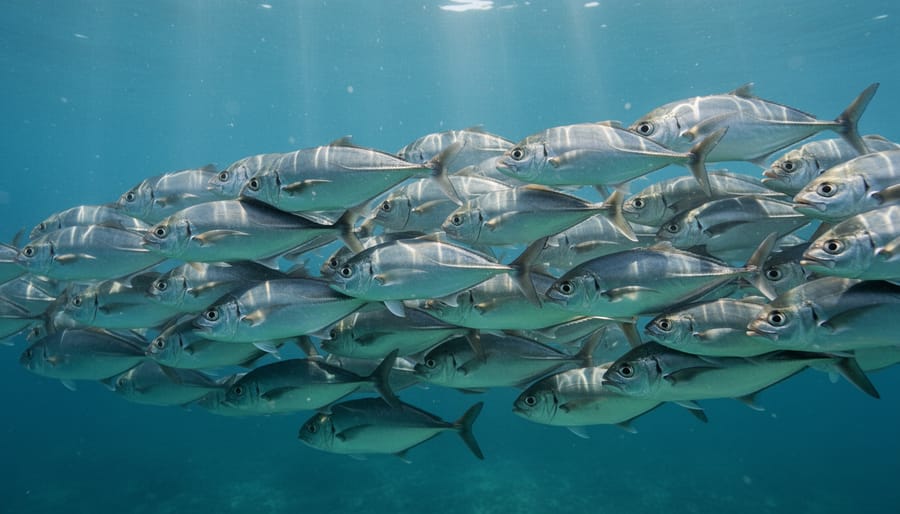
Marine animals have evolved remarkable touch-sensitive structures tailored to underwater life. Fish possess a lateral line system, a series of fluid-filled canals running along their body that contain hair-like cells called neuromasts. When water pressure changes or an object moves nearby, these cells bend and fire nerve signals to the brain. The lateral line senses vibrations from prey, predators, and obstacles even in complete darkness, functioning as an underwater touch-at-a-distance system that maps the surrounding environment in real time.
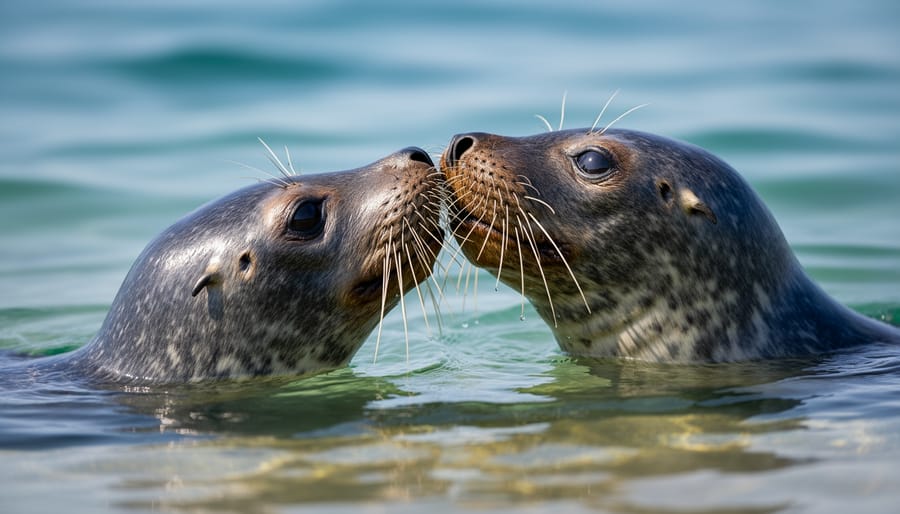
Seals and sea lions rely on highly sensitive whiskers called vibrissae. Each whisker sits in a follicle packed with nerve endings and mechanoreceptors that detect minute water movements and pressure shifts. A seal hunting in murky coastal waters can track the hydrodynamic trail left by a fleeing fish seconds earlier, following the faint turbulence signature through its whiskers with extraordinary precision. Individual vibrissae respond to different frequencies, giving the animal a detailed tactile picture of size, speed, and direction.
Bottom-dwelling species like catfish and sturgeon sport barbels, fleshy, whisker-like appendages around the mouth and snout loaded with taste buds and touch receptors. Barbels sweep the seafloor, probing sediment for hidden invertebrates and sensing texture, chemical cues, and movement simultaneously. This dual-purpose organ turns foraging into a tactile exploration rather than a visual hunt.
Dolphins and whales have skin up to thirty times more sensitive than human fingertips, despite lacking hair or external touch organs. Their epidermis contains dense clusters of nerve endings that detect pressure, temperature gradients, and water flow. Mothers and calves constantly brush against each other, and pod members exchange tactile information through gentle touches that reinforce social bonds and coordinate group movements.
Processing Touch Signals
When a receptor fires in response to touch, that electrical signal travels along sensory neurons through the animal’s peripheral nervous system toward the brain and spinal cord. In marine mammals like dolphins and seals, these neural pathways are remarkably sophisticated, allowing rapid interpretation of multiple simultaneous touch inputs, a seal can process texture, pressure intensity, and directional vibration from its whiskers in milliseconds, enabling it to track a fish’s wake long after the prey has passed.
The brain’s somatosensory cortex maps different body regions, with areas receiving frequent or complex tactile input getting disproportionately large processing space. A manatee’s sensitive lip pads, for instance, occupy significant cortical real estate relative to their size. Marine animals can distinguish between a gentle affiliative touch from a pod mate versus an aggressive contact, between environmental textures signaling food versus danger, and between temperature gradients indicating currents or thermoclines. This processing happens below conscious awareness but drives immediate behavioral responses, approach, avoidance, investigation, or reciprocation. Some species even integrate tactile data with other senses; dolphins, for example, combine echolocation with touch, and whales talk without sound while using physical contact to reinforce social bonds.
Forms of Tactile Communication Across Marine Species
Social Bonding and Affiliation Touch
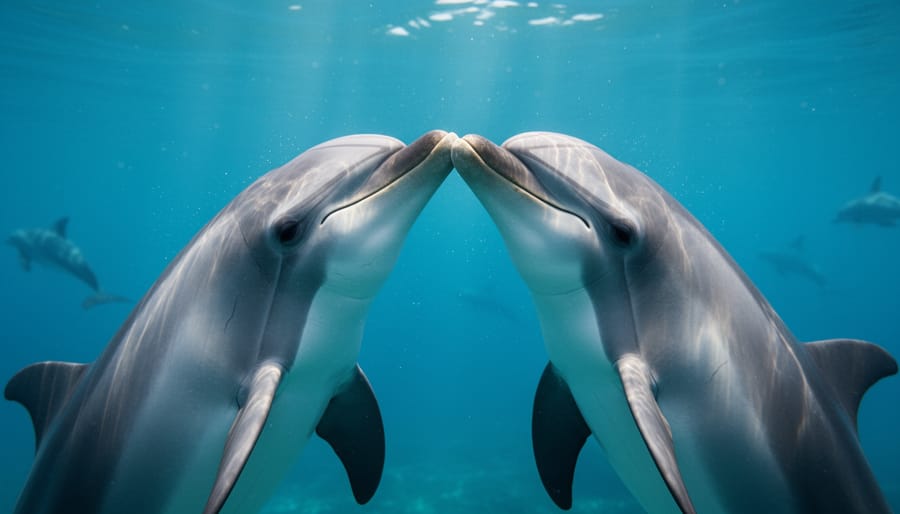
Gentle physical contact forms the foundation of emotional bonds in marine mammal societies. Dolphins glide alongside pod mates with their pectoral fins grazing flanks in deliberate, slow movements that signal trust and companionship. Humpback whale mothers guide calves with nudges of their massive heads, while the youngsters rest against their mothers’ bodies during migrations spanning thousands of miles. These touches aren’t random, they’re purposeful acts that reinforce relationships and reduce anxiety in challenging environments.
Manatees exemplify affiliation touch through their leisurely rubbing sessions, where individuals press bodies together and nuzzle snouts in what appears to be pure social pleasure. Harbor seals engage in similar behaviors during haul-out periods, lying pressed against one another to share warmth and maintain group cohesion. The physical proximity communicates safety and belonging in ways that complement other sensory channels like scent communication.
Courtship touch carries distinct patterns. Male right whales gently stroke females with their flippers during elaborate underwater dances. Bottlenose dolphins caress potential mates with their rostrums and pectoral fins in sequences that can last hours, building familiarity before mating. These tactile exchanges establish consent and compatibility, creating bonds that may extend beyond a single breeding season. The consistency of these touching patterns across marine mammal groups reveals how essential physical contact is for maintaining the social fabric of ocean communities.
Aggressive and Dominance Displays
Physical contact in marine environments isn’t always gentle. Many species rely on forceful touch to establish dominance, defend territory, and maintain social order within their groups.
Bull sharks demonstrate this clearly through aggressive body-slamming during feeding competitions. A dominant individual rams its flank against competitors, using sheer mass and speed to assert priority access to prey. These impacts communicate hierarchical status without the energy cost of prolonged fighting.
Male sea lions employ similar tactics during breeding season. They push, bite, and body-check rival males to control beach territories and access to females. The intensity of physical contact, from warning shoves to full charges, signals commitment to defending a position. Subordinate males typically retreat after initial contact rather than escalate to injurious combat.
Territorial damselfish patrol reef boundaries using nipping and chasing behaviors. A quick bite to the flank tells intruders they’ve crossed into claimed space. These brief tactile encounters prevent costly prolonged aggression while maintaining clear spatial boundaries within dense reef communities.
Even among sharks, which are often solitary, touch establishes temporary hierarchies at feeding sites. Larger individuals use their bodies as battering rams, displacing smaller sharks through forceful contact that leaves little ambiguity about who feeds first.
Mating and Reproductive Touch
Tactile communication forms the foundation of courtship and mating rituals across marine species, where physical contact serves as both signal and bond. Octopuses engage in remarkably complex touching sequences during courtship, with males using their hectocotylus (a specialized arm) to gently probe and caress the female’s mantle, signaling readiness while assessing her receptivity through her texture and response patterns. Seahorses intertwine their prehensile tails and swim in synchronized patterns, maintaining constant physical contact throughout elaborate courtship dances that can last hours before mating occurs.
Sea turtles employ nuzzling and gentle biting during pre-mating interactions, with males using their flippers to stroke the female’s shell and head. Marine mammals like dolphins and whales incorporate sustained physical contact into courtship, including flipper and pectoral fin caresses, body rubbing, and gentle nudges that communicate intent and strengthen pair bonds. These tactile exchanges convey information about health, genetic fitness, and emotional state that visual or acoustic signals cannot provide. The duration and intensity of physical contact often correlate with mating success, particularly in species where females select mates based on prolonged courtship investment rather than brief displays.
Navigation and Environmental Sensing
Marine animals rely on tactile signals to navigate dark, turbid waters where vision fails. Harbor seals and sea lions use their whiskers, technically called vibrissae, to detect hydrodynamic trails left by swimming fish, allowing them to hunt successfully even in complete darkness or murky coastal waters. Each whisker vibrates in response to minute water movements, creating a three-dimensional map of their surroundings.
Rays and some shark species possess electroreceptors called ampullae of Lorenzini that detect both electrical fields and pressure changes, effectively combining tactile and electrical sensing to locate prey buried beneath sand. The lateral line system in fish works similarly, with specialized cells detecting water displacement and vibrations to sense approaching predators, navigate around obstacles, and maintain position within schools even in zero-visibility conditions.
Where Tactile Communication Plays a Critical Role
Mother-Calf Bonding and Parental Care
In the critical early stages of life, marine mammal mothers rely on tactile communication as their primary tool for nurturing, protecting, and teaching their offspring. Physical contact begins immediately after birth, dolphin mothers gently nudge their newborn calves to the surface for their first breath, establishing a touch-based connection that will define their relationship for months or years to come.
Gray whale mothers use their flippers and bodies to maintain almost constant physical contact with calves during their vulnerable first weeks. This continuous touching serves multiple purposes: it keeps the calf close in open water, provides warmth and reassurance, and helps the youngster learn proper swimming techniques through physical guidance. When danger approaches, mothers position their bodies between the threat and their calf, using firm, directive touches to signal when to stay still or move quickly.
Seal mothers recognize their pups through a combination of vocalizations and tactile examination, nuzzling and sniffing their offspring after returning from foraging trips. Sea otter mothers demonstrate feeding techniques through hands-on teaching, physically manipulating their pup’s paws to show how to crack open shells on their chest-mounted “anvil” stones.
Research shows that marine mammal young deprived of adequate maternal touch exhibit delayed development, weakened immune responses, and reduced survival rates, underscoring how essential this sensory connection is to individual health and population stability.
Coordinated Group Behaviors
In group-hunting scenarios, marine mammals such as bottlenose dolphins and orcas rely on tactile cues to synchronize their movements with split-second precision. Pod members brush flanks or nudge each other to signal position changes during cooperative fish herding, ensuring the group maintains formation without breaking the hunting pattern. This physical coordination becomes especially critical when visibility drops or when prey disperses rapidly.
Schooling fish demonstrate equally sophisticated tactile coordination through their lateral line systems, detecting pressure waves and subtle touches from neighboring fish. These mechanoreceptors allow hundreds or thousands of individuals to turn, dive, and accelerate as a unified mass, making it nearly impossible for predators to single out targets. During long-distance migrations, humpback whales and gray whales maintain pod cohesion through intermittent physical contact, with calves staying close enough to feel their mothers’ movements through pressure changes and direct touch, reducing the risk of separation in vast ocean expanses.
Stress Reduction and Health Benefits
Social touch serves measurable physiological functions beyond simple communication. Studies on bottlenose dolphins and harbor seals have documented significant decreases in cortisol levels following affiliative touching between pod members or colony mates. When dolphins engage in pectoral fin contact or gentle rubbing, researchers observe corresponding drops in stress markers within 15 to 20 minutes.
The health implications extend to wound healing and immune response. Gray whales demonstrate faster healing rates for skin lesions when they maintain regular physical contact with conspecifics during migration. Similarly, sea otter mothers who frequently groom and touch their pups produce offspring with stronger immune markers compared to those with limited tactile interaction.
These patterns mirror well-documented findings in primates and humans, where social touch triggers oxytocin release and reduces inflammatory responses. The consistency across marine and terrestrial mammals suggests tactile communication evolved as a fundamental mechanism for maintaining both psychological well-being and physical health. For highly social marine species living in challenging environments, this dual function makes touch an essential component of individual fitness and group survival.
Conservation Implications of Disrupted Tactile Communication
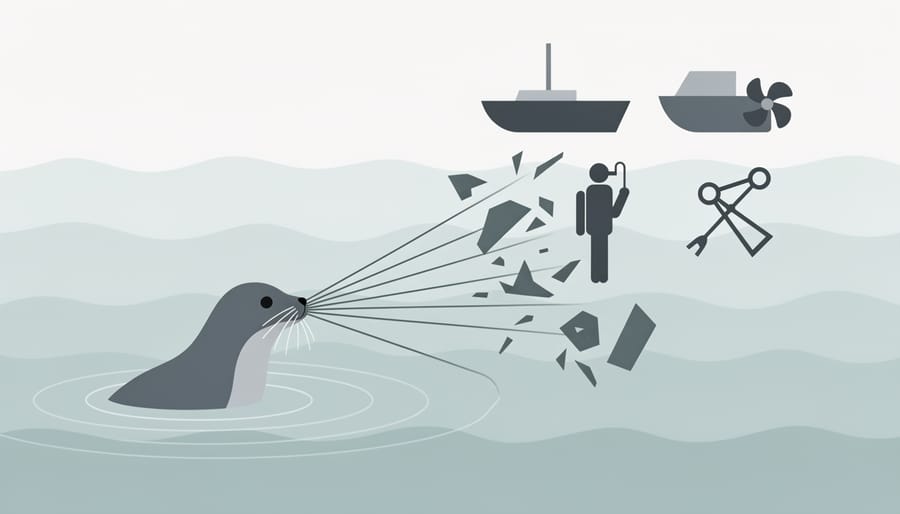
Understanding how tactile communication shapes marine animal behavior reveals why environmental threats pose such serious risks. When human activities disrupt the physical environments and social structures that marine species depend on for touch-based interactions, the consequences ripple through entire populations.
Habitat degradation strips away the environments where tactile communication naturally occurs. Coral reef destruction eliminates the complex surfaces that fish use for tactile exploration and territory establishment. Coastal development removes the shallow nursery grounds where seal mothers bond with pups through constant physical contact. When these spaces disappear, so do the opportunities for the tactile exchanges that maintain social cohesion and teach survival skills to younger generations.
Pollution introduces a different threat by damaging the sensitive organs marine animals rely on for touch. Oil spills coat the whiskers of seals and sea lions, reducing their sensitivity to water movements and prey vibrations. Microplastics accumulate on skin surfaces and may interfere with receptors that detect pressure and temperature. Chemical contaminants can cause lesions and nerve damage, particularly in species like dolphins and whales whose skin serves as both a communication tool and a highly specialized sensory organ.
Captivity creates perhaps the most profound disruption to tactile communication. Marine mammals in tanks cannot engage in the full range of physical interactions their species evolved to perform, limited space prevents the synchronized swimming and extended body contact that wild populations use for bonding. Small enclosures also mean fewer social partners and restricted opportunities for the varied tactile exchanges that occur in natural pod structures.
Climate change compounds these pressures. Rising ocean temperatures force species to shift their ranges, separating established social groups and breaking apart the tactile networks built over years. Ocean acidification may affect sensory organ development in juvenile fish, potentially impairing their ability to process touch signals throughout their lives.
How You Can Support Marine Animal Communication Research
Supporting marine animal communication research doesn’t require an advanced degree, just curiosity and commitment. Whether you live near the coast or halfway across the continent, you can contribute meaningful data and resources that help scientists understand how marine species use touch to survive and thrive.
The most direct way to get involved is through citizen science programs that monitor marine animal behavior. Organizations worldwide train volunteers to observe and document tactile interactions during whale watches, seal colony visits, and coastal surveys. You’ll learn to recognize behaviors like mother-calf nuzzling, pod member affiliative touching, and courtship rituals, then record these observations in standardized databases that researchers use to identify behavioral patterns and population health indicators.
Consider these hands-on opportunities to make a difference:
- Join marine mammal observation programs that document social behaviors during seasonal migrations
- Support marine sanctuaries and rehabilitation centers where injured animals receive care and researchers study tactile communication during recovery
- Participate in beach monitoring projects that track stranded animals and collect behavioral data
- Engage with the Marine Biodiversity Science Center’s e-network to access training materials, submit observations, and connect with the global research community
Financial support matters too. Sensory ecology research requires specialized underwater cameras, acoustic monitoring equipment, and long-term field studies, all expensive undertakings. Donations to marine research institutions and conservation groups fund the technology and personnel needed to decode how tactile communication shapes animal societies beneath the waves.
Even spreading awareness helps. Share research findings on social media, attend public lectures, and talk with friends about why protecting marine habitats means preserving the complex sensory worlds these animals depend on. Every conversation plants seeds that grow into broader public support for science-based conservation policies.
Common Questions About Tactile Communication in Marine Animals
Researchers studying tactile communication in marine animals encounter questions that reflect both scientific curiosity and ethical concerns about human interactions with these species. The answers reveal how touch functions as a sophisticated language beneath the waves and why protecting these communication channels matters for conservation.
Can marine animals feel pain through touch?
Yes, marine mammals, fish, and many invertebrates possess nociceptors, specialized nerve endings that detect potentially harmful stimuli, and behavioral studies show clear avoidance responses to painful touch. The sensitivity varies by species, but current evidence supports that touch-based pain perception is widespread across marine taxa.
Do dolphins really use touch to communicate emotions?
Dolphins engage in extensive social touching that appears to convey emotional states and strengthen bonds, including gentle pectoral fin caresses during greetings, supportive body contact during distress, and increased touching frequency between closely bonded individuals. While we cannot directly measure dolphin emotions, the behavioral patterns mirror mammalian affiliative touch linked to oxytocin release and stress reduction.
How do blind or vision-impaired marine species rely on tactile senses?
Species with limited vision, such as deep-sea fish and certain cave-dwelling crustaceans, develop enhanced tactile sensitivity through elongated fin rays, whisker-like barbels, and dense distributions of mechanoreceptors across their bodies. These adaptations allow them to navigate, hunt, and socialize entirely through touch and water movement detection.
Does captivity affect how marine animals use tactile communication?
Captive environments often restrict natural tactile behaviors by limiting space for full-body contact, reducing group sizes that would normally provide diverse social touching opportunities, and replacing natural substrates with artificial surfaces that offer different tactile feedback. These constraints can alter social hierarchies, increase stress-related behaviors, and disrupt normal mother-offspring tactile bonding sequences.
Understanding what makes marine tactile communication distinct from land-based systems helps contextualize these answers. Water transmits vibrations and pressure waves differently than air, allowing marine animals to detect touch-like signals from greater distances through their lateral lines and sensitive skin. A seal can feel the hydrodynamic trail left by a fish that swam past seconds earlier, essentially “touching” a trace rather than the animal itself. This extended tactile perception has no real terrestrial equivalent.
The question of whether marine animals enjoy human touch deserves careful consideration. While some captive dolphins and seals seek human contact, wild marine mammals typically avoid it, and unsolicited touching can disrupt natural behaviors, separate mothers from calves, or transmit diseases. What might seem like friendly curiosity from a wild dolphin often represents investigative behavior rather than a desire for interaction, and mistaking this can lead to dangerous situations for both species.
Tactile communication stands as one of the ocean’s most vital yet underappreciated languages. From the gentle nuzzle between a dolphin mother and her calf to the coordinated movements of schooling fish responding to pressure changes through their lateral lines, physical touch shapes every aspect of marine animal life. These tactile signals govern social bonds, facilitate cooperative hunting, guide navigation through murky depths, and provide comfort during stressful encounters.
Understanding how marine species communicate through touch gives us powerful insights into their welfare needs and behavioral ecology. When we recognize that disrupted tactile communication can fragment social structures, impair reproduction, and elevate chronic stress, we gain clarity on why habitat protection and pollution reduction matter so deeply. Conservation strategies that account for sensory ecology, preserving quiet spaces for sensitive whisker navigation, maintaining clean waters that don’t degrade skin receptors, protecting nursing grounds where mother-offspring bonding happens, are far more effective than approaches that overlook these biological realities.
The science of tactile communication continues to evolve, with researchers uncovering new mechanoreceptor types and documenting previously unknown touching behaviors. You can be part of this discovery. Whether you’re drawn to hands-on fieldwork, citizen science monitoring programs, or supporting research that advances our knowledge of sensory systems, your involvement strengthens the foundation for smarter, more compassionate marine conservation. Every observation, every volunteer hour, and every voice advocating for science-based protection helps ensure that marine animals maintain the tactile connections essential to their survival and flourishing.

jessica
Ava Singh is an environmental writer and marine sustainability advocate with a deep commitment to protecting the world's oceans and coastal communities. With a background in environmental policy and a passion for storytelling, Ava brings complex topics to life through clear, engaging content that educates and empowers readers. At the Marine Biodiversity & Sustainability Learning Center, Ava focuses on sharing impactful stories about community engagement, policy innovations, and conservation strategies. Her writing bridges the gap between science and the public, encouraging people to take part in preserving marine biodiversity. When she’s not writing, Ava collaborates with local initiatives to promote eco-conscious living and sustainable development, ensuring her work makes a difference both on the page and in the real world.