Marine Biodiversity Science Center

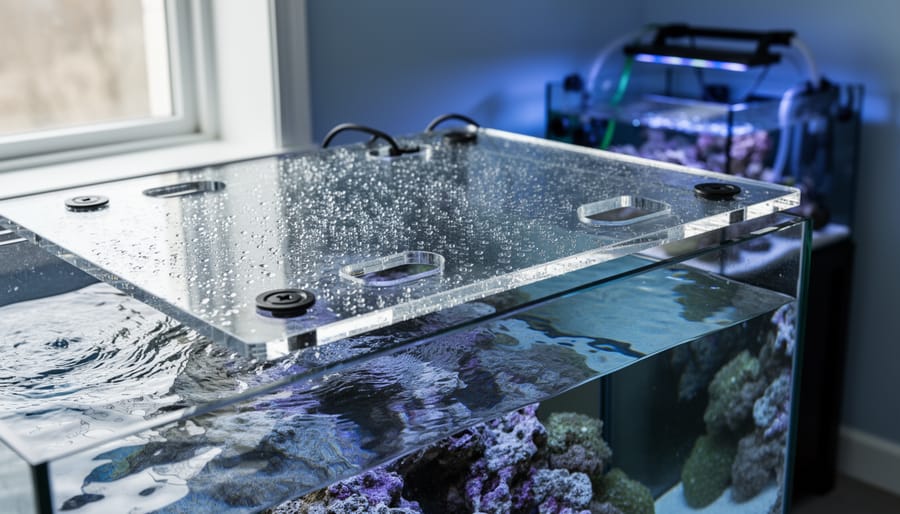
Custom aquarium lids tailored to specific tank dimensions and species needs significantly improve water quality, reduce evaporation, prevent escape, and create optimal lighting conditions for sensitive marine species. Unlike generic glass tops or mesh covers, custom solutions address the unique challenges of conservation aquariums and research facilities: precise cutouts for filtration and monitoring equipment, materials compatible with saltwater environments, and designs that accommodate the behavioral needs of rare or threatened species.
The right lid does more than keep fish from jumping out. It maintains stable temperature and humidity levels critical to coral health, prevents harmful airborne contaminants from entering the water, and integrates seamlessly with specialized lighting systems that mimic natural reef conditions. For marine conservationists working with breeding programs or rehabilitation projects, these factors directly impact species survival and reproduction success.
Choosing between acrylic, glass, mesh, or hybrid materials depends on your specific conservation goals and the environmental health requirements of your specimens. Acrylic offers excellent light transmission and can be precisely machined for equipment ports, while glass resists scratching and withstands saltwater exposure better over time. Mesh tops provide superior gas exchange for high-oxygen species but offer less protection from environmental variables.
The decision becomes more complex when supporting endangered species that require exact environmental parameters. A poorly fitted lid can create dead zones where carbon dioxide accumulates, allow excessive evaporation that concentrates harmful compounds, or fail to prevent contamination from airborne chemicals. Conservation aquariums housing species like seahorses, mandarinfish, or juvenile sea turtles cannot afford these compromises. For specialized fabrication options, https://toplids.com provides custom solutions designed for professional marine facilities.
This guide walks through the critical factors affecting lid performance in marine conservation settings, compares material options for different applications, and identifies common specification mistakes that compromise both animal welfare and research outcomes.
Why Custom Aquarium Lids Matter for Marine Conservation
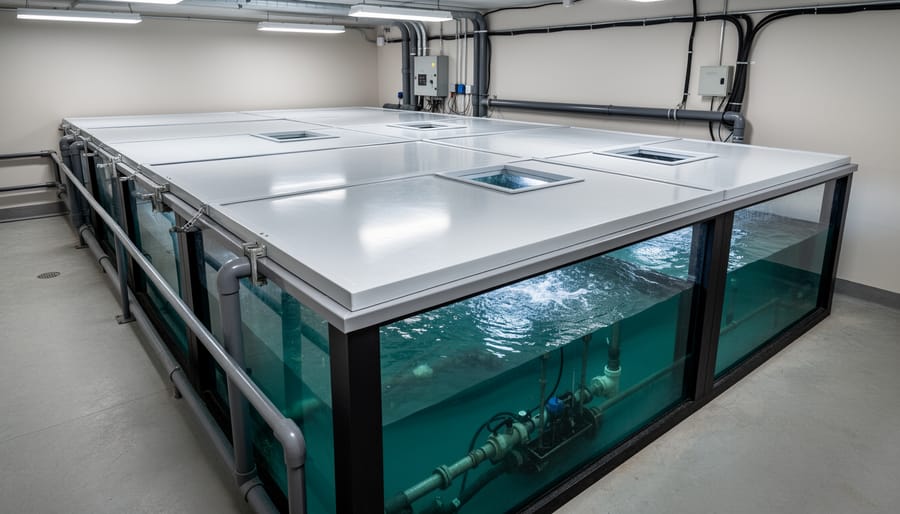
Marine facilities face unique challenges that standard aquarium covers simply can’t address. Saltwater’s corrosive properties, the athletic escape abilities of many marine species, and the precise environmental parameters required by reef organisms demand purpose-built solutions rather than off-the-shelf products.
Temperature fluctuations pose a constant threat to sensitive coral and invertebrate systems. A properly designed custom lid minimizes heat loss during cooler months while preventing excessive heat buildup under powerful reef lighting. Marine biologists at breeding facilities report that even two-degree temperature swings can stress spawning pairs of clownfish or trigger bleaching responses in coral fragments. Custom lids with calculated ventilation openings maintain stable thermal conditions while allowing necessary gas exchange at the water surface.
Humidity control becomes critical when housing species from specific reef zones or coastal habitats. Mudskippers and fiddler crabs need high humidity in their terrestrial zones, while preventing excessive condensation that damages lighting systems or creates unsafe working conditions. A custom lid balances these competing needs through strategic ventilation placement and material selection.
The behavioral needs of marine species often determine whether conservation programs succeed or fail. Wrasses, dartfish, and flasher fish are notorious jumpers that will find any gap in standard covers. Dr. Sarah Chen, a conservation biologist working with endangered Caribbean reef fish, shares that custom lids with zero-gap designs have reduced jumper losses in her facility by 90 percent since implementation. For cephalopod research, weighted and latched custom covers prevent intelligent octopuses from staging elaborate escapes that compromise both the animal and the research.
Protection of marine biodiversity in captive systems starts with the right equipment. Custom lids aren’t luxury items but fundamental tools that allow facilities to maintain the precise conditions threatened species need for successful breeding, research outcomes that advance conservation science, and educational displays that inspire public engagement with ocean protection.
Essential Factors When Selecting Custom Aquarium Lids
Material Options and Durability
Choosing the right material for your custom aquarium lid requires balancing multiple performance factors with the specific demands of saltwater environments. Each material brings distinct advantages and limitations that directly impact both species welfare and operational costs.
Glass offers exceptional clarity and scratch resistance, making it ideal when maximum light penetration matters for photosynthetic organisms. However, standard glass is heavy and prone to shattering if dropped, creating safety concerns in busy research facilities. Tempered glass improves safety but adds cost. The weight becomes particularly relevant for large display tanks where daily feeding access is required.
Acrylic strikes a popular balance between clarity and practicality. At roughly half the weight of glass, it allows easier handling during maintenance routines. Acrylic transmits more light than glass across the full spectrum, benefiting coral propagation systems. The material resists saltwater corrosion indefinitely, though it scratches more easily than glass. For research facilities managing tight budgets, acrylic’s durability often justifies the moderate price premium over basic glass.
Polycarbonate provides the highest impact resistance, making it suitable for facilities housing powerful species or high-traffic educational centers where accidental damage is likely. While slightly less clear than acrylic, polycarbonate blocks UV radiation naturally, which protects species sensitive to excess ultraviolet exposure but may require supplemental UV lighting for some marine invertebrates.
| Material | Saltwater Resistance | Light Transmission | Weight | Best Applications |
|---|---|---|---|---|
| Glass | Excellent | 92% | Heavy | Display tanks, public aquariums |
| Acrylic | Excellent | 93% | Medium | Research facilities, coral systems |
| Polycarbonate | Excellent | 88% | Light | Educational centers, high-impact areas |
| Mesh | Variable | 95%+ | Very Light | Ventilation-critical species, evaporative systems |
Mesh materials, typically marine-grade aluminum or plastic-coated steel, prioritize ventilation over solid coverage. Stainless steel mesh resists corrosion best but costs significantly more than coated alternatives. Mesh lids work well for mudskipper habitats, mangrove tanks, and species requiring high humidity with maximum air exchange. However, they provide no evaporation control and minimal escape prevention for determined animals like octopuses.
Ventilation and Gas Exchange Requirements
Proper ventilation in custom aquarium lids directly determines whether your marine system can sustain healthy gas exchange at the water’s surface. Without adequate airflow, oxygen levels drop while carbon dioxide and humidity accumulate, creating conditions that stress fish, inhibit coral calcification, and promote harmful algae blooms.
The key is balancing evaporation control with sufficient air circulation. Fully sealed glass canopies trap humidity and limit oxygen replenishment, which works against the natural gas exchange marine organisms depend on. For coral propagation systems, inadequate ventilation reduces the oxygen available for zooxanthellae photosynthesis and allows CO2 to suppress pH levels, slowing skeletal growth rates that captive breeding programs monitor closely.
Species requirements vary considerably. Fish-only tanks handling active swimmers like tangs need higher ventilation rates than systems housing slow-moving species. Research facilities breeding mandarinfish report success with hybrid lids featuring 30-40% mesh panels, providing steady airflow while minimizing salinity drift from evaporation. Shallow reef tanks benefit from screen tops that maximize surface agitation, essential for the oxygen demands of SPS corals.
One marine biologist managing a seahorse breeding program emphasized that poor ventilation contributed to recurring bacterial issues until switching to a custom lid with strategic vent placement. The redesign maintained stable humidity for these species while ensuring fresh air reached the water surface. Consider your system’s bioload, equipment heat output, and target species when specifying ventilation features, overcrowding a tank with insufficient airflow compromises even the best filtration setup.
Light Penetration and Spectrum Preservation
Light transmission through custom aquarium lids directly determines whether photosynthetic organisms survive or decline in captivity. For coral propagation systems and macroalgae refugiums supporting marine conservation breeding programs, maintaining proper photosynthetically active radiation (PAR) levels isn’t optional, it’s fundamental to organism health and research success.
Glass lids typically transmit 90-92% of visible light but block most beneficial UV wavelengths that certain coral species require for pigment production and calcification. Standard acrylic performs similarly, though it yellows over time when exposed to intense metal halide or high-output LED systems, progressively reducing light penetration by 10-15% annually. UV-stabilized acrylic and polycarbonate maintain clarity longer but still filter out UV-A and UV-B wavelengths that some shallow-water species evolved to utilize.
This matters particularly for species already stressed by environmental changes like ocean acidification which compromises their ability to build calcium carbonate structures. Research facilities working with vulnerable reef-building corals should specify lids with minimal light interference, often mesh screens over photosynthetic zones combined with solid sections elsewhere.
Consider your photoperiod control needs too. Opaque sections prevent light spill that disrupts nocturnal species behavior, while clear areas must maintain spectral quality throughout the day-night cycle. For mixed systems housing both photosynthetic and non-photosynthetic species, hybrid designs with selective coverage zones offer the most practical solution without compromising either group’s requirements.
Access Points and Maintenance Design
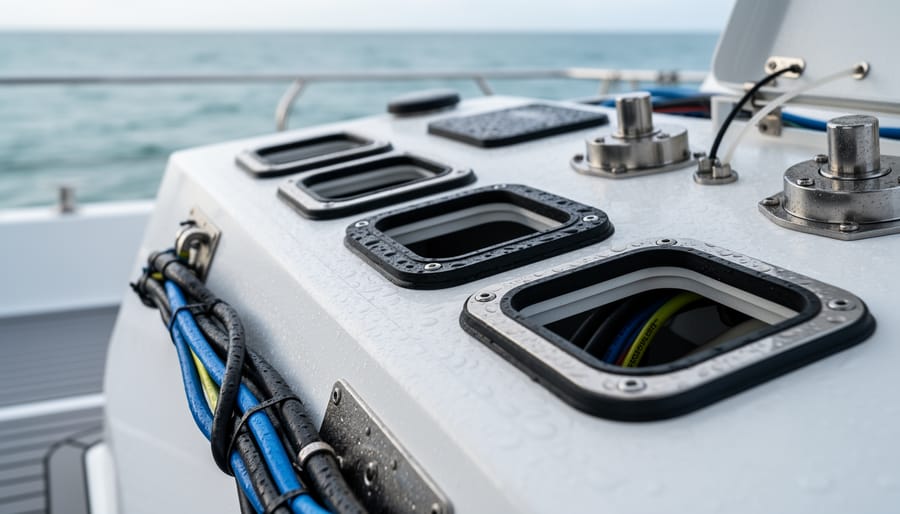
Daily husbandry tasks shape how well a custom lid serves your marine facility. A thoughtfully designed access system reduces handling stress on animals while keeping staff routines efficient during feeding, water testing, and equipment maintenance.
Feeding doors should open wide enough for tongs or feeding sticks without forcing you to remove the entire lid. Hinged or sliding sections work best for frequent access, particularly in public aquarium settings where multiple feedings happen throughout visitor hours. Position these openings near established feeding zones to minimize disruption.
Equipment cutouts require precise planning before fabrication. Map out filter intake and return locations, heater placements, protein skimmer tubing, and any monitoring probes. Research facilities often need multiple probe ports for temperature, pH, and salinity sensors. Request cutouts slightly larger than current equipment diameters to accommodate future upgrades without requiring new lids.
Cable management prevents both equipment damage and escape routes for intelligent species like octopuses. Brush-style cable pass-throughs seal gaps while allowing wires through, though check compatibility with saltwater environments. Some fabricators offer custom gasket solutions that compress around specific cable bundles.
In educational centers where volunteer staff rotate frequently, simple access designs reduce training time and minimize the risk of lids being left partially open or improperly secured after routine tasks.
Safety Features for Sensitive Species
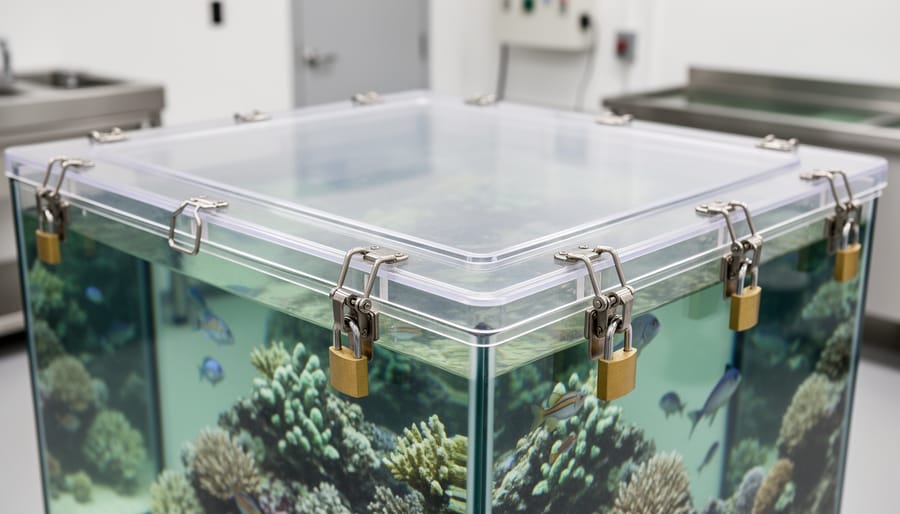
Intelligent marine species like octopuses, moray eels, and mantis shrimp require specialized containment features that standard lids cannot provide. Octopuses, notorious for testing tank seams and lifting unsecured covers, need weighted lids with continuous gasket seals and clamp systems that resist their problem-solving abilities. A marine biologist at our center once watched a common octopus (_Octopus vulgaris_) repeatedly probe a 2mm gap in a lid corner until it could squeeze through, a lesson that led to mandatory full-perimeter latching for all cephalopod exhibits.
Weight distribution matters critically for large marine turtles and rays that surface to breathe; top-heavy glass panels can injure animals that bump them during natural behavior. Instead, opt for reinforced frames that spread load across multiple support points, preventing dangerous sagging over tank centers. For endangered species in breeding programs, lockable lids with tamper-evident seals protect both the animals and the program’s security protocols, ensuring no unauthorized access compromises years of conservation work.
Types of Custom Aquarium Lids Compared
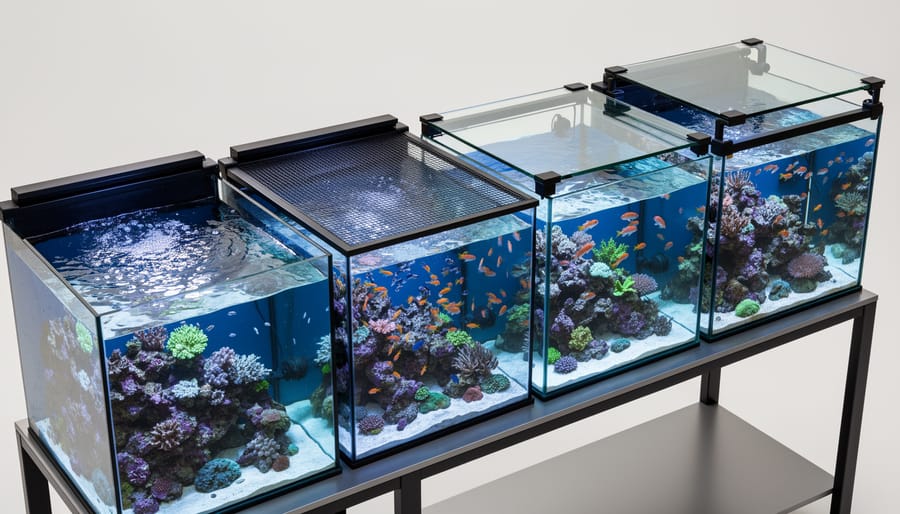
Full Glass Canopy Systems
Full glass canopy systems consist of tempered glass panels that rest on the aquarium rim, offering an unobstructed view into marine habitats. These lids excel in public aquarium settings where visitor experience depends on crystal-clear observation of reef ecosystems or pelagic species. The solid glass construction creates an elegant, professional appearance that disappears visually, allowing corals and fish to take center stage without distracting frames or mesh patterns.
For marine conservation facilities, glass canopies provide excellent humidity retention and minimize evaporation, reducing the workload of auto-top-off systems and maintaining stable salinity levels critical for sensitive species. The smooth surface simplifies cleaning algae and salt creep, crucial for maintaining visitor-facing exhibits.
However, glass canopies restrict gas exchange compared to mesh alternatives, potentially requiring additional surface agitation or protein skimming to maintain adequate oxygen levels. The weight of tempered glass demands sturdy tank construction, and replacing panels after damage can be expensive. Light transmission is excellent, though some UV blocking occurs, which may require adjustments to lighting schedules for photosynthetic organisms in coral propagation programs.
Screen Top and Mesh Lids
Screen top and mesh lids excel in marine systems requiring aggressive ventilation and natural evaporative cooling. These designs use stainless steel or plastic-coated mesh stretched across a lightweight frame, allowing unrestricted airflow while preventing fish from jumping out.
Marine mudskipper exhibits benefit enormously from screen tops, as these amphibious fish need high humidity paired with excellent air circulation to replicate their intertidal zone habitats. Similarly, tropical reef systems in warm facilities use mesh lids to dissipate heat from intense lighting without overheating the water column.
The primary trade-off is significantly higher evaporation rates, sometimes doubling water loss compared to solid lids, which demands frequent top-offs with prepared saltwater. Screen tops also provide minimal splash protection, making them less suitable near electronics or in public spaces where water damage matters.
For marine applications, choose marine-grade stainless steel mesh rather than aluminum or untreated metal. Saltwater corrodes cheaper materials within months, creating rust stains and structural failure. The open design simplifies cable routing for multiple equipment connections but offers no light control, so pair these lids with separate timers or room lighting management in research settings.
Hybrid Solid-Mesh Combinations
Hybrid lids combine solid panels, typically glass or acrylic, with mesh or screen inserts, offering marine facilities the flexibility to control both evaporation and ventilation. Research breeding programs favor this design because it adapts to changing environmental needs without replacing the entire lid. You might use a 70% solid, 30% mesh configuration for seahorse nurseries where humidity matters but oxygen exchange remains critical, or reverse that ratio for species requiring cooler water temperatures through evaporative cooling.
The modular nature means you can swap inserts seasonally or as species mature. A coral propagation system might start with mostly mesh during high-growth periods when photosynthesis demands peak gas exchange, then shift to more solid coverage during winter when evaporation becomes problematic and heating costs rise. Marine biologists at breeding facilities appreciate how these lids let them fine-tune microclimates without custom-ordering new tops for each life stage. The trade-off is slightly higher initial cost and more components to clean, but the operational versatility justifies the investment for dynamic conservation work.
Specialized Containment Lids
Heavy-duty containment lids serve the specialized needs of escape artists, invasive species study programs, and facilities housing endangered species requiring maximum security. Octopuses, cuttlefish, and other cephalopods demand weighted lids with silicone-sealed edges and latching mechanisms, these intelligent animals can lift surprising weights and squeeze through tiny gaps. Research facilities studying lionfish, green crabs, or other invasive species need lockable designs that prevent accidental releases into local ecosystems while allowing safe specimen handling through top-loading ports.
Conservation breeding programs for critically imperiled species often specify custom lids with reinforced acrylic construction, double-locking systems, and integrated sensors that alert staff to tampering or displacement. These designs also incorporate fail-safe ventilation to maintain life support even during security protocols. Facilities housing venomous or delicate species benefit from lids with built-in feeding chutes and observation windows that minimize the need to fully remove the cover, reducing stress and escape opportunities during routine care.
Top Custom Aquarium Lid Recommendations for Marine Applications
For Public Education and Display Tanks
Public education and display tanks demand lids that balance unobstructed viewing with species protection. Frameless tempered glass canopies work exceptionally well in visitor centers and touch tank facilities, offering optical clarity that doesn’t interfere with the educational experience while preventing accidental contact with jellyfish or sea urchins. For larger exhibit systems, low-iron glass reduces the greenish tint that standard glass creates, preserving accurate color perception of reef fish and corals, critical when teaching visitors about species identification.
Hinged glass lids with soft-close mechanisms prevent slamming during public hours, reducing stress for sensitive species like seahorses or mandarinfish. Adding discrete ventilation strips along the back edge maintains gas exchange without compromising the clean aesthetic that museum-quality displays require. Marine educators at coastal aquariums report that visitors engage more deeply with exhibits when lids feel invisible, yet proper containment ensures both animal welfare and compliance with public safety regulations.
For Research and Breeding Facilities
Research and breeding facilities require custom lids engineered for intensive daily use and long-term durability. Prioritize heavy-duty materials like 10mm polycarbonate or marine-grade glass that withstand repeated opening, resist saltwater corrosion, and maintain structural integrity through years of continuous operation. Multiple hinged access panels prove essential for efficient monitoring across large systems, look for designs with three to five independently-opening sections that let staff check specific areas without disrupting entire tank environments.
Customization becomes critical when housing diverse species in adjacent systems. Specify ventilation patterns matched to each organism’s requirements: solid lids with minimal airflow for humid-dependent larvae tanks, mesh inserts for high-metabolism juveniles, and adjustable vents for temperature-sensitive broodstock. Equipment cutouts should accommodate research-grade monitoring probes, automated feeders, and sampling ports without compromising security. Dr. Maria Santos, who manages a Caribbean reef fish breeding program, emphasizes that “investing in properly customized lids reduces handling stress and escape incidents, directly improving survival rates in captive breeding efforts.”
For Home Marine Conservation Enthusiasts
Home aquarists participating in captive breeding programs face a unique challenge: balancing conservation-grade equipment with realistic budgets. The good news? You don’t need research facility pricing to provide species-appropriate housing.
Start with basic acrylic sheet lids from local plastics suppliers, typically $30-60 for standard tank dimensions. Request marine-grade acrylic (cast, not extruded) with UV inhibitors, it’ll outlast cheaper alternatives in saltwater environments. Many fabricators will cut feeding doors and equipment holes for minimal additional cost if you provide exact measurements.
For breeding projects with multiple small systems, consider DIY mesh-frame lids using fiberglass screen and PVC trim. Total material cost runs under $15 per lid, and they’re easily replaced as projects evolve. I’ve seen passionate aquarists maintain successful seahorse and clownfish breeding programs using these simple solutions.
The key isn’t spending more, it’s specifying the right materials and communicating your species’ specific requirements to fabricators who understand saltwater challenges.
For Specialized Species Housing
Specialized marine species demand lid solutions that go beyond standard configurations. Mangrove propagation systems require moisture-rich enclosures, making hinged acrylic canopies with strategically placed ventilation slots ideal for maintaining high humidity while preventing condensation drip that damages delicate seedlings. These lids should incorporate dedicated openings for vertical mangrove growth without compromising containment.
Seahorse breeding tanks benefit from mesh-top lids that maximize surface agitation and oxygen exchange. Seahorses are poor swimmers and need calm water, but they also require pristine water quality. A lightweight fiberglass mesh frame allows proper gas exchange while preventing the powerful jumps seahorses make during courtship displays.
Jellyfish kreisel systems present unique challenges since most operate as pseudo-kreisel or true kreisel designs with constant circular flow. Custom curved acrylic lids that follow the tank’s contour prevent animals from getting trapped in corners while maintaining even light distribution for photosynthetic species like moon jellies. Include a central feeding port and ensure the lid weight distributes evenly to avoid disrupting the delicate flow pattern that keeps jellies suspended.
Common Mistakes to Avoid When Ordering Custom Lids
The most costly mistake conservation facilities make is underestimating the corrosive power of saltwater aerosol. Dr. Elena Kovacs, who manages the breeding program at Pacific Marine Research Station, learned this lesson when her facility ordered twenty “marine-safe” acrylic lids that showed surface crazing and hardware corrosion within six months. The manufacturer had used standard stainless steel fixtures rather than marine-grade 316 stainless, and the acrylic itself lacked proper UV inhibitors. The replacement cost consumed nearly a third of their annual equipment budget, money that could have supported their endangered abalone recovery efforts.
Another frequent error is failing to account for species-specific escape abilities when specifying lid weight and closure mechanisms. Octopuses can lift surprisingly heavy objects and squeeze through gaps as small as their beak. One research aquarist shared how they lost a valuable Giant Pacific Octopus specimen through a feeding port that seemed adequately sized, the animal had simply waited until feeding time, when staff briefly opened the door, then pushed it fully open and escaped into the sump system. This incident illustrates how aquarium impact extends beyond public display concerns to fundamental questions of specimen security in conservation facilities.
Common purchasing mistakes that compromise marine systems include:
- Ordering based on tank dimensions alone without measuring rim irregularities or equipment placement
- Choosing materials that block essential UV wavelengths needed for coral health and coloration
- Specifying inadequate ventilation for high-metabolism species or warm-water systems
- Neglecting to request removable sections for regular maintenance access to overflow boxes
- Selecting purely aesthetic designs that create dead zones with poor surface agitation
- Failing to specify cable pass-throughs sized for actual equipment connectors and airline tubing
- Ordering lids without consulting staff who perform daily husbandry tasks about workflow needs
Many facilities also regret not investing in hinged sections for larger tanks. While sliding lids cost less initially, the ergonomic strain of repeatedly lifting heavy glass panels leads to staff injuries and dropped equipment. Sarah Chen, who coordinates the seahorse breeding program at Coastal Conservation Center, notes that switching to counterweighted hinged lids reduced aquarist back strain complaints by eighty percent and eliminated three incidents of dropped lids cracking during water changes.
Working with Custom Fabricators: What to Communicate
When you contact a custom fabricator, clarity in your initial communication saves time, money, and ensures the lid truly serves your marine conservation needs. Start by providing precise tank dimensions: measure the inside rim where the lid will rest, noting any irregularities or non-square corners common in older tanks. Include photos showing equipment placement, bulkheads, and any existing hardware that affects lid design.
Specify that you need marine-grade materials explicitly. Many fabricators default to freshwater standards, but saltwater demands corrosion-resistant components. Request stainless steel hardware rated 316 or higher, non-reactive edge sealing, and materials tested for long-term saltwater exposure. If your tank houses species for a breeding program or research study, mention this, fabricators familiar with conservation work often suggest solutions based on similar projects.
Describe your species’ behavior and requirements in practical terms. Rather than simply saying “octopus tank,” explain that you need secure latching because the animal can lift lightweight lids and squeeze through small gaps. For jumper species like blennies or wrasses, specify maximum gap tolerances. If you’re maintaining coral propagation systems, detail your lighting specifications so the fabricator can recommend materials that won’t degrade PAR values or shift spectrum.
Ask about revision options before finalizing the order. Marine facilities often discover adjustments needed after installation, a feeding door in a different position, additional ventilation for summer months, or modified cutouts for new equipment. Some fabricators offer a trial period or measurement verification service where they visit your facility to confirm specifications before production.
Request a maintenance plan during your initial discussion. Find out how to clean the material without damaging specialized coatings, whether replacement parts are available, and typical lifespan under saltwater conditions. Experienced fabricators appreciate clients who think long-term, and this conversation often reveals their familiarity with marine applications. A fabricator who asks follow-up questions about your specific species and conservation goals is usually one worth working with.
Frequently Asked Questions About Custom Aquarium Lids
Custom aquarium lids raise specific concerns for anyone working in marine conservation settings, from public aquarium staff to home coral propagation enthusiasts. The questions below reflect the most frequent inquiries we receive from educators managing touch tanks, researchers breeding endangered species, and facility managers balancing conservation budgets.
What should I expect to pay for a custom marine aquarium lid?
Custom lids for marine applications typically range from $150 to $800 depending on size, material choice, and complexity of access points. Research-grade lids with specialized containment features for cephalopods or endangered species may exceed $1,000, while basic acrylic screen tops for standard rectangular tanks start around $100.
How long does it take to receive a custom-fabricated lid?
Most fabricators quote 2-4 weeks for standard custom orders, though complex designs requiring engineering consultation may take 6-8 weeks. Rush orders are sometimes available for an additional fee, which can be justified when setting up emergency holding systems for rescued marine animals.
Can I retrofit a custom lid to an existing tank that came with a standard hood?
Yes, provided you take accurate measurements of the tank’s actual opening rather than relying on manufacturer specifications. Many conservation facilities successfully replace inadequate commercial hoods with custom solutions that better serve specific species needs, though you may need to adjust lighting fixtures and filtration equipment placement.
What’s the best way to clean custom lids in saltwater systems?
Rinse glass and acrylic lids weekly with reverse osmosis water and wipe with microfiber cloths to prevent salt creep buildup that blocks light and creates unsightly deposits. For mesh lids, soak monthly in a vinegar solution to dissolve mineral deposits, then rinse thoroughly before reinstalling to avoid pH fluctuations in sensitive reef systems.
Beyond these basics, warranty coverage deserves careful attention when ordering. Marine-grade materials should resist corrosion for years, but cheaper acrylics may yellow under intense reef lighting within 18 months. Reputable fabricators typically offer one-year warranties against manufacturing defects, though saltwater damage from improper installation or maintenance usually isn’t covered. Ask specifically about UV stability guarantees if you’re running high-PAR lighting over coral propagation systems.
Thickness matters more than many first-time buyers realize. A 6mm acrylic lid provides adequate strength for most home systems, but public touch tanks and research facilities housing strong animals like octopuses benefit from 10mm or thicker material. The extra cost pays for itself by preventing catastrophic escapes that endanger both the animal and conservation program integrity.
Choosing the right custom aquarium lid isn’t just about functionality, it’s about creating an environment where marine species can thrive while supporting broader conservation goals. Every design decision, from material selection to ventilation planning, directly impacts the welfare of the animals in your care and the success of breeding programs, research initiatives, or educational displays.
The lid you select today shapes daily husbandry routines, long-term species health, and even visitor engagement at public facilities. When you prioritize proper gas exchange for coral propagation systems or invest in secure containment for intelligent cephalopods, you’re making a tangible contribution to marine conservation. These choices demonstrate the same attention to detail that separates adequate animal care from excellence.
Marine conservation happens through countless individual decisions by dedicated professionals, educators, and enthusiasts. Your equipment choices matter. They reflect your commitment to giving every organism, from tiny zooplankton to juvenile sea turtles, the conditions they need to flourish.
If you’re passionate about marine biodiversity, consider taking your involvement further. Volunteer opportunities at marine research centers and aquariums offer hands-on experience with species husbandry and conservation techniques. Join our e-network to connect with marine biologists, facility managers, and fellow aquarists who share insights on equipment optimization, species-specific care protocols, and emerging best practices. Together, we’re building a community where every tank becomes a small sanctuary for ocean life.

jessica
Ava Singh is an environmental writer and marine sustainability advocate with a deep commitment to protecting the world's oceans and coastal communities. With a background in environmental policy and a passion for storytelling, Ava brings complex topics to life through clear, engaging content that educates and empowers readers. At the Marine Biodiversity & Sustainability Learning Center, Ava focuses on sharing impactful stories about community engagement, policy innovations, and conservation strategies. Her writing bridges the gap between science and the public, encouraging people to take part in preserving marine biodiversity. When she’s not writing, Ava collaborates with local initiatives to promote eco-conscious living and sustainable development, ensuring her work makes a difference both on the page and in the real world.