Marine Biodiversity Science Center

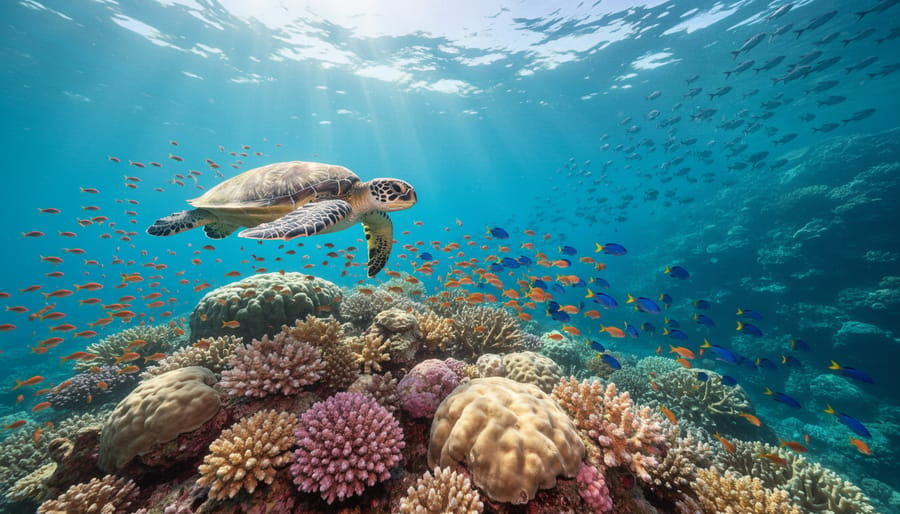
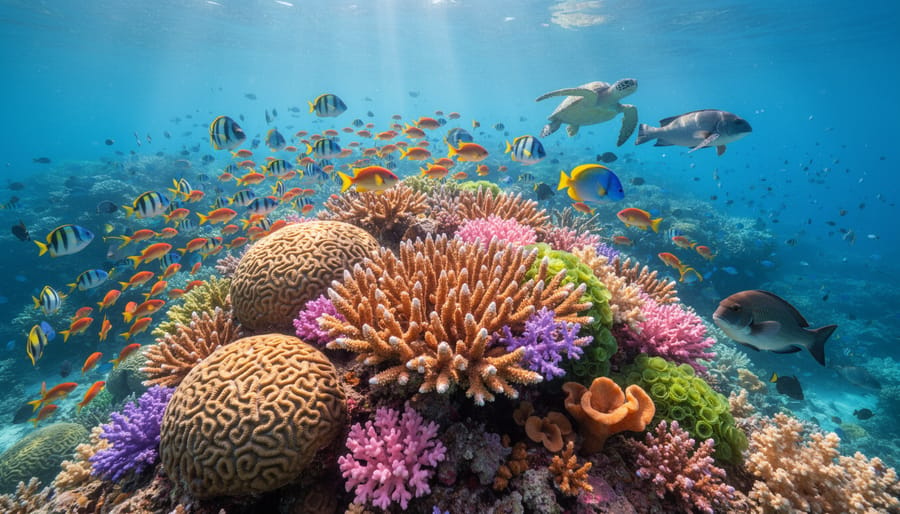
Beneath the ocean’s surface lies an explosion of life so concentrated that coral reef ecosystems rival tropical rainforests in their species density, despite covering less than one percent of the seafloor. These underwater metropolises harbor approximately one-quarter of all known marine species, supporting intricate food webs where each organism plays a crucial role in maintaining the reef’s delicate balance.
The extraordinary biodiversity found in coral reefs stems from millions of years of evolution in stable, warm waters where specialization thrives. Countless niches exist within the reef structure itself: from the symbiotic algae living within coral tissues to predatory fish patrolling the outer slopes, from invertebrates hiding in crevices to microscopic bacteria cycling nutrients through the system. This complexity creates a self-sustaining ecosystem that provides coastal protection, supports commercial fisheries worth billions annually, and offers potential medical breakthroughs through unique biochemical compounds found nowhere else on Earth.
Yet this biological treasure faces unprecedented threats. Rising ocean temperatures trigger coral bleaching events with increasing frequency, while ocean acidification weakens coral skeletons and disrupts the entire ecosystem’s foundation. Overfishing removes key species that maintain ecological balance, and pollution from coastal development smothers reefs with sediment and excess nutrients. Scientists estimate that without immediate intervention, we risk losing 70 to 90 percent of coral reefs by 2050.
Understanding the connection between coral health and biodiversity is essential for effective conservation. When we protect reefs, we safeguard not just corals, but the countless species depending on them and the human communities who rely on reef resources for food security and economic stability.
The Biodiversity Hotspot Beneath the Waves
How Corals Create the Foundation for Life
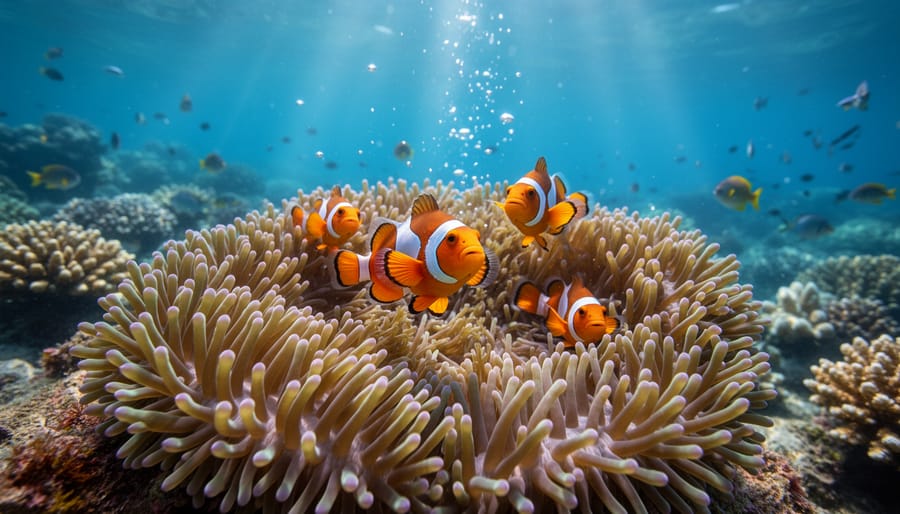
At the heart of every thriving reef lies a remarkable partnership. Corals themselves are actually colonies of tiny animals called polyps, and each polyp hosts millions of microscopic algae called zooxanthellae within its tissues. This symbiotic relationship powers the entire reef ecosystem. The algae perform photosynthesis, converting sunlight into sugars that provide up to 90% of the coral’s energy needs. In return, the coral offers the algae a protected environment and access to nutrients from its waste products. This efficient exchange allows corals and zooxanthellae to build massive limestone structures in nutrient-poor tropical waters where few other ecosystems could thrive.
But corals do far more than sustain themselves. As they grow over centuries, they create intricate three-dimensional structures with countless crevices, caves, and surfaces. This architectural complexity is what transforms coral reefs into biodiversity hotspots. The varied structures provide hiding places for juvenile fish, hunting grounds for predators, attachment sites for sponges and algae, and breeding territories for countless species.
Marine biologist Dr. Sarah Chen describes her first reef survey: “I counted over 200 species in just one hour on a healthy reef section. Every crack held something new—tiny gobies, cleaning shrimp, camouflaged octopuses. The structural diversity directly translates to biological diversity.”
This habitat complexity creates numerous ecological niches, allowing thousands of species to coexist without competing for the same resources. From microscopic plankton to apex predators like sharks, each organism finds its place within the coral architecture, forming the intricate food webs that make reefs the rainforests of the sea.
The Interconnected Web of Reef Species
Coral reefs function as living tapestries where each thread—every species—strengthens the entire fabric. These complex ecological relationships create a self-reinforcing cycle where biodiversity generates even more biodiversity.
At the foundation, microscopic zooxanthellae algae live within coral tissues, converting sunlight into energy through photosynthesis. This partnership allows corals to build massive reef structures that become home to countless other species. The physical complexity of the reef—its crevices, caves, and coral branches—creates thousands of microhabitats, each supporting specialized organisms.
Tiny plankton drift through reef waters, feeding small fish and filter-feeders like sponges and feather stars. These small fish, in turn, attract larger predators, establishing food webs of remarkable complexity. Cleaner wrasse set up “stations” where larger fish visit for parasite removal, demonstrating cooperation between species that benefits both parties.
Marine biologist Dr. Sarah Chen describes her revelation while studying reef interactions: “I watched a parrotfish graze on algae, keeping it from smothering coral. Its waste fed nutrient cycles that supported plankton blooms, which fed juvenile fish hiding in coral branches. One species supporting dozens of others—it was breathtaking.”
Even creatures we might overlook play crucial roles. Sea cucumbers process sediment, recycling nutrients. Bacteria decompose organic matter, preventing toxic buildup. Predatory sharks and groupers maintain balance by controlling prey populations, preventing any single species from dominating.
This interconnectedness means that protecting reef biodiversity isn’t just about saving individual species—it’s about preserving the entire web of life that makes these ecosystems so resilient and productive.
Why Biodiversity Matters for Reef Resilience
Functional Redundancy and Ecosystem Stability
Imagine a coral reef as a complex machine with many moving parts working together to keep the ecosystem running. Functional redundancy means having backup parts—multiple species that perform similar jobs. This built-in insurance policy is what helps reefs bounce back from hurricanes, bleaching events, and other disturbances.
When several different herbivorous fish species graze on algae, for example, the reef doesn’t collapse if one species disappears. Parrotfish, surgeonfish, and rabbitfish all munch on algae that would otherwise smother corals. If disease wipes out one population, the others continue this essential cleaning service. Without this overlap, a single loss could trigger a devastating chain reaction.
Dr. Maria Santos, a marine biologist who has studied Caribbean reefs for fifteen years, witnessed this firsthand. “After Hurricane Maria, reefs with higher species diversity recovered their coral cover within two years,” she explains. “Nearby reefs with fewer herbivore species became dominated by seaweed and haven’t recovered even now.”
The principle extends beyond herbivores. Multiple coral species provide habitat, various predators control prey populations, and different bacteria process nutrients. Each functional group benefits from having several species sharing the workload.
Unfortunately, overfishing and habitat degradation reduce this redundancy by eliminating species one by one. Eventually, reefs reach a tipping point where they can no longer withstand normal environmental stresses. Protecting biodiversity means preserving these ecological backup systems that give reefs their remarkable resilience and ability to recover from damage.
The Ripple Effects of Species Loss
When a single species disappears from a coral reef, the consequences rarely stop there. Instead, the loss triggers a domino effect that can reshape entire marine communities, demonstrating just how interconnected reef ecosystems truly are.
Consider what happened in the Caribbean when overfishing decimated populations of herbivorous parrotfish during the 1980s and 1990s. These colorful fish serve as the reef’s gardeners, grazing on algae that would otherwise smother corals. Without enough parrotfish, algae exploded across Caribbean reefs, blocking sunlight and preventing new corals from settling. Many reefs shifted from coral-dominated to algae-dominated ecosystems, losing their structural complexity and the thousands of species that depended on that intricate habitat. Dr. Maria Gonzalez, a marine biologist who has studied Caribbean reefs for two decades, recalls her first dive on a once-thriving Jamaican reef: “Where I had seen vibrant coral gardens as a student, there was now a flat carpet of algae with just a few struggling coral colonies. It was heartbreaking.”
The loss of apex predators creates equally dramatic ripples. When sharks and large groupers are removed through fishing, populations of smaller predators can explode. These mid-level predators then overconsume herbivorous fish, which allows algae to proliferate again. Scientists call this a “trophic cascade,” where effects travel up and down the food web.
Sea urchins provide another striking example. In the 1980s, a disease wiped out most long-spined sea urchins in the Caribbean. These urchins had been compensating for the loss of herbivorous fish, so their disappearance accelerated reef decline dramatically.
These real-world examples underscore an urgent message: protecting biodiversity means protecting every level of the reef community, from the smallest grazers to the largest predators.
Threats Eroding Coral Reef Biodiversity
Climate Change and Ocean Acidification
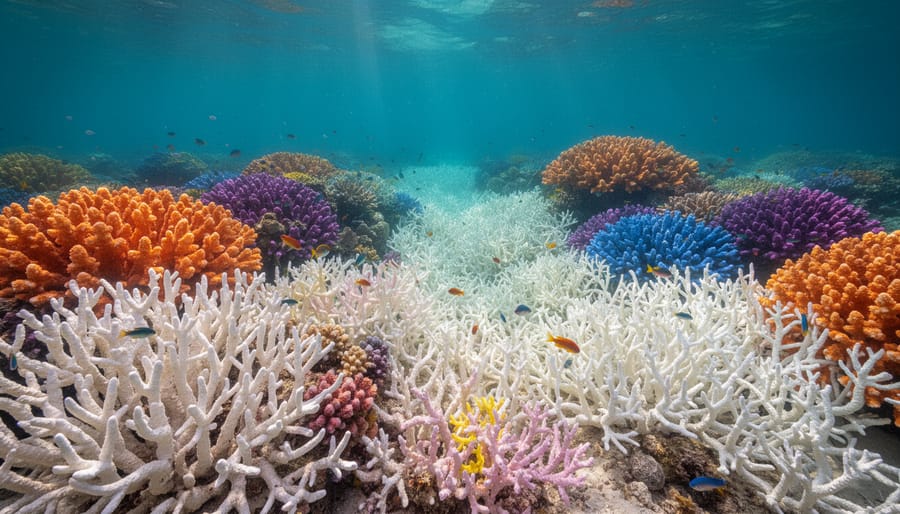
Climate change poses an existential threat to coral reefs through two interconnected mechanisms: rising ocean temperatures and ocean acidification. When water temperatures climb even 1-2°C above normal seasonal maximums, corals experience thermal stress that triggers bleaching. During these events, corals expel the symbiotic algae (zooxanthellae) living in their tissues, losing both their vibrant colors and their primary food source. Without these microscopic partners, corals essentially starve, and prolonged bleaching leads to widespread mortality. Mass bleaching events have become five times more frequent than they were four decades ago, leaving reefs insufficient time to recover between disturbances.
Simultaneously, the ocean absorbs approximately 30% of atmospheric carbon dioxide, which reacts with seawater to form carbonic acid. This process lowers the ocean’s pH and reduces the availability of carbonate ions that corals need to build their calcium carbonate skeletons. As acidification intensifies, coral growth slows dramatically, and existing structures become more vulnerable to erosion and storm damage. Weaker reefs mean fewer crevices and hiding places for fish, crustaceans, and other organisms that depend on complex reef architecture.
The cascading effects on biodiversity are profound. As coral cover declines, so do the fish populations, invertebrates, and algae that form the reef’s intricate food webs. Marine biologist Dr. Elena Rodriguez, who has monitored Caribbean reefs for fifteen years, describes witnessing once-thriving ecosystems transform into algae-dominated rubble fields, with biodiversity losses exceeding 60% in some locations.
Overfishing and Destructive Practices
Overfishing poses one of the most significant threats to coral reef biodiversity by disrupting the delicate balance that keeps these ecosystems thriving. When key species like parrotfish and groupers are removed from reefs, the entire food web suffers. Parrotfish, for instance, graze on algae that would otherwise smother corals, while predatory fish help control populations of coral-eating invertebrates.
Destructive fishing practices compound these problems dramatically. Blast fishing, which uses explosives to stun fish, physically destroys coral structures that took centuries to build. Cyanide fishing, employed to capture live fish for aquariums and restaurants, poisons both target species and the surrounding reef community. Bottom trawling scrapes across reef habitats, leaving devastation in its wake.
Marine biologist Dr. Sarah Chen, who has documented reef damage across Southeast Asia, shares: “I’ve witnessed reefs transformed from vibrant cities of life into rubble fields in just years due to destructive practices. But I’ve also seen communities embrace sustainable fishing methods and watched those same reefs begin recovering.”
The solution requires both enforcement of fishing regulations and community engagement. Many conservation programs now train former destructive fishers in sustainable techniques, creating guardians from those who once caused harm. Volunteers can support these initiatives through reef monitoring programs that document fish populations and help identify areas needing protection.
Pollution and Coastal Development
Human activities along coastlines pose some of the most preventable yet damaging threats to coral reef biodiversity. Nutrient runoff from agricultural fertilizers and sewage creates a cascade of problems that disrupt the delicate balance reef ecosystems require. When excess nitrogen and phosphorus enter coastal waters, they fuel rapid algae growth that smothers corals, blocking the sunlight they need to survive. This process, called eutrophication, reduces water quality and creates dead zones where marine life cannot thrive.
Plastic pollution has become an alarming reality for reef communities worldwide. Microplastics settle on coral surfaces, introducing harmful bacteria and blocking feeding structures, while larger debris physically damages fragile coral colonies. Marine biologist Dr. Elena Rodriguez, who has spent fifteen years studying Caribbean reefs, shares a sobering observation: “During a recent survey, we found plastic fragments embedded in nearly 40% of the coral colonies we examined. These reefs are literally choking on our waste.”
Coastal construction and dredging operations destroy critical reef habitat while increasing sedimentation that suffocates corals. Each new marina, beachfront development, or port expansion can devastate nearby reef systems that took thousands of years to form.
The encouraging news is that communities can reverse these impacts through better waste management, sustainable coastal planning, and restoration efforts. Local beach cleanup initiatives and volunteer monitoring programs provide hands-on opportunities to protect these vital ecosystems. When coastal communities prioritize reef health in development decisions, biodiversity can recover remarkably quickly, offering hope for future generations.
Conservation Strategies That Protect Reef Biodiversity
Marine Protected Areas and No-Take Zones
Marine Protected Areas (MPAs) and no-take zones represent some of the most effective tools we have for restoring coral reef biodiversity. These designated areas restrict or prohibit fishing and other extractive activities, giving marine ecosystems the breathing room they desperately need to recover. The science is clear: when enforcement is strong, the results can be remarkable.
Within well-managed MPAs, fish populations often increase by 400-600% within just five to ten years. Coral cover expands, biodiversity flourishes, and entire food webs regain their natural balance. The spillover effect from these protected zones benefits surrounding waters too, as larger, more abundant fish populations migrate outward, replenishing nearby fishing grounds.
The Apo Island Marine Reserve in the Philippines stands as a powerful success story. What began as a community-led initiative in 1982 transformed a degraded reef into a thriving ecosystem. Today, fish biomass inside the reserve is seven times higher than in unprotected areas nearby. Dr. Maria Santos, a marine biologist who has studied Apo Island for fifteen years, shares: “Watching this reef come back to life has been the most rewarding experience of my career. The key wasn’t just creating boundaries on a map—it was empowering local communities to become guardians of their ocean.”
However, success depends entirely on enforcement and community engagement. Paper parks that exist only in policy documents provide no real protection. Effective MPAs require regular patrols, local buy-in, sustainable funding, and opportunities for communities to participate as citizen scientists and volunteer monitors, ensuring these underwater sanctuaries can fulfill their conservation promise.
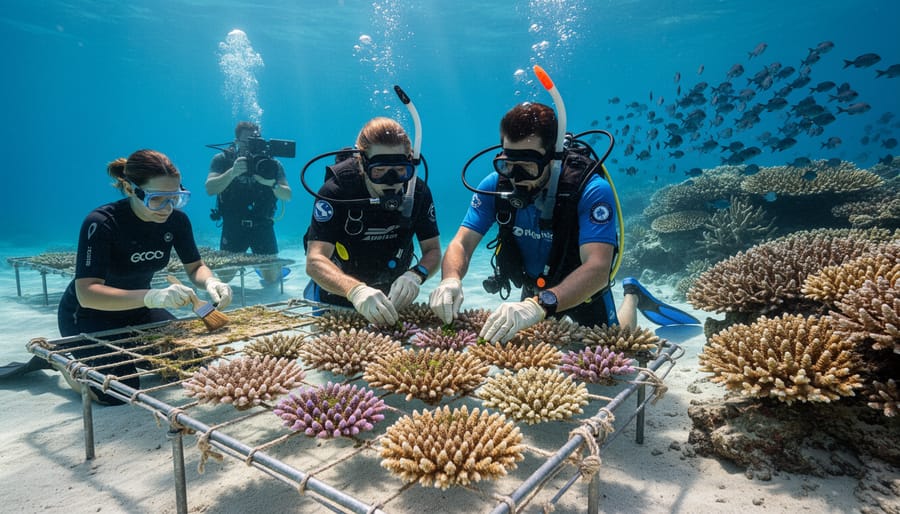
Coral Restoration and Biodiversity Enhancement
Around the world, scientists and communities are pioneering innovative approaches to rebuild damaged coral reefs and restore their vibrant ecosystems. These restoration efforts go far beyond simply replanting corals—they’re about reviving entire underwater communities and the incredible biodiversity they support.
Coral gardening has emerged as one of the most successful restoration techniques. Marine biologists grow coral fragments in underwater nurseries, much like terrestrial gardeners cultivate seedlings. These nurseries protect young corals from predators and allow them to grow faster than they would in the wild. Once the fragments reach sufficient size, restoration teams transplant them onto degraded reefs. Dr. Maria Santos, who leads a restoration project in the Caribbean, shares that “watching volunteers carefully attach corals to the reef and then seeing fish return within weeks is profoundly moving. We’re not just restoring corals; we’re bringing back entire neighborhoods of marine life.”
Even more cutting-edge is assisted evolution, where researchers are developing heat-resistant coral strains that can better withstand warming oceans. By selectively breeding corals that survived bleaching events or exposing them to gradually increasing temperatures, scientists are creating more resilient populations. These “super corals” offer hope for reef survival in our changing climate.
What makes these efforts especially powerful is their community involvement. Restoration projects worldwide welcome volunteers—from experienced divers to students learning marine science. These hands-on opportunities allow everyday citizens to directly contribute to ocean recovery while gaining deeper appreciation for reef ecosystems and their remarkable biodiversity.
Community-Based Conservation Initiatives
Around the world, coastal communities are emerging as powerful guardians of their local reefs, combining generations of traditional ecological knowledge with cutting-edge science. In Fiji, village elders work alongside marine biologists to establish temporary fishing closures called tabu areas, using ancestral management practices that allow fish populations to recover while maintaining community livelihoods. Marine biologist Dr. Sarah Chen shares how working with fishers in the Philippines transformed her research: “They knew migration patterns and spawning sites we’d never documented. Their observations became crucial data points for our conservation strategies.”
In Indonesia’s Coral Triangle, women-led cooperatives now monitor reef health using smartphone apps, documenting species counts and coral bleaching events that feed into regional databases. These citizen scientists receive training in coral identification and survey techniques, creating a network of ocean stewards invested in their reefs’ futures.
Such partnerships demonstrate that effective conservation requires both scientific rigor and local wisdom. Communities living closest to reefs often possess invaluable insights into ecosystem changes over decades, while researchers contribute technical expertise and broader ecological context. This collaborative approach not only strengthens protection efforts but also ensures conservation solutions respect cultural traditions and support sustainable fishing practices that have nourished communities for generations.
How You Can Support Coral Reef Biodiversity
Volunteer Opportunities in Reef Monitoring
Getting involved in reef monitoring doesn’t require an advanced degree—just passion and commitment. Numerous organizations worldwide welcome volunteers to contribute meaningfully to coral reef conservation through hands-on biodiversity surveys and data collection.
Programs like Reef Check and Coral Watch train everyday citizens to conduct standardized surveys, identifying fish species, measuring coral health, and documenting changes over time. These citizen science initiatives generate critical data that fills gaps in scientific knowledge, especially in remote locations where research funding is limited.
Sarah Martinez, a high school teacher from Florida, transformed her love of snorkeling into conservation action by joining a local reef monitoring program. “I learned to identify over fifty fish species and document coral bleaching events,” she shares. “Knowing my observations contribute to long-term datasets that inform marine protected area management makes every dive purposeful.” Sarah now brings her students on monitoring expeditions, inspiring the next generation of ocean stewards.
For those unable to dive, opportunities exist in photo analysis and data entry. Volunteers review underwater footage, identifying species and tracking population changes from their computers. Marine biologist Dr. James Chen emphasizes the value of these contributions: “Citizen scientists have helped us discover biodiversity hotspots we didn’t know existed and track recovery in restored areas. Their dedication multiplies our research capacity exponentially.”
Whether you have a weekend or a summer, participating in reef monitoring connects you directly with conservation efforts while building a community of like-minded advocates working toward healthy oceans.
Making Reef-Friendly Choices Daily
Every individual choice we make ripples outward, impacting coral reefs thousands of miles away. The good news? Creating positive change is more accessible than you might think, and it starts right in your own home.
Begin with your seafood selections. Choose sustainably caught or farmed options by looking for certifications from the Marine Stewardship Council or Aquaculture Stewardship Council. Avoid purchasing species caught using destructive methods like bottom trawling or cyanide fishing, which devastate reef habitats. Dr. Maria Chen, a marine biologist who has studied Pacific reefs for fifteen years, shares this simple rule: “If you don’t know where your fish came from or how it was caught, choose something else.”
Your personal care products matter too. Many sunscreens contain oxybenzone and octinoxate, chemicals that bleach and damage coral tissue even in small concentrations. Switch to mineral-based, reef-safe sunscreens with zinc oxide or titanium dioxide as active ingredients. This single swap prevents thousands of tons of harmful chemicals from entering marine ecosystems annually.
Reducing your carbon footprint directly helps reefs by slowing ocean warming and acidification. Simple actions include reducing energy consumption, choosing renewable energy when possible, minimizing single-use plastics, and supporting businesses committed to sustainability.
Consider volunteering with local beach cleanups or reef monitoring programs. These hands-on experiences connect you directly with conservation efforts while teaching valuable skills. As one volunteer coordinator notes, “We’ve seen participants become our most passionate advocates, inspiring entire communities to take action.”
Coral reefs stand as living testaments to nature’s creativity, supporting an irreplaceable tapestry of life that has evolved over millions of years. These underwater rainforests provide essential services not only to marine life but to hundreds of millions of people who depend on them for food, livelihoods, and coastal protection. The remarkable biodiversity found within reef ecosystems represents a genetic library we’ve barely begun to understand, holding potential solutions to medical challenges and insights into resilience in a changing world.
Yet this natural heritage faces unprecedented threats. The window for meaningful action remains open, but it narrows with each passing year. The encouraging truth is that coral reefs have proven remarkably resilient when given the chance to recover, and conservation efforts worldwide demonstrate that positive change is achievable.
Dr. Maria Santos, a marine biologist who has dedicated twenty years to reef restoration in the Caribbean, shares this perspective: “I’ve watched coral fragments we planted grow into thriving colonies, attracting fish and invertebrates back to areas that seemed lifeless. It reminds me that our efforts, however small they might seem, genuinely matter.”
Every action counts. Whether you participate in beach cleanups, choose sustainable seafood, reduce your carbon footprint, or support conservation organizations, you become part of the solution. Volunteer opportunities with reef monitoring programs welcome people from all backgrounds, transforming concerned citizens into active stewards of marine ecosystems.
The future of coral reef biodiversity rests in our collective hands. These magnificent ecosystems have given us so much; now they need us to give back. By acting together with informed urgency and unwavering hope, we can ensure that future generations inherit oceans as vibrant and full of life as those we’ve known.

jessica
Ava Singh is an environmental writer and marine sustainability advocate with a deep commitment to protecting the world's oceans and coastal communities. With a background in environmental policy and a passion for storytelling, Ava brings complex topics to life through clear, engaging content that educates and empowers readers. At the Marine Biodiversity & Sustainability Learning Center, Ava focuses on sharing impactful stories about community engagement, policy innovations, and conservation strategies. Her writing bridges the gap between science and the public, encouraging people to take part in preserving marine biodiversity. When she’s not writing, Ava collaborates with local initiatives to promote eco-conscious living and sustainable development, ensuring her work makes a difference both on the page and in the real world.