Marine Biodiversity Science Center

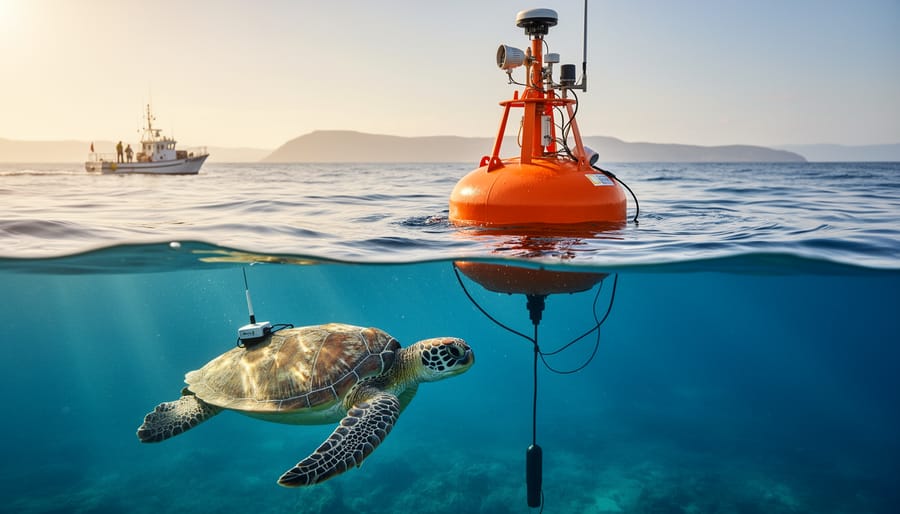
Every second, sensors deployed across our oceans transmit millions of data points about water temperature, salinity, marine animal movements, and ecosystem health. Real-time data streams represent a revolutionary shift in how we understand and protect marine environments, transforming conservation from reactive crisis management into proactive, evidence-based stewardship.
These continuous flows of information arrive from underwater observatories, satellite systems, acoustic monitors, and tagged marine animals, creating an unprecedented window into ocean conditions as they unfold. Unlike traditional research methods that might provide snapshots every few months or years, real-time streams deliver insights minute by minute, allowing scientists to detect harmful algal blooms as they form, track whale migrations as they happen, and identify illegal fishing activities in protected waters before irreversible damage occurs.
The technology behind these systems combines advanced sensors with sophisticated data transmission networks and analytical platforms that can process vast quantities of information instantly. When a tagged sea turtle crosses into dangerous waters, researchers receive immediate alerts. When ocean temperatures spike in a coral reef zone, conservation teams can deploy rapid response protocols. When unusual marine mammal vocalizations suggest distress, intervention becomes possible within hours rather than weeks.
This immediacy fundamentally changes what marine conservation can achieve. Success stories already demonstrate the power of real-time monitoring, from preventing ship strikes through dynamic whale alert systems to coordinating international responses to ocean pollution events. For environmental professionals, students, and engaged citizens alike, understanding real-time data streams means grasping how technology empowers us to become more effective guardians of marine biodiversity, turning observation into meaningful action that protects our oceans when it matters most.
What Are Real-Time Oceanographic Data Streams?
From Ocean Floor to Computer Screen in Seconds
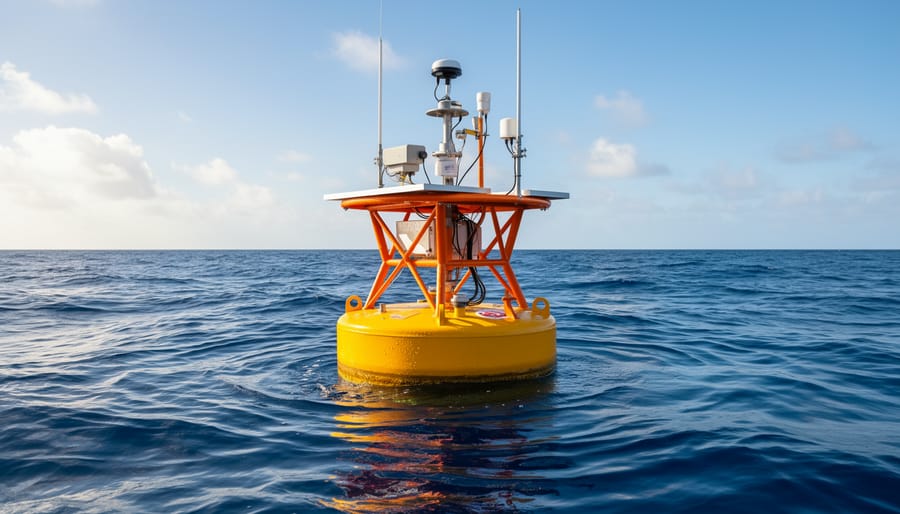
Imagine a sensor attached to a buoy bobbing in the North Atlantic, recording water temperature, salinity, and oxygen levels every few minutes. Within seconds of measurement, that data begins an remarkable journey that ends on a researcher’s computer screen thousands of kilometers away.
The process starts with underwater sensors equipped with satellite communication technology. These devices automatically transmit their readings to orbiting satellites, which relay the information to ground stations. From there, the data flows through secure internet connections to centralized databases where sophisticated algorithms instantly process and organize the incoming stream. Scientists can access this information through user-friendly dashboards that update continuously, showing changes as they happen in the ocean.
Dr. Sarah Chen, a marine biologist who monitors coral reef health, describes her experience: “I remember when we had to wait months for data downloads from recovered equipment. Now I check conditions before my morning coffee. If I see a concerning temperature spike, I can alert our team immediately and even adjust our research plans that same day.”
This rapid flow of information enables researchers to apply spatial analysis techniques that reveal patterns across vast ocean areas. More importantly, it transforms how we respond to ocean changes. When data arrives in real time, conservation action can happen in real time too, creating unprecedented opportunities to protect marine ecosystems before damage becomes irreversible.
Why Real-Time Data Matters for Marine Conservation
Catching Problems Before They Become Catastrophes
Real-time data streams function as the ocean’s early warning system, alerting scientists and managers to environmental threats before they spiral into ecological disasters. These monitoring networks combine satellite imagery, sensor arrays, and ocean modeling systems to detect changes as they unfold.
Consider harmful algal blooms, which can devastate marine ecosystems and pose serious risks to human health. Continuous monitoring of water temperature, nutrient levels, and chlorophyll concentrations now allows researchers to identify bloom formation in its earliest stages. When sensors detect the telltale combination of warm water and elevated nutrient levels along the Florida coast, managers can issue warnings to shellfish harvesters and close beaches before toxins accumulate to dangerous levels.
Oil spill detection has similarly transformed. Satellites equipped with synthetic aperture radar can spot surface slicks within hours of a spill, even in darkness or fog. This rapid detection allows response teams to deploy containment booms and dispersants while spills remain manageable, potentially saving countless seabirds, marine mammals, and coastal habitats.
Temperature anomalies present another critical monitoring target. When sensors detect sudden temperature drops or warming events, scientists can predict coral bleaching episodes or track cold-water upwellings that concentrate prey species. Marine biologist Dr. Sarah Chen recalls how real-time temperature data helped her team relocate endangered sea turtle nests before an unexpected cold snap reached nesting beaches, saving an entire season’s hatchlings.
These systems transform conservation from reactive damage control into proactive protection, giving marine life a fighting chance against rapidly changing conditions.
Tracking Endangered Species in Their Habitat
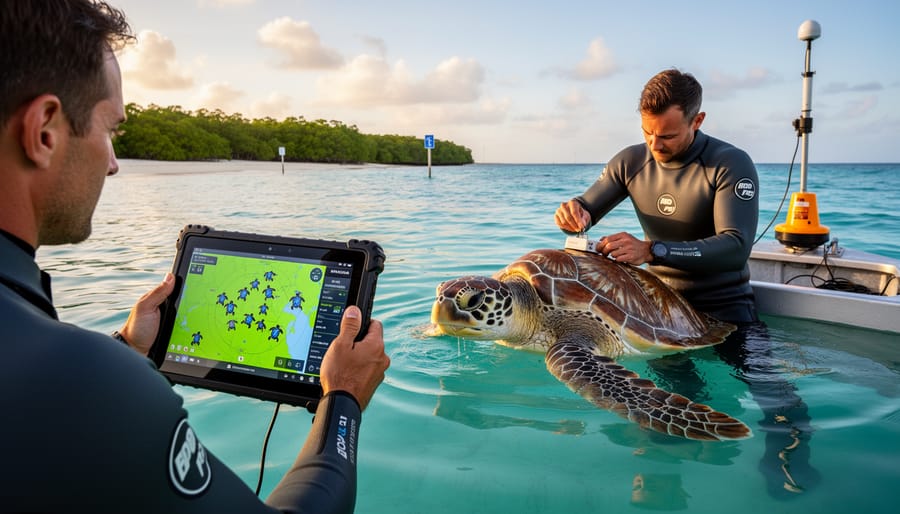
Real-time tracking technology has revolutionized our ability to protect endangered marine species by providing immediate insights into their movements, behaviors, and habitat use. When researchers attach satellite tags to sea turtles, whales, or sharks, the data streams directly to monitoring stations, allowing conservationists to respond quickly to emerging threats and make informed protection decisions.
For leatherback sea turtles, one of the ocean’s most endangered species, real-time tracking reveals critical nesting beaches and feeding grounds that require immediate protection. Dr. Maria Santos, a marine biologist who has tracked turtles across the Pacific for fifteen years, shares how this technology changed her work: “We used to wait months to download data from recovered tags. Now, if a tagged turtle enters waters where illegal fishing activity is reported, we can alert authorities within hours.”
The technology works through a network of sensors that transmit GPS coordinates, dive depths, water temperature, and movement patterns. This constant flow of information helps scientists identify migration corridors, breeding areas, and feeding hotspots that need safeguarding. When North Atlantic right whales—with fewer than 350 individuals remaining—are detected entering shipping lanes, real-time alerts enable vessels to slow down or reroute, dramatically reducing collision risks.
These tracking systems also engage citizen scientists and volunteers in conservation efforts. Many organizations now offer opportunities for the public to “adopt” tagged animals, following their journeys online and contributing to data interpretation. This connection transforms abstract conservation concepts into personal stories, building a community of advocates who understand why protecting these migration routes and habitats matters.
The immediate nature of these data streams means conservation strategies can adapt as animals move, creating dynamic protection that follows species rather than relying solely on fixed marine protected areas.
Real-World Success Stories: Data Streams in Action
Preventing a Coral Bleaching Event
In 2019, the Moorea Coral Reef Long-Term Ecological Research Station in French Polynesia demonstrated how real-time monitoring can prevent ecological catastrophe. When ocean temperature sensors detected a concerning spike of 1.5°C above normal summer temperatures, researchers had a critical window to act before widespread coral bleaching could begin.
The monitoring network, consisting of dozens of underwater temperature sensors transmitting data every fifteen minutes, allowed scientists to track the thermal stress accumulating across different reef zones. Dr. Sarah Chen, the station’s lead marine biologist, recalls the urgency: “We watched the data climbing hourly. These temperature monitoring predictions gave us exactly what we needed—advance warning before the damage became irreversible.”
The team mobilized immediately, deploying shade structures over the most vulnerable coral colonies and installing temporary water circulation systems to promote cooler water flow from deeper areas. Local volunteers, trained through the station’s citizen science program, helped monitor affected zones and documented coral stress indicators daily.
Within three weeks, temperatures normalized, and the intervention proved successful. Post-event surveys showed that protected areas experienced only 8% bleaching compared to 47% in unmonitored nearby reefs. The corals recovered fully within two months.
This case illustrates a fundamental shift in conservation strategy. Real-time data transforms reactive damage control into proactive ecosystem protection, giving scientists and communities the power to intervene during critical moments when action matters most.
A Marine Biologist’s Perspective
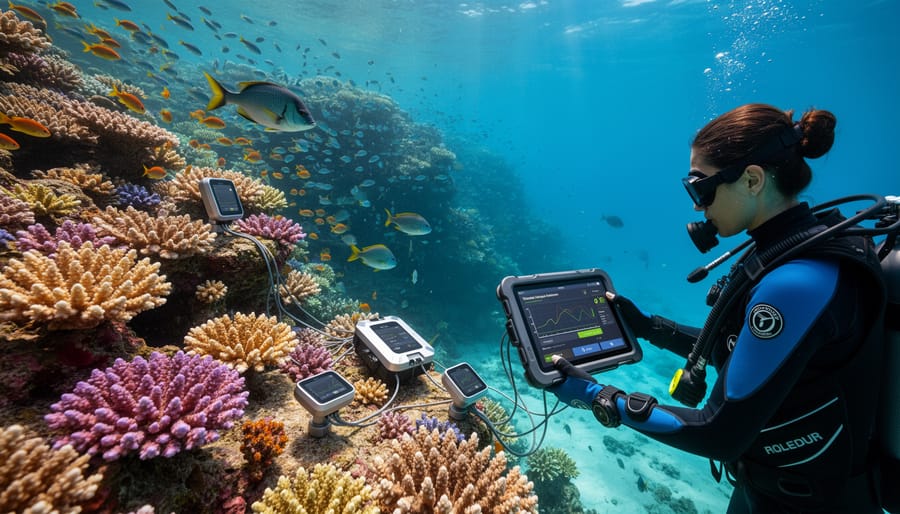
I still remember the morning everything changed for me. I was aboard our research vessel off the coast, manually recording water temperature readings every few hours—the same tedious process I’d followed for years. Then our team installed our first real-time monitoring buoy, and suddenly I could watch ocean conditions update on my laptop every thirty seconds, even from shore.
That transformation happened five years ago, and I haven’t looked back since. As a marine biologist studying coral reef ecosystems, real-time data streams have fundamentally reshaped how I approach conservation work. Instead of waiting weeks to analyze data after fieldwork, I now receive instant alerts when water temperatures spike or oxygen levels drop in the areas I monitor. This immediacy has allowed me to document coral bleaching events as they unfold, rather than discovering the damage days later.
What excites me most is how these data streams connect my work to a broader community. Last summer, I watched as citizen scientists using our public data portal noticed an unusual plankton bloom forming near a protected reef. Their observations, combined with our real-time sensor data, helped us identify the pattern three days earlier than we would have otherwise. That early warning gave local authorities time to implement protective measures before the bloom could impact vulnerable marine life.
The human element in all this technology matters deeply. Behind every data point streaming across my screen is a living ecosystem I care about protecting. Real-time monitoring hasn’t made fieldwork obsolete—it’s made it more purposeful. I spend less time collecting basic measurements and more time interpreting patterns, engaging with communities, and taking meaningful conservation action.
For anyone considering getting involved in marine conservation, understanding these data systems opens remarkable doors. You don’t need an advanced degree to contribute meaningfully. Some of our most valuable insights have come from dedicated volunteers who learned to interpret data streams and shared their observations with our research team.
The Technology Behind the Stream
Making Sense of Millions of Data Points
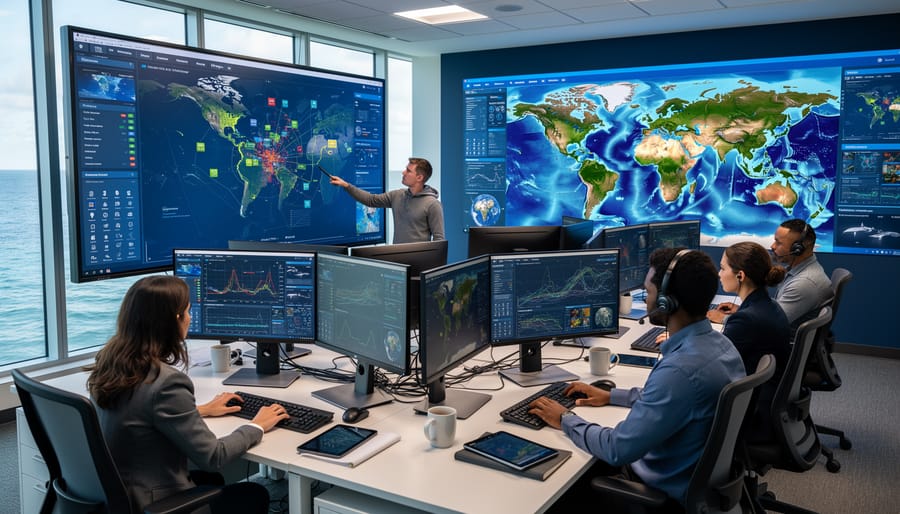
Every day, ocean monitoring systems generate millions of data points from sensors, underwater cameras, acoustic recorders, and satellite feeds. For conservationists, the challenge isn’t just collecting this information—it’s transforming raw numbers into meaningful insights that drive protection efforts.
Modern analytics platforms use sophisticated algorithms to filter signal from noise. When a hydrophone array captures sound across hundreds of frequencies, AI-powered analytics can distinguish between whale songs, ship engines, and natural ocean sounds within seconds. This rapid processing allows researchers to track marine mammal movements, identify critical habitats, and respond to threats before they escalate.
Dr. Sarah Chen, a marine biologist monitoring coral reef ecosystems, describes the transformation: “We used to spend weeks manually reviewing temperature and pH data. Now our analytics system alerts us immediately when conditions suggest bleaching risk, giving us precious time to investigate and document what’s happening.”
The software visualizes complex patterns through intuitive dashboards—heat maps showing species distribution, trend lines revealing population changes, and automated reports highlighting unusual activity. These tools democratize ocean science, allowing smaller conservation organizations and citizen science groups to leverage the same powerful insights once available only to major research institutions.
By making sense of endless data streams, these systems empower conservationists to make evidence-based decisions quickly, allocate resources effectively, and demonstrate measurable impact to funders and stakeholders.
How You Can Get Involved
The exciting world of real-time ocean data is more accessible than you might think, and your participation can make a genuine difference in marine conservation efforts. Whether you’re a student, educator, professional scientist, or simply someone who cares about our oceans, there are meaningful ways to engage with these vital monitoring systems.
One of the most direct ways to get involved is through citizen science programs that harness real-time data streams. Many coastal monitoring initiatives welcome volunteers to help interpret data, document observations, and report unusual findings. These programs often provide training sessions where you can learn to understand oceanographic data visualizations and contribute to ongoing research projects. Your observations—whether you’re a beachgoer noticing temperature changes or a boater spotting marine life patterns—can complement sophisticated sensor networks and help scientists validate automated readings.
The Marine Biodiversity Science Center offers several volunteer opportunities that connect directly with real-time ocean monitoring. Volunteers assist with data quality checks, help maintain shoreline sensors, and participate in coordinated observation events. Marine biologist Dr. Sarah Chen, who coordinates our volunteer program, shares: “Some of our most valuable insights come from dedicated volunteers who notice patterns in the data that automated systems might miss. They’re the eyes and ears that bring context to the numbers.”
Educational resources also provide pathways for engagement. Free online platforms allow anyone to access real-time ocean data dashboards, explore interactive maps showing current conditions, and participate in virtual workshops. Teachers can integrate these live data streams into classroom lessons, giving students hands-on experience with authentic scientific tools. Many universities and research institutions offer webinars explaining how to interpret oceanographic data, making the science accessible to all interest levels.
By engaging with real-time ocean data, you become part of a global community working to understand and protect our marine ecosystems. Every contribution, whether through volunteering, education, or simply staying informed, strengthens our collective ability to respond to ocean challenges effectively.
Real-time data streams represent more than technological innovation—they embody hope for our oceans and the extraordinary life they sustain. As we’ve explored throughout this article, these systems transform how we understand, protect, and restore marine ecosystems. They give us eyes beneath the waves, revealing patterns invisible to previous generations of scientists and conservationists. More importantly, they create pathways for meaningful action.
The power of these data streams lies not just in the information they capture, but in their ability to unite us around a common purpose. When a research vessel uploads temperature readings, when a tagged whale transmits its location, when a remote sensor detects changing pH levels—each data point becomes part of a larger story we’re writing together about ocean stewardship.
Dr. Sarah Chen, who has spent fifteen years analyzing marine migration patterns, often reminds her volunteers that every person contributes to conservation success. “Whether you’re processing data from your home computer or interpreting graphs in our lab, you’re making discoveries that inform policy and protection strategies,” she says. This collaborative spirit defines modern marine science.
The Marine Biodiversity Science Center invites you to become part of this movement. Join our e-network to receive updates on real-time monitoring projects, explore volunteer opportunities that match your skills and interests, or participate in our citizen science initiatives. Your engagement—whether sharing data, spreading awareness, or contributing time—helps build the comprehensive understanding our oceans desperately need. Together, we’re not just collecting data; we’re creating a sustainable future for marine life.

jessica
Ava Singh is an environmental writer and marine sustainability advocate with a deep commitment to protecting the world's oceans and coastal communities. With a background in environmental policy and a passion for storytelling, Ava brings complex topics to life through clear, engaging content that educates and empowers readers. At the Marine Biodiversity & Sustainability Learning Center, Ava focuses on sharing impactful stories about community engagement, policy innovations, and conservation strategies. Her writing bridges the gap between science and the public, encouraging people to take part in preserving marine biodiversity. When she’s not writing, Ava collaborates with local initiatives to promote eco-conscious living and sustainable development, ensuring her work makes a difference both on the page and in the real world.