Marine Biodiversity Science Center

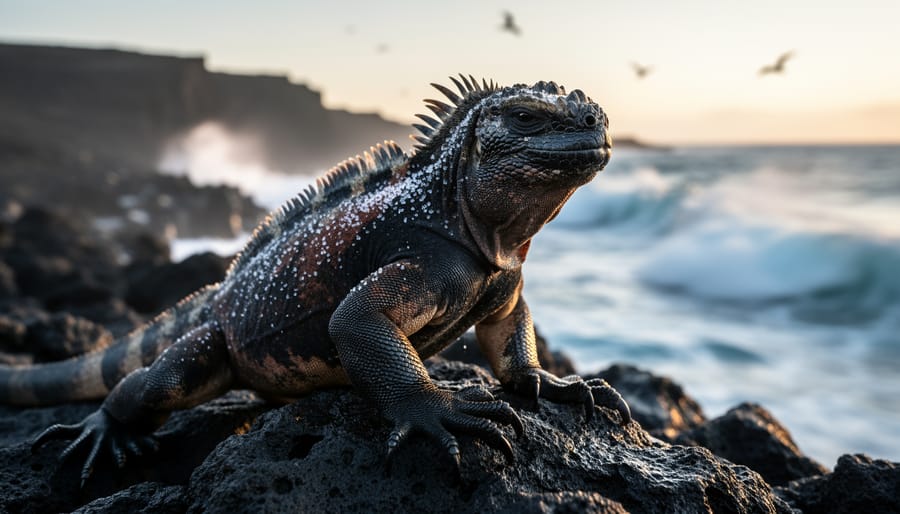
On the volcanic shores of the Galápagos Islands, a prehistoric-looking reptile emerges from crashing waves, its body glistening with salt crystals. The marine iguana stands as one of evolution’s most remarkable adaptations—the world’s only oceangoing lizard. Yet behind this dramatic image lies an equally captivating story of survival from the moment life begins in a sandy nest to the daily struggles of adulthood in one of Earth’s harshest marine environments.
Understanding the marine iguana’s life cycle reveals nature’s ingenuity at every stage. From females digging precise nesting chambers in volcanic soil to hatchlings racing past predatory hawks, each phase demonstrates extraordinary adaptations found across marine reproductive strategies. These cold-blooded reptiles have conquered challenges that would doom most terrestrial species: diving into frigid Pacific waters, grazing on submerged algae while holding their breath, then basking on black lava rocks to recover lost body heat.
This journey through the marine iguana’s life stages illuminates both vulnerability and resilience. Climate change threatens nesting sites with rising temperatures and altered food availability through El Niño events. Yet conservation efforts offer hope, with researchers monitoring populations and local communities protecting critical habitats. By exploring how these ancient mariners navigate life from egg to adult, we gain insight into preserving not just one species, but the delicate balance of Galápagos marine ecosystems that inspire wonder and demand our stewardship.
The Remarkable Marine Iguana: Evolution Meets Ocean
In the vast tapestry of evolution, few creatures capture the imagination quite like the marine iguana. These remarkable reptiles, found exclusively in the Galápagos Islands, represent one of nature’s most extraordinary experiments in adaptation. While most iguanas bask contentedly on land, their marine cousins have ventured where no other lizard dares to go: into the cold Pacific waters.
The marine iguana’s evolutionary journey began millions of years ago when land iguanas, likely blown by storms from mainland South America, arrived in the Galápagos. Faced with limited terrestrial food sources, these pioneers gradually adapted to feed on marine algae, developing specialized marine adaptations that would transform them into the ocean-going reptiles we see today. Their flattened tails propel them through water like miniature crocodiles, while powerful claws grip volcanic rocks against surging waves. Perhaps most remarkably, special glands near their nostrils expel excess salt from their bodies, a crucial adaptation for surviving on a marine diet.
These living fossils inhabit all major islands of the Galápagos archipelago, with different populations evolving distinct characteristics based on their specific island environments. Some populations have grown larger to withstand colder waters, while others remain smaller on islands with more accessible food sources.
Ecologically, marine iguanas serve as vital links between ocean and land ecosystems. They consume prodigious amounts of algae, helping maintain balanced underwater communities, while their waste fertilizes coastal areas, supporting endemic plant species. As both predator and prey, they connect numerous species within the Galápagos food web.
Dr. Sofia Martinez, a marine biologist who has studied these iguanas for fifteen years, describes them as “living laboratories of evolution.” Understanding their life cycle offers invaluable insights into how species adapt to changing environments, knowledge increasingly critical as ocean temperatures rise and ecosystems shift. For conservationists and researchers worldwide, marine iguanas represent both a conservation success story and an urgent reminder of our responsibility to protect Earth’s unique biodiversity.
From Egg to Hatchling: The Vulnerable Beginning
Mating Season and Territorial Battles
The breeding season of marine iguanas unfolds during the warmer months, typically between December and March, when environmental conditions align to trigger reproduction. Rising sea surface temperatures and increased food availability, particularly algae growth, signal optimal conditions for successful breeding and offspring survival.
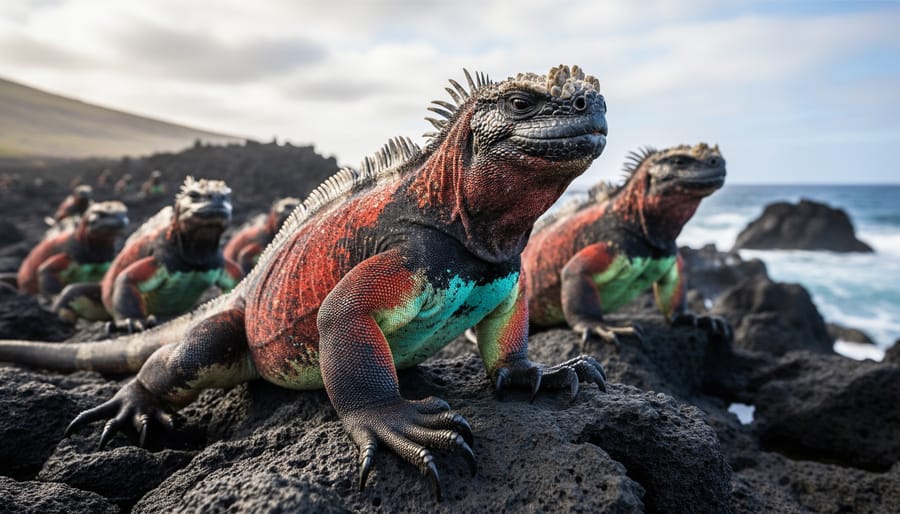
Male marine iguanas undergo remarkable physical transformations during mating season, with their typically black skin developing vibrant red and green patches. These colors, most pronounced in dominant males, result from increased hormone levels and serve as visual signals of fitness to potential mates. The competition among males intensifies dramatically as they establish and defend breeding territories on rocky shorelines.
Territorial battles between males involve impressive displays of dominance. Males position themselves on prominent rocks, bobbing their heads vigorously and engaging in ritualized pushing contests. Dr. Maria Gonzalez, a marine biologist who has studied Galápagos iguanas for over fifteen years, describes these confrontations as “carefully choreographed contests where size and strength matter, but serious injuries remain relatively rare.” The larger, more experienced males typically secure prime territories that attract multiple females.
Females select mates based on territory quality and male physical condition rather than engaging in prolonged courtship. Once breeding occurs, females face their next challenge: finding suitable nesting sites. Understanding these reproductive behaviors helps conservationists identify critical breeding areas requiring protection, especially as climate change affects breeding season timing and success rates. Volunteer monitoring programs often document these seasonal behaviors, contributing valuable data to ongoing research efforts.
Nesting: The Race Against Time and Predators
As breeding season arrives between January and March, female marine iguanas face one of their most demanding challenges: securing a suitable nesting site. Unlike their daily ocean forays, this task keeps them on land for extended periods, often traveling considerable distances to find optimal conditions. Female iguanas gravitate toward volcanic sand beaches where geothermal heat from below helps maintain stable incubation temperatures. These prime locations become battlegrounds, with females competing aggressively for the best spots through head-butting and territorial displays.
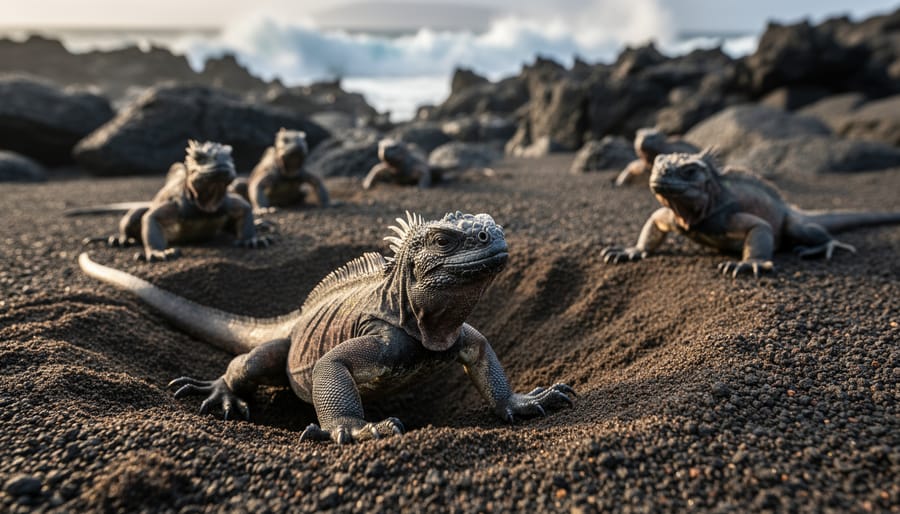
The nesting process itself is exhausting. A female digs a burrow up to 80 centimeters deep using her powerful claws, carefully depositing between one and six leathery eggs depending on her size and health. Larger females typically produce more eggs, investing significant energy reserves built up through months of foraging. After covering the nest, she abandons it, leaving the eggs to develop over the next three to four months without parental care.
This vulnerable period exposes eggs to numerous threats. Introduced predators like rats, cats, and dogs pose the greatest danger, raiding nests and devastating entire clutches. Native predators such as Galápagos hawks also take their toll. Beyond predation, eggs face environmental challenges including extreme temperature fluctuations and flooding during unusual weather events.
Marine biologist Dr. Sofia Ramirez, who has monitored nesting sites for fifteen years, notes that conservation efforts focusing on predator control have dramatically improved hatching success rates at protected beaches, offering hope for future generations.
Hatching and Immediate Survival Challenges
After approximately 90 to 120 days of incubation in their sandy burrows, marine iguana hatchlings begin the arduous task of digging their way to the surface. These miniature replicas of adults emerge measuring just 20 to 25 centimeters in length and weighing around 60 grams. Their dark coloration provides some camouflage against volcanic rocks, yet they remain extraordinarily vulnerable during their first hours of life.
Unlike mammals, marine iguanas provide no parental care—a characteristic reproductive strategy among reptiles. Hatchlings must immediately navigate a gauntlet of predators without guidance or protection. Galápagos hawks patrol from above, swooping down to snatch exposed hatchlings. Herons stalk the shoreline, while Galápagos racer snakes slither between rocks in pursuit of easy prey. Even Sally Lightfoot crabs opportunistically attack weakened youngsters.
The survival rate during this critical period is sobering. Marine biologist Dr. Ana Hernández recalls observing a single hatching event where fewer than half the hatchlings reached the safety of coastal rock crevices. Those that survive this treacherous journey must quickly learn to forage and avoid the ocean’s dangers. Understanding these early-life challenges helps conservationists develop targeted protection strategies, and volunteers monitoring nesting sites play vital roles in documenting hatching success rates that inform conservation priorities.
Juvenile Years: Learning to Live Between Two Worlds
Developing Marine Foraging Skills
As juvenile marine iguanas emerge from their vulnerable hatchling phase, they face the critical challenge of learning to forage efficiently in their marine environment. This transition represents one of the most remarkable adaptations in the reptile world.
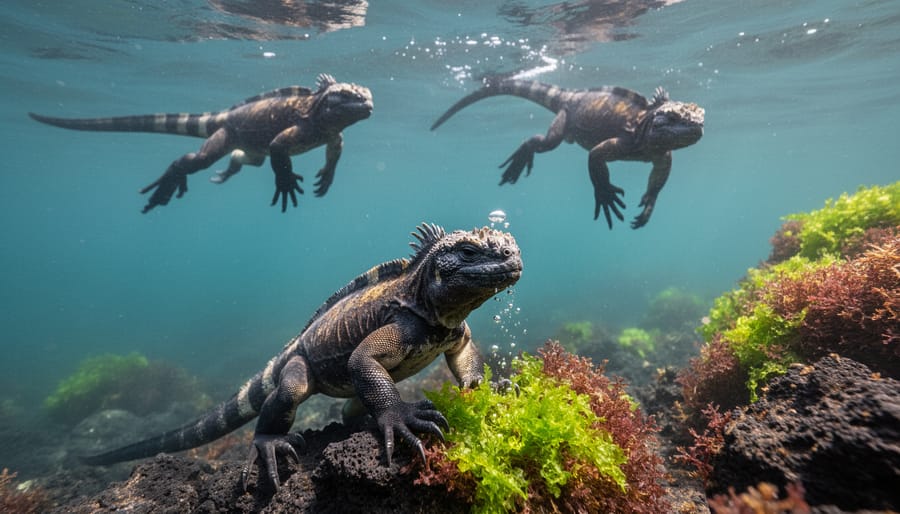
Initially, young iguanas feed exclusively on intertidal algae exposed during low tide, grazing on red and green algae clinging to coastal rocks. This shore-based feeding provides essential practice for their future marine foraging while minimizing exposure to cold ocean waters. During these early weeks, juveniles gradually build the strength and confidence needed for their first tentative dives.
The progression to underwater foraging happens incrementally over several months. Young iguanas begin with shallow dives lasting just seconds, barely submerging beneath the surface. As they mature, dive duration steadily increases from 5-10 minutes in juveniles to 30-40 minutes in experienced adults. Dive depth follows a similar pattern, with juveniles initially staying within a few meters of the surface before eventually reaching depths of 10-15 meters as adults.
This gradual transition is supported by the development of specialized salt-excreting glands located near the nostrils. These remarkable glands filter excess salt from the bloodstream, allowing iguanas to consume salt-laden algae without disrupting their internal chemistry. Juveniles expel accumulated salt through dramatic sneezing displays, often visible as white crystalline deposits around their nostrils.
Marine biologist Dr. Sofia Ramirez, who has studied Galapagos marine iguanas for over a decade, notes that observing these learning phases provides invaluable insights into marine reptile adaptation. Volunteer opportunities exist for those interested in monitoring juvenile feeding behavior and contributing to our understanding of these extraordinary creatures.
Growing Up in a Harsh Environment
The journey from hatchling to adult is fraught with challenges for young marine iguanas, with mortality rates during the first year reaching 50-70% in some populations. These remarkable reptiles must navigate multiple threats while developing the physiological capabilities that will sustain them throughout their lives.
Growth rates in juvenile marine iguanas vary considerably based on environmental conditions and food availability. During the first year, hatchlings typically grow 5-8 centimeters, though this can fluctuate dramatically during periods of resource scarcity. Thermoregulation presents a constant challenge, as smaller body mass means juveniles lose heat more rapidly than adults. Young iguanas must carefully balance their time between basking on sun-warmed rocks to raise body temperature and foraging in cold waters that can drop to 16°C. This thermal juggling act becomes even more precarious in harsh ocean environments where weather conditions shift rapidly.
Predation poses the most immediate threat to juvenile survival. Galápagos hawks patrol coastal areas hunting young iguanas, while introduced species like cats and rats have devastated populations on some islands. Marine biologist Dr. Sofia Ramirez recalls watching a juvenile colony where only 3 out of 20 marked individuals survived their first year. “The ones that made it were those who learned quickly to recognize alarm calls and found secure crevices for nighttime shelter,” she notes.
El Niño events represent catastrophic challenges for growing iguanas. These warming events decimate algae populations, leaving juveniles without adequate nutrition during critical development periods. During the severe 1997-1998 El Niño, some populations experienced up to 90% juvenile mortality. Those that survive these events typically demonstrate superior adaptability, including flexible foraging behaviors and efficient energy conservation strategies that serve them throughout adulthood.
Adult Life: Masters of Marine Adaptation
Daily Life Cycle and Feeding Strategies
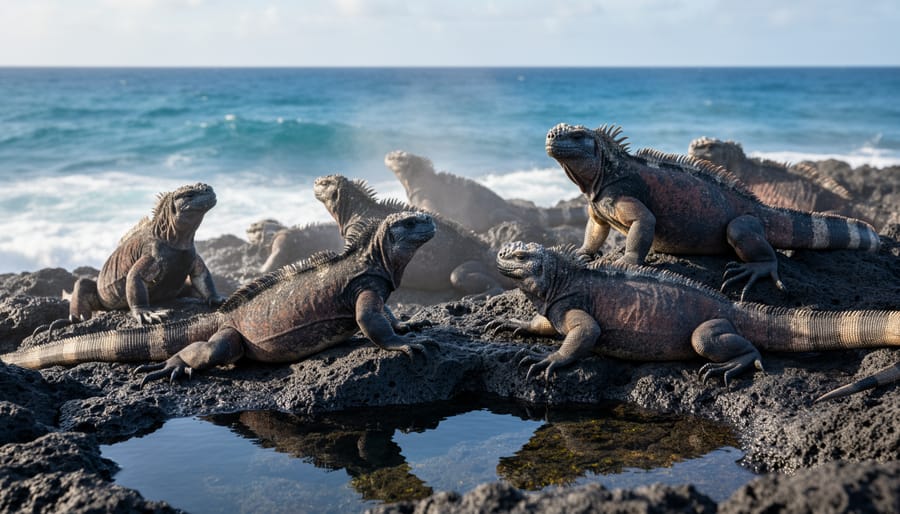
Marine iguanas have evolved a remarkable daily rhythm that perfectly balances their need for warmth with their quest for food. Each morning, these unique reptiles emerge from rocky crevices where they’ve huddled together overnight for warmth. As cold-blooded creatures, they must first spend 30 to 60 minutes basking in the sun, absorbing heat to raise their body temperature from a chilly 25°C to an optimal 35°C before entering the cold Galápagos waters.
Once sufficiently warmed, adult iguanas dive into the ocean to graze on marine algae, their primary food source. Depending on their size and experience, they can dive to depths of 1.5 to 12 meters, with exceptional individuals reaching up to 25 meters. Most feeding dives last between 5 to 10 minutes, though they can hold their breath for up to 45 minutes by slowing their heart rate dramatically, a crucial energy-conservation adaptation.
Marine biologist Dr. Sofia Ramirez shares her fascination: “Watching a marine iguana feed underwater is like witnessing an ancient dance. They use their sharp claws to grip volcanic rocks while their blunt snouts scrape away algae with remarkable efficiency.”
After feeding, iguanas must return to shore quickly, as the frigid water rapidly drains their body heat. They spend the remainder of the day basking again, a necessary recovery period that can take several hours. This constant balance between thermoregulation and nutrition intake defines their existence, making them vulnerable to environmental changes that disrupt either warming or feeding opportunities.
Seasonal Cycles and Environmental Pressures
Marine iguanas have evolved remarkable physiological adaptations to survive the Galápagos Islands’ dramatic seasonal fluctuations. These ancient reptiles face their greatest challenges during El Niño events, when warmer ocean temperatures cause massive die-offs of their primary food source: marine algae. During these periods of scarcity, adult iguanas exhibit an extraordinary survival mechanism that initially baffled scientists.
Research has revealed that marine iguanas can actually shrink their body size by up to 20 percent during extended food shortages. This isn’t simply weight loss—they reduce their skeletal length by absorbing bone tissue, effectively downsizing their bodies to reduce metabolic demands. Dr. Martin Wikelski, who extensively studied this phenomenon, describes it as “one of the most remarkable adaptations I’ve witnessed in vertebrates.” When algae populations recover during normal or La Niña years, the iguanas regrow their body mass and length, demonstrating incredible physiological plasticity.
The intensity of El Niño events directly correlates with mortality rates. Severe events can eliminate up to 90 percent of some populations, particularly affecting larger males who require more food to maintain their size. Smaller individuals often survive better during these periods, creating interesting evolutionary pressures that shape population dynamics over time.
Under typical conditions, marine iguanas live between 5 and 12 years in the wild, though exceptional individuals have reached an estimated 60 years. Their longevity depends heavily on their ability to navigate these boom-and-bust cycles, making them living indicators of ocean health and climate patterns.
Conservation organizations now monitor marine iguana populations as climate sentinels, and volunteers can participate in citizen science projects that track these resilient reptiles. By documenting iguana populations and behavior, we gain crucial insights into how marine ecosystems respond to environmental change—knowledge essential for protecting ocean biodiversity in our warming world.
Reproductive Strategies in the Marine Environment
Marine iguanas have evolved a reproductive approach uniquely suited to the challenging Galápagos environment, and examining their strategy within the broader context of marine reproductive strategies reveals fascinating adaptations. Unlike many marine species that release thousands or millions of eggs into ocean currents, marine iguanas follow a more terrestrial model, producing relatively few eggs that receive no parental care after burial. This places them somewhere between the extremes of marine reproduction strategies.
Most marine reptiles, including sea turtles, share this approach of returning to land for nesting, but marine iguanas have a distinct advantage in the Galápagos ecosystem: the absence of significant terrestrial predators. While sea turtle nests face threats from crabs, birds, and introduced mammals on many beaches worldwide, marine iguana nesting sites experience relatively less predation pressure, though introduced species like rats and cats have created new challenges in recent decades.
The timing of their reproductive cycle demonstrates remarkable adaptation to local conditions. By synchronizing egg-laying with seasonal patterns, females ensure hatchlings emerge when marine algae growth is optimal, giving young iguanas the best chance of survival. This synchronization contrasts sharply with marine fish species that often breed continuously or during multiple seasons throughout the year.
Dr. Patricia Gonzalez, who has studied marine iguana reproduction for fifteen years on Fernandina Island, shares an illuminating perspective: “What makes their strategy successful is the balance between investment and risk. Females put tremendous energy into developing eggs with substantial yolk reserves, essentially front-loading their offspring with resources for survival. Then they rely on the relatively safe nesting environment of the Galápagos to protect that investment.”
The primary disadvantage of this strategy is its inflexibility. Unlike species that broadcast spawn and can adjust reproductive output based on immediate conditions, marine iguanas are locked into their annual cycle. Climate events that disrupt algae growth during critical periods can devastate entire cohorts of hatchlings.
Conservation Challenges and the Future of Marine Iguanas
Marine iguanas face a gauntlet of threats that challenge their survival at every life stage, from vulnerable hatchlings to breeding adults. Climate change stands as the most pervasive danger, altering ocean temperatures and affecting the algae populations these remarkable reptiles depend upon. Rising sea temperatures can trigger massive algae die-offs, leaving marine iguanas without adequate nutrition during critical periods of their life cycle.
El Niño events, which are becoming more frequent and severe due to climate change, pose particularly acute risks. During the 1997-1998 El Niño, some marine iguana populations declined by up to 90 percent as warmer waters killed off their primary food sources. Adult iguanas can shrink their skeletons during these periods to reduce energy needs, a unique adaptation, but juveniles often lack the reserves to survive extended food shortages.
Invasive species introduced by humans create additional pressures throughout the life cycle. Feral cats, dogs, and rats prey heavily on eggs and hatchlings, while goats and donkeys compete for terrestrial habitat and degrade nesting sites. On some islands, introduced fire ants attack hatchlings as they emerge from their nests, adding another layer of mortality to an already perilous journey.
Human disturbance, though often unintentional, disrupts critical behaviors. Tourists approaching too closely can prevent females from accessing prime nesting sites or cause basking adults to flee into the water before reaching optimal body temperatures for digestion. Marine pollution, including oil spills and plastic debris, contaminates feeding areas and poses ingestion risks.
Conservation efforts are making measurable differences. The Galápagos National Park implements strict visitor guidelines to minimize disturbance during breeding and nesting seasons. Scientists conduct regular population monitoring to track demographic trends across life stages, providing early warning of declines. Dr. Marta Jiménez, who has studied marine iguanas for fifteen years, notes that community involvement has been transformative: “When local guides help monitor nesting beaches and educate visitors, we see real improvements in hatchling survival rates.”
Eradication programs targeting invasive species have shown promising results on several islands, allowing iguana populations to recover. Success means stable populations with healthy recruitment of juveniles into breeding age classes, resilient food webs, and protected habitat throughout their range. Volunteers can participate in monitoring programs, support invasive species removal efforts, or contribute to citizen science initiatives that track marine iguana populations across their life stages, turning concern into meaningful conservation action.
How You Can Help Protect Marine Iguana Populations
Protecting marine iguanas requires collective action, and numerous opportunities exist for individuals to contribute meaningfully to their conservation. Whether you’re a scientist, student, or simply passionate about marine life, your involvement can make a tangible difference.
Several organizations offer hands-on volunteer programs focused on marine iguana research in the Galápagos Islands. These initiatives typically involve population monitoring, nest site surveys, and behavioral observation studies. Volunteers work alongside researchers to collect vital data on iguana distribution, health metrics, and reproductive success. The Charles Darwin Foundation regularly accepts volunteers for their marine iguana monitoring projects, providing training in field research techniques while contributing to long-term datasets that inform conservation strategies.
Citizen science represents another powerful avenue for participation. Mobile applications now allow visitors to the Galápagos to photograph and report marine iguana sightings, helping scientists track population movements and identify critical habitats. These crowdsourced observations have proven invaluable for understanding how climate events affect iguana behavior and survival.
Dr. Sofia Ramirez, a marine biologist with fifteen years studying marine iguanas, shares her perspective: “I’ll never forget the first time I witnessed a newly hatched marine iguana successfully navigate to the ocean. After months of monitoring the nest site and documenting the incubation period, seeing that tiny creature instinctively head toward its marine home reminded me why this work matters. Every data point we collect, every volunteer who joins us, helps ensure future generations will witness these remarkable adaptations.”
Responsible ecotourism plays a crucial role in conservation funding. When visiting marine iguana habitats, maintain the required two-meter distance, never feed wildlife, and choose tour operators committed to sustainable practices. The Marine Biodiversity Science Center supports marine iguana conservation through educational programs that connect research findings with public engagement, funding field studies that examine how environmental changes affect iguana life cycles, and partnering with local communities to protect critical nesting beaches.
The remarkable journey of marine iguanas from vulnerable hatchlings to resilient adults showcases nature’s delicate balance between adaptation and survival. Throughout their life cycle, these extraordinary reptiles demonstrate both impressive resilience in their specialized marine lifestyle and profound vulnerability to environmental changes. From the moment females carefully select nesting sites to the dramatic ocean plunge of hatchlings, from the selective pressures of adolescence to the territorial displays of breeding adults, each stage reveals critical insights into marine reproductive strategies found nowhere else among modern reptiles.
Understanding the marine iguana’s complete life cycle illuminates broader patterns in how species adapt to challenging environments while highlighting the interconnectedness of marine ecosystems. These ancient creatures, having evolved over millions of years, now face rapid environmental shifts that threaten their carefully balanced existence. Rising ocean temperatures, habitat degradation, and human disturbance create compounding pressures at every life stage.
Yet hope flourishes through collective conservation action. Marine biologist Dr. Sofia Ramirez shares, “Every person who participates in beach cleanups, supports protected areas, or educates others becomes part of the solution. I’ve witnessed communities transform conservation outcomes through simple, sustained efforts.”
Your participation matters. Whether volunteering with local marine conservation organizations, supporting research initiatives, reducing plastic consumption, or simply sharing knowledge about these remarkable creatures, individual actions collectively create powerful change. The future of marine iguanas and countless other species depends on our willingness to act today, ensuring these resilient survivors continue their ancient dance with the sea for generations to come.

jessica
Ava Singh is an environmental writer and marine sustainability advocate with a deep commitment to protecting the world's oceans and coastal communities. With a background in environmental policy and a passion for storytelling, Ava brings complex topics to life through clear, engaging content that educates and empowers readers. At the Marine Biodiversity & Sustainability Learning Center, Ava focuses on sharing impactful stories about community engagement, policy innovations, and conservation strategies. Her writing bridges the gap between science and the public, encouraging people to take part in preserving marine biodiversity. When she’s not writing, Ava collaborates with local initiatives to promote eco-conscious living and sustainable development, ensuring her work makes a difference both on the page and in the real world.