Marine Biodiversity Science Center

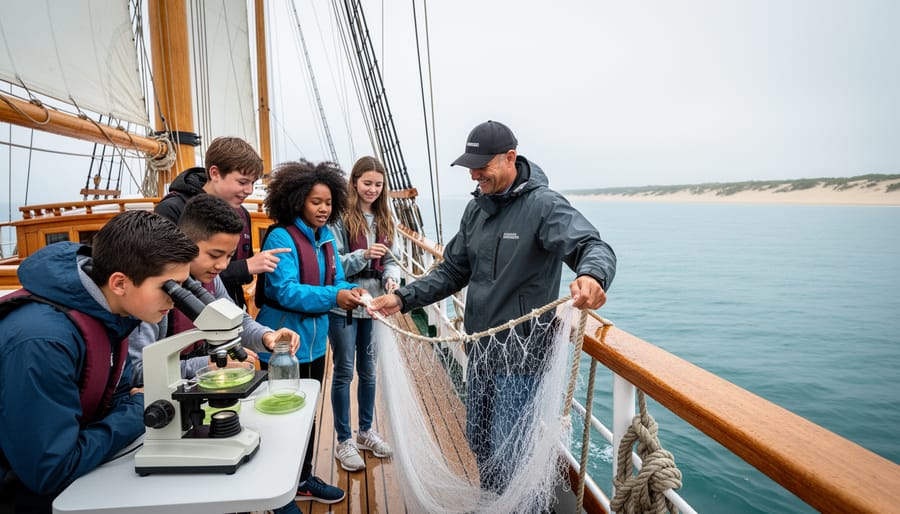
The Great Lakes hold 21 percent of the world’s surface freshwater, yet thousands of students growing up along their shores never set foot on a research vessel or understand the marine ecosystems in their own backyard. The Inland Seas Education Association (ISEA) has spent over four decades bridging this gap, transforming how inland communities connect with marine science through hands-on education aboard floating classrooms.
Since 1989, ISEA has welcomed more than 300,000 students and adults onto Lake Michigan and beyond, proving that powerful marine education doesn’t require ocean access. Their flagship research schooner and programs create immersive experiences where participants collect water samples, identify aquatic species, and measure environmental indicators alongside marine scientists—all within sight of their own communities.
This approach addresses a critical gap in environmental literacy. Inland populations often view marine conservation as distant from their daily lives, despite living beside freshwater seas that face urgent challenges including invasive species, nutrient pollution, and climate-driven ecosystem changes. When a tenth-grader from Grand Rapids pulls a plankton tow from Lake Michigan and examines microscopic organisms through a microscope, marine science becomes immediately relevant and personal.
ISEA’s model demonstrates that location doesn’t determine environmental impact. The Great Lakes watershed touches eight states and supports 30 million people whose actions directly influence water quality, habitat health, and biodiversity. By engaging students, educators, and community members where they live, ISEA cultivates a generation of informed stewards who understand their connection to these vital freshwater ecosystems.
The organization’s success offers valuable lessons for expanding marine education reach and demonstrates how passion, accessibility, and scientific rigor can inspire lasting conservation action in communities far from traditional marine environments.
Bridging the Distance: Why Marine Education Matters Inland
When you live hundreds of miles from the nearest coastline, the ocean can feel like an abstract concept—something distant, perhaps even irrelevant to daily life. Yet for the 30 million people living within the Great Lakes basin, marine education is surprisingly essential. These five interconnected lakes contain 21% of the world’s surface freshwater and function as true inland seas, complete with shipping routes, commercial fisheries, and complex marine ecosystems that mirror oceanic environments in many ways.
The Inland Seas Education Association recognized early on that geographic distance from saltwater shouldn’t mean disconnection from marine science and conservation principles. The Great Lakes face many of the same challenges as ocean ecosystems: invasive species disruption, plastic pollution accumulation, nutrient loading leading to harmful algal blooms, and climate change impacts on water temperatures and ice coverage. By engaging inland communities with these freshwater marine environments, ISEA helps develop crucial ocean literacy skills that translate directly to broader conservation efforts.
Consider this: water moves in cycles. The Great Lakes eventually connect to the Atlantic Ocean through the St. Lawrence Seaway, creating a continuum between freshwater and saltwater systems. Pollutants entering Lake Michigan don’t simply disappear—they travel downstream, affecting ecosystems far beyond their origin point. Understanding these connections transforms how people view their environmental responsibility.
Marine biologist Dr. Sarah Chen, who works with ISEA’s education programs, shares a perspective that resonates: “When students discover that the water they’re studying could eventually reach the ocean, it clicks. They realize they’re not separate from marine conservation—they’re part of it, even in Wisconsin or Michigan.”
Through hands-on research experiences aboard their research vessels and innovative educational technologies, ISEA demonstrates that marine science belongs everywhere water flows. This approach creates a generation of environmental stewards who understand that protecting our planet’s waters requires participation from everyone—coastline or not.
The Inland Seas Education Association Model
Schoolship Programs: Classrooms on the Water
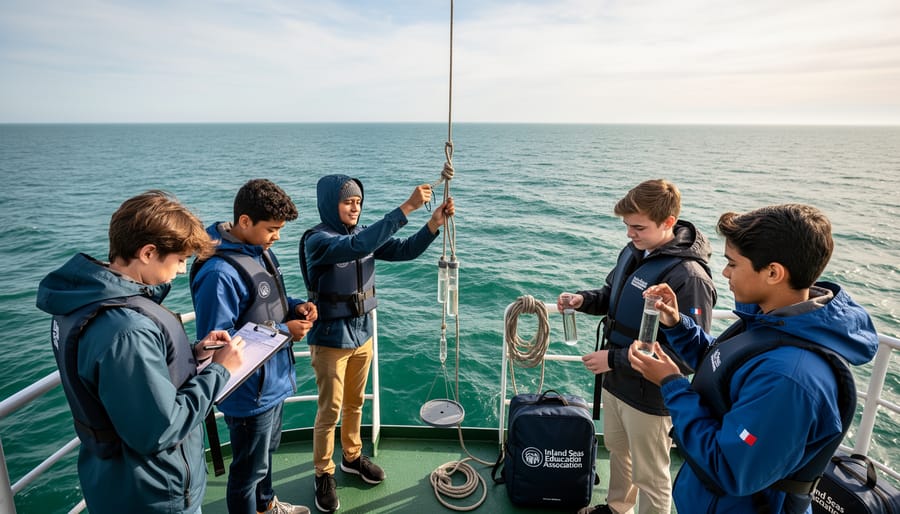
At the heart of ISEA’s mission are their acclaimed schoolship programs, which transform traditional classrooms into floating laboratories on the Great Lakes. Students from grades 4 through 12, along with college participants, embark on multi-day voyages aboard research vessels where they become working scientists rather than passive observers.
These programs exemplify genuine hands-on marine education. Under the guidance of trained marine educators, students conduct authentic scientific research using professional equipment. They deploy plankton nets to study microscopic organisms, analyze water chemistry through pH and dissolved oxygen testing, and collect sediment samples that reveal the health of lake ecosystems. Every data point gathered contributes to ISEA’s ongoing research database, giving students the profound realization that their work matters beyond the classroom.
The immersive nature of shipboard life creates transformative learning experiences. Students navigate using charts, help raise sails, and take turns at the helm while learning about wind patterns and weather systems. Evening sessions feature microscope work where plankton samples come alive under magnification, revealing the intricate food webs supporting Great Lakes biodiversity.
Dr. Sarah Mitchell, a marine biologist who began as a student participant, recalls her first voyage: “Holding a water sample I’d collected myself and discovering aquatic invasive species through the microscope ignited my passion for freshwater conservation. That hands-on discovery changed my life’s direction.”
These programs demonstrate that meaningful marine education doesn’t require ocean access—freshwater ecosystems offer equally rich opportunities for scientific exploration and environmental stewardship.
Scientific Research and Citizen Science
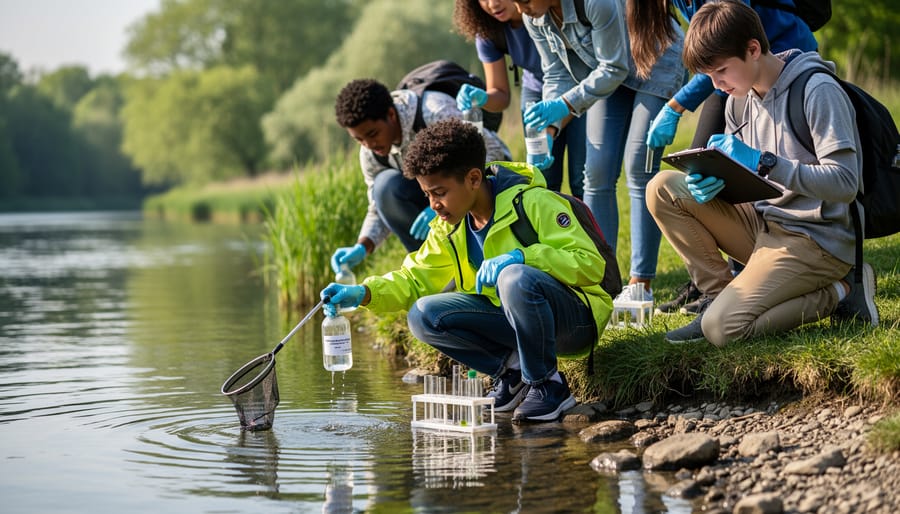
ISEA transforms students and participants into active contributors to Great Lakes science through carefully designed citizen science programs. Aboard their research vessels, participants don’t just observe—they conduct authentic water quality testing, collect plankton samples, measure water temperature and clarity, and catalog aquatic species using standardized scientific protocols. This hands-on data collection follows methodologies parallel to those used in oceanographic research worldwide, helping participants understand that freshwater and marine science share fundamental approaches.
The data collected during ISEA programs contributes to long-term monitoring databases that professional researchers use to track ecosystem health, invasive species distribution, and climate change impacts on the Great Lakes. One marine biologist who regularly collaborates with ISEA explains, “The longitudinal data sets we’ve built with participant help have been invaluable for understanding seasonal plankton patterns and nutrient cycling.”
This approach demystifies scientific research while building critical thinking skills. Participants learn to formulate hypotheses, record observations precisely, and analyze results—experiences that prove especially powerful for inland students who might never have imagined themselves as scientists. By connecting their efforts to broader conservation goals, ISEA demonstrates how individual actions scale into meaningful environmental impact, fostering both scientific literacy and environmental stewardship that extends far beyond the classroom.
Community Outreach Beyond the Boat
ISEA recognizes that not everyone can experience the Great Lakes aboard a tall ship. That’s why their community outreach programs bring marine science directly to inland communities through classroom visits, public lectures, and community events. Their educators travel to schools throughout the region, delivering hands-on watershed education that connects local streams and rivers to the larger Great Lakes ecosystem. These programs use portable water quality testing kits and microscopes, allowing students to examine aquatic organisms and understand their role in maintaining healthy waterways.
The organization also hosts community science days at waterfront locations, inviting families to participate in beach cleanings, plankton sampling, and shore bird monitoring. These events create volunteer opportunities for people of all ages to contribute to ongoing research while learning about lake ecology. Marine biologist Sarah Chen recalls watching a grandmother and granddaughter team discover their first amphipod together: “That moment of shared discovery reminds us why accessible education matters. You don’t need to be on a research vessel to fall in love with these waters.”
ISEA’s free online resources include lesson plans, data visualization tools, and virtual lab experiences that educators can integrate into existing curricula, ensuring their impact reaches far beyond the shoreline.
From Lakes to Oceans: Transferable Conservation Lessons
When students aboard Inland Seas Education Association’s research vessels learn to test water quality in the Great Lakes, they’re developing skills that extend far beyond the shores of Michigan or Wisconsin. The conservation challenges facing these inland waters mirror those threatening oceans worldwide, making Great Lakes education a powerful gateway to understanding global marine issues.
Consider plastic pollution. The Great Lakes contain an estimated 22 million pounds of plastic, with concentrations in some areas rivaling those found in ocean gyres. Students who learn to identify microplastics in Lake Michigan water samples gain knowledge directly applicable to addressing ocean pollution. The methodologies are identical—collecting samples, analyzing them under microscopes, understanding how plastics enter food webs—whether in Chicago’s waters or the Pacific Ocean.
Sarah Martinez, a marine educator with ISEA for eight years, recalls a transformative moment during a student expedition. “A young person from landlocked Indiana held up a water sample filled with microplastics and said, ‘This connects me to the ocean.’ That’s when I realized we’re not just teaching about lakes—we’re cultivating ocean stewards who may never see saltwater.”
Invasive species present another shared challenge. The zebra mussels that devastated Great Lakes ecosystems entered through ballast water, the same pathway that introduces invasive species to oceans globally. Understanding how one region combats biological invasions equips students with transferable knowledge for protecting marine environments anywhere.
Climate change impacts unite freshwater and saltwater systems through rising temperatures, altered precipitation patterns, and ecosystem disruption. Students measuring temperature stratification in Lake Superior learn principles equally relevant to understanding ocean warming. They grasp how thermal changes affect species distribution, oxygen levels, and habitat suitability—concepts that transcend the freshwater-saltwater divide.
Habitat degradation, from coastal development to nutrient pollution, follows similar patterns in both environments. The dead zones created by agricultural runoff in Lake Erie teach students about hypoxia—the same phenomenon affecting the Gulf of Mexico and coastal oceans worldwide.
This transferability creates environmentally conscious citizens prepared to protect any water body they encounter. A student who learns watershed science on the Great Lakes understands how their actions affect distant oceans. They recognize that all water is connected, that conservation principles apply universally, and that their inland education empowers them to make meaningful contributions to marine conservation.
Volunteer opportunities through ISEA allow participants to directly apply these lessons, transforming knowledge into action and proving that ocean conservation begins wherever people connect with water.
Real Voices from the Deck: A Marine Educator’s Story
I still remember the moment Sarah grabbed my arm, eyes wide with wonder. We were hauling in a plankton net aboard the research schooner Inland Seas, and this sixteen-year-old from Indianapolis had just peered through a microscope at her first living zooplankton. “They’re beautiful,” she whispered, watching tiny copepods pulse through the water droplet. “I had no idea there was this entire universe in the lake.”
That moment changed her trajectory. Sarah went on to study limnology and now researches freshwater ecosystems threatened by climate change—one of countless students whose lives shifted during those transformative days on the Great Lakes.
As a marine educator with ISEA for over a decade, I’ve witnessed these “aha moments” repeatedly. Students from landlocked communities step aboard our vessel expecting a field trip and discover instead a calling. There’s something profound about physically collecting water samples, analyzing their chemistry, and understanding that their actions at home—hundreds of miles from any coastline—directly impact these magnificent waters.
I think of Marcus, a student from Detroit who’d never considered science as accessible to him. After identifying invasive quagga mussels during our benthic survey, he asked question after question about ecosystem disruption. Today, he’s completing his graduate degree in aquatic ecology. Or Emma, who arrived seasick and uncertain but left determined to protect freshwater resources. She now leads youth conservation programs in her home state.
The beauty of hands-on learning is its immediacy. When students hold a fish they’ve just netted, measure its length, and discuss population health, abstract concepts become tangible realities. They grasp that conservation isn’t something happening elsewhere—it’s their responsibility, their watershed, their future.
These experiences demonstrate why investing in experiential education matters. The students who pursue marine science careers after sailing with us represent just one measure of success. Equally valuable are the thousands who return home as informed advocates, making sustainable choices and inspiring others to protect our precious freshwater resources.
Getting Involved: Opportunities for Learning and Action
Volunteer Opportunities
The Inland Seas Education Association welcomes volunteers who share a passion for Great Lakes conservation and education. Whether you have a few hours or can commit to extended periods, there’s a meaningful role waiting for you.
Shipboard volunteer opportunities are among the most immersive experiences ISEA offers. Volunteers assist with sailing operations aboard traditional tall ships, help facilitate hands-on learning activities for students, and support water quality monitoring efforts. These positions typically require basic physical fitness and the ability to work collaboratively in close quarters. No prior sailing experience is necessary, though enthusiasm for the outdoors and working with young learners is essential.
Shore-based volunteers contribute just as vitally to ISEA’s mission. Opportunities include assisting with educational programming at land-based facilities, supporting administrative tasks, helping with equipment maintenance, and participating in community outreach events. These roles particularly suit those with backgrounds in education, environmental science, or nonprofit management.
The application process begins with completing an online volunteer form and attending an orientation session. Background checks are required for positions involving direct student interaction. ISEA provides comprehensive training for all volunteers, ensuring you feel confident and prepared to contribute meaningfully to Great Lakes education and conservation efforts.
Educational Programs and Partnerships
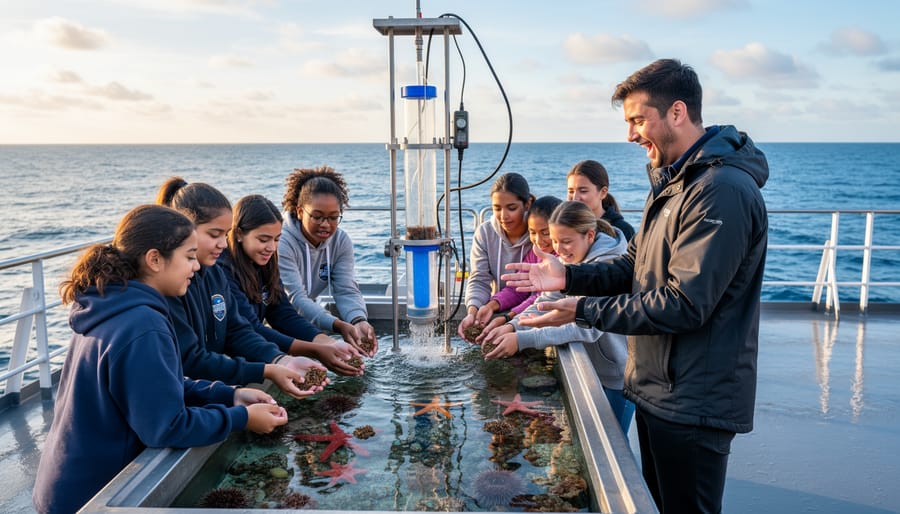
ISEA partners with schools across the Great Lakes region and beyond, bringing hands-on marine science education to students who might never otherwise experience shipboard learning. The organization offers multi-day programs aboard their research schooners, where students participate in authentic scientific research while sailing Lake Michigan. Programs typically run from May through October, with options ranging from three-day expeditions to week-long intensive experiences designed for different grade levels.
Educators can choose from several program formats tailored to curriculum needs, including ecology-focused expeditions, water quality monitoring programs, and leadership development courses. Most programs accommodate 20-30 students per voyage, with experienced marine educators facilitating all activities. Program costs vary based on duration and season, with scholarship opportunities available to ensure accessibility for schools with limited budgets.
Teachers receive comprehensive pre-voyage materials to prepare students for shipboard life, including information about safety protocols, what to pack, and preview activities that introduce key scientific concepts. The experience goes far beyond traditional classroom learning, transforming ocean advocates through direct engagement with freshwater ecosystems. Schools interested in partnership opportunities can contact ISEA’s education coordinator to discuss scheduling, custom programming options, and funding support to make these transformative experiences accessible to all students.
Organizations like the Inland Seas Education Association demonstrate that marine conservation is not just a coastal concern—it’s a responsibility that belongs to everyone, regardless of zip code. The waters of the Great Lakes connect to global ocean systems, and the environmental choices made by inland communities create ripple effects that extend far beyond regional shores. When a student in Michigan learns about microplastic pollution aboard a research vessel, they carry that knowledge home, influencing families, friends, and eventually their own communities to make more sustainable choices.
Building marine literacy across all communities strengthens our collective capacity to protect marine biodiversity. Coastal populations cannot shoulder this responsibility alone. The fish consumed hundreds of miles from shore, the plastics that travel through watersheds, the climate decisions made in landlocked states—all impact ocean health. Through hands-on environmental education, ISEA creates engaged citizens who understand their connection to these vast water systems.
The power of experiential learning extends beyond information transfer. Volunteers who have sailed with ISEA often describe transformative moments—holding plankton samples, testing water quality, witnessing the intricate food webs that sustain millions of species. These experiences forge lasting environmental stewards committed to conservation action. By investing in marine education for inland communities today, we build the foundation for healthier waters tomorrow.

jessica
Ava Singh is an environmental writer and marine sustainability advocate with a deep commitment to protecting the world's oceans and coastal communities. With a background in environmental policy and a passion for storytelling, Ava brings complex topics to life through clear, engaging content that educates and empowers readers. At the Marine Biodiversity & Sustainability Learning Center, Ava focuses on sharing impactful stories about community engagement, policy innovations, and conservation strategies. Her writing bridges the gap between science and the public, encouraging people to take part in preserving marine biodiversity. When she’s not writing, Ava collaborates with local initiatives to promote eco-conscious living and sustainable development, ensuring her work makes a difference both on the page and in the real world.