Marine Biodiversity Science Center

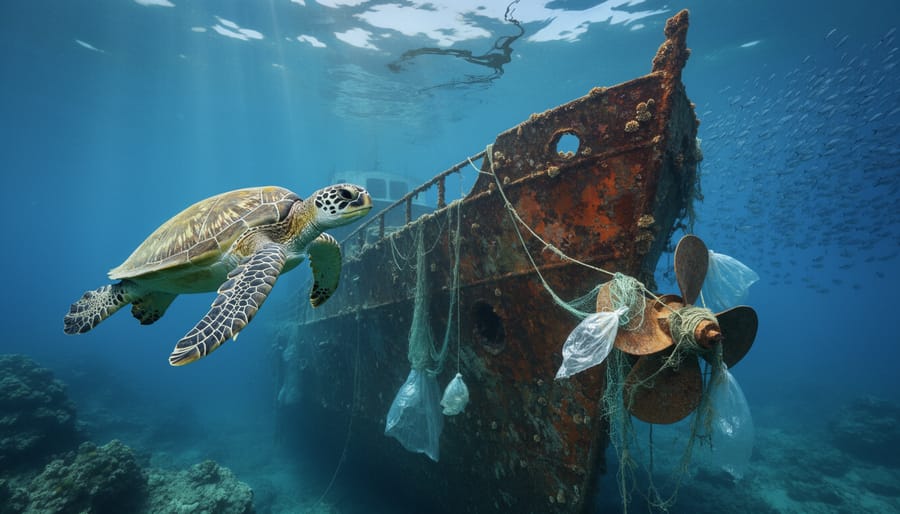
The ocean’s heartbeat is weakening. Every minute, a garbage truck’s worth of plastic enters our seas, joining the estimated 14 million tons already choking marine ecosystems. But pollution extends far beyond the plastic bottles washing ashore—it encompasses invisible chemical contaminants, noise disruption, oil spills, and nutrient overloads that together create a perfect storm threatening the foundation of marine life itself.
Marine pollution doesn’t discriminate. It devastates microscopic plankton that produce 70% of Earth’s oxygen, poisons coral reefs that shelter a quarter of all ocean species, and accumulates in the tissues of apex predators like sharks and whales. The consequences ripple through entire food webs, ultimately reaching our dinner plates as contaminated seafood and destabilizing coastal communities that depend on healthy oceans for their livelihoods and cultural identity.
Dr. Sarah Chen, a marine biologist who has spent fifteen years documenting pollution impacts in the Pacific, describes finding seabirds with stomachs full of bottle caps and fishing gear. “What breaks my heart most,” she shares, “is knowing that these animals mistake our waste for food, teaching their young to do the same.” Her research reveals that over 800 marine species now encounter plastic debris, with ingestion and entanglement causing injury or death to hundreds of thousands of animals annually.
Yet amid this crisis lies extraordinary opportunity. Scientific understanding of pollution mechanisms has never been stronger, and conservation successes prove that targeted action yields measurable results. From community beach cleanups to international policy reforms, individuals and organizations worldwide are turning the tide. This article explores the multifaceted impacts of marine pollution, examines real-world case studies, and presents practical pathways for everyone to contribute to ocean recovery.
The Double Victim: When Pollution Attacks Life and Legacy
What We Stand to Lose
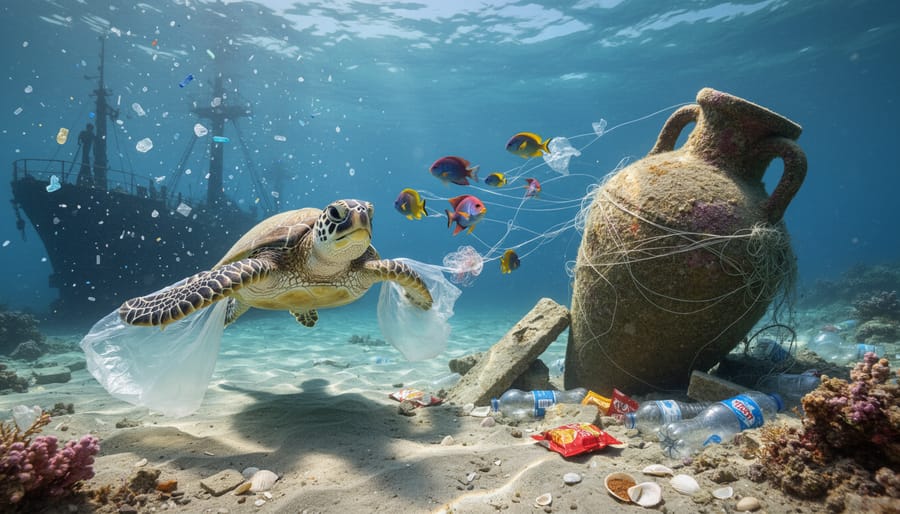
Beneath our ocean waves lies an irreplaceable dual legacy: vibrant marine ecosystems and humanity’s cultural heritage. The seafloor harbors over three million shipwrecks spanning millennia, submerged cities like ancient Alexandria and Dwarka, and countless archaeological artifacts that chronicle human civilization. These underwater treasures exist in delicate balance with thriving coral reefs, kelp forests, and diverse marine communities that have evolved over millions of years.
However, pollution poses an escalating threat to both realms. Chemical contaminants corrode historic metal artifacts and degrade organic materials preserved for centuries in stable underwater conditions. Simultaneously, these same pollutants devastate marine life through toxic exposure, habitat destruction, and ecosystem collapse. Plastic debris smothers both ancient ruins and living coral formations. Oil spills coat archaeological sites while suffocating marine organisms.
Dr. Sarah Chen, a marine archaeologist, shared during a recent expedition, “When we discover pollution damage at a wreck site, we’re witnessing the simultaneous destruction of history and habitat. The fish communities sheltering among these structures lose their homes alongside our cultural memory.”
Understanding the threats to underwater treasures requires recognizing this interconnection—protecting our oceans means safeguarding both ecological diversity and irreplaceable human heritage for future generations.
The Pollution Connection
The destructive reach of marine pollution extends far beyond living organisms, creating an unexpected crisis for our underwater cultural heritage. The same chemical compounds and plastic debris that devastate coral reefs and marine animals are simultaneously eroding irreplaceable archaeological treasures resting on ocean floors worldwide.
Industrial pollutants, particularly heavy metals like copper and lead, don’t discriminate between biological and historical targets. These contaminants accelerate the corrosion of metal artifacts from shipwrecks, transforming centuries-old anchors, cannons, and navigational instruments into unrecognizable masses within decades rather than centuries. Meanwhile, ocean acidification caused by excess carbon dioxide absorption creates a more corrosive environment that attacks limestone structures, ancient marble statues, and calcium-based building materials from submerged civilizations.
Marine biologist Dr. Sarah Chen has witnessed this dual destruction firsthand while documenting Mediterranean shipwrecks. “We’re racing against time,” she explains. “The same microplastics coating fish gills are settling into the crevices of 2,000-year-old amphorae, while petroleum-based pollutants create biofilms that trap moisture against wooden hull fragments, accelerating their decay.” This interconnected damage reminds us that protecting marine ecosystems means preserving human history itself, making pollution reduction efforts doubly urgent for future generations.
Chemical Pollution: The Silent Destroyer of Reefs and Relics
Heavy Metals and Toxic Compounds
Heavy metals like mercury, lead, and cadmium pose a dual threat to our oceans, harming living creatures while simultaneously destroying underwater cultural treasures. These toxic compounds enter marine ecosystems through industrial discharge, mining operations, and atmospheric deposition, creating a persistent contamination problem that scientists are working to understand and address.
The process of bioaccumulation makes heavy metals particularly dangerous for marine life. Small organisms absorb these toxins from contaminated water and sediments. When larger predators consume them, the metals concentrate at higher levels up the food chain. Marine biologist Dr. Sarah Chen recalls examining tuna samples that contained mercury levels 10 million times higher than the surrounding water. “It’s shocking how efficiently these toxins magnify through the food web,” she explains. “A single meal for a top predator can represent the accumulated poison from thousands of smaller fish.”
Beyond biological impacts, these same chemicals corrode metal artifacts from historic shipwrecks. Iron cannons, brass fittings, and bronze sculptures deteriorate rapidly when exposed to acidic compounds and chloride ions intensified by industrial pollution. The chemical pollution damages heritage sites we’re trying to preserve for future generations.
Volunteer opportunities exist for concerned citizens to participate in water quality monitoring programs. These grassroots efforts help scientists track contamination patterns while engaging communities in meaningful conservation work. By documenting pollution sources and supporting remediation projects, we can protect both marine wildlife and our submerged archaeological heritage.
Ocean Acidification’s Dual Threat
Our oceans absorb approximately 30% of atmospheric carbon dioxide, acting as a vital climate buffer. However, this protective service comes at a steep cost. When CO2 dissolves in seawater, it forms carbonic acid, lowering the ocean’s pH in a process called ocean acidification. Since the Industrial Revolution, ocean acidity has increased by about 30%, creating a crisis for marine life and underwater heritage alike.
For marine organisms like corals, mollusks, and sea urchins, this chemistry change is devastating. These creatures build their protective structures from calcium carbonate, but acidic waters dissolve these building blocks faster than animals can produce them. Dr. Marina Rodriguez, a marine biologist studying coral reefs in the Caribbean, explains: “I’ve watched coral skeletons that took decades to form become brittle and porous within just a few years. It’s like watching ancient cathedrals crumble in fast-forward.”
The threat extends beyond living organisms. Shipwrecks, submerged archaeological sites, and underwater monuments face accelerated deterioration as acidic waters eat away at calcium-based materials and speed up the decay of metals and organic matter. These irreplaceable time capsules of human history are dissolving before researchers can properly document them.
The good news? Reducing carbon emissions directly slows acidification. Many coastal communities now participate in seagrass restoration projects, which absorb CO2 and create localized pH refuges. Volunteer monitoring programs help scientists track acidification patterns, providing crucial data that shapes conservation strategies and policy decisions.
A Marine Biologist’s Perspective
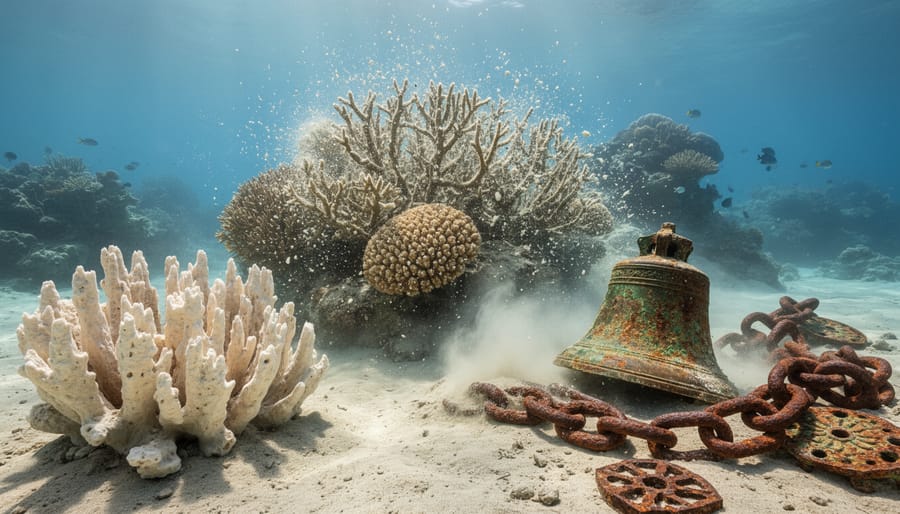
Dr. Sarah Chen has spent fifteen years studying coral reefs in the Indo-Pacific, and what she’s witnessed has transformed her understanding of pollution’s reach. “I used to think of pollution damage in terms of biological systems alone,” she explains, “but during a research expedition near Indonesia, I discovered a 17th-century shipwreck adjacent to a reef I’d been monitoring.” What she found was sobering: the same acidification degrading coral structures was accelerating the deterioration of wooden hull fragments and corroding metal artifacts at alarming rates.
“The plastic debris we documented wasn’t just entangling sea turtles—it was literally carpeting historically significant sites, making them inaccessible for study,” Sarah recalls. This dual threat motivated her to collaborate with archaeologists and expand her conservation advocacy. Now she leads citizen science programs where volunteers document both ecological and cultural damage. “When people see pollution destroying not just marine life but also our underwater heritage, the connection becomes personal,” she notes, “and that’s when real change begins.”
Plastic Pollution: Strangling Ecosystems and Smothering History
The Physical Threat to Marine Life
Plastic debris poses devastating physical threats to marine animals through three primary mechanisms: entanglement, ingestion, and habitat disruption. Marine biologist Dr. Sarah Chen recalls a particularly heartbreaking encounter: “We found a young sea turtle with fishing line wrapped so tightly around its flipper that circulation had been cut off for weeks. These incidents happen daily across our oceans.”
Entanglement in discarded fishing nets, six-pack rings, and other debris causes injury, restricted movement, and often death in marine mammals, sea turtles, and seabirds. Ghost nets—abandoned fishing gear—continue trapping wildlife long after fishermen discard them, creating underwater death traps that can persist for decades.
Ingestion presents an equally serious threat. Seabirds mistake floating plastic fragments for food, filling their stomachs with indigestible materials that provide no nutrition. Sea turtles often confuse plastic bags with jellyfish, their natural prey. Studies reveal that over 50% of sea turtles and 90% of seabirds have consumed plastic debris at some point in their lives.
Physical habitat disruption occurs when plastic accumulation smothers coral reefs and seafloor ecosystems. Volunteers participating in coastal cleanup programs regularly document these impacts firsthand, removing tons of debris that would otherwise continue harming marine species for generations.
How Plastic Obscures and Damages Heritage Sites
Plastic pollution doesn’t just threaten living marine ecosystems—it’s also obscuring our underwater cultural heritage. As plastic debris accumulates on the seafloor, it settles over shipwrecks, submerged ancient ports, and other archaeological sites, creating thick blankets of waste that make these treasures nearly impossible to locate and document. Marine archaeologist Dr. Sofia Mendez shares, “During a recent expedition off the Mediterranean coast, we spent hours clearing modern plastic waste before we could even begin examining a Roman-era vessel. It’s like searching for history through layers of our own carelessness.”
The damage goes beyond simple covering. Microplastics—tiny fragments less than five millimeters in diameter—penetrate the porous surfaces of ancient ceramics, wood, and stone structures. Once embedded, these particles expand and contract with temperature changes, creating microscopic fractures that accelerate deterioration. This process is irreversible, meaning artifacts that survived centuries of natural ocean conditions are now degrading within decades due to plastic contamination.
For those passionate about preserving both marine life and human history, volunteer opportunities with underwater archaeology projects often include debris removal efforts, combining conservation with cultural preservation.
Ghost Nets: Killing Today, Destroying Yesterday
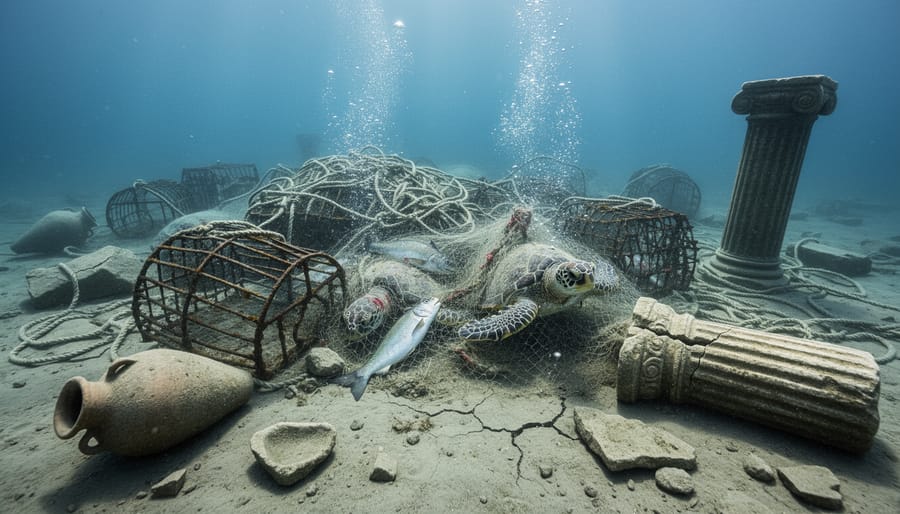
Ghost nets—fishing gear abandoned or lost at sea—continue their deadly work long after fishers have moved on. These synthetic nets can persist for hundreds of years, drifting through currents or snagging on reefs where they become invisible death traps. Marine biologist Dr. Sarah Chen describes finding a single ghost net that had ensnared over 40 sea turtles, countless fish, and even a young dolphin. “The tragedy is that these animals die needlessly, completely unseen,” she explains.
Beyond the immediate wildlife casualties, ghost nets destroy what lies beneath. As they drag across the ocean floor, they shatter coral formations that took centuries to develop and damage shipwrecks of historical significance. Archaeological sites that help us understand maritime history are being erased by these plastic phantoms. The Ocean Conservancy estimates that ghost gear comprises roughly 10 percent of all marine litter, yet causes disproportionate harm to fragile underwater ecosystems and cultural heritage sites alike.
Oil Spills and Sediment: Catastrophic Events With Lasting Consequences
Immediate Biological Devastation
When oil enters marine environments, it triggers a cascade of biological devastation that affects every level of the ocean food web. Plankton, the foundation of marine ecosystems, absorb toxic compounds directly through their cell membranes, leading to population crashes that ripple upward through the food chain. Marine biologist Dr. Sarah Chen describes witnessing this firsthand: “After an oil spill, the water looks dead. The microscopic life that normally thrives simply disappears.”
Fish and marine mammals suffer severe respiratory damage when oil coats their gills or is inhaled through blowholes, often leading to suffocation or chronic breathing difficulties. Sea turtles and seabirds experience hypothermia as oil destroys the insulating properties of their shells and feathers. The reproductive systems of marine species face particular vulnerability, with oil exposure causing egg deformities, reduced fertility, and developmental abnormalities in offspring that persist for generations.
Apex predators like dolphins and sharks accumulate these toxins through biomagnification, consuming contaminated prey throughout their lives. The result is often ecosystem collapse, where entire food webs unravel. However, understanding these mechanisms empowers us to respond more effectively, and volunteers play crucial roles in wildlife rescue operations during oil spill emergencies, helping affected animals receive immediate care.
Cultural Heritage Contamination
Marine pollution doesn’t just threaten living organisms—it also endangers invaluable underwater cultural heritage sites, including shipwrecks, submerged settlements, and ancient artifacts that hold centuries of human history. When oil spills occur near these sites, the thick, viscous material creates a coating that smothers artifacts and alters their chemical environment. This petroleum layer penetrates deeply into porous materials such as wooden ship hulls, ceramics, and textiles, where it becomes extremely difficult to remove without causing irreparable damage.
Dr. Elena Martinez, a marine archaeologist who has studied shipwrecks in the Mediterranean, shares a sobering observation: “I’ve witnessed 300-year-old artifacts that survived intact on the seafloor deteriorate significantly within just a few years of increased pollution exposure.” The oil and sediment create anaerobic conditions—environments lacking oxygen—which paradoxically accelerates the decomposition of organic materials that were previously preserved by stable underwater conditions. These oxygen-starved zones promote the growth of sulfate-reducing bacteria that produce corrosive compounds, eating away at metal fastenings and wooden structures.
For those passionate about protecting these irreplaceable time capsules, numerous organizations offer volunteer opportunities in underwater site monitoring and documentation, allowing everyday citizens to contribute to preserving our shared maritime heritage while combating pollution’s far-reaching impacts.
Case Study: A Shipwreck in Crisis
The SS Politician, a cargo vessel that sank off Scotland’s coast in 1941, illustrates how human impacts on archaeological sites extend beyond physical disturbance. Recent surveys revealed that oil pollution from nearby shipping routes has accelerated corrosion of the wreck’s metal structure by 40% compared to pre-2000 rates. Marine biologist Dr. Sarah Chen documented a 65% decline in kelp forest coverage around the site, with microplastic concentrations reaching 12 particles per liter. The archaeological materials now host 30% fewer invertebrate species, disrupting the artificial reef community that once thrived there. This tangible example demonstrates how pollution simultaneously degrades cultural heritage and marine ecosystems.
The Ecosystem Services Connection: Why Healthy Oceans Protect Our Past
Coral Reefs and Seagrass as Natural Guardians
Coral reefs and seagrass meadows serve as nature’s engineering marvels, providing crucial protection for underwater archaeological sites and coastal ecosystems. These marine habitats act as natural buffers, reducing wave energy by up to 97% in some cases and slowing water current velocity significantly. Their complex root systems and physical structures stabilize sediment that might otherwise smother delicate artifacts or disperse across the ocean floor.
Dr. Maria Chen, a marine archaeologist who has studied Mediterranean shipwrecks for fifteen years, shares her observations: “I’ve witnessed firsthand how seagrass beds around ancient amphora sites keep these treasures in place. When pollution degrades these protective habitats, we lose both the natural ecosystem and our window into human history.”
The interconnected root networks of seagrass bind sediment particles together, preventing erosion that could expose or damage heritage materials. Similarly, coral reef structures create calm zones where particulate matter settles naturally, reducing turbidity and maintaining visibility around significant sites. When pollution weakens these natural guardians through ocean acidification, nutrient loading, or physical damage, the protective services they provide diminish rapidly. Volunteers participating in reef restoration projects report seeing immediate improvements in water clarity and sediment stability, demonstrating how conservation efforts support both ecological health and cultural preservation.
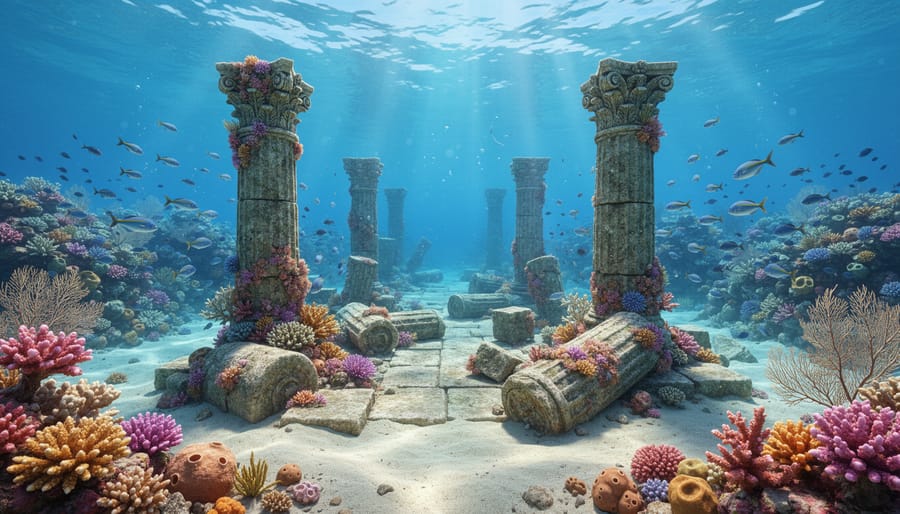
When Ecosystems Fail, Heritage Becomes Vulnerable
Marine pollution doesn’t just threaten living organisms—it fundamentally destabilizes the protective systems that have safeguarded underwater archaeological sites for centuries. When pollution degrades coastal ecosystems, it triggers a cascade of environmental changes that leave submerged heritage sites dangerously exposed.
Healthy seagrass meadows and coral reefs act as natural barriers, absorbing wave energy and stabilizing sediments that protect shipwrecks and ancient settlements. However, nutrient pollution causes algal blooms that suffocate these protective habitats, while plastic debris and chemical contaminants weaken coral structures. Marine biologist Dr. Elena Martinez, who studies Mediterranean archaeological sites, recalls discovering a 2,000-year-old Roman vessel: “The surrounding seagrass had died back due to agricultural runoff. Without that protective cover, we watched storm currents erode artifacts that had remained intact for millennia.”
The consequences are striking. Coastal erosion accelerates by up to 300% in areas where protective vegetation disappears. Storm surges penetrate deeper, physically battering fragile structures and dispersing artifacts across the seabed. Rising ocean temperatures, exacerbated by pollution’s greenhouse effects, intensify storm frequency and severity, creating a perfect storm of destruction for our submerged cultural heritage. This degradation represents an irreversible loss of human history that pollution makes increasingly difficult to prevent.
Solutions That Save Both Life and Legacy
Marine Protected Areas With Dual Purpose
Marine Protected Areas (MPAs) are increasingly recognizing that ocean conservation must address multiple priorities simultaneously. Forward-thinking MPAs now integrate ecological protection with cultural heritage preservation, creating sanctuaries that safeguard both living marine ecosystems and submerged archaeological treasures from pollution’s destructive effects.
The Thunder Bay National Marine Sanctuary in Lake Huron exemplifies this dual approach, protecting 200 square miles of habitat while preserving nearly 100 historic shipwrecks. Park managers collaborate with archaeologists and marine biologists to monitor how pollutants affect both fish populations and wooden artifacts, implementing preservation methods that benefit multiple resources simultaneously.
Dr. Sarah Chen, a marine archaeologist working in Mediterranean MPAs, shares her experience: “When we reduce nutrient runoff to protect coral communities, we’re simultaneously slowing the biological colonization that degrades ancient amphoras. It’s conservation synergy at its best.”
Volunteers play vital roles in these integrated MPAs, participating in water quality monitoring programs that track pollution indicators affecting both ecological and archaeological resources. This approach demonstrates how comprehensive marine protection addresses interconnected threats, ensuring future generations inherit healthy oceans rich with both biodiversity and cultural heritage.
Pollution Prevention at the Source
Preventing pollution before it reaches our oceans represents the most effective strategy for protecting marine ecosystems and underwater heritage sites. At the agricultural level, implementing buffer zones with native vegetation along waterways significantly reduces chemical runoff from farms. These natural filters trap pesticides and fertilizers before they enter drainage systems. Industries can adopt closed-loop water systems that treat and recycle wastewater, dramatically decreasing toxic discharge into marine environments.
For plastic waste, municipalities worldwide are finding success with comprehensive recycling programs and single-use plastic bans. Simple actions like choosing reusable containers and properly disposing of waste prevent an estimated 8 million tons of plastic from entering oceans annually. Dr. Maya Chen, a marine chemist who volunteers with coastal cleanup initiatives, shares that “every piece of plastic we prevent from reaching the ocean saves countless marine animals and preserves archaeological sites from degradation.”
Community involvement makes a tangible difference. Watershed protection groups organize regular monitoring of local waterways, catching pollution sources early. Volunteer opportunities with organizations like Surfrider Foundation and Ocean Conservancy allow individuals to contribute directly to source reduction efforts. Educational programs in schools teaching about stormwater pollution create lasting behavioral changes. When communities understand that street litter eventually flows to the ocean, participation in prevention increases dramatically.
Industrial facilities increasingly partner with environmental groups to audit their discharge practices, discovering cost-effective alternatives to harmful chemicals while protecting marine life downstream.
How You Can Make a Difference
You have the power to protect our oceans through meaningful action, whether you live near the coast or inland. Join community conservation initiatives that combine marine conservation with underwater heritage protection, offering hands-on experiences documenting shipwrecks while monitoring ocean health. Participate in citizen science programs like beach cleanups, water quality monitoring, or wildlife tracking apps that contribute valuable data to researchers studying pollution impacts.
In your daily life, reduce single-use plastics by choosing reusable alternatives, properly dispose of chemicals and medications to prevent them from entering waterways, and support sustainable seafood choices. Marine biologist Dr. Sarah Chen shares, “Every volunteer I’ve worked with tells me they never realized how much their individual actions mattered until they saw firsthand the plastics we collected from one beach in a single day.”
Choose ocean-friendly products, advocate for stronger environmental policies in your community, and educate others about marine pollution. Consider supporting organizations dedicated to marine conservation through donations or volunteering your professional skills. Remember, collective action creates lasting change—when we work together, we transform our relationship with the ocean from one of harm to one of healing and hope.
The fate of our marine ecosystems and the cultural treasures they harbor are inextricably linked. As pollution continues to degrade ocean health, we simultaneously lose both vibrant biodiversity and irreplaceable underwater heritage sites that tell the story of human civilization. Ancient shipwrecks dissolve under acidic waters while coral reefs that have supported countless generations crumble around them. The urgency of this dual crisis cannot be overstated.
Yet there is genuine reason for hope. Marine biologist Dr. Sarah Chen, who has spent two decades studying pollution impacts, shares an inspiring observation: “I’ve witnessed communities rally together to transform polluted harbors into thriving marine sanctuaries within just five years. When people understand what’s at stake, they become powerful agents of change.”
Every action matters. Reducing single-use plastics, participating in coastal cleanups, supporting sustainable fishing practices, and advocating for stronger environmental policies collectively create measurable impact. Volunteer opportunities with marine conservation organizations offer hands-on ways to contribute, whether monitoring water quality, removing debris, or educating others about pollution prevention.
The knowledge we’ve gained about pollution’s mechanisms and consequences empowers us to make informed decisions. Students, educators, scientists, and concerned citizens form a growing network of ocean advocates equipped to reverse these troubling trends. Our oceans have remarkable resilience when given the chance to recover.
The choice before us is clear: continue on our current trajectory and watch both natural wonders and cultural heritage disappear, or unite in purposeful action to preserve these treasures for future generations. Together, through sustained commitment and collective effort, we can write a different story for our oceans.

jessica
Ava Singh is an environmental writer and marine sustainability advocate with a deep commitment to protecting the world's oceans and coastal communities. With a background in environmental policy and a passion for storytelling, Ava brings complex topics to life through clear, engaging content that educates and empowers readers. At the Marine Biodiversity & Sustainability Learning Center, Ava focuses on sharing impactful stories about community engagement, policy innovations, and conservation strategies. Her writing bridges the gap between science and the public, encouraging people to take part in preserving marine biodiversity. When she’s not writing, Ava collaborates with local initiatives to promote eco-conscious living and sustainable development, ensuring her work makes a difference both on the page and in the real world.