Marine Biodiversity Science Center

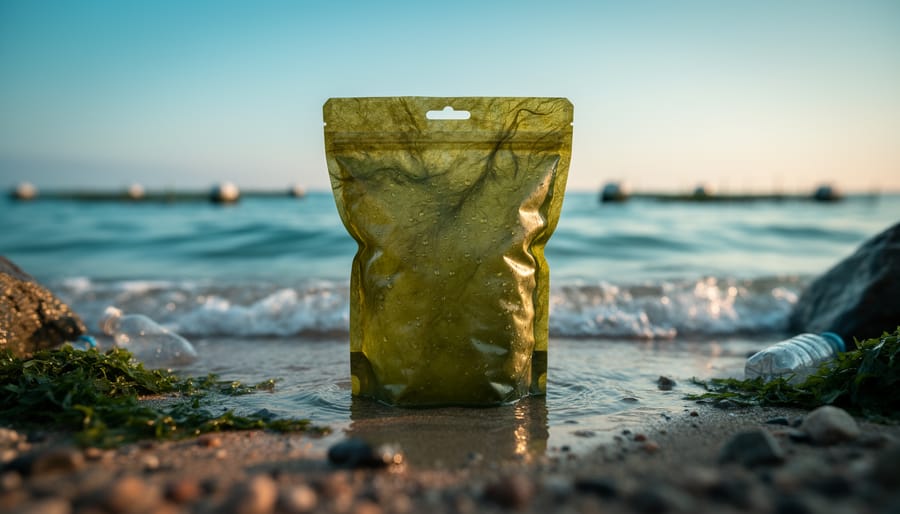
Every minute, a garbage truck’s worth of plastic enters our oceans. But imagine if that material could simply disappear, broken down by the very microorganisms that call the ocean home. Biodegradable materials promise exactly that: alternatives to conventional plastics that can decompose naturally in marine environments, leaving no toxic residue behind.
Yet the reality is more nuanced than many product labels suggest. Not all biodegradable materials perform equally in saltwater versus soil. Some require specific conditions that ocean environments rarely provide. Others break down into microplastics before fully decomposing. Understanding these distinctions matters tremendously for marine conservationists, researchers, and anyone making purchasing decisions that affect our oceans.
The good news? Genuine innovations are emerging. Scientists are developing seaweed-based packaging, fishing nets engineered to degrade safely if lost at sea, and shipping materials that marine bacteria can actually digest. These advances aren’t just laboratory curiosities. They’re being deployed in aquaculture operations, coastal communities, and maritime industries right now.
This article cuts through the marketing hype to examine what biodegradable materials truly work in marine settings. You’ll discover the science behind degradation processes, see real-world applications already making waves, and learn the honest limitations these materials still face. Most importantly, you’ll understand how to evaluate biodegradable claims and support solutions that genuinely protect our oceans. The path forward requires both innovation and informed choices. Together, these tools can help turn the tide on marine pollution.
The Marine Plastic Crisis: Why We’re Desperate for Solutions
Every year, over 11 million metric tons of plastic waste enter our oceans—a figure projected to triple by 2040 if current trends continue. This deluge of persistent materials has created what many scientists call a planetary emergency, one that demands urgent action and innovative pollution solutions.
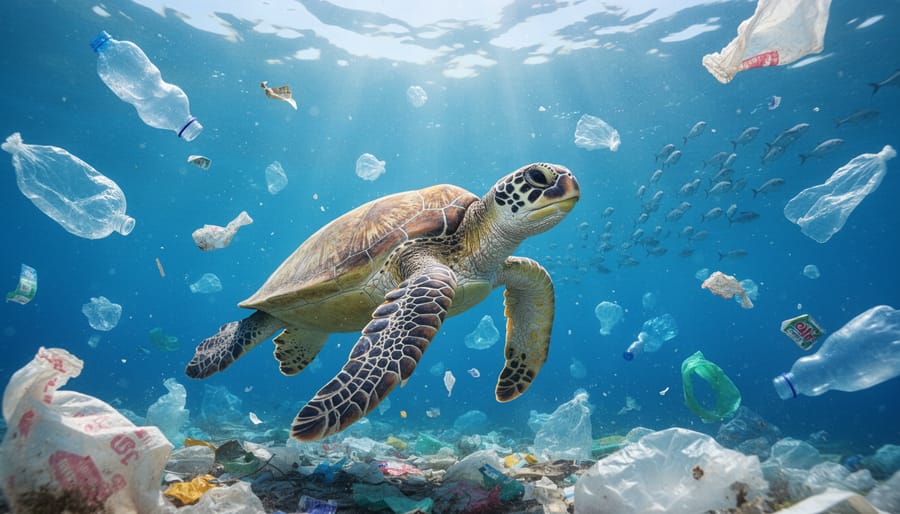
The statistics paint a sobering picture: at least 1,500 marine species have been documented ingesting or becoming entangled in plastic debris. Sea turtles mistake plastic bags for jellyfish, their primary food source. Seabirds feed plastic fragments to their chicks, filling tiny stomachs with indigestible waste instead of nutrition. Microplastics—particles smaller than 5 millimeters—have infiltrated every corner of the marine environment, from Arctic ice to the deepest ocean trenches.
Dr. Sarah Chen, a marine biologist studying coral reef ecosystems in the Pacific, recalls a moment that crystalized the urgency of this crisis. “During a routine reef survey, I watched a juvenile hawksbill turtle struggling with a tangled mass of fishing line and plastic straws wrapped around its flipper,” she shares. “After carefully freeing the animal, I spent the next hour collecting debris from that single reef section—filling three mesh bags with plastic bottles, packaging, and fragments. That’s when the scale of the problem truly hit me. These weren’t isolated incidents; this was the new normal.”
The persistence of conventional plastics compounds the problem. A single plastic bottle can take 450 years to decompose, while fishing nets may persist for over 600 years, continuing to trap and kill marine life in what’s known as “ghost fishing.”
This growing crisis has catalyzed intense research into biodegradable alternatives specifically designed for marine environments. The marine technology industry recognizes that traditional recycling and cleanup efforts, while important, cannot keep pace with the volume of plastic entering our oceans. We need materials that can safely return to nature.
What Makes a Material Truly ‘Biodegradable’ in the Ocean?
The Difference Between Degradable, Compostable, and Biodegradable
These terms are frequently used interchangeably, but they have distinct meanings that matter enormously for ocean health. Degradable materials simply break into smaller pieces over time, often becoming microplastics that persist in marine environments for centuries. This process doesn’t eliminate the material, it just makes it invisible to the naked eye while remaining harmful to marine life.
Biodegradable materials can break down through natural biological processes, but the timeline and conditions matter critically. A product labeled “biodegradable” might decompose in an industrial facility within months but persist for decades in cold ocean water where microbial activity is limited.
Compostable materials represent the highest standard, requiring breakdown into non-toxic components within specific timeframes under defined conditions. Marine biologist Dr. Elena Rodriguez shared with us that she’s witnessed products labeled “ocean-safe biodegradable” still intact after two years on the seafloor. The lesson? Always look for third-party certifications and specific degradation timelines. Understanding these distinctions empowers you to make truly ocean-friendly choices and ask manufacturers the right questions about their environmental claims.
How Ocean Conditions Change Everything
When we talk about biodegradable materials in the ocean, we’re not talking about a uniform environment. The reality is far more complex, and understanding these variations is crucial for designing materials that actually break down as intended.
Temperature plays a pivotal role in biodegradation rates. Warmer tropical waters accelerate microbial activity, potentially breaking down materials two to three times faster than frigid polar seas. This means a fishing net labeled “biodegradable” might decompose in months near the equator but persist for years in Arctic waters. Marine biologist Dr. Elena Rodriguez, who has spent fifteen years studying material breakdown in different ocean zones, explains: “We’ve seen the same bioplastic sample behave like completely different materials depending on water temperature. It’s a wake-up call for manufacturers making universal claims.”
Salinity affects how water molecules interact with biodegradable polymers. Materials designed for freshwater may struggle in saltwater conditions, where higher salt concentrations can actually slow certain degradation processes while accelerating others.
Pressure becomes significant at depth. The deep ocean presents a unique challenge where cold temperatures, crushing pressure, and limited oxygen create an environment where even “biodegradable” items may remain intact for extended periods. Some materials tested in surface waters degraded beautifully, only to persist almost unchanged when dropped to the seafloor.
Perhaps most critical is microbial activity. Biodegradation requires the right bacteria and enzymes to be present. Coastal areas teeming with diverse microbial communities facilitate faster breakdown, while the sparse microbial populations in open ocean can leave materials languishing indefinitely.
Biodegradable Materials Transforming Marine Technology
Fishing Gear and Aquaculture Equipment
The fishing industry faces a sobering challenge: abandoned or lost fishing gear, known as ghost gear, continues catching marine life long after its useful life ends. Each year, an estimated 640,000 tons of fishing equipment enters our oceans, creating deadly traps for whales, sea turtles, seals, and countless fish. Biodegradable fishing gear offers a promising solution to this persistent problem.
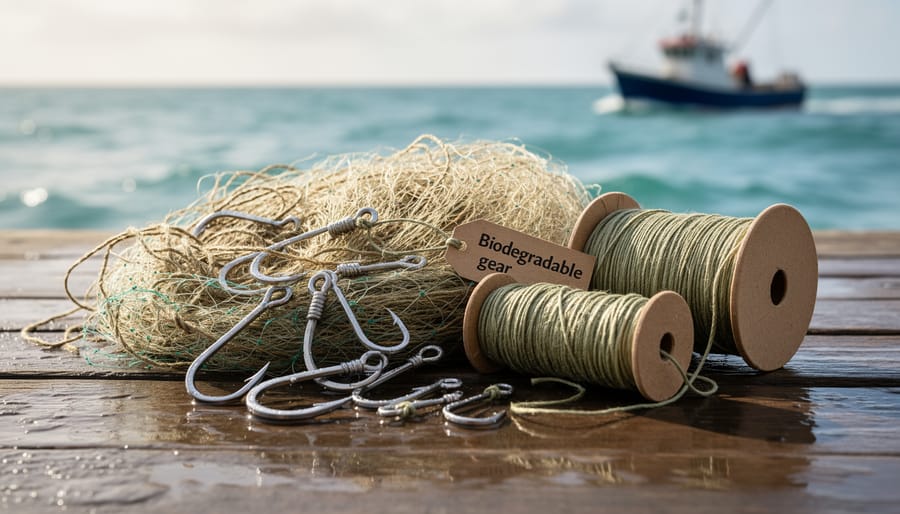
Researchers and manufacturers have developed biodegradable fishing nets from materials like polyhydroxyalkanoates (PHAs) and modified natural fibers that maintain strength during active use but break down within months or years after abandonment. Unlike conventional nylon nets that persist for centuries, these alternatives decompose into harmless compounds when exposed to marine bacteria and UV light. Early field trials show promising results, with degradation beginning within 12 to 18 months in ocean conditions.
Biodegradable fishing lines and trap components are also entering the market. Some materials incorporate enzymes that accelerate breakdown once the gear stops moving regularly, helping distinguish between active and abandoned equipment. Buoys made from plant-based plastics provide another innovation, eliminating persistent foam debris that litters coastlines.
Marine biologist Dr. Elena Santos, who monitors ghost gear impacts in the Caribbean, shares an encouraging perspective: “I’ve witnessed firsthand the devastation caused by abandoned nets. Seeing biodegradable alternatives actually work gives me hope we can fish sustainably while protecting marine ecosystems.”
Volunteer beach cleanup programs increasingly report finding biodegradable gear fragments rather than intact nets, suggesting these materials perform as designed. However, challenges remain around cost competitiveness and ensuring complete degradation without releasing microplastics. Still, continued innovation points toward cleaner oceans ahead.
Marine Research and Monitoring Devices
Scientists tracking marine animals and ocean conditions face a significant challenge: how do you collect valuable data without leaving behind harmful equipment? Traditional tracking devices and sensors often contain plastics and metals that can entangle wildlife or leach toxins. Enter biodegradable marine monitoring devices, a breakthrough that’s transforming ocean research.
These innovative tools include tracking tags made from cellulose-based materials that dissolve harmlessly after transmitting data, and sensors constructed from biopolymers that naturally break down into organic compounds. Marine biologist Dr. Sofia Chen shares her experience: “We’ve deployed biodegradable acoustic tags on sea turtles that function perfectly for our study period, then safely decompose within months. It’s relieved a huge ethical burden knowing we’re not contributing to ocean pollution.”
Current applications include temperature sensors monitoring coral reef health, biodegradable drifters tracking ocean currents, and dissolvable tags studying fish migration patterns. While these devices typically cost more than conventional equipment, their environmental benefits are substantial. Researchers estimate that switching to biodegradable alternatives could eliminate thousands of pounds of research-related debris annually. For conservation-minded volunteers participating in citizen science projects, supporting institutions that prioritize these eco-friendly technologies amplifies positive impact.
Coastal Protection and Restoration Tools
Coastal ecosystems face relentless pressure from rising seas and intensifying storms, but biodegradable materials are offering temporary lifelines while natural systems recover. Erosion control blankets made from coconut coir and jute fibers stabilize vulnerable shorelines, decomposing naturally within months after vegetation takes root. These mesh structures prevent sediment loss without leaving behind synthetic debris that plagues traditional solutions.
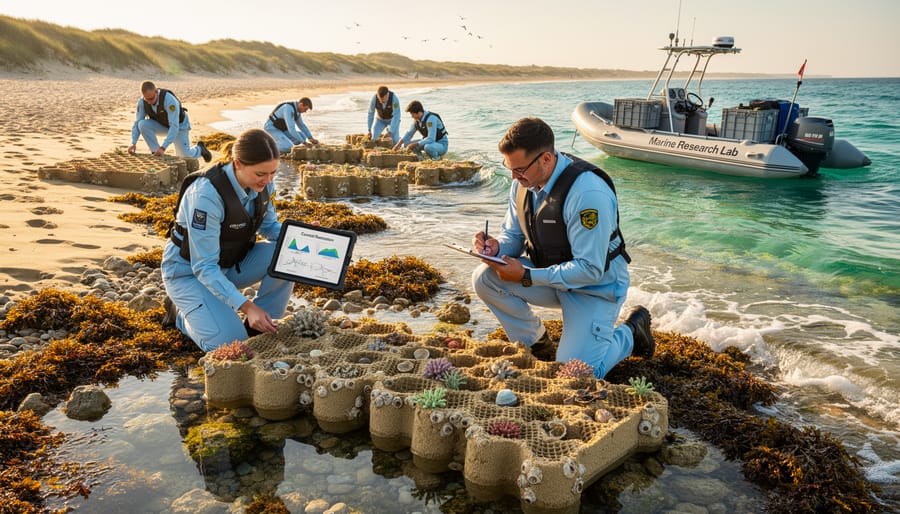
In coral reef restoration, scientists are deploying biodegradable scaffolds crafted from limestone-based materials and natural polymers. These frameworks provide attachment points for coral fragments, gradually breaking down as the living corals grow and fuse together. Marine biologist Dr. Sarah Chen shares how volunteers helped install these structures in the Caribbean: “Watching community members place coral on biodegradable bases, knowing they’ll vanish as the reef heals itself, transforms how people view ocean conservation technology.”
Oyster reef restoration projects increasingly use biodegradable shell bags and fiber mats that anchor spat while decomposing harmlessly. These temporary structures demonstrate how thoughtful material selection enables intervention without long-term environmental footprints, supporting ecosystems until they regain resilience naturally.
The Dark Side: When ‘Biodegradable’ Doesn’t Mean ‘Harmless’
The Microplastic Problem We’re Not Talking About
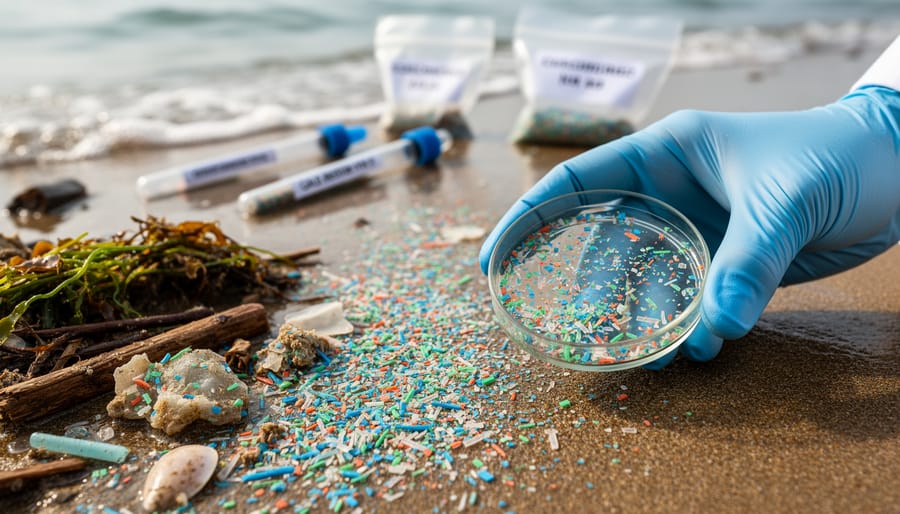
Here’s an uncomfortable truth about biodegradable materials: not all of them disappear cleanly. While many break down over time, some fragment into microplastics before completing the biodegradation process, creating exactly the pollution problem they were designed to solve.
Marine biologist Dr. Sarah Chen has witnessed this firsthand during coastal cleanups. “We found materials labeled biodegradable that had fragmented into tiny pieces, just like conventional plastics,” she explains. “The difference is that these eventually break down at a molecular level, but the intermediate stage creates microplastic pollution that marine life can ingest.”
This happens when materials degrade physically before their chemical structure breaks down. Environmental conditions matter enormously. A fishing net marked biodegradable might take months or even years to fully decompose in cold ocean waters, fragmenting into microplastics throughout that period. Those fragments can enter the food chain, potentially harming filter feeders, fish, and seabirds.
The solution isn’t abandoning biodegradable materials but understanding their limitations. Researchers are developing enhanced formulations that minimize fragmentation, while conservation groups work to ensure proper disposal and recovery systems exist. If you’re passionate about addressing this challenge, volunteer opportunities with beach cleanup organizations provide firsthand experience documenting how these materials perform in real marine environments.
The key takeaway: biodegradable doesn’t automatically mean harmless. We need continued innovation and responsible implementation to ensure these materials deliver on their environmental promise.
Hidden Chemicals and Unintended Consequences
Not all biodegradable materials are created equal, and what seems environmentally friendly on the surface may carry hidden risks beneath the waves. Many biodegradable plastics and materials contain chemical additives—plasticizers, colorants, stabilizers, and processing agents—that manufacturers add to improve performance and shelf life. While the base material may break down, these additives can persist in marine environments or release toxic compounds during decomposition.
Dr. Sarah Chen, a marine chemist who has studied degradation processes in seawater for over a decade, explains it plainly: “We’ve found that some biodegradable fishing gear releases heavy metals and endocrine-disrupting chemicals as it breaks apart. These substances accumulate in sediments and can enter the food chain, affecting everything from plankton to apex predators.”
The breakdown process itself presents challenges. When biodegradable materials decompose in oxygen-poor marine sediments, they can produce methane, a potent greenhouse gas. Additionally, the intermediate breakdown products—partially degraded polymers—may be more bioavailable to marine organisms than the original material, leading to unintended environmental consequences.
Researchers are working to develop comprehensive testing protocols that evaluate not just biodegradation rates, but also the toxicity of all breakdown products. Several marine conservation organizations now offer volunteer opportunities to collect samples from coastal areas where biodegradable materials are used, helping scientists better understand real-world impacts. Your participation in these monitoring programs provides crucial data for improving material safety standards.
Promising Innovations on the Horizon
The race to develop truly ocean-friendly materials is accelerating, with researchers worldwide tackling the persistent challenges that have limited first-generation biodegradables. These innovations promise to bridge the gap between environmental necessity and practical functionality.
Dr. Elena Marquez, a biochemist at the Ocean Materials Innovation Lab in Vancouver, shares her excitement about a breakthrough her team recently achieved. “We’ve developed a seaweed-based polymer that degrades completely within six months in cold Arctic waters,” she explains. “Previous materials only worked in warmer conditions, leaving polar regions vulnerable. This changes everything.” Her team’s material incorporates specialized enzymes that remain active even in near-freezing temperatures, finally addressing one of the most significant limitations in marine biodegradable technology.
Meanwhile, researchers at the Marine Biomaterials Consortium have created hybrid materials that combine the strength of traditional plastics with the breakdown capabilities of natural decomposition processes. These next-generation polymers contain embedded nutrients that actually feed marine microorganisms during degradation, turning waste into a resource rather than simply disappearing.
Another promising development comes from mycelium-based materials, grown from fungal networks. Dr. James Chen, who leads a student research team in Halifax, describes how undergraduate volunteers helped cultivate fishing nets from mushroom roots. “Watching students realize they could literally grow ocean-safe materials in our campus lab was transformative,” he says. “These nets perform as well as nylon but become fish food after their useful life.”
Perhaps most exciting are smart biodegradables engineered to remain stable during use but trigger degradation only when exposed to specific ocean conditions. This programmable breakdown prevents premature failure while ensuring complete decomposition once discarded.
For those inspired to contribute, many research institutions welcome citizen scientists and volunteers to participate in material testing programs, helping accelerate the journey from laboratory innovation to ocean-saving reality.
How You Can Support the Right Solutions
Supporting truly biodegradable solutions requires more than good intentions. It demands informed action from all of us, whether you’re a researcher, educator, business owner, or concerned citizen.
For those interested in hands-on involvement, the Marine Biodiversity Science Center offers volunteer opportunities in material testing programs and coastal cleanup initiatives that specifically track biodegradable product performance in real marine environments. These experiences provide invaluable data while connecting volunteers with working marine biologists who share insights from the field. Dr. Jennifer Martinez, who coordinates our volunteer research program, recalls how a retired teacher discovered that supposedly biodegradable fishing line remained intact after six months in local waters, leading to important manufacturer accountability measures.
As consumers and professionals, ask critical questions before purchasing or recommending products labeled biodegradable. What specific standards does the material meet? Under what conditions does it actually break down? Is there third-party certification? Does it require industrial composting, or will it degrade in natural ocean conditions? Manufacturers making genuine environmental claims should provide clear, verifiable answers.
Students and educators can integrate biodegradable material testing into science curricula, creating real-world learning experiences while contributing to citizen science databases. Set up simple experiments comparing degradation rates of different materials in saltwater conditions, then share findings with local environmental groups.
Advocacy matters tremendously. Support legislation requiring transparent labeling standards for marine biodegradable products. Contact representatives about funding for marine material research. Share evidence-based information through your networks, countering greenwashing with facts.
Remember, collective action creates the pressure needed for systemic change. When we demand accountability, support rigorous research, and choose verified solutions, we accelerate the transition toward materials that genuinely protect our oceans rather than simply appearing to do so.
The journey toward healthier oceans requires all of us to think critically about the materials we use and discard. Biodegradable materials represent an important tool in our conservation toolkit, but they’re not a magical solution to marine pollution. The most effective path forward combines using truly biodegradable alternatives where appropriate, dramatically reducing our overall consumption, improving waste management systems, and supporting research into innovative materials that won’t harm marine life.
Each of us has a role to play. Whether you’re a researcher developing next-generation biopolymers, an educator teaching students about ocean health, or simply someone who cares about marine ecosystems, your choices matter. Start by questioning product claims, supporting companies with verified environmental credentials, and advocating for stronger standards in biodegradable material certification.
We invite you to join our growing community of ocean advocates. Our center offers volunteer opportunities in beach cleanups, citizen science projects monitoring marine debris, and educational outreach programs. Connect with marine biologists who share their field experiences and insights through our e-network, where you can access the latest research, participate in webinars, and collaborate on conservation initiatives. Together, informed and engaged, we can protect the incredible biodiversity that makes our oceans thrive.

jessica
Ava Singh is an environmental writer and marine sustainability advocate with a deep commitment to protecting the world's oceans and coastal communities. With a background in environmental policy and a passion for storytelling, Ava brings complex topics to life through clear, engaging content that educates and empowers readers. At the Marine Biodiversity & Sustainability Learning Center, Ava focuses on sharing impactful stories about community engagement, policy innovations, and conservation strategies. Her writing bridges the gap between science and the public, encouraging people to take part in preserving marine biodiversity. When she’s not writing, Ava collaborates with local initiatives to promote eco-conscious living and sustainable development, ensuring her work makes a difference both on the page and in the real world.