Marine Biodiversity Science Center

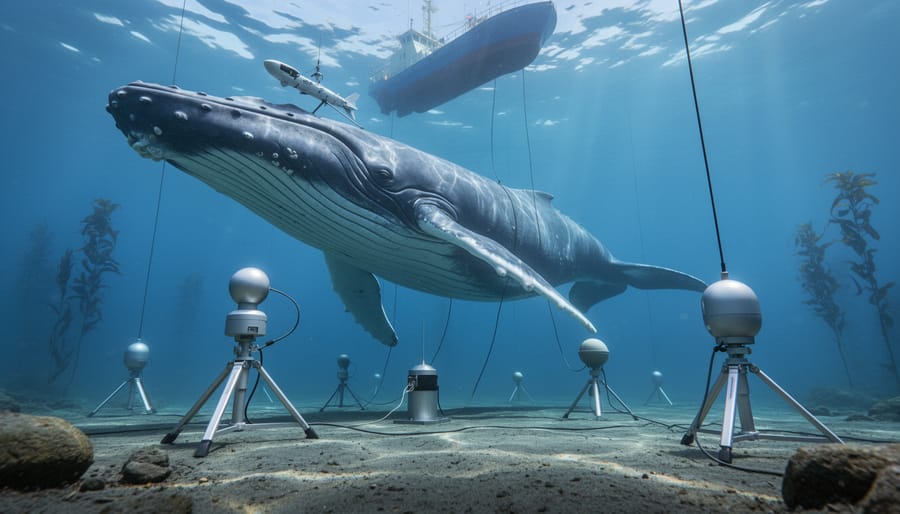
Beneath the ocean’s surface, where GPS signals cannot penetrate, scientists track everything from migrating whales to autonomous underwater vehicles using sound waves that travel four times faster through water than air travels through the atmosphere. Underwater acoustic positioning systems transform the ocean from an opaque void into a mappable frontier, enabling researchers to pinpoint the exact location of tagged marine animals, monitor coral reef health, and coordinate complex research missions in the deep sea.
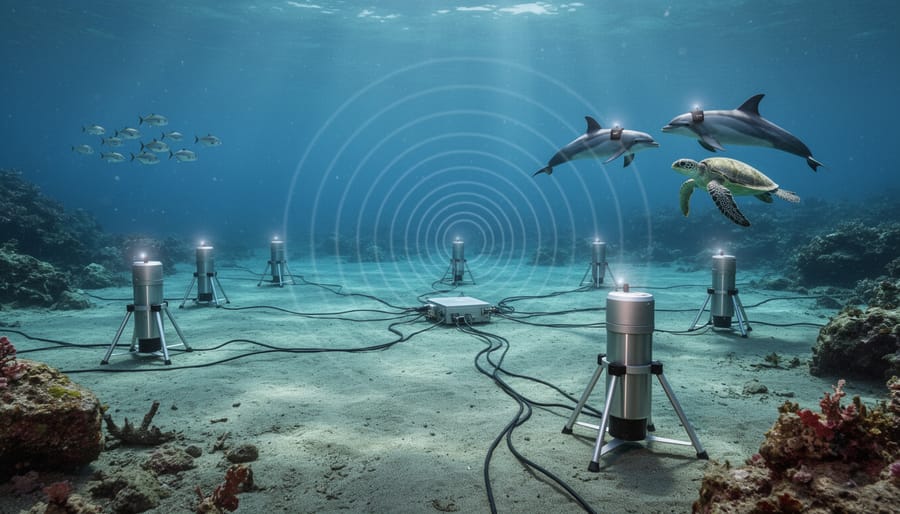
These systems work by deploying acoustic transponders—underwater beacons that emit sound pulses at specific frequencies—across a study area, creating an invisible grid beneath the waves. When a tagged animal or research equipment passes through this grid, receivers calculate distances based on the time it takes for sound signals to travel between points, triangulating precise positions even at depths where light disappears entirely. The technology has revolutionized marine conservation, allowing scientists to map migration corridors, identify critical breeding grounds, and document behavioral patterns that were previously invisible to human observation.
The real power of acoustic positioning extends far beyond data collection. Marine biologist Dr. Sarah Chen describes her first experience deploying these systems off the California coast: “We watched in real-time as a tagged blue whale navigated through shipping lanes. That data helped establish new protective corridors, reducing ship strikes by 30 percent.” Today, volunteers worldwide assist with acoustic monitoring projects, from deploying receivers to analyzing tracking data from their own computers.
Understanding how these systems function opens doors to meaningful participation in ocean research. Whether you’re a student considering marine science, an educator seeking hands-on conservation projects, or simply someone who cares about protecting marine life, acoustic positioning technology offers tangible ways to contribute to discoveries happening right now beneath the waves.
What Is Underwater Acoustic Positioning and Why Does It Matter?
The Science Behind Sound in the Ocean
Sound travels through water in a remarkable way that makes it perfect for tracking marine life. Unlike light, which quickly fades in ocean depths, sound waves can travel for hundreds of miles underwater. This happens because water is denser than air, allowing acoustic signals to move faster and farther—about four times the speed they travel through air.
When marine scientists use underwater acoustic communication systems, they rely on this principle. The technology works similarly to how dolphins and whales navigate using echolocation. A transmitter, often attached to a marine animal or placed on the ocean floor, sends out sound pulses at specific frequencies. These acoustic signals travel through the water until they reach receivers, which are underwater listening stations positioned strategically throughout a study area.
The receivers detect and record when tagged animals swim nearby, capturing data about their movements, depth preferences, and habitat use. Think of it like an underwater GPS system, but instead of satellites, we use sound waves bouncing between transmitters and receivers.
What makes this technology particularly valuable for conservation is its non-invasive nature. Animals can move freely while researchers gather crucial information about migration patterns, breeding grounds, and critical habitats. This data helps scientists understand how marine species use their environment and how we can better protect them. Even better, volunteers and citizen scientists can participate in deploying and maintaining these systems, making ocean research a truly collaborative effort.
From Tags to Data: How the System Works
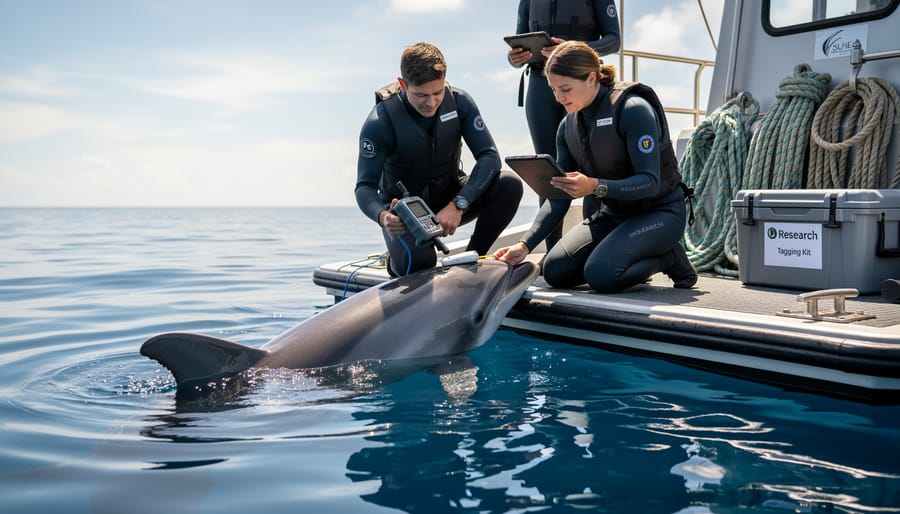
The journey from tagging to data collection begins with a small acoustic tag—roughly the size of a AAA battery—carefully attached to a marine animal. These tags emit unique ultrasonic pings at regular intervals, like an underwater beacon that humans can’t hear but specialized equipment can detect.
Surrounding the study area, researchers deploy hydrophones—essentially underwater microphones—strategically positioned to create an array. When a tagged animal swims through the area, multiple hydrophones pick up the tag’s signal. Here’s where triangulation works its magic: by measuring the tiny time differences between when each hydrophone receives the ping, sophisticated software calculates the animal’s precise location.
Dr. Maria Santos, a marine biologist studying dolphin movements, explains it simply: “Think of it like hearing thunder after lightning. The sound reaches different listeners at slightly different times, revealing where the storm is.” This same principle lets us track sharks, turtles, or whales with remarkable accuracy—often within meters—creating detailed maps of their underwater journeys. The data collected helps researchers understand migration patterns, breeding grounds, and critical habitats, informing conservation strategies that protect these vital ecosystems for future generations.
Real-World Applications in Marine Conservation
Tracking Endangered Species and Migration Patterns
Underwater acoustic positioning systems have revolutionized our understanding of marine species movements, providing unprecedented insights into the secret lives of ocean inhabitants. Researchers now track everything from sea turtles navigating thousands of miles to return to nesting beaches, to great white sharks patrolling coastal waters, to humpback whales undertaking epic migrations between feeding and breeding grounds.
The technology has revealed fascinating patterns in species behavior. Tagged loggerhead sea turtles, for instance, have shown researchers previously unknown foraging hotspots in the open ocean, helping scientists identify critical habitats that need protection. Similarly, tracking ocean giants like whale sharks has uncovered migration corridors spanning entire ocean basins, connecting breeding areas scientists never knew existed.
Dr. Sarah Mitchell, a marine biologist who has spent fifteen years studying hawksbill turtle movements in the Caribbean, shares her excitement: “When we first deployed acoustic receivers around suspected breeding sites, we discovered these turtles were using coral reefs we thought were too degraded. It completely changed our conservation priorities and showed us that restoration efforts were working better than we imagined.”
The data collected through these systems helps identify seasonal patterns, feeding aggregations, and nursery grounds. This information proves invaluable for establishing marine protected areas, timing fishing restrictions, and understanding how climate change affects species distribution, ultimately guiding evidence-based conservation strategies that protect vulnerable populations.
Understanding Ecosystem Health and Biodiversity
Acoustic positioning data serves as a powerful diagnostic tool for understanding the pulse of our oceans. By tracking how marine animals move through their underwater world, scientists can identify which areas serve as essential feeding grounds, breeding sites, or migration corridors. This information reveals the invisible highways and gathering places that sustain marine life.
When researchers map these movement patterns over time, they can detect changes in ecosystem health. For instance, if tagged fish suddenly avoid an area they once frequented, it may signal declining water quality or habitat degradation. Conversely, increased activity in a region might indicate recovery or abundant food sources.
Marine biologist Dr. Sarah Chen shares her experience: “After analyzing three years of acoustic tracking data off the California coast, we discovered a small rocky reef that served as a nursery for juvenile rockfish. Without this positioning technology, we never would have known how critical that seemingly ordinary patch of ocean was to the entire population.”
This precise spatial data directly informs the design of marine protected areas, ensuring these sanctuaries actually encompass the habitats that matter most. Rather than drawing arbitrary boundaries, conservation planners can create evidence-based protected zones that truly safeguard biodiversity hotspots and support ecosystem resilience.
A Marine Biologist’s Story: Discoveries Made Possible
Dr. Maya Chen remembers the moment everything changed. Tracking hawksbill turtles off Indonesia’s coast using acoustic positioning, she discovered something unexpected: her tagged turtles were gathering at an unmapped coral reef system. “Without precise underwater positioning data, we would have missed this critical habitat entirely,” she reflects. The technology revealed not just where the turtles traveled, but spawning grounds for endangered fish species nobody knew existed. That discovery led to establishing a 500-hectare marine protected area. “What moves me most is knowing citizen scientists helped collect some of this acoustic data during our volunteer monitoring programs,” Maya shares. “Their dedication turned coordinates on a screen into real protection for species facing extinction. Every data point represented hope.” Today, that reef thrives, and Maya continues training volunteers to use acoustic positioning systems, multiplying conservation impact across the region.
How Public Participation Powers Acoustic Monitoring
Citizen Science: Your Role in the Ocean’s Research Network
The power of underwater acoustic positioning systems multiplies exponentially when everyday people join the research effort. You don’t need an advanced degree to make meaningful contributions to marine science—just curiosity and commitment.
One of the most impactful ways to participate is by hosting hydrophone equipment. Coastal residents with waterfront properties can provide crucial monitoring locations, allowing researchers to expand their acoustic networks beyond institutional facilities. Organizations often provide the equipment and training, while you contribute the location and occasional maintenance checks.
If you prefer land-based involvement, data analysis offers exciting opportunities. Researchers need volunteers to help identify marine mammal calls, fish sounds, and other acoustic signatures from thousands of hours of recordings. Online platforms make this accessible from anywhere, and training modules teach you to recognize different species’ unique vocalizations. Marine biologist Dr. Sarah Chen shares, “Our citizen analysts have identified migration patterns we never would have caught otherwise. Their fresh perspectives often spot details we’ve become too familiar to notice.”
Visual monitoring complements acoustic data beautifully. Reporting marine mammal sightings, unusual fish behavior, or environmental changes in your local waters helps scientists correlate acoustic data with observable events. Many projects use simple smartphone apps for logging observations.
Financial support for monitoring stations also matters. Adopting a hydrophone or sponsoring equipment maintenance keeps these vital listening posts operational year-round.
The growing field of citizen science in conservation demonstrates that collective action creates measurable impact. Your participation, however small it seems, adds essential data points to our understanding of ocean health.
Success Stories from Volunteer Acoustic Monitoring Projects
Volunteer acoustic monitoring projects are transforming our understanding of marine ecosystems and driving real conservation change. In the Pacific Northwest, citizen scientists using underwater acoustic systems helped document the return of gray whales to historically important feeding grounds. Their consistent monitoring efforts provided data that influenced the establishment of protected habitat zones, safeguarding these areas from industrial development.
Marine biologist Dr. Sarah Chen reflects on working with volunteers in the Philippines: “Our community monitors detected dugong vocalizations in areas where they were thought to be locally extinct. This discovery, made possible by dedicated volunteers checking acoustic data weekly, redirected our entire conservation strategy and secured funding for seagrass restoration.”
In Australia’s Great Barrier Reef, volunteer acoustic monitors identified previously unknown fish spawning aggregations. This grassroots data collection led to the creation of temporary no-take zones during critical breeding periods, resulting in measurably increased fish populations within two years.
Perhaps most inspiring is the story of teenage volunteers in California who, while analyzing whale songs recorded by acoustic positioning systems, noticed unusual patterns indicating ship strike risks. Their findings prompted shipping lane adjustments that reduced whale collisions by 30 percent in just one season.
These successes demonstrate that when everyday people engage with sophisticated monitoring technology, they become powerful advocates for marine life. Each volunteer contribution adds crucial puzzle pieces to our understanding of underwater ecosystems, proving that conservation victories often begin with curious individuals willing to listen.
Getting Involved: Volunteer Opportunities in Acoustic Monitoring
Opportunities for Coastal Communities
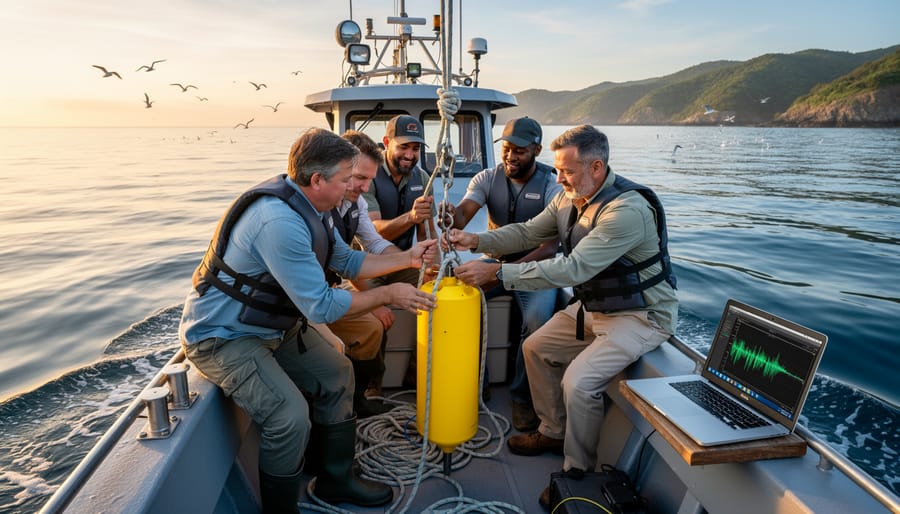
Coastal communities are uniquely positioned to contribute to underwater acoustic monitoring programs in meaningful ways. If you live near the ocean, you can host hydrophone equipment on private docks or waterfront properties, providing crucial listening stations that expand monitoring networks. Many research programs offer training and equipment at no cost to participants.
Boat owners have exceptional opportunities to support marine conservation through mobile monitoring. By mounting temporary acoustic receivers during fishing trips or recreational outings, you can help scientists collect data across broader areas. Some programs even compensate participants for fuel costs while contributing to vital research on whale migration patterns and fish populations.
Beach-based activities offer accessible entry points for all community members. Coastal residents can participate in equipment maintenance, assist with seasonal deployments during organized beach events, or help with data quality checks by reporting unusual sounds or marine mammal sightings. These volunteer work opportunities require no specialized background and provide hands-on learning experiences about marine ecosystems.
Local schools and community groups often serve as coordination hubs, organizing training sessions and creating networks of citizen scientists who collectively monitor their coastal waters, fostering both conservation impact and community connection.
Ways to Contribute From Anywhere
You don’t need specialized equipment or a marine biology degree to make a meaningful difference in underwater acoustic research. Our center’s e-network connects passionate individuals worldwide with valuable remote opportunities that directly support marine conservation efforts.
One of the most impactful ways to contribute is through sound classification projects. After acoustic positioning systems collect underwater recordings, volunteers help identify and catalog marine mammal calls, fish vocalizations, and other biological sounds. This work is essential for building comprehensive databases that scientists use to track species populations and migration patterns. We provide thorough training materials and user-friendly software, making this opportunity accessible even if you’re new to marine acoustics.
Data analysis volunteers play a crucial role in processing the enormous volumes of information our positioning systems generate. Whether you have experience with spreadsheets or more advanced statistical skills, there’s a place for you. Your contributions help researchers identify trends, detect changes in marine ecosystems, and validate the effectiveness of conservation measures.
If you’re passionate about education, consider joining our outreach team. Remote volunteers create educational materials, manage social media campaigns, write blog posts about recent discoveries, and develop curriculum resources for schools. These efforts amplify our conservation message and inspire the next generation of ocean stewards.
Getting started is simple. Visit our e-network portal to explore current projects, connect with marine biologists working in the field, and find opportunities that match your interests and schedule. Many volunteers begin with just a few hours monthly and discover a rewarding connection to ocean conservation that fits seamlessly into their lives.
The Future of Acoustic Monitoring and Marine Conservation
The future of underwater acoustic monitoring shines with unprecedented promise, driven by rapid technological advancement and expanding collaborative networks. Next-generation hydrophone arrays are becoming smaller, more affordable, and increasingly sophisticated, enabling deployment in previously inaccessible marine habitats. Machine learning algorithms now process vast acoustic datasets in real-time, automatically identifying species, tracking migration patterns, and detecting environmental changes with remarkable accuracy.
Emerging technologies like autonomous underwater vehicles equipped with acoustic sensors are revolutionizing how we monitor the ocean’s depths. These innovations, combined with satellite connectivity, create integrated monitoring networks that provide comprehensive ocean health assessments. Cloud-based platforms now allow researchers worldwide to share acoustic data instantly, accelerating discoveries and conservation responses.
Perhaps most exciting is the democratization of marine monitoring. Community-based acoustic networks are springing up globally, with coastal residents deploying simple hydrophones to track local marine life. Citizen scientists are revolutionizing marine research by contributing valuable observations and data, transforming conservation from an exclusive scientific endeavor into a collective movement.
Dr. Maria Santos, who coordinates volunteer monitoring programs in the Caribbean, shares an inspiring perspective: “When community members hear whale songs or dolphin clicks through their own hydrophones, something profound happens. They become guardians of these waters, advocating for protection with personal investment.”
Mobile applications now enable anyone with a smartphone to participate in acoustic monitoring projects, identifying marine mammal calls or reporting unusual underwater sounds. Educational programs train volunteers in basic acoustic analysis, creating a skilled network of ocean listeners spanning continents.
This convergence of technology and public engagement represents a pivotal moment for marine conservation. When thousands of dedicated individuals combine their efforts with cutting-edge acoustic systems, we create an unprecedented monitoring capacity. The collective action of concerned citizens, empowered by accessible technology and guided by scientific expertise, offers genuine hope for protecting marine biodiversity for generations to come.
Underwater acoustic positioning systems represent more than just technological innovation—they’re a bridge connecting human curiosity with the urgent need to protect our ocean’s remarkable inhabitants. Every data point collected through these systems helps scientists understand migration patterns, identify critical habitats, and develop effective conservation strategies. But technology alone cannot save our oceans. The real power lies in what we do with this knowledge and how many of us choose to get involved.
Dr. Rachel Chen, a marine biologist who has spent fifteen years tracking whale populations, puts it simply: “Every volunteer who helps us monitor marine life becomes part of a global effort to ensure these animals survive for future generations. Your participation matters more than you might think.”
The Marine Biodiversity Science Center offers numerous ways to contribute to this vital work. Whether you’re an experienced scientist or simply passionate about marine life, there’s a place for you in conservation efforts. Join citizen science programs that help process acoustic data, participate in beach monitoring initiatives, or attend educational workshops to deepen your understanding of marine ecosystems.
Getting started is straightforward. Visit the Marine Biodiversity Science Center’s volunteer portal to explore current opportunities, sign up for their monthly newsletter to receive updates on marine conservation projects, and follow their research blog for inspiring stories from the field. Together, we can ensure that acoustic positioning technology continues to serve its highest purpose: safeguarding the incredible diversity of life beneath the waves.

jessica
Ava Singh is an environmental writer and marine sustainability advocate with a deep commitment to protecting the world's oceans and coastal communities. With a background in environmental policy and a passion for storytelling, Ava brings complex topics to life through clear, engaging content that educates and empowers readers. At the Marine Biodiversity & Sustainability Learning Center, Ava focuses on sharing impactful stories about community engagement, policy innovations, and conservation strategies. Her writing bridges the gap between science and the public, encouraging people to take part in preserving marine biodiversity. When she’s not writing, Ava collaborates with local initiatives to promote eco-conscious living and sustainable development, ensuring her work makes a difference both on the page and in the real world.