Marine Biodiversity Science Center

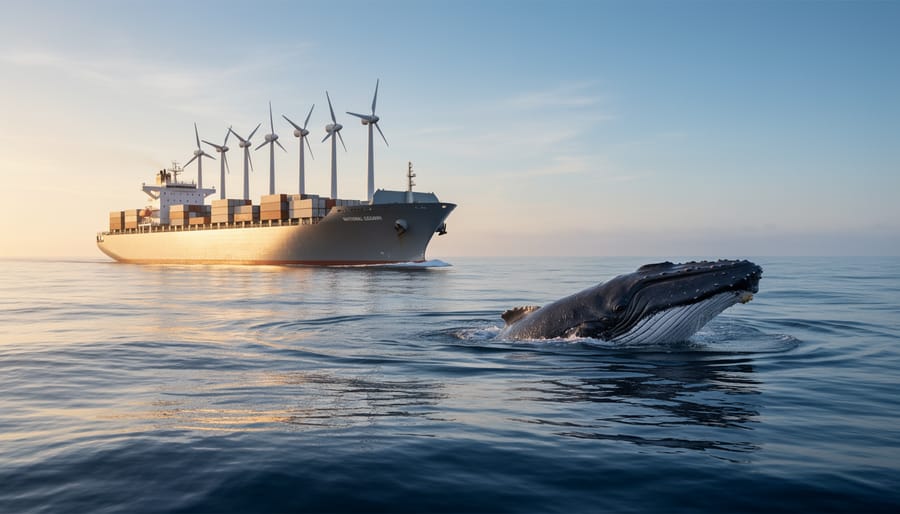
The global shipping industry moves over 90% of world trade while generating nearly 3% of global greenhouse gas emissions, but a wave of technological transformation is proving that commercial maritime operations and marine ecosystem protection can coexist. From alternative fuel systems that eliminate sulfur oxide pollution to artificial intelligence platforms that optimize routes around whale migration corridors, these innovations represent more than incremental improvements—they’re fundamentally reshaping how vessels interact with ocean environments.
Modern shipping technology addresses multiple conservation challenges simultaneously. Advanced hull designs reduce fuel consumption by up to 30%, decreasing both carbon emissions and underwater noise pollution that disrupts marine mammal communication. Ballast water treatment systems neutralize invasive species before they enter new ecosystems, protecting biodiversity in ports worldwide. Meanwhile, ocean innovation in propulsion systems—including hydrogen fuel cells and wind-assisted technologies—demonstrates that zero-emission shipping isn’t a distant dream but an emerging reality.
These advancements matter because shipping lanes intersect with critical marine habitats. Every technological improvement that reduces emissions, minimizes chemical discharge, or prevents biological contamination directly benefits the species and ecosystems we’re working to protect. Understanding these innovations empowers environmental professionals, students, and conservation advocates to recognize progress, support effective solutions, and hold the maritime industry accountable to higher environmental standards. The technology exists—implementation determines our oceans’ future.
The Urgent Need for Change: Understanding Shipping’s Impact on Marine Life
The global shipping industry, responsible for transporting roughly 90% of world trade, operates largely out of sight but leaves a profound footprint beneath the waves. Every year, approximately 100,000 commercial vessels crisscross our oceans, and their traditional practices exact a devastating toll on marine ecosystems that many of us dedicate our lives to protecting.
Consider the hidden threat of underwater noise pollution. Modern cargo ships generate intense low-frequency sounds that travel vast distances through water, disrupting the communication patterns of whales and dolphins who depend on sound for navigation, finding food, and maintaining social bonds. North Atlantic right whales, already critically endangered with fewer than 350 individuals remaining, struggle to communicate over distances that have shrunk by 90% due to ocean noise. When a mother whale cannot hear her calf’s calls, survival becomes exponentially more difficult.
Ship strikes represent another urgent crisis. Large vessels traveling through critical habitats collide with marine species at alarming rates. These collisions account for a significant portion of whale deaths in busy shipping lanes, particularly affecting slow-moving species like right whales and humpbacks. Dr. Sarah Chen, a marine biologist who has volunteered with our research team for five years, describes the heartbreak of documenting these preventable deaths: “Each whale we find bears propeller scars or fatal impact injuries. These are intelligent, social creatures whose populations cannot sustain these losses.”
Beyond physical impacts, traditional shipping practices introduce chemical pollution through oil spills and discharge ballast water containing invasive species that devastate native ecosystems. The industry also contributes nearly 3% of global carbon emissions, accelerating ocean acidification and warming that threatens coral reefs, shellfish populations, and the entire marine food web.
These interconnected threats demand immediate action, and fortunately, technological innovation offers genuine hope for transforming how ships coexist with ocean life.

Clean Fuel Alternatives: Powering Ships Without Poisoning the Sea
Hydrogen and Ammonia: The Zero-Emission Future
The maritime industry stands at the cusp of a revolutionary transformation with hydrogen fuel cells and green ammonia emerging as promising zero-emission alternatives to conventional bunker fuel. These technologies offer remarkable potential not just for reducing carbon emissions, but for protecting marine ecosystems from the harmful effects of fossil fuel combustion and spillage.
Hydrogen fuel cells generate electricity through a chemical reaction between hydrogen and oxygen, producing only water vapor as a byproduct. Several pioneering vessels are already demonstrating this technology’s viability. Norway’s MF Hydra, the world’s first hydrogen-powered ferry, began operations in 2021, transporting passengers across the Hjelmeland fjord without releasing greenhouse gases or pollutants into sensitive coastal waters. Similarly, Japan’s Energy Observer, a former racing catamaran retrofitted with hydrogen propulsion, has circumnavigated the globe, proving the technology’s reliability for extended voyages.
Green ammonia, produced using renewable energy to combine nitrogen and hydrogen, represents another exciting frontier. The maritime company Maersk has committed to launching its first carbon-neutral vessel using ammonia fuel by 2024. Unlike traditional shipping fuels, ammonia contains no carbon and doesn’t contribute to ocean acidification when used properly, offering dual benefits for atmospheric and marine health.
Marine biologist Dr. Sarah Chen, who monitors cetacean populations near shipping lanes, shares an encouraging observation: “As cleaner fuels reduce underwater noise pollution and eliminate toxic emissions, we’re documenting behavioral changes in marine mammals—they’re spending more time in previously avoided areas.” These innovations represent tangible hope for healthier oceans and the countless species that depend on them.

LNG and Biofuels: Transitional Solutions Making Waves Today
While fully emission-free shipping remains years away, liquefied natural gas (LNG) and biofuels are proving themselves as practical bridge technologies, delivering measurable environmental benefits today. These transitional solutions are already making significant waves in reducing the shipping industry’s carbon footprint and protecting marine ecosystems.
LNG has emerged as a leading alternative fuel, cutting carbon dioxide emissions by up to 25% compared to traditional heavy fuel oil. More importantly for marine life, LNG-powered vessels eliminate sulfur oxide emissions entirely and reduce nitrogen oxide emissions by 85%. Major shipping companies like CMA CGM and Carnival Corporation have invested heavily in LNG-powered fleets, with over 600 LNG-fueled ships currently operating or on order worldwide. The reduction in air pollutants translates directly to healthier ocean ecosystems, as nitrogen and sulfur compounds contribute to ocean acidification and harmful algal blooms that devastate marine habitats.
Biofuels represent another promising pathway, with some blends achieving up to 90% emission reductions. Maersk recently completed successful trials using biodiesel derived from waste cooking oil, demonstrating that biofuels can work in existing engines without modifications. The shipping giant aims to have carbon-neutral vessels in operation by 2030, powered partly by second-generation biofuels made from agricultural waste rather than food crops.
Marine biologist Dr. Sarah Chen, who monitors whale populations along major shipping routes, shares her perspective: “We’ve documented measurable improvements in water quality near ports that have transitioned to LNG bunkering facilities. Cleaner air means cleaner oceans, and that matters tremendously for the phytoplankton that form the foundation of marine food webs.”
Smart Ship Design: Engineering Vessels That Coexist with Marine Life
Quieter Propulsion Systems: Protecting Ocean Soundscapes
Ocean noise pollution poses a serious threat to marine mammals, fish, and invertebrates that rely on sound for communication, navigation, and hunting. Whales, for instance, can become disoriented by excessive underwater noise, leading to strandings and disrupted migration patterns. Recognizing this impact, maritime engineers have developed revolutionary propulsion technologies that significantly reduce acoustic footprints.
Modern propeller designs now incorporate carefully shaped blade geometry that minimizes cavitation—the formation of air bubbles that create intense underwater noise. These advanced propellers feature smoother profiles and optimized blade counts that allow water to flow more quietly around the vessel. Some ships have adopted contra-rotating propellers or ducted propellers enclosed in shrouds, which further dampen sound emissions.
Beyond propeller improvements, alternative propulsion systems are gaining momentum. Pod propulsion units, where electric motors are housed in pods beneath the hull, eliminate traditional shaft systems and operate with remarkable quietness. Some vessels now employ air lubrication systems that create microbubble carpets along the hull, simultaneously reducing friction, fuel consumption, and noise transmission into the water.
Marine biologist Dr. Sarah Chen, who studies humpback whale communication off California’s coast, shares an encouraging observation: “We’re documenting measurably quieter ocean conditions in shipping lanes where these technologies have been adopted. The whales are responding—their stress hormones are lower, and we’re seeing improved foraging success.”
For those inspired to support these innovations, volunteer opportunities exist with organizations monitoring ocean soundscapes and advocating for quieter shipping practices.

Hull Innovations: Speed Reduction and Strike Prevention
The shape of a ship’s hull can mean the difference between life and death for a whale. Modern hull innovations are transforming vessel design to reduce both fuel consumption and catastrophic collisions with marine mammals, addressing two critical environmental challenges simultaneously.
Advanced hull designs now feature bulbous bows and streamlined contours that allow ships to maintain efficiency at reduced speeds. This matters tremendously in whale-populated waters, where slower-moving vessels give marine mammals precious extra seconds to detect and avoid oncoming ships. Research consistently shows that reducing vessel speed from 20 knots to 10 knots decreases the likelihood of fatal whale strikes by 50 percent.
Dr. Maria Castellanos, a marine biologist who has spent fifteen years studying North Atlantic right whales, witnessed this technology’s potential firsthand. “We equipped several commercial vessels with thermal imaging systems integrated into their hull monitoring equipment,” she recalls. “Within the first year, crews successfully avoided 23 documented near-misses with right whales, a species with fewer than 350 individuals remaining.”
These detection systems use a combination of infrared cameras, acoustic monitoring, and artificial intelligence to identify whale signatures up to 1,000 meters ahead. When marine mammals are detected, automated alerts give bridge officers time to adjust course or reduce speed.
For those passionate about marine conservation, opportunities exist to support these innovations through citizen science programs that track vessel compliance in marine protected areas. Organizations worldwide welcome volunteers to monitor shipping lanes and document wildlife interactions, contributing valuable data that shapes future hull design requirements and speed regulations in sensitive habitats.
Digital Intelligence: AI and Sensors Transforming Maritime Operations
Route Optimization: Navigating Around Critical Habitats
Modern shipping vessels now harness sophisticated artificial intelligence systems to chart courses that protect vulnerable marine ecosystems while simultaneously reducing environmental impact. These AI-powered conservation technologies analyze vast datasets including real-time whale migration patterns, seasonal breeding grounds, coral reef locations, and protected marine sanctuaries to calculate optimal routes that minimize disturbance to critical habitats.
The technology works by integrating multiple data sources: satellite tracking of marine mammals, oceanographic conditions, and historical species distribution maps. When a vessel prepares to depart, the system processes this information within seconds, recommending routes that avoid areas where endangered species like North Atlantic right whales or blue whales are known to congregate. This proactive approach has already demonstrated measurable results in reducing ship strikes, a leading cause of mortality for many whale species.
Beyond conservation benefits, these intelligent routing systems deliver impressive fuel savings of up to 15 percent by optimizing for ocean currents and weather patterns. Marine biologist Dr. Sarah Chen, who collaborates with shipping companies to implement these systems, shares that “watching vessels automatically adjust their paths to protect whale calving grounds represents a remarkable marriage of technology and conservation ethics.”
For students and conservation advocates interested in this field, volunteering with organizations that monitor marine traffic patterns provides valuable experience in applied conservation technology.
Real-Time Monitoring: Eyes on the Ocean
Modern vessels now deploy sophisticated marine monitoring systems that function as vigilant guardians of ocean ecosystems. Advanced acoustic sensors detect whale calls and other marine mammal vocalizations, allowing ships to identify nearby wildlife even in low visibility conditions. These passive acoustic monitoring systems can recognize species-specific sounds from several kilometers away, giving captains crucial time to alter course or reduce speed.
Temperature, salinity, and pH sensors continuously track water quality, providing real-time data about ocean health. Some vessels share this information with research institutions, transforming commercial ships into mobile data collection platforms. Dr. Sarah Chen, a marine biologist who works with shipping companies to install monitoring equipment, shares: “Every container ship becomes a floating research station. The data we collect helps us understand migration patterns and environmental changes across vast ocean areas we couldn’t monitor otherwise.”
Infrared cameras and thermal imaging detect surface-dwelling animals like sea turtles and seals, particularly valuable during nighttime navigation. When combined with artificial intelligence systems, these technologies enable immediate route adjustments, reducing collision risks while maintaining efficient shipping schedules. This proactive approach represents a fundamental shift from reactive to preventive marine conservation.
Ballast Water Solutions: Stopping Invisible Invasions
Every day, commercial ships pump approximately 10 billion tons of ballast water across the world’s oceans, unknowingly transporting thousands of aquatic species far from their native habitats. When these organisms are released in new environments, they can devastate local ecosystems, outcompeting native species and altering marine food webs. The economic cost alone exceeds $100 billion annually, but the ecological damage is immeasurable. Fortunately, innovative ballast water treatment systems are now stopping these invisible invasions before they begin.
Modern ballast water treatment technology works like a sophisticated filtration and disinfection system for the ocean. These systems typically use a two-step approach: first, mechanical filters remove larger organisms and sediment from the water as it enters the ship’s tanks. Then, the water undergoes a disinfection process using ultraviolet light, electrolysis, or chemical treatments that neutralize remaining microorganisms without introducing harmful substances back into the sea.
One particularly successful example comes from the implementation of UV-based systems on container vessels operating between Asia and North America. These systems expose ballast water to intense ultraviolet radiation that damages the DNA of invasive organisms, rendering them unable to reproduce or survive. Marine biologist Dr. Sarah Chen, who monitors ballast discharge compliance in San Francisco Bay, shares an encouraging observation: “Since mandatory treatment systems were installed on vessels entering our port, we’ve seen a 95% reduction in viable invasive species in ballast water samples. It’s remarkable to finally see technology catching up with this critical conservation need.”
For those inspired to contribute to this effort, volunteer opportunities exist through port monitoring programs where citizens help collect and test ballast water samples, creating crucial data that tracks the success of these technological innovations in protecting our marine ecosystems.
What You Can Do: Supporting Sustainable Shipping Innovation
The future of sustainable shipping depends not just on industry innovation, but on collective action from informed citizens like you. While technological advances offer promising solutions, widespread adoption requires public support and advocacy.
Start by making conscious consumer choices. When possible, support companies that prioritize sustainable shipping practices and transparent supply chains. Research brands that use low-emission vessels or participate in programs like the Green Marine certification. Your purchasing decisions send powerful market signals that sustainability matters.
Advocacy plays a crucial role in accelerating change. Contact your elected representatives to voice support for stricter maritime emission standards and stronger protections for marine ecosystems. Join organizations focused on supporting conservation efforts to amplify your impact through coordinated campaigns.
The Marine Biodiversity Science Center offers unique opportunities to contribute directly to shipping impact research. Our Vessel Strike Monitoring Program welcomes volunteers to help track ship routes and marine mammal populations, providing essential data that informs safer navigation practices. Citizen scientists can also participate in acoustic monitoring projects, recording underwater noise levels to assess the effectiveness of quieter ship technologies.
Stay connected through the center’s e-network, which provides monthly updates on shipping innovation research, policy developments, and conservation victories. Subscribers receive exclusive access to webinars featuring marine biologists studying technological solutions to shipping challenges. Dr. Sarah Chen, one of our researchers, shares: “Community involvement transforms our work from data collection into meaningful change. Every volunteer observation helps us build the evidence base needed to advocate for better practices.”
Whether through volunteering, advocacy, or staying informed, your engagement helps bridge the gap between innovation and implementation, ensuring these technologies reach their full potential in protecting our oceans.
The technological innovations transforming the shipping industry offer genuine hope that we can reconcile the demands of global commerce with the urgent need to protect ocean health. From cleaner fuels and quieter hull designs to artificial intelligence systems that help vessels avoid whale migration routes, these solutions demonstrate that commerce and conservation need not be opposing forces. What was once considered an unavoidable trade-off between economic activity and environmental protection is becoming a partnership where both can thrive.
Yet technology alone cannot solve this challenge. These innovations require collective action to reach their full potential. Industry leaders must commit to adoption beyond regulatory minimums, investors need to support sustainable maritime ventures, and policymakers should create frameworks that incentivize environmental responsibility. Equally important is public awareness and support. When consumers and citizens demand cleaner shipping practices, industries respond. When communities understand the connection between their purchases and marine ecosystem health, they become powerful advocates for change.
We envision a future where cargo vessels glide through oceans powered by green hydrogen, their underwater noise profiles designed to let marine mammals communicate freely, their routes plotted to respect critical habitats. In this future, shipping becomes a model of how human enterprise can coexist with thriving marine ecosystems. This vision is achievable, but it requires all of us.
Join our center’s efforts to protect marine biodiversity. Whether you contribute through volunteering, participating in citizen science programs, or simply spreading awareness, your involvement matters. Together, we can ensure that the oceans supporting global trade remain vibrant, biodiverse, and resilient for generations to come.

jessica
Ava Singh is an environmental writer and marine sustainability advocate with a deep commitment to protecting the world's oceans and coastal communities. With a background in environmental policy and a passion for storytelling, Ava brings complex topics to life through clear, engaging content that educates and empowers readers. At the Marine Biodiversity & Sustainability Learning Center, Ava focuses on sharing impactful stories about community engagement, policy innovations, and conservation strategies. Her writing bridges the gap between science and the public, encouraging people to take part in preserving marine biodiversity. When she’s not writing, Ava collaborates with local initiatives to promote eco-conscious living and sustainable development, ensuring her work makes a difference both on the page and in the real world.