Marine Biodiversity Science Center

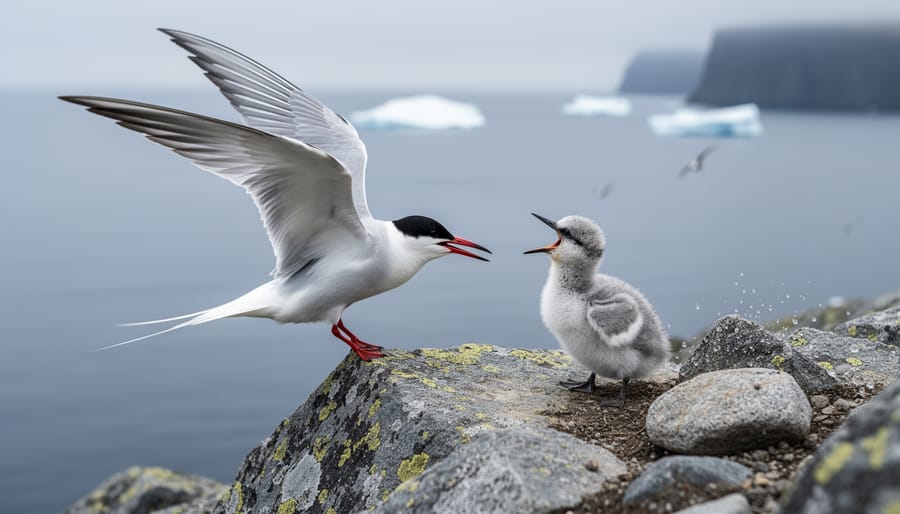
Imagine a Arctic tern chick hatching in early June, its parents returning from a 25,000-mile migration with beaks full of fish—except the fish aren’t there anymore. The ocean warmed two weeks earlier than usual this year, triggering the zooplankton bloom in April instead of May. The small fish that feast on zooplankton came and went, following their food source. Now, in the brief window when chicks need protein-rich meals to survive, the ocean appears empty to hunting adult terns. This is trophic mismatch: when climate change disrupts the precise timing between predators and prey, throwing ancient ecological rhythms dangerously out of sync.
For millions of years, marine species have synchronized their life cycles with remarkable precision. Zooplankton blooms coincided with fish spawning; fish migrations aligned with seabird nesting; whale arrivals matched prey abundance. These intricate choreographies evolved over countless generations, each species timing critical life events—breeding, hatching, migration—to match food availability. But rising ocean temperatures are rewriting these schedules at different rates for different species, creating temporal gaps where once there was seamless coordination.
The consequences extend far beyond individual hungry chicks. When foundational species like zooplankton shift their peak abundance by even a few weeks, the effects cascade through entire food webs, affecting commercial fisheries, marine mammal populations, and coastal communities dependent on predictable ocean productivity. Understanding trophic mismatch isn’t just an academic exercise—it’s essential for protecting marine biodiversity and the human communities intertwined with ocean health. Scientists and conservationists worldwide are racing to document these shifts, predict future mismatches, and develop strategies to build resilience into vulnerable marine ecosystems before these temporal disconnections become irreversible.
What Is Trophic Mismatch?
The Delicate Dance of Marine Timing
Marine food webs operate like an intricate choreography, where timing is everything. Each spring, as sunlight strengthens and waters warm, microscopic phytoplankton bloom in vast numbers—the foundation of ocean productivity. Within weeks, zooplankton populations must surge to feast on this abundance. Fish larvae, hatching from their eggs, depend on encountering dense clouds of these tiny grazers at precisely the right moment in their development. Miss that window by even a few weeks, and starvation looms.
Consider the relationship between copepods and cod larvae in the North Atlantic. These rice-grain-sized crustaceans have historically peaked in abundance just as newly hatched cod require their first meals. Marine biologist Dr. Sarah Chen, who has studied these interactions for two decades, recalls her early research expeditions: “We’d watch cod larvae swimming through what looked like living soup—millions of copepods per cubic meter. The synchrony was breathtaking.”
This precision extends upward through the food web. Seabirds like puffins time their nesting so chicks hatch when small fish are most abundant nearshore. Arctic terns migrate over 40,000 miles to exploit predictable seasonal peaks in prey availability. Yet climate change is disrupting these ancient rhythms. Warming waters now trigger phytoplankton blooms earlier in many regions, while zooplankton and fish populations respond at different rates—creating mismatches that ripple through entire ecosystems.
When the Music Stops: Breaking the Synchrony
Imagine a perfectly choreographed underwater ballet where each performer knows exactly when to enter the stage. For millions of years, marine species have timed their life cycles—spawning, migration, feeding—to coincide with seasonal cues like water temperature, daylight duration, and nutrient availability. But as climate change disrupts relationships between ocean conditions and biological rhythms, this synchrony is unraveling at different speeds for different species.
Warming waters are shifting spring phytoplankton blooms earlier in many regions, sometimes by several weeks compared to historical patterns. However, the zooplankton that feed on these microscopic plants don’t always adjust their timing at the same rate. They may respond more slowly to warming or rely on different environmental cues, like day length, which remains constant despite climate change. This creates a temporal gap—a mismatch—where hungry larvae hatch after their food supply has already peaked and declined.
Changing ocean currents further complicate matters by transporting nutrients and organisms to new locations at altered times. Altered light conditions from increased cloud cover or shifting weather patterns can also confuse species that depend on photoperiod signals. The result is an increasingly out-of-sync ocean where predators arrive late to the feast, and prey populations fluctuate unpredictably, threatening the intricate food web connections that sustain marine biodiversity.
Real-World Examples From Our Oceans
The North Sea’s Declining Seabirds
The North Sea presents one of the most thoroughly documented cases of trophic mismatch affecting seabird populations. As ocean temperatures have risen over the past three decades, the timing of spring plankton blooms has shifted dramatically earlier in the season. These microscopic organisms respond quickly to warming waters, reaching peak abundance weeks ahead of their historical schedule.
The problem emerges because sand eels, the primary food source for many seabirds, haven’t adjusted their spawning timing at the same rate. These small fish depend on plankton for their larvae to survive, but when the young sand eels hatch, they increasingly find the plankton bloom has already passed. This creates a cascade effect up the food chain.
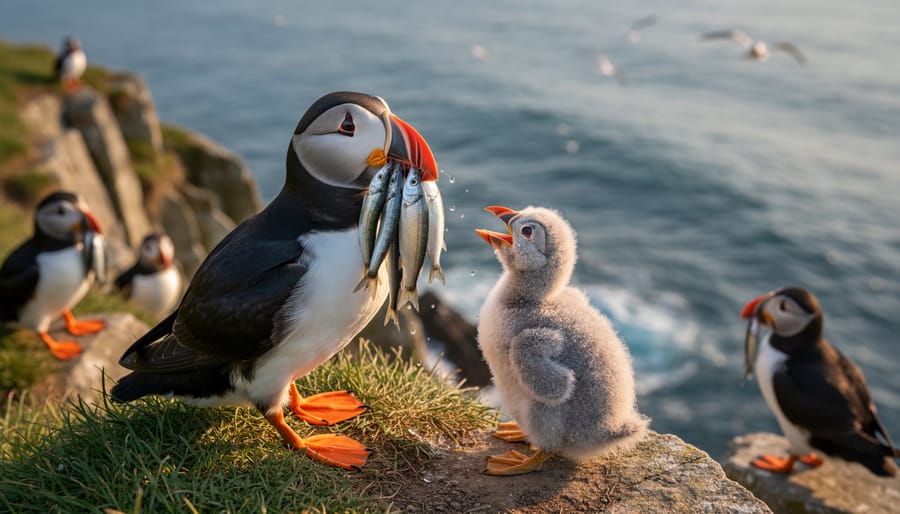
Puffins and black-legged kittiwakes face the sharpest consequences during breeding season. These birds time their egg-laying based on genetic programming and environmental cues that evolved over thousands of years. When chicks hatch, parents discover that sand eel populations are depleted or nutritionally poor, leading to widespread breeding failures. Some North Sea colonies have seen chick survival rates plummet by over 50 percent.
Marine biologist Dr. Sarah Chen, who monitors kittiwake colonies in Scotland, shares that witnessing parent birds repeatedly return to nests empty-beaked is heartbreaking. However, she remains hopeful that understanding these patterns allows us to develop targeted conservation responses and engage citizen scientists in monitoring efforts.

Arctic Cod and Vanishing Ice Algae
In the Arctic Ocean, melting sea ice is creating a critical trophic mismatch that threatens the foundation of the Arctic food web. Ice algae—microscopic organisms that bloom on the underside of sea ice—traditionally peak in abundance just as Arctic cod larvae hatch in spring. This precise timing has sustained cod populations for millennia, but warming temperatures are disrupting this delicate synchronization.
As sea ice melts earlier each year, ice algae blooms are shifting forward, often finishing before cod larvae emerge and need their first meals. Research from the Norwegian Polar Institute shows that in some Arctic regions, the mismatch has widened by nearly three weeks over the past two decades. Starving cod larvae means fewer juvenile fish surviving to adulthood, directly impacting seals, seabirds, and other predators that depend on this keystone species.
Marine biologist Dr. Elena Petrov, who studies Arctic ecosystems, shares: “Every field season, we’re documenting changes that once took decades. But communities are responding—citizen scientists now help us track ice conditions and fish populations across vast areas we couldn’t monitor alone.”
Volunteer programs through Arctic research stations welcome participants to contribute observational data, helping scientists understand and respond to these rapid ecosystem shifts.
Gray Whales and Shifting Prey
Along North America’s Pacific coast, gray whales have perfected a remarkable migration strategy over thousands of years, traveling up to 12,000 miles annually between Mexican breeding lagoons and Arctic feeding grounds. Their journey depends on precise timing with amphipod populations—tiny shrimp-like crustaceans that form dense mats on the seafloor. However, warming ocean temperatures and shifting currents are disrupting this ancient synchronization.
Marine biologist Dr. Elena Rodriguez, who has studied gray whale feeding behavior for over a decade, explains that amphipod emergence now peaks two to three weeks earlier in some regions due to rising water temperatures. “When whales arrive at traditional feeding areas expecting abundant prey, they sometimes find the amphipods have already dispersed or moved to cooler, deeper waters,” she notes. This mismatch forces whales to expend additional energy searching for food or feeding in less productive areas.
The consequences extend beyond individual whales. Malnourished females may struggle to sustain pregnancies or nurse calves successfully, potentially impacting population recovery. Researchers are now tracking these changes through collaborative programs that welcome trained volunteers to assist with coastal observations. By documenting whale arrival times and prey availability, citizen scientists contribute valuable data helping us understand and respond to these climate-driven shifts, ultimately supporting conservation strategies that can help gray whales adapt to their changing ocean environment.
The Ripple Effects Throughout Marine Ecosystems
When predator and prey fall out of sync, the consequences extend far beyond a single missed meal. Trophic mismatches create cascading effects through food webs, disrupting the delicate balance that marine ecosystems have maintained for millennia.
Consider the Atlantic cod fishery, once one of the world’s most productive fishing grounds. As warming waters shift plankton blooms earlier in spring, larval cod often hatch after their primary food source has already peaked. This timing mismatch contributes to reduced juvenile survival rates, compounding pressures already placed on depleted cod populations. The result affects not just the fish themselves, but the thousands of coastal workers and communities whose livelihoods depend on healthy fish stocks.
Dr. Sarah Chen, a marine ecologist who has spent fifteen years studying North Atlantic food webs, describes the challenge: “We’re seeing mismatches ripple upward and downward simultaneously. When forage fish miss their prey peak, they produce fewer offspring and have less energy reserves. This affects everything from seabirds that depend on these fish to feed their chicks, to larger predators like tuna and sharks.”
The impacts extend to nutrient cycling itself. Many marine species undertake vertical migrations, transporting nutrients from deep waters to surface layers. When populations decline due to trophic mismatches, this biological pump weakens, potentially affecting the ocean’s capacity to support primary production.
For conservation organizations and research institutions, tracking these cascading effects requires extensive monitoring networks. Volunteer citizen scientists play an increasingly vital role in documenting seasonal changes in species abundance and timing. Programs inviting participants to record first sightings of migrating whales, spawning fish, or jellyfish blooms provide crucial data that helps scientists map the geographic spread and intensity of trophic mismatches. These collective observations transform concerned individuals into active contributors to marine conservation science, building the knowledge base needed to develop adaptive management strategies.
Why Some Species Struggle While Others Adapt
When phenological shifts occur, not all species possess the same capacity to adjust. Understanding what separates the survivors from those struggling reveals crucial insights into ecosystem resilience and adaptation.
Generation time plays a pivotal role in adaptation potential. Species that reproduce quickly and mature rapidly, like copepods and certain fish species, can evolve responses to changing conditions across just a few generations. In contrast, long-lived species such as sea turtles or large marine mammals face significant challenges adapting through natural selection, as their extended generational cycles limit evolutionary flexibility.
Mobility offers another critical advantage. Highly mobile species like migratory seabirds or pelagic fish can track shifting food resources across vast ocean distances. When plankton blooms occur earlier or in different locations, mobile predators can adjust their movements accordingly. However, species with limited ranges or those tied to specific breeding sites often cannot follow their prey, leading to dangerous mismatches.
Dietary flexibility determines survival when traditional prey becomes unavailable. Generalist feeders that consume diverse food sources can switch targets when timing misaligns, while specialist species dependent on specific prey face potential starvation. For example, puffins that typically rely exclusively on sand lance larvae struggle dramatically when these fish spawn earlier, whereas gulls with varied diets adapt more successfully.
Finally, genetic diversity within populations provides the raw material for adaptation. Populations with higher genetic variability possess greater potential to produce individuals with traits suited to new timing challenges. Marine biologist Dr. Sarah Chen notes that protecting genetic diversity through maintaining healthy population sizes represents one of our most powerful conservation tools for helping species weather phenological disruption.
What Scientists Are Doing to Track and Understand These Changes
Voices From the Field
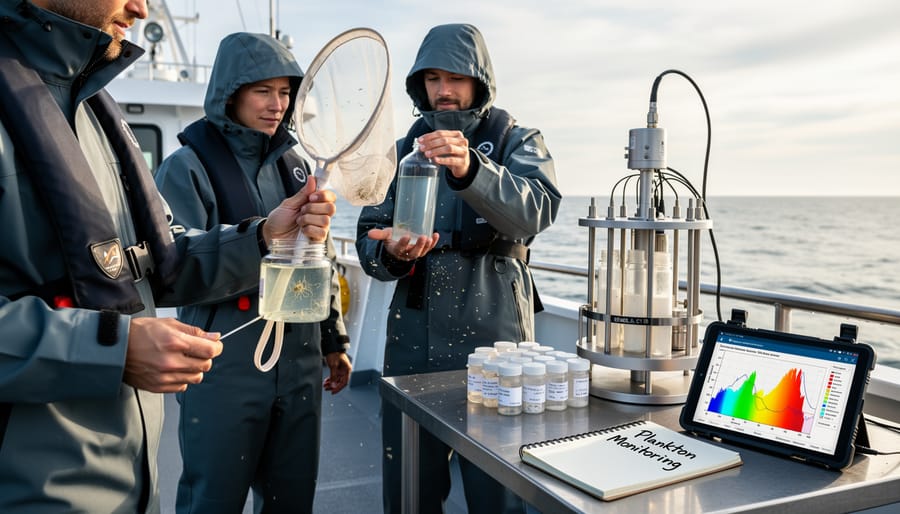
Dr. Maria Santos, who has spent fifteen years tracking plankton blooms off the California coast, recalls the moment the data shifted dramatically. “In 2012, we noticed the spring bloom arriving nearly three weeks earlier than our baseline measurements from the 1990s,” she explains. “The zooplankton populations simply couldn’t adjust quickly enough. We watched seabird colonies struggle that year—it was heartbreaking but also galvanizing.”
For graduate student James Chen, studying Arctic copepods means embracing unpredictability. “Every field season brings surprises now,” he shares. “The ice melt timing has become so variable that we’ve had to completely redesign our sampling protocols. But these challenges push us to think creatively about monitoring techniques.”
Dr. Aisha Okonkwo, researching coral spawning in the Indian Ocean, finds hope in community engagement. “Local fishing communities are our best observers,” she notes. “They’re documenting changes we’d never catch from a research vessel alone. Training citizen scientists to record phenological events has expanded our understanding enormously—and created passionate conservation advocates in the process.”
How You Can Help Address This Crisis
Addressing trophic mismatch requires collective action at multiple levels, and every contribution matters. Whether you’re a scientist, educator, student, or concerned citizen, you can play a vital role in monitoring, research, and advocacy efforts.
The Marine Biodiversity Science Center offers several volunteer programs specifically designed to track phenological changes in marine ecosystems. Our seasonal monitoring initiative welcomes participants to help document the timing of plankton blooms, fish spawning events, and seabird nesting periods along coastal areas. These observations provide crucial data that helps researchers identify and predict trophic mismatches before they cascade through food webs. No advanced scientific training is required—just enthusiasm and consistency in recording observations.
For those interested in deeper involvement, our citizen science diving program trains volunteers to survey underwater ecosystems and document species interactions. Marine biologist Dr. Sarah Chen notes, “Some of our most valuable data on shifting predator-prey relationships has come from dedicated volunteers who notice subtle changes during regular monitoring dives.”
Beyond hands-on research, supporting ocean conservation programs that address climate change remains essential. Advocate for policies that reduce greenhouse gas emissions, protect critical marine habitats, and fund long-term ecological monitoring. Contact local representatives about marine protection legislation and share information about trophic mismatch with your networks.
Educators can integrate these concepts into curricula, helping the next generation understand interconnected ocean systems. Students can pursue research projects examining local phenological shifts or organize community awareness campaigns.
Remember, trophic mismatch is solvable through coordinated effort. By contributing your time, voice, or expertise, you become part of a growing movement working to restore synchrony to our ocean ecosystems and ensure their resilience for future generations.
The story of those hungry chicks waiting in their nests doesn’t have to end in tragedy. While trophic mismatch poses a genuine threat to marine ecosystems worldwide, we’re not powerless spectators to this unfolding drama. Early detection systems, improved monitoring programs, and collaborative conservation efforts are already making a difference in helping marine species navigate these challenging shifts.
Scientists and conservationists are developing innovative approaches to track phenological changes in real time, from satellite monitoring of plankton blooms to citizen science networks that document seabird breeding patterns. This data allows researchers to identify vulnerable populations before catastrophic mismatches occur and implement targeted interventions. Marine protected areas can be adjusted seasonally, fishing practices modified to protect critical breeding periods, and restoration projects timed to support species most at risk.
The encouraging news is that nature demonstrates remarkable resilience when given the chance. Some species are already adapting their behaviors, and with our support, more can follow. But this requires everyone’s participation. Whether you’re a researcher, educator, student, or simply someone who cares about our oceans, your involvement matters. Join our volunteer monitoring programs, where you can contribute valuable observations to ongoing research. Connect with our e-network to receive updates on the latest findings and conservation successes. Together, we can ensure that future generations witness thriving marine ecosystems, not empty nests and silent shores.

jessica
Ava Singh is an environmental writer and marine sustainability advocate with a deep commitment to protecting the world's oceans and coastal communities. With a background in environmental policy and a passion for storytelling, Ava brings complex topics to life through clear, engaging content that educates and empowers readers. At the Marine Biodiversity & Sustainability Learning Center, Ava focuses on sharing impactful stories about community engagement, policy innovations, and conservation strategies. Her writing bridges the gap between science and the public, encouraging people to take part in preserving marine biodiversity. When she’s not writing, Ava collaborates with local initiatives to promote eco-conscious living and sustainable development, ensuring her work makes a difference both on the page and in the real world.