Marine Biodiversity Science Center

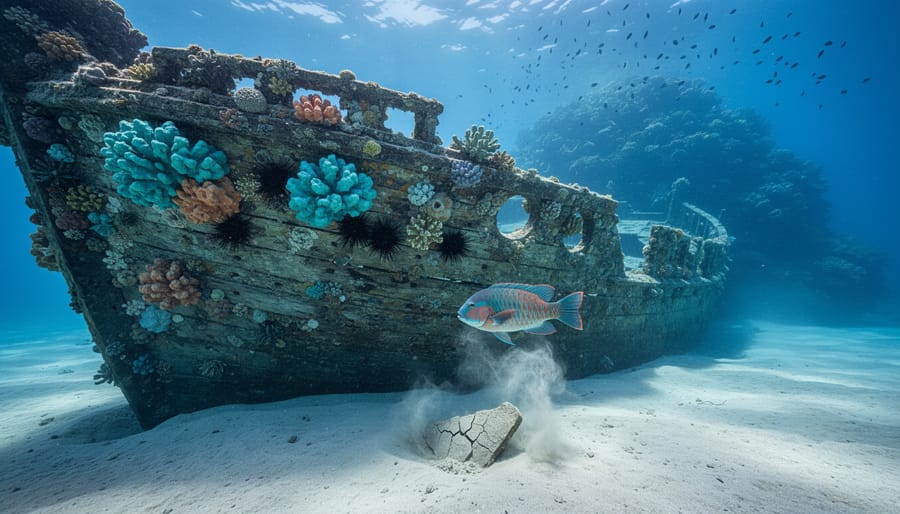
Beneath the ocean’s surface, an invisible force is constantly reshaping our underwater cultural heritage. Bioturbation—the disturbance of sediment by living organisms—poses one of the most pervasive yet underestimated threats to submerged archaeological sites worldwide. From burrowing crustaceans that fragment ancient pottery to marine worms that accelerate wood decay on shipwrecks, biological activity transforms archaeological contexts in ways that fundamentally alter what we can learn about human history.
Understanding bioturbation requires examining the complex relationship between marine ecosystems and cultural artifacts. Sea urchins grind through limestone anchors, parrotfish inadvertently consume microscopic archaeological evidence while feeding, and countless microorganisms break down organic materials that once told stories of maritime trade and exploration. These processes don’t simply damage artifacts—they redistribute materials vertically and horizontally through sediment layers, compromising the stratigraphic integrity that archaeologists depend upon for accurate interpretation.
For environmental scientists and conservationists, bioturbation archaeology reveals crucial insights into ecosystem health and biodiversity impacts. Sites experiencing intense bioturbation often indicate thriving marine communities, creating an intriguing tension between conservation success and cultural preservation. Marine biologist Dr. Sarah Chen describes this paradox: “Every thriving coral community colonizing a historic shipwreck represents both ecological recovery and archaeological transformation—we’re learning to value both narratives simultaneously.”
This emerging field offers unprecedented opportunities for collaborative research, volunteer engagement, and innovative preservation strategies that honor both our natural and cultural heritage.
What Is Bioturbation and Why Should We Care?
Beneath the ocean’s surface, countless marine organisms are constantly reshaping the seafloor in a process scientists call bioturbation. This natural phenomenon occurs when creatures like worms, crustaceans, mollusks, and sea cucumbers burrow through sediments, filter feed, or simply move across the ocean floor. Their daily activities mix layers of sand, mud, and organic matter, fundamentally altering the physical and chemical properties of marine sediments.
Think of bioturbation as nature’s plowing system. A single lugworm, for example, can process several pounds of sediment annually, creating tunnels that aerate the seafloor and redistribute nutrients. Larger animals like rays and crabs dig even more extensively, sometimes excavating substantial volumes in search of prey. These activities aren’t random chaos but essential ecological processes that maintain healthy marine ecosystems by cycling nutrients, promoting oxygen flow, and creating diverse microhabitats.
For marine conservationists and environmental scientists, understanding bioturbation is crucial for assessing ecosystem health. Thriving populations of sediment-dwelling organisms indicate balanced marine environments. However, this same beneficial process presents fascinating challenges for underwater archaeologists. Ancient shipwrecks, submerged settlements, and maritime artifacts lying on the seafloor become subject to these relentless biological forces.
Marine biologist Dr. Sarah Chen, who has studied Mediterranean archaeological sites for over a decade, explains: “We’ve documented how burrowing organisms can displace pottery shards several meters from their original positions within just a few years. It’s remarkable how these tiny creatures can completely reorganize an archaeological site.”
This intersection between marine ecology and human history makes bioturbation archaeology essential for anyone interested in preserving our underwater cultural heritage while maintaining healthy ocean ecosystems.
The Tiny Engineers Reshaping Underwater History
Burrowing Invertebrates: The Primary Disturbers
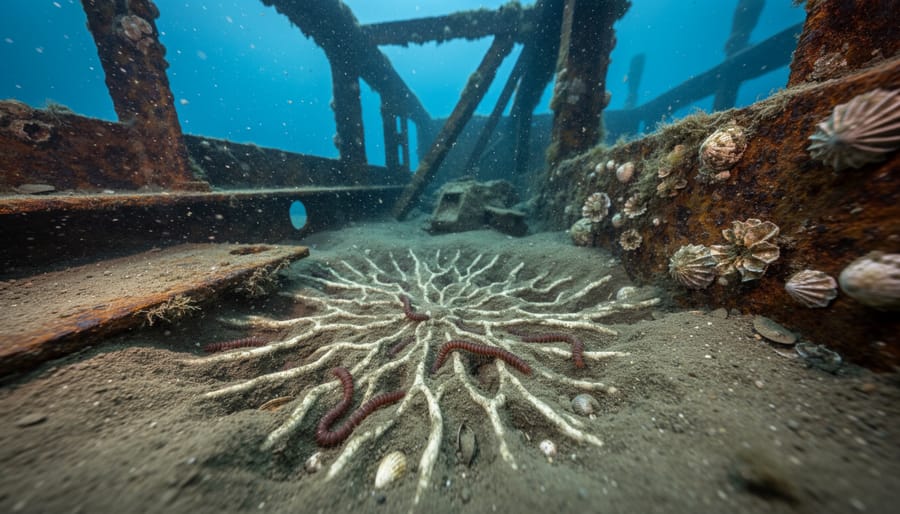
Beneath the seafloor, countless invertebrates work tirelessly as nature’s excavators, fundamentally reshaping the archaeological record. Polychaete worms, often called bristle worms, create extensive burrow systems that can penetrate several meters deep into sediments. These tunnels don’t simply displace artifacts—they create pathways for oxygen and water to reach deeper layers, accelerating the corrosion of metal objects and degrading organic materials.
Bivalves like clams add another dimension to this disturbance. As they burrow vertically through sediment seeking protection, they transport artifacts both upward and downward, sometimes moving pottery sherds or ancient tools far from their original context. Marine biologist Dr. Sarah Chen, who has studied shipwreck sites off the California coast, shares a striking observation: “We’ve found 18th-century nails scattered across three separate sediment layers, all thanks to burrowing clams that created vertical mixing over decades.”
Crustaceans, particularly mud shrimp and ghost crabs, excavate chambers and galleries that can collapse, causing artifacts to shift unpredictably. Understanding these primary disturbers helps archaeologists interpret site formation and guides conservation strategies. For those interested in contributing to this research, many coastal monitoring programs welcome volunteers to help document burrowing activity at underwater heritage sites, providing crucial data for preservation efforts.
Larger Marine Life: Unexpected Contributors
While tiny invertebrates often steal the spotlight in bioturbation studies, larger marine vertebrates play surprisingly significant roles in reshaping underwater archaeological sites. Fish species that engage in bottom-feeding behaviors actively excavate sediments, displacing artifacts as they search for prey buried beneath the seafloor. Stingrays and skates are particularly effective bioturbators, using their disc-shaped bodies to create feeding pits that can measure several feet across and penetrate deep into sediment layers.
Marine biologist Dr. Elena Rodriguez shares a memorable discovery: “During a survey of a colonial-era shipwreck site, we documented how eagle rays had completely exposed pottery fragments that were previously buried under two feet of sand. Their systematic feeding patterns created a mosaic of excavation pits across the site.” This feeding activity, while natural, complicates efforts to understand original artifact placement and site formation processes.
Sea turtles contribute through nesting behaviors, with females digging deep chambers in coastal sediments that can disturb shallow archaeological deposits. Even sharks, when resting on sandy bottoms, create depressions that redirect water flow and initiate sediment movement. Understanding these larger-scale bioturbation processes helps archaeologists develop more accurate site management strategies and underscores the interconnected nature of marine ecosystems and human heritage preservation.
The Double-Edged Sword: Destruction Meets Protection
When Bioturbation Harms Archaeological Sites
While bioturbation plays vital roles in healthy marine ecosystems, it can significantly damage underwater archaeological sites, creating preservation challenges for scientists and conservationists working to protect our submerged cultural heritage.
Physical disruption occurs when burrowing organisms like shipworms, marine worms, and crustaceans tunnel through wooden shipwrecks and artifacts. These creatures create networks of holes and galleries that weaken structural integrity, causing timbers to collapse and disintegrate far more rapidly than they would through natural decay alone. Dr. Sarah Chen, a marine archaeologist studying Caribbean shipwrecks, shares: “I’ve witnessed centuries-old vessels reduced to fragments within decades due to intense boring activity. It’s heartbreaking to see history literally eaten away before our eyes.”
Chemical changes compound the problem. Organism waste products and decomposition alter pH levels and oxygen availability around artifacts, accelerating corrosion of metals and degradation of organic materials. Iron cannons that might otherwise remain intact for centuries can deteriorate rapidly in these modified microenvironments.
Perhaps most concerning is how bioturbation exposes previously protected materials. When organisms disturb sediment layers that naturally preserve artifacts through oxygen-deprived conditions, newly exposed items face accelerated deterioration. This creates urgent situations where documentation and recovery become critical before valuable archaeological evidence disappears forever, highlighting why understanding these biological processes matters for both marine conservation and cultural preservation efforts.
The Surprising Benefits of Marine Disturbance
While bioturbation presents challenges for archaeologists, it also offers unexpected advantages for preserving underwater cultural heritage. Understanding these benefits helps us appreciate the complex relationship between marine life and archaeological conservation.
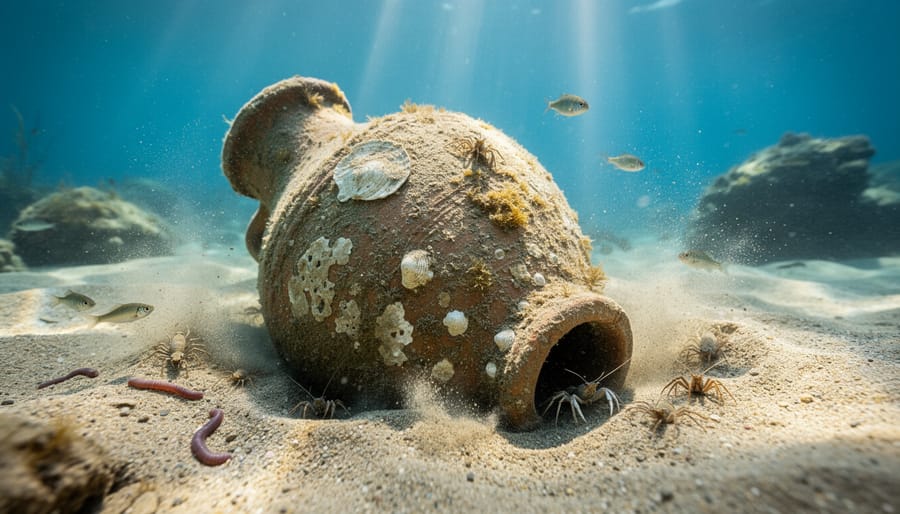
Rapid burial by burrowing organisms can actually protect artifacts from destructive forces. When crustaceans and worms dig through sediment, they often inadvertently cover exposed objects, shielding them from strong currents, wave action, and physical damage. Marine biologist Dr. Sarah Chen recalls discovering a remarkably well-preserved ceramic vessel on a Mediterranean shipwreck: “The pot was completely buried by sediment churned up by burrowing shrimp. Without their activity, the piece would likely have been scattered by storms decades ago.”
Bioturbation also creates microenvironments that slow deterioration. When organisms mix sediment layers, they can establish anaerobic (oxygen-poor) pockets that inhibit the growth of wood-boring organisms and reduce metal corrosion. These protective zones act as natural preservation chambers within the seabed.
Additionally, changes in bioturbation patterns serve as early warning indicators of environmental stress. When water quality declines or ecosystems face threats, burrowing activity often shifts noticeably. Monitoring these changes helps conservationists identify at-risk archaeological sites before irreversible damage occurs, creating opportunities for proactive protection strategies. For those interested in contributing to this research, volunteer monitoring programs increasingly welcome citizen scientists to document bioturbation activity at local marine sites.
Climate Change and the Future of Underwater Heritage
Climate change is fundamentally reshaping the underwater landscape, and its impacts extend far beyond what we might initially imagine. As ocean temperatures rise and waters become increasingly acidic, marine organisms are responding in ways that directly affect how they interact with archaeological sites on the seafloor.
Warming waters are driving species to migrate toward cooler regions, typically poleward or into deeper waters. This redistribution means that archaeological sites once inhabited by specific bioturbating communities may now host entirely different species with distinct burrowing behaviors. For instance, polychaete worms that previously dominated certain areas are being replaced by other invertebrates with varying excavation patterns, fundamentally altering the rate and nature of sediment disturbance around artifacts.
Ocean acidification presents another challenge. As seawater absorbs excess atmospheric carbon dioxide, its chemistry changes, weakening the calcium carbonate structures that many marine organisms depend upon. Shell-forming burrowers like mollusks may struggle to maintain their protective casings, potentially reducing their populations and changing bioturbation dynamics. Simultaneously, acidification accelerates the deterioration of archaeological materials, working alongside biological disturbance to threaten preserving underwater artifacts.
Marine biologist Dr. Sarah Chen, who has studied Mediterranean shipwrecks for fifteen years, shares a sobering observation: “We’re seeing bioturbation patterns shift faster than we can document them. Sites that were relatively stable are experiencing increased disturbance as ecosystem dynamics change.”
These climate-driven alterations compound existing human impacts on sites, creating an urgent need for adaptive conservation strategies. Understanding these evolving bioturbation patterns helps researchers predict which sites face greatest risk and prioritize protection efforts accordingly. By monitoring these changes, citizen scientists and volunteers can contribute valuable data, helping build a comprehensive picture of how climate change affects our submerged cultural heritage while supporting broader marine conservation goals.
Real Stories from the Ocean Floor
Dr. Elena Vásquez still remembers the moment she first witnessed bioturbation’s archaeological impact firsthand. During a 2019 expedition to document the SS Copenhagen, a 19th-century merchant vessel off Bermuda’s coast, her team discovered something unexpected. “We mapped the same section we’d surveyed five years earlier,” she recalls. “Entire wooden planks had disappeared, not from decay alone, but from the tunneling activity of shipworms and other wood-boring organisms. The ship’s structure looked like Swiss cheese.”
This experience exemplifies what marine archaeologists worldwide are documenting: marine organisms actively reshape our underwater cultural heritage. Dr. James Chen, a marine biologist who collaborates with archaeological teams, explains that bioturbation—the disturbance of sediments by living organisms—operates on timescales both rapid and gradual. “On the RMS Titanic, we’ve observed crustaceans and polychaete worms creating burrow networks through accumulated sediment layers. These tunnels allow oxygen penetration, which paradoxically both preserves some materials while accelerating the corrosion of others.”
The Mediterranean offers particularly striking examples. Marine archaeologist Dr. Sofia Moretti has spent fifteen years studying ancient Roman shipwrecks along Italy’s coast. “One amphora field we monitor shows clear evidence of octopus activity,” she notes. “These intelligent creatures use pottery fragments as den materials, physically moving artifacts several meters from their original positions. Without understanding bioturbation, we’d misinterpret the site’s archaeological context entirely.”
Perhaps most concerning is how bioturbation interacts with modern environmental stressors. As climate change threatens shipwrecks through warming waters and ocean acidification, organisms’ behavior patterns shift. Dr. Chen’s research shows increased bioturbation rates in warming zones, accelerating both sediment mixing and artifact displacement.
Yet these challenges present opportunities. Many archaeological teams now include marine biologists as essential collaborators, creating interdisciplinary approaches to site preservation. Dr. Vásquez’s organization regularly hosts volunteer citizen scientists, training them to document marine life around archaeological sites. “Understanding bioturbation isn’t just about protecting artifacts,” she emphasizes. “It’s about recognizing that shipwrecks are living ecosystems. Every organism tells part of the story—both of human history and of our ocean’s ongoing transformation.”
Balancing Conservation with Cultural Heritage
Managing underwater archaeological sites presents a unique challenge: how do we protect both our cultural heritage and the thriving marine ecosystems that now call these sites home? This intersection of conservation priorities requires innovative thinking and collaboration across disciplines.
Marine protected areas often encompass shipwrecks and submerged settlements that have become artificial reefs, supporting diverse communities of organisms. The very bioturbation processes that threaten artifact preservation also indicate healthy ecosystem functioning. Removing burrowing organisms to protect artifacts could devastate local biodiversity, while unrestricted biological activity may compromise irreplaceable historical evidence.
Dr. Sarah Mitchell, a marine archaeologist working in the Mediterranean, shares her perspective: “I’ve watched octopuses make homes in ancient amphorae for years. It’s humbling to realize we’re not choosing between history and nature—we’re managing a space where both coexist. Our job is finding harmony between these values.”
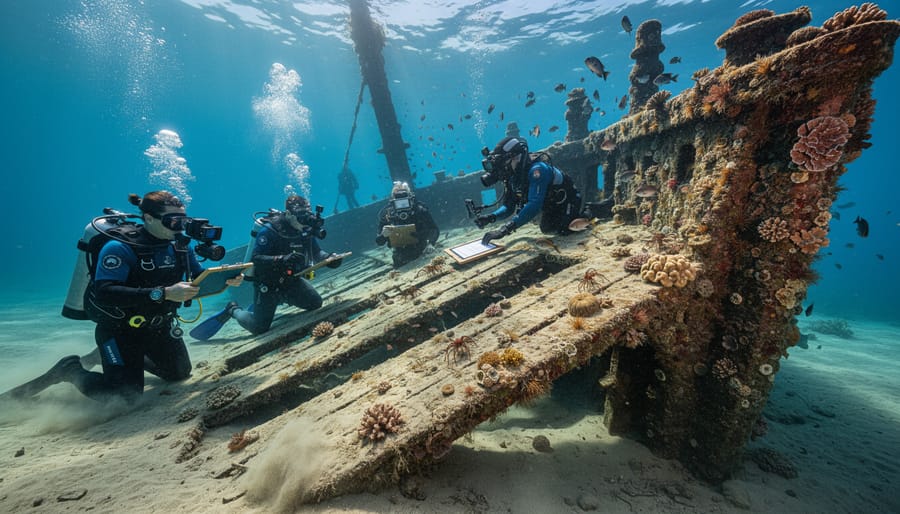
Successful management strategies employ adaptive approaches that consider both priorities. Some sites designate specific artifact-rich zones for active conservation while allowing natural processes to continue in surrounding areas. Non-invasive monitoring techniques, including underwater photography and environmental DNA sampling, help researchers track both archaeological condition and ecosystem health without disturbing either.
Collaborative frameworks bring together archaeologists, marine biologists, and local communities to develop site-specific plans. These partnerships recognize that underwater cultural heritage sites serve dual purposes as both historical records and marine habitats. Rather than viewing conservation and preservation as competing interests, forward-thinking managers are creating integrated solutions that honor both our past and our responsibility to protect marine biodiversity.
Volunteer dive teams increasingly participate in these efforts, conducting surveys that simultaneously document artifacts and catalog marine life, demonstrating how citizen science can bridge these traditionally separate fields.
How You Can Help Protect Both Marine Life and Underwater History
You can play a vital role in protecting both marine ecosystems and underwater cultural heritage by engaging with initiatives that bridge these interconnected fields. Several organizations offer volunteer opportunities in marine archaeology surveys, where participants help document sites while monitoring the biological activity affecting them. Programs like the Nautical Archaeology Society’s training courses equip volunteers with skills to recognize and record bioturbation impacts on submerged artifacts.
Citizen science projects provide accessible entry points for contributing to research. Platforms like iNaturalist allow divers and snorkelers to photograph and catalog marine organisms near archaeological sites, creating valuable datasets that help researchers understand which species are most active in bioturbation. The Ocean Exploration Trust and similar organizations periodically recruit volunteers to assist with remotely operated vehicle expeditions that simultaneously explore marine life and cultural resources.
Supporting research initiatives financially or through advocacy helps address the ethical challenges inherent in managing sites where conservation and preservation goals intersect. Many university marine archaeology programs welcome public support for projects developing innovative, non-invasive monitoring technologies.
If you’re an educator, incorporating bioturbation archaeology into curricula introduces students to interdisciplinary thinking about ocean stewardship. Share articles and documentaries about underwater heritage with your networks to raise awareness. Even choosing sustainable seafood and supporting marine protected areas indirectly helps preserve these vulnerable sites by maintaining healthy ecosystems that can better withstand environmental stressors.
Dr. Emma Richardson, a marine archaeologist, shares: “Every observation from recreational divers about organism behavior near wrecks contributes to our understanding. You don’t need a PhD to make a difference.”
The intricate relationship between marine organisms and submerged archaeological sites reveals a profound truth: our ocean’s ecological health and human cultural heritage are inseparably linked. When burrowing crabs reshape sediments or boring mollusks penetrate ancient timber, they remind us that protecting underwater archaeological treasures requires safeguarding the entire marine ecosystem. Every species, from microscopic bacteria to large marine mammals, plays a role in this dynamic underwater world where nature and human history coexist.
This interconnection presents an extraordinary opportunity for community-based conservation that honors both ecological integrity and cultural legacy. By understanding bioturbation’s role in archaeological site transformation, we can develop management strategies that benefit marine life while preserving irreplaceable historical resources. Marine protected areas designed with archaeological sites in mind create refuges for biodiversity and heritage simultaneously.
The path forward requires collective stewardship. Whether you’re a scientist, educator, diver, or ocean enthusiast, your engagement matters. Support marine conservation initiatives, participate in citizen science projects, and share knowledge about our ocean’s hidden history. Together, we can ensure that future generations inherit thriving marine ecosystems rich with both biodiversity and the stories of those who came before us.

jessica
Ava Singh is an environmental writer and marine sustainability advocate with a deep commitment to protecting the world's oceans and coastal communities. With a background in environmental policy and a passion for storytelling, Ava brings complex topics to life through clear, engaging content that educates and empowers readers. At the Marine Biodiversity & Sustainability Learning Center, Ava focuses on sharing impactful stories about community engagement, policy innovations, and conservation strategies. Her writing bridges the gap between science and the public, encouraging people to take part in preserving marine biodiversity. When she’s not writing, Ava collaborates with local initiatives to promote eco-conscious living and sustainable development, ensuring her work makes a difference both on the page and in the real world.