Marine Biodiversity Science Center

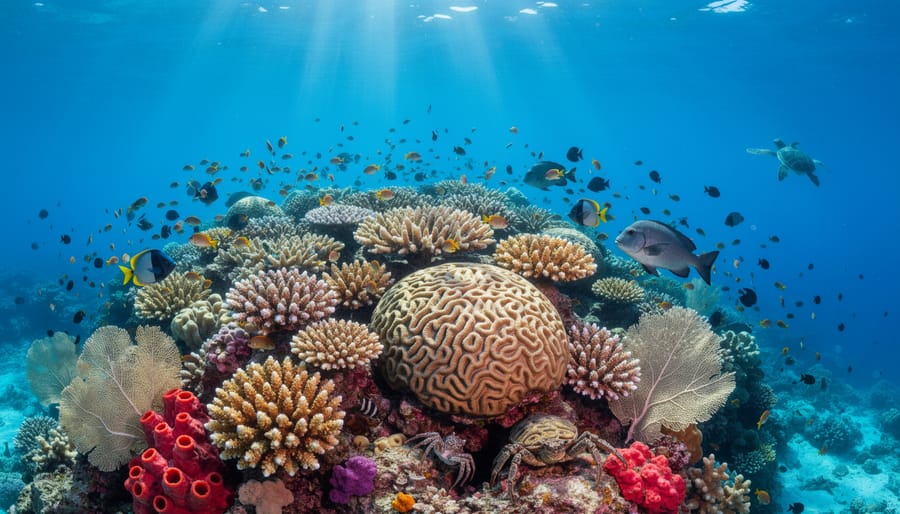
Beneath every wave that crashes on shore lies an interconnected web of life so vast it produces more than half the oxygen we breathe. Marine biomes—the distinct oceanic regions characterized by unique physical conditions, wildlife, and ecological processes—cover 71% of our planet’s surface and harbor approximately 80% of all life on Earth. From sunlit coral reefs teeming with colorful fish to the pitch-black depths where bioluminescent creatures drift, these underwater ecosystems operate as the planet’s life support system, regulating climate, absorbing carbon dioxide, and providing food security for billions of people.
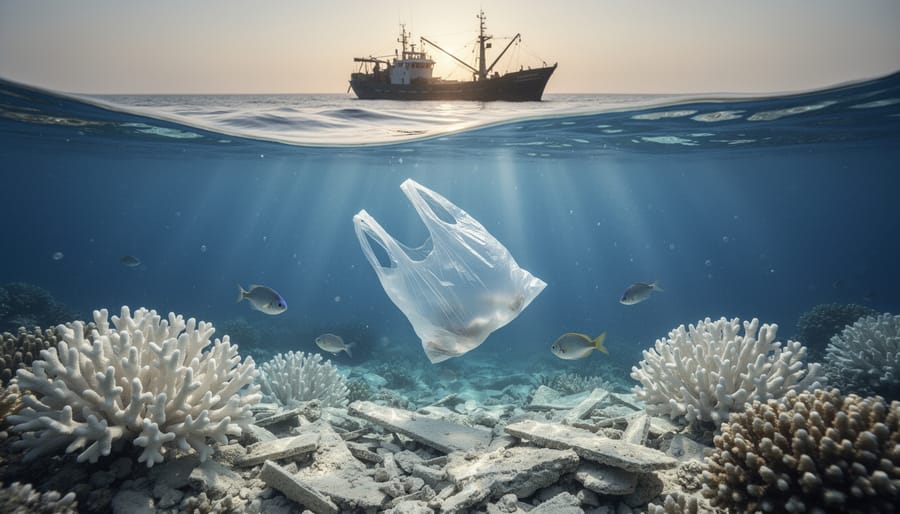
Yet these vital systems face an unprecedented convergence of threats. Ocean temperatures have risen faster in the past two decades than in the previous century, triggering mass coral bleaching events that transform vibrant reefs into ghostly graveyards. Plastic pollution now contaminates every marine habitat surveyed, from Arctic ice to the deepest ocean trenches. Industrial fishing practices deplete fish populations faster than they can reproduce, while agricultural runoff creates massive dead zones where nothing can survive. Climate change intensifies these pressures through ocean acidification, disrupting the calcium carbonate structures that shellfish and corals depend upon for survival.
Understanding marine biomes and the specific threats they face represents the critical first step toward meaningful conservation action. Marine biologist Dr. Sarah Chen, who has spent fifteen years studying kelp forest ecosystems, emphasizes that knowledge transforms passive concern into active engagement: “When people understand how these systems work and why they matter, they become powerful advocates for protection.” The solutions exist, from marine protected areas to sustainable fishing practices, but they require informed citizens willing to participate in restoration efforts and demand accountability from industries and governments alike.
What Are Marine Biomes? The Ocean’s Life-Sustaining Neighborhoods
Why Marine Biomes Matter to Everyone
Marine biomes might seem distant from our daily lives, but they’re intimately connected to every breath we take and every meal we eat. The ocean produces approximately 50-80% of Earth’s oxygen through tiny phytoplankton—microscopic marine plants that form the foundation of oceanic food webs. Without healthy marine ecosystems, our atmosphere would look dramatically different.
These vast underwater systems also regulate our climate by absorbing roughly 30% of the carbon dioxide we release into the atmosphere. This natural carbon sink helps buffer the impacts of climate change, though it comes at a cost to marine life through ocean acidification. Marine biomes essentially act as Earth’s thermostat, distributing heat through ocean currents and influencing weather patterns worldwide.
For coastal communities, marine biomes provide essential services beyond environmental benefits. Over three billion people depend on seafood as their primary protein source, making ocean health directly tied to global food security. Coral reefs and mangrove forests serve as natural barriers, protecting coastlines from storm surges and erosion—services valued at billions of dollars annually.
The economic impact extends further through tourism, pharmaceutical discoveries, and employment. Marine biologist Dr. Sarah Chen, who studies coral reef ecosystems in the Caribbean, explains: “When I show visitors the intricate relationships within a healthy reef, they realize they’re not just looking at pretty fish—they’re witnessing systems that support their own survival.” Her research team welcomes volunteers year-round, offering hands-on opportunities to understand these connections firsthand while contributing to vital conservation data collection.
The New Wave of Threats Facing Our Oceans
For decades, marine biomes have faced well-documented threats like overfishing, coastal development, and oil spills. These traditional challenges continue to strain ocean ecosystems, but they’re no longer acting alone. Today’s oceans are confronting a new wave of interconnected threats that amplify existing pressures and create unprecedented challenges for marine life.
Climate change stands at the forefront of these emerging dangers, fundamentally altering ocean chemistry and temperature patterns in ways that ripple through entire food webs. Ocean acidification, rising sea temperatures, and shifting currents are reshaping marine habitats faster than many species can adapt. Meanwhile, microplastic pollution has infiltrated every corner of our oceans, from surface waters to the deepest trenches, introducing contaminants into marine food chains with consequences we’re only beginning to understand.
What makes these modern threats particularly concerning is their compounding nature. When coral reefs already weakened by pollution face bleaching from warming waters, their ability to recover diminishes dramatically. When fish populations stressed by overfishing encounter oxygen-depleted dead zones, entire ecosystems can collapse.
Dr. Sarah Chen, a marine biologist working with coastal communities in Southeast Asia, describes this phenomenon simply: “We’re not just dealing with one problem at a time anymore. These threats interact and multiply, creating challenges that require us to think differently about ocean conservation.”
Understanding these emerging threats is the first step toward meaningful action. The encouraging news? Scientists, conservationists, and volunteers worldwide are developing innovative solutions to address these complex, interconnected challenges.
Climate Change: When the Ocean’s Thermostat Breaks
Marine Heatwaves and Mass Bleaching Events
The ocean is running a fever, and marine ecosystems are paying the price. Marine heatwaves—prolonged periods of abnormally high water temperatures—have become five times more frequent since the early 20th century. These events trigger mass coral bleaching, where stressed corals expel their symbiotic algae, losing both their vibrant colors and primary food source.
Dr. Sarah Chen, a marine biologist who has studied the Great Barrier Reef for fifteen years, witnessed the devastating 2016 bleaching event firsthand. “Swimming over kilometers of bleached coral felt like touring a ghost town,” she recalls. “What once teemed with color and life had turned bone white. Some sections lost 90% of their coral cover.” The cascading effects extend far beyond corals themselves—fish populations decline as their habitat disappears, affecting food webs and local fishing communities that depend on healthy reefs.
The frequency of these events has accelerated alarmingly. While corals typically need 10-15 years to recover from bleaching, many regions now experience repeat events within just a few years, preventing recovery. The Caribbean experienced its worst bleaching on record in 2023, with water temperatures reaching unprecedented highs.
You can help monitor these changes through citizen science programs like Reef Check, where volunteers collect vital data on coral health. These observations help scientists track bleaching patterns and develop targeted conservation strategies to protect our ocean’s most vulnerable ecosystems.
Plastic Pollution: The Forever Problem Getting Worse
Every minute, the equivalent of one garbage truck full of plastic enters our oceans. This staggering influx creates a crisis that persists for centuries, as plastics never truly disappear—they simply break down into smaller and smaller pieces.
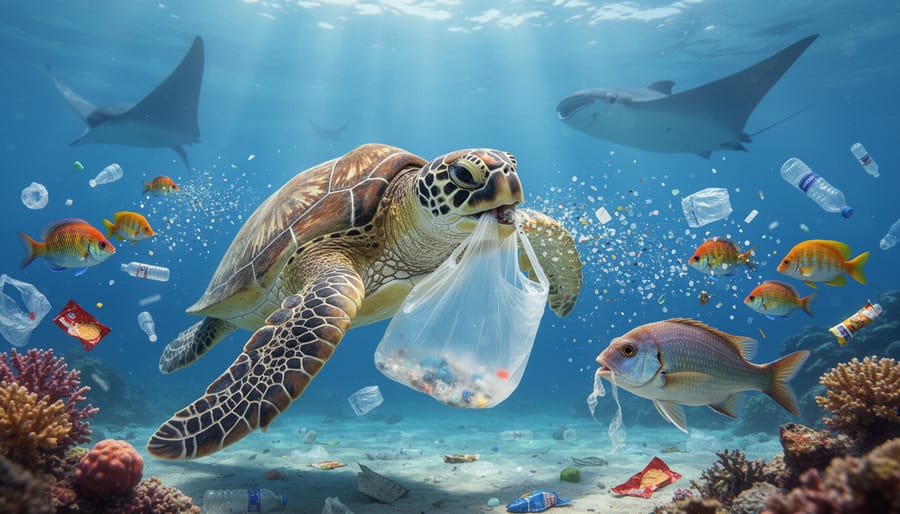
Microplastics, fragments smaller than 5 millimeters, now contaminate every corner of marine ecosystems, from surface waters to the deepest ocean trenches. These particles enter the food chain when filter feeders like mussels and plankton mistake them for food. As predators consume contaminated prey, plastics accumulate and magnify up the food web, eventually reaching apex predators and humans who consume seafood. Scientists have found microplastics in the digestive systems of fish, seabirds, sea turtles, and marine mammals worldwide.
Ghost fishing gear—abandoned, lost, or discarded fishing nets and lines—continues killing marine life long after being discarded. These “ghost nets” entangle dolphins, seals, sea turtles, and countless fish, causing injury, starvation, and death. In some regions, ghost gear accounts for up to 70 percent of large plastic pollution.
Massive plastic accumulation zones, like the Great Pacific Garbage Patch spanning 1.6 million square kilometers, concentrate debris in ocean gyres where currents converge. These zones disrupt marine habitats and serve as toxic hotspots where organisms face concentrated exposure to harmful pollutants.
Emerging research reveals even more concerning threats. Nanoplastics and chemical leaching pose risks we’re only beginning to understand. Nanoplastics can penetrate cell membranes and potentially cross the blood-brain barrier in marine organisms. Meanwhile, plastics leach toxic additives and absorb pollutants from surrounding water, becoming vehicles for harmful chemicals.
Dr. Sarah Chen, a marine toxicologist studying plastic impacts, shares: “What keeps me awake is knowing these particles are everywhere, affecting organisms we haven’t even studied yet. But what drives my work is the incredible potential for change through beach cleanups, policy advocacy, and supporting sustainable alternatives.”
Noise and Light Pollution: The Invisible Disruptions
While we often focus on visible pollution like plastics and oil spills, marine ecosystems face two pervasive yet largely invisible threats: noise and light pollution. These disruptions fundamentally alter how marine species communicate, navigate, and survive.
Our oceans have become dramatically noisier over the past century. Commercial shipping traffic, oil and gas exploration, military sonar operations, and underwater construction generate powerful sound waves that travel vast distances through water. Marine mammals like whales and dolphins rely on sound for nearly everything—locating prey, finding mates, navigating migration routes, and maintaining social bonds. When human-generated noise drowns out these critical acoustic signals, the consequences are profound.
Dr. Sarah Mitchell, a marine acoustics researcher, recalls monitoring humpback whales near busy shipping lanes: “We documented mothers and calves becoming separated because they couldn’t hear each other’s calls over vessel noise. It was heartbreaking, but it highlighted how urgently we need quieter ocean solutions.”
Light pollution presents equally concerning challenges. Artificial illumination from coastal development, offshore platforms, and vessels disrupts natural light cycles that marine organisms depend upon. Sea turtle hatchlings, naturally drawn to moonlight reflecting on ocean waves, become disoriented by beachfront lights and crawl inland instead of toward the sea. Coral spawning events, precisely timed to lunar cycles, can be thrown off schedule. Even deep-sea creatures migrating vertically each night to feed are affected by surface lighting.
The promising news is that addressing these threats is achievable. Ships can reduce speed in sensitive areas, coastal communities can install turtle-friendly lighting, and emerging technologies promise quieter vessel designs. Organizations like the Ocean Conservation Society offer volunteer opportunities in beach lighting assessments and marine mammal monitoring programs. By recognizing these invisible disruptions, we take essential steps toward protecting marine life’s fundamental behaviors.
Emerging Chemical Threats: What We’re Just Beginning to Understand
Beyond the well-documented threats of plastics and oil spills, marine biomes face a new generation of chemical pollutants that scientists are only beginning to understand. These emerging contaminants—including pharmaceuticals, PFAS (per- and polyfluoroalkyl substances, often called “forever chemicals”), sunscreen compounds, and agricultural runoff—pose unique challenges because they persist in the environment and accumulate in marine organisms.
Pharmaceutical pollution enters oceans through wastewater treatment plants that aren’t designed to filter out medications like antibiotics, hormones, and antidepressants. Once in marine waters, these compounds can disrupt the endocrine systems of fish and invertebrates, affecting their reproduction and behavior. Studies have found antidepressants altering the mating behaviors of shellfish, while synthetic hormones interfere with the sexual development of numerous marine species.
PFAS chemicals, used in everything from non-stick cookware to firefighting foam, have earned their “forever” nickname because they don’t break down naturally. These substances bioaccumulate—meaning they build up in organisms over time and become more concentrated as they move up the food chain. Marine mammals at the top of the food web, including dolphins and seals, carry particularly high PFAS loads, which compromise their immune systems and reproductive health.
Sunscreen chemicals, particularly oxybenzone and octinoxate, wash off swimmers and accumulate in coastal waters. Research shows these compounds contribute to coral bleaching and disrupt the development of fish larvae. Even agricultural runoff, laden with pesticides and fertilizers, creates dead zones while introducing hormone-disrupting chemicals into marine ecosystems.
Dr. Sarah Chen, a marine toxicologist studying pharmaceutical pollution in California’s coastal waters, shares an encouraging perspective: “Understanding these threats is the first step. Community science initiatives are helping us map contamination hotspots. Volunteers collecting water samples and documenting marine health have been instrumental in identifying problem areas.” Her work demonstrates that awareness, combined with collective action through proper medication disposal, choosing reef-safe sunscreens, and supporting sustainable agriculture, can mitigate these emerging threats.
Deep-Sea Mining: Racing to Exploit the Last Frontier
The ocean floor holds vast reserves of cobalt, nickel, and rare earth minerals essential for renewable energy technologies like electric vehicle batteries and solar panels. This has sparked an international race to begin deep-sea mining operations, particularly in the Clarion-Clipperton Zone between Hawaii and Mexico. The irony is stark: extracting materials for green technology could devastate some of Earth’s least-explored ecosystems.
Mining operations would involve massive machines scraping the seafloor, destroying habitats that took millions of years to form. The deep-sea mining threats extend beyond immediate destruction. Sediment plumes could drift for hundreds of kilometers, smothering filter-feeding organisms and disrupting bioluminescent communication between deep-sea species. Many creatures in these zones remain undiscovered, meaning we could lose species before we even know they exist.
Dr. Lisa Chen, a deep-sea biologist who has spent fifteen years studying hydrothermal vent communities, shares her concerns: “We’re rushing to mine ecosystems we barely understand. Every expedition reveals creatures with unique adaptations that could hold medical breakthroughs or teach us about life’s resilience.”
Currently, the International Seabed Authority is debating mining regulations, while over twenty countries support a moratorium. You can join this critical conversation by supporting organizations like the Deep Sea Conservation Coalition, which advocates for science-based policies. Writing to your representatives about protecting international waters makes a tangible difference in these ongoing negotiations.
What Scientists and Conservationists Are Doing About It
Around the world, scientists and conservationists are developing groundbreaking solutions to protect marine biomes. From coral restoration labs to community-led beach cleanups, these efforts combine cutting-edge technology with grassroots action to reverse decades of damage.
Dr. Maria Chen, a marine biologist working in the Coral Triangle, spends her days cultivating coral fragments in underwater nurseries. “We’re essentially gardening the ocean,” she explains. “By growing resilient coral strains and transplanting them onto degraded reefs, we’ve seen recovery rates that exceed our expectations.” Her team has successfully restored over 50 hectares of reef, providing habitat for thousands of marine species. These marine conservation strategies demonstrate how targeted interventions can yield measurable results.
Technology is revolutionizing ocean monitoring too. Artificial intelligence now helps researchers track illegal fishing activities through satellite imagery, while underwater drones map previously unexplored deep-sea ecosystems. Scientists are also using environmental DNA sampling, which involves collecting water samples to identify species present in an area without physical observation, making biodiversity assessments faster and less invasive.
Community engagement forms the backbone of many successful initiatives. In coastal villages across Southeast Asia, former fishermen have become reef guardians, monitoring marine protected areas and educating tourists about sustainable practices. These programs not only protect ecosystems but also create alternative livelihoods for communities dependent on ocean resources.
Volunteer opportunities abound for those inspired to help. Organizations worldwide welcome citizen scientists to participate in beach cleanups, coral monitoring projects, and marine debris surveys. Even landlocked individuals can contribute by supporting sustainable seafood choices and reducing plastic consumption.
“Every action matters,” says Chen. “Whether you’re restoring a reef or refusing a plastic straw, you’re part of the solution.” This combination of scientific innovation and collective action offers genuine hope for marine biomes facing unprecedented challenges.
How You Can Make Waves for Marine Conservation
Every individual can contribute to protecting marine biomes, regardless of their background or location. The collective impact of informed action creates meaningful change for ocean conservation.
Start with everyday lifestyle adjustments that reduce your marine footprint. Choose sustainable seafood by consulting science-based guides, minimize single-use plastics that end up in our oceans, and select reef-safe sunscreens when visiting coastal areas. These simple changes, multiplied across millions of people, significantly reduce pressure on marine ecosystems.
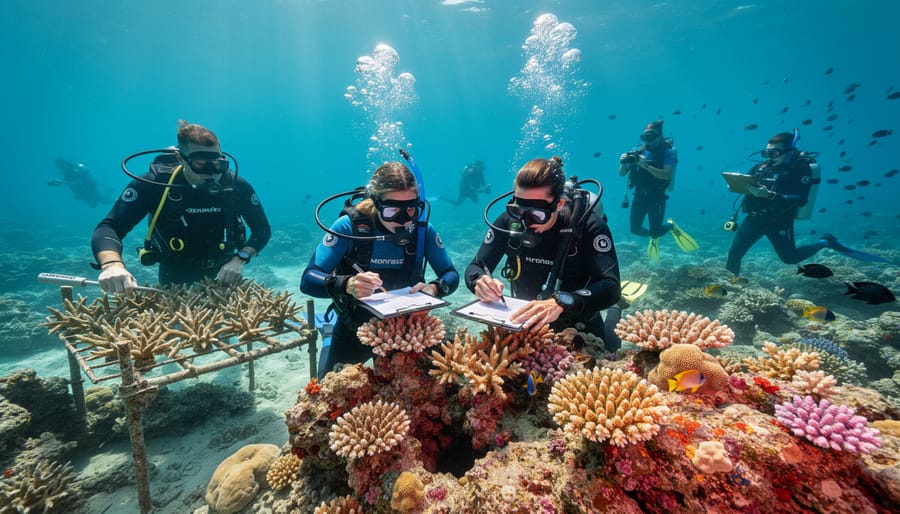
Citizen science offers exciting opportunities to contribute directly to marine research. You can participate in beach cleanups that document plastic pollution patterns, submit observations to marine species monitoring programs, or help classify underwater images through online platforms. Dr. Maya Chen, a marine ecologist, shares: “Citizen scientists have helped us identify critical feeding grounds for endangered sea turtles. Their data fills gaps that professional researchers simply cannot cover alone.”
Ready to dive deeper? The Marine Biodiversity Science Center offers hands-on volunteer programs ranging from coastal habitat restoration to assisting with research expeditions. These programs welcome participants of all experience levels, providing training and mentorship from marine conservation professionals.
Join our e-network to receive updates on volunteer opportunities, access educational resources, and connect with a community passionate about ocean protection. You’ll gain exclusive insights from marine biologists in the field and learn about emerging conservation initiatives.
For educators and students, we provide downloadable lesson plans, virtual tours of marine ecosystems, and opportunities to interact with researchers. These resources make marine science accessible and inspiring for the next generation of ocean stewards.
Whether you contribute through daily choices, citizen science, or dedicated volunteering, your actions matter. Together, we’re building a movement that ensures thriving marine biomes for future generations.
Marine biomes are facing unprecedented challenges, but the growing wave of conservation awareness gives us genuine reason for hope. Climate change, pollution, and overfishing continue to accelerate, yet we’re witnessing remarkable momentum in global marine protection efforts. Scientists are developing innovative restoration techniques, from coral gardening to seagrass rehabilitation, while communities worldwide are establishing marine protected areas at record rates.
Dr. Sarah Chen, a marine biologist working in coral restoration, shares this perspective: “Every volunteer who joins our reef restoration projects proves that individual action matters. I’ve seen degraded reefs bounce back because communities decided to act.”
The path forward requires each of us to engage, whether through reducing plastic consumption, supporting sustainable seafood choices, or volunteering with local coastal cleanup initiatives. Educational institutions and research programs actively seek citizen scientists to contribute valuable data, making marine conservation accessible to everyone regardless of background.
Our health and the ocean’s health are inseparable. The oxygen we breathe, the climate we depend on, and the food security of billions are all tied to thriving marine ecosystems. When we protect marine biomes, we’re ultimately safeguarding our own future and that of generations to come.

jessica
Ava Singh is an environmental writer and marine sustainability advocate with a deep commitment to protecting the world's oceans and coastal communities. With a background in environmental policy and a passion for storytelling, Ava brings complex topics to life through clear, engaging content that educates and empowers readers. At the Marine Biodiversity & Sustainability Learning Center, Ava focuses on sharing impactful stories about community engagement, policy innovations, and conservation strategies. Her writing bridges the gap between science and the public, encouraging people to take part in preserving marine biodiversity. When she’s not writing, Ava collaborates with local initiatives to promote eco-conscious living and sustainable development, ensuring her work makes a difference both on the page and in the real world.