Marine Biodiversity Science Center

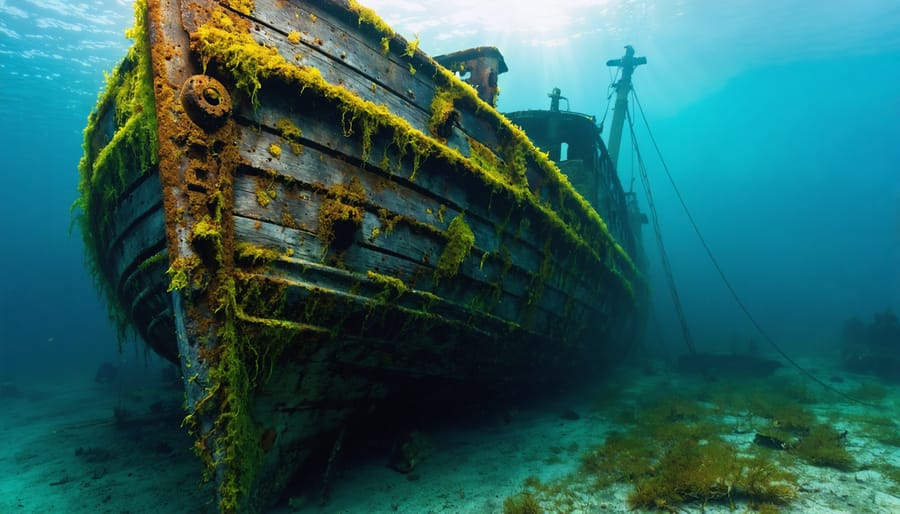
Beneath the surface of our oceans and lakes lies a silent crisis where toxic chemicals don’t just poison water—they trigger explosive algal blooms that suffocate entire ecosystems and bury our submerged cultural heritage under layers of decay. Cultural eutrophication, the accelerated nutrient enrichment of water bodies caused by human activities, typically conjures images of agricultural runoff and sewage discharge. Yet a lesser-known culprit accelerates this process with devastating precision: toxic-chemical pollution from industrial discharge, urban stormwater, and contaminated sediments.
When heavy metals like mercury and lead, along with persistent organic pollutants, enter aquatic systems, they don’t simply disappear. These toxins disrupt the delicate microbial communities that naturally regulate nutrient cycles. Dead zones expand as decomposing algae consume oxygen. Fish populations collapse. And remarkably, underwater archaeological sites—shipwrecks, submerged cities, ancient trade routes—face accelerated deterioration as the altered water chemistry corrodes metals, degrades organic materials, and promotes the growth of destructive biofilms.
This connection between chemical pollution and cultural eutrophication represents a dual threat to both ecological integrity and our shared human heritage. Marine biologist Dr. Sarah Chen, who has documented shipwreck degradation in the Great Lakes, describes finding century-old vessels nearly unrecognizable after just two decades of exposure to chemically-enriched, oxygen-depleted waters. The wooden hulls that survived 150 years now disintegrate in months.
Understanding this relationship empowers us to protect both marine biodiversity and irreplaceable historical treasures. The mechanisms are complex, but the solutions are within reach—and they require collective awareness, scientific innovation, and hands-on participation from concerned citizens willing to become guardians of our underwater world.
Understanding Cultural Eutrophication and Its Chemical Triggers
The Chemical Catalysts Behind Nutrient Overload
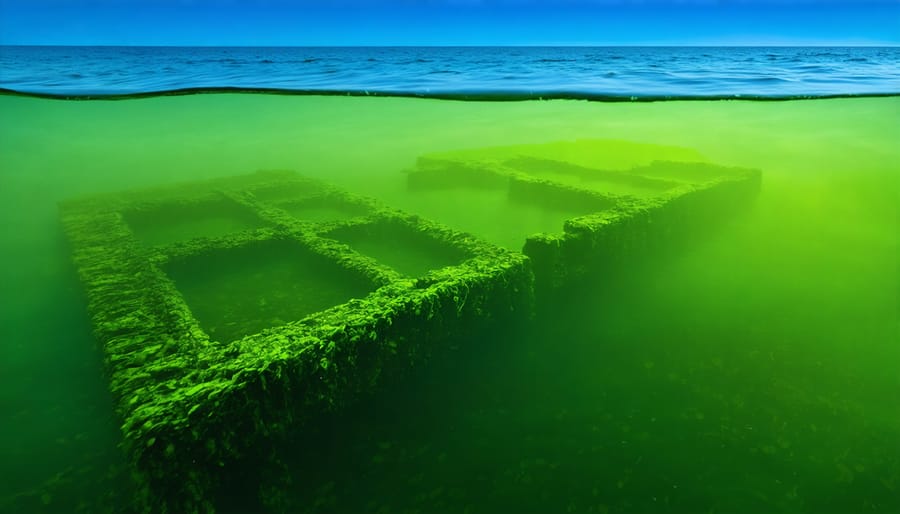
While excess nitrogen and phosphorus drive cultural eutrophication, toxic chemicals act as hidden accelerants in this ecological crisis. Heavy metals like mercury, cadmium, and lead from industrial discharge don’t just contaminate waterways—they fundamentally alter how aquatic ecosystems process nutrients.
These metals can disrupt the natural nitrogen cycle by inhibiting beneficial bacteria that normally regulate nitrogen levels. When copper and zinc from mining operations or urban runoff enter water systems, they damage the microorganisms responsible for converting harmful ammonia into less toxic forms. This disruption leaves more reactive nitrogen available to fuel algal blooms, intensifying eutrophication beyond what nutrient loading alone would cause.
Persistent organic pollutants, including pesticides and industrial chemicals, create similar cascading effects. PCBs and dioxins accumulate in sediments where they interfere with phosphorus cycling. These compounds can actually increase the release of phosphorus from bottom sediments, particularly when oxygen levels drop during algal decomposition—creating a vicious cycle where toxins amplify nutrient availability.
Industrial effluents containing surfactants and pharmaceutical residues add another layer of complexity. Marine biologist Dr. Sarah Chen, who volunteers with coastal monitoring programs, explains: “We’re seeing how even trace amounts of endocrine disruptors can weaken aquatic plant communities that normally absorb excess nutrients. When these natural filters fail, eutrophication accelerates dramatically.”
Understanding these chemical interactions helps volunteers and scientists identify pollution sources more effectively, enabling targeted restoration efforts that address both nutrient overload and toxic contamination simultaneously.
From Surface Waters to Ocean Depths
Once toxic chemicals and excess nutrients enter coastal waters through agricultural runoff, industrial discharge, or urban wastewater, they don’t simply stay at the surface. These pollutants begin a transformative journey through the water column that ultimately threatens underwater cultural heritage sites resting on the ocean floor.
The process starts when nutrient-rich water triggers massive algal blooms at the surface. As these blooms die off, the decomposing organic matter sinks downward, consuming dissolved oxygen as bacteria break it down. This creates what scientists call hypoxic zones, or areas with dangerously low oxygen levels. Marine biologist Dr. Elena Rodriguez, who studies shipwreck sites off the Mediterranean coast, shares her observations: “I’ve witnessed firsthand how these oxygen-depleted waters accelerate corrosion on historical vessels. What should take decades of degradation happens in just years.”
Ocean currents play a crucial role in distributing these chemicals far beyond their original entry points. Surface currents can transport nutrient-laden water hundreds of miles from shore, while thermohaline circulation carries pollutants into deeper waters. Meanwhile, the persistent sinking of organic material, known as marine snow, delivers contaminants directly to the seafloor where ancient artifacts rest.
Heavy metals and persistent organic pollutants bind to sediment particles during this descent, accumulating in layers around underwater archaeological sites. This sedimentation not only buries cultural treasures but also creates chemically hostile environments that damage delicate materials like wood, ceramics, and metal through altered pH levels and increased microbial activity.
What Underwater Cultural Heritage Really Means
Beneath our oceans lies a hidden museum of human history—underwater cultural heritage sites that tell the story of our maritime past. These submerged treasures include centuries-old shipwrecks carrying cargoes from ancient trade routes, entire cities lost to rising seas or geological events, prehistoric settlements that now rest on continental shelves, and sacred sites that once stood on dry land. From the legendary ruins of Pavlopetri, a 5,000-year-old city off Greece’s coast, to the estimated three million shipwrecks scattered across ocean floors worldwide, these sites preserve archaeological evidence that cannot be found anywhere else on Earth.
What makes these underwater treasures particularly valuable extends beyond their historical significance. They serve as time capsules, offering scientists insights into past civilizations, ancient maritime technologies, trade networks, and even climate patterns from bygone eras. A single well-preserved shipwreck can reveal details about shipbuilding techniques, navigation methods, dietary habits, and cultural exchanges that written records never captured.
Remarkably, these heritage sites often develop a dual identity over time. Marine biologist Dr. Sarah Chen, who has studied Mediterranean shipwrecks for fifteen years, explains: “What begins as a human artifact transforms into a thriving ecosystem. The wooden hull of a centuries-old vessel becomes colonized by corals, sponges, and other marine organisms, effectively creating an artificial reef.” These structures provide hard substrate in otherwise sandy or muddy environments, attracting fish populations, invertebrates, and creating biodiversity hotspots.
This ecological transformation means that protecting underwater cultural heritage simultaneously protects marine biodiversity. However, both face threats from the same source: chemical pollution and the resulting eutrophication that degrades water quality, accelerates deterioration of artifacts, and disrupts the delicate balance of these hybrid historical-ecological sites. Understanding this interconnection becomes essential for developing effective conservation strategies.

The Cascade of Destruction: How Toxic Eutrophication Damages Submerged Sites
Oxygen Depletion and Anaerobic Degradation
When massive algal blooms die off, they sink to the ocean floor where bacteria begin breaking them down. This decomposition process consumes enormous amounts of dissolved oxygen, creating hypoxic zones where oxygen levels drop dangerously low, or anoxic zones where oxygen disappears entirely. These oxygen-starved environments fundamentally alter the chemistry of seawater, triggering a cascade of effects that threaten both living ecosystems and submerged archaeological treasures.
In these depleted conditions, the normal aerobic bacteria that typically break down organic matter slowly are replaced by anaerobic microbes. These organisms produce corrosive compounds like hydrogen sulfide, which marine biologist Dr. Elena Torres describes as “essentially turning the water into a weak acid bath for anything metal down there.” Shipwrecks, anchors, and other metallic artifacts experience accelerated corrosion, sometimes deteriorating in decades what might have taken centuries under normal conditions.
Meanwhile, wooden structures face a different fate. The altered chemistry can paradoxically preserve some organic materials better than others, creating unpredictable degradation patterns. However, when oxygen returns periodically, the cycling between anoxic and oxic conditions creates particularly destructive conditions. Volunteers participating in underwater heritage monitoring programs have documented these changes, providing crucial data that helps scientists understand and potentially mitigate these threats to our shared cultural legacy beneath the waves.
Biological Overgrowth and Material Erosion
When nutrient pollution triggers algal blooms, the consequences extend far beyond cloudy water. Excessive algae and bacterial biofilms actively colonize submerged archaeological sites, creating thick layers that obscure inscriptions, artwork, and structural details that archaeologists rely on to piece together our maritime past. These biological carpets don’t just hide evidence—they cause genuine physical damage through chemical secretions that dissolve limestone, corrode metals, and weaken wooden structures.
Marine biologist Dr. Elena Rodriguez recalls surveying a Roman shipwreck site off the Mediterranean coast where chemical pollution had sparked unprecedented algal growth. “Within three years, delicate bronze fittings were completely engulfed. The biofilms produced acids that etched away surface details we’d carefully documented just seasons before,” she explains. The same nutrient-rich conditions that fuel algae also attract invasive species like zebra mussels and Asian kelp, which physically attach to artifacts, breaking off fragments as they grow and creating entry points for further decay.
This biological assault transforms preservation sites into degradation zones, with each bloom cycle accelerating damage. The good news? Understanding these mechanisms helps conservationists develop targeted protection strategies, and volunteers play crucial roles in monitoring affected sites and documenting changes before damage becomes irreversible.
Chemical Reactions That Erase History
When toxic chemicals enter marine environments, they trigger a cascade of chemical reactions that silently destroy underwater cultural heritage. These pollutants dramatically alter water chemistry, particularly pH levels, creating increasingly acidic conditions that act like invisible solvents on historical materials.
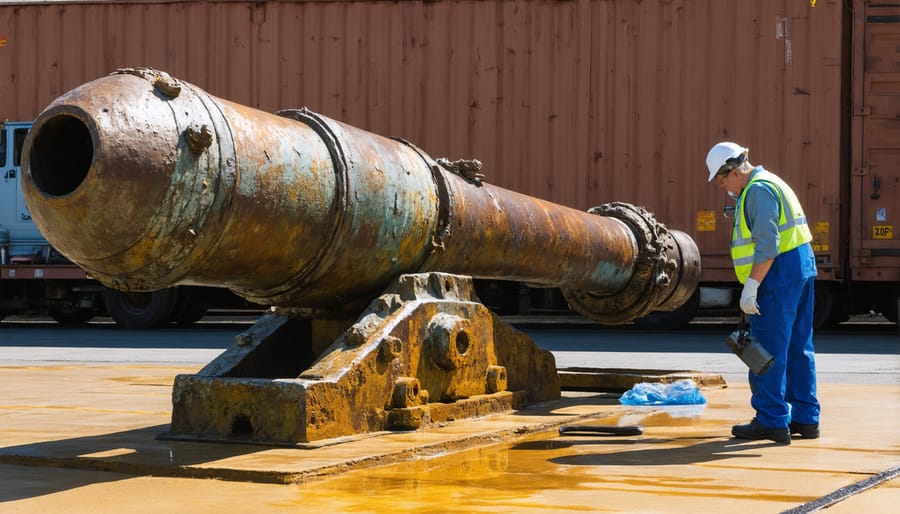
Industrial runoffs containing heavy metals, petroleum products, and agricultural chemicals don’t just contaminate water—they fundamentally change its chemical properties. As pH levels drop, the water becomes more corrosive, accelerating the decomposition of materials that have survived centuries on the seafloor. Wood structures from ancient shipwrecks, once preserved in stable underwater conditions, begin to soften and disintegrate as acidic water penetrates their cellular structure. Metal artifacts, including bronze cannons, iron anchors, and copper fittings, experience rapid corrosion as toxic chemicals catalyze oxidation reactions at unprecedented rates.
Dr. Elena Martinez, a marine archaeologist specializing in preserving submerged artifacts, witnessed this firsthand at a Mediterranean shipwreck site. “We documented pottery and ceramics that had remained intact for two millennia suddenly developing surface cracks and losing structural integrity over just five years,” she explains. “The culprit was industrial pollution that lowered the pH and introduced reactive compounds.”
The chemistry is particularly devastating when multiple pollutants interact. Sulfur compounds create sulfuric acid, while nitrogen-based chemicals form nitric acid, both eating away at limestone, marble, and calcium-based mortars. Even glass deteriorates faster as these acids dissolve silicate bonds. Understanding these chemical processes helps conservationists develop targeted protection strategies and underscores the urgent need for pollution control.
Real-World Examples: Heritage Sites Under Threat
The intersection of toxic-chemical pollution and cultural eutrophication is wreaking havoc on some of our planet’s most precious underwater treasures. These marine archaeological sites tell stories spanning millennia, yet they face an uncertain future as pollutants accelerate their decay.
In the Mediterranean Sea, ancient Roman shipwrecks off the coast of Italy illustrate this crisis vividly. Dr. Elena Moretti, a marine archaeologist working in the region, has witnessed firsthand how agricultural runoff containing pesticides and excess nutrients transforms these underwater museums. “We’re seeing amphoras that survived two thousand years dissolving within decades,” she explains. The chemical cocktail fuels algal blooms that deplete oxygen and create acidic conditions, eating away at wooden hulls and ceramic artifacts far faster than natural processes ever could.
The Baltic Sea presents an equally troubling scenario. This semi-enclosed body of water accumulates pollutants from surrounding industrial nations, creating what conservationists call a “chemical soup.” Medieval trading vessels, remarkably preserved in the Baltic’s cold, low-oxygen waters for centuries, now face accelerated decomposition. Marine archaeologist Dr. Lars Andersson describes discovering biofilms coating 15th-century timber frames, fed by nutrient pollution. “These organisms produce acids that break down the wood structure. What nature protected for 600 years, pollution is destroying in our lifetime,” he shares with palpable frustration.
Perhaps nowhere is the threat more immediate than in Southeast Asian harbors, where submerged settlements reveal ancient maritime communities. In Vietnam’s coastal waters, researcher Nguyen Thi Mai documents how industrial discharge combines with agricultural runoff to create hypoxic zones around archaeological sites. “Local fishing communities remember when these waters were clear,” she notes. “Now, toxic blooms cloud the sites seasonally, making documentation and preservation nearly impossible.”
These personal accounts underscore an urgent reality: protecting our underwater cultural heritage requires addressing the pollution sources feeding destructive eutrophication. Each lost artifact represents an irreplaceable connection to our shared human story, making the fight against toxic-chemical pollution not just an environmental imperative, but a cultural one as well.
The Ripple Effect on Marine Biodiversity
The devastating effects of cultural eutrophication extend far beyond the physical degradation of underwater heritage sites, creating cascading impacts throughout marine ecosystems. When toxic chemicals trigger excessive algal growth around shipwrecks, archaeological sites, and submerged monuments, they fundamentally alter the delicate balance of life that has often developed around these structures over decades or even centuries.
Marine biologist Dr. Elena Cortez has spent fifteen years studying Mediterranean shipwrecks and their surrounding ecosystems. “What we’ve discovered is heartbreaking,” she explains. “These sites had become thriving artificial reefs, supporting incredibly diverse communities of fish, invertebrates, and marine plants. But as eutrophication intensifies, we’re watching these ecosystems collapse in real-time.”
The oxygen-depleted waters created by algal decomposition force mobile species to flee, while stationary organisms like corals, sponges, and sea anemones suffocate. This creates dead zones where once-vibrant communities thrived. The loss ripples upward through the food chain, affecting commercial fish populations and the livelihoods of coastal communities dependent on healthy marine environments.
However, this challenge presents an unexpected opportunity. Protected underwater heritage sites, when properly managed with pollution controls and monitoring programs, can serve dual purposes as marine sanctuaries. By restricting harmful activities and implementing water quality safeguards, these areas become refuges for biodiversity while preserving cultural treasures.
Conservation organizations now recruit volunteers to monitor water quality around heritage sites, creating citizen science networks that protect both natural and cultural resources. These programs offer hands-on opportunities to contribute meaningful data while learning about marine ecology and archaeological preservation. Through collaborative management approaches, we can transform threatened heritage sites into beacons of hope, demonstrating how cultural preservation and ecosystem protection strengthen one another when pursued together.
Solutions That Protect Both Past and Future
Policy and Legal Frameworks
Protecting our underwater cultural heritage from chemical pollution and eutrophication requires robust international cooperation and legal frameworks. The UNESCO Convention on the Protection of the Underwater Cultural Heritage, adopted in 2001, provides crucial guidelines for preserving submerged archaeological sites, though it doesn’t explicitly address chemical threats. Meanwhile, the London Convention and Protocol regulate ocean dumping, helping prevent some sources of toxic pollution that fuel eutrophication.
Marine Protected Areas (MPAs) serve as powerful tools for safeguarding vulnerable underwater heritage sites. By restricting industrial activities and establishing water quality standards within designated zones, MPAs can slow eutrophication’s damaging effects on archaeological treasures. The OSPAR Convention in the Northeast Atlantic exemplifies regional cooperation, setting pollution reduction targets that benefit both marine ecosystems and cultural sites.
National regulations like the U.S. Clean Water Act and the European Union’s Marine Strategy Framework Directive establish enforceable limits on nutrient and chemical discharges. However, enforcement remains challenging, particularly in international waters. Marine conservationists emphasize that strengthening these frameworks requires citizen engagement. Volunteers can participate in water quality monitoring programs, report pollution incidents, and advocate for stricter regulations. As marine archaeologist Dr. Sarah Chen notes, “Every water sample collected by volunteers helps build the evidence base for stronger protections.”
Scientific Monitoring and Innovation
Protecting submerged archaeological sites from cultural eutrophication requires innovative approaches combining cutting-edge science with grassroots conservation. Researchers are deploying advanced monitoring technology, including underwater sensors that continuously measure dissolved oxygen levels, nutrient concentrations, and algal growth patterns around vulnerable heritage sites. These real-time data systems alert conservationists to pollution events before irreversible damage occurs.
Marine biologist Dr. Sarah Chen shares her experience: “We’ve developed biofilm monitoring techniques that detect early-stage microbial activity on artifact surfaces. By catching deterioration at the microscopic level, we can implement targeted interventions like temporary protective barriers or localized water treatment.”
Citizen science programs are expanding opportunities for volunteers to participate in water quality testing near coastal heritage areas. Through simple test kits and smartphone apps, community members collect valuable data that supplements professional monitoring efforts. Some initiatives train recreational divers to document site conditions, creating a network of underwater guardians. Additionally, researchers are experimenting with beneficial bacteria cultures that naturally reduce harmful nutrient loads without disrupting marine ecosystems, offering hope for biological remediation strategies that protect both biodiversity and cultural treasures.
How You Can Make a Difference
Each of us has the power to combat cultural eutrophication and protect ocean heritage. The Marine Biodiversity Science Center welcomes volunteers for water quality monitoring programs, where you’ll collect samples and help track nutrient levels in coastal waters. These hands-on opportunities provide valuable data while connecting you directly with conservation efforts.
Join citizen science initiatives like shoreline cleanup projects that prevent chemical-laden debris from entering waterways. Marine biologist Dr. Sarah Chen shares, “I’ve seen volunteers make remarkable impacts. One dedicated team in Nova Scotia removed over 500 pounds of agricultural runoff debris in a single season, measurably improving local water quality.”
At home, reduce your chemical footprint by choosing phosphate-free detergents, minimizing fertilizer use, and properly disposing of household chemicals. These small changes collectively prevent tons of pollutants from reaching our waters annually.
Advocate for stronger pollution regulations by contacting local representatives and supporting organizations dedicated to water quality protection. Share your knowledge with friends and family, creating ripples of awareness that extend far beyond individual action. Together, we can reverse cultural eutrophication’s devastating effects on our underwater heritage.
The intersection of toxic-chemical pollution and cultural eutrophication presents a dual crisis that demands immediate attention from scientists, policymakers, and citizens alike. We’ve explored how industrial runoff, agricultural chemicals, and heavy metals don’t simply disappear into our oceans—they trigger cascading effects that smother coral reefs, accelerate the decay of shipwrecks and archaeological sites, and create oxygen-depleted zones where marine life cannot survive. These underwater treasures, whether natural or cultural, represent irreplaceable windows into our planet’s history and biodiversity.
Yet there is genuine reason for hope. Around the world, communities are demonstrating that meaningful change is possible. Restoration projects are reviving degraded estuaries, stricter pollution controls are showing measurable improvements in water quality, and innovative technologies are removing excess nutrients before they reach coastal waters. Marine biologist Dr. Sarah Chen, who leads coral restoration efforts in Southeast Asia, shares an inspiring observation: “When we reduce chemical inputs and nutrient loading together, we see ecosystems bounce back faster than we ever anticipated. The ocean wants to heal—we just need to give it the chance.”
This is where you come in. Whether you’re participating in citizen science water quality monitoring, supporting marine protected areas, volunteering with local beach cleanups, or simply making informed choices about fertilizer use and chemical disposal, your actions matter. Every small step contributes to the larger movement protecting both our underwater cultural heritage and the extraordinary biodiversity that surrounds it. Together, we can ensure these irreplaceable resources remain vibrant and intact for generations to come.

jessica
Ava Singh is an environmental writer and marine sustainability advocate with a deep commitment to protecting the world's oceans and coastal communities. With a background in environmental policy and a passion for storytelling, Ava brings complex topics to life through clear, engaging content that educates and empowers readers. At the Marine Biodiversity & Sustainability Learning Center, Ava focuses on sharing impactful stories about community engagement, policy innovations, and conservation strategies. Her writing bridges the gap between science and the public, encouraging people to take part in preserving marine biodiversity. When she’s not writing, Ava collaborates with local initiatives to promote eco-conscious living and sustainable development, ensuring her work makes a difference both on the page and in the real world.