Marine Biodiversity Science Center

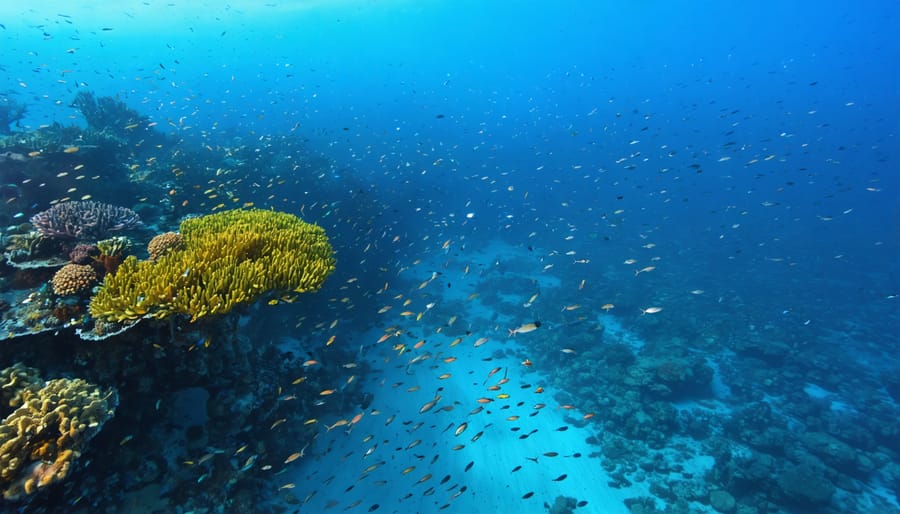
Viruses shape the destiny of our oceans, infecting every level of marine life from microscopic plankton to massive whales. These invisible architects of marine ecosystems influence crucial marine life cycles and biodiversity patterns across the globe. Recent research reveals that marine viruses infect an astounding one trillion microorganisms every second, controlling population dynamics and nutrient cycling in ways we’re only beginning to understand.
From the abundant bacterial communities that power ocean food webs to commercially important fish species and endangered marine mammals, viral infections play both destructive and surprisingly beneficial roles in maintaining ocean health. These molecular parasites have evolved alongside their hosts for millions of years, developing intricate relationships that challenge our traditional views of viruses as mere pathogens. By understanding which organisms marine viruses target and how these interactions affect marine ecosystems, we can better protect ocean biodiversity and the essential services it provides to our planet.
Viral Infection in Marine Bacteria and Microorganisms
Bacteriophages in Ocean Ecosystems
Bacteriophages, or “phages” for short, are viruses that specifically target bacteria, and they play a crucial role in marine ecosystems, even in extreme marine environments. These microscopic predators are incredibly abundant, with estimates suggesting there are approximately 10 million viral particles in just one milliliter of seawater.
In ocean ecosystems, bacteriophages help regulate bacterial populations through a process known as the “viral shunt.” When phages infect and destroy bacteria, they release organic matter and nutrients back into the water. This process, called viral lysis, makes essential nutrients available to other marine organisms, contributing to the ocean’s complex food web.
Marine bacteriophages also influence global climate patterns by affecting bacterial communities that process carbon and other nutrients. When viruses lyse bacteria, they release carbon that would otherwise be transferred to larger organisms. Some of this carbon sinks to the ocean floor, while some remains in the water column, impacting the marine carbon cycle.
Recent research has revealed that bacteriophages can transfer genetic material between different bacterial species, promoting bacterial adaptation and evolution in marine environments. This genetic exchange helps maintain bacterial diversity and resilience in our oceans, ultimately supporting the health of marine ecosystems.
Impact on Phytoplankton Communities
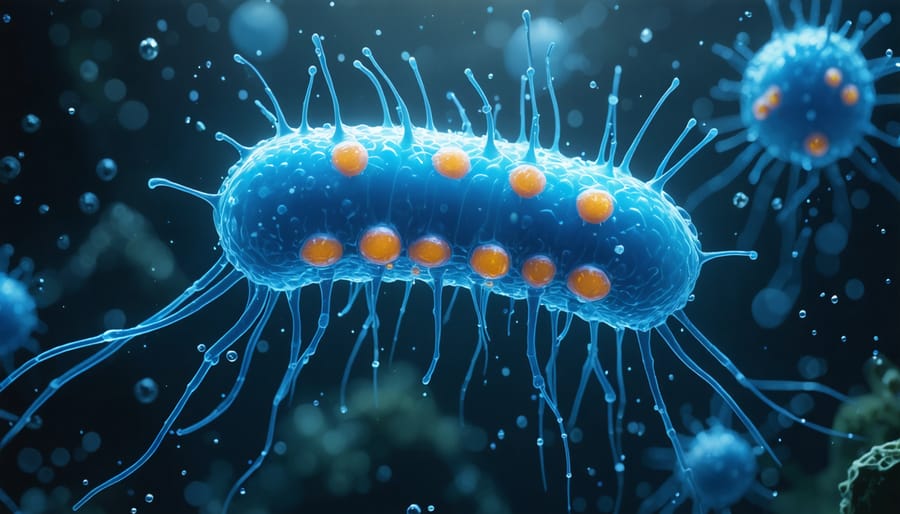
Viruses play a crucial role in shaping marine phytoplankton communities, affecting these microscopic organisms that form the foundation of ocean food webs. These tiny primary producers, including some bioluminescent organisms, are particularly susceptible to viral infections, which can lead to significant population changes and ecological cascades.
When viruses infect phytoplankton, they can cause massive die-offs known as viral lysis events. During these events, infected cells burst, releasing organic matter and nutrients back into the water column. This process, known as the “viral shunt,” redistributes essential nutrients and carbon throughout marine ecosystems, influencing both local and global nutrient cycles.
Research has shown that marine viruses can infect up to 40% of phytoplankton cells in some areas, controlling their population dynamics and species composition. This viral control helps maintain diversity within phytoplankton communities by preventing any single species from dominating the ecosystem. When one species becomes too abundant, viruses targeting that species typically increase in number, helping to restore balance.
Interestingly, some phytoplankton species have evolved strategies to resist viral infection, leading to ongoing evolutionary arms races between viruses and their hosts. This dynamic relationship has contributed to the remarkable genetic diversity found in marine microbial communities and continues to shape ocean ecosystems in ways we are only beginning to understand.
Viral Infections in Marine Animals
Fish Viruses and Their Impact
Marine fish populations face various viral infections that can significantly impact both wild and farmed fish communities. Notable examples include the Viral Hemorrhagic Septicemia Virus (VHSV), which affects over 80 fish species and causes severe bleeding and tissue damage. This virus has led to substantial economic losses in aquaculture and has sparked concern among marine conservationists due to its potential to devastate wild populations.
Another significant threat is the Infectious Salmon Anemia Virus (ISAV), particularly devastating to Atlantic salmon. This virus has caused major outbreaks in salmon farms worldwide, with mortality rates reaching up to 90% in affected populations. The virus spreads rapidly through water currents and can persist in marine environments for extended periods.
Betanodaviruses, causing Viral Nervous Necrosis (VNN), primarily affect larvae and juvenile fish, leading to high mortality rates in early life stages. These viruses target the brain and nervous system, causing erratic swimming behavior and eventually death. The impact on juvenile populations can have long-lasting effects on fish stock recovery and ecosystem balance.
Research has shown that fish viruses often become more prevalent in stressed ecosystems, particularly those affected by warming waters and pollution. Marine biologists have observed that climate change-induced stress can make fish more susceptible to viral infections, creating a concerning feedback loop in affected areas.
Conservation efforts focus on monitoring viral outbreaks, implementing quarantine measures in aquaculture facilities, and studying virus-host relationships to better predict and prevent major disease events. Understanding these viral dynamics is crucial for maintaining healthy fish populations and protecting marine biodiversity for future generations.
Marine Mammal Viral Diseases
Viral diseases pose significant challenges to marine mammal populations worldwide, affecting various species from massive whales to agile seals. These infections can compromise marine mammals’ sensory systems and vital organs, leading to behavioral changes and, in severe cases, mortality events that impact entire populations.
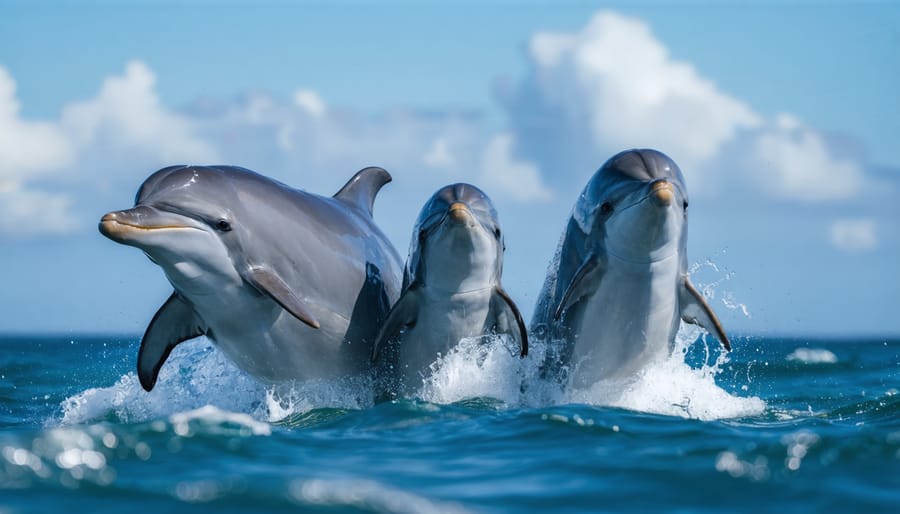
Among cetaceans, morbillivirus has emerged as a particularly concerning pathogen, causing devastating outbreaks in dolphin populations along coastal regions. This virus can spread rapidly through social groups, taking advantage of these mammals’ close-knit social structures and migration patterns. In recent years, scientists have documented several mass mortality events linked to morbillivirus infections, particularly affecting bottlenose dolphins and pilot whales.
Pinnipeds (seals, sea lions, and walruses) face challenges from various viral pathogens, including influenza A viruses and herpesvirus. These infections can cause respiratory distress, reproductive complications, and neurological symptoms. The spread of these viruses often intensifies during breeding seasons when large numbers of animals gather on rookeries.
Climate change and environmental stressors have begun to alter the dynamics of viral infections in marine mammals. Warming waters and changing migration patterns can influence virus transmission and host susceptibility. Additionally, pollutants and other environmental toxins may compromise marine mammals’ immune systems, making them more vulnerable to viral infections.
Conservation efforts focus on monitoring viral outbreaks, understanding transmission patterns, and developing response strategies to protect vulnerable populations. Scientists and veterinarians work together to study these diseases, track their spread, and develop potential treatments while considering the broader ecosystem impacts.
Invertebrate Host-Virus Relationships
Marine invertebrates form complex relationships with viruses, with coral reefs being particularly vulnerable to viral infections. These ancient marine ecosystems face challenges from various viral pathogens, including those that cause coral bleaching and tissue loss. Scientists have identified numerous virus families that specifically target coral species, affecting both the coral polyps and their symbiotic algae.
In the case of mollusks, viral infections can have devastating effects on both wild populations and aquaculture operations. For instance, oysters and clams frequently encounter herpes-like viruses that can cause significant mortality rates, especially in juvenile specimens. These infections not only impact biodiversity but also affect coastal economies that depend on shellfish harvesting.
Crustaceans, including commercially important species like shrimp and crabs, also contend with viral infections. White Spot Syndrome Virus (WSSV) remains one of the most destructive pathogens in shrimp aquaculture, capable of causing up to 100% mortality in affected populations. The virus can spread rapidly through water and can persist in the environment for extended periods.
Research has shown that these host-virus relationships often become more complex under environmental stress. Climate change and ocean acidification can weaken invertebrates’ immune responses, making them more susceptible to viral infections. Temperature changes, in particular, can trigger increased viral replication rates and alter the virulence of certain pathogens.
Understanding these relationships has become crucial for marine conservation efforts. Scientists are developing new methods to detect and monitor viral infections in invertebrate populations, including innovative molecular techniques and environmental DNA sampling. These advances help in early detection and management of viral outbreaks, protecting both wild populations and aquaculture operations.
The study of invertebrate-virus interactions also provides valuable insights into marine ecosystem health and resilience. Many of these viruses serve as indicators of environmental stress, helping researchers monitor the overall health of marine habitats and predict potential threats to biodiversity.

Emerging Threats and Conservation Implications
Climate Change and Viral Emergence
Climate change is dramatically altering marine ecosystems, creating new opportunities for viral infections and changing how viruses interact with their hosts. Rising ocean temperatures are expanding the geographical range of many marine viruses, allowing them to encounter and infect previously unexposed species. This shift is particularly evident in coral reef systems, where warming waters increase viral activity and contribute to devastating coral bleaching events.
Ocean acidification, another consequence of climate change, weakens the immune systems of marine organisms, making them more susceptible to viral infections. Scientists have observed increased viral replication rates in warmer waters, suggesting that climate change could accelerate the spread of marine viruses throughout ecosystems.
The melting of polar ice caps is releasing ancient viruses that have been trapped in ice for thousands of years. As these viruses re-enter marine environments, they pose potential risks to modern marine organisms that have no evolved immunity to these ancient threats. Additionally, changing ocean currents are transporting viruses to new regions, creating novel host-pathogen relationships.
These climate-driven changes in viral patterns can have cascading effects throughout marine food webs. For example, when viruses affect phytoplankton populations, it impacts not only these microscopic organisms but also the many species that depend on them for food. Understanding these complex interactions is crucial for predicting and managing the future health of marine ecosystems in a changing climate.
Conservation Strategies
Conservation efforts to protect marine organisms from viral threats require a multi-faceted approach combining research, monitoring, and preventive measures. Scientists and conservationists work together to implement early warning systems that can detect viral outbreaks before they become widespread. This includes regular health assessments of marine populations and water quality monitoring to identify potential disease vectors.
Maintaining healthy marine ecosystems is crucial for building natural resilience against viral infections. This involves protecting critical habitats, reducing pollution, and managing human activities that can stress marine organisms and make them more susceptible to viral infections. Marine protected areas have proven particularly effective in providing safe havens where populations can maintain robust immune responses.
Collaborative efforts between research institutions and conservation organizations focus on developing vaccination programs for farmed marine species and studying natural antiviral compounds found in marine organisms. These discoveries not only help protect cultivated species but also provide insights into potential treatments for wild populations.
Public engagement plays a vital role in conservation success. Citizen science programs allow volunteers to participate in monitoring programs, while educational initiatives help raise awareness about the importance of marine viral ecology. Simple actions, such as proper disposal of waste and supporting sustainable fishing practices, can significantly impact the health of marine ecosystems and their resilience to viral threats.
By combining scientific research with practical conservation measures and community involvement, we can better protect marine life from viral challenges while preserving biodiversity for future generations.
Understanding marine viral ecology is crucial for comprehending ocean health and biodiversity. Throughout this exploration, we’ve seen how viruses impact an incredibly diverse range of marine organisms, from microscopic bacteria and phytoplankton to large marine mammals. These viral interactions form complex webs that influence marine ecosystems at every level.
The relationship between viruses and marine life extends far beyond simple infection patterns. Viruses play vital roles in nutrient cycling, population control, and even genetic exchange between organisms. They help maintain the delicate balance of marine ecosystems while contributing to their evolution and adaptation.
As our oceans face unprecedented challenges from climate change and human activities, understanding viral ecology becomes increasingly important. This knowledge helps us predict and respond to marine disease outbreaks, protect endangered species, and maintain healthy ocean ecosystems. It also provides insights into potential solutions for marine conservation and restoration efforts.
Looking ahead, continued research in marine viral ecology will be essential. Whether you’re a scientist, student, or concerned citizen, there are numerous ways to support this vital field. From citizen science projects to conservation initiatives, every contribution helps build our understanding of these fascinating and complex interactions in marine environments.
By protecting marine ecosystems and supporting research efforts, we safeguard not only the diverse organisms affected by viruses but also the broader ocean health that we all depend upon.

jessica
Ava Singh is an environmental writer and marine sustainability advocate with a deep commitment to protecting the world's oceans and coastal communities. With a background in environmental policy and a passion for storytelling, Ava brings complex topics to life through clear, engaging content that educates and empowers readers. At the Marine Biodiversity & Sustainability Learning Center, Ava focuses on sharing impactful stories about community engagement, policy innovations, and conservation strategies. Her writing bridges the gap between science and the public, encouraging people to take part in preserving marine biodiversity. When she’s not writing, Ava collaborates with local initiatives to promote eco-conscious living and sustainable development, ensuring her work makes a difference both on the page and in the real world.