Marine Biodiversity Science Center

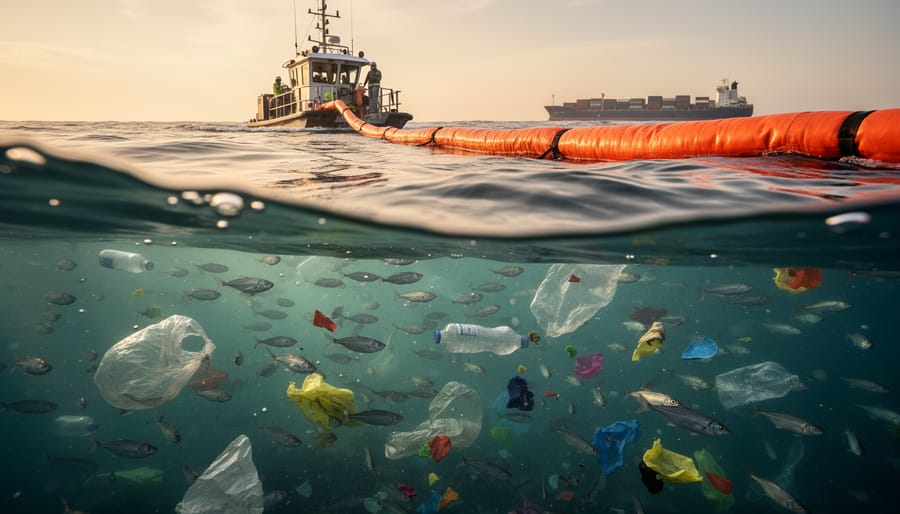
Every piece of plastic ever created still exists somewhere on our planet, and much of it has found its way into our oceans. Marine pollution now affects every corner of the sea, from surface waters to the deepest trenches, threatening the intricate web of life that sustains both marine ecosystems and human communities. Yet this crisis didn’t emerge overnight, nor has the response to it remained static.
Understanding the evolution of marine pollution policy reveals a critical truth: environmental protection advances through the combined force of scientific discovery, public pressure, and governmental action. From the earliest international maritime conventions of the 1950s to today’s ambitious plastic reduction treaties, policy frameworks have shaped how societies approach ocean health. These governance structures determine which pollutants get regulated, how enforcement occurs, and whether marine ecosystems receive adequate protection.
This examination of marine pollution policy history illuminates the pathway from awareness to action. By tracing key legislative milestones, analyzing their real-world effectiveness, and identifying persistent gaps, we can better advocate for stronger protections. The story encompasses landmark agreements like MARPOL and the London Convention, regional initiatives that transformed coastlines, and emerging frameworks addressing microplastics and ocean acidification.
For students, educators, and concerned citizens, this historical perspective provides essential context for current debates while highlighting opportunities to participate in ongoing conservation efforts. Understanding what has worked, what hasn’t, and why certain approaches succeed while others stall equips us to drive meaningful change in protecting our ocean’s future.
Before the Rules: When Oceans Were the World’s Dumping Ground
For much of human history, the world’s oceans were viewed as limitless voids capable of absorbing any amount of waste without consequence. This perception shaped industrial practices throughout the 19th and early 20th centuries, when factories, cities, and ships routinely discharged untreated sewage, chemical waste, and industrial byproducts directly into coastal waters and open seas. The prevailing belief was simple: dilution equals solution. With oceans covering more than 70 percent of Earth’s surface, many assumed that any pollutants would simply disappear into the vast blue expanse.
During the Industrial Revolution, riverside factories dumped heavy metals, dyes, and toxic chemicals into waterways that flowed to the sea. Coastal cities built sewage systems that emptied directly onto beaches or into harbors. Ships discarded garbage, bilge water, and coal ash overboard as standard practice. There were no regulations, no monitoring systems, and certainly no understanding of how these actions would accumulate over time.
The early petroleum industry added another dimension to marine pollution. Oil tankers routinely flushed their holds at sea, releasing thousands of gallons of crude oil into the water. Before modern cleaning technologies, this was considered normal operational procedure. Major oil spills, though less frequent than routine discharges, punctuated this era with dramatic evidence of oceanic vulnerability. Yet even these disasters rarely prompted lasting policy changes.
Unlike some historical ocean protection practices employed by coastal communities to preserve fishing grounds, industrial-age societies prioritized economic growth over environmental stewardship. The connection between ocean health and human wellbeing remained largely unrecognized.
It wasn’t until the mid-20th century, when dead zones appeared, fisheries collapsed, and beaches closed due to contamination, that public awareness began shifting. The evidence became impossible to ignore: oceans were not infinite dumping grounds, and decades of unchecked pollution had created a crisis requiring immediate attention and formal governance.
The Wake-Up Calls That Changed Everything
The Torrey Canyon Disaster and Its Ripple Effects
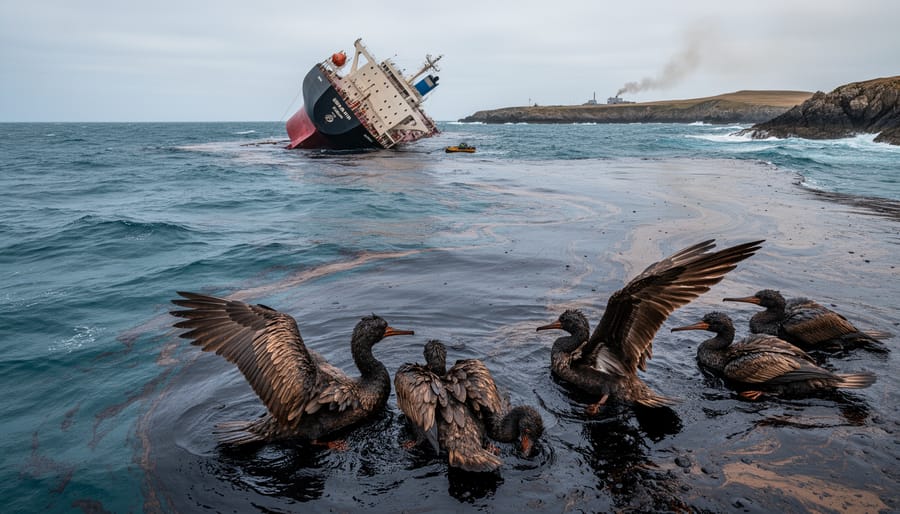
On March 18, 1967, the supertanker Torrey Canyon struck Pollard’s Rock between Cornwall and the Scilly Isles, spilling approximately 119,000 tons of crude oil into the ocean. This catastrophe marked a turning point in how the world approached maritime pollution. The disaster devastated coastal ecosystems, killing an estimated 15,000 seabirds and coating miles of pristine beaches with thick, black crude. What made this event particularly significant wasn’t just its scale, but the fumbled response that followed.
Britain’s attempts to clean up the spill, including bombing the wreck and using toxic chemical dispersants, often caused more harm than the oil itself. Marine biologist Dr. Rachel Morrison recalls her mentor describing the aftermath: “The chemical treatments killed marine life that might have survived the oil alone. We learned the hard way that good intentions aren’t enough without scientific understanding.”
The Torrey Canyon disaster catalyzed international action. Within two years, nations established the International Convention on Civil Liability for Oil Pollution Damage, creating accountability frameworks that persist today. This event demonstrated that ocean pollution transcends borders, requiring coordinated global responses and inspiring the comprehensive maritime regulations we rely on now.
Rachel Carson’s Silent Spring and Ocean Awareness
Published in 1962, Rachel Carson’s groundbreaking book Silent Spring fundamentally transformed how society viewed environmental protection, extending its influence far beyond terrestrial ecosystems to reshape ocean conservation efforts. While primarily focused on pesticide contamination on land, Carson’s eloquent warning about chemical pollutants entering waterways sparked unprecedented public concern about how human activities threatened marine life. Her scientific training as a marine biologist, combined with her ability to translate complex ecological concepts into compelling narratives, made environmental degradation both understandable and urgent for everyday citizens.
Carson’s work catalyzed a dramatic shift in environmental policy development. Her documentation of how DDT and other persistent chemicals moved through food chains reached legislators and the public simultaneously, creating momentum for regulatory reform. Within a decade of Silent Spring’s publication, the United States established the Environmental Protection Agency and passed landmark legislation including the Clean Water Act, which directly addressed pollutant discharge into oceans and waterways.
The book’s lasting legacy lies not just in specific policy achievements, but in establishing a template for science communication that inspired generations of marine conservationists. Today’s researchers continue following Carson’s model, combining rigorous scientific evidence with accessible storytelling to build public support for protecting marine ecosystems from emerging threats like microplastics and ocean acidification.
The Plastic Crisis Enters Public Consciousness
The late 20th and early 21st centuries marked a turning point in how we understood ocean plastic pollution. In 1997, Captain Charles Moore discovered what would become known as the Great Pacific Garbage Patch while sailing between Hawaii and California. This massive accumulation of plastic debris, spanning an area larger than Texas, shocked the scientific community and captured public imagination. The discovery sparked urgent questions about how much plastic was actually in our oceans and what harm it was causing.
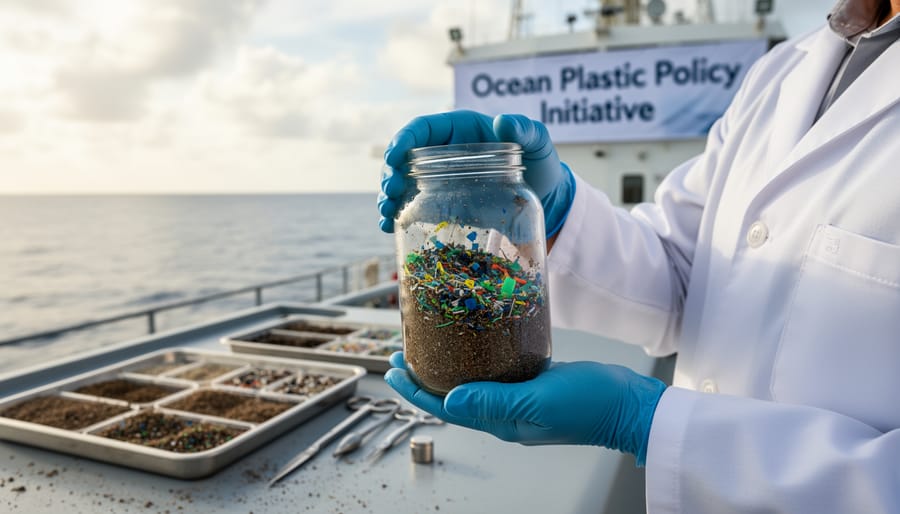
Around the same time, researchers began documenting microplastics—tiny plastic fragments less than 5mm in size—throughout marine ecosystems. These particles, formed when larger plastics break down or released directly from products like cosmetics and synthetic clothing, were appearing everywhere scientists looked: in fish stomachs, on remote beaches, even in Arctic ice. Marine biologist Dr. Richard Thompson’s groundbreaking work in the early 2000s revealed that these microscopic particles could enter the food chain at every level, from plankton to apex predators.
These revelations galvanized action. Countries began implementing plastic bag bans, microplastic restrictions in cosmetics, and single-use plastic regulations. The European Union’s 2019 Single-Use Plastics Directive and similar national policies worldwide reflected growing recognition that the plastic crisis demanded immediate intervention.
Landmark Policies That Reshaped Marine Protection
MARPOL: The Foundation of Maritime Pollution Prevention
The International Convention for the Prevention of Pollution from Ships, commonly known as MARPOL, stands as the cornerstone of global efforts to protect our oceans from vessel-related contamination. Adopted in 1973 and modified by the Protocol of 1978, this treaty emerged during a pivotal moment when mounting evidence of maritime pollution demanded coordinated international action.
MARPOL operates through six technical annexes, each targeting specific pollution sources. Annex I addresses oil pollution, perhaps the most visibly devastating form of ship-based contamination. Annex II covers noxious liquid substances carried in bulk, while Annex III regulates harmful substances in packaged form. Annexes IV and V tackle sewage and garbage respectively, and Annex VI, added in 1997, addresses air pollution from ships, including sulfur oxide and nitrogen oxide emissions.
What makes MARPOL particularly effective is its living framework. Regular amendments through the International Maritime Organization ensure the convention evolves alongside technological advances and emerging environmental challenges. For instance, recent updates have strengthened regulations around ballast water management and introduced stricter sulfur emission limits in designated Emission Control Areas.
The convention’s impact extends beyond mere regulation. It has spurred innovation in ship design, wastewater treatment systems, and cleaner fuel alternatives. For marine conservationists and students studying policy effectiveness, MARPOL demonstrates how international cooperation can translate into measurable environmental protection. While enforcement challenges persist, particularly in international waters, MARPOL has fundamentally transformed maritime industry practices and established accountability standards that continue protecting marine ecosystems worldwide.
The London Convention and Ocean Dumping Regulations
The 1972 London Convention on the Prevention of Marine Pollution by Dumping of Wastes and Other Matter marked a watershed moment in ocean protection. Before this international agreement, the world’s oceans were treated as convenient dumping grounds for industrial waste, sewage sludge, radioactive materials, and chemical weapons. Ships would routinely sail beyond territorial waters to dispose of hazardous materials, assuming the vast ocean could absorb anything.
The Convention fundamentally changed this practice by establishing a global framework requiring permits for ocean disposal and banning the dumping of highly hazardous substances altogether. Think of it as the first time nations collectively acknowledged that our oceans have limits. The treaty introduced a “black list” of prohibited materials, including mercury, cadmium, and persistent plastics, alongside a “grey list” requiring special permits.
By 1996, the London Protocol strengthened these protections further, reversing the burden of proof. Now, nothing can be dumped unless explicitly permitted, embracing the precautionary principle that marine biologist Dr. Sylvia Earle champions in her ocean advocacy work.
Today, 87 countries have ratified the Convention, demonstrating how international cooperation can drive meaningful change. While challenges remain in enforcement and monitoring, this framework laid essential groundwork for modern marine pollution controls, inspiring similar regional agreements worldwide.
UNCLOS and the Law of the Sea
The United Nations Convention on the Law of the Sea (UNCLOS), adopted in 1982 and entering into force in 1994, represents a landmark achievement in ocean governance. Often called the “Constitution for the Oceans,” UNCLOS built upon decades of post-war maritime cooperation to create comprehensive rules for marine environmental protection.
UNCLOS established crucial frameworks requiring nations to prevent, reduce, and control marine pollution from all sources, including land-based activities, seabed mining, and vessel operations. Part XII specifically addresses protection of the marine environment, obligating states to adopt measures consistent with international maritime law and to cooperate on a global scale.
The convention recognizes different maritime zones with varying protection requirements, from territorial seas to exclusive economic zones and the high seas. This zoning system provides a legal foundation for conservation efforts while balancing resource use rights.
Marine biologist Dr. Elena Rodriguez reflects on UNCLOS’s impact: “It gave us the legal architecture to address transboundary pollution issues that no single nation could solve alone.” Today, with over 160 ratifying countries, UNCLOS continues shaping how we approach ocean stewardship, though implementation challenges remain.
Regional Agreements Making Local Impact
While global treaties set broad frameworks, regional sea conventions have proven remarkably effective at tackling specific marine pollution challenges. The Mediterranean Action Plan, established in 1975, brought together 21 countries to combat oil spills, sewage discharge, and plastic pollution in shared waters. Through coordinated monitoring and enforceable standards, participating nations reduced oil pollution by 60% within two decades.
The Baltic Marine Environment Protection Commission demonstrates how neighboring countries can address unique regional threats. Facing severe eutrophication from agricultural runoff, member states implemented nutrient reduction targets that decreased nitrogen loads by 20% since 2000. Marine biologist Dr. Elena Svensson notes, “Regional cooperation allows us to respond quickly to localized crises while sharing resources and expertise.”
These agreements succeed because they address pollution sources at manageable scales, fostering accountability among neighboring nations who share immediate consequences and benefits.
From Paper to Practice: The Real-World Impact
Measurable Victories in the Fight Against Pollution
Real-world data demonstrates that targeted policies can reverse marine pollution trends. The Mediterranean Action Plan, implemented in 1975, achieved a 50% reduction in oil pollution incidents along coastal areas within its first decade. More recently, the European Union’s Marine Strategy Framework Directive has documented measurable improvements in water quality across member states, with plastic debris decreasing by 30% in monitored beach areas between 2014 and 2020.
Single-use plastic bans offer particularly compelling evidence. After Kenya introduced one of the world’s strictest plastic bag bans in 2017, marine biologists conducting coastal surveys reported a 40% decrease in plastic bag presence in turtle nesting sites within two years. Similar success emerged in Chile, where a 2019 ban on single-use plastics in coastal cities led to a documented 60% reduction in plastic debris collected during beach cleanups.
The recovery of the Chesapeake Bay showcases comprehensive policy success. Through coordinated nutrient reduction targets established in the 1987 Chesapeake Bay Agreement, nitrogen pollution declined by 23% and phosphorus by 16% over three decades. These improvements directly corresponded with increased seagrass coverage and the return of species like the Atlantic sturgeon.
Perhaps most inspiring is the testimony of Dr. Sarah Mitchell, a marine biologist who monitored California waters before and after the state’s microplastic filtration requirements. “Within five years, we measured a 35% reduction in microplastic concentrations in coastal sediments,” she explains. “Witnessing tangible ecosystem recovery reminds us that policy action yields real results.” These victories prove that sustained commitment to marine protection creates measurable change.
The Enforcement Gap
Despite decades of international agreements and national regulations, a persistent gap exists between policy creation and actual enforcement. Many developing nations possess comprehensive marine pollution laws but lack the financial resources, trained personnel, and monitoring technology needed to implement them effectively. Even in wealthy countries, budget constraints often leave environmental agencies understaffed and unable to conduct regular inspections of industrial facilities or illegal dumping sites.
The problem extends beyond resources. Weak penalties for violations rarely deter large corporations, where fines become just another cost of doing business. Jurisdictional complexities create enforcement challenges too, particularly in international waters where responsibilities overlap or remain unclear. Marine biologist Dr. Elena Rodriguez shares her frustration: “I’ve documented the same shipping companies illegally discharging waste for years. The evidence exists, but prosecutions are rare and penalties minimal.”
Political will also fluctuates with changing administrations, causing enforcement priorities to shift dramatically. This inconsistency undermines long-term pollution reduction efforts. Addressing this gap requires sustained funding commitments, international cooperation frameworks with teeth, and public pressure to hold both governments and polluters accountable for protecting our oceans.
The Modern Governance Landscape: Who’s in Charge Now?
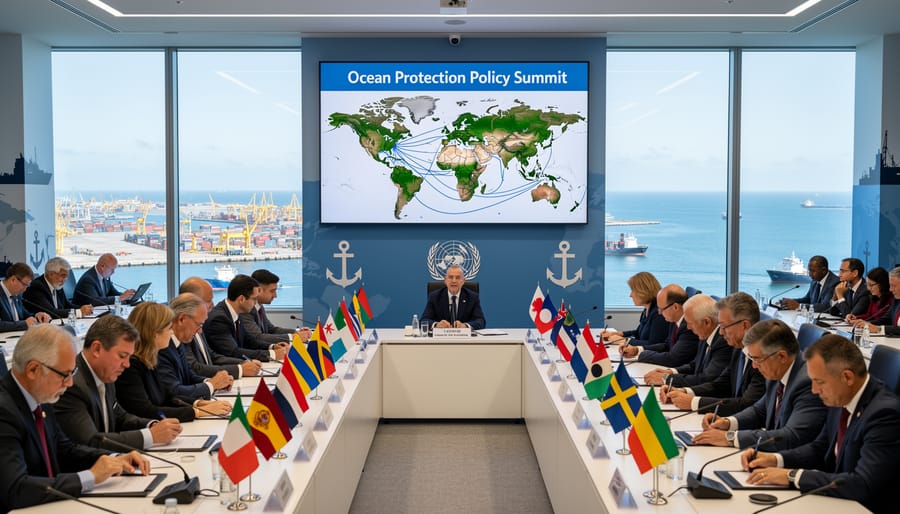
Today’s marine pollution governance operates through a complex web of international, regional, and non-governmental organizations, each playing distinct but interconnected roles in protecting our oceans.
At the global level, the International Maritime Organization (IMO) stands as the primary United Nations agency responsible for preventing marine pollution from ships. Established in 1948, the IMO has developed crucial regulations including MARPOL, the international convention addressing oil spills, sewage, garbage, and harmful substances discharged at sea. The organization brings together 175 member states to create binding maritime standards, though enforcement remains the responsibility of individual nations.
Complementing the IMO’s work, the United Nations Environment Programme (UNEP) coordinates broader ocean conservation efforts, including initiatives to combat plastic pollution and protect marine biodiversity. UNEP’s Regional Seas Programme has established 18 regional agreements covering over 140 countries, recognizing that neighboring nations sharing ocean waters must collaborate on pollution challenges.
Regional bodies have emerged as particularly effective governance players. The European Union’s Marine Strategy Framework Directive sets ambitious targets for member states to achieve “Good Environmental Status” in their waters by 2020, extended to 2030. Similarly, the OSPAR Commission protects the North-East Atlantic, while the Barcelona Convention safeguards the Mediterranean Sea. These regional frameworks allow for tailored approaches addressing specific local challenges.
Non-governmental organizations fill critical gaps in monitoring and advocacy. Groups like Oceana, The Ocean Conservancy, and Surfrider Foundation conduct independent research, organize beach cleanups where volunteers can directly contribute to data collection, and pressure governments to strengthen regulations. Marine biologist Dr. Sarah Jenkins notes, “NGOs provide the citizen science and grassroots pressure that keep governmental bodies accountable. We’ve documented pollution sources that official monitoring missed.”
This multi-layered governance system, while imperfect, represents humanity’s evolving commitment to ocean stewardship, with increasing opportunities for individual participation in protection efforts.
What Scientists and Volunteers Are Teaching Policymakers
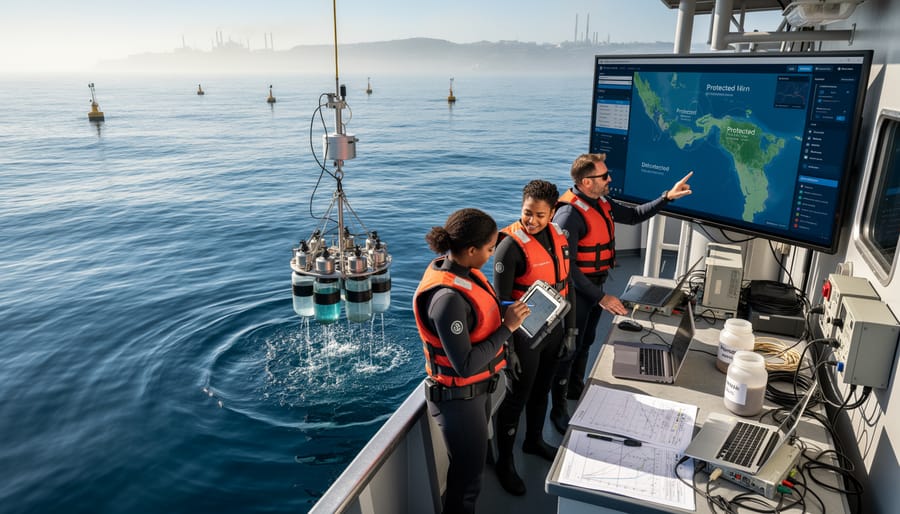
The bridge between scientific discovery and environmental policy has never been more vital—or more collaborative. Today’s marine pollution policies increasingly reflect contributions from an expanding network of researchers, citizen scientists, and community volunteers whose data collection and advocacy are reshaping how governments respond to ocean threats.
Dr. Maya Chen, a marine biologist who spent five years translating research findings for congressional committees, recalls a pivotal moment in 2019. “We presented microplastic data collected by volunteers across 47 coastal sites,” she explains. “Policymakers were stunned by the geographic scope and consistency of the pollution patterns. That volunteer-generated evidence directly influenced stricter regulations on industrial plastic discharge.” This collaboration between professional scientists and engaged citizens demonstrates how monitoring technology and grassroots participation can create compelling cases for policy change.
Citizen science programs have proven particularly influential. The Ocean Conservancy’s annual coastal cleanup, involving over 900,000 volunteers globally, generates databases that scientists use to identify pollution hotspots and track waste trends over decades. This information has informed international agreements like the recent UN treaty on plastic pollution, showing policymakers that marine debris isn’t just an aesthetic problem but a persistent ecological crisis.
Marine biologist James Torres works directly with state legislators, helping them understand complex research in accessible terms. “Scientists often speak in data points and statistical significance,” he notes, “but policymakers need to grasp real-world impacts. When I share stories about volunteers finding ghost nets killing endangered sea turtles, paired with our population decline data, it creates a complete picture that drives legislative action.”
These partnerships are transforming policy development from top-down mandates to evidence-based frameworks informed by diverse stakeholders. Whether through beach cleanups documenting debris types, water quality testing programs, or wildlife monitoring initiatives, everyday citizens are becoming essential contributors to the scientific evidence that shapes marine protection laws—proving that effective conservation requires both laboratory precision and community participation.
The Next Wave: Emerging Policies for New Threats
As ocean threats grow more complex, governance frameworks are rapidly evolving to address challenges that previous generations of policymakers never anticipated. Today’s emerging policies reflect our deepening understanding of interconnected marine systems and the urgent need for adaptive management strategies.
Microplastics have emerged as a governance priority, with the European Union leading efforts through its Single-Use Plastics Directive and proposed restrictions on intentionally added microplastics in products. Several nations are now developing monitoring protocols to track microplastic concentrations in marine environments, while researchers work alongside policymakers to establish safe threshold levels. Marine biologist Dr. Sarah Chen, who testified before international committees, shares that “watching science translate directly into policy gives me hope. We’re finally seeing governments recognize that particles invisible to the naked eye can have massive ecosystem impacts.”
Ocean acidification, once overlooked in climate negotiations, now features prominently in updated marine conservation strategies. The Ocean Acidification International Coordination Centre works with member states to integrate pH monitoring into national ocean policies, while regional agreements increasingly include acidification thresholds in marine protected area management plans.
Deep-sea mining presents perhaps the most contentious emerging policy frontier. The International Seabed Authority is developing regulations for mineral extraction in international waters, balancing economic interests against largely unknown ecological consequences. Conservation groups advocate for precautionary moratoriums until comprehensive impact assessments can be completed, reflecting the principle that absence of evidence is not evidence of safety.
Climate-related pollution impacts, including increased runoff from extreme weather events and warming-accelerated contaminant release from sediments, are prompting integrated approaches that merge climate adaptation with pollution prevention. Forward-thinking policies now recognize that addressing marine pollution requires simultaneously tackling climate change.
For those inspired to participate in shaping these emerging frameworks, volunteer opportunities exist through citizen science initiatives monitoring local pollution indicators and advocacy organizations working to strengthen international agreements. Your voice and data collection efforts directly inform the policies protecting tomorrow’s oceans.
The journey of marine pollution governance reflects humanity’s growing awareness that our oceans require active protection. From the early recognition of oil spills as environmental disasters in the 1960s to today’s comprehensive frameworks addressing plastic pollution, climate change, and biodiversity loss, we’ve made significant strides. International treaties like MARPOL and regional agreements have reduced ship-based pollution, while initiatives such as marine protected areas now cover approximately 8% of our oceans. Scientific research has expanded dramatically, giving us unprecedented understanding of how pollutants move through marine ecosystems and affect everything from microscopic plankton to majestic whales.
Yet the work is far from complete. Plastic pollution continues accumulating at alarming rates, nutrient runoff creates expanding dead zones, and climate change acidifies our seas. These challenges demand not just policy solutions but active engagement from all of us.
You can make a tangible difference right now. Consider volunteering with local beach cleanup organizations or marine conservation groups that monitor water quality and wildlife health. Advocate for stronger environmental regulations by contacting your representatives about marine protection bills. Stay informed by following marine research institutions and participating in citizen science projects that collect valuable data about ocean health.
Marine biologist Dr. Sarah Chen shares this perspective: “Every piece of trash removed from a beach, every email sent to a policymaker, every conversation about ocean conservation creates ripples of positive change. Our oceans recovered from ozone depletion and rebounded from overfishing in protected areas. With collective action, we can address today’s challenges too.”
The future of our oceans depends on informed, engaged citizens transforming knowledge into action.

jessica
Ava Singh is an environmental writer and marine sustainability advocate with a deep commitment to protecting the world's oceans and coastal communities. With a background in environmental policy and a passion for storytelling, Ava brings complex topics to life through clear, engaging content that educates and empowers readers. At the Marine Biodiversity & Sustainability Learning Center, Ava focuses on sharing impactful stories about community engagement, policy innovations, and conservation strategies. Her writing bridges the gap between science and the public, encouraging people to take part in preserving marine biodiversity. When she’s not writing, Ava collaborates with local initiatives to promote eco-conscious living and sustainable development, ensuring her work makes a difference both on the page and in the real world.