Marine Biodiversity Science Center

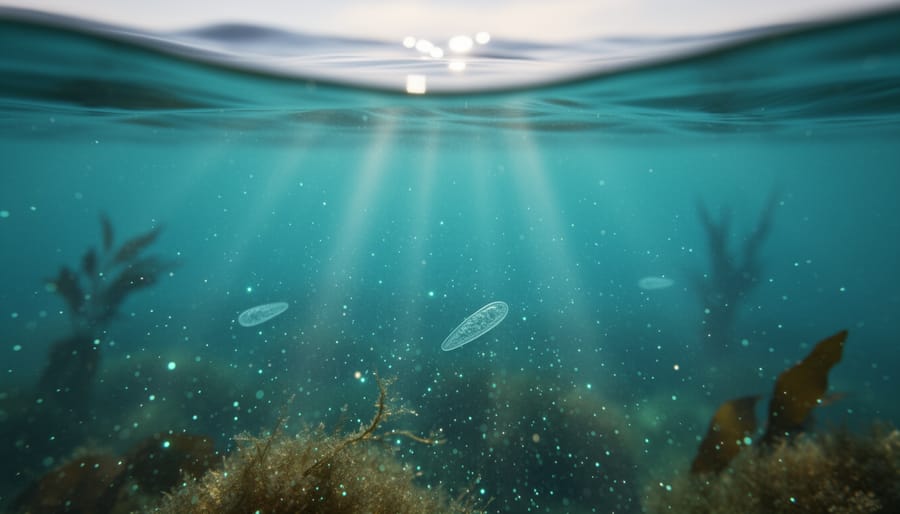
Marine photosynthesis is the process by which microscopic ocean plants and bacteria convert sunlight, carbon dioxide, and water into organic compounds and oxygen. This underwater phenomenon, carried out by phytoplankton, algae, and cyanobacteria, generates roughly half the oxygen in Earth’s atmosphere and forms the foundation of nearly every marine food web.
Every breath you take is connected to the ocean. While rainforests often receive credit as the planet’s lungs, the truth is that tiny organisms drifting in the surface waters of our seas perform an equally vital service. These photosynthetic powerhouses, invisible to the naked eye yet numbering in the trillions, don’t just sustain marine life. They regulate our climate by absorbing massive quantities of atmospheric carbon dioxide, influence global weather patterns, and support fisheries that feed billions of people worldwide.
Understanding marine photosynthesis means grasping how our planet maintains its delicate balance. The process operates differently than its terrestrial counterpart, adapted to the unique challenges of underwater life: fluctuating light levels as depth increases, nutrient availability that varies dramatically by region, and the constant movement of ocean currents that transport these organisms across vast distances.
This article breaks down the mechanics of how marine photosynthesis works at the cellular level, explores the diverse organisms that perform it (from single-celled diatoms to massive kelp forests), and examines why this process matters far beyond the ocean itself. You’ll discover how scientists monitor photosynthetic activity across the globe, what threats face these critical organisms in 2026, and how conservation efforts aim to protect the microscopic engines driving ocean health. Whether you’re a student encountering this topic for the first time or a conservation-minded reader seeking deeper knowledge, you’ll find practical insights into one of nature’s most essential processes.
What Marine Photosynthesis Means for Our Ocean
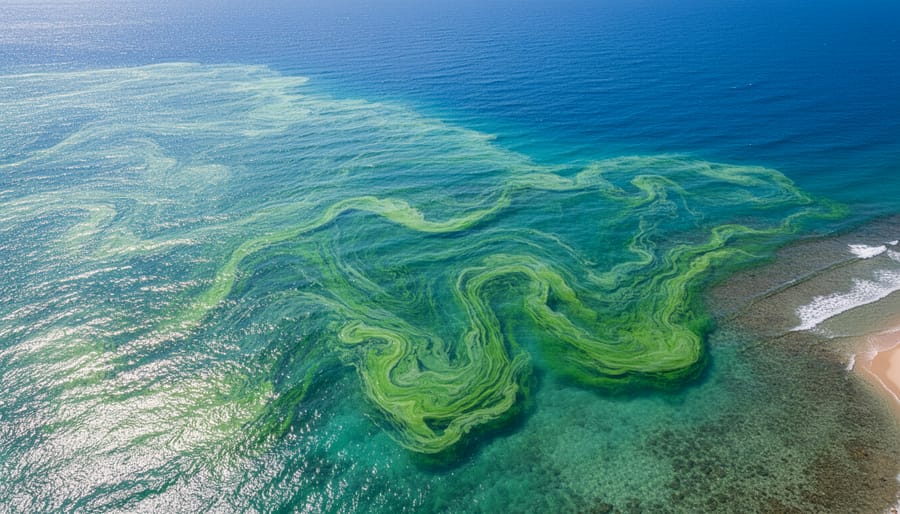
Marine photosynthesis is the process by which ocean-dwelling organisms transform sunlight into chemical energy while releasing oxygen into the water. It’s the same fundamental process that makes terrestrial plants grow, but it happens in the ocean’s saltwater environment, performed by organisms ranging from microscopic single-celled drifters to towering underwater forests.
At its core, the process works like this: marine photosynthesizers capture sunlight using specialized pigments, absorb carbon dioxide dissolved in seawater, and combine these ingredients with water to produce sugars they use for growth and energy. Oxygen emerges as a byproduct, bubbling into the ocean and eventually reaching our atmosphere.
The ocean’s photosynthetic workforce includes three main groups. Phytoplankton are microscopic organisms that drift in sunlit surface waters, invisible to the naked eye yet responsible for roughly half the planet’s oxygen production. Despite their tiny size, their collective impact dwarfs the Amazon rainforest. Seaweeds and macroalgae, the larger cousins of phytoplankton, attach to rocks and reefs in coastal zones, forming vibrant underwater gardens and kelp forests that shelter countless marine species. Seagrasses, true flowering plants that adapted to life underwater, carpet shallow coastal areas with meadows that stabilize sediments and filter pollutants.
Understanding these key concepts helps clarify how marine photosynthesis works:
- Phytoplankton
- Microscopic single-celled organisms that drift in ocean currents and form the base of most marine food webs. They include diatoms, dinoflagellates, and cyanobacteria.
- Primary Producers
- Organisms that create organic matter from inorganic sources through photosynthesis, serving as the foundation that supports all other marine life. Without them, ocean ecosystems would collapse.
- Photosynthetic Pigments
- Light-absorbing molecules like chlorophyll, carotenoids, and phycobilins that capture different wavelengths of sunlight penetrating ocean water. Marine organisms often use pigments beyond the chlorophyll found in land plants to maximize light capture at depth.
- Dissolved Oxygen
- Oxygen gas released by marine photosynthesizers that becomes dissolved in seawater, where it supports all oxygen-breathing marine animals from fish to whales. This oxygen also exchanges with the atmosphere, contributing to the air we breathe.
Why does this matter? Marine photosynthesis sustains life both in the ocean and on land. Every second breath you take comes from the ocean. The sugars created by marine photosynthesizers feed zooplankton, which feed fish, which feed larger predators in an interconnected web that supports global fisheries and marine biodiversity. These organisms also absorb massive amounts of carbon dioxide, helping regulate Earth’s climate and buffer against atmospheric carbon buildup. Without marine photosynthesis, ocean food webs would vanish, oxygen levels would plummet, and climate regulation would fail.
How Marine Photosynthesis Works
Light and Pigment Adaptations
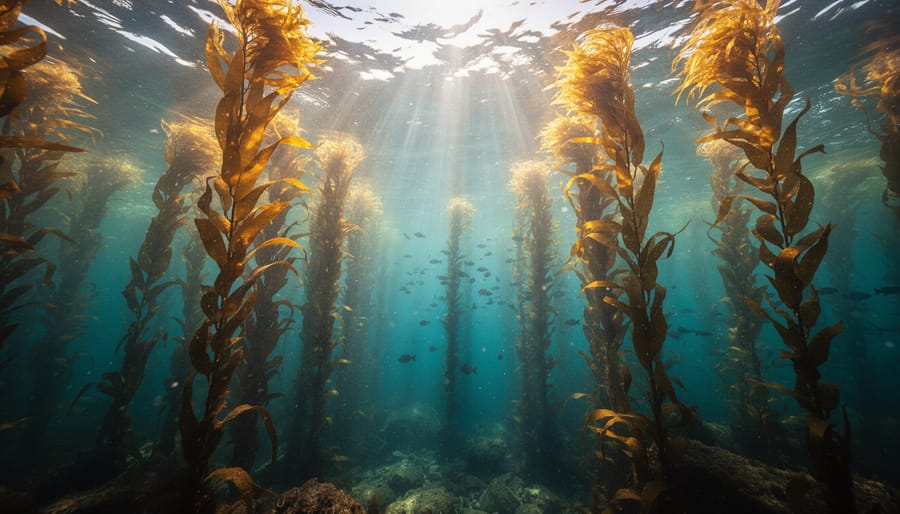
Light penetrates ocean water unevenly. Blue wavelengths travel deepest, reaching down 200 meters in clear tropical seas, while reds and oranges get absorbed within the first 10 meters. Marine photosynthesizers have evolved pigment combinations that let them harvest whatever light reaches their depth.
Chlorophyll a remains the primary photosynthetic pigment across all marine organisms, but it captures mainly red and blue light. To exploit the green and blue-green wavelengths that dominate deeper waters, many species produce accessory pigments. Fucoxanthin gives brown algae and diatoms their characteristic color while capturing blue-green light efficiently. Phycoerythrin in red algae absorbs the green and blue wavelengths that chlorophyll misses, explaining why red seaweeds thrive at greater depths than their green relatives.
Cyanobacteria use phycobiliproteins arranged in antenna-like structures called phycobilisomes. These proteins pass absorbed light energy to chlorophyll molecules with remarkable efficiency, allowing photosynthesis in dim conditions. Some dinoflagellates contain peridinin, a unique carotenoid that broadens their light-harvesting range.
This pigment diversity creates vertical zonation in marine ecosystems. Green algae dominate shallow, brightly lit areas. Brown seaweeds establish kelp forests in moderate depths. Red algae colonize deeper zones where only blue light penetrates. Each group’s pigment profile represents millions of years of adaptation to specific light environments, maximizing energy capture wherever photons reach.
The Carbon and Oxygen Exchange
Marine photosynthesis begins when phytoplankton and other ocean organisms absorb dissolved carbon dioxide directly from seawater. Unlike terrestrial plants that take CO2 from air, marine photosynthesizers work with carbon already dissolved in the ocean, a process facilitated by seawater’s natural ability to hold large amounts of this gas. Inside the organism’s cells, specialized structures called chloroplasts use energy captured from sunlight to drive a remarkable chemical transformation: six molecules of carbon dioxide combine with six molecules of water to produce one molecule of glucose (a simple sugar) and six molecules of oxygen.
This glucose becomes the building block for all organic matter in the ocean, from the cell walls of microscopic diatoms to the tissues of seagrasses. The organism uses some glucose immediately for energy and converts the rest into starches, lipids, and proteins that fuel growth and reproduction. Meanwhile, the oxygen released as a byproduct dissolves into surrounding water, replenishing the dissolved oxygen that fish, invertebrates, and marine mammals need to survive.
The rate of this exchange depends heavily on environmental conditions. Warm, nutrient-rich surface waters with ample sunlight support rapid photosynthesis and oxygen production. In contrast, cold waters or areas where light limits at depth slow the process considerably, creating oxygen-poor zones that challenge marine life.
Nutrient Requirements
Marine photosynthesizers need more than just sunlight and carbon dioxide to thrive. Three nutrients prove particularly crucial: nitrogen, phosphorus, and iron. Nitrogen supports protein synthesis and chlorophyll production, while phosphorus enables energy transfer through ATP molecules and forms the backbone of genetic material. Iron, though required in trace amounts, activates enzymes essential for photosynthesis and nitrogen metabolism.
When any of these nutrients becomes scarce, productivity plummets. Vast areas of the open ocean remain surprisingly barren despite ample sunlight because iron concentrations drop to nearly undetectable levels. Conversely, nutrient-rich upwelling zones along coasts support explosive phytoplankton growth, producing some of the ocean’s most productive ecosystems.
The ratio between nutrients matters too. Marine photosynthesizers typically consume nitrogen, phosphorus, and carbon in a roughly 16:1:106 ratio, known as the Redfield ratio. Deviations from this balance can shift which species dominate and alter entire food web structures.
Types of Marine Photosynthetic Organisms
Phytoplankton: The Ocean’s Microscopic Powerhouses
Phytoplankton are single-celled organisms drifting through the sunlit upper ocean, collectively producing about half of Earth’s oxygen while forming the foundation of nearly every marine food web. These microscopic photosynthesizers come in remarkable variety, each group adapted to different conditions and contributing uniquely to ocean productivity.
Diatoms are perhaps the most abundant phytoplankton, encased in intricate silica shells that resemble tiny glass boxes. They thrive in nutrient-rich waters and bloom spectacularly in coastal upwelling zones and polar seas, where cold water brings nutrients to the surface. Dinoflagellates are more mobile, using whip-like flagella to move through the water column and sometimes producing the bioluminescent displays studied in marine light ecology. Cyanobacteria, the ocean’s most ancient photosynthesizers, include species like *Prochlorococcus*, the planet’s most numerous photosynthetic organism, which dominates warm, nutrient-poor tropical waters.
Other groups include coccolithophores, covered in calcium carbonate plates that reflect light and turn waters milky white during blooms, and various green algae species. Together, these diverse phytoplankton communities respond rapidly to changing conditions, with population explosions following nutrient inputs and crashes when grazed by zooplankton or when conditions shift, creating the dynamic pulse that drives ocean ecosystems.
Seaweeds and Macroalgae
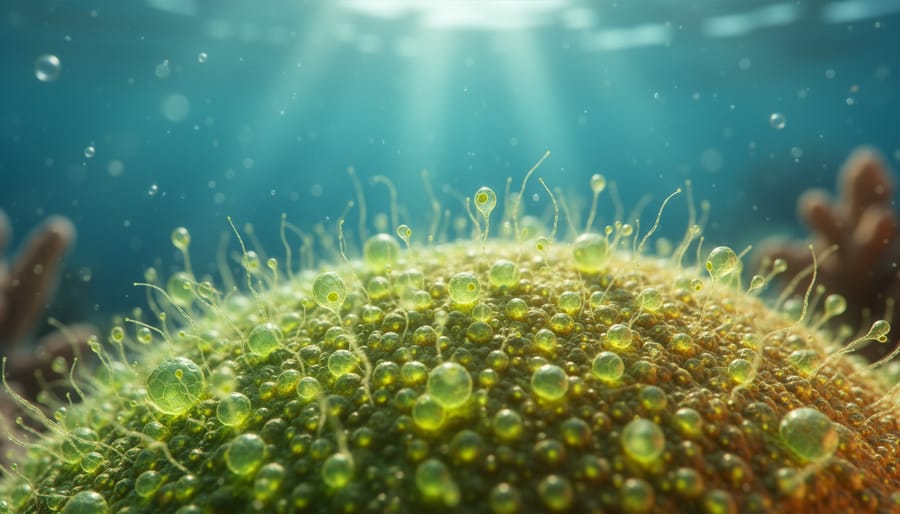
Seaweeds and macroalgae represent the ocean’s most visible photosynthesizers, ranging from delicate filamentous forms to towering kelp that can grow over 45 meters tall. Unlike phytoplankton, these multicellular organisms anchor themselves to rocky substrates in coastal waters where sufficient light penetrates, typically from the intertidal zone down to about 30 meters depth depending on water clarity.
Kelp forests, dominated by brown algae species like giant kelp (Macrocystis pyrifera), create three-dimensional structures that rival terrestrial forests in productivity. These underwater canopies can produce up to 500 grams of carbon per square meter annually, supporting entire ecosystems from sea urchins to sea otters. Their large blade-like fronds maximize light capture while specialized gas-filled bladders keep them buoyant near the surface.
Red algae thrive in deeper waters where their unique pigments, particularly phycoerythrin, efficiently absorb the blue-green wavelengths that penetrate furthest. Green algae occupy shallower zones, their chlorophyll content similar to terrestrial plants. Together, these macroalgae communities stabilize shorelines, provide nursery habitat for juvenile fish, and contribute significantly to coastal carbon cycling. A single kelp forest can sequester carbon at rates comparable to temperate rainforests while simultaneously producing oxygen that enriches surrounding waters.
Seagrasses and Other Marine Plants
Seagrasses represent a remarkable evolutionary achievement, true flowering plants that returned to the ocean millions of years ago and developed extraordinary adaptations for underwater photosynthesis. Unlike seaweeds, which are algae, seagrasses possess roots, stems, and leaves, and they produce flowers and seeds beneath the waves.
These marine plants colonize shallow coastal waters where sunlight penetrates to the seafloor, forming expansive underwater meadows. Their leaves contain chlorophyll just like terrestrial plants, but seagrass photosynthesis faces unique challenges: constantly moving water, varying light levels from waves and tides, and the need to extract dissolved carbon dioxide from seawater rather than air.
Seagrass meadows rank among the most productive ecosystems on Earth. A single hectare can generate as much oxygen annually as a terrestrial forest while sequestering carbon at rates up to 35 times faster than tropical rainforests. Their dense root systems trap sediment and stabilize coastlines, while their canopies dampen wave energy and filter water.
Beyond photosynthesis, these underwater gardens provide nursery habitat for fish, feeding grounds for sea turtles and dugongs, and shelter for countless invertebrates, making them biodiversity hotspots essential to coastal food webs.
How Marine Photosynthesis Powers Ocean Life and Beyond
Marine photosynthesis doesn’t just sustain ocean ecosystems; it underpins life on our entire planet. Every breath you take carries oxygen generated by microscopic phytoplankton and coastal seaweeds that transformed sunlight into usable energy beneath the waves. Understanding these connections reveals why protecting marine photosynthetic communities matters far beyond the shoreline.
The most tangible global contribution comes through oxygen production. While we often credit forests as the planet’s lungs, ocean photosynthesis supplies oxygen for roughly half of every breath we take. Phytoplankton, despite their microscopic size, collectively generate more atmospheric oxygen than all terrestrial plants combined. This oxygen diffuses from ocean surface waters into the atmosphere, sustaining terrestrial life while simultaneously supporting marine organisms that rely on dissolved oxygen in seawater.
Marine photosynthesis delivers critical ecosystem services that extend across biological, chemical, and economic dimensions:
- Foundation of ocean food webs, converting solar energy into biomass that feeds everything from tiny zooplankton to massive whales
- Carbon sequestration through the biological pump, which moves carbon from surface waters to deep ocean storage for centuries
- Ocean pH regulation by absorbing dissolved carbon dioxide during photosynthesis, partially buffering acidification
- Commercial fishery support, as approximately 90% of global fish catch depends directly or indirectly on photosynthetic productivity
- Coastal protection through seagrass beds and kelp forests that reduce wave energy and prevent erosion
- Nutrient cycling that maintains water quality and supports biodiversity in estuaries and coastal zones
The carbon sequestration role deserves particular attention. Marine photosynthesizers absorb billions of tons of carbon dioxide annually, incorporating it into organic matter. Some of this carbon sinks to the ocean floor when organisms die, effectively removing it from the atmosphere for geological timescales. Without this biological pump, atmospheric carbon dioxide concentrations would be substantially higher, accelerating climate warming.
For fisheries, the connection is direct and measurable. Primary productivity from phytoplankton determines how many fish a region can ultimately support. Highly productive areas like upwelling zones, where nutrient-rich deep water fuels photosynthetic blooms, host the world’s most abundant fisheries. Coastal photosynthesizers like seagrasses also serve as critical nursery habitat, sheltering juvenile fish that grow into commercially important populations.
These interlocking benefits reveal a fundamental truth: marine photosynthesis creates the conditions that make ocean life possible, while simultaneously regulating Earth’s atmosphere and climate. Protecting the organisms that perform this work protects the entire web of life they sustain.
Measuring Primary Productivity in Marine Environments
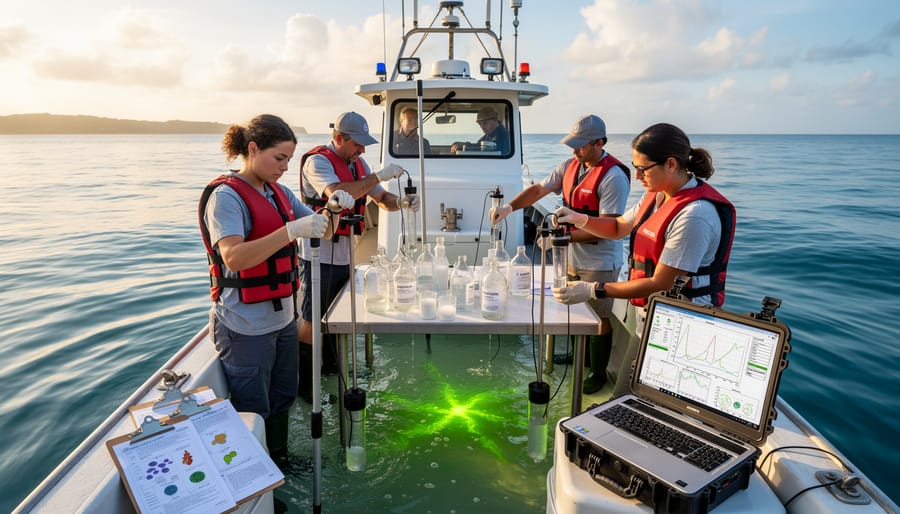
Scientists measure marine photosynthesis to track ocean health, predict changes in marine food webs and understand how much carbon dioxide the ocean absorbs. This measurement, called primary productivity, reveals how much organic matter phytoplankton and other photosynthesizers create in a given area over time.
Satellites provide the broadest view. Instruments like NASA’s MODIS sensors detect chlorophyll concentrations by measuring ocean color from space. Green-tinged water indicates high phytoplankton abundance, while deep blue suggests fewer photosynthesizers. These satellite maps let researchers monitor entire ocean basins daily, tracking seasonal blooms, upwelling zones, and long-term productivity trends across decades.
In-water measurements offer precision that satellites cannot match. Ships deploy instruments called fluorometers to detect chlorophyll fluorescence in real time as they travel. CTD rosettes collect water samples at multiple depths, which scientists analyze in shipboard or shore labs for chlorophyll content, nutrient levels, and phytoplankton species composition. The bottle incubation method remains a gold standard: researchers seal water samples in clear and dark bottles, incubate them at sea for several hours, then measure oxygen production or carbon uptake to calculate photosynthetic rates directly.
Autonomous floats and gliders now roam the ocean for months, recording chlorophyll fluorescence, light levels, and nutrient data without requiring ships. These robotic platforms fill gaps between research cruises and reach remote areas year-round.
Continuous monitoring matters urgently. Warming ocean temperatures shift phytoplankton communities toward smaller, less nutritious species. Acidification may reduce calcifying phytoplankton like coccolithophores. Tracking productivity changes helps scientists predict fisheries shifts, identify ecosystem stress before collapse, and quantify the ocean’s weakening ability to absorb atmospheric carbon dioxide. Without consistent measurement, we lose the baseline needed to detect trouble and guide marine conservation effectively.
Threats to Marine Photosynthesis and What We Can Do
Marine photosynthesis faces mounting pressures from human-driven environmental changes that threaten the productivity of phytoplankton, seaweeds, and seagrasses. Ocean warming disrupts the delicate temperature ranges that marine photosynthesizers have evolved to tolerate, with rising water temperatures forcing species toward cooler waters, altering community composition, and reducing overall productivity in some regions. Warmer water also holds less dissolved oxygen and nutrients, creating challenging conditions for photosynthetic organisms.
Ocean acidification presents a particularly complex threat. As oceans absorb excess atmospheric carbon dioxide, seawater pH drops, creating ocean chemistry impacts that affect how marine organisms function. While increased dissolved CO2 might seem beneficial for photosynthesis, the associated pH changes stress many marine photosynthesizers, particularly calcifying species like coralline algae and coccolithophores that build calcium carbonate structures while performing photosynthesis.
Pollution compounds these stresses. Nutrient runoff from agriculture and urban areas triggers harmful algal blooms that exhaust oxygen when they die and decay, creating dead zones where photosynthesis cannot sustain healthy ecosystems. Plastic pollution blocks sunlight penetration and introduces toxins that impair photosynthetic function. Chemical pollutants from industrial discharge and oil spills directly damage cellular processes in phytoplankton and seaweeds.
Light availability, essential for photosynthesis, decreases when coastal development, dredging, and erosion increase water turbidity. Suspended sediments scatter and absorb light that would otherwise reach photosynthetic organisms, reducing the depth at which they can thrive and limiting productivity in coastal waters.
You can contribute to protecting marine photosynthesis through concrete actions. Join water quality monitoring programs that track nutrients, turbidity, and phytoplankton health in coastal waters. These citizen science initiatives provide scientists with crucial data about changing conditions while building community awareness. Participate in phytoplankton sampling projects that help researchers document seasonal patterns and detect harmful algal blooms early.
Coastal restoration offers hands-on opportunities to support photosynthetic communities. Volunteer with seagrass restoration projects that replant these critical photosynthesizers in degraded areas, or join kelp forest monitoring programs that assess the health of these productive ecosystems. Beach cleanups directly reduce pollution that threatens marine photosynthesis, while advocacy for reduced nutrient runoff and carbon emissions addresses root causes.
Individual choices matter too. Reducing fertilizer use in gardens, choosing sustainable seafood, minimizing plastic consumption, and supporting marine protected areas all contribute to healthier conditions for the photosynthetic organisms that sustain ocean life and produce much of our oxygen.
Common Questions About Marine Photosynthesis
Do all ocean organisms photosynthesize? How does depth affect it? These questions come up constantly when people first learn about marine photosynthesis, and the answers reveal just how specialized ocean life has become.
Do all ocean organisms photosynthesize?
No, only organisms with photosynthetic pigments can perform photosynthesis. While phytoplankton, seaweeds, and seagrasses are photosynthetic, the vast majority of marine animals, fungi, and bacteria rely on consuming other organisms or organic matter for energy.
How deep can photosynthesis occur in the ocean?
Photosynthesis typically occurs in the top 200 meters of the ocean, known as the photic zone, where sufficient sunlight penetrates. In exceptionally clear tropical waters, some photosynthesis may happen as deep as 250 meters, but productivity drops sharply with depth as light intensity decreases.
What happens to marine photosynthesis at night?
Photosynthesis stops completely without sunlight. Marine organisms switch to respiration only, consuming stored energy and releasing carbon dioxide, which is why oxygen levels in coastal waters fluctuate between day and night.
How does marine photosynthesis differ between tropical and polar waters?
Tropical waters maintain steady, year-round photosynthesis but often have lower productivity due to nutrient scarcity. Polar waters experience dramatic seasonal swings, with intense phytoplankton blooms during the continuous summer daylight when nutrients are abundant, followed by winter dormancy in near-total darkness.
Can photosynthesis happen in polluted water?
Yes, but pollution typically reduces photosynthetic efficiency. Turbidity from sediment blocks light penetration, toxic chemicals can damage photosynthetic machinery, and excess nutrients from runoff can trigger harmful algal blooms that eventually crash and deplete oxygen, creating conditions where pollution and disease compound to harm entire ecosystems.
One detail that surprises many people: the color of seawater itself affects photosynthetic potential. Blue ocean water indicates low nutrient levels and sparse phytoplankton, while greenish water signals higher productivity. Coastal areas often shift between these states seasonally as nutrient inputs from land runoff or upwelling currents change. Scientists use these color variations, visible from satellites, to map photosynthetic activity across entire ocean basins and track how productivity patterns shift with climate and human impacts.
Marine photosynthesis sustains life on Earth in ways most people never see. Every second breath you take comes from ocean-dwelling photosynthesizers, while these same organisms remove billions of tons of carbon dioxide from the atmosphere each year. The microscopic phytoplankton drifting in surface waters, the kelp forests swaying in coastal currents, and the seagrass meadows carpeting shallow bays aren’t just beautiful features of marine ecosystems, they’re the foundation of ocean food webs and critical regulators of our climate.
Understanding how marine photosynthesis works helps us recognize what’s at stake. When we protect coastal waters from pollution, reduce carbon emissions, or restore degraded habitats, we’re safeguarding the biological machinery that makes our planet livable. Scientists continue refining their measurements of primary productivity, tracking changes across ocean basins, and identifying early warning signs of ecosystem stress. This knowledge creates opportunities for effective intervention.
You can contribute to this effort. Citizen science programs need volunteers to collect water samples, monitor phytoplankton blooms, and document seagrass coverage. Coastal restoration projects welcome hands-on participants who help transplant seagrasses and remove invasive species. Even sharing what you’ve learned about marine photosynthesis spreads awareness that drives broader conservation support.
The health of our oceans and atmosphere depends on these photosynthetic communities thriving. By connecting scientific understanding with practical action, we can protect the invisible forests that sustain us all.

jessica
Ava Singh is an environmental writer and marine sustainability advocate with a deep commitment to protecting the world's oceans and coastal communities. With a background in environmental policy and a passion for storytelling, Ava brings complex topics to life through clear, engaging content that educates and empowers readers. At the Marine Biodiversity & Sustainability Learning Center, Ava focuses on sharing impactful stories about community engagement, policy innovations, and conservation strategies. Her writing bridges the gap between science and the public, encouraging people to take part in preserving marine biodiversity. When she’s not writing, Ava collaborates with local initiatives to promote eco-conscious living and sustainable development, ensuring her work makes a difference both on the page and in the real world.